What an Aussie’s Breath Says About Its Teeth
It's a common tale: you lean in for a sweet snuggle with your beloved Australian Shepherd, ready for a wet nose boop, and instead, you're hit with a smell that makes your eyes water. Many Aussie parents, bless their hearts, just shrug it off, thinking "that's just dog breath!" But here's a little secret from us veteran dog parents: truly healthy dog breath shouldn't be offensive. If your Aussie's breath could knock a buzzard off a gut wagon, it's a huge flashing red light that something is amiss, often with their dental health, but sometimes with deeper systemic issues. This guide will walk you through what those funky smells are telling you and what you can do about it, because your Aussie deserves a fresh smile, and your nose deserves a break!
Decoding Your Aussie's Breath: What Normal vs. Not-So-Normal Smells Mean
We've all been there, right? That little whimper, the nudge for attention, and then BAM! A wave of eau de garbage disposal hits you. It's easy to just think, "oh, it's just dog breath." But in reality, just like with people, bad breath in dogs, medically known as halitosis, is almost always a symptom, not a standalone condition. Learning to decipher these smells is the first step in protecting your Australian Shepherd's health.
The "Normal Dog Breath" Myth
Let's bust this myth right now: truly healthy dog breath doesn't stink. It might have a faint, mild "doggy" smell, especially right after they’ve eaten their kibble, but it should never be foul, pungent, or make you recoil. Think about a healthy human's breath – it's generally neutral. The same goes for our canine companions. If your Aussie's breath is constantly unpleasant, even subtly so, it's a sign that microscopic bacteria are having a party in their mouth, and it's time to investigate further. A slightly stale smell after a long nap is one thing; a persistent, unpleasant odor is quite another.
Many owners mistakenly believe that because their dog's breath smells bad, and their neighbor's dog's breath smells bad, that it must be normal for all dogs. This simply isn't true. It's a widespread problem, yes, but not a normal state of health. A young Aussie puppy, for instance, typically has very neutral or even slightly sweet breath. As they age, dietary changes, exposure to different bacteria, and lack of consistent oral hygiene can begin to shift that sweet scent into something far less appealing. Don't let yourself get used to the smell; see it as the warning it is.
Warning Signs from Your Aussie's Halitosis
When your Aussie's breath takes a turn for the worse, the type of smell can actually give you a big clue about what's going on. It’s like their mouth is sending you a coded message, and once you learn the code, you can act quickly. Ignoring these signs can lead to much more serious and costly health problems down the road.
A "fishy" odor often indicates issues with the anal glands, but it can also be tied to bacteria in the mouth or even certain dietary issues. If the smell is distinctly sour or acidic, it might point to digestive problems or reflux. Perhaps your Aussie has recently gotten into something it shouldn't have, or there's an upset stomach brewing. A truly foul, rotten smell, reminiscent of a decaying carcass, is the most common and often the most severe indicator of advanced dental disease. This is where you're likely dealing with deep infections, significant plaque and tartar buildup, and possibly abscesses in the mouth. It’s a very strong indicator that immediate veterinary attention is needed.
Even more concerning are smells that aren't necessarily "rotten" but are definitely unusual. A sickly sweet or fruity smell could be a sign of diabetes, especially if accompanied by increased thirst and urination. An ammonia-like or urine-like smell can point to kidney disease, while an extremely putrid or musty odor might signal liver issues. These are serious systemic conditions that require prompt diagnosis and treatment. Always keep an eye on these distinct smells; they are your Aussie's way of telling you that something is seriously wrong, far beyond just needing a mint.
Common Dental Culprits Behind Foul Aussie Breath
The vast majority of cases of bad breath in Australian Shepherds, and indeed most dogs, stem directly from issues within their mouth. It’s a literal petri dish in there, and without proper care, it can quickly turn into a bacterial breeding ground. As an Aussie owner, you know how resilient these dogs are, but even they can't fight off an onslaught of oral bacteria without help.
Plaque, Tartar, and Gum Disease
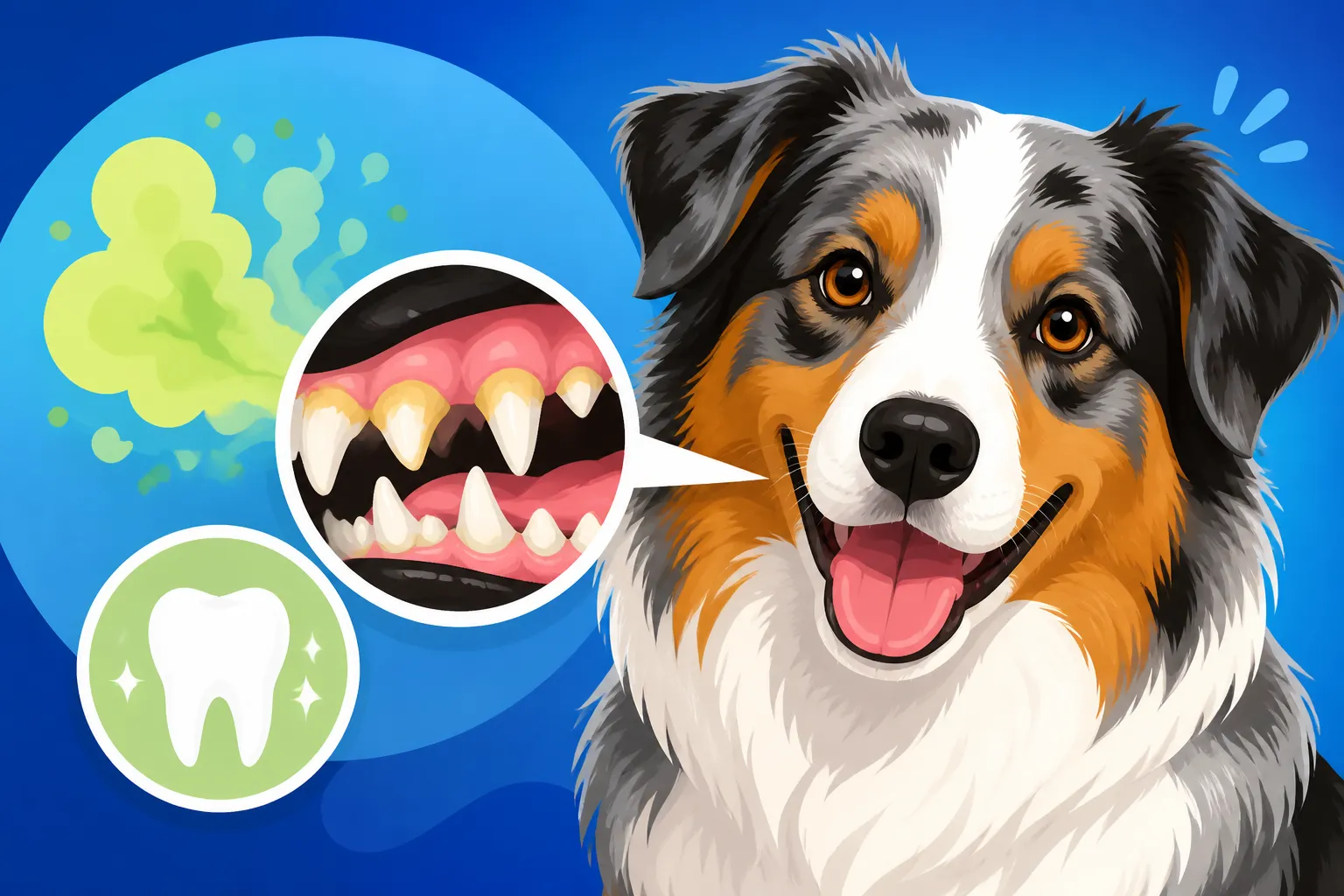
This is the big one, the primary antagonist in the battle against bad dog breath. Every time your Aussie eats, tiny food particles combine with bacteria in their mouth to form plaque – a soft, sticky, colorless film. If this plaque isn't removed regularly, it hardens within 24-48 hours into tartar (or calculus), a rough, yellow-brown substance that stubbornly clings to the teeth. You can’t brush tartar away; it needs professional removal.
Once tartar forms, it acts like a magnet for more plaque and bacteria. This continuous buildup irritates the gums, leading to gingivitis, which is inflammation of the gums. You might notice redness along the gumline, slight bleeding when your Aussie chews on a toy, and, of course, that increasingly pungent breath. Left unchecked, gingivitis progresses to periodontal disease, a more severe and irreversible condition where the infection spreads below the gumline, destroying the supporting structures of the tooth. This can lead to painful tooth loss, bone decay, and even systemic infections when bacteria enter the bloodstream. All of these stages contribute to that terrible smell you’re trying to avoid, which just keeps getting worse as the disease progresses. This is why consistent dental care, including things like regular Australian Shepherd Dental Care, is so important.
Other Oral Issues: Abscesses, Fractures, and Growths
Sometimes, the bad breath isn't just about general plaque and tartar buildup. There can be more acute and painful problems lurking in your Aussie's mouth. Imagine stepping on a sharp rock – now imagine that kind of pain with every chew! These hidden issues can cause excruciating discomfort and contribute significantly to severe halitosis.
A tooth root abscess is a deep infection at the root of a tooth, often caused by severe periodontal disease or a fractured tooth. These pockets of pus are incredibly painful and can swell the face, usually just under the eye. The trapped infection releases a truly horrific smell, making your Aussie’s breath almost unbearable. Similarly, a fractured tooth, perhaps from chewing on something too hard like a rock or antler, exposes the sensitive inner pulp to bacteria, leading to infection and pain. Even if you can't see the fracture, the resulting infection will certainly announce its presence via their breath. Oral tumors or growths, while less common, can also become infected and necrotic, causing a foul odor. These can be benign or malignant, but any new growth in the mouth warrants immediate veterinary attention. These aren't just minor irritations; they are serious problems that demand a vet visit.
Beyond the Mouth: Systemic Health and Your Aussie's Breath
While most bad breath cases point to dental disease, it's crucial to remember that your Australian Shepherd's mouth isn't an isolated system. The body is a wonderfully interconnected thing, and sometimes, a distinct change in breath odor can be the very first alarm bell for a serious underlying systemic health issue. This is why a vet check is always recommended if the bad breath is persistent, unusual, or accompanied by other symptoms. It's often one of the signs vets look for during a general check-up, alongside things like body condition and coat health.
Kidney and Liver Disease
When organs like the kidneys or liver aren't functioning correctly, they can't effectively filter toxins from the bloodstream. These toxins then circulate throughout the body and can be exhaled through the lungs, resulting in very distinctive breath odors. If your Aussie's breath smells like ammonia or urine, it's a strong indicator of kidney disease. The kidneys are failing to remove urea, which then builds up in the blood and saliva. This isn't just bad breath; it's a critical sign that your dog's kidneys are struggling.
A sickly sweet or musty odor, sometimes described as a "dead animal" smell, can point to severe liver disease. The liver plays a vital role in detoxification, and when it's compromised, various metabolic byproducts accumulate. This distinct smell, combined with other symptoms like lethargy, loss of appetite, vomiting, or jaundice (yellowing of the eyes or gums), should send you straight to the vet. These are not conditions to take lightly, and early detection, sometimes through something as simple as noticing a change in breath, can make a huge difference in prognosis. Regular bloodwork, especially for older Aussies, can often detect these issues before they become critical, as discussed in Bloodwork Worth Running on a Senior Aussie.
Diabetes and Other Metabolic Conditions
Another significant systemic health issue that can manifest as unusual breath is diabetes. If your Australian Shepherd's breath has a sweet, fruity, or acetone-like smell (similar to nail polish remover), it could be a sign of diabetic ketoacidosis, a serious complication of untreated or poorly managed diabetes. This occurs when the body starts breaking down fat for energy due to a lack of insulin, producing ketones as a byproduct. Alongside this distinct breath, you might notice increased thirst, frequent urination, weight loss despite a good appetite, and lethargy.
While less common, other metabolic conditions or gastrointestinal problems can also contribute to unusual breath odors. For example, some Aussies with severe gastrointestinal upset or malabsorption issues might have very sour or metallic-smelling breath. Even certain types of cancer can sometimes cause a specific, unpleasant odor, although this is usually in advanced stages. The key takeaway here is that while dental disease is the most frequent culprit, any unusual, persistent, or worsening breath odor that isn't clearly explained by diet or obvious oral issues warrants a thorough veterinary examination to rule out these serious underlying conditions.
Taking Action: Improving Your Australian Shepherd's Dental Health
Okay, so you've sniffed out the problem. Now what? The good news is that most dental issues, especially in their early stages, are highly treatable and even preventable. Taking proactive steps can save your Aussie from pain, expensive procedures, and potentially life-threatening systemic diseases. It's an investment in their overall well-being and a commitment every responsible Australian Shepherd parent should embrace.
The Power of Regular Brushing
This is the gold standard for at-home dental care, and honestly, nothing beats it. Brushing your Aussie's teeth daily, or at least several times a week, is the most effective way to remove plaque before it hardens into tartar. It might sound daunting, especially with a high-energy Aussie, but with patience and positive reinforcement, most dogs can learn to tolerate and even enjoy it.
Start slow. Introduce a canine-specific toothpaste (never use human toothpaste, as fluoride and xylitol are toxic to dogs!) on your finger for them to lick. Brands available on sites like Chewy often have enzymatic toothpastes designed to break down plaque even with minimal brushing. Once they're comfortable with the taste, introduce a soft-bristled dog toothbrush or a finger brush. Gently lift their lip and brush a few teeth at a time, focusing on the outside surfaces where plaque tends to accumulate most. Build up the duration gradually, always ending with praise and a reward. Remember, consistency is key, and even a quick brush is better than no brush at all. This practice ties directly into maintaining their overall oral health and preventing issues like Tartar Building on Aussie Molars.
Dental Chews, Water Additives, and Diet
While brushing is king, there are other tools you can add to your dental arsenal to help keep your Aussie's mouth clean. Dental chews can be very effective, but choose wisely. Look for Veterinary Oral Health Council (VOHC) approved products, which have been scientifically proven to reduce plaque and tartar. Not all dental chews are created equal; many are simply treats disguised as dental aids. Offer these regularly, perhaps as a special after-meal treat.
Water additives are another option. These are typically liquids you add to your Aussie's drinking water, containing ingredients designed to reduce bacteria in the mouth. Again, look for VOHC approval or ask your vet for recommendations. Some dog food brands offer "dental diets" with specially designed kibble that encourages mechanical scrubbing of the teeth as your dog chews. For those exploring fresh food options, companies like Ollie also focus on high-quality ingredients that can support overall health, including oral health, though brushing remains paramount. You can also find durable dental toys and chews on Amazon that encourage chewing and help scrape off some plaque. Just ensure they are appropriate for your Aussie's chewing style and won't break teeth. Remember, these are supplements to brushing, not replacements for it.
Professional Veterinary Dental Cleanings
Even with the best at-home care, professional dental cleanings are often necessary to keep your Aussie's mouth in tip-top shape. Just like humans need regular dental check-ups, our dogs benefit from them too. During a professional cleaning, your veterinarian will perform a thorough examination, including dental X-rays to assess the health of the teeth below the gumline. This is vital because 60% of dental disease occurs under the gumline, invisible to the naked eye.
The cleaning itself is done under general anesthesia, which sounds scary but is crucial for a safe and effective procedure. It allows the vet to scale away tartar both above and below the gumline using specialized tools, polish the teeth to smooth the surfaces (making it harder for plaque to adhere), and address any extractions or other procedures needed. Anesthesia also ensures your Aussie is comfortable and still, preventing stress and injury. These cleanings aren't just about fresh breath; they're about preventing pain, infection, and protecting your Aussie’s overall health and longevity. It's a key part of comprehensive Australian Shepherd Dental Tartar and Cleanings.
Paying attention to your Australian Shepherd's breath is more than just avoiding a smelly greeting; it's a vital part of monitoring their health. From the earliest signs of gingivitis to potential red flags for kidney disease or diabetes, your Aussie’s breath can tell you a whole story. By understanding these signals and taking proactive steps with at-home care and professional veterinary cleanings, you can ensure your beloved companion lives a longer, healthier, and happier life – with much fresher breath for those delightful nose boops!
Disclaimer
This article is for general informational purposes only and does not constitute professional advice. Laws, prices and regulations vary by location and change over time. Consult a qualified professional for guidance on your specific situation.