Australian Shepherd Skin Allergies by Season
There’s nothing quite as heart-wrenching as watching your beloved Australian Shepherd scratch, chew, and rub themselves raw, especially when it feels like it’s a never-ending battle tied to the time of year. If your Aussie turns into an itchy, irritated mess every spring, summer, or fall, you're not alone. This guide will walk you through the frustrating world of seasonal skin allergies in Australian Shepherds, helping you understand the triggers, recognize the signs, and find practical ways to bring your furry friend some much-needed relief.
The Root of the Itch: Understanding Environmental Allergies in Australian Shepherds
When your Aussie starts itching only at certain times of the year, it's often a classic sign of environmental allergies, or what veterinarians call atopy or atopic dermatitis. Unlike a sudden rash from a new shampoo or a flea bite, seasonal allergies are a systemic immune response to common allergens in their environment. Imagine constantly feeling like you have hay fever, but instead of sneezing, your skin is the primary battlefield. It's incredibly uncomfortable and can significantly impact their quality of life.
Australian Shepherds, with their robust genetic background and active lifestyles, are unfortunately among the breeds that can be predisposed to developing these kinds of sensitivities. Their immune systems can sometimes mistakenly identify harmless substances like pollen, dust mites, or mold spores as threats, triggering an inflammatory cascade. This isn't just a surface-level irritation; it’s their entire body reacting, often manifesting most visibly on their skin. This underlying predisposition means that even if you live in a pristine environment, your Aussie might still react to very common, unavoidable particles in the air or on the ground. It's a genetic lottery, and unfortunately, many Aussies draw the short straw. For a broader look at common health issues, consider reading up on Australian Shepherd Skin, Coat and Allergy Problems.
What Happens Beneath the Coat
Atopic dermatitis in Australian Shepherds isn't just about surface irritation; it's a deeper immune system malfunction. When an allergen like grass pollen enters their system, often through inhalation or direct skin contact, their immune cells go into overdrive. Instead of targeting harmful bacteria or viruses, they release histamine and other inflammatory chemicals. These chemicals cause blood vessels to dilate, nerve endings to become hypersensitive, and skin cells to produce more oils and shed more quickly. This leads to the classic symptoms we see: redness, swelling, intense itching, and sometimes a greasy or flaky coat.
The skin barrier, which acts as a protective shield, can also become compromised. This means irritants and secondary invaders, like yeast or bacteria, can more easily penetrate the skin, leading to secondary infections. These infections often compound the original allergic itch, creating a vicious cycle of discomfort. What starts as seasonal itching can quickly escalate into chronic skin issues if not properly managed, making your Aussie's life, and yours, quite challenging.
The Genetic Link in Aussie Allergies
While environmental allergies are common in many breeds, Australian Shepherds do seem to have a notable predisposition, suggesting a genetic component. Although there isn't one single "allergy gene" identified, the propensity to develop atopy often runs in families. This means if your Aussie's parents or grandparents suffered from seasonal allergies, there's a higher chance your dog might too. It's a complex interplay of multiple genes, making breeding away from allergies particularly challenging. Responsible breeders strive to produce healthy dogs, but even with the best intentions, these multifactorial conditions can surface.
Understanding this genetic background can help you set realistic expectations for managing your Aussie's allergies. It means that while you can control environmental factors and provide symptomatic relief, you're essentially managing a lifelong condition. Knowing this upfront helps you prepare for the commitment required to keep your Aussie comfortable. Consulting resources like The Genetic Panel Every Australian Shepherd Needs can offer insights into other inherited conditions, providing a comprehensive view of your dog's health profile.
Decoding the Seasons: Common Triggers and Telltale Symptoms
Identifying when your Australian Shepherd's allergies flare up is the first step to understanding what might be causing them. Allergens vary significantly by season and geographic location, but certain patterns are common. The frustrating part is that an Aussie's intense double coat can sometimes hide these early signs until they become severe.
Spring Awakenings: Tree Pollens and Early Grasses
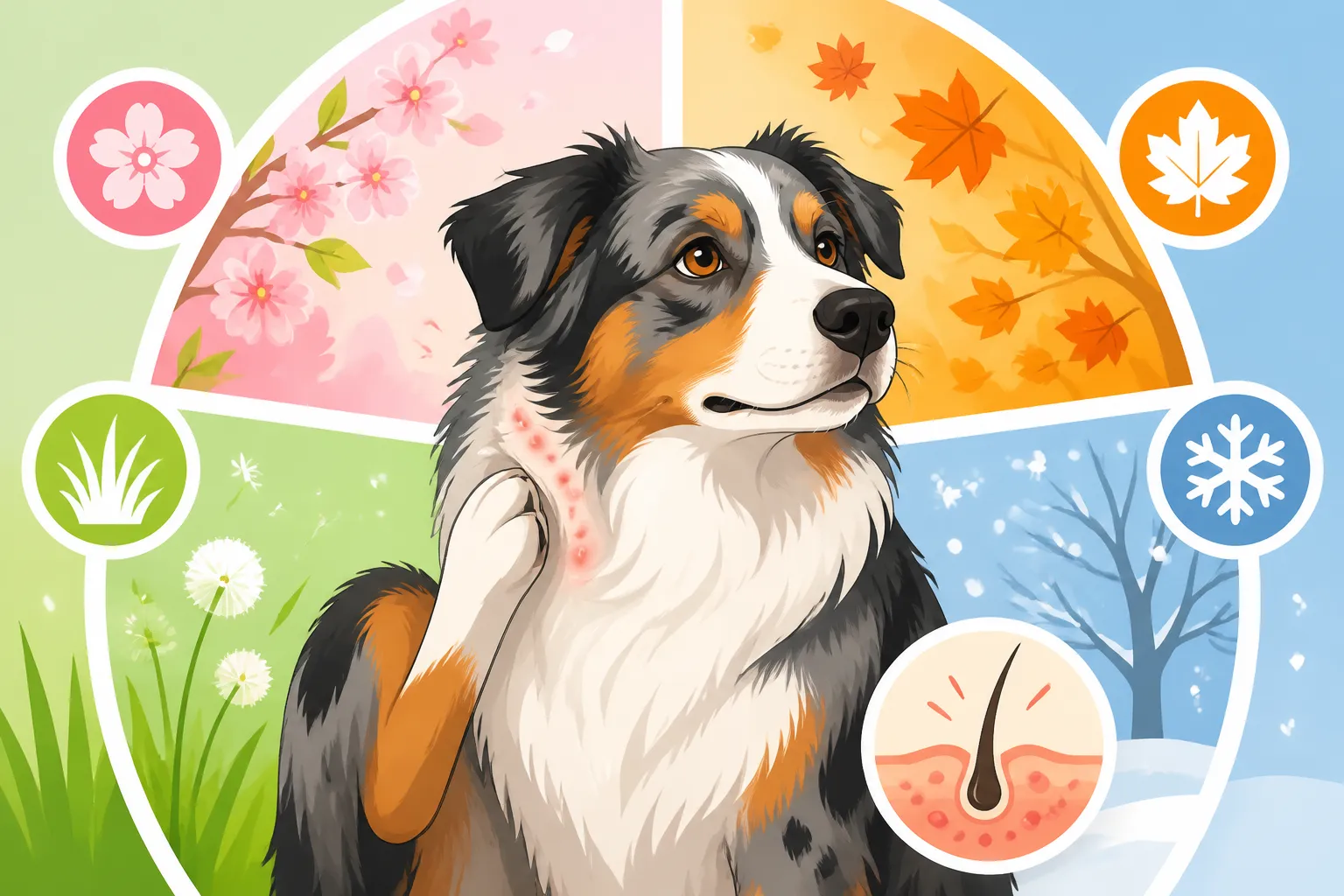
As the world wakes up from winter, so do the pollens. Spring is often marked by the release of tree pollens from species like oak, birch, cedar, and maple. For Aussies sensitive to these, you might notice the first signs of itching as early as late winter or early spring, even before the leaves fully emerge. They might start licking their paws more after walks, rubbing their face against the carpet, or developing pinkish irritation around their eyes or mouth.
The symptoms often escalate as grass pollens begin to emerge later in spring. If your Aussie loves to roll in the grass or play fetch in a field, they're getting a concentrated dose of these allergens directly onto their skin. This is a common time for general body itching to increase, leading to frustrated scratching that can disrupt their sleep and yours.
Summer Hot Spots: Grass, Weeds, and Mold Spores
Summer often brings the peak of allergy season for many dogs. Grass pollens continue to be a major culprit, alongside a surge in weed pollens like ragweed, which can be particularly potent. Warm, humid weather also creates ideal conditions for mold spores to thrive, both indoors and outdoors. These invisible particles can cause significant discomfort for sensitive Aussies.
During summer, you might observe more intense paw licking and chewing, especially after being outside. The constant moisture from licking, combined with the irritation, can quickly lead to painful infections and "hot spots" – those raw, weeping lesions that appear almost overnight. These hot spots are incredibly painful and often require immediate veterinary attention. You can learn more about managing these in Hot Spots Hidden in an Aussie Undercoat.
Fall and Winter Challenges: Lingering Weeds, Dust Mites, and Indoor Allergens
Just when you think you might get a break, fall brings its own set of challenges. Ragweed pollen can linger well into autumn in many regions, and falling leaves create damp environments where mold can flourish. As the weather cools and we spend more time indoors, indoor allergens become more prominent. Dust mites, tiny creatures that live in bedding, carpets, and upholstery, are a huge problem for many allergic dogs. Storage mites, often found in dry dog food or stored grains, can also be a trigger.
During these months, an Aussie might show year-round symptoms if dust mites or indoor molds are their primary triggers. You might notice more generalized itching, particularly when they've been lying on bedding or carpet. Ear infections can become more frequent, as can general skin irritation, often confused with dryness. For more information on this year-round issue, check out Seasonal Allergies in an Australian Shepherd.
Here's a quick overview of common seasonal triggers and symptoms:
| Season | Common Allergens | Typical Symptoms |
|---|---|---|
| Spring | Tree pollens (oak, birch, cedar), early grass pollens | Paw licking, face rubbing, red eyes, itchy ears |
| Summer | Grass pollens, weed pollens (ragweed), mold spores | Intense paw chewing, generalized body itching, hot spots, belly rashes, recurrent Australian Shepherd Ear Infections |
| Fall | Ragweed, lingering grass pollens, outdoor mold spores | Continued itching, irritated skin, ear infections, paw chewing |
| Winter | Dust mites, storage mites, indoor molds | Generalized itching (especially indoors), dry skin, frequent ear flare-ups |
Bringing Relief Home: Practical Management Strategies
Dealing with seasonal allergies in your Australian Shepherd requires a multi-pronged approach that combines environmental management with at-home care. It's about reducing their exposure to allergens and soothing their irritated skin. You're essentially creating a personalized wellness plan for your itchy companion.
Environmental Control and Hygiene
Minimizing allergen exposure is crucial, even if it feels like fighting an invisible enemy. After walks, especially during high pollen seasons, gently wipe your Aussie's paws, legs, and belly with a damp cloth or a pet-safe wipe. This removes pollen particles before they can settle into their coat or be licked off. Investing in a good HEPA air purifier for the rooms your Aussie spends the most time in can also help reduce airborne allergens. Regular vacuuming with a HEPA filter vacuum cleaner is also beneficial, particularly if dust mites are a concern. Wash your dog's bedding frequently in hot water to kill dust mites.
Bathing plays a huge role in managing skin allergies. While it might seem counterintuitive to bathe an already irritated dog, frequent baths with a veterinarian-recommended hypoallergenic or medicated shampoo can literally wash away allergens from their coat and soothe their skin. Aim for 2-3 baths per week during peak allergy season, and then reduce as needed. Ensure you rinse thoroughly to avoid leaving any residue. For more on general coat care that supports skin health, take a look at Brushing an Australian Shepherd Twice a Week.
Dietary Support and Supplements
While food allergies are a separate issue, a well-balanced diet rich in essential fatty acids can significantly support skin barrier health and reduce inflammation, making your Aussie less reactive to environmental allergens. Omega-3 fatty acids, found in fish oil, are particularly beneficial. I've seen firsthand how a good quality fish oil supplement can improve coat shine and reduce dryness and itchiness in many of my own dogs. Fish Oil for an Aussie Double Coat can provide more detailed information on this topic.
Some Aussies may benefit from a diet specifically formulated for sensitive skin, often containing novel proteins or limited ingredients. If you suspect a food component is exacerbating their environmental allergies, or if their itching persists year-round despite your best efforts, your vet might recommend an elimination diet to rule out food sensitivities. This is a very different beast from seasonal allergies but worth investigating if signs are chronic, as discussed in Food Allergy Itching in an Australian Shepherd.
Over-the-Counter Options and Holistic Approaches
For mild, intermittent itching, some owners find relief with over-the-counter antihistamines like diphenhydramine (Benadryl) or cetirizine (Zyrtec). However, always consult your veterinarian before giving your dog any human medication, as dosages and suitability vary greatly. These are often not strong enough for severe allergic reactions but can take the edge off for some. Topical sprays containing hydrocortisone or oatmeal-based ingredients can provide localized relief for irritated patches of skin.
Some holistic approaches, like adding probiotics to their diet or exploring certain herbal remedies, are popular among some owners. While these can support overall immune health, they rarely provide sufficient relief for moderate to severe atopic dermatitis on their own. They are best used as complementary therapies under veterinary guidance, integrated into a broader treatment plan.
Working with Your Vet: Diagnosis and Advanced Treatments
When at-home measures aren't enough, or if your Aussie's symptoms are severe and persistent, it's time to partner with your veterinarian. They can accurately diagnose the type of allergy and recommend more targeted and effective treatments. Don't feel like you've failed if you reach this point; allergies are complex, and professional help is often essential for your Aussie's comfort.
The Veterinary Consultation: Ruling Out Other Causes
Your first step should always be a thorough vet visit. Your veterinarian will perform a full physical examination and likely recommend some diagnostic tests. This is crucial because many other conditions can mimic allergy symptoms, such as flea dermatitis (even if you don't see fleas, a single bite can cause intense reactions), parasitic infections (mites, ringworm), bacterial or yeast infections, or even underlying systemic diseases like Australian Shepherd Autoimmune Thyroiditis. Ruling these out is essential to ensure you're treating the correct problem.
They might take skin scrapings to check for mites, perform a fungal culture, or run blood work to look for signs of infection or other health concerns. Your vet will also ask for a detailed history of your Aussie's symptoms, including when they started, how they've progressed, and what home remedies you've tried. Be prepared to discuss your Aussie's diet, exercise routine, and exposure to various environments.
Advanced Diagnostic Testing for Allergies
Once other conditions are ruled out, your vet might suggest allergy-specific testing to identify the exact environmental allergens affecting your Australian Shepherd.
- Intradermal Skin Testing (IDST): This is often considered the "gold standard" for identifying environmental allergens. It involves sedating your Aussie, shaving a small area of their side, and injecting tiny amounts of various allergens just under the skin. The vet then observes the skin for reactions (redness, swelling) to determine sensitivity. This test is typically performed by a veterinary dermatologist.
- Serum Allergy Testing (Blood Test): A blood sample is taken and sent to a specialized lab to measure antibodies (IgE) against a panel of common environmental allergens. While less invasive than IDST, its accuracy can vary, and results need to be interpreted carefully in conjunction with clinical signs.
These tests help create a precise profile of what your Aussie is allergic to, which is vital for formulating an effective treatment plan, especially if immunotherapy is considered.
Prescription Medications and Immunotherapy
For moderate to severe seasonal allergies, veterinarians often turn to prescription medications to control the itch and inflammation.
- Steroids: Medications like prednisone can quickly reduce inflammation and itching. However, they come with potential side effects with long-term use, such as increased thirst, urination, appetite, and can impact liver function. They are usually reserved for short-term relief during severe flare-ups.
- Cyclosporine (e.g., Atopica): This medication modulates the immune system to reduce allergic reactions. It can be very effective but takes a few weeks to reach full efficacy and can have gastrointestinal side effects initially.
- Oclacitinib (Apoquel): This is a targeted medication that specifically blocks the "itch pathway" in the dog's body. It works relatively quickly and has fewer side effects than steroids, making it a popular choice for long-term management.
- Lokivetmab (Cytopoint): This is an injectable monoclonal antibody that targets a specific protein involved in sending the itch signal. It's given as an injection every 4-8 weeks, offering extended relief with minimal side effects, as it specifically targets the itch without affecting the broader immune system.
One of the most promising long-term solutions is allergen-specific immunotherapy (ASIT), often referred to as "allergy shots" or "allergy drops." Based on the results of allergy testing, a custom vaccine is formulated containing tiny amounts of your Aussie's specific allergens. Over time, these shots or drops help desensitize the immune system, teaching it not to overreact. This is the only treatment that can potentially modify the disease course rather than just manage symptoms, leading to reduced reliance on other medications. It requires commitment, as it can take 6-12 months to see significant improvement, but for many Aussies, it offers the best chance for long-term comfort.
Managing chronic conditions like seasonal allergies can indeed add up over time, especially with specialized diagnostics, ongoing medications, or immunotherapy. This is where pet insurance, like a plan from Healthy Paws, can truly be a lifesaver. Having a good policy in place early on can help cover a significant portion of these recurring vet bills, allowing you to prioritize your Aussie's comfort and well-being without constant financial stress. I know many owners who've been able to pursue advanced treatments and provide consistent care thanks to their pet insurance.
For Aussies battling more complex immune system responses, further investigation into conditions like Australian Shepherd Immune-Mediated Disease may be warranted if typical allergy treatments aren't effective. It’s always about finding the right puzzle pieces for your individual dog.
The Long Road: Consistent Care and Monitoring
Managing seasonal allergies in an Australian Shepherd is often a marathon, not a sprint. It requires patience, consistency, and close collaboration with your veterinarian. Even with effective treatment, flare-ups can occur, necessitating adjustments to medication or environmental controls. Regular follow-up appointments are important to monitor your Aussie's progress, address any new symptoms, and ensure their long-term health and comfort. Having pet insurance, such as from Healthy Paws, can provide immense peace of mind, knowing that you're supported in providing the best possible care for your allergic Aussie throughout their life. It means you can focus on making your dog comfortable, rather than worrying about the accumulating costs of consistent medication, specialist visits, or unexpected flare-ups. Remember, your Aussie relies on you to be their advocate, and with the right approach, you can significantly improve their quality of life.
Disclaimer
The information provided in this article is for general informational purposes only and is not a substitute for professional veterinary advice. Always consult with a qualified veterinarian for any health concerns or before making any decisions related to your pet's health and treatment.