Fish Oil for an Aussie Double Coat
It can be incredibly frustrating to look at your beautiful Australian Shepherd and see a dull, flaky coat, or feel rough, dry patches on their skin, despite all your efforts to keep them healthy. We pour so much love and care into our Aussies, and when their magnificent double coat isn't shining its best, it often signals an internal issue that needs addressing. This guide will walk you through how incorporating fish oil into your Australian Shepherd's diet can transform their coat health, soothe irritated skin, and contribute to their overall well-being.
Why an Australian Shepherd's Coat Needs Special Attention
Australian Shepherds are renowned for their stunning, abundant coats. It's one of their most distinctive features, whether it's a vibrant blue merle, a striking red tri, or a classic black bi. But this beautiful coat isn't just for show; it's a functional masterpiece, designed to protect them from the elements, whether they're herding in a cold field or resting in the summer sun. Understanding its unique structure helps us appreciate why it sometimes needs a little extra help.
The Australian Shepherd Double Coat Explained
Your Aussie’s coat is a marvel of natural engineering, a dense, weather-resistant system. It's called a "double coat" because it has two distinct layers. First, there's the harsh, medium-textured outer coat, which is water-resistant and helps shed dirt and debris. This is the part you typically see and feel. Beneath this lies a soft, dense undercoat, which acts as incredible insulation, keeping them warm in winter and surprisingly cool in summer by trapping air.
This dual-layer system means that your Aussie’s skin and hair follicles are constantly working hard. The health of both layers, from the roots deep within the skin to the very tips of the guard hairs, depends heavily on their internal nutrition. If something is lacking, or if there's inflammation, the coat is often one of the first places you’ll notice a change, manifesting as dryness, excessive shedding, or a lack of luster. For a deeper dive into this incredible feature, you might want to read The Australian Shepherd Double Coat Explained.
Common Coat Challenges
Even with the best intentions, many Australian Shepherd owners encounter coat issues. One of the most common complaints is a dull, dry coat that lacks its natural sheen. Instead of flowing and gleaming, the hair might appear brittle, static-prone, or simply lifeless. This often goes hand-in-hand with dry, flaky skin underneath, sometimes mistaken for dandruff, but often a sign of insufficient moisture and essential fatty acids.
Another frequent challenge is excessive shedding, beyond the normal seasonal Twice-Yearly Coat Blow in an Australian Shepherd. While Aussies are known for shedding, a constant heavy shed, or patches of thinning hair, can indicate a problem. Skin irritation, redness, or constant itching are also tell-tale signs. You might notice your Aussie scratching more than usual, developing hot spots, or biting at their flanks. These issues can stem from various factors, including environmental allergens, food sensitivities, or simply a nutritional deficiency that prevents healthy skin cell regeneration and oil production. If you're seeing a lot of itching and discomfort, it's worth considering Australian Shepherd Skin, Coat and Allergy Problems for more information.
The Science Behind Fish Oil for Canine Coat Health
When we talk about giving our Australian Shepherds a gleaming coat and healthy skin, fish oil often comes up as a top recommendation. It's not just an old wives' tale; there's solid scientific backing for why this supplement is so beneficial, particularly for a double-coated breed like the Aussie.
Omega-3 Fatty Acids: EPA and DHA
The magic in fish oil primarily comes from its rich concentration of Omega-3 fatty acids, specifically Eicosapentaenoic Acid (EPA) and Docosahexaenoic Acid (DHA). These are "essential" fatty acids, meaning your Aussie's body cannot produce them on its own, so they must be obtained through diet. Unlike Omega-6 fatty acids, which are often plentiful in commercial dog foods and can sometimes contribute to inflammation if out of balance, Omega-3s are renowned for their anti-inflammatory properties.
Think of it this way: EPA and DHA are like tiny powerhouses for cellular health. They're incorporated into cell membranes throughout the body, including the skin cells, helping them to function optimally. This direct integration means they play a crucial role in maintaining the integrity of the skin barrier and promoting healthy hair growth cycles. Without adequate amounts, these processes can falter, leading to the dull coats and irritated skin we often see.
How Omega-3s Benefit Skin and Coat
So, how exactly do these Omega-3 superheroes work their wonders on your Australian Shepherd's skin and coat? It boils down to a few key mechanisms:
First, their anti-inflammatory properties are paramount. Many common skin issues, from allergies to environmental irritants, cause inflammation. This inflammation leads to itching, redness, and discomfort, which in turn can damage hair follicles and disrupt healthy hair growth. EPA, in particular, helps to quell this inflammatory response, reducing irritation and creating a calmer environment for the skin to heal and the coat to thrive. Imagine your Aussie finally getting relief from constant itching; that's the power of reducing inflammation.
Secondly, Omega-3s contribute to skin barrier integrity. The skin acts as a protective shield, keeping moisture in and irritants out. When this barrier is compromised, skin becomes dry, flaky, and more susceptible to allergens and infections. Fish oil helps strengthen this barrier, enhancing the skin's ability to retain moisture and reducing dryness. This natural moisturizing effect makes the skin more supple and less prone to flaking, which directly translates to a healthier, more lustrous coat.
Finally, these fatty acids are vital for healthy cell regeneration and oil production. Healthy hair starts with healthy follicles, which are embedded in the skin. EPA and DHA support the optimal function of these follicles, promoting stronger, more resilient hair strands. They also contribute to the production of natural oils by the skin, which coat the hair shafts, giving your Aussie's double coat that desirable shine and softness. This means less brittle hair, fewer tangles, and a noticeable improvement in overall coat texture.
Choosing the Right Fish Oil Supplement for Your Aussie
Navigating the world of supplements can be a bit overwhelming, but selecting the right fish oil for your Australian Shepherd doesn't have to be complicated. The key is to look for quality and understand the different forms available.
Types of Fish Oil: Liquid vs. Capsules, Source
When it comes to fish oil, you'll primarily find two forms: liquid and capsules. Both have their merits, and the best choice often depends on your Aussie's preferences and your lifestyle.
Liquid Fish Oil:
- Pros: Often easier to administer, especially for larger breeds like Aussies, as you can simply squirt it over their food. It can be more cost-effective per serving, and allows for very precise dosage adjustments. Many Aussies love the taste, treating it like a special gravy. Brands like Zesty Paws or Nordic Naturals offer popular liquid options often found on platforms like Chewy or Amazon.
- Cons: Can be prone to oxidation once opened, which reduces its effectiveness and can make it rancid (and smelly!). It needs to be stored in a cool, dark place, often refrigerated, and used within a specific timeframe. Messier to handle if your Aussie isn't a neat eater.
Capsules:
- Pros: Convenient, mess-free, and protected from oxidation by the gel cap. Easy to travel with. No strong fishy smell on your hands or food bowl.
- Cons: Aussies may refuse to swallow larger capsules, requiring you to pierce them and squeeze the oil out (which defeats the "mess-free" benefit). Often more expensive per serving. Dosage can be less precise if you need an in-between amount.
Source Matters: Regardless of form, always look for fish oil derived from small, wild-caught fish like anchovies, sardines, or mackerel. These fish have shorter lifespans and are lower on the food chain, meaning they accumulate fewer heavy metals and toxins (like mercury) compared to larger, longer-lived fish such as salmon or tuna. Reputable brands will often state their sourcing and purification processes on the label.
Here's a quick comparison:
| Feature | Liquid Fish Oil | Fish Oil Capsules |
|---|---|---|
| Ease of Use | Easy to mix into food, precise dosing | Mess-free, good for travel |
| Taste/Smell | Can be strong, often appealing to dogs | Odorless until punctured |
| Storage | Requires refrigeration, susceptible to oxidation | Stable, less prone to oxidation |
| Cost | Generally more cost-effective per dose | Can be more expensive per dose |
| Portioning | Highly adjustable | Fixed doses, less flexible |
| Longevity | Shorter shelf life once opened | Longer shelf life |
| Risk of Mess | Higher, especially with eager eaters | Lower, unless pierced |
Dosage Considerations and Safety
Determining the correct dosage of fish oil for your Australian Shepherd is crucial for effectiveness and safety. While I can't give specific milligram recommendations here (always consult your vet!), the general guideline is based on your dog's weight and the concentration of EPA and DHA in the product. It's not about the total amount of "fish oil," but specifically the EPA and DHA content. A typical starting point for general health might be around 10-20 mg of combined EPA and DHA per pound of body weight, but this can vary significantly for therapeutic doses, such as for severe allergies or joint issues.
Always start slow. Introduce fish oil gradually over several days to a week to allow your Aussie's digestive system to adjust. Too much too fast can lead to an upset stomach, loose stools, or diarrhea. Monitor your dog for any changes in appetite or stool quality.
Quality is paramount. Look for products that are molecularly distilled to remove impurities and heavy metals, and that undergo third-party testing for purity and potency. These details are usually highlighted on the product packaging. Also, check for an expiry date and make sure the product hasn't been exposed to excessive heat or light, as this can degrade the delicate Omega-3s.
While fish oil is generally very safe, potential side effects can include mild gastrointestinal upset, bad breath, and an oily coat if given in excessively high doses. In rare cases, extremely high doses over a long period could potentially affect blood clotting or vitamin E levels, which is why veterinary guidance is so important. Never exceed the recommended dosage without professional advice.
Integrating Fish Oil into Your Aussie's Diet
Adding fish oil to your Australian Shepherd's daily routine is usually quite straightforward. If you're using liquid fish oil, simply measure the correct dose and drizzle it over their regular kibble or wet food. Most Aussies will happily gobble it up, sometimes even more enthusiastically than their plain meal! For those with less enthusiasm, you might try mixing it thoroughly with a spoonful of plain yogurt or pumpkin puree to make it more palatable. You can find many reputable liquid fish oil brands on sites like Chewy or Amazon.
If you opt for capsules, you can try hiding them in a small amount of irresistible food, like a bit of cheese, a piece of hot dog, or a dollop of peanut butter. Some dogs will swallow them whole with their food, especially if they are smaller capsules. If your Aussie is a discerning eater and spits out the capsule, you might need to pierce it and squeeze the oil out, as you would with liquid fish oil. Remember to factor this into your daily meal prep. Consistency is key, so try to administer it with the same meal each day.
Beyond Fish Oil: Comprehensive Coat Care for Your Australian Shepherd
While fish oil is an incredible ally for a healthy Australian Shepherd coat, it’s just one piece of a larger puzzle. For truly optimal skin and coat health, a holistic approach that covers nutrition, grooming, and environmental management is essential. Think of it as supporting your Aussie from the inside out and the outside in.
Balanced Nutrition: The Foundation of a Healthy Coat
No supplement, no matter how potent, can fully compensate for a poor-quality diet. A high-quality, balanced diet is the absolute bedrock of a healthy coat for your Australian Shepherd. This means feeding a dog food that lists real meat as the first ingredient, avoids excessive fillers, and contains a good balance of protein, fats, and carbohydrates tailored to an active breed like the Aussie. Look for formulas that include other beneficial ingredients like flaxseed (another source of Omega-3s, though less bioavailable than fish oil), biotin, and zinc, all of which play roles in skin and coat health.
Some owners explore fresh food diets, which can be fantastic for overall health and often contain naturally occurring healthy fats. Companies like Ollie provide human-grade fresh food options that might appeal to those looking to switch their Aussie's diet. If your Aussie is struggling with allergies that manifest as skin issues, your vet might recommend a novel protein or limited ingredient diet, as discussed in Food Allergy Itching in an Australian Shepherd. A healthy gut also plays a role in skin health, so ensuring good digestion through probiotics or fermented foods can indirectly benefit the coat. Remember, consulting with your veterinarian or a canine nutritionist is always best to ensure your Aussie’s diet is meeting all their needs, especially if you're trying to figure out Daily Calories for a Fifty Pound Australian Shepherd.
Regular Grooming Practices
Beyond nutrition, consistent and appropriate grooming is vital for maintaining your Australian Shepherd's double coat. This isn't just about making them look pretty; it's about preventing mats, allowing the skin to breathe, and distributing natural oils.
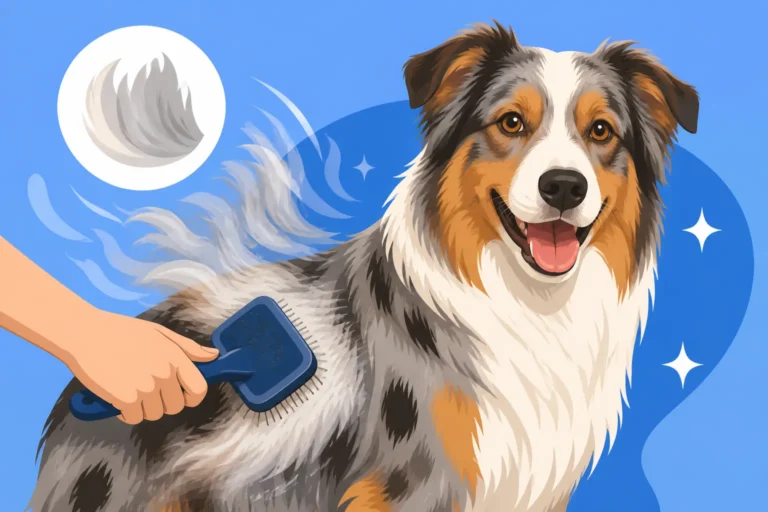
Brushing: Regular brushing, at least 2-3 times a week, is non-negotiable for an Aussie. During their seasonal coat blows, you’ll want to brush daily to remove loose undercoat and prevent painful mats. Tools like an undercoat rake are essential for reaching deep into the dense undercoat. You can find a wide selection of these tools on Chewy or Amazon. Proper technique, such as line brushing, ensures you get down to the skin and remove all dead hair. If you're wondering about the best approach, check out Brushing an Australian Shepherd Through Coat Blow. Mats, especially behind the ears, in the armpits, and on the "trousers" (the feathering on their hind legs), can pull on the skin, causing discomfort and even skin infections.
Bathing: While not a daily activity, occasional baths are important. Use a gentle, dog-specific shampoo and conditioner to avoid stripping natural oils. Always rinse thoroughly to prevent residue that can irritate the skin. And remember, your Aussie should never be shaved, as this can permanently damage their double coat and compromise its insulating properties. For more on this, see Why an Australian Shepherd Should Never Be Shaved. After a bath, ensure they are completely dry, especially the undercoat, to prevent skin issues like hot spots.
Environmental Factors
Finally, don't underestimate the impact of your Aussie's environment on their coat.
Weather: Extreme weather can take a toll. In dry climates or during winter, the air can be harsh, leading to dry skin and static electricity in the coat. Using a humidifier indoors can sometimes help. In warmer, humid climates, ensure good airflow and watch for moisture trapped in the coat, which can encourage fungal or bacterial growth.
Allergens: Just like humans, Aussies can suffer from environmental allergies (atopy) triggered by pollen, dust mites, or molds. These often manifest as itchy skin and a dull coat. Regular cleaning of bedding, vacuuming, and wiping down your Aussie’s paws after walks can help reduce exposure to outdoor allergens. If allergies are suspected, your vet can recommend specific treatments or management strategies.
By combining the power of fish oil with a high-quality diet, diligent grooming, and mindful environmental management, you'll be well on your way to ensuring your Australian Shepherd boasts a coat that's not only breathtakingly beautiful but also a true reflection of their vibrant health.
Disclaimer
This article is for general informational purposes only and does not constitute professional advice. Laws, prices and regulations vary by location and change over time. Consult a qualified professional for guidance on your specific situation.