Undercoat Rakes and Brushes for an Aussie
Anyone who shares their life with an Australian Shepherd knows the sheer volume of hair these beautiful dogs can produce. It's not just a bit of shedding; it’s a constant battle against tumbleweeds of fluff, especially during their twice-yearly "coat blow" seasons. Finding the right tools to manage this glorious double coat isn't just about keeping your house cleaner; it's vital for your Aussie's skin health and comfort, preventing painful mats and hot spots. This guide will walk you through the absolute best undercoat rakes and brushes to effectively groom your Australian Shepherd, ensuring their coat stays healthy and manageable.
Understanding the Australian Shepherd Double Coat
The Australian Shepherd’s signature coat is a marvel of natural engineering, designed to protect them from the elements while they worked tirelessly on ranches. But what makes it so distinctive, and why does it require such specific care? Let's dive into the two crucial layers that make up this incredible coat.
What Makes Up an Aussie's Coat?
An Aussie's coat isn't just one type of hair; it's a sophisticated system built for function. You have two distinct layers, each serving its own purpose. First, there's the outer coat, often called guard hairs. These are longer, coarser, and somewhat water-resistant. They lie flat and protect the dog from rain, snow, and sunlight, essentially forming a protective barrier. They also contribute to the beautiful colors and patterns we see in Australian Shepherds, from the classic blue merle to striking black tri.
Underneath these guard hairs, close to the skin, is the undercoat. This layer consists of softer, denser, and shorter hairs. Its primary job is insulation – keeping your Aussie warm in winter and, perhaps surprisingly, cool in summer by trapping a layer of air. The density of this undercoat varies with climate and season, becoming incredibly thick in colder months and thinning out in warmer ones. Understanding "What the Undercoat Does on an Aussie" is key to appreciating why specific grooming tools are so essential.
The Challenges of Shedding and Matting
The double coat, while beautiful and functional, comes with its own set of challenges, particularly when it comes to shedding and matting. Australian Shepherds are renowned for their shedding, and it's not a light affair. They shed moderately year-round, but twice a year, usually in spring and fall, they go through a process called "coat blow." This is when they shed their entire undercoat to prepare for the change in season, and it can feel like your house is suddenly covered in snow.
If this dead undercoat isn't removed regularly, it can quickly become impacted and form dense, painful mats. These mats aren't just unsightly; they pull on the skin, causing discomfort, irritation, and can even lead to skin infections and hot spots, especially during warmer weather. Mats can hide skin issues, parasites, and prevent proper air circulation, making your Aussie more susceptible to overheating. Dealing with "Australian Shepherd Skin, Coat and Allergy Problems" often starts with consistent, proper grooming to prevent these issues from even taking root.
Essential Brushing Tools for Your Aussie's Undercoat
Navigating the world of grooming tools can feel overwhelming, but for an Australian Shepherd, a few key pieces are absolute game-changers. Forget those flimsy brushes that just skim the surface; you need tools designed to tackle that thick undercoat.
Undercoat Rakes: The Deep Dive
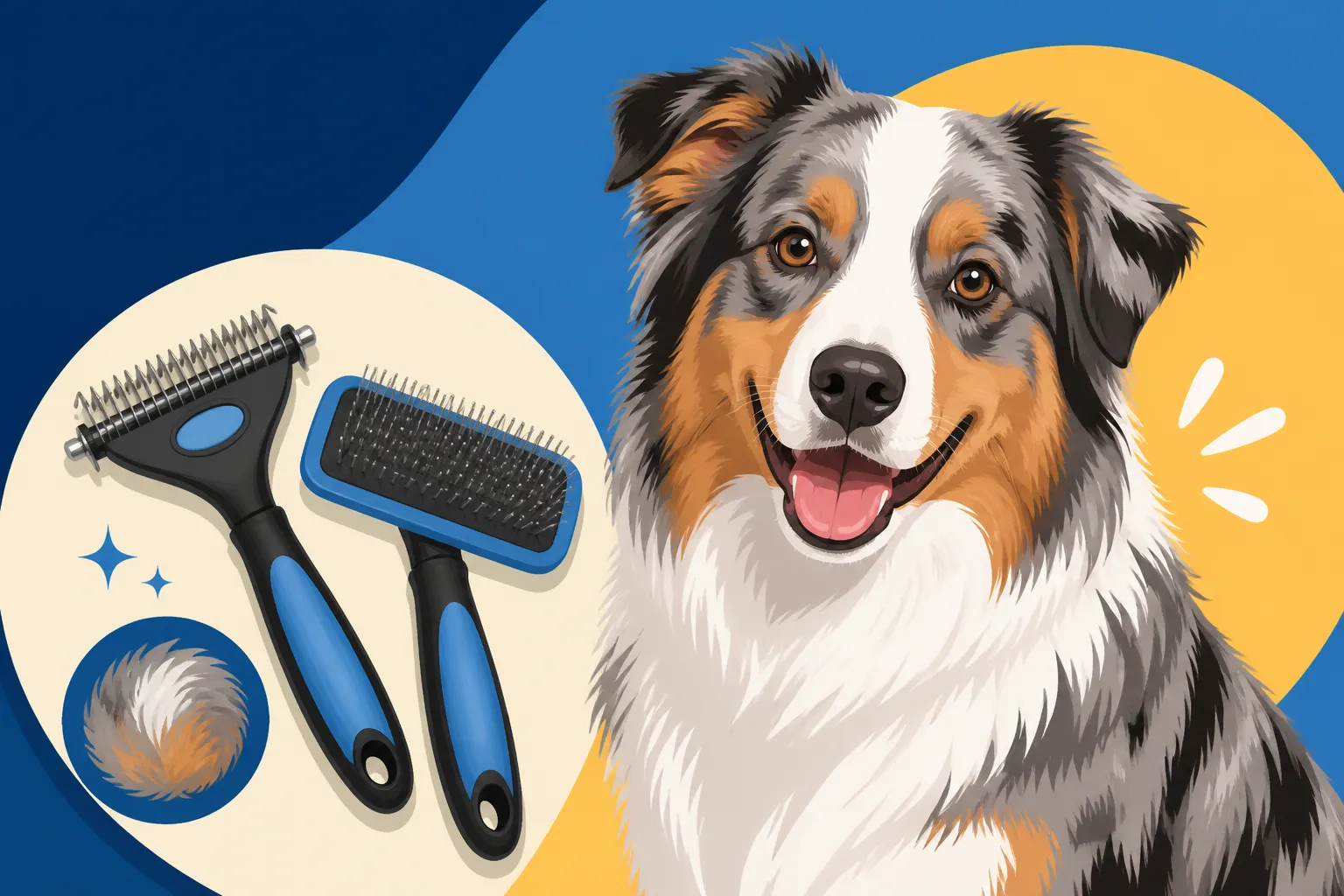
When it comes to penetrating that dense Australian Shepherd undercoat, nothing beats a good undercoat rake. These tools are specifically designed to reach down through the guard hairs and gently pull out loose, dead undercoat without damaging the topcoat. They are your first line of defense against mats and excessive shedding.
There are a few types of undercoat rakes to consider:
- Single-Row Rakes: These often have long, rotating teeth that help to prevent hair pulling and irritation. They are excellent for general deshedding and are gentle enough for regular use. They work wonders on the main body, helping to thin out that insulating layer.
- Double-Row Rakes: These offer more coverage and can be efficient for heavily shedding areas or during coat blow. The multiple rows of teeth grab more loose hair with each stroke, making the job quicker.
- Blade-Style Rakes (also known as Dematting Rakes): These often have serrated or sharp, curved blades. While effective for cutting through existing mats, they should be used with extreme caution and only on actual mats, not for general deshedding, as they can cut healthy hair or skin if misused. For most Australian Shepherd owners, a de-shedding rake with blunt, rotating teeth is preferred for routine maintenance.
When using an undercoat rake, always work in the direction of hair growth, starting from the head and moving towards the tail. Use gentle, long strokes, being careful not to press too hard or rake too aggressively, especially over bony areas or thin skin. The goal is to lift out the loose undercoat. You’ll be amazed at how much hair comes out, and your Aussie will feel much lighter and more comfortable afterward. You can find a wide variety of these specialized tools at pet retailers like Chewy, making it easy to compare and select the right one for your dog.
Slicker Brushes: For Mats and General Grooming
While undercoat rakes excel at deep deshedding, a slicker brush serves a different, yet equally important, role in your Australian Shepherd's grooming routine. Slicker brushes feature a dense bed of fine, short wires angled on a flat or curved surface.
Their primary uses for an Aussie are:
- Removing Minor Tangles and Surface Mats: Before using an undercoat rake, or for daily touch-ups, a slicker brush can gently work through smaller tangles and prevent them from becoming full-blown mats. They are particularly effective for "The Mats That Form Behind Aussie Ears" or in the feathering on their legs and tail.
- Fluffing the Coat: After deshedding, a slicker brush can help to fluff up the topcoat, leaving it looking smooth and well-groomed.
- Stimulating Skin and Distributing Oils: The fine pins gently massage the skin, stimulating circulation and helping to distribute natural oils throughout the coat, which contributes to a healthy shine.
When using a slicker brush, employ a technique called "line brushing" or "pin brushing." This involves parting the hair and brushing small sections at a time, working your way through the coat layer by layer. This ensures you're reaching down to the skin and not just skimming the surface. Remember to be gentle, as the wire pins can be sharp if pressed too hard. While not the primary tool for massive undercoat removal, a slicker brush is indispensable for maintaining a mat-free coat, especially in areas prone to tangles. For a more detailed look at this method, check out our guide on "Slicker Brushes and Line Brushing an Aussie."
Pin Brushes and Bristle Brushes: Finishing Touches
Once you've tackled the heavy lifting of deshedding with an undercoat rake and smoothed out any minor tangles with a slicker brush, pin brushes and bristle brushes come into play for the final touches. These aren't your heavy-duty deshedding tools, but they contribute significantly to a well-maintained coat.
- Pin Brushes: These brushes have widely spaced, wire pins with rounded tips. They are excellent for longer-coated breeds and are primarily used for general daily brushing to remove loose surface hairs and debris. They can help detangle superficial knots and are generally very comfortable for the dog. Think of them as a gentle massage brush that keeps the topcoat flowing smoothly. While they won't reach deep into the undercoat, they prevent new tangles from forming on the surface and ensure the guard hairs lie correctly.
- Bristle Brushes: Made from natural or synthetic bristles, these brushes are best for smoothing the coat, adding shine, and distributing natural oils. They are particularly good for short-coated breeds but can be used on an Aussie as a finishing brush to make their coat look exceptionally polished. They help remove fine dust and dander, leaving the coat sleek and lustrous. A bristle brush can be a great way to bond with your Aussie, as the soft bristles are usually quite enjoyable for them.
Using these brushes after the main deshedding work helps to maintain the overall health and appearance of the Australian Shepherd’s coat, preventing future problems and enhancing its natural beauty.
Mastering the Art of Brushing Your Australian Shepherd
Grooming an Australian Shepherd isn't just about owning the right tools; it's about consistency, patience, and knowing the right techniques. It’s a commitment, but one that pays off in a happier, healthier dog and a cleaner home.
Establishing a Routine and Technique
Consistency is truly king when it comes to grooming an Australian Shepherd. Aim for at least two to three thorough brushing sessions per week, with quick daily brush-overs in between, especially during peak shedding season. Our guide on "Brushing an Australian Shepherd Twice a Week" offers excellent tips for integrating this into your schedule.
The most effective technique, particularly for Aussies, is line brushing. This method ensures you reach every single layer of that dense coat:
- Start with a section: Choose a starting point, usually a leg or the flank. Using your free hand, part the hair horizontally, revealing a strip of skin.
- Brush from the skin out: With your undercoat rake or slicker brush (depending on the task), brush this small section from the skin outwards, working in the direction of hair growth.
- Work in layers: Once that section is tangle-free and dead undercoat is removed, drop another small layer of hair over it and repeat the process. Continue this method over the entire dog, working systematically.
- Be thorough but gentle: It's tempting to rush, but thoroughness prevents future mats. Always be gentle to avoid pulling or irritating the skin.
- Positive reinforcement: Make grooming a positive experience. Offer treats, praise, and take breaks if your Aussie gets antsy.
Building a consistent routine not only keeps your Aussie looking great but also allows you to check for any skin issues, bumps, or parasites regularly.
Dealing with Mats and Tangles
Despite your best efforts, mats and tangles can still happen, especially in areas like behind the ears, armpits, and leg feathering. Dealing with "Mats in an Aussie Ruff and Trousers" requires a delicate approach.
Here's how to tackle them safely:
- Assess the mat: Determine if the mat is superficial or deeply embedded. Small, loose tangles can often be worked out with a slicker brush.
- Use a detangling spray: A good quality detangling spray or conditioner can make a world of difference. Apply it directly to the mat and let it soak in for a few minutes.
- Start from the outside in: Instead of trying to pull through the whole mat, start by gently picking at the edges with your fingers or the very tips of a slicker brush or a wide-toothed comb. Work slowly, one strand at a time.
- Mat splitter (use with extreme caution): For very stubborn mats, a mat splitter tool can be used. These tools have small blades designed to cut through the mat, rather than pull it out. However, they are sharp and can easily cut skin if not used correctly. Always position the tool between the mat and the skin, keeping your fingers between the tool and your dog's skin for protection.
- Never pull: Ripping through a mat is painful for your dog and can cause skin irritation or damage. Patience is paramount.
- When to seek professional help: If a mat is too large, too tight to the skin, or if your Aussie is in pain, do not hesitate to call a professional groomer or your vet. They have specialized tools and techniques to remove severe mats safely, sometimes requiring sedation. A major mat removal can even warrant a vet visit, which is where having good pet insurance like Healthy Paws can really come in handy, covering unexpected expenses.
Seasonal Coat Blow: Brace Yourself
The "When an Australian Shepherd Blows Its Coat" phenomenon is real, and it’s spectacular. Twice a year, typically in spring and fall, your Australian Shepherd will shed their entire undercoat over a period of several weeks. This isn't just heavy shedding; it's an explosion of fluff that can quickly overwhelm your home if not managed.
During coat blow, your regular brushing routine needs to be intensified. "Brushing Every Day While an Aussie Sheds" isn't an exaggeration; it becomes a necessity.
- Daily deshedding: Increase your undercoat rake sessions to daily, focusing on lifting as much dead hair as possible. You'll be filling brush after brush, and that's exactly what you want to see.
- Bathing: A warm bath with a good deshedding shampoo and conditioner can help loosen the dead undercoat. Follow up with a powerful blow dryer (a high-velocity pet dryer is ideal) to force out even more loose hair.
- Professional assistance: Many owners opt for professional deshedding treatments during coat blow. Groomers have powerful dryers and tools that can make quick work of a coat blow, often saving you days of endless brushing.
The goal during coat blow is to remove the dead undercoat as efficiently as possible to prevent it from becoming matted and to help your Aussie regulate their body temperature as the seasons change. It's a messy period, but with the right tools and a dedicated routine, you can navigate it successfully.
Complementary Care for a Healthy Australian Shepherd Coat
Grooming is undeniably crucial, but a truly healthy Australian Shepherd coat is also a reflection of overall well-being. What you put into your dog's body and how you care for their skin and fur between brushings can make a world of difference.
Nutrition and Supplements for Coat Health
Just like with us humans, what your Australian Shepherd eats directly impacts their skin and coat health. A high-quality diet provides the building blocks for strong, shiny hair and healthy skin. Look for dog foods that list real meat as the first ingredient and contain essential fatty acids.
- Omega Fatty Acids: These are superstars for coat health. Omega-3 and Omega-6 fatty acids, often found in fish oil or flaxseed oil supplements, help to reduce shedding, soothe dry skin, and give the coat a beautiful, healthy sheen. Many premium dog foods, like those offered by Ollie, formulate their recipes with these beneficial ingredients to support overall health, including skin and coat quality.
- Biotin and Zinc: These micronutrients also play a role in skin and coat integrity. If your Aussie has dull fur or dry, flaky skin, your vet might recommend supplements containing these.
- Protein: Hair is primarily protein, so ensuring your Aussie gets adequate, high-quality protein in their diet is fundamental for healthy hair growth and strength.
Before adding any supplements to your Aussie’s diet, always consult with your veterinarian to ensure it's appropriate for their individual needs and won't interact with any existing medications or health conditions.
Bathing and Drying Practices
While frequent bathing isn't necessary for Australian Shepherds – typically every 4-8 weeks or when they're particularly dirty – proper bathing and drying are critical when you do wash them.
- Shampoo and Conditioner: Use a high-quality dog shampoo that is appropriate for their skin type (e.g., sensitive skin, deshedding formula). Follow with a good conditioner, especially one designed to help detangle and moisturize, as this will make subsequent brushing much easier.
- Thorough Rinsing: It's absolutely crucial to rinse all the shampoo and conditioner out of your Aussie's double coat. Residue can cause skin irritation, itching, and lead to matting. Rinse until the water runs clear and you can't feel any slickness on the coat.
- Drying is Key: This is arguably the most important step for an Australian Shepherd. Their dense undercoat can take hours, even days, to air dry, creating a perfect breeding ground for bacteria, fungus, and severe matting. You must dry your Aussie completely.
- Towel Dry: Start by blotting as much water as possible with highly absorbent towels.
- High-Velocity Dryer: If you have one, a high-velocity (HV) dryer designed for pets is invaluable. It forces water out of the coat and helps to "blast" out loose undercoat. Section the coat and dry thoroughly, from the skin out, until completely dry.
- Hair Dryer: If you don't have an HV dryer, a regular human hair dryer on a cool or low heat setting can work, but it will take much longer. Keep the dryer moving to avoid overheating any one spot. Brush continuously as you dry to separate the hair and ensure thorough drying down to the skin. "Why an Aussie Must Be Dried to the Roots" cannot be stressed enough to prevent skin issues and mat formation.
Professional Grooming When Needed
Let's be real: not everyone has the time, energy, or equipment to manage an Australian Shepherd's coat perfectly all the time, especially during coat blow season. That's where professional groomers come in. They are experts in handling double coats and have specialized tools and techniques that can save you a lot of headache.
Consider professional grooming if:
- You're overwhelmed by shedding: A professional deshedding treatment can significantly reduce the amount of loose hair in your home.
- Your Aussie has severe matting: Attempting to remove deep, tight mats yourself can be painful and risky for your dog. A groomer can remove them safely, sometimes even recommending a shave-down in severe cases.
- You're short on time: Life gets busy. Regular professional appointments can ensure your Aussie's coat stays in top condition even when you can't commit to daily extensive grooming.
- Your Aussie dislikes grooming: Some dogs are just not fans of being brushed. A skilled groomer often has techniques and patience to make the experience less stressful.
Remember, a professional groomer isn't a replacement for all home grooming, but a fantastic complement to your efforts, especially during challenging times like "How Long an Aussie Coat Blow Lasts." They can offer advice, demonstrate proper techniques, and keep your Aussie looking and feeling their best.
| Tool Type | Primary Use for Aussie Coat | Benefits | Considerations |
|---|---|---|---|
| Undercoat Rake | Deep deshedding, removing loose undercoat | Effectively reduces shedding, prevents mats, improves air circulation | Must be used gently, can damage guard hairs if used incorrectly or too aggressively |
| Slicker Brush | Detangling minor mats, fluffing topcoat, general surface grooming | Excellent for smaller tangles, stimulating skin, distributing natural oils | Wire pins can be sharp if pressed too hard, not ideal for heavy undercoat removal |
| Pin Brush | Daily light brushing, removing loose surface hair and debris | Gentle for daily use, good for detangling superficial knots, comfortable for dog | Does not penetrate deep into the undercoat for effective deshedding |
| Bristle Brush | Smoothing coat, adding shine, distributing natural oils | Creates a polished look, gentle massage, removes fine dust | Primarily a finishing brush, no significant deshedding or detangling capability |
| Mat Splitter | Safely cutting through severe, tight mats | Can salvage matted areas without full shaving | Very sharp, requires extreme caution and skill to avoid cutting skin or healthy hair |
Disclaimer
This guide offers general information and recommendations for Australian Shepherd grooming. Every dog is an individual, and specific needs may vary based on age, health, and lifestyle. Always consult with your veterinarian or a professional groomer for personalized advice regarding your dog's health and grooming requirements.