Australian Shepherd Herding Trial Levels
One of the most profound joys for an Australian Shepherd owner is watching their dog truly thrive, especially when that means engaging with the instincts they were bred for. If you’ve ever seen your Aussie subtly (or not-so-subtly) try to "gather" the kids in the yard or stare intently at moving objects, you've witnessed their inherent herding drive. This guide will walk you through the various levels of Australian Shepherd herding trials, helping you understand the progression, the skills involved, and how to embark on this incredibly rewarding journey with your intelligent and driven companion.
The Foundation: Herding Instinct and Pre-Trials
Before you can even dream of titles and ribbons, it’s crucial to understand the very core of what makes an Australian Shepherd a herding dog and how to nurture that raw talent. It's not just about chasing; it's about control, partnership, and intelligent movement.
Understanding the Aussie's Innate Drive
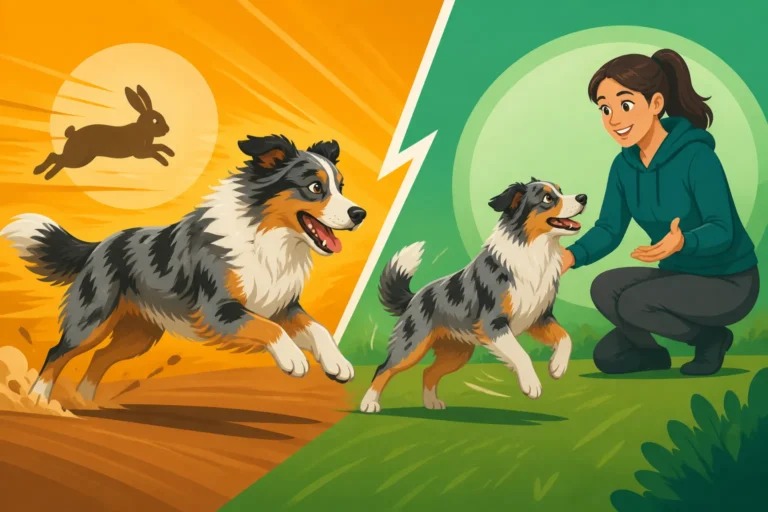
Australian Shepherds possess a strong, ingrained herding instinct, often referred to as their "operating system." This isn't just a quirky personality trait; it's a deep-seated desire to gather and control livestock. When you see your Aussie intently watching squirrels, or trying to circle family members, they are manifesting this ancient programming. This drive is what makes them such incredible working dogs, but it also needs an appropriate outlet. Without proper channeling, this energy can lead to undesirable behaviors around the home, like nipping at heels or excessive barking at moving objects outside the window.
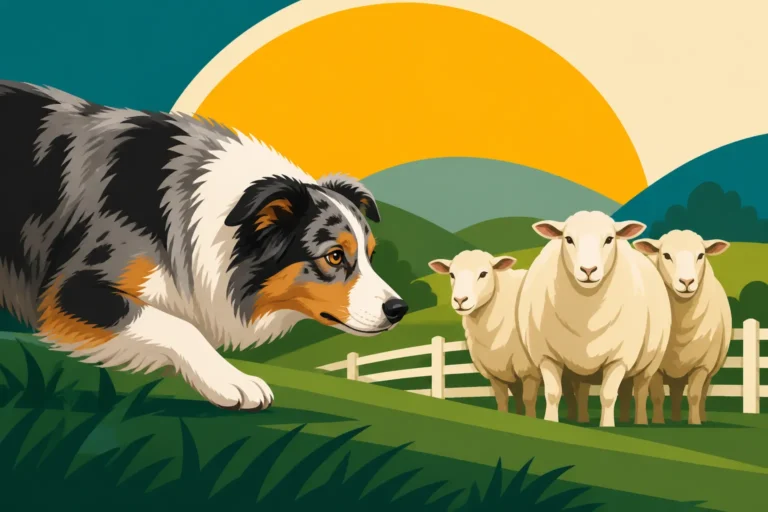
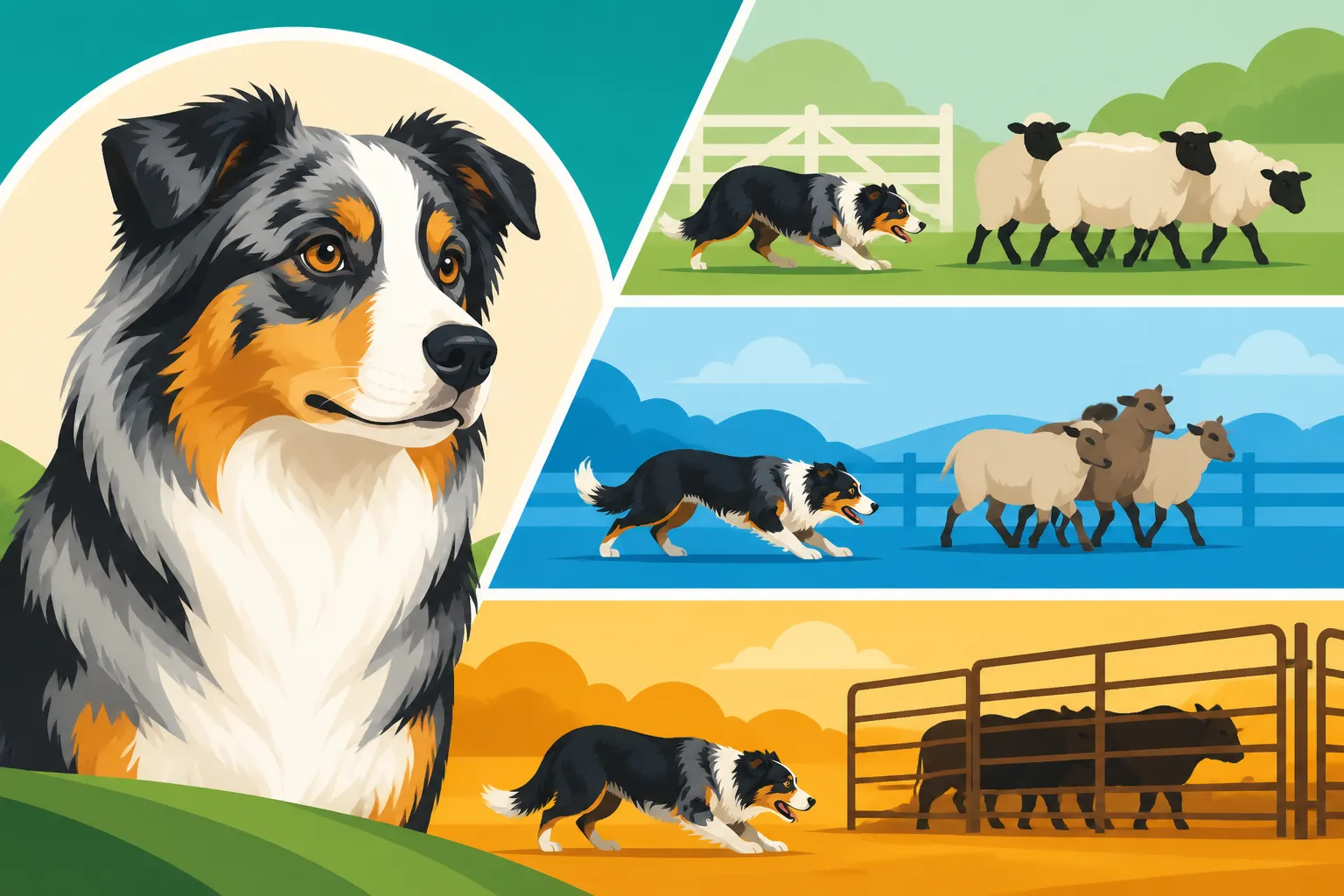
The beauty of the Aussie's herding style is their "loose-eyed" approach, meaning they don't fixate with an intense stare like some other breeds. Instead, they use a more upright posture, often barking and pushing, using their presence to influence stock. This makes them highly versatile, capable of working various types of livestock, from sheep and goats to cattle. Recognizing and respecting this natural inclination is the first step toward exploring herding trials. You're not teaching them how to herd, so much as teaching them what to herd and how to respond to your cues in a controlled environment.
Herding Instinct Tests (HIT)
For many Aussie owners, the Herding Instinct Test (HIT) is the very first step into the world of organized herding. It’s not a competition, but rather an assessment to confirm that your dog possesses the fundamental herding instinct. The test usually involves introducing your dog to a small flock of sheep or ducks in a controlled pen, with a qualified handler observing their natural reactions. The goal is simply to see if the dog shows interest, tries to gather the stock, and exhibits the inherent desire to move them.
Passing an HIT is a wonderful affirmation of your Aussie's heritage and a green light to pursue more formal training. It confirms that the spark is there, and provides valuable insight into your dog's natural style and intensity. If your Australian Shepherd passes, they’ll typically earn an "Herding Instinct Certificate" (HIC) or similar designation, which is a fantastic initial achievement and a proud moment for any Aussie owner. This early exposure, even if brief, can awaken latent drives and help your dog understand the purpose of the stock. What Happens at an Aussie Herding Instinct Test goes into more detail about what to expect on the day.
Pre-Trial Classes and Training
Once you've confirmed that herding instinct, the next phase is pre-trial training. This is where your Aussie learns the fundamental commands and develops the necessary control to work effectively with stock under your direction. These classes focus on foundational skills like "come by" (go clockwise), "away to me" (go counter-clockwise), "walk up" (move forward), "lie down" (stop), and "that'll do" (release). It's a dance between handler and dog, learning to communicate and work as a team.
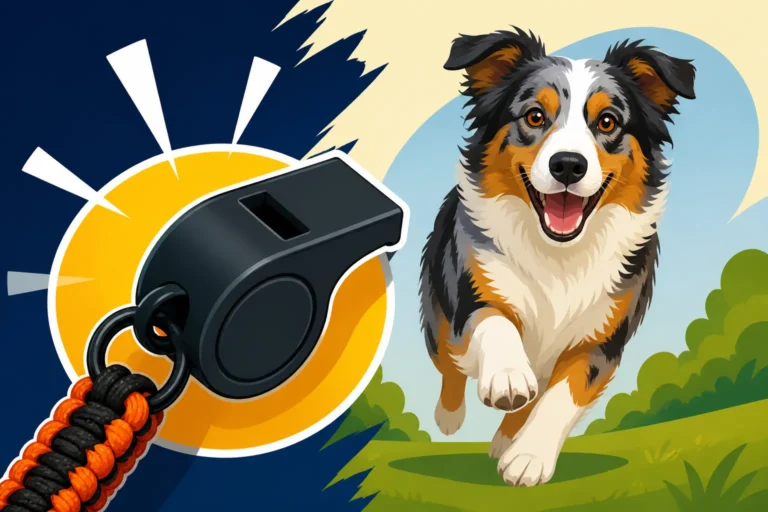
Many owners find immense satisfaction in these early training stages, witnessing their dogs blossom as they understand their job. A good instructor is paramount, one who understands the Australian Shepherd's working style and can guide both you and your dog. You'll likely start with limited stock in a small pen, gradually increasing the complexity as your dog gains confidence and responsiveness. Building a strong bond and clear communication during this phase is vital, as it forms the bedrock for all future trial successes. You'll be using gear like long lines and a good whistle, which can easily be found on platforms like Amazon, to aid in your communication from a distance.
Navigating the Trial Levels: From Novice to Advanced
Herding trials are structured in a progressive manner, allowing dogs and handlers to build skills and confidence as they move from simpler tasks to more complex maneuvers. This tiered system ensures that everyone is challenged appropriately and has a clear path for advancement.
Started (or Novice) Level
The "Started" or "Novice" level is designed for dogs and handlers who are new to competitive herding. The objective here is to demonstrate basic control over a small group of stock, typically 3-5 sheep or ducks, within a confined area like a small arena or pasture. The patterns are relatively straightforward, focusing on core maneuvers such as gathering the stock, moving them in a controlled manner, and perhaps driving them through a small gate or around a designated obstacle. The emphasis is on the dog's willingness to work, their natural herding ability, and the handler's ability to direct them with basic commands.
Judges at this level are looking for a dog that shows good instinct, responds to the handler's directions, and moves the stock calmly and efficiently without being overly aggressive or fearful. It’s an opportunity to prove that you and your Aussie have a solid foundation and are ready to advance. Achieving a title at this level, such as an Herding Started (HS) or Started Sheepdog (SD) title, is a significant milestone, signifying that your Australian Shepherd has officially entered the world of competitive herding. Starting an Australian Shepherd on Sheep can offer more insights into this initial stage.
Intermediate (or Open) Level
Once your Aussie has mastered the basics and earned a Started title, you'll move on to the "Intermediate" or "Open" level. This is where the challenges increase significantly, requiring greater precision, control, and partnership between dog and handler. At this level, dogs are typically expected to work a larger group of stock in a larger arena or open field, performing more intricate patterns. These might include larger outruns (where the dog circles out to gather the stock from a distance), drives that involve navigating the stock through multiple gates or obstacles, and perhaps a wear (a penning exercise).
The Intermediate level demands a higher degree of responsiveness from your Aussie and more sophisticated handling skills from you. The stock might be more challenging, and the courses longer, simulating more realistic working scenarios. Judges will be scrutinizing the dog's ability to maintain control, work quietly and effectively, and adapt to the movement of the stock, all while responding promptly to the handler's cues. Earning an Intermediate title demonstrates a strong working relationship and a refined understanding of herding principles.
Advanced (or Excellent) Level
The pinnacle of herding competition is the "Advanced" or "Excellent" level. This is where true mastery is showcased, with dogs and handlers performing complex, real-world herding tasks with precision and finesse. At this level, the courses are extensive, often mimicking the work a ranch dog would do daily, such as gathering a large flock from a distant pasture, driving them through various gates, negotiating difficult turns, and precise penning or shedding. The stock can be more challenging, sometimes requiring the dog to work with less guidance from the handler, demonstrating their independent decision-making skills while still staying within the overall plan.
Judges expect flawless execution, seamless communication, and a dog that works with confidence, intelligence, and a deep understanding of the task at hand. The handler's role often shifts from constant direction to subtle guidance, trusting the dog's ability to read the stock and make appropriate adjustments. Earning an Advanced title, such as Herding Excellent (HX) or Advanced Sheepdog (AD), represents the highest achievement in competitive herding, a testament to years of dedication, training, and an extraordinary partnership between human and Australian Shepherd.
Understanding Different Herding Organizations and Their Levels
Different organizations sanction herding trials, and while the core principles remain the same, their specific rules, titles, and emphasis can vary. Understanding these differences is key when deciding which path to pursue with your Australian Shepherd.
American Kennel Club (AKC) Herding Titles
The AKC offers a structured progression of herding titles for various breeds, including the Australian Shepherd. Their trials are generally held in arenas or large fields, and the focus is on a balance of natural herding ability and handler control. The AKC offers titles across three main courses: A (arena), B (intermediate field), and C (advanced field), and across three levels: Started, Intermediate, and Advanced. You can earn titles on different types of stock – Sheep (S), Ducks (D), or Cattle (C).
For example, a dog might earn an HS (Herding Started) on Course A with sheep, then an HXA (Herding Excellent, Course A) with ducks. The AKC system allows for dogs to progress in specific courses and stock types. Their rules emphasize safety for both dog and stock, and scores are based on various criteria including control, efficiency, and the dog's natural working style. The AKC also has Herding Champion (HC) titles for dogs that achieve a certain number of points and wins at the Advanced level, a truly prestigious accomplishment.
Australian Shepherd Club of America (ASCA) Herding Titles
The Australian Shepherd Club of America (ASCA) has its own robust herding program, often considered by many Aussie enthusiasts to be more aligned with the traditional working roots of the breed. ASCA trials place a strong emphasis on practical, real-world ranch work, and their courses often mimic the challenges faced by working stock dogs. Their titles also progress through Started, Open, and Advanced levels, but the methodology and judging can feel a bit different from AKC. ASCA offers titles on all three types of stock: Sheep (S), Ducks (D), and Cattle (C), and different courses such as Farm Dog (FD), Ranch Dog (RD), and Trials (WTCH).
ASCA's "Working Trial Champion" (WTCH) is a highly coveted title, reflecting a dog's exceptional ability to work all three types of stock at the Advanced level under real-world conditions. Many handlers find the ASCA trials to be more challenging and rewarding because of this practical focus. They also have a strong community dedicated to preserving the working Australian Shepherd, offering numerous clinics and training opportunities. The ASCA Australian Shepherd Standard reflects their dedication to the breed's working characteristics.
Other Organizations and Their Nuances
While AKC and ASCA are prominent, other organizations also offer herding events and titles that might appeal to Australian Shepherd owners. The American Herding Breed Association (AHBA) is another well-respected organization that provides trials and programs. AHBA offers a variety of tests and trials, including Herding Capability Tests (HCTs) for initial assessment, and then trials in three levels: Junior Herding Dog (JHD), Senior Herding Dog (SHD), and Versatility Herding Dog (VHD).
AHBA often caters to a broader range of herding breeds and their trials can sometimes be a good stepping stone for those looking to gain experience before tackling the more specialized trials of ASCA or AKC. Each organization has its own judging philosophies and course designs, offering slightly different experiences. It's a good idea to research which organization's philosophy and trial structure best align with your personal goals and your Aussie's natural working style. This table provides a simplified comparison:
| Feature | AKC Herding | ASCA Herding | AHBA Herding |
|---|---|---|---|
| Philosophy | Balanced: Natural instinct & handler control | Practical: Real-world ranch work, traditional breed focus | Inclusive: Broad range of herding breeds, practical skills |
| Levels | Started, Intermediate, Advanced | Started, Open, Advanced | Junior Herding Dog (JHD), Senior Herding Dog (SHD), Versatility Herding Dog (VHD) |
| Courses/Venues | Arena (A), Intermediate Field (B), Advanced Field (C) | Farm Dog (FD), Ranch Dog (RD), Trials (WTCH) | Herding Trials (HT), Herding Ranch Trials (HRT) |
| Stock Types | Sheep (S), Ducks (D), Cattle (C) | Sheep (S), Ducks (D), Cattle (C) | Sheep, Goats, Ducks, Cattle |
| High Title | Herding Champion (HC) | Working Trial Champion (WTCH) | Herding Champion (HCh) |
| Emphasis | Precision, controlled maneuvers | Realistic scenarios, dog's initiative | Fundamental working skills, progression |
Preparing for Trial Success: Training, Equipment, and Mindset
Success in herding trials isn't just about natural talent; it's the culmination of consistent training, the right equipment, and a solid mental game for both dog and handler.
Consistent Training and Skill Refinement
Herding is a journey, not a destination. Consistent training, even short daily sessions, is crucial for refining your Aussie's skills and maintaining their responsiveness. This doesn't mean you need access to livestock every day; much of the control work, directional commands, and impulse control can be practiced at home. Think about working on your recall around distractions, or reinforcing "stop" commands with a toy. Australian Shepherd Recall Around Livestock is a critical skill that needs constant reinforcement.
Regular lessons with a knowledgeable herding instructor are invaluable. They can spot nuances in your dog's work and offer insights into handling techniques that you might miss. Attending clinics and workshops can also expose you to different handling styles and advanced strategies. Remember, every training session builds upon the last, cementing good habits and correcting inefficiencies. It's about building a language and trust between you and your dog that translates seamlessly into the trial arena.
Essential Gear and Resources
Beyond the actual sheep or cattle, a few key pieces of equipment are indispensable for herding training and trials. A sturdy long line is essential for early training, allowing you to give your Aussie freedom to work while still maintaining control. A reliable herding whistle is also critical, especially as you progress to larger fields where your voice might not carry. Different whistles have different tones, and you'll want one that's comfortable for you to use and clear for your dog to hear. Many handlers find great success with a specific type of shepherd's whistle, which you can find readily on Amazon.
For learning and refining your skills, online resources can be incredibly helpful. Platforms like BAXTER & Bella, while often focused on basic obedience, offer foundational training principles that apply to any dog sport. Look for books and videos specifically on herding techniques for your breed. Understanding stock behavior is also critical, so reading up on how different animals react to pressure can give you a significant advantage. Don't forget comfortable, durable footwear for yourself – you'll be doing a lot of walking and running!
Mental Preparation for Both Handler and Dog
Herding trials can be nerve-wracking for both you and your Australian Shepherd. Dogs are incredibly sensitive to our emotions, so maintaining a calm, confident demeanor is paramount. If you're stressed, your dog will feel it, and it can affect their performance. Practice deep breathing, visualize your run, and remember that it's just one trial – win or lose, your bond with your dog is what truly matters.
For your dog, familiarity with the trial environment helps. Expose them to new places, different types of stock, and the general hustle and bustle of a trial day before you compete. Some dogs thrive on the excitement, while others need a quieter approach. Learn to read your Aussie's body language and understand when they might be feeling overwhelmed or overstimulated. Building their confidence in various situations, not just around stock, will make them a more resilient and successful trial partner.
Disclaimer
This article is for general informational purposes only and does not constitute professional advice. Laws, prices and regulations vary by location and change over time. Consult a qualified professional for guidance on your specific situation.