Teaching an Aussie to Come Off a Chase
It’s a heart-stopping moment many Australian Shepherd owners know all too well: your beloved Aussie spots a squirrel, a distant jogger, or even a leaf skittering across the pavement, and woosh – they’re off like a shot. That intense chase drive, a hallmark of their herding heritage, can feel like an insurmountable challenge, making off-leash adventures nerve-wracking and even dangerous. This guide will walk you through practical strategies and patient training techniques to teach your Australian Shepherd to reliably come off a chase, ensuring their safety and your peace of mind.
Understanding the Australian Shepherd's Chase Drive
Before we dive into training, it's crucial to grasp why your Australian Shepherd has such an intense chase drive. It's not about being disobedient or trying to annoy you; it's hardwired into their very being.
The Instinct Behind the Chase
Australian Shepherds were bred for generations to control livestock. This work requires incredible focus, speed, and the instinct to pursue and gather. That instinct, what we often call "prey drive" or "herding drive," is incredibly powerful. For a working Aussie, chasing a flock of sheep is their entire world. For a pet Aussie, that same drive often translates to chasing anything that moves quickly: squirrels, rabbits, bicycles, children, cars, or even blowing leaves. When your Aussie locks onto a moving object, their brain is literally flooded with adrenaline and dopamine, making it incredibly rewarding for them to pursue. They're not being stubborn; they're simply doing what their genetics tell them to do. Trying to "train out" this instinct entirely is like asking a fish not to swim; it's largely impossible. Instead, our goal is to manage it, redirect it, and build a recall strong enough to interrupt it. For more on this, you might find Why Herding Instinct Is the Aussie Operating System helpful.
This intense focus means that once an Aussie is in "chase mode," they are often completely deaf to everything else around them. Their world shrinks to the object of their pursuit, and your voice, no matter how loud or urgent, becomes mere background noise. This is where the frustration really sets in for owners. You feel ignored, disrespected, and worried sick. But understanding that this is a primal, hardwired response, rather than a personal affront, can help you approach the training with more patience and a more effective strategy. It’s about working with their instincts, not against them. They aren't trying to be naughty; they're just being an Aussie.
Why a Strong Recall is Crucial for Aussies
Given this powerful drive, a truly rock-solid recall isn't just a convenience for Australian Shepherd owners – it's an absolute necessity. The safety stakes are incredibly high. An Aussie on a chase can quickly run into a busy road, get lost in unfamiliar territory, encounter aggressive wildlife or other dogs, or even cause an accident if they dart into traffic or trip someone on a bike. The sheer speed and agility of an Australian Shepherd mean they can cover a surprising amount of ground in seconds, putting them out of sight and potentially out of reach before you can react.
Beyond immediate safety, a reliable recall is the foundation for a much happier life for both you and your Aussie. It allows for more freedom in safe, off-leash areas, richer experiences on hikes, and stronger trust between you. Without it, every outing can become a constant battle of wills, filled with anxiety and frustration. Think about the difference between a "good" recall, where your dog comes when called most of the time, and an "emergency" recall, which is a life-saving command that overrides even the most intense distractions. For an Australian Shepherd, you absolutely need both, and your emergency recall needs to be so powerful that it cuts through the fog of a full-blown chase. This commitment to recall training will pay dividends throughout your Aussie's life, from puppyhood through their senior years.
Building a Rock-Solid Recall, Step-by-Step
Building a reliable recall, especially one that can interrupt a chase, requires patience, consistency, and a clear progression of training. You can't just expect it to work in a high-stakes situation if you haven't built a strong foundation.
Starting in Low-Distraction Environments
Every strong recall begins in the quietest, most controlled environments. This means starting indoors, in your living room, where there are no squirrels, bikes, or tempting scents to compete with you. Your goal here is to build an overwhelmingly positive association with the "come" cue.
Start by saying your dog's name, then your chosen recall word (e.g., "Come!" or "Here!"), and immediately reward them with something truly high-value when they move towards you. This isn't just a pat on the head; we're talking about tiny pieces of cooked chicken, cheese, or their absolute favorite treat. Make it a party! Bend down, clap your hands, use an excited voice – whatever makes you the most exciting thing in the room. Practice this multiple times a day in short, fun sessions. Don't call them if you know they won't come, as every ignored call weakens the command. Once they're consistently running to you indoors, move to a fenced yard, still using those high-value rewards. Slowly introduce very minor distractions, like a toy bouncing nearby, but only after they've mastered the recall without distractions. For more ideas on early training, take a look at The Aussie Puppy Curriculum Month by Month. Many online puppy training programs, such as those offered by BAXTER & Bella, include comprehensive modules on foundational recall training that you can do from home, making it easy to integrate into your daily routine.
Gradually Increasing Distractions and Distance
Once your Australian Shepherd is consistently responding to your recall cue in a low-distraction, fenced area, it's time to slowly increase the difficulty. This is where a long line becomes your best friend. A long line, which you can find readily on Amazon, gives your dog the illusion of freedom while allowing you to maintain control and prevent them from actually succeeding in a chase. Start with a 15-foot line, then move up to 30 or 50 feet as your dog progresses.
Take your Aussie to a slightly more distracting environment, like a quiet park during off-peak hours. Keep them on the long line. Let them explore a bit, then randomly call them back, rewarding them lavishly when they respond. If they get distracted and ignore you, gently reel them in with the long line while repeating your cue, then still reward them when they reach you – the goal is always positive reinforcement for getting to you, even if prompted. Never use the long line as a punishment or to yank them back. Practice impulse control games, like "leave it" with a dropped treat or toy, before you even try recalling around distractions. This helps build their ability to resist temptation. Consistency is key here; don't rush through this phase. Slowly introduce more exciting distractions, always making sure you have control with the long line. Consider reading Long Line Length for an Australian Shepherd for advice on choosing the right line.
Introducing the Emergency Recall Word
For an Australian Shepherd, you need more than just a regular "come." You need an emergency recall – a word or sound so powerful and so positively ingrained that it can cut through even the most intense chase drive. This word must be completely separate from your everyday "come." Choose something distinct, like "Front!" "Blast Off!" or a specific whistle.
The key to the emergency recall is that it is only ever used for true emergencies and is always associated with the absolute highest-value rewards possible. We're talking about a spoonful of peanut butter, a entire hot dog, or an extra-long game of tug with their favorite toy. Practice this word rarely, but with incredible fanfare. You want your dog to think, "Oh my goodness, that word means something absolutely amazing is about to happen right here, right now!" Never use this word when you're just calling them for dinner or to come inside. Keep it sacred. If you use it and your dog doesn't respond, you risk diluting its power. That's why building up your regular recall first is so important. When you use your emergency recall, your goal is a response that is immediate and enthusiastic, overriding whatever distraction they might be focused on. For ideas on creating this unique cue, Building an Emergency Recall Whistle for an Aussie can be a great resource.
Here’s a quick comparison of the two types of recall:
| Feature | Regular Recall ("Come!") | Emergency Recall ("Blast Off!") |
|---|---|---|
| Purpose | Everyday situations, general obedience | Life-saving, interrupting high-value distractions/chases |
| Cue | Common word (e.g., "come", "here") | Unique word or whistle, used rarely |
| Reward Value | High-value treats, praise, toys | Extremely high-value rewards (e.g., whole hot dog) |
| Frequency | Frequent practice, daily use | Infrequent, reserved for critical moments |
| Environment | Started in low-distraction, gradually increased | Practiced in controlled, then higher-distraction settings |
| Desired Response | Reliable, enthusiastic return | Instantaneous, urgent, absolute return |
| Consequence of Ignoring | Leads to re-training, gentle correction | Should never be ignored; power is lost if it fails |
Strategies for Interrupting an Active Chase
Despite all your training, there might be times when your Australian Shepherd's instincts kick in with such force that your regular recall just isn't enough. Knowing what to do in these high-stakes moments is critical.
When "Come" Isn't Enough: What to Do
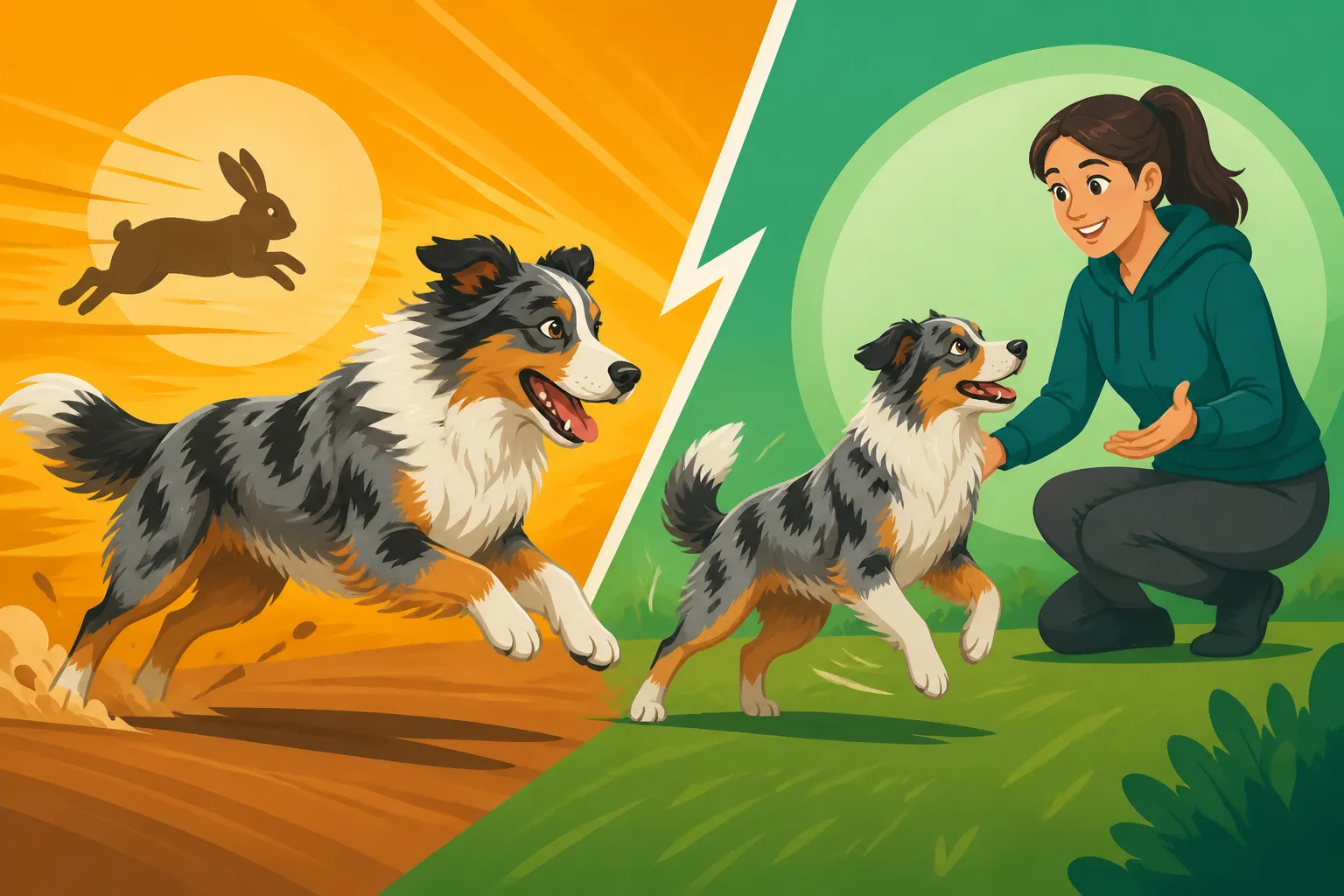
The moment you see your Aussie lock onto a squirrel or a fast-moving object and take off, your heart sinks. Your usual "Come!" might just sail right over their head. This is the moment for your emergency recall. It's designed for this exact scenario. Shout your emergency cue with urgency and enthusiasm, while simultaneously doing something utterly unexpected to capture their attention. Often, this means running in the opposite direction from your dog, making exciting noises, or even dropping to the ground as if you've found something incredible. The instinct for many owners is to chase their dog, but this often just fuels the dog's chase drive further, making them run faster. By running away, you activate their herding instinct to gather you back, or their curiosity to see what amazing thing you've found.
As soon as they turn even a fraction of an inch towards you, reward them with that unparalleled, emergency-level treat. Make it the best decision they ever made. Do not scold them for the chase; focus entirely on the success of the recall. If they start associating returning to you with anger or punishment, they'll be less likely to come next time, especially in a high-distraction scenario. The goal is to always make coming to you more rewarding than whatever they were chasing. This can feel counterintuitive, but it's incredibly effective for a highly driven breed like an Australian Shepherd.
Management Tools and Safety Measures
While you're working on building that bulletproof recall, managing your Australian Shepherd's environment is paramount to their safety and your peace of mind. Prevention is always better than cure, especially when dealing with such strong instincts.
A long line (as mentioned earlier) is indispensable. It allows your Aussie to explore and even initiate a short chase, but you maintain the ability to safely interrupt it and practice your recall. Think of it as a crucial bridge between on-leash and off-leash freedom. Always use a harness with a long line, never just a collar, to prevent neck injuries if they hit the end of the line at speed. Beyond the long line, secure fencing is non-negotiable if your yard isn't fully enclosed. An Australian Shepherd can clear fences you wouldn't believe if a rabbit flashes by. Regularly check your fence lines for weaknesses, and ensure gates are always latched. For those truly adventurous Aussies who are escape artists or have an incredibly strong prey drive, a GPS tracker can be a lifesaver. While it doesn't replace recall training, it provides immense comfort knowing you can locate them if they do get away. However, remember, Whether a Tracker Replaces an Aussie Recall is a resounding no – it’s a backup, not a solution. Keep working on that recall!
Seeking Professional Guidance
Sometimes, despite your best efforts, your Australian Shepherd's chase drive or reactivity is just too intense to manage on your own. There's absolutely no shame in seeking professional help; in fact, it's a sign of a responsible and dedicated owner. Trainers who specialize in herding breeds or working dogs will have a deeper understanding of the unique challenges and strengths of Australian Shepherds. They can assess your dog's individual temperament, identify specific triggers, and tailor a training plan that addresses your particular struggles.
A good professional trainer can help you refine your recall techniques, teach you advanced impulse control exercises, and provide strategies for managing reactivity (like lunging or barking at passing dogs or bikes, a common issue for Aussies). They might introduce tools or techniques you haven't considered, or help you understand your dog's body language better. If your Aussie is consistently lunging at passing dogs or showing extreme overarousal, a certified professional can be invaluable. Don't wait until the problem becomes unmanageable; early intervention can make a huge difference. Resources like BAXTER & Bella offer not only puppy programs but also advanced training options and one-on-one coaching that can be incredibly beneficial for these specific behavioral challenges. Finding someone who understands Finding a Trainer Who Understands an Aussie is key to success.
Preventing the Chase Impulse in the First Place
The best way to get your Australian Shepherd to come off a chase is to prevent the chase from starting in the first place. This involves a combination of providing appropriate outlets for their natural drives and proactive training.
Providing Appropriate Outlets for Herding Drive
As we've discussed, the chase impulse stems directly from your Aussie's inherent herding drive. If this drive isn't given appropriate, constructive outlets, it will manifest in less desirable ways – like chasing everything that moves. Providing structured "jobs" for your Aussie is vital.
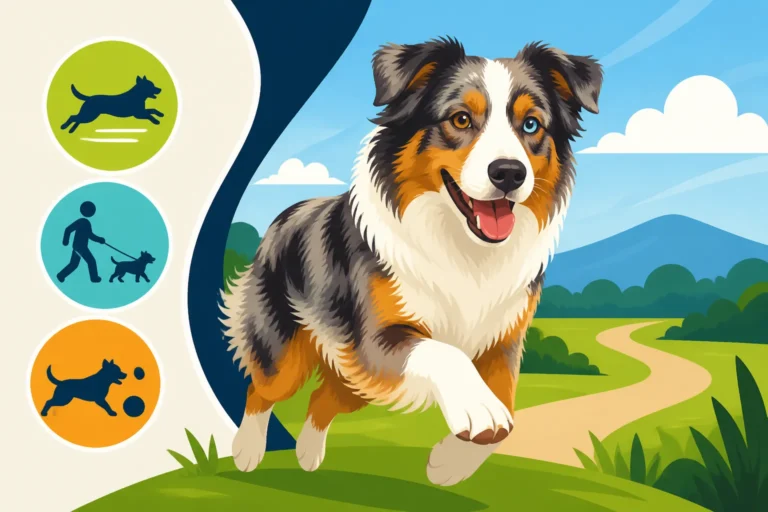
Flirt Poles are fantastic for this. They mimic prey movement in a controlled way, allowing your dog to chase, pounce, and "catch" a lure attached to a pole. This is a safe and incredibly tiring way to satisfy that chase instinct. Just be mindful of sudden stops and turns, especially with young or older dogs, to protect their joints. Herding balls (large, durable exercise balls) can also be a great substitute for livestock, allowing your Aussie to push and "herd" the ball around a yard. This taps into their desire to control movement. Even intense tug-of-war games, when played with rules and an "out" command, can be a wonderful outlet for their drive, serving as a "legal outlet for Aussie herding drive." Engaging in dog sports like Treibball, which focuses on herding large exercise balls into a goal, is another excellent way to channel this energy into a productive and fun activity. You can learn more about this in Treibball as an Aussie Alternative to Sheep. The key is to provide activities that are challenging both physically and mentally, mimicking the kind of work their ancestors did.
Mental Stimulation and Impulse Control Games
Physical exercise alone is often not enough to truly tire out an Australian Shepherd; their minds need a workout too! Mental stimulation can significantly reduce their urge to chase indiscriminately by engaging their problem-solving abilities and improving their impulse control.
Puzzle toys are fantastic for this, requiring your Aussie to manipulate objects to get treats. Scent work (like nose work games or hiding treats for them to find) taps into their incredible sense of smell and is mentally exhausting. Even a few minutes of focused scent work can tire an Aussie more than an hour of mindless fetching. Consider trying Scent Games That Tire an Australian Shepherd for some ideas. Beyond games, actively incorporating impulse control exercises into your daily routine can make a huge difference. Teach and regularly practice commands like "Leave It" (for objects they want to chase or pick up), "Wait" (before going through a door or eating their food), and "Watch Me" (to establish eye contact and attention in distracting environments). These exercises teach your Aussie to pause, think, and look to you for direction, rather than immediately acting on their impulses.
Socialization and Desensitization
While Australian Shepherds are typically reserved with strangers, proper socialization is crucial for them to navigate the world calmly and not react impulsively to every moving object. Early, positive exposure to a wide variety of sights, sounds, people, and moving objects can help prevent intense chase responses.
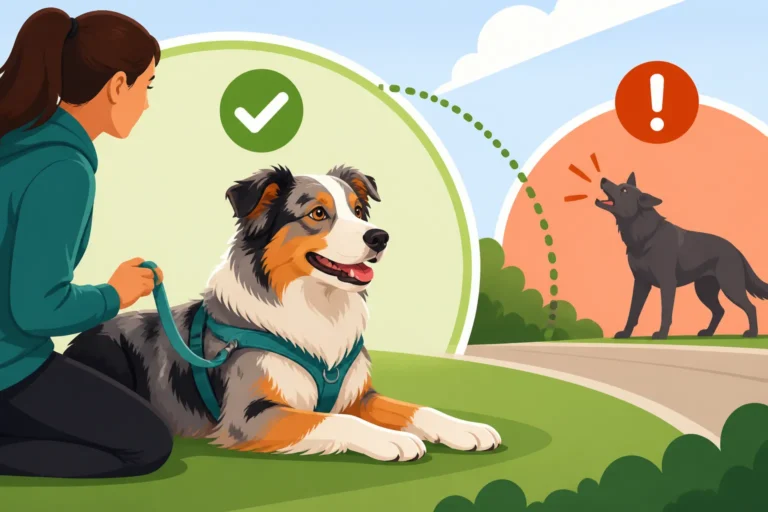
This isn't about letting your Aussie greet every person or dog; it's about teaching them to observe calmly. Start with controlled exposure to known triggers (like bicycles, joggers, or other dogs) from a safe distance where your Aussie is aware but not reacting. As they notice the trigger, immediately reward them with a high-value treat before they even think about chasing. The goal is to create a positive association: "Oh, a bike! That means good things happen when I look at Mom/Dad!" Gradually decrease the distance as your dog shows comfort, always keeping them below their reaction threshold. If your Aussie is already showing strong reactions, seek professional help, as mentioned before, but a slow, systematic desensitization and counter-conditioning protocol is the way forward. For general tips on broadening your Aussie's experiences, Socializing an Aussie to Traffic and Crowds offers great advice. Remember, an Aussie who feels secure and understands their environment is less likely to bolt after every perceived "prey."
Disclaimer
This article is for general informational purposes only and does not constitute professional advice. Laws, prices and regulations vary by location and change over time. Consult a qualified professional for guidance on your specific situation.