Aussie Impulse Control With Moving Toys
One of the most common, and frankly, exasperating, challenges Australian Shepherd owners face is their dog's intense reaction to anything that moves. You’re out on a walk, a squirrel dashes across the path, or a child on a scooter whizzes by, and suddenly, your calm Aussie transforms into a laser-focused missile, dragging you along for the ride. This relentless drive to chase, herd, and engage with moving objects can be tough to manage, leading to pulled shoulders, frustrated owners, and even unsafe situations. This guide will dive deep into understanding this innate Aussie trait and equip you with practical, empathetic strategies to build impulse control, turning those chaotic moments into opportunities for connection and calm.
Understanding the Australian Shepherd's Innate Drive to Chase
Let's be real: your Australian Shepherd wasn't bred to sit calmly on a porch all day, observing the world. These magnificent dogs were developed to work livestock, which means they possess an incredibly strong instinct to chase, gather, and control anything that moves. It's literally in their DNA. This isn't naughtiness; it's instinct. It’s their operating system, their core programming.
The Herding Instinct: Nature's Command
The drive to chase moving objects isn't just a quirky habit; it’s the manifestation of hundreds of years of selective breeding for herding livestock. Imagine a flock of sheep spreading out – a good herding dog needs to react instantly, dash in, and bring them back together. That quick burst of speed, the intense focus, the desire to intercept and redirect motion—these are all critical components of a working Aussie's job. When you see your Aussie fixate on a bicyclist, a skateboard, or even just a leaf skittering across the pavement, you're witnessing this powerful, primal instinct in action. It's a testament to their heritage, even if it feels like a personal challenge in your modern suburban life. This isn't something you can train out of an Australian Shepherd; it's something you learn to manage and redirect. The Australian Shepherd Herding Drive You Cannot Train Out explains this concept beautifully.
The Appeal of Motion: Why Toys Come Alive
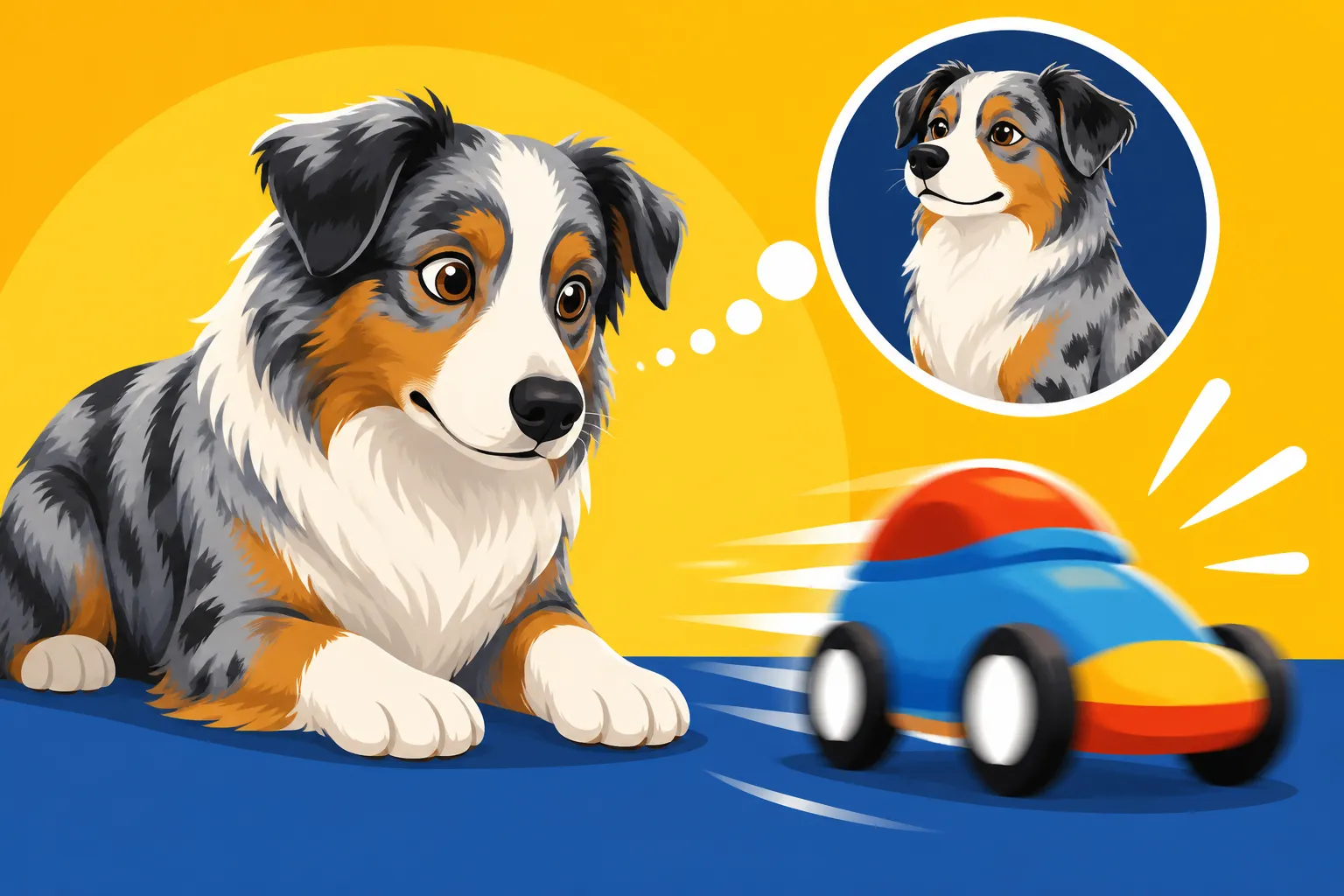
For an Australian Shepherd, a static object is often just… there. But add motion, and it transforms into something irresistible. The wobble of a ball, the flutter of a disc, the unpredictable bounce of a tug toy—each movement mimics the evasive actions of livestock. This isn't just about play; it's about fulfilling that deep-seated desire to interact with and control movement. A ball rolling away becomes a "stray sheep" needing to be "gathered." A frisbee flying through the air is a challenge to be met, a "herd" to be brought down. For many Aussies, toys aren't just entertainment; they're stand-ins for the work they were born to do. This intense focus can be a fantastic tool for training, but it can also make it incredibly hard for them to disengage when something truly exciting passes by.
The Challenges of Lacking Impulse Control with Moving Objects
When an Australian Shepherd doesn't have good impulse control around moving toys, or any moving object for that matter, it can manifest in a variety of frustrating and sometimes dangerous ways. It’s more than just a minor annoyance; it can impact their safety, your peace of mind, and even your relationship with your dog. You might find yourself dreading walks or avoiding certain areas, which isn't fair to either of you.
Unwanted Chasing and Herding Behaviors
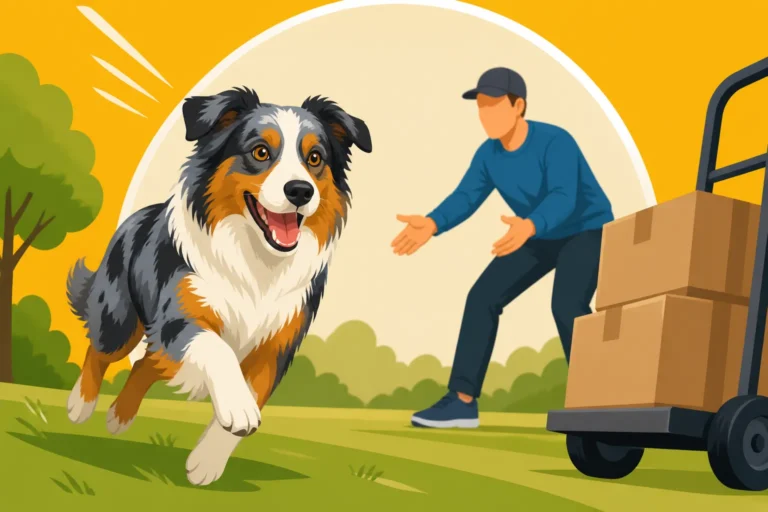
The most obvious challenge is the uncontrolled chase. Whether it's the neighborhood cat, a jogger, or a child on a bicycle, your Aussie’s instinct can kick in, leading to them darting off, potentially into traffic or bothering strangers. This isn't aggression; it's often an attempt to "herd" or "control" the moving object, but it can be perceived negatively by others and put your dog at risk. Think about how stressful it is when your otherwise well-behaved dog suddenly launches themselves after a bird, leash snapping tight, and you're left apologizing to passersby. This intense, unfettered reaction can also extend to playful nipping at heels, particularly with children or other pets, as they attempt to gather them. An Australian Shepherd Nipping a Toddler's Ankles is a common scenario arising from this instinct.
Overarousal and Difficulty Settling Down
Beyond the initial chase, a lack of impulse control often leads to overarousal. An Aussie that consistently struggles to disengage from moving toys or stimuli can become perpetually "on edge." They might struggle to settle indoors, pacing, panting, or fixating on windows even after a long walk. This isn't just about high energy; it's about an inability to regulate their emotional state. They get so revved up by the prospect of chasing that their nervous system struggles to calm down afterward. You might see this particularly in the evenings, where they get worse because they haven't had enough mental work, or they're just overtired but can't switch off. An Australian Shepherd That Gets Worse in the Evening explores this in more detail. It's like a child who's had too much sugar and screen time—they're exhausted but wired.
Potential for Injury and Accidents
An Australian Shepherd's enthusiasm for movement is often boundless, but their bodies aren't always indestructible. Uncontrolled chasing, especially on uneven terrain or hard surfaces, can lead to serious injuries. Think about a sudden stop, a sharp turn, or a collision while chasing a ball. These dogs are agile, but repeated high-impact movements, particularly if they haven't had proper warm-ups, can take a toll on their joints, ligaments, and paw pads. Injuries like cruciate tears or strains are not uncommon in highly active, impulsive Aussies. Australian Shepherd Paw Injuries From Hard Running can be a painful reality for owners of dogs who don't know how to moderate their intensity. Safety should always be a top priority, and that includes teaching them how to play without risking harm.
Strategies for Building Impulse Control
Building impulse control in an Australian Shepherd isn't about crushing their spirit or stopping them from being an Aussie. It's about teaching them to think before they act, to make choices, and to understand that patience leads to rewards. It's a long game, but incredibly rewarding for both of you.
Foundation Training: The "Wait" and "Leave It" Commands
These two commands are your absolute superstars when it comes to impulse control. "Wait" teaches your Aussie to pause and hold position, even when something exciting is happening. "Leave It" teaches them to disengage from something tempting. Start small:
- "Wait" with Food: Hold a treat in your hand, say "wait," and slowly lower it towards the floor. If your Aussie tries to grab it, quickly cover it with your hand. The moment they back off, even for a split second, say "yes!" and give them the treat. Gradually increase the duration and distance before they get the reward. Once they master it with food, apply it to a rolling ball or a toy you're about to throw. Have them "wait" while you roll the ball a short distance, then release them with "okay!"
- "Leave It" with Low-Value Objects: Place a low-value treat on the floor, cover it with your hand, and say "leave it." When your Aussie looks away from the treat (even briefly), mark it with a "yes!" or click, and reward them with a higher-value treat from your other hand. This teaches them that ignoring the temptation leads to something even better. Slowly progress to higher-value treats, then to moving toys.
A fantastic online resource like BAXTER & Bella often provides step-by-step video tutorials for these exact foundation behaviors, making it easy to practice at home. Consistent, short training sessions are key to building these critical skills.
Redirection and Appropriate Outlets
Since you can't extinguish the herding drive, you must redirect it. This means providing plenty of appropriate outlets for that energy and instinct.
- Structured Play with Toys: Instead of just letting your Aussie wildly chase a ball until exhaustion, introduce structure. Use a long line for safety. Roll the ball, ask for a "wait" before releasing, or ask them to retrieve and bring it back, then "drop it" on command before the next throw. This makes the game about cooperation and control, not just chaotic chasing. A flirt pole is another excellent tool here; it simulates prey movement without exhausting you, and you can control the speed and direction.
- Tug-of-War: Tug is an amazing outlet for prey drive and mental stimulation. It allows your Aussie to engage their natural instincts in a controlled environment. Teach "take it" and, crucially, "drop it" on command. This teaches them that you control the game, and ending it means you can start it again. Tug as a Legal Outlet for Aussie Herding Drive is a great way to bond and manage drive.
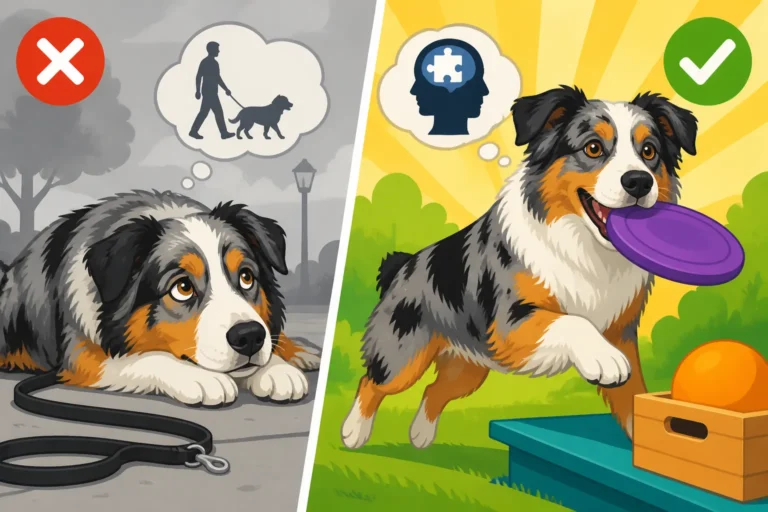
- Scent Work and Puzzle Toys: Mental exercise is just as important as physical. Scent games, where your Aussie uses their nose to find hidden treats or toys, engage a different part of their brain and can be incredibly tiring. Puzzle feeders, which you can find readily on Amazon, force them to problem-solve to get their food, slowing them down and building focus. Puzzle Feeders and Enrichment Gear for an Aussie can be a game-changer for redirecting mental energy.
Desensitization and Counter-Conditioning
This strategy involves gradually exposing your Aussie to moving stimuli at a low intensity and pairing it with something positive, like high-value treats.
- Controlled Exposure: Start far away from the trigger. If it's bikes, sit on a bench across the park where bikes are barely visible or moving slowly. Every time a bike goes by, give your Aussie a treat. The goal is to change their emotional response from "I must chase!" to "Bike means treats!"
- Gradual Increase: Slowly decrease the distance or increase the speed/proximity of the moving object as your dog remains calm. If they react, you're too close or going too fast. Go back to where they were successful. This takes time and patience, but it reconditions their brain to associate moving things with positive reinforcement, not frantic chasing. This isn't about forcing them to endure the trigger, but about making them comfortable around it. Working a Reactive Aussie Under Threshold applies here, even if it's more about excitement than fear.
Building an "Off Switch"
A common issue with high-drive dogs like Aussies is their inability to settle down after excitement. Teaching an "off switch" is vital for overall calm.
- Mat Settle Training: Teach your Aussie to go to a designated "place" (a mat, bed, or crate) and stay there until released. Start with short durations and reward generously. Gradually introduce distractions while they're on their mat. This provides them with a structured way to calm down. The BAXTER & Bella program often incorporates "place" training as a core component.
- Enforced Naps: For puppies or over-aroused adults, sometimes the best solution is simply a scheduled nap in their crate. An overtired Aussie is often a misbehaving Aussie. Don't be afraid to put them down for a rest, just like you would a human child. Enforced Naps for an Overtired Aussie Puppy can work wonders for managing their energy levels throughout the day.
Essential Tools and Resources for Impulse Control Training
Having the right equipment and support can make a world of difference in your training journey. You don't need a huge arsenal, but a few key items and resources will be invaluable.
Training Aids for Safety and Control
When you're working on impulse control, especially with moving targets, safety is paramount. You need tools that give you maximum control without causing discomfort.
- Long Line: A long line (15-30 feet) is indispensable for practicing recall and "leave it" commands in an open, but still controlled, environment. It allows your Aussie to feel a sense of freedom while giving you the ability to intervene if they try to bolt after a squirrel. You can find sturdy, durable long lines on Amazon in various lengths and materials. This is safer than letting them off-leash if their recall isn't rock-solid, especially around moving distractions. Long Line Length for an Australian Shepherd offers more on this.
- No-Pull Harness: For everyday walks, a front-clip or head-halter harness can significantly reduce pulling, making it easier for you to manage an unexpected lunge. These harnesses redirect your dog's forward momentum, giving you more leverage without putting pressure on their sensitive throat. Brands like Ruffwear or Easy Walk (available on Amazon) are popular choices and can make walks much more enjoyable while you're working on impulse control.
- High-Value Treats: Your Aussie needs a compelling reason to ignore a moving target, and that reason is often delicious food. Small, soft, smelly treats like cooked chicken, cheese, or specialized training treats will get their attention more effectively than dry kibble. Keep them in a treat pouch for quick access during training sessions.
Enrichment Toys and Gear
Beyond basic training, providing engaging and mentally stimulating toys can help channel your Aussie's energy positively, reducing the likelihood of them seeking out "trouble" with moving objects.
| Toy Type | Primary Benefit | Impulse Control Focus | Recommended Use |
|---|---|---|---|
| Puzzle Feeders | Mental stimulation, slow eating | Teaches patience, problem-solving, quiet engagement | Daily meals, calming down after exercise, independent play |
| Flirt Pole | Prey drive outlet, controlled chase | Teaches "wait," "leave it," "drop it," controlled bursts of energy | Short, intense play sessions in a fenced area, great for focus and obedience in motion |
| Tug Toys | Builds bond, physical outlet, mouth control | Teaches "take it," "drop it," respect for handler, controlled excitement | Interactive play, rewarding good behavior, redirecting nipping |
| Kongs/Chew Toys | Independent chewing, stress relief | Encourages calm, sustained engagement, self-soothing | Crate time, quiet relaxation, distraction from environmental stimuli |
You can find a wide array of these toys on Amazon, from simple treat-dispensing balls to more complex puzzle boards. The key is to choose toys that require engagement and thought, rather than just mindless chasing. Look for durable options, as Aussies can be quite destructive with their toys!
Professional Guidance and Online Resources
Sometimes, tackling impulse control challenges requires a bit more expertise. Don't be afraid to seek help!
- Experienced Trainers: A certified professional dog trainer who understands herding breeds can be invaluable. They can observe your dog's specific behaviors and tailor a training plan that addresses your unique challenges. Look for trainers who use positive reinforcement methods and understand the Australian Shepherd temperament. They can help you refine your timing, build confidence, and ensure you're setting your Aussie up for success.
- Online Training Programs: If in-person training isn't feasible, comprehensive online programs can be a fantastic alternative. Platforms like BAXTER & Bella offer lifetime memberships with access to a wealth of videos, live Q&A sessions, and personalized support. They break down complex behaviors into manageable steps, which can be particularly helpful for building impulse control and an "off switch." These programs often cover everything from basic obedience to more advanced concepts, all from the comfort of your home.
- Breed-Specific Clubs and Forums: Connecting with other Australian Shepherd owners through breed clubs or online forums can provide a supportive community and a wealth of shared experiences. Often, someone else has faced exactly the same challenge you're encountering and can offer practical advice or recommend local resources. These groups also often have insights into why An Aussie That Will Not Stop Fetching or Teaching an Aussie to Take a Break are common issues.
Remember, building impulse control is a journey, not a destination. Celebrate the small victories, stay consistent, and always approach training with patience and understanding. Your Australian Shepherd is a brilliant, high-drive companion, and with the right guidance, they can learn to channel their instincts in ways that make life enjoyable and safe for everyone.
Disclaimer
This article is for general informational purposes only and does not constitute professional advice. Laws, prices and regulations vary by location and change over time. Consult a qualified professional for guidance on your specific situation.