Aussie Collie Eye Surgery Priced Per Eye
Discovering that your beloved Australian Shepherd might need eye surgery for something as serious as Collie Eye Anomaly (CEA) can feel like a punch to the gut. Beyond the immediate worry for their vision and well-being, the practical reality of veterinary costs can be overwhelmingly daunting. This guide is here to walk you through the complex world of CEA surgery pricing, helping you understand what to expect, what influences the final bill, and how you can prepare for these significant expenses to ensure your Aussie gets the best possible care.
Understanding Collie Eye Anomaly in Australian Shepherds
Collie Eye Anomaly is a congenital, inherited eye disease that affects several collie breeds, including our wonderful Australian Shepherds. It's not something that develops over time due to injury or age; your Aussie either has the genetic predisposition for it or they don't. When it's severe enough to warrant surgical intervention, it's often because the condition is impacting their quality of life or risking their vision significantly.
What CEA Entails and Why Surgery Might Be Needed
CEA is a spectrum of eye abnormalities. At its mildest, it might just be choroidal hypoplasia (CH), where the choroid, a layer of tissue behind the retina, is underdeveloped. In these cases, your Aussie might have completely normal vision, and you might never even know they have it unless a vet performs a specialized eye exam. Many dogs with mild CEA live full, happy lives without any vision impairment or need for intervention.
However, CEA can also manifest with more severe issues. These include colobomas, which are defects in the optic nerve or retina, appearing as "holes" or depressions. These colobomas can be problematic because the abnormal tissue here isn't as strong as healthy tissue, making the eye structurally unsound. The most serious complications arise when these structural weaknesses lead to retinal detachment or intraocular hemorrhage (bleeding inside the eye). This is where things get really serious, as retinal detachment can cause partial or complete blindness, and hemorrhages are not only painful but also severely compromise vision.
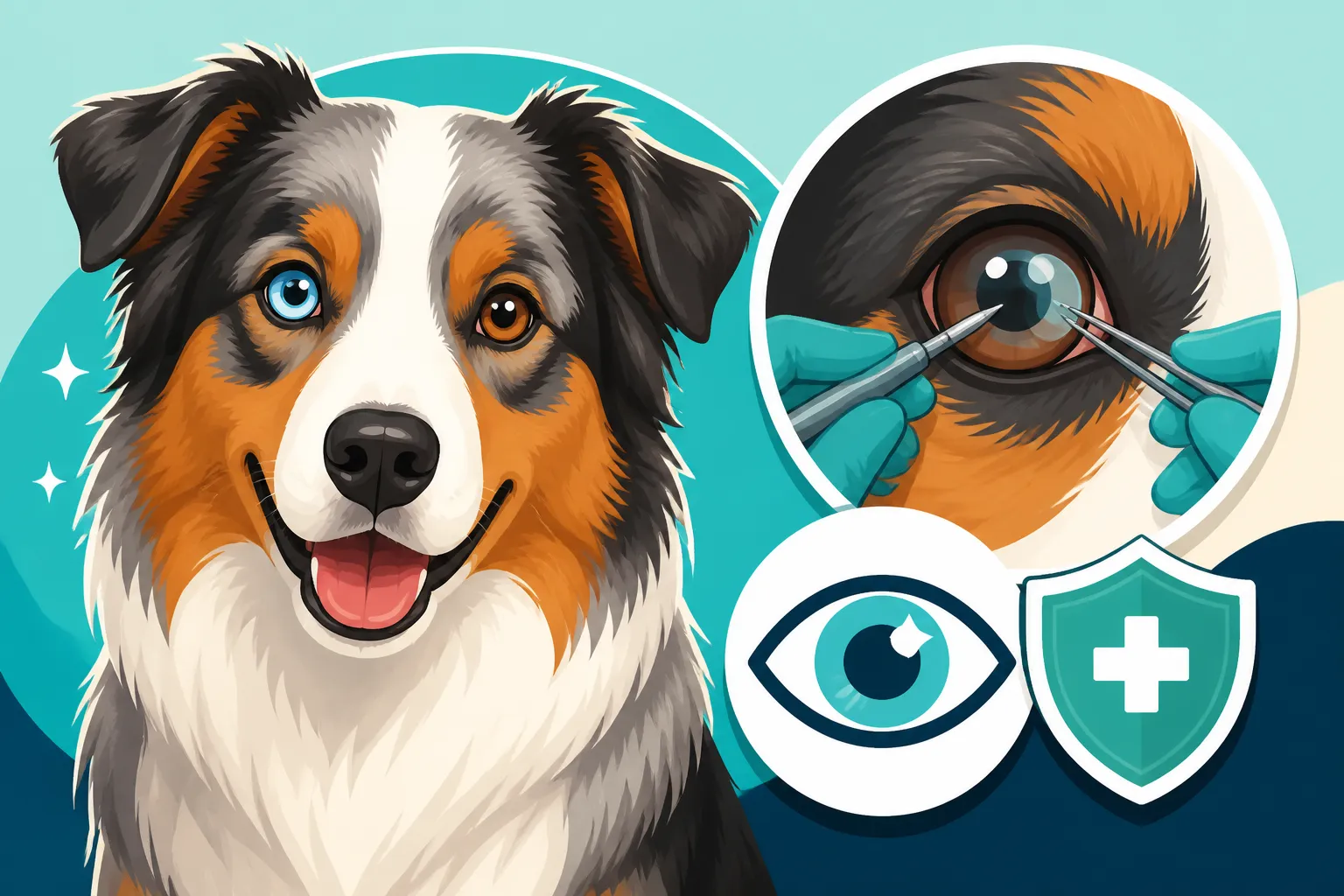
When a veterinary ophthalmologist identifies a severe coloboma that puts the retina at high risk of detachment, or if a detachment has already occurred, surgery often becomes the only viable option to try and save or restore vision. It’s a delicate, specialized procedure aimed at reattaching the retina or preventing its detachment, and it’s truly a last resort to preserve your dog's sight and comfort. For a deeper dive into the condition itself, you might find more information on What Collie Eye Anomaly Does to an Aussie Eye.
Diagnosing CEA and Pre-Surgical Evaluations
The journey to a CEA diagnosis typically begins with a routine veterinary check-up, especially if you have a puppy. A general practice veterinarian might notice something unusual during a standard eye exam or, if they are particularly experienced with Aussies, might recommend a specialized screening. Often, the earliest detection happens during The Aussie Puppy Eye Check at Six Weeks, which is highly recommended for all puppies of predisposed breeds.
If any concerns arise, your vet will likely refer you to a board-certified veterinary ophthalmologist. This specialist has the advanced training and equipment to properly diagnose CEA and assess its severity. Their examination will go far beyond what a general vet can do, often involving indirect ophthalmoscopy to get a clear view of the fundus (the back of the eye, including the retina and optic nerve).
To prepare for potential surgery, the ophthalmologist will conduct several critical pre-surgical evaluations. These can include a thorough ocular ultrasound to look for retinal detachments or other internal eye abnormalities not visible through external examination. Electroretinography (ERG) might be performed to assess the function of the retina, determining if it’s capable of responding to light even if detached. Additionally, routine pre-anesthetic blood work is essential to ensure your Australian Shepherd is healthy enough to undergo general anesthesia, checking organ function and clotting abilities. These diagnostic steps are crucial not only for confirming the diagnosis and severity but also for planning the most effective surgical approach and minimizing risks. Genetic testing, such as The CEA DNA Test for Australian Shepherds, can confirm if your Aussie carries the gene, though a clinical exam is still necessary to determine the physical manifestation and severity.
The Core Costs of Australian Shepherd CEA Eye Surgery
When we talk about the cost of CEA eye surgery for an Australian Shepherd, it’s not a single fixed price. Instead, it’s a compilation of several specialized services, each contributing to the overall expense. Understanding these components is key to grasping why the total can be substantial.
Surgical Fees and Specialist Expertise
The largest portion of your bill will undoubtedly be the surgical fees themselves. This procedure isn't performed by your regular family vet; it requires a highly skilled, board-certified veterinary ophthalmologist. These specialists undergo years of additional training beyond veterinary school, akin to human ophthalmologists, and their expertise comes at a premium. They are trained in microsurgical techniques, often working with magnified views and delicate instruments to repair tiny, intricate structures within the eye.
The surgical fee covers the ophthalmologist's time, skill, and the complexity of the specific procedure required for your Aussie’s condition. For instance, a retinal reattachment surgery (retinopexy) is significantly more involved than a simpler coloboma repair. These fees also account for the use of the specialized surgical facility, which is equipped with state-of-the-art ophthalmic equipment, often including surgical microscopes, lasers, and cryotherapy units. You’re not just paying for a surgery; you're paying for access to advanced medical technology and unparalleled expertise.
Geographic location plays a huge role here, too. A veterinary ophthalmologist in a major metropolitan area like Los Angeles or New York City will likely charge more than one in a smaller town or rural setting, reflecting higher operating costs and demand.
Anesthesia, Monitoring, and Post-Operative Care
Eye surgery, even for small animals, requires general anesthesia. This isn’t a quick sedation; it’s a carefully managed process to ensure your Aussie is completely unconscious and pain-free throughout the delicate procedure. The costs associated with anesthesia are multifaceted. They include pre-anesthetic blood work to assess organ function and minimize risks, the anesthetic drugs themselves, and the vital role of a dedicated veterinary anesthetist or highly trained technician. This person's sole job during surgery is to monitor your Aussie’s heart rate, blood pressure, oxygen saturation, and temperature, making real-time adjustments to ensure their safety. Intravenous (IV) fluids are also typically administered before, during, and after surgery to maintain hydration and support blood pressure.
After the surgery is complete, the care doesn't stop. Your Australian Shepherd will need careful post-operative monitoring, often requiring a stay in the veterinary hospital for one to three days. This allows the veterinary team to manage pain effectively, administer prescribed anti-inflammatory medications, and apply specialized eye drops or ointments. Bandage changes, if needed, and initial checks for complications are also part of this phase. All of these elements – the drugs, the skilled personnel, the monitoring equipment, and the hospitalization – contribute significantly to the total cost. It's a comprehensive approach to recovery, ensuring that the delicate surgical repair has the best possible chance of success. It's also worth noting that special consideration must be given if your Australian Shepherd is Anesthetics That Need Adjusting for an MDR1 Aussie.
Factors Influencing the Total Cost Per Eye
The sticker shock of CEA surgery can be intense, and it’s important to understand that the final bill can fluctuate wildly based on several key factors. It’s rarely a one-size-fits-all scenario, especially when dealing with such a delicate and variable condition.
Severity of the Condition and Required Procedures
As mentioned earlier, CEA exists on a spectrum. A mild form of choroidal hypoplasia will never require surgery. The cost truly comes into play when the condition is severe, particularly when it involves colobomas or retinal detachment.
If your Aussie has a large or complex coloboma that is judged to be at high risk of leading to retinal detachment in the future, a prophylactic surgery might be considered. This could involve laser photocoagulation or cryotherapy around the coloboma to create a scar that helps tack the retina down, preventing future detachment. These procedures are less invasive than a full retinal reattachment but still require specialized equipment and expertise.
However, if your Australian Shepherd has already experienced a full retinal detachment due to CEA, the surgery required is far more intricate and demanding. This is typically a vitrectomy combined with retinal reattachment (retinopexy), which involves removing the vitreous humor (the gel-like substance filling the eye), flattening the detached retina, and reattaching it using techniques like laser, cryotherapy, or gas/silicone oil injection. The level of invasiveness, the specialized equipment (like advanced vitrectomy machines and endolaser systems), and the extended surgical time for these complex procedures directly translate into significantly higher costs. Each eye requiring such a procedure would be priced independently, making the overall cost for bilateral issues much greater. Sometimes, if complications like cataracts develop secondary to CEA, additional procedures like lens extraction may be needed, further increasing the bill.
Geographic Location and Veterinary Practice Type
Just like human medical costs, veterinary expenses, especially for specialist procedures, are heavily influenced by where you live and the type of clinic providing the care. In bustling metropolitan areas like New York, Boston, or San Francisco, you can expect to pay significantly more for CEA surgery than in a smaller city or rural community. This is due to higher overheads for practices (rent, staff wages, utilities), greater demand for specialist services, and often access to the very latest, most expensive equipment.
For example, a veterinary ophthalmology specialist operating out of a university veterinary teaching hospital might have slightly different pricing structures compared to a private specialty clinic. University hospitals often have advanced research facilities and resident training programs, which can sometimes impact the pricing, though they also offer cutting-edge treatments and highly experienced staff. Private specialty clinics, while still excellent, might have their own competitive pricing models. It’s always worth getting estimates from a couple of different reputable facilities if you have the option, even if it means a bit of travel. Remember that an emergency vet visit, often necessary for sudden complications, might also have different pricing.
Unforeseen Complications and Extended Recovery
No surgery, human or animal, comes with a 100% guarantee of a smooth, complication-free recovery. Eye surgery, being so delicate, is particularly susceptible to potential setbacks, and each complication can add significantly to the overall cost.
One of the most concerning complications after retinal surgery is the failure of the retina to reattach or a re-detachment. This might necessitate a second, equally complex, and expensive surgery. Other issues can include post-operative infections, which require aggressive antibiotic treatment, or severe inflammation, which demands additional anti-inflammatory medications and careful monitoring. Glaucoma, an increase in intraocular pressure, can also develop, potentially requiring lifelong medication or even further surgical intervention. Secondary cataracts, though less common, can sometimes form and might require their own removal procedures.
Each of these complications means more diagnostic tests (e.g., ocular ultrasounds, pressure checks), additional medications (eye drops, oral antibiotics, pain relievers), more frequent follow-up appointments with the ophthalmologist, and potentially extended hospital stays. What might start as a quote for a straightforward procedure can escalate quickly if your Aussie faces an uphill battle during recovery. This is why having a financial buffer or robust pet insurance coverage (more on that next) is so crucial when facing such specialized procedures.
Navigating the Financial Landscape of CEA Treatment
The thought of covering specialized veterinary surgery can be incredibly stressful for any Australian Shepherd parent. The good news is there are several avenues to explore to help manage these costs, from insurance to financial aid programs.
Pet Insurance and Coverage for Eye Conditions
Pet insurance can be an absolute lifesaver when unexpected and expensive medical conditions like severe CEA arise. However, the key to pet insurance being truly helpful is often enrolling your Australian Shepherd before any symptoms or diagnosis of CEA appear. Most pet insurance policies consider pre-existing conditions, and unfortunately, CEA, being a congenital condition (present from birth), would typically fall under this exclusion if diagnosed before coverage begins or during a waiting period.
When researching pet insurance providers like Healthy Paws, it's crucial to understand their policies regarding hereditary and congenital conditions. Many comprehensive plans do cover these conditions, provided they are not pre-existing. This means if you enroll your Aussie as a puppy, and CEA is diagnosed years later, the costs associated with its treatment, including surgery, would likely be covered (minus your deductible and according to your reimbursement rate). Policies usually offer reimbursement rates of 70%, 80%, or 90% of eligible veterinary bills after your annual deductible is met. It's vital to compare plans and read the fine print carefully, specifically looking at how they handle eye conditions and genetic disorders. Knowing Whether Insurance Covers Australian Shepherd Eye Surgery is a question you'll want to ask prospective providers directly. Comprehensive plans often range from Australian Shepherd Insurance at $35 to $55 a Month, but this can vary based on your dog's age, breed, and your location.
Payment Plans, Financial Aid, and Discount Programs
Even with the best planning, large veterinary bills can be a shock. Thankfully, several options exist to help lighten the financial load.
Many veterinary specialty clinics, including those performing CEA surgery, offer third-party payment options such as CareCredit. This is a credit card specifically designed for healthcare expenses, and it often provides promotional periods with no interest if the balance is paid in full within 6, 12, 18, or 24 months. It can be a very useful tool for managing significant upfront costs.
Beyond credit options, there are also various financial aid programs. Veterinary schools, particularly those with large teaching hospitals, sometimes have funds or programs to assist pet owners facing high-cost treatments. It's always worth inquiring if such aid is available. Breed-specific rescue organizations and health foundations can also be a source of support. For Australian Shepherds, organizations like the Australian Shepherd Health & Genetics Institute (ASHGI) focus on health issues within the breed and may offer grants or advice on where to find financial assistance for specific conditions. You might also find local animal welfare organizations that offer emergency aid for life-saving procedures. Don't hesitate to ask your veterinary ophthalmologist's office for a list of resources; they often keep information on hand for clients in need. Finally, always discuss payment plans directly with your veterinary clinic. Many are willing to work with clients to spread payments over a few months, especially for loyal patients.
The Long-Term Cost of Management
Even if CEA surgery is successful in reattaching the retina or preventing detachment, the financial commitment often doesn't end there. It’s important to prepare for the long-term management costs associated with your Australian Shepherd’s eye health.
For an eye that has undergone surgery, particularly retinal reattachment, regular follow-up appointments with the veterinary ophthalmologist will be crucial for the rest of your Aussie’s life. These visits, often every 6-12 months, involve thorough examinations to monitor the surgical site, check for any signs of re-detachment, assess intraocular pressure, and ensure there are no other developing complications like glaucoma or secondary cataracts. Each of these specialist visits comes with a consultation fee and potentially additional diagnostic tests.
Furthermore, some Australian Shepherds might require ongoing daily eye drops or oral medications to manage inflammation, prevent glaucoma, or address other secondary issues that can arise even after successful surgery. These medications can add up over months and years. You might also need to adapt your home environment to support a dog with potentially compromised vision. This could include adding baby gates to prevent falls, using scents or textures to mark important areas, or simply being extra vigilant on walks. While not direct medical costs, these adaptations are part of ensuring your Aussie's long-term well-being.
The journey with a dog recovering from such a serious eye condition is a marathon, not a sprint. Just as managing conditions like The Running Cost of Australian Shepherd Epilepsy becomes a part of daily life, so too can the ongoing care for a surgically treated eye. Buying medications from online pharmacies like Chewy can sometimes help reduce costs compared to in-clinic purchases, and discussing generic options with your vet is always a good idea. Even considering specialized diets, perhaps from brands like Ollie, for general health and well-being could be part of a holistic long-term care plan, though not directly related to CEA treatment.
Estimated Costs for Australian Shepherd CEA Eye Surgery
To give you a clearer picture, here’s a breakdown of estimated costs for different scenarios related to Australian Shepherd CEA eye surgery. Please remember these are general estimates and actual prices can vary significantly based on location, specialist fees, and individual case complexity.
| Procedure/Service | Estimated Cost Per Eye (USD) | Notes |
|---|---|---|
| Initial Ophthalmic Consultation & Diagnostics | $150 – $500 | Includes specialist exam, ocular ultrasound, possibly ERG. |
| Prophylactic Laser/Cryotherapy (Coloboma) | $1,500 – $3,500 | To prevent retinal detachment, less invasive than reattachment. |
| Retinal Reattachment Surgery (Vitrectomy/Retinopexy) | $4,000 – $8,000 | Highly complex, involves microsurgery to repair detached retina. |
| Anesthesia & Monitoring (per surgery) | $800 – $2,000 | Includes drugs, dedicated anesthetist, vital sign monitoring. |
| Post-Operative Hospitalization (1-3 days) | $500 – $1,500 | Pain management, medications, specialist care. |
| Post-Operative Medications (initial take-home) | $100 – $400 | Eye drops, oral anti-inflammatories, antibiotics. |
| Follow-Up Exams (per visit) | $100 – $300 | Essential for monitoring recovery and long-term eye health. |
| Total Estimated Range (for one complex eye) | $6,000 – $12,000+ | This range can fluctuate widely. Double for bilateral issues. Complications add significantly more. |
These figures underscore the importance of early diagnosis and preparation.
Disclaimer
The information provided in this article is intended for general informational and educational purposes only, and is not a substitute for professional veterinary advice. Always consult with a qualified veterinary professional for any health concerns or before making any decisions related to your Australian Shepherd's care, diagnosis, or treatment plan. Costs mentioned are estimates and can vary widely based on location, specific veterinary clinic, and individual circumstances.