Muzzle Training an Australian Shepherd
Let's be honest, the word "muzzle" often conjures up images of aggressive dogs or difficult situations, and if you're an Australian Shepherd owner, the thought of putting one on your beloved companion can feel disheartening, like you've failed somewhere. But the truth is, muzzle training is a profoundly responsible and proactive step that can safeguard your Aussie, other animals, and people in a variety of everyday and emergency scenarios, not just when there's an issue with aggression. This comprehensive guide will walk you through demystifying muzzle training, explaining its many benefits, how to select the perfect muzzle, and a step-by-step approach to introducing it positively and effectively to your intelligent Australian Shepherd.
Why Muzzle Training is a Proactive Step for Australian Shepherds
As Aussie owners, we adore their intelligence, their boundless energy, and their loyal, protective nature. But sometimes, these very traits can lead to situations where a muzzle becomes an invaluable tool. It's not about admitting defeat or labeling your dog as "bad"; it's about being prepared and ensuring everyone's safety and comfort. Think of it as another piece of essential gear, like a seatbelt or a first-aid kit.
Beyond Aggression: Common Reasons for Muzzle Use
When people see a dog in a muzzle, their first thought often jumps to aggression. While it's true that muzzles are used to prevent bites from reactive or aggressive dogs, that's far from their only purpose. For an Australian Shepherd, a muzzle can be a game-changer in many non-aggressive contexts:
- Vet Visits and Grooming: Let's face it, even the most saintly Aussie can get nervous or uncomfortable at the vet, especially during procedures like vaccinations, blood draws, or nail trims. A quick nip from a scared dog isn't aggression; it's self-preservation. A muzzle, worn for short periods during these stressful events, can prevent accidental bites, allowing the vet or groomer to do their job safely and efficiently. Similarly, some Aussies really don't appreciate having their nails trimmed, or dealing with stubborn mats, and a muzzle can make these necessary tasks less stressful for everyone involved. Australian Shepherd Dental Care is another area where a muzzle can ensure a safe examination if your Aussie is particularly sensitive about mouth handling.
- Emergency Situations: Imagine your Aussie gets into an accident – perhaps they've been hit by a car, or suffered a bad fall during a hike. An injured dog, even one as devoted as an Australian Shepherd, can bite out of sheer pain, fear, or confusion. Having them accustomed to a muzzle beforehand means you, or a first responder, can safely handle them without adding a bite wound to the emergency. It buys crucial time and prevents further complications.
- Preventing Scavenging: Aussies are curious creatures, and their noses lead them everywhere. Sometimes, this means they try to eat things off the ground that are truly dangerous – toxic plants, discarded food, or even sharp objects. If you have an Aussie known for being a scavenger, a muzzle can prevent them from ingesting something harmful during walks or while exploring a new environment. This can be particularly useful for young, inquisitive puppies or dogs with a history of dietary indiscretions.
- Public Safety and Breed Perception: Unfortunately, some breeds carry unwarranted stigmas. While Australian Shepherds are generally well-regarded, sometimes people are simply uncomfortable around dogs. Using a muzzle in crowded public spaces, on public transport, or during certain events can offer peace of mind to both you and those around you, ensuring your Aussie can still participate in life without causing undue anxiety for others. It shows a commitment to responsible pet ownership.
Removing the Stigma: Muzzles as a Responsible Tool
The biggest hurdle for many owners is overcoming the public perception and personal feeling that a muzzle means something negative. But it's time to shift that mindset. Just as a leash is a tool for control and safety, and a harness protects your dog's neck, a muzzle is a tool designed for specific safety needs.
Consider the parallel to a seatbelt in a car. We don't view seatbelts as a sign that we're bad drivers or that our car is dangerous; we see them as a standard safety measure. A muzzle for your Australian Shepherd operates on the same principle. It's a layer of protection that allows your dog to participate more fully and safely in the world, or to navigate stressful situations with fewer risks.
By openly and positively muzzle training your Aussie, you're not hiding a problem; you're actively managing potential risks and demonstrating incredibly responsible pet ownership. You're showing that you prioritize everyone's safety and your dog's well-being. Furthermore, a well-fitted, comfortable muzzle allows your dog to pant, drink, and even take treats, indicating that it's not a punishment, but a neutral, even positive, experience. As more owners adopt this proactive approach, the stigma surrounding muzzles can slowly dissipate, replacing fear with an understanding of responsible care. The Aussie Temperament the Aussie Standard Requires is one of loyalty and protectiveness, and sometimes that drive, though well-intentioned, requires an extra safety measure to manage safely in public.
Choosing the Right Muzzle for Your Australian Shepherd
Finding the right muzzle is absolutely critical for your Australian Shepherd's comfort, safety, and the success of your training. A poorly fitting or inappropriate muzzle can cause discomfort, anxiety, skin irritation, and even make your Aussie dislike the muzzle more, undoing all your hard work. This isn't a "one size fits all" situation, especially with an active breed like an Aussie.
Basket Muzzles vs. Soft Muzzles: What's Best for an Aussie
There are two primary types of muzzles you'll encounter, and understanding their differences is key to making the best choice for your Australian Shepherd:
-
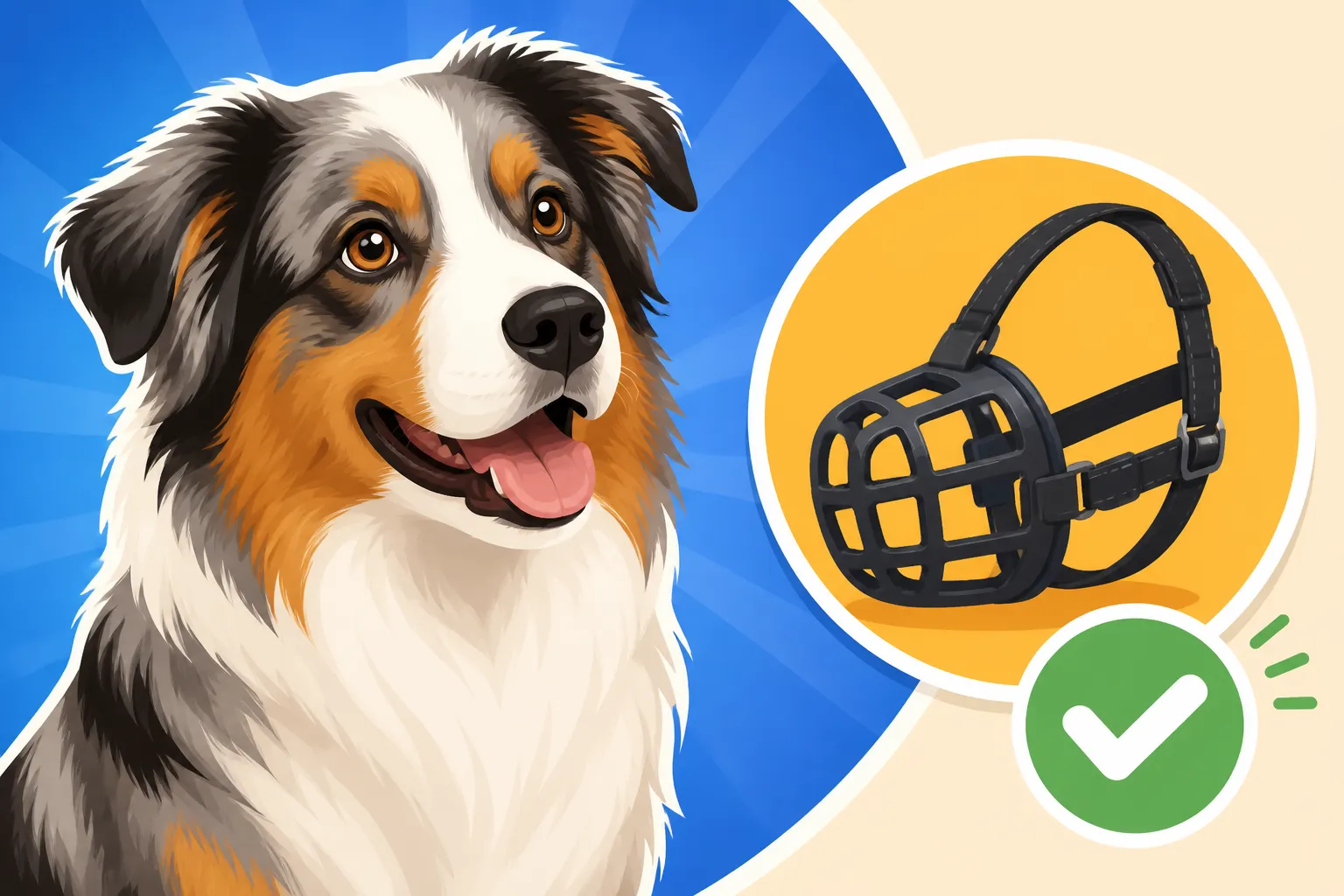
Basket Muzzles: These are typically made from plastic, silicone, or coated wire and are designed to allow your dog to pant, drink water, and even take small treats through the front opening.
- Pros: This is the gold standard for muzzle training, especially for active Aussies. The ability to pant is crucial for dogs to regulate their body temperature, particularly during exercise or stress. Allowing drinking and treats helps maintain a positive association with the muzzle. Basket muzzles are durable and provide excellent bite prevention while maximizing comfort for longer wear periods. Brands available on platforms like Amazon offer a wide variety of sizes and materials.
- Cons: Some people find their appearance intimidating. Finding the perfect fit can take some trial and error, as Aussies have a range of head shapes and Australian Shepherd Height and Weight can vary.
- Best Use: Ideal for prolonged wear, walks, vet visits, public outings, and situations where bite prevention is necessary but panting and hydration are essential.
-
Soft Muzzles (Grooming Muzzles): These are typically made from nylon or fabric and fit snugly around the dog's snout, holding their mouth closed.
- Pros: They are compact, lightweight, and less intimidating in appearance.
- Cons: Crucially, these muzzles prevent or severely restrict your dog's ability to pant. Dogs pant to cool themselves down. Restricting this can quickly lead to overheating, especially for a double-coated breed like an Australian Shepherd, or during periods of stress or exertion. They also make it impossible for your dog to drink or take treats.
- Best Use: These should only be used for very short durations under direct supervision, typically for quick grooming procedures, during an examination where the vet needs their mouth held shut, or for very brief emergency handling. They are not suitable for walks, extended wear, or any situation where your Aussie might get warm or stressed. Never leave your dog unattended in a soft muzzle.
For almost all Australian Shepherd owners considering muzzle training for general safety, vet visits, or public outings, a basket muzzle is the clear and responsible choice.
Ensuring a Proper Fit for Comfort and Safety
A muzzle that doesn't fit correctly is not only uncomfortable but can also be ineffective and potentially dangerous. It could rub and cause sores, or your Aussie might be able to remove it. Here's how to ensure a good fit:
-
Measure Your Aussie's Snout:
- Snout Length: Measure from just below your dog's eyes (where the muzzle would rest at the top of their nose bridge) to the tip of their nose.
- Snout Circumference: Measure around the widest part of your dog's snout, usually about an inch or so below their eyes.
- Head Circumference (for over-the-head strap): Some muzzles have a strap that goes over the top of the head for added security. Measure around your Aussie's head just behind their ears.
-
Allow for Panting and Movement:
- Length: The muzzle should be long enough that it doesn't rub the end of your Aussie's nose, but not so long that it interferes with their vision or allows them to get it off easily. There should be a small gap (about half an inch to an inch) between the end of your Aussie's nose and the front of the muzzle.
- Circumference: This is perhaps the most critical measurement. When your Aussie's mouth is open in a full pant, there should still be enough room around their snout for the muzzle not to restrict this action. You should be able to comfortably slide two fingers under the muzzle band when it's on their snout.
- Strap Adjustments: The straps that go around the back of the head should be snug enough to prevent the muzzle from being pulled off, but not so tight that they cause discomfort or interfere with breathing.
-
Material and Design Considerations:
- Comfort: Look for muzzles with soft padding or smooth edges, especially where it rests on the bridge of their nose or around their cheeks. Silicone basket muzzles are often very flexible and comfortable.
- Durability: Australian Shepherds are active and strong. Choose a material that can withstand their energy and potential chewing.
- Visibility: Ensure the muzzle doesn't obstruct their peripheral vision.
Remember, every dog is built a little differently. What fits one Aussie might not fit another, even if they are similar in size. Don't be afraid to try a couple of different sizes or styles from reputable brands on Amazon to find the perfect match. A proper fit ensures comfort, which is the foundation of successful muzzle training. Australian Shepherd Proportions in the Standard can give you an idea of the general build, but individual variation is always present.
Here's a quick comparison of the main muzzle types:
| Muzzle Type | Material | Primary Use | Allows Panting/Drinking | Pros | Cons |
|---|---|---|---|---|---|
| Basket Muzzle | Plastic, Silicone, Wire | General safety, vet, grooming, public | Yes | Allows panting, drinking, treats; durable | Can appear intimidating; finding perfect fit takes effort |
| Soft Muzzle | Nylon, Fabric | Brief restraint (grooming, vet) | No | Lightweight, less intimidating | Restricts panting (danger of overheating); not for long-term use |
The Step-by-Step Guide to Positive Muzzle Training
Muzzle training your Australian Shepherd should be a gradual, positive process, built on trust and rewards. Rushing it or forcing the muzzle on will only create a negative association, making future use much harder. Remember, the goal is for your Aussie to view the muzzle as a neutral, or even good, thing – something that brings treats or signals fun activities.
Introducing the Muzzle: Making it a Positive Experience
This process relies heavily on classical conditioning, pairing the sight and presence of the muzzle with something highly enjoyable.
- Step 1: The "Muzzle is Awesome" Association (Treat Dispenser):
- Start by simply placing high-value treats (think cooked chicken, cheese, or liver paste) inside the muzzle. Don't try to put it on your Aussie yet. Just let them approach it, sniff it, and eat the treats out of it.
- Repeat this several times a day for a few days. The goal here is to build a strong positive association: "Muzzle = delicious things!"
- You want your Aussie to voluntarily push their nose into the muzzle to get the treat.
- Step 2: Brief Snout Touches and Rewards:
- Once your Aussie is happily sticking their nose into the muzzle to get treats, start holding the muzzle up to their face. As their nose goes in, give a treat. Remove the muzzle.
- Increase the duration slightly. Hold it to their face, nose in, for a second or two, treat, then remove.
- Do this repeatedly in short sessions. The key is to keep it brief and always end on a positive note.
- Step 3: The "Slip On, Slip Off" Game:
- Now, gently slip the muzzle all the way on (fastening the straps if necessary, but don't worry about tightness yet), immediately give a super high-value treat through the front of the basket, and then immediately take the muzzle off.
- The duration should be literally one or two seconds. The association needs to be: muzzle on = treat, muzzle off = relief.
- Repeat this many times, always ensuring the treat appears the moment the muzzle is on, and it comes off almost instantly.
- Step 4: Gradually Increasing Duration with Rewards:
- Once Step 3 is easy and your Aussie isn't showing any hesitation, you can slowly start to increase the time the muzzle is on.
- Put it on, give a treat, wait a few seconds, give another treat, then take it off.
- Slowly extend the time: 5 seconds, 10 seconds, 30 seconds, a minute. During these longer durations, continue to feed treats frequently through the muzzle opening.
- Distract them with simple tasks or Trick Training as Aussie Mental Work while the muzzle is on. Ask for a "sit," "down," or a simple paw, rewarding with a treat through the muzzle.
- Always take the muzzle off before your Aussie shows signs of discomfort or tries to paw it off. You want them to associate the removal with a good feeling, not with escape.
- Australian Shepherd Puppy Curriculum Month by Month should include desensitization to handling and gear like collars, harnesses, and eventually, muzzles, as part of their early education.
Throughout this process, patience is paramount. If your Aussie shows any signs of stress, retreat to an earlier step where they were comfortable. Never use force, and always keep sessions short, fun, and positive. You want the muzzle to be a non-event, or even something they look forward to because they know good things happen when it's around.
Generalizing Muzzle Wear: Different Situations and Environments
Once your Australian Shepherd is comfortable wearing the muzzle for several minutes at home, it's time to start practicing in various situations and environments. This helps them understand that the muzzle is a normal part of life, no matter where they are.
- Practice in Calm, Familiar Environments First:
- Start by having your Aussie wear the muzzle during relaxed activities around the house, like during a quiet chewing session with a favorite bone, or while you're reading a book.
- Take them out into the yard for a short, calm supervised potty break with the muzzle on.
- Continue to offer occasional treats and praise while the muzzle is on, even if they're not doing anything specific.
- Gradual Introduction to More Stimulating Environments:
- Once comfortable at home, move to slightly more stimulating, but still controlled, environments. Maybe a quiet walk around the block during off-peak hours.
- Observe their body language carefully. If they seem stressed, reduce the stimulation or shorten the session.
- Practice activities they enjoy while muzzled, like short Scent Games That Tire an Australian Shepherd in the yard or a brief retrieve. This further reinforces the positive association.
- Prepare for Real-World Scenarios:
- Vet Visits: Practice putting the muzzle on before you even leave the house for a routine vet visit. Give treats, go to the vet, have them wear it for a few minutes in the waiting room, give treats, and then remove it before the stress of the actual examination. Build up to wearing it during the examination itself. This kind of Cooperative Care for an Australian Shepherd at the Vet makes a huge difference.
- Public Outings: Start with very brief excursions to places where you might normally use the muzzle – a quiet park, a pet store during a slow time. Keep interactions positive, reward calm behavior, and keep sessions short initially.
- "Muzzle Up" Cue: Once your Aussie understands the process, you can even add a verbal cue, like "Muzzle up!" or "Gear on!" before you present the muzzle. This helps them anticipate and mentally prepare.
Remember to always bring high-value treats when practicing in new environments, and never push your Aussie beyond their comfort level. Consistency and positive reinforcement are your best friends here. You can find many resources for positive reinforcement training online, for example, programs from BAXTER & Bella, or gear and training aids readily available on Amazon to help you through the process.
Troubleshooting and Common Muzzle Training Challenges
Even with the best intentions and a solid plan, muzzle training can present its unique set of challenges. It's a skill, like any other, and sometimes you hit a snag. Don't get discouraged – recognizing common problems and knowing how to address them is part of the journey.
Addressing Resistance and Discomfort
If your Australian Shepherd is resisting the muzzle, trying to paw it off, rub their face, or seems generally unhappy, it's a clear sign that something isn't quite right.
- Go Back a Step (or Two!): The most common mistake is progressing too quickly. If your Aussie is resisting, it means the current step is too much for them. Go back to where they were consistently comfortable – even if it's just eating treats from the muzzle, not with it on. Rebuild that positive association slowly.
- Check the Fit (Again and Again): A poor fit is a huge culprit for discomfort.
- Is it too tight around the snout, restricting panting or rubbing?
- Is it too loose, allowing them to paw it off easily?
- Is it rubbing the bridge of their nose or under their eyes?
- Are the straps digging in?
- Re-measure carefully and compare with the muzzle's sizing guide. Sometimes, trying a different brand or style that might better suit your Aussie's head shape is necessary.
- Increase the Value of Rewards: If your Aussie isn't motivated, your treats might not be exciting enough. Break out the absolute highest-value treats they rarely get – shredded chicken, cheese, or squeeze tube treats. The reward needs to be incredibly enticing to overcome any mild discomfort or apprehension.
- Keep Sessions Shorter: If your sessions are too long, your Aussie might get bored or frustrated. Keep them brief, even just 30 seconds to a minute, but do them frequently throughout the day.
- Never Force It: Forcing the muzzle onto your Aussie or using it as punishment will only create fear and a profoundly negative association. This is counterproductive and can damage your bond. Always aim for voluntary participation. If your Aussie is a bit of a "stubborn" learner or seems to have developed a negative association already, consider reaching out to a certified professional dog trainer for personalized guidance. They can often spot subtle cues we miss. An Aussie Refusing Work It Used to Love might be signaling discomfort or a lack of motivation, and this applies to muzzle training too.
Maintaining Positive Associations and Long-Term Use
Successful muzzle training isn't a one-and-done event. It requires ongoing maintenance to ensure your Australian Shepherd continues to accept it willingly throughout their life.
- Periodic "Muzzle Fun" Sessions: Even after your Aussie is perfectly muzzle-trained, occasionally put the muzzle on for a few minutes while giving treats, playing a favorite game, or going for a short, enjoyable walk. This keeps the positive association strong and prevents the muzzle from only being used during stressful events.
- Use it When Necessary, But Not Excessively: Don't just leave the muzzle on for hours if there's no specific need. It's a tool for specific situations. Overuse can lead to desensitization, boredom, or skin irritation.
- Regular Checks for Wear and Tear: Inspect the muzzle periodically for any damage, sharp edges, or areas where padding might have worn down. A damaged muzzle can become uncomfortable or ineffective.
- Anticipate Setbacks: Dogs are not robots. Sometimes, after a particularly stressful vet visit or an unexpected scary event while muzzled, your Aussie might regress slightly in their acceptance. If this happens, simply go back to the basic steps of positive re-association, just like you did at the beginning. Patience and understanding are key.
- Consult a Professional: If you're struggling, or if your Aussie has significant behavioral issues that make muzzle training difficult (e.g., severe anxiety, reactivity), don't hesitate to seek help from a qualified professional. A certified trainer or veterinary behaviorist can provide tailored strategies. Finding a trainer who truly understands Finding a Trainer Who Understands an Aussie is vital, as they bring specific knowledge about the breed's drives and sensitivities.
Remember, the goal of muzzle training is to create a safer, less stressful world for your Australian Shepherd and for those around them. With consistency, positive reinforcement, and a well-fitting muzzle, you can achieve this important goal, empowering your Aussie to navigate various situations with confidence and security.
Disclaimer
This article is for general informational purposes only and does not constitute professional advice. Laws, prices and regulations vary by location and change over time. Consult a qualified professional for guidance on your specific situation.