An Aussie Refusing Work It Used to Love
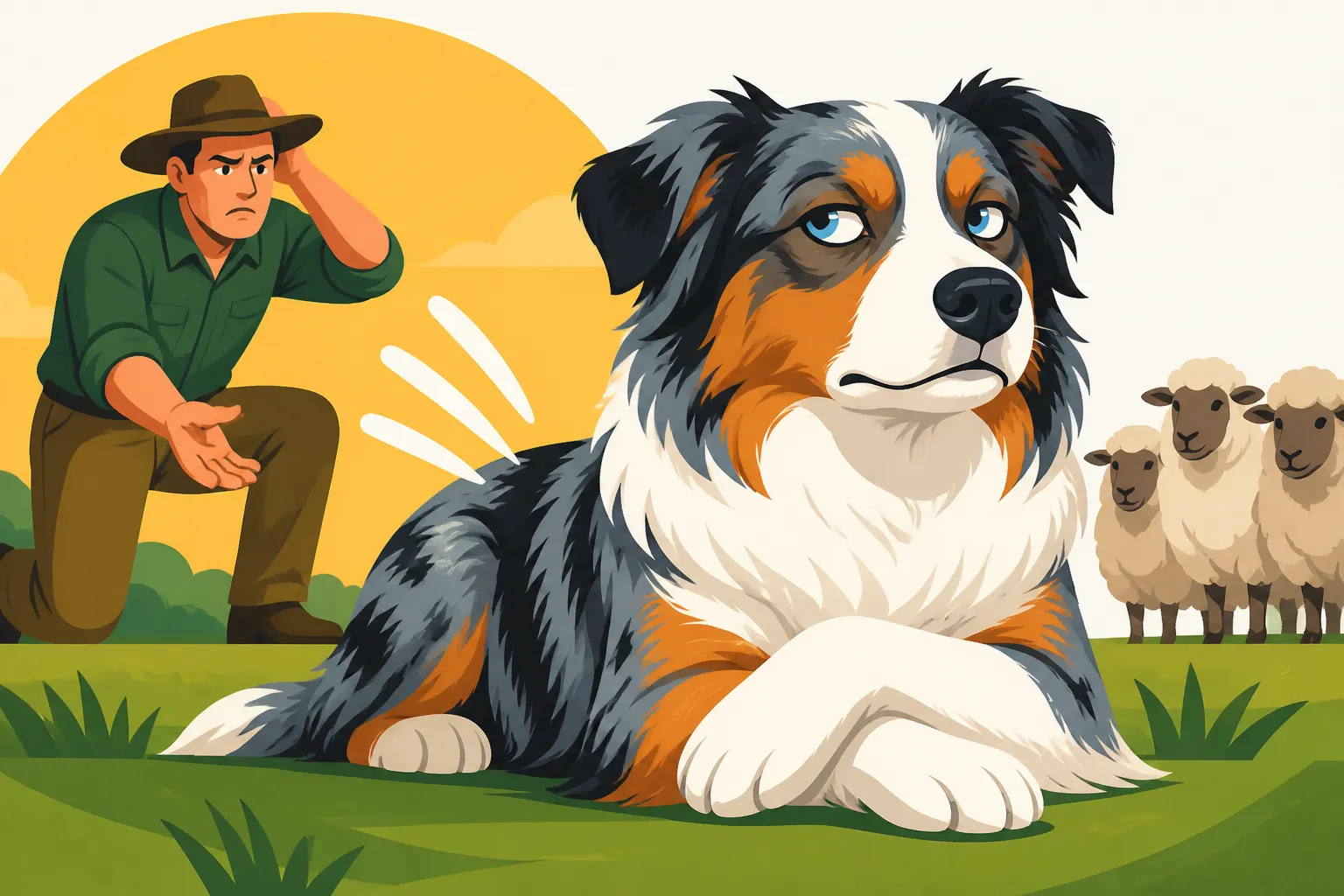
It's absolutely heartbreaking, isn't it? You pour your heart and soul into training, into those long walks, those intense agility sessions, or those focused herding drills, and your Australian Shepherd, who once lived for the work, suddenly… stops. The sparkle in their eye is gone, the eager bounce replaced by a hesitant step, or even a flat-out refusal. It’s confusing, it’s frustrating, and most of all, it makes you worry sick about what’s going on with your beloved companion. This guide is here to walk you through the common reasons why an Aussie might refuse work it once loved and, more importantly, what you can do to help them rediscover their joy.
The Sudden Shift: Why the Disinterest?
When an Australian Shepherd, a breed renowned for its drive and intelligence, suddenly loses interest in activities it once adored, it's rarely just "being stubborn." Their refusal is almost always a form of communication, a signal that something isn't right. As their human, it's our job to become detectives and figure out what message they're trying to send.
When Pain or Discomfort Steals Their Drive
This is, hands down, the first thing you need to consider. Aussies are stoic dogs. They were bred to work through discomfort on the ranch, and many will hide pain until it becomes unbearable. What looks like a lack of interest might actually be an attempt to avoid an activity that causes them pain. Imagine if your favorite hobby, like running or knitting, suddenly started causing a sharp ache. You'd probably find excuses not to do it, right? Your Aussie is doing the same.
A subtle limp might not be present, especially in the early stages. Instead, you might see them taking jumps a little lower, slowing down on the retrieve, or hesitating before settling into a down-stay. Common culprits include joint issues like Australian Shepherd Hip Dysplasia Symptoms Before Two or elbow dysplasia, back pain, muscle strains, or even something as seemingly minor as a sore tooth. If a specific movement in a sport, like tight turns in agility or quick stops in frisbee, causes pain, they’ll start to associate that activity with discomfort and avoid it. Sometimes, the pain is chronic, slowly building over time, leading to a gradual decline in enthusiasm. This can be especially true for working dogs who have spent years putting stress on their bodies. You might notice them getting An Aussie Stiff After a Career in Agility.
The Shadow of Stress and Anxiety
Our highly sensitive and intelligent Australian Shepherds are deeply affected by their environment and our emotional states. A sudden change in routine, a new pet in the home, a shift in household dynamics, or even a traumatic experience during a training session can plant seeds of stress and anxiety that manifest as refusal. For instance, if another dog barked aggressively at them during an agility run, or if a loud noise startled them on a walk where they used to chase a ball, they might develop a negative association with that activity or location.
Anxiety isn't always obvious panting and shaking. For an Aussie, it can look like hyper-vigilance, excessive sniffing, lip-licking, yawning, or a general shutdown. They might disengage from eye contact, turn their head away, or simply refuse to move. Perhaps they're worried about performing "correctly" because the pressure has become too high. An Aussie thrives on clear communication and confidence from their handler. If they sense your frustration or nervousness, it can feed their own anxiety, creating a vicious cycle where they shut down even more.
Burnout from Boredom or Over-training
This might sound counter-intuitive for a breed renowned for its endless energy, but even Australian Shepherds can get bored or over-trained. Repetitive drills without variety or sufficient mental stimulation can lead to mental fatigue. An Aussie’s mind is a sponge, constantly seeking new information and challenges. If the "work" has become monotonous or predictable, they might simply check out.
Similarly, pushing them too hard, too often, or for too long can lead to burnout. Imagine having a job where you do the same demanding task eight hours a day, seven days a week, without any creative outlets or breaks. You'd eventually lose your motivation, no matter how much you initially loved the work. Over-training can manifest as a dog becoming physically tired, mentally dull, or simply losing the joyful spark. They might appear sullen, slow to respond, or even resistant to commands they once knew perfectly. Variety truly is the spice of life for these intelligent dogs, both physically and mentally.
Medical Causes: Always Rule These Out First
Before you dive into behavior modification or training adjustments, the most crucial step is to get your Aussie thoroughly checked by a veterinarian. What appears to be a behavioral issue is very often rooted in an underlying physical problem. Trust me, I've seen countless owners struggle with "stubborn" dogs only to find out it was a hidden ache all along.
Subtle Injuries and Chronic Conditions
As mentioned, Aussies are masters of hiding pain. A slight muscle pull from a misstep, an irritated tendon, or even a minor spinal issue can cause significant discomfort without presenting as an obvious lameness. They might subtly adjust their gait, shift their weight, or avoid certain movements that aggravate the injury. Over time, this avoidance becomes refusal. Your vet can perform a comprehensive physical exam, palpating joints and muscles, assessing range of motion, and checking for any pain responses. Don't be afraid to push for a deeper dive if you suspect something is truly wrong, including X-rays or other diagnostics if warranted.
Beyond acute injuries, chronic conditions can slowly erode your Aussie's willingness to work. Arthritis is a common culprit in older dogs, making those once-easy jumps or quick turns painful. Australian Shepherd Arthritis After Years of Work is a real concern for a breed known for its athleticism. Other conditions like early-stage Australian Shepherd Epilepsy Starting Between One and Five could cause a general feeling of malaise or disorientation, making them less inclined to engage. Even seemingly unrelated issues like thyroid problems can affect energy levels and enthusiasm. Some medications can also have side effects that make your dog feel sluggish or unwell, leading to a decline in their desire to work.
Vision or Hearing Changes
As Aussies age, their senses can naturally decline, which can profoundly impact their ability and willingness to participate in activities. A dog with worsening vision might struggle to track a moving object like a frisbee or a herding ball, leading to frustration and disengagement. They might hesitate in unfamiliar environments or become more clumsy. Similarly, Hearing Loss in an Aging Australian Shepherd can make it difficult for them to hear your commands, especially from a distance or in noisy environments. They might appear to ignore you, when in reality, they simply didn't hear you.
These sensory changes can be incredibly confusing and isolating for a dog that relies so heavily on communication and visual cues. If your Aussie is older, discuss these possibilities with your vet. A specialized eye exam by a veterinary ophthalmologist can diagnose issues like Hereditary Cataracts Clouding an Aussie Eye or Progressive Retinal Atrophy in an Aussie, while a BAER test can assess hearing. Understanding these changes allows you to adapt your training methods and expectations, ensuring your dog feels safe and understood.
Here’s a quick guide to some physical signs that might indicate your Aussie is in pain or discomfort:
| Symptom | Possible Indication | Behavioral Manifestation |
|---|---|---|
| Limping or Gait Changes | Joint pain, muscle strain, paw injury | Refusal to run, jump, go up/down stairs; general slowness |
| Difficulty getting up/down | Arthritis, hip/elbow dysplasia, back pain | Hesitation to lie down, struggle to rise; preferring to stand |
| Licking or chewing a specific area | Localized pain, itching, skin irritation | Obsessive licking of a paw, joint, or flank; avoids touch |
| Hunched posture, tucked tail | Abdominal pain, back pain, generalized discomfort | Appears withdrawn, less playful; low energy; avoids handling |
| Growling or snapping when touched | Pain response, fear-aggression | May snap if touched in a sensitive area, even if normally docile |
| Reluctance to jump or climb | Joint pain, cruciate ligament injury | Hesitates at car, couch, agility equipment; opts for ramps |
| Changes in appetite or thirst | Internal organ issues, general illness | Eating less, drinking more/less; lethargy; weight loss/gain |
| Excessive panting (not due to heat) | Pain, stress, anxiety | Panting at rest, even in cool temperatures; restlessness |
Environmental and Emotional Factors at Play
Once you've ruled out medical issues, it's time to consider the less tangible, but equally powerful, influences on your Aussie's desire to work: their emotional state and the environment around them. These can be complex, and often require keen observation and patience to unravel.
The Impact of Changes in Routine or Environment
Australian Shepherds thrive on predictability. While they are adaptable, significant changes to their daily life or surroundings can be incredibly unsettling for them. Moving to a new home, a change in your work schedule (meaning more time alone), the arrival of a new baby or pet, or even a sudden change in their walking routes can throw their sensitive systems off balance. Imagine your life suddenly changing dramatically – your dog feels that too, and often more intensely because they don't understand the "why."
These shifts can create underlying stress that reduces their capacity for joy and focus. A dog feeling insecure about its environment is less likely to engage enthusiastically in training or play. They might be spending their mental energy scanning for threats, trying to understand the new norms, or simply feeling a bit lost. If your Aussie's work refusal coincided with a major life event, take a step back and consider how that change might be impacting them. Sometimes, simply re-establishing a predictable, comforting routine can work wonders in restoring their confidence and, with it, their motivation.
Training Plateaus, Pressure, and Lack of Motivation
Even the most brilliant Australian Shepherd can hit a wall in training. If they've reached a plateau, where progress seems to stall, or if the training has become too demanding or monotonous, they might simply lose interest. It's easy for us, as enthusiastic handlers, to inadvertently put too much pressure on our dogs to perform, especially in competitive sports. If the joy is replaced by the stress of "getting it right," your Aussie might decide it's not worth the effort. They might start to associate the training environment or specific cues with feelings of inadequacy or frustration.
Sometimes, it’s not about pressure but about outright boredom. If you're doing the same retrieves in the same field every day, or running the same agility course layout repeatedly, your clever Aussie might simply be under-stimulated. They need novelty and variety to keep their minds engaged. Think about introducing Scent Games That Tire an Australian Shepherd or new tricks, or even rotating through different toys to keep things fresh. You might consider enriching their environment with puzzle feeders or interactive toys from places like Amazon, which can provide mental stimulation even when you're busy. The goal is to make "work" feel like a fun game again, not a chore.
And what about motivation itself? Are the rewards still high-value for your dog? Perhaps the treats you're using have become boring, or verbal praise isn't cutting it anymore. An Aussie needs clear, consistent, and exciting reinforcement. If the rewards don't feel worth the effort, they won't put in the effort. Re-evaluate your reward system, consider higher-value treats, or introduce new types of praise and play. Remember, they are working for their paycheck, not yours!
Rebuilding the Connection and Joy
Seeing your Australian Shepherd disengage from activities they once cherished is tough, but it's not a dead end. With a thoughtful, patient, and systematic approach, you can often help them rekindle their passion and joy for work.
The Essential Vet Check-Up
I cannot stress this enough: always start with a thorough veterinary examination. Even if you're convinced it's behavioral, ruling out pain or underlying illness is paramount. A vet can check for subtle lameness, joint issues, dental pain, and general health. They might recommend bloodwork to check for metabolic issues or Australian Shepherd Autoimmune Thyroiditis. If your dog is older, Bloodwork Worth Running on a Senior Aussie becomes even more critical. Getting a clean bill of health provides peace of mind and confirms you're dealing with a behavioral issue, not a medical one. This is the foundation upon which all other solutions are built.
Observe, Adjust, and Simplify
Once medical issues are ruled out, become your Aussie’s personal detective. Keep a detailed log:
- When does the refusal happen? Is it always during a specific activity (e.g., jumping), in a particular location, or at a certain time of day?
- What precedes the refusal? Did something unusual happen right before they disengaged?
- What activities do they still enjoy? This can give clues about what's not causing discomfort or stress.
- What is their body language telling you? Are they stressed, bored, or genuinely uncomfortable?
Based on your observations, it’s time to simplify. Go back to basics. If they loved fetch, start with just one toss in a quiet, familiar area. If they adored agility, remove obstacles and simply practice running through tunnels or walking over planks. Lower your expectations dramatically. Make every interaction light, positive, and pressure-free. The goal is to create successful, enjoyable experiences that remind them how much fun it can be, without the stress of perfection. Break down tasks into tiny, achievable steps, rewarding heavily for any effort.
Reintroducing Fun, Novelty, and Choice
Variety is truly the spice of life for an intelligent Australian Shepherd. If boredom is a factor, introduce new games, explore different environments, and vary your training sessions. Try a new sport like Australian Shepherd Scent Work Titles or urban herding with a large exercise ball. Consider using high-value rewards they rarely get. Let them make choices during training sessions – perhaps they pick the toy or the direction. This gives them a sense of control and increases engagement.
Puzzle toys, snuffle mats, and lick mats can provide fantastic mental enrichment indoors, especially on days when physical exercise needs to be limited or varied. Brands like BAXTER & Bella offer online resources and courses that can provide fresh training ideas and help you build a stronger bond through positive reinforcement, making learning feel like a game again. The key is to keep things fresh, exciting, and always end on a positive note. Never push them to the point of frustration or failure.
When to Seek Professional Guidance
If you've gone through the vet check-up, tried adjusting your approach, and your Aussie is still refusing work, it's time to call in a professional. A certified professional dog trainer (CPDT) or a veterinary behaviorist has the expertise to observe subtle cues you might be missing and develop a tailored plan. They can help identify underlying behavioral issues like anxiety, fear, or a lack of confidence, and guide you through specific counter-conditioning and desensitization protocols.
Look for trainers who use positive reinforcement methods and have experience with working breeds like Australian Shepherds. They understand the nuances of their drive and intelligence. Never hesitate to get help; sometimes, an objective, experienced eye is exactly what you need to unlock the mystery of your Aussie’s reluctance. Remember, their refusal isn't personal; it's a plea for understanding and help.
Disclaimer
This article is for general informational purposes only and does not constitute professional advice. Laws, prices and regulations vary by location and change over time. Consult a qualified professional for guidance on your specific situation.