Starting Training With an Adopted Adult Aussie
Bringing an adult Australian Shepherd into your home through adoption is an incredibly rewarding experience, but it also comes with its own unique set of training challenges. Many new owners feel overwhelmed, unsure where to begin when their new companion arrives with an unknown past, and this guide is here to walk you through how to establish trust, build a solid foundation, and tackle common behavioral hurdles, helping you and your adopted Aussie thrive together.
Understanding the Unique Challenges of an Adopted Adult Aussie
When you adopt an adult Australian Shepherd, you're not just bringing home a dog; you're bringing home a whole life story that you might not know anything about. Unlike a puppy whose slate is relatively blank, an adult dog comes with a history – good, bad, or indifferent – that has shaped its behaviors, fears, and preferences. This can feel like trying to solve a puzzle with half the pieces missing, and it’s perfectly normal to feel a bit lost at first.
Think about it: this dog might have lived in a loving, active home where it was taught manners and given plenty of enrichment. Or, it could have been neglected, left alone for long hours, or even experienced harsh training methods. Maybe it was a stray, fending for itself on the streets. Each of these scenarios leaves a different imprint. A dog that was previously ignored might crave attention but be unsure how to ask for it politely. One that experienced rough handling might be wary of hands reaching for it or shy away from loud voices. These aren't necessarily "bad" behaviors, but rather coping mechanisms or ingrained habits that served them in their previous life, and now they need patient redirection in a new environment. You might see signs of Australian Shepherd Behavior Problems From Under-Exercise if they came from a sedentary home.
The biggest hurdle often isn't the dog's intelligence – Aussies are incredibly smart! – but rather overcoming the emotional baggage they carry. Trust needs to be built from the ground up, and that takes time, consistency, and a deep understanding of canine body language. They don't speak English, and we don't speak "dog," so we have to learn each other's languages through observation and gentle guidance. This initial period is less about formal "training" and more about creating a safe, predictable world where your Aussie can finally relax and be themselves. Expect bumps along the way; every Australian Shepherd is an individual, and their journey with you will be unique.
The Critical First Weeks: Decompression and Observation
The first few weeks after bringing an adopted adult Australian Shepherd home are absolutely crucial, and honestly, they're often the most misunderstood. Many people, eager to start training and bonding, inadvertently put too much pressure on their new dog. Instead, think of this period as a "decompression" phase. Your Aussie has just experienced a huge life upheaval – new smells, new sounds, new people, new routines. They need time to process all of it without being overwhelmed. There's a popular concept known as the "Rule of Threes," which offers a general timeline for this adjustment:
- 3 Days: This is often the initial shock period. Your Aussie might be withdrawn, shut down, or very quiet. They're just trying to figure out where they are and if they're safe. Don't expect much interaction; simply provide a quiet, secure space.
- 3 Weeks: The dog starts to settle in a bit. They might begin to show more of their personality, good and bad. This is when some behaviors that were suppressed by fear might start to emerge. They're testing boundaries and learning the rhythm of your home.
- 3 Months: By now, your Aussie should be feeling much more comfortable and truly integrated into the family. They understand the routines, know who their people are, and feel secure in their new environment. True training can really begin to flourish here.
During this decompression phase, your primary job is to provide safety, predictability, and minimal demands. Set up a comfortable crate or a designated quiet area where your Aussie can retreat when they feel overwhelmed. Consistency in feeding times, potty breaks, and short, structured walks will help them understand what to expect. Keep interactions calm and positive, allowing them to initiate contact rather than forcing it. Limit new experiences, new people, and especially new dogs for a while. It's not about being antisocial; it's about giving them space to breathe and build confidence in their immediate world.
Observation is your superpower during this time. Pay close attention to your Aussie's body language. When do they seem relaxed? What makes them tense up? Do they prefer certain types of toys? Are they comfortable being touched in certain areas? Do loud noises startle them, which could indicate Australian Shepherd Barking and Noise Sensitivity? This information will be invaluable as you move into more formal training. For example, if you notice they flinch when you reach over their head, you'll know to approach them from the side. If they show discomfort around other dogs, you'll manage your walks carefully. A safe, structured environment and careful observation will lay the strongest groundwork for future success.
Building a Foundation: Trust, Routine, and Basic Cues
Once your adopted Australian Shepherd has had time to decompress and you've established some basic routines, it's time to intentionally build a solid foundation of trust and understanding. This isn't about rushing into complex tricks; it's about consistently communicating what you want and making your Aussie feel safe and rewarded for engaging with you.
Establishing Predictable Routines
Dogs thrive on predictability, and an adopted Aussie, especially one with an unknown past, will benefit immensely from a clear schedule. This means consistent feeding times, regular potty breaks, and designated times for play and rest. For instance, if your mornings always start with a potty break, then breakfast, followed by a short sniffy walk, your Aussie will quickly learn the pattern. This predictability reduces anxiety because they know what’s coming next, helping them feel secure. Even something as simple as a designated spot for their meal bowl, always at the same time, helps build a sense of order. Remember to be consistent with your communication too; use the same words for actions like "potty" or "bed."
Positive Reinforcement and Clear Communication
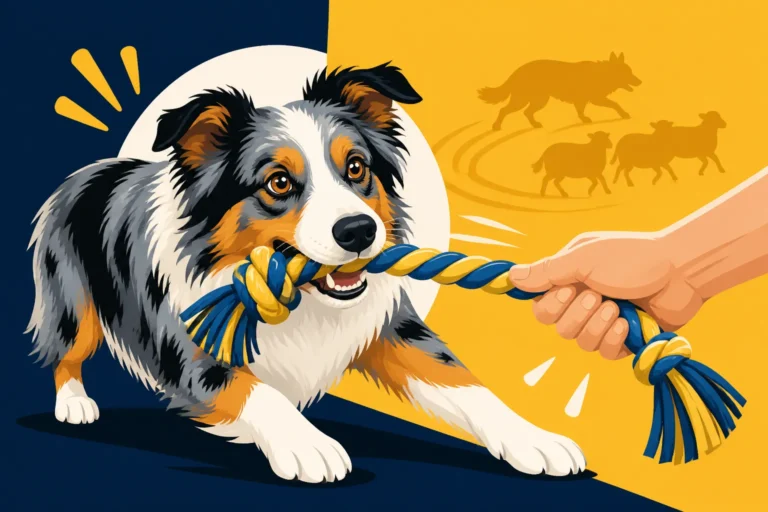
Positive reinforcement is absolutely non-negotiable for an adopted dog. This means rewarding behaviors you like with something your Aussie values – high-value treats, enthusiastic praise, or a quick game of tug. If they offer a "sit" when you stand still, reward it! If they come when you call, even if it's just across the room, make it a party. This approach builds a positive association with you and with learning. Never use punishment or harsh corrections, as this can easily erode the nascent trust you're trying to build, especially with a dog that might already have a sensitive disposition or a history of negative experiences.
Using clear, concise cues is also important. Stick to one word for each command (e.g., "Sit," "Stay," "Come"). Pair the verbal cue with a hand signal. Aussies are incredibly intelligent and often pick up hand signals very quickly. When you're consistent, they learn that performing a certain action leads to a reward, making them more likely to repeat it.
Starting with Basic Cues and Management
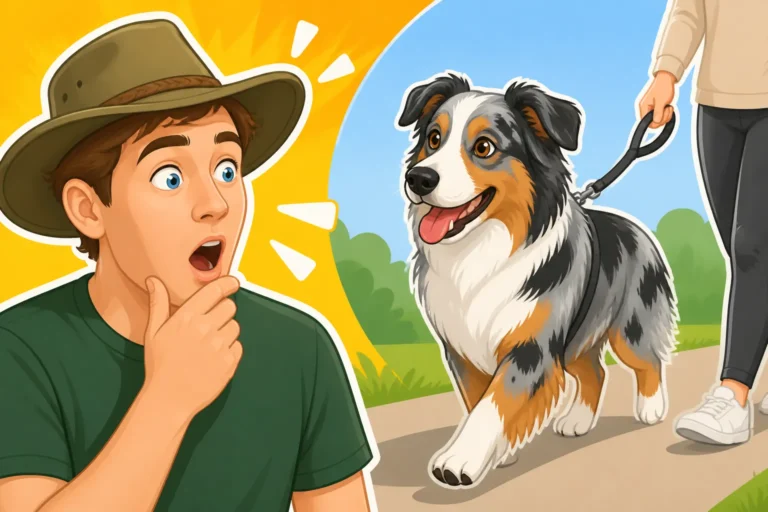
Begin with the basics: "Sit," "Stay," "Come," "Down," and polite leash walking. Practice these in quiet, low-distraction environments first, like your living room or a fenced backyard. Keep sessions short, fun, and end on a positive note. For leash manners, a good quality front-clip harness can be an absolute game-changer, helping to reduce pulling without discomfort. Many great options are available on Amazon that can make walks much more pleasant for both of you.
Consider a long line for practicing recall in a safe, open area, allowing your Aussie to explore while you maintain control and practice calling them back. How Long an Aussie Long Line Should Be explores this in more detail. Remember, consistency is key, and everyone in the household needs to use the same cues and reward system. If one person allows jumping and another doesn't, it creates confusion for your dog. For those who want more structured guidance, online training programs like BAXTER & Bella offer fantastic step-by-step curricula that can be worked through at your own pace, providing videos and support tailored to various stages of training. This can be especially helpful for adult adopted dogs, as it allows you to address specific needs in a low-pressure environment.
| Foundation Element | Goal for Your Aussie | How to Implement |
|---|---|---|
| Trust | Feeling safe and secure with you. | Consistent positive interactions, no forced contact. |
| Routine | Understanding daily expectations and schedule. | Predictable feeding, potty, play, and rest times. |
| Communication | Learning what your cues mean. | Clear, consistent verbal cues and hand signals. |
| Motivation | Wanting to engage and learn with you. | High-value rewards (treats, toys, praise) for desired behaviors. |
| Management | Preventing unwanted behaviors from becoming habits. | Leash, crate, gates, supervising interactions. |
Remember, patience is paramount. You are building a new life together, and that takes time and understanding.
Addressing Common Behavioral Hurdles in Adopted Aussies
Even with the best foundation of trust and routine, many adopted adult Australian Shepherds come with specific behavioral challenges that need careful, empathetic attention. These aren't character flaws; they're often responses to past experiences or simply a manifestation of their breed-specific traits, like their strong The Australian Shepherd Herding Drive You Cannot Train Out.
Reactivity and Overarousal
It's very common for adopted Aussies to exhibit reactivity, which can manifest as barking, lunging, or freezing when they see other dogs, people, or even moving objects like skateboards. This often stems from anxiety, fear, or a lack of appropriate socialization in their past. Australian Shepherd Reactivity and Overarousal is a significant concern for many owners.
- Management is Key: Your first step is always to manage the environment to prevent your Aussie from rehearsing the reactive behavior. This might mean walking at quiet times, choosing less busy routes, or using a front-clip harness to give you better control. If they react to things outside a window, you might use frosted film or simply keep the blinds closed.
- Counter-Conditioning: This involves changing your dog's emotional response to a trigger. If your Aussie reacts to other dogs, for example, start by spotting another dog at a distance where your Aussie doesn't react. The moment they see the other dog (before they react!), immediately give them a high-value treat. Repeat this over and over, gradually decreasing the distance as your Aussie forms a positive association. The goal isn't to force interaction, but to change "other dog = scary/exciting" to "other dog = treats from my human!"
- Professional Help: If reactivity is severe or you feel stuck, don't hesitate to seek out a certified professional dog trainer or veterinary behaviorist. They can assess your specific situation and provide tailored guidance.
Resource Guarding
Resource guarding is when a dog shows aggression (growling, snapping, freezing) when another animal or person approaches something they perceive as valuable – food, toys, a bed, or even a person. This can be a scary behavior for new owners.
- Avoid Confrontation: The worst thing you can do is try to "dominate" your dog or take the item away forcefully. This will only escalate the guarding behavior and damage trust.
- Management and Trade: The immediate strategy is to manage the environment so guarding doesn't occur. Feed your Aussie in a quiet, separate area. Pick up high-value toys when you can't supervise. For items they've already guarded, teach a "drop it" cue by trading them a higher value treat for the item. For example, if they're guarding a chew, offer a piece of chicken. As they eat the chicken, gently take the chew. You want them to associate you approaching their valuable items with something even better.
- "Nothing in Life is Free" (NILIF): This approach means your Aussie "works" for everything they want (sit for dinner, lie down for a walk). It subtly reinforces that good things come from you, building your value and their impulse control.
Separation Anxiety
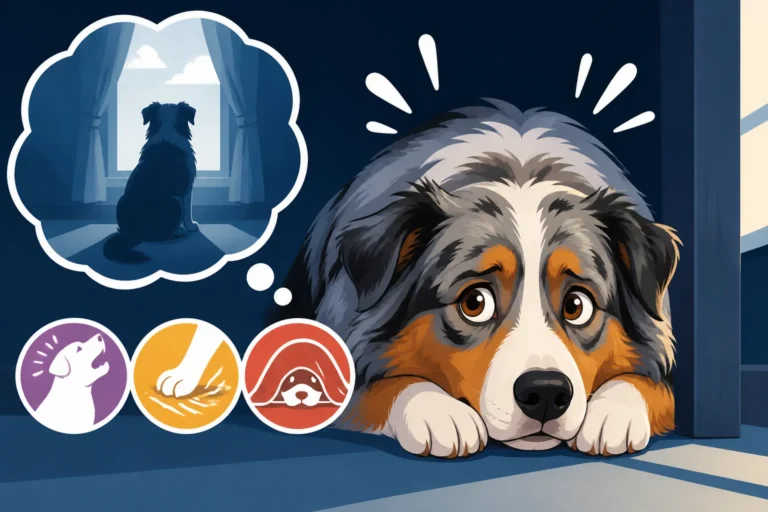
Some adopted Aussies struggle deeply when left alone, exhibiting behaviors like destructive chewing, incessant barking, house soiling, or pacing. This isn't naughtiness; it's genuine panic. The Signs an Aussie Is Panicking Alone are important to recognize.
- Rule Out Other Issues: First, a vet check is vital to ensure there isn't an underlying medical cause for house soiling or excessive vocalization.
- Gradual Departures: You need to desensitize your Aussie to your departure cues. Start with very short absences. Leave for literally seconds, then return before they show signs of anxiety. Gradually increase the duration. You might practice just walking out the door and immediately coming back in.
- Enrichment: Provide puzzle toys or chews (like a Kong stuffed with frozen peanut butter, readily available on Amazon) to keep them occupied as you leave. The goal is for them to associate your departure with a positive, engaging activity.
- Avoid Punishment: Never punish an Aussie for anxiety-related destruction or accidents. They are not doing it to spite you; they are genuinely distressed.
- Professional Intervention: Severe separation anxiety almost always requires the guidance of a professional trainer or veterinary behaviorist, potentially alongside medication prescribed by your vet.
In all these cases, patience, consistency, and a commitment to positive reinforcement are your best tools. Remember that your adopted Aussie is learning a whole new world with you, and every step, no matter how small, is a victory. It’s also wise to research Finding a Trainer Who Understands an Aussie as their specific breed traits can sometimes be misinterpreted.
Long-Term Training and Enrichment for a Thriving Aussie
Once you've navigated the initial decompression period and laid a strong foundation, the journey of training and bonding with your adopted adult Australian Shepherd truly takes off. Aussies are incredibly intelligent, active, and eager to please, meaning they thrive on having a "job" to do. This isn't just about teaching them tricks; it's about providing mental stimulation and physical outlets that tap into their natural instincts, preventing Australian Shepherd Behavior Problems From Under-Exercise.
Continuing Education: Beyond Basic Cues
Don't stop at "sit" and "stay." Your Aussie's brain is a powerhouse that needs regular exercise. Consider diving into more advanced obedience, trick training, or even canine sports. Learning complex chains of behaviors, like fetching specific objects by name, or mastering a precise "stay" with distractions, can be incredibly rewarding for both of you. Many online platforms and local trainers offer advanced classes. Companies like BAXTER & Bella provide comprehensive courses that allow you to progress at your own pace, continually challenging your Aussie with new skills.
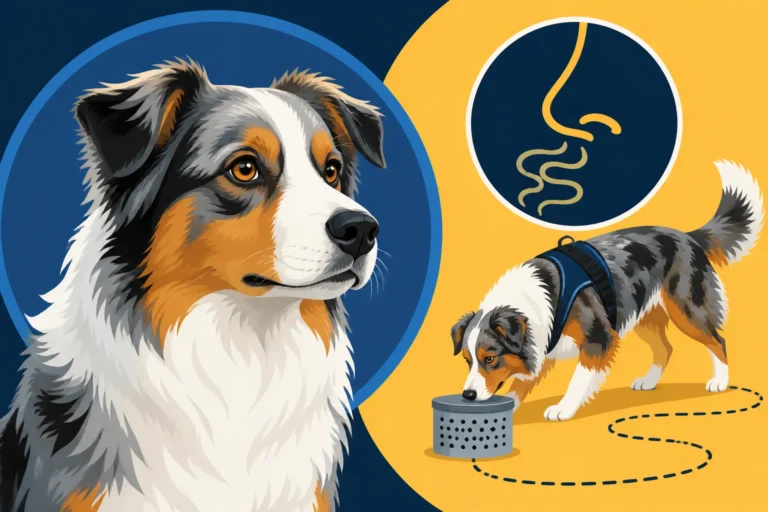
Think about what your Australian Shepherd enjoys most. Is it chasing a disc? Then explore disc dog sports. Do they love to sniff? Scent work or K9 Nose Work can be a fantastic way to engage their powerful noses and provide immense mental satisfaction. Giving an Australian Shepherd a Job Instead of a Walk highlights the importance of this mental engagement. Even simple daily activities can become training opportunities. Ask them to "wait" at the door, "settle" on their mat during dinner, or perform a series of tricks for their meal.
Managing Herding Instincts Appropriately
The Australian Shepherd's strong herding drive is a defining characteristic. In a home environment, this can sometimes manifest as nipping at heels, circling family members, or trying to "herd" children or other pets. It's crucial to understand that you cannot train this instinct out of an Aussie, but you can redirect it into appropriate channels. Australian Shepherd Heel Nipping and How to Redirect It offers specific strategies.
- Structured Play: Engage in play that mimics herding behavior but with acceptable outlets. Flirt poles are excellent for this, allowing them to chase and "catch" a lure without targeting people. Herding balls, larger than a standard soccer ball, can also be a great way for them to push and maneuver an object.
- Teaching Impulse Control: Given their strong chase drive, teaching solid impulse control is paramount. Practice "leave it" with tempting items, "wait" before going through doors, and a rock-solid Australian Shepherd Recall Around Moving Things. This doesn't suppress their drive but teaches them when and where to use it appropriately.
- Exploring Real Herding: If you have access and interest, exploring an actual herding instinct test or working with livestock can be incredibly fulfilling for an Aussie. Even if you don't pursue competitive herding, allowing them to engage with their innate abilities in a controlled environment can do wonders for their overall well-being.
Socialization and Desensitization
Ongoing, positive socialization is vital, even for adult adopted Aussies. This isn't just about meeting other dogs; it's about comfortable exposure to various sights, sounds, people, and environments. If your Aussie is shy around strangers, don't force interactions. Instead, allow them to observe from a distance, rewarding calm behavior. Socializing an Australian Shepherd Beyond the Farm emphasizes broadening their experiences.
For noise sensitivity, gradual desensitization using sound recordings can be helpful, starting at a low volume and slowly increasing it over time. Always pair these exposures with positive experiences, like tasty treats or a favorite game. The goal is to build confidence and resilience, allowing your Australian Shepherd to navigate the world without unnecessary stress.
Remember, training is a lifelong journey. Your bond with your adopted Aussie will deepen with every session, every challenge overcome, and every shared success. Celebrate the small victories, remain patient through the setbacks, and enjoy the incredible companion you've chosen to bring into your life.
Disclaimer
This article is for general informational purposes only and does not constitute professional advice. Laws, prices and regulations vary by location and change over time. Consult a qualified professional for guidance on your specific situation.