Garden Plants Toxic to an Australian Shepherd
It’s a heart-stopping moment many Australian Shepherd owners have faced: you look away for just a second, and your ever-curious, intelligent companion is sniffing, or worse, mouthing something they shouldn't be in the garden. That beautiful backyard you’ve lovingly cultivated might be a hidden minefield for your curious Aussie, whose natural drive to explore, dig, and even "herd" anything new can lead them directly to toxic plants. This guide aims to arm you with the knowledge to identify common garden dangers, understand how your Australian Shepherd might encounter them, and know exactly what to do if the worst happens, helping you create a safer outdoor haven for your beloved dog.
The Sneaky Dangers: Common Toxic Garden Plants
Our gardens are often filled with plants that are perfectly lovely to us but can be incredibly dangerous, even deadly, for our dogs. Australian Shepherds are particularly prone to getting into things due to their high energy and inherent curiosity. They're not just sniffing; they're often investigating with their mouths, which can turn a harmless curiosity into a veterinary emergency.
The "Pretty but Deadly" List
Some of the most beautiful additions to our gardens unfortunately pack the biggest punch when it comes to toxicity. It's a cruel irony that the plants we admire most can be the most hazardous.
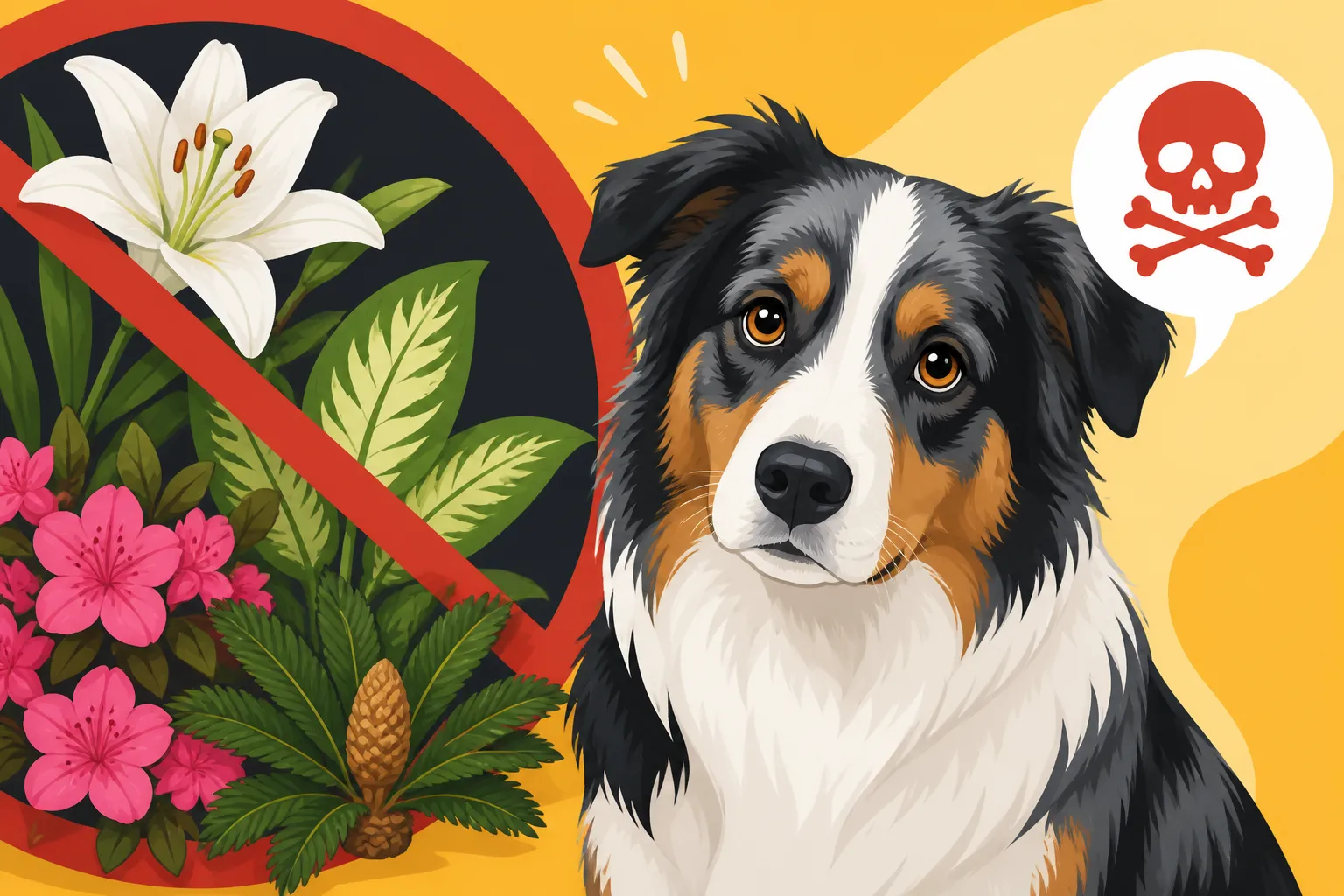
- Azaleas and Rhododendrons: These vibrant flowering shrubs are incredibly common, especially in shaded, acidic gardens. Every single part of these plants – the leaves, flowers, nectar, and even the soil they grow in – contains grayanotoxins, which are highly toxic. Even a small amount can cause severe symptoms in your Australian Shepherd, including excessive drooling, vomiting, diarrhea, weakness, difficulty breathing, and in severe cases, seizures, coma, or even death due to cardiovascular collapse. I’ve heard countless stories of frantic owners calling their vets because their Aussie decided to prune an azalea bush.
- Lilies: While more notorious for their toxicity to cats, many types of lilies (especially true lilies like Easter lilies, Tiger lilies, Daylilies, and Asiatic lilies) can cause kidney failure in dogs. Though generally considered less severe for dogs than cats, ingestion can still lead to gastrointestinal upset, lethargy, and dehydration. It's best to avoid having any type of lily accessible to your Australian Shepherd, just to be safe. The Everyday Foods That Harm an Aussie also goes into other common household toxins.
- Oleander: This attractive shrub is popular in warmer climates for its drought tolerance and beautiful flowers. However, every part of the oleander plant is extremely toxic, containing cardiac glycosides that can disrupt heart function. Even ingesting a small piece can cause severe symptoms like vomiting, diarrhea, lethargy, tremors, and serious heart abnormalities, which can quickly become fatal. This is one you absolutely want to keep out of reach.
- Sago Palm: Often grown as an ornamental plant in temperate zones or indoors in pots, the sago palm is a silent killer. All parts of the plant are toxic, but the seeds (or "nuts") contain the highest concentration of cycasin, a potent hepatotoxin. Ingestion can cause severe liver damage, leading to vomiting, diarrhea, black tarry stools, lethargy, neurological signs like seizures, and ultimately, liver failure. This plant is considered one of the most dangerous for dogs.
- Autumn Crocus: This plant is often confused with the harmless spring crocus or saffron crocus, but it is not the same and is highly toxic. It contains colchicine, which can cause severe gastrointestinal upset, bone marrow suppression, and kidney and liver damage. Symptoms might be delayed, making diagnosis difficult if you don't realize your Aussie has ingested it.
Underground Threats and Hidden Dangers
It’s not just the visible parts of plants that pose a risk. Many plants store their toxins in their roots or bulbs, which are prime targets for a digging Australian Shepherd.
- Tulips and Hyacinths (Bulbs): While the flowers and leaves are mildly irritating, the bulbs of these popular spring flowers are the most concentrated source of toxins, primarily soluble oxalates. If your Australian Shepherd decides to unearth and chew on a bulb, it can lead to intense oral irritation, excessive drooling, vomiting, and diarrhea. Some Aussies have a real talent for excavating, so these can be a real hazard.
- Daffodils (Bulbs): Similar to tulips and hyacinths, daffodil bulbs contain lycorine and other alkaloids that are highly emetic (cause vomiting). Ingestion can lead to severe gastrointestinal distress, including vomiting, diarrhea, abdominal pain, and sometimes cardiac arrhythmias or respiratory depression.
- Castor Bean Plant: This plant is visually striking with its large, often reddish leaves and spiky seed pods. The seeds contain ricin, one of the most potent plant toxins known. Even a few seeds can be lethal. Symptoms, which can be delayed for a day or two, include severe abdominal pain, vomiting, bloody diarrhea, dehydration, weakness, tremors, and seizures.
- Onions, Garlic, Leeks, and Chives: While these are common kitchen staples, they are also frequently found in home gardens. All members of the Allium family are toxic to dogs, causing damage to red blood cells, which can lead to anemia. Symptoms might not appear for several days and include lethargy, weakness, pale gums, rapid breathing, and reddish-brown urine. So, if you've got a vegetable patch, make sure your Aussie isn't 'helping' with the harvest.
Everyday Gardeners' Surprises
Sometimes, the most seemingly innocuous plants can be a hidden danger, catching even seasoned gardeners off guard.
- Rhubarb: The stalks are edible for humans, but the leaves of the rhubarb plant contain high levels of oxalic acid. If your Australian Shepherd eats them, it can cause tremors, drooling, vomiting, diarrhea, and kidney problems. Many people grow rhubarb, and an Aussie might be tempted by the large leaves.
- Tomatoes and Potatoes (Green Parts): While ripe tomatoes and potato tubers are generally fine, the green parts of these plants (leaves, stems, unripe fruit/tubers) contain solanine, a glycoalkaloid. Ingesting these parts can cause gastrointestinal upset, lethargy, weakness, and confusion. It's a good reminder that just because a food is safe for us doesn't mean all parts of the plant are safe for our dogs.
- Marijuana/Cannabis: With changing regulations, cannabis plants are increasingly found in home gardens. While not always lethal, ingestion can cause a range of symptoms from lethargy, uncoordinated movements, drooling, and dilated pupils, to more severe signs like seizures or coma. The effects can be quite distressing for both the dog and the owner.
- Grapes and Raisins (Vines): While the exact toxic compound in grapes and raisins is still unknown, it's clear they can cause acute kidney failure in dogs. While it's typically the fruit that's the concern, it's safer to assume any part of the vine could potentially pose a risk if ingested in quantity. Keep your Aussie away from grape arbors.
How Aussies Get Into Trouble: Identifying the Danger and Symptoms
Australian Shepherds are incredibly intelligent and often highly motivated by their environment. This combination means they are excellent at finding things to get into. Understanding how they encounter toxic plants and what symptoms to look for is crucial for timely intervention.
The Aussie's Drive to Explore
Your Australian Shepherd's natural curiosity and high energy are a double-edged sword. On one hand, it makes them engaging and fun; on the other, it means they’re constantly investigating, often with their mouths.
- Puppy Curiosity: When you bring home an Australian Shepherd puppy, their world is one giant chew toy. They explore everything by mouthing, tasting, and chewing. This is a critical time for puppy-proofing your garden. A young Aussie might dig up a bulb or chew on a low-hanging leaf without a second thought. Our article, The Aussie Puppy Curriculum Month by Month, delves into appropriate training and socialization during these formative weeks, which includes teaching them what not to chew.
- Boredom and Under-Exercise: An Australian Shepherd needs a job, even if that job is just playing fetch, learning new tricks, or going for a long hike. An under-exercised or bored Aussie will often invent their own entertainment, which can include digging, chewing on plants, or trying to "herd" anything that moves, including swaying branches or rustling leaves. Australian Shepherd Behavior Problems From Under-Exercise highlights how essential mental and physical stimulation is to prevent destructive behaviors. If your Aussie isn't getting enough appropriate outlets, a garden full of tempting plants can become a target.
- MDR1 Sensitivity: While not directly related to plant toxicity, it's vital to remember that roughly half of Australian Shepherds carry the MDR1 gene mutation. This mutation affects their ability to process certain drugs and toxins. While most plant toxins don't fall into the same category as the drugs affected by MDR1, having an MDR1-positive Aussie means you should always be extra cautious and inform your vet about their status in any emergency. This sensitivity means their bodies might react differently or more severely to various substances.
- The Appeal of Novelty: New plantings, disturbed soil, or even just a change in wind direction can pique your Aussie's interest. They might be drawn to a specific texture, scent, or even just the act of digging. A freshly planted bed with tulip bulbs, for instance, is practically an invitation for some dogs.
Recognizing the Warning Signs
The symptoms of plant poisoning can vary widely depending on the plant, the amount ingested, and your dog's individual sensitivity. However, there are common signs that should immediately trigger a call to your veterinarian.
- Gastrointestinal Distress: This is the most common sign. Look for sudden or severe vomiting (especially if it contains plant material), diarrhea (which might be bloody or tarry), excessive drooling, lack of appetite, or abdominal pain (your Aussie might seem hunched or reluctant to be touched).
- Lethargy and Weakness: Your normally energetic Australian Shepherd might suddenly seem unusually tired, weak, unsteady on their feet, or reluctant to move.
- Neurological Symptoms: Ingesting certain plants can affect the nervous system. Watch for tremors, muscle twitching, seizures, disorientation, dilated pupils, or a drunken gait.
- Cardiac Issues: Some toxins affect the heart, leading to changes in heart rate (too fast or too slow), irregular heartbeat, or collapse.
- Skin or Oral Irritation: Some plants cause immediate irritation on contact. Look for redness, swelling, or irritation around the mouth, gums, or skin. Your Aussie might paw at their face or rub their mouth.
- Unusual Behavior: Beyond lethargy, any sudden, inexplicable change in your Aussie's behavior, like unusual agitation, confusion, or vocalization, warrants attention.
It's critical not to wait for severe symptoms to appear. If you suspect your Aussie has eaten a toxic plant, call your vet immediately, even if they seem fine. Early intervention can make a life-saving difference.
Emergency Response and Prevention Strategies for a Safer Garden
Knowing what to do in an emergency and, more importantly, how to prevent one in the first place, is key to keeping your Australian Shepherd safe in the garden. Aussies are smart, but they're still dogs, driven by instinct and curiosity.
The Immediate Aftermath: What to Do
Time is of the essence if you suspect plant poisoning. Don't delay.
- Call Your Vet IMMEDIATELY: This is the absolute first step. Don't wait for symptoms to worsen. Have your vet's number, or the number for your nearest emergency vet, readily available. Explain what happened, including the suspected plant, the amount ingested (even a guess helps), and any symptoms you’re observing. Our article What to Do When an Aussie Eats Something Toxic provides a detailed step-by-step guide for these urgent situations.
- Identify the Plant: If possible and safe to do so, try to identify the plant your Australian Shepherd ingested. Take a photo of the plant (leaves, flowers, berries, bark, roots if applicable) or, if safe, bring a small sample with you to the vet. This helps the veterinary team accurately diagnose and treat.
- Do NOT Induce Vomiting Unless Instructed: While inducing vomiting might seem like a good idea, it can sometimes do more harm than good, especially if the plant is caustic or if your dog is already showing neurological symptoms. Always follow your vet's specific instructions.
- Monitor Your Aussie: Keep a close eye on your Australian Shepherd for any changes in their breathing, consciousness, or behavior while you await veterinary advice or transportation.
Proactive Prevention: Creating a Dog-Safe Oasis
Prevention is always better than cure, especially when it comes to toxic plants. With an active and intelligent breed like the Australian Shepherd, being proactive is paramount.
- Know Your Plants: Take the time to walk around your garden and identify every plant. If you’re unsure, use plant identification apps or consult local nurseries. Cross-reference them with reliable lists of toxic plants for dogs (like those from the ASPCA or Pet Poison Helpline). Create a table like this for quick reference:
| Plant Name | Toxic Parts | Common Symptoms in Aussies | Severity |
|---|---|---|---|
| Azalea/Rhododendron | All parts | Vomiting, diarrhea, weakness, difficulty breathing, seizures, coma | High |
| Lilies (True Lilies) | All parts | Vomiting, lethargy, kidney failure | Moderate-High |
| Oleander | All parts | Vomiting, diarrhea, lethargy, tremors, heart abnormalities | High (Fatal) |
| Sago Palm | All parts (especially seeds) | Vomiting, diarrhea, black stools, liver failure, seizures | High (Fatal) |
| Autumn Crocus | All parts | Severe GI upset, bone marrow suppression, organ damage | High |
| Tulip/Hyacinth | Bulbs (most concentrated) | Oral irritation, drooling, vomiting, diarrhea | Moderate |
| Daffodil | Bulbs (most concentrated) | Vomiting, diarrhea, abdominal pain, cardiac issues | Moderate |
| Castor Bean Plant | Seeds | Severe abdominal pain, bloody diarrhea, dehydration, seizures | High (Fatal) |
| Onions/Garlic/Leeks | All parts | Lethargy, weakness, pale gums, anemia | Moderate-High |
| Rhubarb | Leaves | Tremors, drooling, vomiting, diarrhea, kidney problems | Moderate |
| Tomato/Potato (Green) | Leaves, stems, unripe fruit/tubers | GI upset, lethargy, weakness, confusion | Mild-Moderate |
| Marijuana | All parts | Lethargy, uncoordinated movements, drooling, seizures | Moderate |
| Grapes/Raisins | Fruit (assume vine too) | Vomiting, lethargy, acute kidney failure | High |
- Remove or Restrict Access: The safest option for highly toxic plants is removal. If removal isn't feasible (e.g., a large mature tree), create physical barriers. Sturdy fencing (you can find various heights and styles on Amazon to suit your needs), raised garden beds, or thick hedging can help prevent your Australian Shepherd from reaching dangerous areas. Make sure these barriers are secure enough that a determined Aussie can't jump over or dig under them.
- Choose Dog-Friendly Plants: When planting new additions to your garden, prioritize non-toxic options. Many beautiful plants are perfectly safe for dogs, such as sunflowers, petunias, roses, snapdragons, and most herbs like basil, thyme, and rosemary.
- Supervision is Key: Never leave your Australian Shepherd unsupervised in the garden, especially if you have known toxic plants. Even with barriers, a clever Aussie might find a way around them. Active supervision means you can immediately intervene if they show interest in something dangerous.
- "Leave It" and Recall Training: Reinforce strong "leave it" and recall commands daily. A solid "leave it" can be a lifesaver if you spot your Aussie heading towards a questionable plant. Australian Shepherd Recall Around Moving Things is an excellent resource for strengthening this vital command.
- Provide Safe Alternatives: Make sure your Aussie has plenty of appropriate chew toys and mental stimulation to keep them away from garden plants. Consider puzzle toys filled with safe treats or sturdy chew toys from places like Chewy to redirect their chewing instincts. If your Aussie is prone to eating anything outside, consult your vet about muzzle training for garden time – not as a punishment, but as a safety tool.
- Proper Waste Disposal: If you're pruning toxic plants, dispose of the cuttings immediately and securely in a lidded bin that your Australian Shepherd cannot access. Don't leave piles of trimmings where they could be investigated.
- Consider a Designated "Dog Zone": If you have a larger yard, consider creating a specific, fenced-off "dog zone" filled with only safe plants, sturdy chew toys, a digging pit (if they love to dig), and plenty of space to run and play. This gives them a safe area to be an Aussie without constant worry.
- Healthy Diet: While not a direct preventative, a well-fed Australian Shepherd with a balanced diet (perhaps even one of the fresh, human-grade options from a brand like Ollie) might be less inclined to scavenge indiscriminately. However, never rely on this alone, as curiosity often trumps hunger.
By combining vigilance with preventative measures, you can create a beautiful and enriching outdoor space that's safe for your beloved Australian Shepherd.
Disclaimer
This article is for general informational purposes only and does not constitute professional advice. Laws, prices and regulations vary by location and change over time. Consult a qualified professional for guidance on your specific situation.