How Slowly a Working Aussie Should Lose Weight
It's incredibly frustrating when your once lean, active Australian Shepherd starts to put on weight, especially if their working days have slowed down. You know they're built for activity, and seeing them struggle with a few extra pounds feels like you're letting them down. The truth is, managing weight loss in a working breed like an Aussie isn't just about cutting food and running them more; it requires a thoughtful, gradual approach to protect their health and keep their spirits high. This guide will walk you through how to safely and effectively help your Australian Shepherd shed those extra pounds without compromising their well-being.
Understanding the Working Aussie's Metabolism
Australian Shepherds are incredible athletes, bred for endurance and quick bursts of activity on the farm. This means they naturally have a high metabolism and are efficient at converting food into energy. However, this finely tuned system can easily go awry if their lifestyle changes, leading to unexpected weight gain. It's not your fault; it's a common challenge as our dogs' lives evolve from their prime working years.
The Impact of Reduced Activity
Imagine an Aussie who spent years moving sheep, covering miles daily, and constantly engaging their brain. Their body was a calorie-burning machine, accustomed to a high intake of food to fuel that demanding work. Now, if that same dog transitions to a suburban life with regular but less intense walks, or if age means they can no longer keep up with the same pace, their calorie needs plummet. Yet, we often continue to feed them the same amount out of habit or affection. This creates an imbalance where excess calories are stored as fat, rather than burned for work. It’s a silent creeping change that can surprise even the most diligent owner.
Think about a dog who goes from herding cattle for several hours a day to enjoying an hour or two of fetch and walks. The difference in energy expenditure is massive. Their body, still thinking it needs to prepare for the next big job, will store any unused energy. This is a primary reason why many well-loved Aussies start to develop a "middle-aged spread" even with what seems like a reasonable amount of exercise for other breeds.
Genetic Predisposition to Leanness and Why It Changes
Historically, Australian Shepherds were bred for stamina and agility, needing to be lean and muscular to perform their tasks effectively. Their genetics lean towards a body type optimized for sustained effort, not for carrying extra fat. This genetic blueprint means they tend to be naturally athletic and can often maintain a healthy weight with adequate exercise and appropriate food. However, as domestic pets, they often encounter a stark contrast to their ancestral environment. Why an Aussie's Deep Chest Raises Bloat Risk is a prime example of how their physical structure is designed for activity, not sedentary living.
When an Aussie isn't expending the energy their genetics prepare them for, their body can become incredibly efficient at holding onto every calorie. This is especially true if they are spayed or neutered, which can further impact their metabolism. Over time, that efficient, lean body can become prone to storing fat, particularly around the rib cage and abdomen. Understanding this inherent efficiency is crucial because it means even small, seemingly insignificant changes in diet or activity can have a big impact on their weight over weeks and months.
Setting Realistic Weight Loss Goals
When you notice your Aussie is a bit chunky, the first instinct might be to drastically cut food or ramp up exercise. But for a breed prone to joint issues and with a history of high activity, a slow and steady approach is paramount. Rushing the process can lead to muscle loss, nutritional deficiencies, and even injury.
Defining a Healthy Body Condition Score
Before embarking on any weight loss journey, it’s essential to know what a healthy Australian Shepherd should look and feel like. This is where a Body Condition Score (BCS) comes in handy. It's a simple, hands-on assessment you can do at home, but it's even better when confirmed by your veterinarian. You should be able to feel your Aussie’s ribs without pressing hard, and they should have a visible waistline when viewed from above. When viewed from the side, their abdomen should tuck up, not sag down. Scoring an Aussie Body Condition by Hand goes into detail on how to do this yourself.
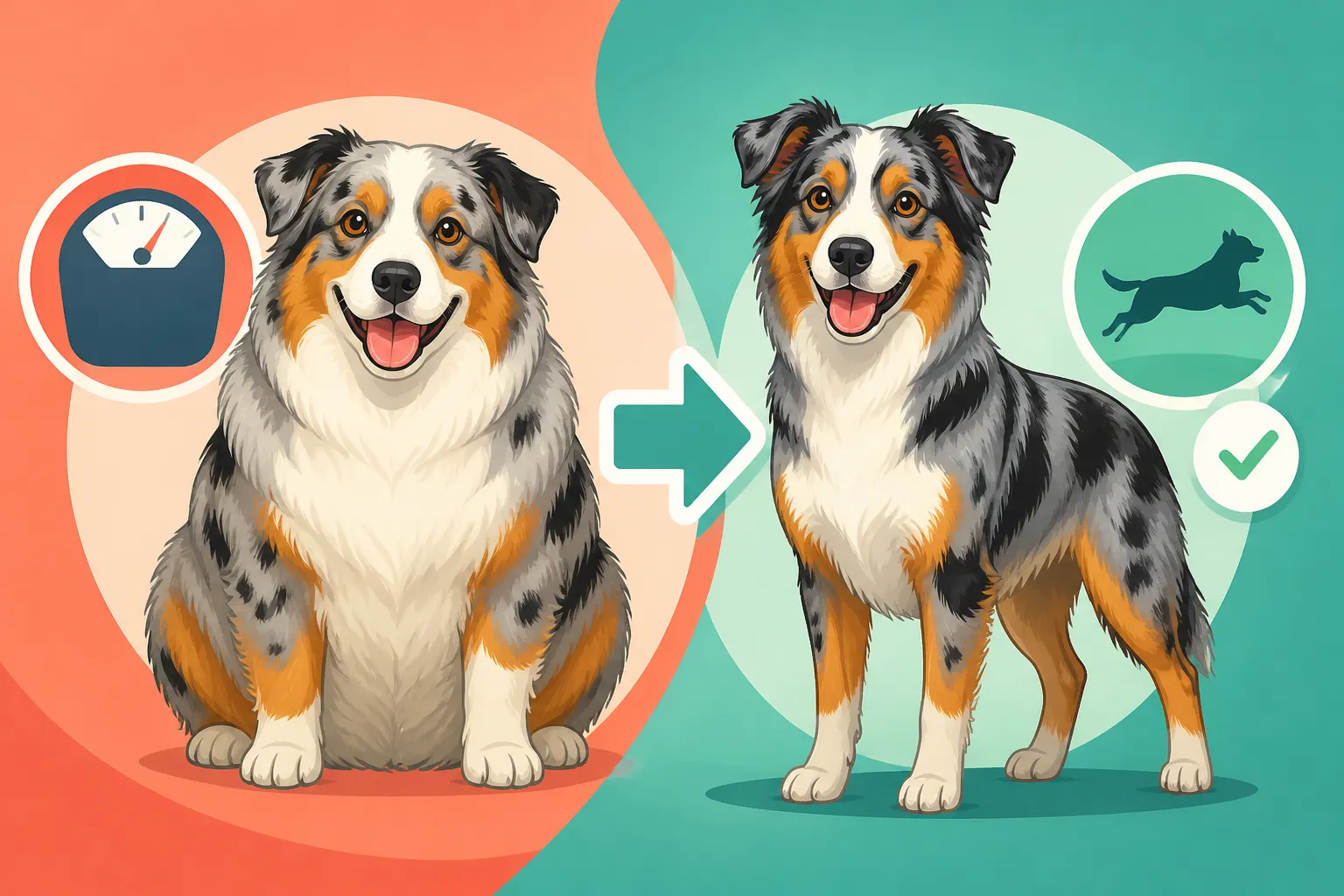
A dog with a healthy BCS will generally have a sleek, athletic appearance, even if they're not actively working livestock. An overweight Aussie, by contrast, will have ribs that are hard to feel, a broader back, and little to no discernible waist. Establishing their ideal weight and BCS is the foundation of a successful weight loss plan. It gives you a clear, achievable target that prioritizes their long-term health.
The Dangers of Rapid Weight Loss
It’s tempting to want quick results, but rapid weight loss is detrimental to any dog, especially a breed like the Australian Shepherd. Crash dieting can lead to muscle loss instead of fat loss, weakening their already hard-working joints and potentially impacting their overall energy levels and mood. It can also create nutrient deficiencies, leaving them feeling lethargic and unwell. Moreover, a dog who is constantly hungry can develop behavioral issues, becoming more prone to counter-surfing, resource guarding, or begging.
Beyond the physical risks, rapid weight loss is often unsustainable. Just like with humans, if the changes are too extreme, it’s harder to stick to them. A healthy weight loss rate for a dog is typically about 1-2% of their body weight per week. This might seem slow, but it's a safe, manageable pace that allows their body to adjust and ensures the weight stays off in the long run. If your Aussie weighs 60 pounds, a healthy weekly loss would be between 0.6 and 1.2 pounds. This measured approach prevents the "yo-yo" effect and promotes lasting health.
Consulting Your Vet: The Absolute Necessity
Before you change anything significant in your Aussie's diet or exercise routine, a visit to your veterinarian is non-negotiable. They are your best resource and will help rule out any underlying medical conditions that might be contributing to weight gain, such as thyroid issues or other metabolic problems. Australian Shepherd Autoimmune Thyroiditis can sometimes manifest as weight gain, so it's vital to get a full check-up.
Your vet can help you establish a realistic target weight, recommend specific dietary changes, and advise on safe exercise levels, especially if your Aussie has existing joint issues like those discussed in Australian Shepherd Hip Dysplasia and Working Joints. They can also help you calculate the appropriate daily calorie intake to achieve gradual, healthy weight loss, taking into account your dog's age, current weight, and activity level. This professional guidance ensures your plan is tailored to your individual Aussie and is medically sound.
Adjusting Diet for Healthy Weight Loss
Dietary changes are usually the most impactful part of a weight loss plan for an Australian Shepherd. Even a working Aussie can gain weight if their food intake isn't perfectly matched to their energy output. The goal isn't just to feed them less, but to feed them smarter, ensuring they still get all the nutrients they need while gradually reducing calories.
Gradual Calorie Reduction
The biggest mistake people make is dramatically slashing their dog's food portions overnight. This leads to a constantly hungry dog, which is miserable for everyone involved. Instead, aim for a gradual reduction in calories, typically starting with a 10-20% decrease from their current intake. Your vet can give you a starting calorie target based on your Aussie's ideal weight. Daily Calories for a Thirty-Five to Seventy Pound Aussie provides a general framework, but individual needs vary.
Once you’ve established a starting point, monitor their weight weekly. If they're losing weight at a healthy pace (1-2% of body weight per week), stick with it. If not, you can make further small adjustments, reducing calories by another 5-10%. Consistency is crucial here. Measure food accurately every single time – a kitchen scale is your best friend. Those "extra scoops" or handfuls of kibble add up quickly. Remember that even treats contribute to their daily calorie count, so factor those in or swap them for healthier, low-calorie options like plain green beans or carrot sticks.
Choosing the Right Food
Not all dog foods are created equal, especially when it comes to weight management. You’ll want to look for high-quality commercial foods specifically formulated for weight loss or "light" diets. These foods typically have a lower calorie density, meaning your Aussie can eat a satisfying volume without consuming too many calories. They also tend to be higher in fiber to help them feel full and protein to maintain muscle mass.
When browsing options on a site like Chewy or at your local pet supply store, carefully read the nutritional labels. Look for foods with good quality animal protein as the first ingredient and a moderate fat content. Some owners also explore fresh food delivery services like Ollie, which can offer precise portion control and nutrient balance, though you'll still need to work with them to ensure the calorie count is appropriate for weight loss. Avoid "grain-free" unless specifically advised by your vet, as the benefit for weight loss isn't guaranteed and some research suggests potential concerns with certain formulations.
The Role of Fiber and Protein
Fiber and protein are your secret weapons in a weight loss diet. Protein is essential for maintaining muscle mass while your Aussie loses fat. It also helps them feel fuller for longer. When a dog loses weight too quickly or on a diet lacking adequate protein, they can lose valuable muscle, which is counterproductive for an athletic breed.
Fiber, often found in vegetables like green beans, pumpkin, or specific weight-management kibbles, helps promote satiety. It adds bulk to their meal without adding significant calories, making your Aussie feel satisfied after eating. You can often supplement their regular food with small amounts of vet-approved, safe vegetables to boost fiber and volume. This strategy helps prevent the constant hunger pangs that can derail a diet. Cutting Aussie Calories Without Cutting Meals often involves incorporating more fiber-rich ingredients to achieve this balance.
Incorporating Smart Exercise Strategies
While diet is typically 70-80% of the weight loss equation, exercise plays a vital role in burning calories, building muscle, and maintaining your Aussie's mental health. However, for an overweight dog, especially one who might be older or have existing joint issues, the type and intensity of exercise need to be carefully considered. It’s about being smart, not just doing more.
Quality Over Quantity
For an Australian Shepherd, exercise isn't just about logging miles. It's about engagement. A bored Aussie might burn some calories on a long walk, but a mentally stimulated one will often be more content and burn more diverse types of energy. Instead of endless, repetitive fetch sessions that could strain joints, incorporate activities that engage their intelligent minds. Think about scent work, puzzle toys, or even trick training. Mental Work That Actually Tires an Australian Shepherd offers great ideas for this.
Even simple changes can make a difference. Instead of just letting them out in the yard, engage them in a focused game of hide-and-seek with their favorite toy or use a flirt pole for short, intense bursts of play that mimic herding movements without sustained high-impact running. This type of quality exercise targets their inherent drives and satisfies them in a way a simple walk might not.
Low-Impact Activities for Overweight Aussies
If your Aussie is significantly overweight, high-impact activities like jumping, intense agility, or long-distance running can put undue stress on their joints, potentially leading to injury or exacerbating existing conditions like Australian Shepherd Hip Dysplasia and OFA Scoring. Prioritize low-impact exercises that build strength without pounding their joints.
Swimming is an excellent option as it’s zero-impact and provides a full-body workout. If swimming isn’t feasible, brisk walks on soft surfaces like grass or trails (rather than pavement) are better. Incorporate short bursts of varied activities. For instance, a 10-minute walk, followed by 5 minutes of basic obedience commands, then another 10-minute walk. Even controlled, short uphill walks can help build muscle without extreme strain. Always observe your Aussie for signs of discomfort or fatigue and stop before they overdo it.
Consistency is Key
The most effective exercise plan is one you can stick to consistently. Short, frequent bouts of activity are often more beneficial than one long, exhausting session once a week. Aim for several shorter walks or play sessions throughout the day, rather than trying to fit all their exercise into one grueling hour. This aligns with Australian Shepherd Exercise at One to Two Hours a Day, emphasizing distribution.
Think about incorporating a daily routine. A morning walk, a midday brain game, and an evening play session or training practice. Even on days when the weather is bad, indoor activities like stairs (if appropriate for their joints), puzzle feeders from Amazon, or interactive toys can keep them moving. Consistency helps to slowly increase their metabolic rate and burn fat over time.
Here’s a simplified guide to the gradual adjustments:
| Stage | Target Weight Loss (per week) | Calorie Reduction (from current) | Exercise Adjustment (from current) | Focus |
|---|---|---|---|---|
| Initial | 1% of body weight | 10-15% | Maintain current, add 1-2 new activities | Establish baseline, gentle diet change |
| Moderate | 1.5% of body weight | 15-20% | Increase duration/intensity by 10-15% | Introduce higher fiber foods, varied exercise |
| Advanced | 1.5-2% of body weight | 20-25% | Increase duration/intensity by 15-20% | Refine diet, focus on muscle building |
| Maintenance | 0% (stable) | Adjust to maintain ideal weight | Maintain consistent, enjoyable routine | Long-term healthy habits |
Remember, this is a general guideline. Your vet's specific recommendations, combined with your Aussie's individual response, should always guide your plan. Monitoring their energy levels, coat condition, and overall demeanor will tell you if the plan is working well for them.
Disclaimer
This article is for general informational purposes only and does not constitute professional advice. Laws, prices and regulations vary by location and change over time. Consult a qualified professional for guidance on your specific situation.