Australian Shepherd Behavior Problems From Under-Exercise
It's incredibly frustrating, isn't it? You love your Australian Shepherd to bits, but sometimes you walk into a house that looks like a tornado just ripped through it, or your ears are ringing from a barking marathon. You might be left wondering if your intelligent, high-energy companion is purposefully trying to drive you up the wall. More often than not, these "bad" behaviors aren't malicious, but rather loud, clear signals from a brilliant dog that isn't getting its fundamental needs met. This guide dives deep into the specific behavior problems that arise when an Australian Shepherd is under-exercised and under-stimulated, and crucially, what you can do to bring peace back to your home and joy back to your Aussie.
The Root Cause: Why Under-Exercise Creates Chaos
Australian Shepherds were literally bred for a job. Their ancestors spent entire days running, thinking, and reacting to livestock. That deep-seated drive isn't just something you can walk out of them with a quick stroll around the block. When that immense physical and mental energy isn't channeled appropriately, it has to go somewhere, and unfortunately, that "somewhere" often manifests as problematic behaviors in our homes. It’s not about them being naughty; it’s about them trying to fulfill their inherent programming in the only ways they know how within the confines of a human household.
Think of it like trying to contain a powerful spring. If you don't release its tension, it's going to find its own way to unwind, often explosively and inconveniently. An under-exercised Aussie isn't just bored; they're genuinely stressed and unfulfilled, leading to a cascade of undesirable actions. Understanding this fundamental truth is the first step toward resolving the issues.
More Than Just Physical Energy
Many people assume "exercise" simply means letting the dog run around for a bit. While physical exertion is absolutely critical for an Australian Shepherd, it's only one piece of the puzzle. These dogs are intelligent problem-solvers, bred to make quick decisions, work independently, and analyze situations. Their brains are constantly whirring, seeking engagement. If their minds aren't challenged, they become just as frustrated as their bodies.
Imagine being a highly intelligent person stuck in a room with nothing to do all day. You might start inventing games, taking things apart, or making noise just to feel something. Your Aussie is no different. They need tasks, puzzles, and opportunities to use their clever minds. A long walk that doesn't engage their brain might leave them physically tired, but mentally still wired and ready for action, leading to destructive habits. Why Physical Exercise Alone Never Settles an Aussie is a powerful reminder of this.
The Herding Instinct Unleashed Indoors
The quintessential trait of an Australian Shepherd is their intense herding drive. It's literally their operating system. They are driven to gather, control, and move things. In a ranch environment, this is invaluable. In a suburban home with no sheep, this instinct doesn't just vanish; it redirects. Without proper outlets, your furniture, your children, your other pets, or even inanimate objects become targets for their innate need to "work."
This can look like your Aussie circling family members, nudging them, or even nipping at heels as if they were errant sheep. They might try to "herd" the vacuum cleaner, the mail carrier, or anything that moves through their perceived territory. This isn't aggression; it's an overwhelming, unchanneled natural impulse. Understanding The Australian Shepherd Herding Drive You Cannot Train Out is key to managing these behaviors and providing appropriate alternatives.
Common Behavior Problems Born from Boredom
When an Australian Shepherd isn't getting enough physical and mental exercise, their unmet needs tend to manifest in ways that are frustrating, damaging, and often misunderstood by their human companions. These aren't signs of a "bad" dog, but a deeply bored and unfulfilled one seeking any form of stimulation. Recognizing these symptoms as cries for engagement is the first step toward effective intervention.
It's easy to get angry or upset when your home is in disarray or your dog won't settle. However, taking a step back and realizing these behaviors are often instinctual responses to boredom can help you approach the situation with more empathy and a problem-solving mindset rather than one of punishment. Your Aussie is simply trying to find a "job," and if you don't provide one, they'll create their own, usually at your expense.
Destructive Chewing and Digging
Is your furniture becoming a chew toy? Are your flowerbeds riddled with holes? Destructive chewing and digging are classic signs of an Aussie with too much energy and not enough to do. Chewing is a natural, stress-relieving behavior for dogs, and for a powerful breed like the Australian Shepherd, it's also a way to work their jaws and release pent-up energy. If they don't have appropriate outlets, your couch legs or favorite shoes become fair game. They're not being vindictive; they're simply responding to an overwhelming urge.
Digging, too, can be a form of self-entertainment, a way to expend physical energy, or even an attempt to create a cooler spot to rest if they're overheating. An Aussie might dig up your prize-winning roses not because they're spiteful, but because the scent of the soil is interesting, or the act of digging itself is satisfying their need to work. Providing appropriate chew toys and a designated digging area (if possible) can redirect this natural inclination.
Excessive Barking and Howling
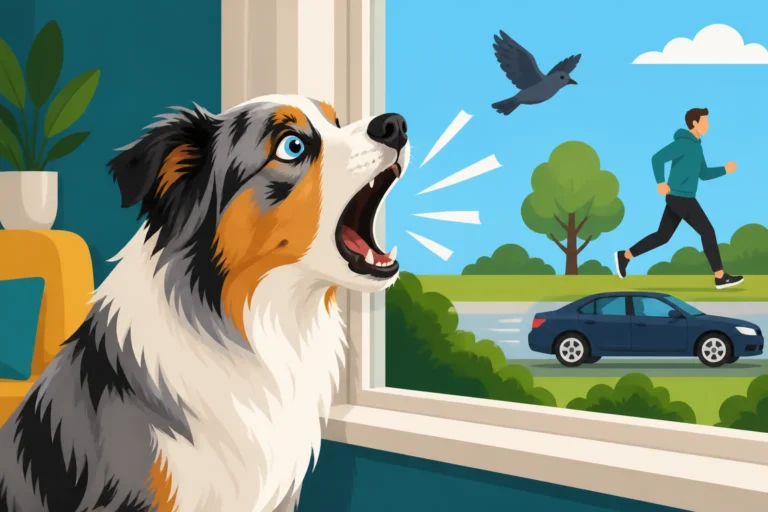
The constant alert barking, the demand barking, the seemingly endless howling at nothing in particular – this is often a direct result of an under-exercised and under-stimulated Australian Shepherd. Aussies are naturally vocal dogs; they were bred to alert shepherds to perceived threats or to communicate with livestock. However, when they're bored, barking becomes a way to attract attention, relieve stress, or simply make some noise in an otherwise quiet and uninteresting environment.
An Aussie confined without enough to do might bark at every leaf that blows past the window, every person walking by, or simply because they're restless and seeking interaction. This can be incredibly disruptive to neighbors and stressful for the household. It's their way of saying, "I'm here! I'm bored! Entertain me!" Addressing Australian Shepherd Barking and Noise Sensitivity means looking beyond the noise itself and identifying the underlying need for more activity and mental engagement.
Nipping, Herding, and Chasing
Perhaps the most iconic, and often problematic, behavior stemming from an under-exercised Australian Shepherd is the redirection of their herding instinct onto people or other pets. This manifests as heel nipping, circling family members, pushing, or relentlessly chasing children or other animals in the home. It’s not aggression in the typical sense; it’s a dog attempting to "work" and control movement, exactly as they would with a flock of sheep.
Toddlers running, bikes zooming past, even just people walking quickly through the house can trigger this deep-seated desire to gather and manage. While it might seem cute in a puppy, an adult Australian Shepherd nipping at heels can cause pain and fear, especially in small children. It's crucial to understand Why an Australian Shepherd Nips at Heels and to proactively provide appropriate, safe outlets for this powerful drive, such as herding balls or structured games of fetch. Redirecting these behaviors early and consistently is vital for a harmonious home.
The Mental Toll: Anxiety and Frustration in Under-Stimulated Aussies
Beyond the overt destructive behaviors, an Australian Shepherd that isn't sufficiently exercised, both physically and mentally, often struggles with a silent, internal battle of anxiety and frustration. These aren't always immediately obvious to an owner, but they significantly impact the dog's quality of life and can lead to more deeply ingrained behavioral issues. It's a heavy burden for such intelligent and sensitive creatures to carry, and it often manifests as a hyper-vigilance, an inability to relax, or an overreaction to everyday stimuli.
We often underestimate the psychological impact of boredom and under-stimulation on our dogs. For an Aussie, whose brain is wired for constant engagement and problem-solving, a lack of purpose can be genuinely distressing. This internal turmoil can make them difficult to live with, not because they are inherently "bad," but because they are constantly battling their own unmet instincts and needs.
Overarousal and Reactivity
An under-exercised Australian Shepherd is often a dog living in a constant state of overarousal. This means they are highly stimulated by everything in their environment and struggle to calm down. A simple walk might turn into a lunging, barking, pulling nightmare because every squirrel, every passing dog, or every person is seen as an incredibly exciting, or sometimes threatening, event they can't properly process. Their threshold for managing stimuli becomes very low.
This overarousal easily tips into reactivity. An Aussie Reacting to Dogs on the Lead or An Australian Shepherd Lunging at Passing Dogs are common scenarios. They might bark and lunge at things that wouldn't bother a calm dog, simply because their internal "cup" of stress and energy is already full, and any small trigger makes it overflow. This isn't necessarily aggression, but rather an inability to cope with normal environmental input due to pent-up energy and mental frustration. Teaching an Aussie an "off switch" and providing ample, appropriate exercise are critical to addressing this.
Anxious Pacing and Shadow Chasing
Have you ever noticed your Aussie relentlessly pacing circuits around the living room, unable to settle? Or maybe they obsessively stare at walls, "hunting" dust motes or shadows on the floor? These seemingly peculiar behaviors are often signs of profound anxiety and obsessive tendencies born from a lack of appropriate mental and physical outlets. An under-stimulated Aussie's brain is still searching for a job, and if a real one isn't provided, it will invent one.
Shadow chasing or light chasing can become an addictive, self-reinforcing behavior for an Aussie who is desperate for mental engagement. What starts as a harmless distraction can escalate into an obsessive-compulsive disorder. Similarly, constant pacing is a physical manifestation of their restless mind and body. They are literally walking off anxiety because they don't have other, more constructive ways to release that internal tension. Providing Mental Work That Actually Tires an Australian Shepherd can redirect these frustrating habits.
Resource Guarding and Demand Barking
While not always directly caused by under-exercise, the underlying frustration and anxiety of an under-stimulated Aussie can certainly exacerbate issues like resource guarding or demand barking. A dog who feels generally unfulfilled might become more possessive over the few resources they do have (toys, food, even their human's attention) because they lack overall contentment. This isn't about being greedy; it's about trying to control their limited environment.
Similarly, demand barking—that insistent, often ear-splitting vocalization to get what they want—is amplified in an Aussie who isn't getting enough proactive engagement. They learn that if they make enough noise, you'll eventually cave and give them attention, food, or access. This behavior thrives in an environment where the dog feels the need to constantly advocate for its own needs because those needs aren't being met through a structured, fulfilling routine. Breaking this cycle involves providing plenty of appropriate exercise and mental stimulation before the demand barking starts.
Beyond the Walk: Fulfilling Your Aussie's Needs
It's clear that simply tossing a ball in the yard for fifteen minutes isn't going to cut it for an Australian Shepherd. Their needs go far beyond basic physical activity. To truly prevent and address behavior problems stemming from under-exercise, we need to embrace a holistic approach that integrates mental stimulation, structured training, and a variety of physical outlets. This means becoming proactive in managing their energy and intellect, rather than reactive to their "misbehaviors."
The key is to think of your Aussie's day as a balanced diet of different activities. Just as you wouldn't eat only one type of food, your dog shouldn't have only one type of exercise. Variety, challenge, and consistency are the ingredients for a happy, well-adjusted Australian Shepherd who can finally relax in your home. It’s about channeling that incredible drive into positive pursuits.
Incorporating Mental Stimulation Daily
Mental exercise is arguably just as important as physical exercise for an Australian Shepherd, if not more so for preventing frustration. Their minds are constantly seeking puzzles to solve and tasks to complete. There are countless ways to provide this engagement throughout the day without necessarily leaving your house. Think about how their wild ancestors would have had to hunt, forage, and navigate complex social situations – these all require significant brainpower.
Consider puzzle toys, which can turn mealtime into a challenging game. Instead of just putting food in a bowl, use a KONG, a snuffle mat, or a slow feeder. Scent games, where you hide treats around the house and encourage your Aussie to sniff them out, are fantastic for engaging their powerful noses and minds. Even short trick training sessions, learning new cues, or practicing existing ones can be incredibly tiring for their brains. These activities offer Scent Games That Tire an Australian Shepherd and Trick Training as Aussie Mental Work, providing outlets that soothe their busy minds.
Structured Play and Training Sessions
Unstructured play is fun, but structured play and training sessions are where your Aussie truly thrives and learns to channel their energy constructively. These aren't just about teaching commands; they're about building a working relationship, fostering focus, and providing a sense of purpose. An Australian Shepherd wants to please you and wants a job to do. Structured sessions provide that.
This could involve practicing obedience commands in new environments, setting up a mini-agility course in your yard, or engaging in advanced trick training. Even a simple game of fetch can be structured with "wait" and "drop it" commands. Online training programs, such as those offered by BAXTER & Bella, can provide a wealth of structured lessons and exercises that cater specifically to high-drive dogs, guiding you through a curriculum that builds skills and strengthens your bond. The goal is to make them think while they move, ensuring they're both physically and mentally engaged.
Finding the Right Balance of Exercise
While mental stimulation and structured play are crucial, physical exercise is still the bedrock of an Australian Shepherd's well-being. However, it's not just about raw duration; it's about intensity, variety, and appropriateness. Two hours of off-leash running in a varied environment, incorporating some training or scent work, is far more valuable than two hours of simply jogging on a leash down the same street every day. A good goal is often Two Aussie Hours a Day and What Counts.
A mix of activities works best. Think about combining brisk walks, runs, hikes, swimming (if your Aussie enjoys it), and off-leash play in secure areas. Consider dog sports like agility, flyball, or disc dog, which perfectly combine physical exertion with mental strategy. Remember to tailor the exercise to your dog's age and physical condition. A young puppy has different needs and limitations than a senior Aussie. The table below summarizes some ideas for balancing these needs.
| Exercise Type | Physical Focus | Mental Focus | Benefits for Aussies |
|---|---|---|---|
| Brisk Walks/Hikes | Endurance, leg strength | Environmental sniffing, trail navigation | Burns energy, exposes to new stimuli, good bonding |
| Running/Jogging | Cardiovascular fitness, stamina | Focus on pace, ignoring distractions | Excellent for high-energy release, builds endurance |
| Fetch/Disc Play | Sprinting, jumping, retrieving | Anticipation, tracking, "leave it" commands | High-intensity burst, reinforces recall |
| Agility/Flyball | Coordination, speed, balance | Problem-solving courses, handler communication | Pinnacle of combined physical/mental work, builds focus |
| Scent Work/Nosework | Low physical impact | Intense concentration, problem-solving, searching | Mentally exhausting, builds confidence, suitable for all ages |
| Puzzle Toys/Feeders | Minimal physical | Strategic thinking, fine motor skills | Great for meal times, independent enrichment |
| Trick Training | Minor physical, body awareness | Learning new commands, sequencing | Builds confidence, strengthens bond, mentally tiring |
| Herding Balls | Pushing, chasing, controlling movement | Instinctual outlet, strategic herding | Safe way to satisfy herding drive without livestock |
Practical Strategies for Re-Balancing Your Aussie
Now that we understand why these behaviors happen and what kind of exercise and stimulation an Australian Shepherd truly needs, it’s time to talk about the practical steps you can take to implement these changes. It’s not just about adding more activities, but about structuring your day and equipping yourself with the right tools and mindset to set your Aussie up for success. Consistency and patience are your best friends here.
Remember, re-balancing an under-exercised dog isn't an overnight fix. It's a journey that requires dedication, understanding, and a willingness to adjust your routine. But the payoff—a calm, happy, and well-behaved Australian Shepherd—is immeasurable. You'll be amazed at how much your dog's "personality" improves when their fundamental needs are consistently met.
Crafting a Daily Routine
One of the most powerful tools in managing an Australian Shepherd's energy is a consistent daily routine. Dogs, especially intelligent, driven breeds like Aussies, thrive on predictability. Knowing what to expect throughout the day can significantly reduce anxiety and help them settle. When they know when their exercise, training, and downtime are coming, they're less likely to try to create their own entertainment.
Start by mapping out a typical day. Incorporate early morning exercise (a brisk walk, run, or a game of fetch) to "take the edge off" their morning energy. Follow this with a mental stimulation activity, like a puzzle feeder for breakfast. Midday could include a shorter walk, a training session, or some quiet chew time. The evening should ideally involve another significant exercise period and a dedicated training session. Building an Australian Shepherd Exercise Routine around your schedule, and sticking to it as much as possible, provides structure and helps your Aussie understand the flow of their day.
Enlisting Help: Daycare and Dog Walkers
Let's be realistic: not everyone has the time or physical capacity to provide 1-2 hours of varied, intense exercise and mental stimulation every single day, especially if you work full-time. And that's okay! Acknowledging this limitation is crucial, and thankfully, there are excellent resources available to help you meet your Aussie's needs. Don't feel guilty about seeking assistance; it's a sign of a responsible owner committed to their dog's well-being.
High-quality dog daycares that cater to energetic breeds can be a lifesaver. Look for facilities with large play areas, trained staff, and structured activities, not just free-for-all playtime. A good daycare will ensure your Aussie gets plenty of physical and social interaction. Similarly, hiring a professional dog walker who understands the Australian Shepherd breed and can provide more than just a quick leash walk can make a huge difference. They can often take your dog on longer, more adventurous outings or incorporate training elements. Daycares That Can Tire an Aussie Out are worth seeking out.
Tools and Toys for Enrichment
The right tools and toys can be instrumental in providing both physical and mental enrichment, especially when you can't be actively engaging with your Aussie every second of the day. This isn't about replacing your interaction, but supplementing it and empowering your dog to entertain themselves constructively. Think about durability and purpose when selecting items for an Australian Shepherd.
For powerful chewers, durable chew toys like those from KONG or Nylabone, found easily on Amazon, are essential to redirect destructive chewing from your furniture. Puzzle feeders, as mentioned earlier, transform mealtime into a mental workout. Interactive toys, like treat-dispensing balls or snuffle mats, keep their minds busy. For physical exercise, a sturdy flirt pole can provide a fantastic outlet for their chase drive in a controlled way, without you needing to run miles. Long lines are invaluable for practicing recall in open, safe spaces. Chew Toys That Last With an Australian Shepherd and Puzzle Feeders and Enrichment Gear for an Aussie are excellent investments.
When to Seek Professional Guidance
Even with the best intentions and consistent effort, sometimes behavior problems persist or escalate beyond what you feel equipped to handle on your own. This is not a sign of failure; it's a sign that you're a responsible owner who knows when to call in the experts. Australian Shepherds are complex, intelligent, and sometimes stubborn dogs, and a fresh perspective from a qualified professional can make all the difference. Early intervention is always better than waiting until behaviors become deeply ingrained and harder to modify.
Don't let embarrassment or frustration prevent you from seeking help. A good trainer or veterinary behaviorist understands the unique challenges of the breed and can provide tailored strategies, support, and guidance that will ultimately benefit both you and your beloved Aussie.
Identifying Escalating Behaviors
While general nuisance behaviors like excessive barking or occasional chewing can often be managed with increased exercise and mental stimulation, there are certain escalating behaviors that signal a need for professional intervention. These include persistent aggression (beyond herding nips), severe separation anxiety leading to self-harm or extreme destruction, or any sudden, drastic change in temperament. If your Aussie is showing signs of deep-seated fear, uncontrollable reactivity, or genuine aggression towards people or other animals, it's time to act.
Other warning signs might include an inability to settle at all, constant pacing even after significant exercise, or obsessive-compulsive behaviors like incessant licking, shadow chasing that interferes with their daily life, or repetitive vocalizations. If you've tried implementing changes consistently for several weeks and see no improvement, or if you feel unsafe or overwhelmed, that's a clear signal to seek help. Ignoring these signs can lead to worsening problems and a breakdown in your relationship with your dog.
Choosing a Trainer or Behaviorist
Finding the right professional is crucial, as not all trainers are created equal, especially when dealing with a high-drive breed like the Australian Shepherd. Look for trainers who use positive reinforcement methods and have specific experience with herding breeds. Avoid anyone who suggests harsh corrections, punitive tools, or promises a "quick fix" for complex behavioral issues. A good trainer will teach you how to work with your dog, not just train your dog for you.
For more severe issues, such as anxiety, aggression, or obsessive behaviors, a certified professional dog behaviorist (CPDT-KA, CDBC) or a veterinary behaviorist (DACVB) may be necessary. These professionals have specialized education and experience in animal behavior and can often work in conjunction with your veterinarian to rule out medical causes and develop comprehensive behavior modification plans, sometimes including medication if appropriate. Ask for references and observe a session before committing. Finding a Trainer Who Understands an Aussie is paramount.
The Importance of a Vet Check
Before embarking on any major behavior modification plan, it is absolutely essential to get a full veterinary check-up for your Australian Shepherd. Many behavioral problems, including sudden aggression, increased anxiety, changes in energy levels, or house-soiling, can have underlying medical causes. Pain, thyroid issues, neurological problems, or even dental discomfort can manifest as behavioral changes.
Your veterinarian can perform a thorough physical exam, blood tests, and other diagnostics to rule out any medical conditions that might be contributing to your Aussie's behavior. For example, joint pain from hip or elbow dysplasia could make a dog irritable or less tolerant of being touched, while a seizure disorder could lead to post-ictal confusion and anxiety. Addressing any underlying health issues can often resolve or significantly improve the behavioral symptoms, allowing any subsequent training to be much more effective. Sudden Aussie Aggression and a Vet Check is always the first step.
Disclaimer
This article is for general informational purposes only and does not constitute professional advice. Laws, prices and regulations vary by location and change over time. Consult a qualified professional for guidance on your specific situation.