Australian Shepherd Recall Around Moving Things
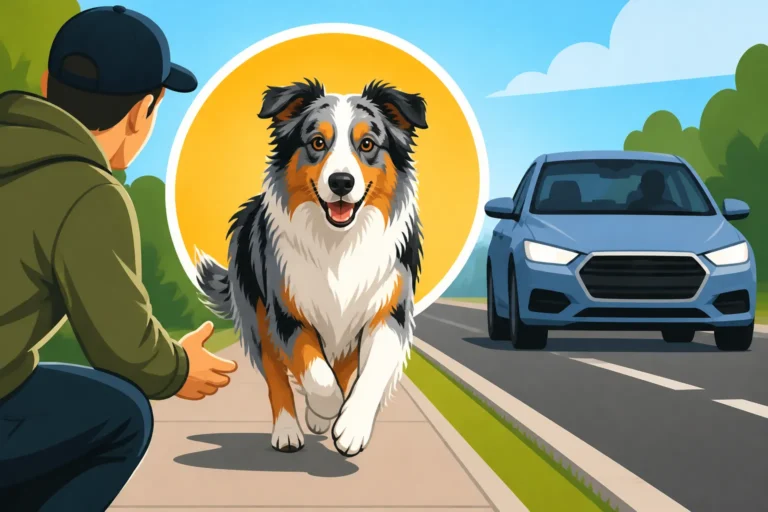
Oh, the sheer panic when your beloved Australian Shepherd spots a squirrel, a cyclist, or even just a falling leaf, and that usually reliable recall vanishes into thin air! It's a common, incredibly frustrating, and potentially dangerous situation for so many Aussie parents. We pour hours into training, only to have all that hard work seem to evaporate the moment something exciting moves. This comprehensive guide is here to walk you through understanding why your Aussie behaves this way around moving things and, more importantly, how to build a rock-solid recall that stands up to even the most enticing distractions.
Understanding the Australian Shepherd's Innate Drive to Chase
Let's be real: your Australian Shepherd isn't trying to be disobedient when they bolt after a rabbit. They're simply being an Australian Shepherd. These dogs were bred for centuries to control and move livestock, which means they have an incredibly strong, deeply ingrained instinct to react to movement. It’s not a flaw in their personality; it's practically their operating system.
The Herding Instinct: Why Movement is Magnetic
Imagine being engineered specifically to notice and respond to motion. That's your Aussie. Their ancestors spent their days watching, circling, and directing sheep and cattle based on subtle shifts and quick movements. This isn't just about big, dramatic dashes; it's about an acute awareness of anything that changes its position in their peripheral vision. So, when a distant dog starts running or a child zips by on a scooter, it's like an internal alarm bell goes off. That movement triggers an ancient, powerful response that often overrides learned commands, especially if the groundwork for recall hasn't been consistently proofed against such high-value distractions. It’s part of The Australian Shepherd Herding Drive You Cannot Train Out.
This inherent drive means that what looks like "just running away" to us is, for them, an automatic urge to control, collect, or investigate that moving object. It's a fundamental part of Why Herding Instinct Is the Aussie Operating System. This instinct isn't malicious; it's just powerful. They’re not thinking, "I'm going to ignore my human." They're thinking (or rather, their ancient brain is reacting), "Movement! Must observe! Must engage!" And once that instinct kicks in, it can be incredibly difficult to break their focus. A simple "come" might as well be spoken in a foreign language when a flock of pigeons takes flight.
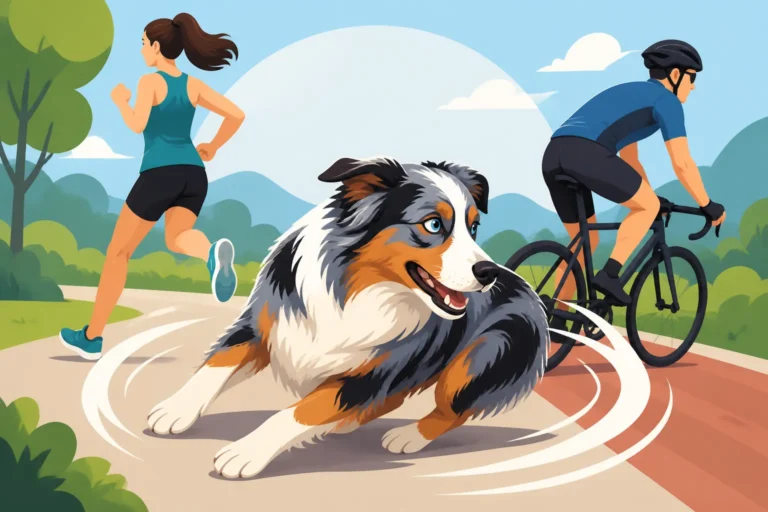
What makes it even more challenging is that Aussies don't just react to livestock. Their herding instinct extends to anything that moves in a way that resembles prey or something to be gathered: cars, bicycles, joggers, children, other dogs, even shadows dancing on the ground. This generalized herding behavior, while fascinating to observe in a working context, becomes a major hurdle when trying to achieve reliable recall in a busy, modern environment. Their eyes are constantly scanning, their ears are perked, and their brains are always processing motion cues, making them highly susceptible to any passing stimulus.
Prey Drive vs. Herding Drive in an Aussie
It's easy to confuse prey drive with herding drive, and while they share similarities, they're distinct and important to understand for effective recall training. Prey drive is about chasing, catching, and often killing for sustenance. Herding drive, on the other hand, is about gathering, controlling, and moving. An Aussie might chase a squirrel, which looks like a classic prey drive behavior. However, their instinct isn't necessarily to kill it, but to manage it, to bring it back to the "flock" (which might be you) or simply to prevent its escape.
While there's certainly an overlap, especially in the initial chase, an Aussie's primary motivation isn't usually to make a kill, but to engage with and direct the movement. This nuance means that redirection can sometimes be more effective than simply trying to suppress the drive. Instead of fighting the chase instinct head-on, we can sometimes channel it or offer an equally stimulating alternative. For instance, a strong game of fetch or tug with a favorite toy can often satisfy that urge to interact with movement, giving them a constructive outlet rather than constantly battling their nature. This understanding helps us choose training methods that work with their breed traits, rather than against them.
Think of it this way: a cat stalking a bird is pure prey drive. An Australian Shepherd circling a running child, perhaps nudging their ankles, is classic herding drive. Both involve chasing, but the underlying motivation and desired outcome are different. When an Aussie spots a cat or rabbit, that herding instinct might manifest as an intense desire to "collect" it. This can look like pure prey drive, especially in the initial burst of speed. Recognizing this difference helps you understand their focus and apply the right training approach. If it's a "gather" instinct, you might have more luck with a strong "come here, this way" than trying to simply shut down the chase.
Genetic Predisposition and Breed History
The modern Australian Shepherd carries generations of carefully selected traits for herding. Breeders prioritized dogs that were attentive, agile, and reactive to movement. These traits are literally encoded in their DNA. You're not dealing with a blank slate; you're working with a living, breathing testament to dedicated breeding for a specific purpose. This genetic blueprint means that certain behaviors, like the intense focus on moving objects, are incredibly difficult, if not impossible, to eradicate completely.
Understanding this genetic predisposition is crucial for managing expectations and choosing appropriate training strategies. We can't wish away their instinct, but we can teach them to exert impulse control and to respond to our cues despite those powerful urges. It requires patience, consistency, and a recognition that your Aussie is operating from a place of deep, genetic programming. It's a marathon, not a sprint, and every successful recall around a distraction is a testament to the strength of your bond and your training. Acknowledge that you’re asking them to actively override centuries of selective breeding, which is a huge ask!
This historical context also explains why early socialization and consistent training from puppyhood are so vital. A puppy's brain is highly moldable, and while the instinct will always be there, early positive reinforcement can help build strong neural pathways that prioritize your voice over the siren song of a fleeing object. Exposing them to various sights, sounds, and controlled moving objects with positive experiences can help them learn that not every movement requires their full, unbridled attention. This is a key part of The Aussie Puppy Curriculum Month by Month.
The Challenges of Recall in a High-Stimulus Environment
You might have a perfect recall in your quiet backyard, but introduce a dog park, a busy hiking trail, or even just your own neighborhood with its unpredictable movements, and suddenly your Aussie seems to lose their mind. High-stimulus environments present unique challenges that can make even the most well-trained dog appear deaf to your commands.
The "Zoomies" and Overarousal
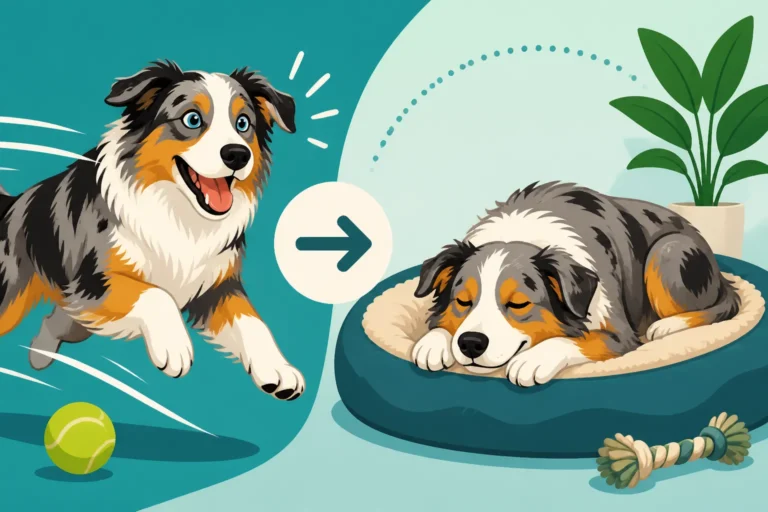
Australian Shepherds are incredibly sensitive and can become easily overaroused by too much excitement or stimulation. Think of "the zoomies" – those bursts of frantic, undirected energy. While often playful, they're also a sign of an overwhelmed nervous system. In this state, an Aussie's ability to process and respond to commands, especially complex ones like recall, plummets. They're literally too hyped up to think straight, let alone focus on your voice amidst the chaos of their internal and external world.
Overarousal isn't always about wild running. It can manifest as excessive barking, frantic sniffing, or even a sudden inability to settle. When their adrenaline is pumping, their focus narrows to the most immediate, exciting stimulus – which is almost always a moving object. Trying to get a calm, responsive recall from an overaroused Aussie is often a futile exercise. The key is to recognize the signs of approaching overarousal and either preemptively intervene with a calming activity or remove them from the stimulating environment before they hit that point of no return. Understanding An Australian Shepherd That Cannot Switch Off can be a real eye-opener here.
Preventing overarousal is often more effective than trying to manage it in the moment. This means managing their environment, providing structured play, and teaching them an "off switch" from a young age. High-energy breeds like Aussies need to learn how to self-regulate and settle. This could involve practicing mat work, engaging in calm sniff-based games, or simply providing quiet time in their crate after an exciting activity. If you can keep their emotional state balanced, their cognitive functions, including recall, will be far more accessible.
Distractions that Trump a Standard Recall
Let's face it, a piece of kibble, no matter how tasty, often can't compete with the thrill of chasing a bicycle or a flock of birds. Your Aussie’s brain is literally wired to find movement intrinsically rewarding. The visual stimulus, the chase, the rush of adrenaline – it’s a powerful cocktail that often outweighs any reward you can offer. This is where many owners get frustrated, feeling like their dog simply doesn't care about them. It's not that they don't care; it's that the natural reward of the chase is incredibly potent.
To combat this, your recall cue needs to be absolutely synonymous with the most amazing thing that could possibly happen. This means using incredibly high-value rewards – think boiled chicken, cheese, or their absolute favorite squeaky toy – and making the recall game the most exciting event in their universe. Furthermore, gradually introducing distractions, starting with very mild ones and slowly increasing the challenge, is paramount. You wouldn't expect a child to do calculus before they've mastered arithmetic, and the same applies to your Aussie's recall training. Start small, build success, and always make yourself more rewarding than the distraction.
A common mistake is trying to practice recall in a highly distracting environment too soon. This just sets your dog up for failure and teaches them that ignoring your recall command is acceptable, or even more rewarding. Instead, aim for a high success rate by controlling the environment. Think of it like a ladder: each rung is a slightly higher level of distraction. Only move up a rung when your Aussie is consistently nailing the recall at the current level. This systematic approach, coupled with incredibly motivating rewards, is how you gradually strengthen the recall against tempting movements. Australian Shepherd Recall Off a Squirrel is a specific challenge that requires this kind of focused, high-value training.
The Hormonal Rollercoaster of Adolescence
Just like human teenagers, adolescent Australian Shepherds (roughly between 6 months and 2 years old) go through a period where their brains are rewired, hormones surge, and they often "forget" all the training they've received. This can be incredibly disheartening. Your once-attentive puppy might suddenly become rebellious, adventurous, and far more interested in the world than in you. This is a normal developmental stage, but it's a critical time to double down on recall training.
During adolescence, a dog’s natural instincts, including herding and prey drive, can intensify. They might start pushing boundaries, testing limits, and becoming more independent. This means that a recall that was once solid might suddenly become unreliable, especially around moving distractions. Patience and consistency are your best friends during this phase. Don't take it personally; just understand that their brain is undergoing significant changes. Keep training sessions fun, frequent, and rewarding, and avoid situations where their recall might spectacularly fail, such as off-leash in an unfenced area with lots of moving things.
This isn't the time to ease up on management. In fact, it's often when a long line becomes absolutely essential for maintaining safety and preventing self-reinforcing behaviors like bolting. Continue to build value in your presence and your recall cue, using those high-value rewards to remind them that coming back to you is always the best option. Remember, this phase doesn't last forever, but the habits formed during it can. Consistent, positive reinforcement will help you navigate this challenging stage and emerge with a more reliable adult dog.
Laying the Foundation: Building a Bulletproof Recall
A truly reliable recall isn't something that happens overnight. It's built brick by brick, starting with a strong, positive association and gradually proofing it against increasing distractions. Think of it as investing in your Aussie’s safety and your peace of mind.
Starting in Low-Distraction Environments
Before you even think about calling your Aussie back from a distant cyclist, you need to establish a recall that's virtually 100% reliable in a distraction-free setting. Start indoors, in a quiet room, or in a securely fenced yard where there are no moving targets to tempt them. Use a cheerful, enthusiastic tone when you say your recall word, and follow it immediately with an irresistible treat or a super fun game of tug. Make coming to you the most exciting thing that could possibly happen.
Practice this many, many times a day, in short, fun bursts. Don't just call them when you want to put them on a leash or end playtime; call them, reward them lavishly, and then immediately release them to go back to what they were doing. This prevents them from associating recall with the end of fun. The goal is to create such a strong, positive emotional response to your recall cue that it becomes almost an automatic, joyful reaction, like a dog hearing the crinkle of a treat bag.
Vary your location slightly as they improve, moving from one room to another, or from a quiet spot in the yard to another quiet spot. The idea is to generalize the behavior without adding significant external stimuli. Always ensure success at this stage. If your dog isn't coming 9 out of 10 times in a low-distraction environment, they're definitely not ready for the next step. Building this foundation properly is the single most important thing you can do for a solid recall.
High-Value Rewards and Consistent Reinforcement
This isn't the time for boring old kibble. When you're teaching or proofing recall, especially around distractions, you need to pull out the big guns. Think boiled chicken, small pieces of cheese, hot dogs, or a smear of peanut butter on a spoon. These are "jackpot" rewards that make your Aussie think, "Wow, coming to my human is amazing!" The value of the reward needs to outweigh the value of the distraction, at least initially.
Consistency is equally vital. Every single time you call your dog with your recall cue, and they respond, they must be rewarded. No exceptions. If you call them and don't reward, you weaken the association. If you call them and they ignore you, and you don't follow through, you teach them that your command is optional. This means you should only use your recall cue when you are reasonably sure your dog will respond. If you're unsure, go get them, or use a long line to gently guide them in, but do not burn out your recall word by saying it repeatedly without a response.
Vary the rewards as well – sometimes it’s food, sometimes it’s a quick, energetic game with a favorite toy, a belly rub, or enthusiastic praise. The key is to keep it exciting and unpredictable. Your recall cue should be the most powerful, positive signal in your dog’s vocabulary. Companies like BAXTER & Bella, known for their online puppy training programs, often emphasize the importance of high-value rewards and consistent, positive reinforcement from day one to build these strong foundations.
The "Emergency Recall" Word and Its Sacred Meaning
For Australian Shepherds, especially with their powerful herding drive, it's wise to have an "emergency recall" word that is never used except for critical situations. This word should be distinct, rarely spoken, and associated with the most phenomenal reward imaginable. This is not your everyday "come." This is the "drop everything and run to me like your life depends on it" word.
To establish this, choose a unique word – something like "CRITICAL" or "NOW!" – and dedicate specific training sessions to it. In a quiet environment, say the word once, and immediately present a huge jackpot reward (a handful of extra-special treats, a favorite toy appearing out of nowhere). Repeat this 5-10 times, then end the session. Do this daily for a week. The dog should quickly learn that this word means ultimate goodness. The idea is to build an unshakeable, visceral response. This is The Recall Word That Stops an Aussie Mid-Chase.
The sacred rule of the emergency recall: never use it casually. Only deploy it when absolutely necessary, and always follow through with that jackpot reward, even if you have to chase them down afterwards. If you use it too often or without a massive reward, it loses its power. This emergency recall is your ultimate safety net, your last resort, and its effectiveness relies entirely on its rarity and the overwhelming positivity associated with it.
Training for Moving Distractions: Step-by-Step Approach
Once your Aussie has a bombproof recall in a low-distraction setting, it’s time to start introducing movement. This is where the real challenge begins, but also where systematic, careful training pays off immensely.
Introducing Mild, Controlled Movement
The first step is to introduce very mild, controlled movement in a secure, fenced area. Start with something simple:
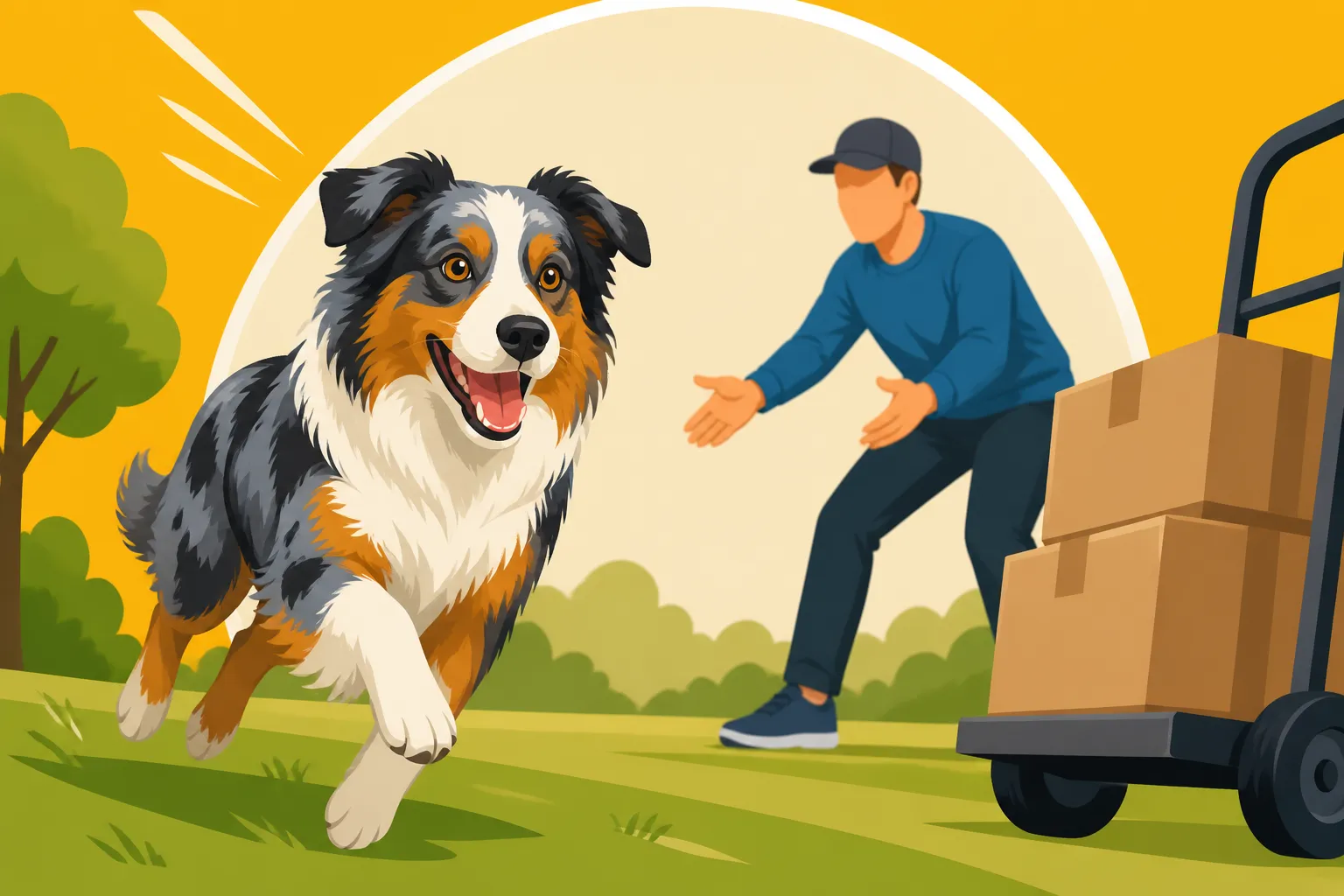
- You move: Have a friend hold your Aussie on a leash. Walk a short distance away, say your recall word, and then run a few steps away from your dog while calling them. Their natural instinct is to chase you, which helps reinforce the recall. Reward heavily when they reach you.
- A toy moves: Have your Aussie on a long line. Gently roll a ball or drag a rope toy a short distance away. As soon as your dog shows any interest in the moving object, immediately say your recall word with enthusiasm. If they disengage from the object and turn to you, jackpot reward. If they start to go for the object, gently reel them in with the long line while saying your recall word, and then reward as soon as they are within reach. The key is to interrupt the chase instinct before it fully takes hold.
- A person moves: Again, in a secure area with your Aussie on a long line, have a calm friend walk slowly across their field of vision. As soon as your dog notices the person, but before they show signs of intense interest or a desire to chase, use your recall word. Reward heavily for their attention shifting to you. This is about building impulse control at the earliest stages of detection.
The important thing is that these initial movements are predictable, non-threatening, and easy for your dog to disengage from. You want to set them up for success, not failure.
Gradually Increasing Distraction Levels
This is the "ladder" approach. Each rung is a slightly higher level of distraction. Never jump rungs.
- Step 1: Increase proximity: Once they ignore a toy moving at a distance, try moving it a bit closer.
- Step 2: Increase speed: Once they ignore a slow-moving object, try a slightly faster one.
- Step 3: Introduce new objects: From a ball to a remote-control car, a person walking, then a person jogging. Always on a long line, always in a secure area.
- Step 4: Change environments: Move from your quiet backyard to a slightly busier park, but stay away from the main activity. Practice your recall when someone walks by far away. Slowly close the distance.
Here's a table to illustrate the progression:
| Distraction Level | Environment | Moving Object | Distance/Speed | Reward Strategy | Safety Tool |
|---|---|---|---|---|---|
| Level 1 | Quiet Home/Yard | Handler moving | Short, slow | Jackpot treats + praise | None/Leash |
| Level 2 | Secure Fenced Area | Rolled ball | 10-15 ft, slow | Jackpot treats + praise | Long Line |
| Level 3 | Secure Fenced Area | Jogging person | 20-30 ft, moderate | Super jackpot treats + enthusiastic play | Long Line |
| Level 4 | Semi-Busy Park | Distant dog/cyclist | 50+ ft, moderate | Emergency recall reward + ultimate praise | Long Line |
| Level 5 | Busy Park/Trail | Closer dog/cyclist | 20-30 ft, faster | Emergency recall reward + enthusiastic game | Long Line |
Remember, if your Aussie struggles at any level, go back to the previous one and reinforce. The goal is to build confidence and success. Don't rush it. It might take weeks or even months to move through these stages.
Working with Different Types of Moving Objects
Australian Shepherds can categorize movement differently. A running child might trigger a different response than a bicycle, or a bird taking flight. Therefore, you need to practice with a variety of moving objects.
- People: Joggers, walkers, people on bikes, skateboards.
- Animals: Other dogs (controlled settings first!), birds, squirrels, rabbits (these are tough!).
- Vehicles: Bicycles, remote-control cars, even slow-moving real cars (from a very safe distance, behind a secure fence).
Always remember that safety is paramount. Never put your dog in a situation where they could bolt into danger. The long line is your best friend here. When you know your Aussie has a strong urge to chase An Australian Shepherd Chasing Cars, you need to introduce these stimuli with extreme caution and control. The goal is not to eliminate the instinct but to teach your dog that your command is more important and rewarding than acting on that instinct.
It’s often helpful to work with a trusted training partner who can act as the "moving distraction" in a controlled manner. They can approach slowly, then speed up, or change direction, allowing you to practice your recall cue at precise moments – ideally, just before your Aussie becomes completely fixated. The more varied the practice, the more generalized and robust your Aussie's recall will become in the real world.
Essential Tools and Management Strategies for Safety
Even the most dedicated training regimen needs the support of appropriate tools and smart management. These aren't shortcuts, but vital safety nets and aids in your recall journey.
The Indispensable Long Line
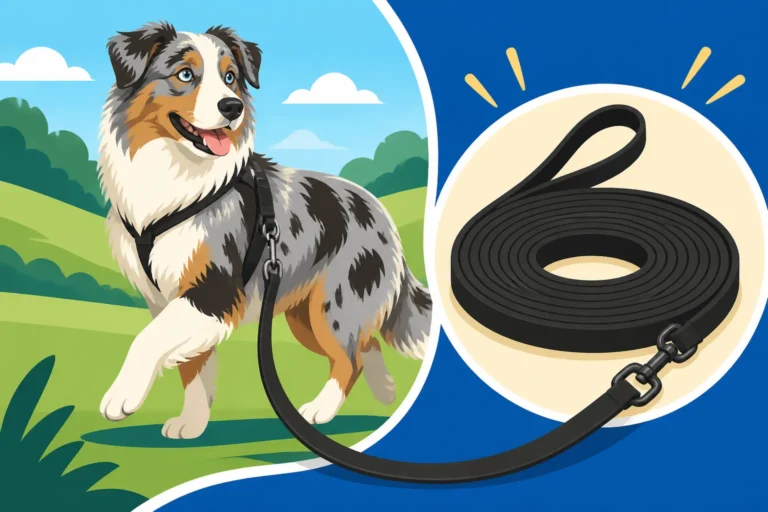
If your Australian Shepherd doesn't have a 100% reliable recall around distractions, they should be on a long line when outside of a securely fenced area. Period. A long line (15 to 50 feet) gives you control while allowing your dog to explore and practice recall in a more natural setting than a short leash. It's an invaluable tool for safely proofing recall in environments with potential distractions. When using a long line, always attach it to a well-fitting harness, not a collar, to prevent neck injuries if your dog hits the end of the line at speed.
How Long an Aussie Long Line Should Be really depends on the environment and your dog's current training level. In a wide-open field, a 30-foot or 50-foot line might be appropriate, giving them more freedom. In an area with more obstacles or closer to roads, a 15-foot or 20-foot line might be safer. The purpose is always the same: to allow safe exploration and practice while ensuring you can physically prevent them from practicing the undesirable behavior of chasing something out of bounds.
Using a long line effectively means not just letting your dog drag it. You need to be actively engaged, holding the end of the line, ready to reel them in or give a gentle tug to interrupt their focus if they start to become fixated on a distraction. It's an active training tool, not just a tether. It enables you to intervene immediately, enforce your recall, and reward heavily for coming back, thereby building stronger positive associations with returning to you, even when there's something moving nearby.
Harnesses and Collars for Reliable Control
For Aussies, especially those with a strong prey or herding drive, the choice of collar and harness is crucial for safety and control. A standard flat collar can be easily slipped out of, or can put dangerous pressure on the neck if your dog suddenly lunges. A well-fitting, secure harness that your dog cannot back out of is generally recommended for walks and long line use. Front-clip harnesses can be particularly helpful as they redirect a dog's pulling power towards you, making it harder for them to gain momentum if they try to bolt.
While a regular flat collar might hold your ID tags, a sturdy, escape-proof harness provides the physical security you need when training around distractions. Some owners also opt for a martingale collar, which tightens gently when a dog pulls but doesn't choke them, making it harder to slip out of. However, for maximum safety and comfort during long line training or in high-stimulus environments, a good quality, well-fitted harness from brands found on platforms like Amazon is usually the preferred choice.
It’s also important to consider what kind of identification your Aussie is wearing. Beyond basic tags, microchipping is essential. For dogs with a strong bolt instinct, a GPS tracker collar can also offer an extra layer of peace of mind, allowing you to locate them quickly if they do manage to get away. While Whether a Tracker Replaces an Aussie Recall is a clear 'no' (it's a tool, not a solution), it's a valuable safety device.
Fenced Areas and Supervised Off-Leash Time
Until your Australian Shepherd's recall is truly proofed against high-level moving distractions, off-leash time should be strictly limited to securely fenced areas. Dog parks, private dog-friendly fields, or a friend's yard are ideal. Even in these areas, supervision is key. Just because it's fenced doesn't mean you can zone out. You still need to be actively engaged, practicing recall, and intervening if your dog starts to get into trouble or becomes overaroused by other dogs running.
Never assume a recall is "fixed" just because they did well once or twice. It requires continuous maintenance and practice. Even with a well-trained Aussie, completely off-leash time in unfenced public areas with moving distractions (like trails with bikes or wildlife) might never be a safe option. It's about risk management and setting your dog up for success and safety.
If you don't have access to securely fenced areas, consider creating one in your own yard if possible, or looking into local dog training clubs that rent out private, fully fenced fields. For the urban Aussie, this might mean carefully selected dog daycare facilities that offer supervised, secure play areas. Always prioritize your dog's safety over the desire for unfettered freedom. A controlled environment allows for successful training and prevents the highly self-rewarding act of an uninhibited chase.
When Recall Fails: Troubleshooting Common Scenarios
Even with the best intentions and consistent training, there will be times when your Aussie's recall just… doesn't work. It's frustrating, sometimes frightening, but understanding why it failed is the first step to fixing it.
When Your Aussie "Selectively Hears"
Ah, selective hearing – a common complaint among Australian Shepherd parents! It feels like they only hear you when they want to, usually when there's nothing more exciting happening. This isn't usually deliberate defiance; it's often a combination of factors:
- Distraction value: The moving object is simply too high-value for their current training level. Your recall hasn't been proofed enough against that specific level of stimulus.
- Lack of motivation: Your reward isn't exciting enough to compete with the distraction. Are you still using basic kibble when a squirrel just ran by? Time for the jackpot!
- Command burnout: You've used the recall word too many times without follow-through, or in situations where you knew your dog wouldn't respond. This desensitizes them to the command.
- Inconsistent reinforcement: You don't always reward them when they come, or the reward is inconsistent. They learn that coming to you is a gamble.
To combat selective hearing, re-evaluate your training environment. Are you asking too much too soon? Increase the value of your rewards. Go back to basics in a less distracting environment, making recall an overwhelmingly positive and rewarding experience every single time. Reinvigorate your recall cue with fresh, exciting rewards and enthusiastic praise. Make coming to you the most irresistible option, even when a distraction is present. Sometimes, Why an Australian Shepherd Bolts After Movement isn't just instinct, but a perceived lack of incentive to not bolt.
Overcoming Fear or Excitement-Based Bolting
Not all bolting is pure herding or prey drive. Sometimes, an Aussie might bolt due to fear or overwhelming excitement.
- Fear-based bolting: A sudden loud noise (fireworks, a backfiring car), an unfamiliar person or dog approaching too quickly, or a startling visual stimulus can cause a sensitive Aussie to panic and run. In these cases, recall isn't about overriding a chase drive, but about overcoming a flight response.
- Excitement-based bolting: This can be seen at the dog park where the sheer joy and energy of other dogs running can be overwhelming, leading to uncontrolled chasing and an inability to respond to cues. This ties back into overarousal.
For fear-based bolting, the primary strategy is management and desensitization. Avoid known triggers whenever possible. If you anticipate a scary event, keep your dog securely leashed or indoors. Work on building positive associations with mild versions of their triggers. For excitement-based bolting, focus on impulse control training (like "leave it" and "wait") in progressively more exciting environments. Teach them to settle and focus on you amidst chaos.
A table on bolting types:
| Bolting Type | Underlying Cause | Manifestation | Training Approach |
|---|---|---|---|
| Herding/Prey | Instinctual drive | Chasing cars, joggers, wildlife, other running dogs | High-value recall, impulse control, redirection, long line |
| Fear-Based | Startle/Anxiety | Running from loud noises, unfamiliar stimuli | Desensitization, counter-conditioning, safe haven, management |
| Excitement-Based | Overarousal, lack of impulse control | Frantic chasing at dog park, unable to settle | "Off switch" training, calming protocols, controlled exposure |
Understanding the root cause helps you tailor your training. A fear-reactive dog needs empathy and confidence-building, while a high-drive chaser needs structured redirection and reinforcement for alternative behaviors.
Seeking Professional Help for Persistent Issues
If you've diligently worked on recall, used high-value rewards, tried long lines, and your Australian Shepherd still struggles significantly with recall around moving things, it's absolutely okay – and often necessary – to seek professional help. A certified professional dog trainer (CPDT) or a veterinary behaviorist can observe your dog's behavior, identify underlying issues (like anxiety, over-arousal, or deeply ingrained behavioral patterns), and develop a tailored training plan.
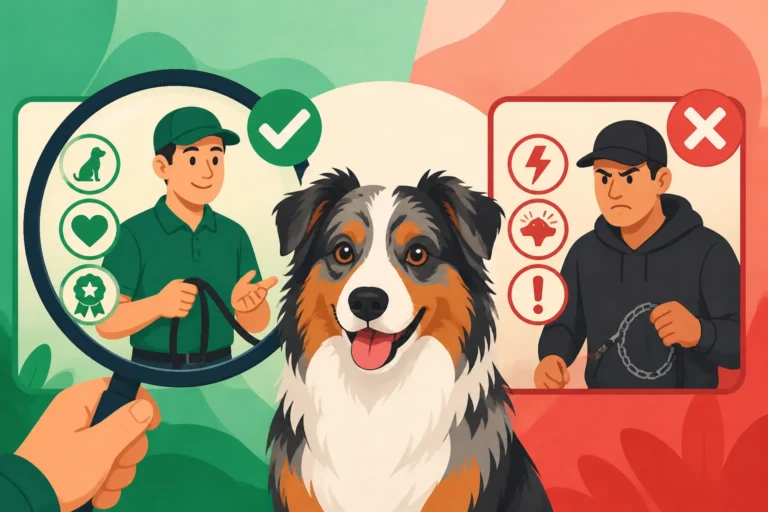
They can help you refine your techniques, teach you advanced handling skills, and provide solutions for specific challenges you might be facing. Sometimes, an outside perspective and expert guidance are exactly what's needed to break through a plateau. Don't view seeking help as a failure; view it as a responsible step towards ensuring your dog's safety and well-being. Look for trainers who use positive reinforcement methods and have experience with high-drive herding breeds like Australian Shepherds.
A professional might also introduce concepts like "proof of concept" training in new environments, or specific exercises designed to build intense focus on you even amidst high-level distractions. They can help you gauge when your dog is ready for the next step, ensuring you don't push them too far too fast. Remember, Australian Shepherds are incredibly smart and eager to please, but their instincts are powerful, and sometimes they just need a little extra guidance from an expert to channel that energy appropriately.
Beyond Basic Recall: Integrating Impulse Control
Recall isn't just about yelling "come" and hoping for the best. For an Australian Shepherd, it's deeply intertwined with impulse control – the ability to override an immediate urge in favor of a different, learned behavior.
"Leave It" and "Stay" as Recall Boosters
These two commands are absolute gold for an Aussie with a strong drive to chase.
- "Leave It": This teaches your dog to disengage from something tempting. Practice with low-value items first, then gradually increase the temptation and the distraction of movement. If your Aussie can "leave it" when a ball rolls by, they're much more likely to "leave it" when a squirrel dashes past, buying you crucial seconds to issue a recall. Start by placing a treat on the floor, cover it with your hand. Say "leave it." The moment your dog looks away from the treat, reward them with a different, better treat. Gradually move to leaving the treat uncovered, increasing the duration they must "leave it" before getting their reward.
- "Stay": A solid "stay" can prevent your dog from moving towards a distraction in the first place, giving you time to assess the situation or call them to you before they're fully engaged. Practice "stay" with increasing duration, distance, and distractions. Start with them staying while you walk a few steps away, then a few more, then walk around them, and finally, practice with mild movement happening in their periphery.
These commands don't just act as preventative measures; they also strengthen your overall communication and your dog's ability to focus on you even when highly stimulated. They build the mental muscle of self-control, which is directly applicable to a successful recall around moving targets.
Mental Stimulation to Channel Drive
An under-stimulated Australian Shepherd is a ticking time bomb for recall failures around movement. Their high intelligence and drive mean they need more than just physical exercise; they need their brains worked too. Mental stimulation can be just as tiring, if not more so, than a long run, and it helps channel their natural herding and problem-solving abilities constructively.
Consider activities like:
- Puzzle toys: Food-dispensing toys that require manipulation to get treats.
- Scent work/nose games: Hiding treats around the house or yard and having them sniff them out. This is incredibly fulfilling for dogs and uses their natural abilities. Scent Games That Tire an Australian Shepherd can be a real game-changer.
- Trick training: Teaching new tricks engages their minds and strengthens your bond.
- Obedience training: Continuously working on and refining obedience commands keeps their brains active and focused on you.
By providing ample mental stimulation, you reduce their overall drive to seek out their own "jobs" (like chasing squirrels or bikes) and increase their willingness to engage with you. A mentally tired Aussie is often a calmer, more attentive Aussie, making your recall efforts much more effective.
Sports and Activities to Satisfy Herding Needs
For an Australian Shepherd, giving them a "job" is not just a nice idea; it's often a necessity for their well-being and a calmer demeanor in daily life. Dog sports provide an incredible outlet for their intelligence, athleticism, and natural drives.
- Herding: If possible, consider enrolling your Aussie in a herding instinct test or herding classes. Even if you never compete, allowing them to engage with sheep or ducks in a controlled environment can be profoundly satisfying for their innate instincts.
- Agility: This sport involves navigating obstacle courses and is fantastic for channeling an Aussie's speed, agility, and problem-solving skills. Australian Shepherd Agility and Disc Sports are tailor-made for these dogs.
- Disc Dog/Flyball: These high-energy sports involve chasing and catching, providing an excellent outlet for their chase drive in a structured, cooperative way.
- Rally/Obedience: These focus on precise execution of commands, building incredible focus and a strong working relationship between you and your dog.
Engaging in these types of activities not only tires them out physically and mentally but also reinforces their desire to work with you. When their profound need to chase and control is met in a structured, positive way, they are often much more relaxed and attentive in other situations, making your recall around everyday moving distractions much more reliable. It's about fulfilling their breed-specific needs, not trying to suppress them entirely.
Disclaimer
This article is for general informational purposes only and does not constitute professional advice. Laws, prices and regulations vary by location and change over time. Consult a qualified professional for guidance on your specific situation.