Black Tri and Red Tri Australian Shepherds
It's incredibly exciting to learn about the various coat colors Australian Shepherds come in, but sometimes, the specific terms like "black tri" and "red tri" can feel a little confusing, especially when you're trying to figure out what your future puppy might look like or how your current Aussie's coat developed. This guide will walk you through the distinct characteristics of black tri and red tri Australian Shepherds, demystifying the colors and patterns that make these dogs so visually stunning and helping you appreciate the genetics behind their beautiful coats.
Understanding the Basics of Australian Shepherd Coat Colors
Before we dive into the specifics of black and red tris, it's helpful to understand the fundamental building blocks of an Australian Shepherd's coat. These aren't just pretty patterns; they're the result of complex genetic interactions, and knowing the basics helps you appreciate the incredible diversity within the breed. When you're looking at an Aussie, you're not just seeing a dog; you're seeing a masterpiece of genetics.
The Foundation Colors: Black and Red
At the very core of all Australian Shepherd coat colors are two primary pigments: black and red. Every single Aussie, regardless of how complex its pattern or how many colors it displays, is genetically either black-based or red-based. Think of these as the primary paint colors on an artist's palette. A black-based dog carries the gene for black pigment, which means its nose, eye rims, and lips will be black. Even if its coat appears blue merle, it's still fundamentally a black dog with a dilution gene. Conversely, a red-based dog carries the gene for red pigment, and its nose, eye rims, and lips will be liver (a reddish-brown). This is a crucial distinction, as it dictates how other color modifiers will express themselves. This foundational color determines the entire palette of the dog's pigment.
The Role of the Tricolor Pattern
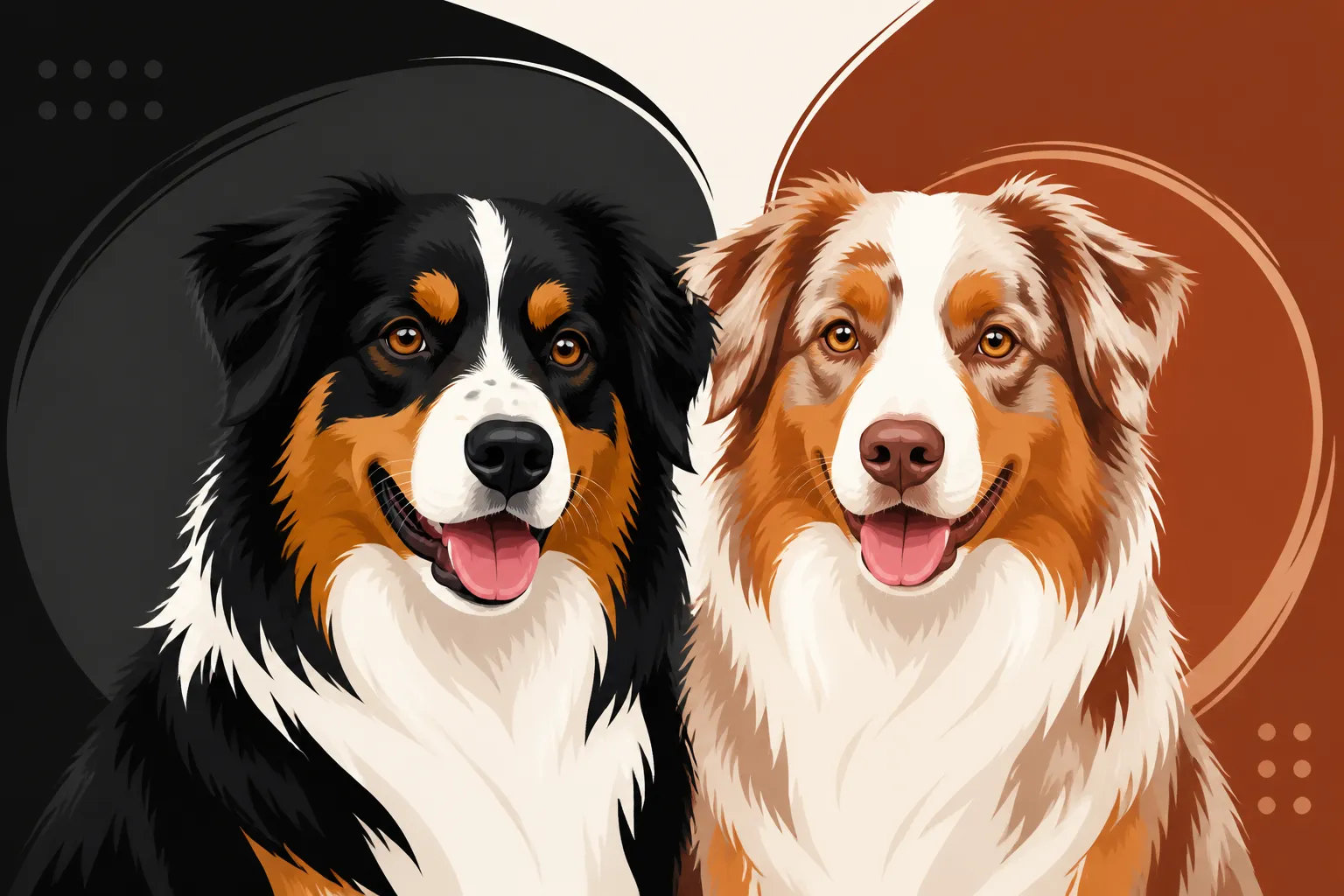
The "tri" in "tri-color" refers to the presence of three distinct colors: a primary body color (black or red), white markings, and copper (or tan) points. This is a classic pattern in many herding breeds, giving them a very distinctive and often striking appearance. The copper points typically appear on the cheeks, over the eyes (often called "eyebrows"), on the chest, legs, and under the tail. These aren't just random splashes; they follow a specific, genetically determined pattern. The white markings usually appear on the muzzle, a blaze up the face, a collar around the neck, on the chest, belly, and legs. Not every tri-color Aussie will have all these white markings in equal measure – some might have just a little white on their toes, while others have broad white collars. The combination of these three colors creates the classic Australian Shepherd look that so many people adore. For a deeper dive into all the possible colors, you might want to read Merle, Tri and Every Australian Shepherd Color.
Distinguishing Between Solid and Tri-Color Aussies
It's easy to assume that any Aussie with some white and copper is a "tri," but there's a subtle distinction. A true "tri-color" Australian Shepherd exhibits the genetically determined pattern of copper points in addition to its primary body color and white markings. A "solid" Australian Shepherd, on the other hand, might have white markings, but it lacks the distinct copper points. For example, a "black bi" (bi-color) Aussie would be black with white markings, but no copper points. A solid black Aussie would have minimal to no white and no copper. The presence of those warm, reddish-brown accents, particularly on the face and legs, is what officially designates an Australian Shepherd as a "tri-color." This distinction is important for understanding breed standards and genetic inheritance.
Diving Deep into Black Tri Australian Shepherds
The black tri Australian Shepherd is arguably one of the most recognizable and striking color patterns in the breed. With its deep, rich black as the dominant color, accented by crisp white and warm copper, it's a truly classic look that embodies much of what people picture when they think of an Aussie.
The Striking Black Base
The black base of a black tri Aussie is a deep, solid hue, often described as jet black or raven black. This isn't just a dark shade; it's a pure, unblemished black that covers the majority of the dog's body. Genetically, these dogs express the black pigment fully. Their nose, eye rims, and lips will be a strong, dark black, which contributes to their intense and intelligent expression. This black should be vibrant and not have any reddish or brownish undertones, although sun exposure or poor coat condition can sometimes lead to a slight fading or 'rusting' of the black over time. The quality and depth of this black base are often considered when evaluating a dog against the breed standard. It's the canvas upon which the other colors are painted, creating a stark and beautiful contrast. You can read more about this in Black Tricolor Australian Shepherds.
The Tan/Copper Points
The tan or copper points are the defining feature that elevates a black bi-color to a black tri-color. These markings are typically a rich, warm reddish-brown, ranging from a light tan to a deep, burnished copper. They appear in very specific locations on the dog's body:
- Above the eyes: These "eyebrows" give the Aussie an expressive, almost questioning look. They are usually distinct patches of copper.
- On the cheeks: Copper patches framing the face.
- On the chest: Often forming a "V" shape or patches on either side of the chest.
- On the legs: Running up the inside and outside of the legs, often extending to the hocks and stifles.
- Under the tail: A patch of copper typically found at the base of the tail or on the underside.
These points should be clearly defined and distinct from the black body color and the white markings. They add depth and warmth to the coat, breaking up the expanse of black and drawing attention to the dog's features. The intensity of the copper can vary from dog to dog, even within the same litter, from a pale cream to a deep rust.
The White Markings: Where They Appear
White markings on a black tri Australian Shepherd add to its distinctive appearance. These white areas are typically crisp and clean, creating a sharp contrast against the black and copper. The standard allows for a certain amount of white, and its placement is key to the overall aesthetic. Common locations for white markings include:
- Muzzle: Often a white muzzle, sometimes extending up between the eyes as a "blaze."
- Forehead: A white blaze on the forehead is common and can vary in width.
- Neck: A partial or full white "collar" around the neck is a prized marking.
- Chest: A broad white chest is very typical.
- Belly and flanks: White can extend along the underside of the dog.
- Legs and feet: White socks or stockings on any or all four legs are common.
While white markings are desirable, there are limits. The breed standard typically states that white should not dominate the head (e.g., covering more than 25% of the head or encircling the eyes) and should not extend past the elbow on the forelegs or the hock on the hind legs, though this can vary slightly by registry. Excessive white can sometimes be linked to certain health concerns, particularly in merle patterns (though less commonly a concern in solid black/red tris), and is a factor breeders carefully consider. The placement and balance of these white markings contribute greatly to the overall "look" of the black tri Aussie.
Exploring Red Tri Australian Shepherds
Just as stunning as their black counterparts, red tri Australian Shepherds bring a warm, earthy palette to the breed. Their rich red base color, combined with white and copper points, creates a beautiful and often captivating appearance that stands out in a crowd.
The Rich Red Base
The red base color of a red tri Australian Shepherd can range dramatically, from a light, almost cinnamon hue to a deep, dark liver or chocolate. This color should be rich and even across the dog's body. Unlike black, which is fairly uniform, red can have incredible variation, and each shade is beautiful in its own right. Like black tris, the red Aussie's nose, eye rims, and lips will match its base color, meaning they will be a liver or reddish-brown tone. This is a key identifier – a red Aussie will never have a black nose. Just as sun can 'rust' a black coat, it can sometimes lighten a red coat, making it appear more faded. The depth of the red, and its evenness, are important considerations for breeders and in the show ring. This vibrant base color is why many are drawn to the uniqueness of Red Tricolor Australian Shepherds.
Tan/Copper Points on a Red Canvas
The tan or copper points on a red tri Aussie follow the same pattern as those on a black tri, but they present a different visual effect. On a red base, these points still appear on the cheeks, over the eyes, on the chest, legs, and under the tail. However, because the base color itself is red, the contrast with the copper points can be less stark than on a black tri. The copper points might be a slightly lighter or darker shade of red than the main body, or they might be a very similar shade, simply defining the "point" areas. For example, a dark liver red Aussie might have slightly lighter, more tan-colored points, or it could have points that are a deep, rich copper that blends harmoniously with its body. The richness of the red base often means the copper points contribute to an overall warm, fiery appearance.
White Markings on a Red Tri
The white markings on a red tri Australian Shepherd are identical in placement and type to those found on a black tri. You'll see the white on the muzzle, a blaze up the face, a partial or full collar, a broad chest, the belly, and the legs and feet. The crisp white stands out beautifully against the warm red base, creating a pleasing contrast. Imagine a deep rust-colored Aussie with a bright white muzzle and chest, and white 'socks' on its paws – it's a truly eye-catching combination. As with black tris, the amount and placement of white are governed by breed standards to ensure it doesn't become excessive or distract from the dog's overall conformation. Concerns about extreme white markings and their potential link to certain sensory deficits are generally limited to merle patterns, but a responsible breeder will always consider proper white placement for both health and aesthetic reasons.
| Feature | Black Tri Australian Shepherd | Red Tri Australian Shepherd |
|---|---|---|
| Primary Body Color | Deep, jet black | Rich red, ranging from light cinnamon to deep liver |
| Nose/Eye Rims/Lips | Black | Liver (reddish-brown) |
| Tan/Copper Points | Distinct, warm reddish-brown on cheeks, brows, chest, legs, tail | Present in same locations, often harmonizing with red base, may be lighter/darker red |
| White Markings | Crisp white on muzzle, blaze, collar, chest, belly, legs | Crisp white on muzzle, blaze, collar, chest, belly, legs |
| Contrast | High contrast between black, copper, and white | Moderate contrast, warm tones blend; high contrast with white |
| Genetic Base | Genetically black | Genetically red |
The Genetics Behind Tri-Color Coats
Understanding Australian Shepherd coat colors goes beyond just admiring their beauty; it involves a fascinating journey into their genetic makeup. The tri-color pattern, whether black or red, is the result of several genes working in concert, each responsible for a specific aspect of the dog's appearance. It's a testament to the intricate science of canine genetics.
Understanding the K Locus and Black/Red Gene
The very first step in determining an Australian Shepherd's base color lies at the K locus and the E locus (often simplified as the "black/red gene"). The E locus controls whether the dog can produce red pigment at all. Dogs that are 'ee' at this locus will be red, regardless of other color genes. Dogs that have at least one dominant 'E' allele can produce black pigment. The K locus then determines how that black pigment is expressed.
- Black Base: A dog must have at least one dominant 'E' allele and carry the 'kbr' (brindle), 'ky' (non-black), or 'K' (dominant black) allele at the K locus to be black-based. Most black tris will be 'KBKB' or 'KBk' at the K locus and 'EE' or 'Ee' at the E locus, meaning they are genetically programmed to produce black pigment. This results in the black fur, black nose, and dark eyes characteristic of a black-based Aussie.
- Red Base: A red Aussie has two recessive 'e' alleles at the E locus (ee). This means they can only produce red pigment, overriding any black genes they might carry at other loci. This is why a red Aussie will always have a liver-colored nose, eye rims, and lips, and why their coat can be shades of red or liver. The 'e' allele effectively "masks" the expression of black pigment in the coat.
These two loci lay the groundwork, deciding whether the primary pigment expressed will be black or red.
The Role of the Agouti Gene for Tan Points
The "tri" in tri-color comes from the tan or copper points, and these are controlled by the agouti series (A locus). Specifically, the allele responsible for the tan points is 'at' (for tan points).
- Genotype: An Australian Shepherd must inherit two copies of the 'at' allele (atat) or one copy of 'at' and one copy of 'a' (recessive black) or 'aw' (wild sable) in order to express tan points. The 'atat' genotype is the most common for tri-color patterns.
- Expression: When a dog has the 'at' allele, it allows for the expression of tan pigment in specific areas of the body, even on a black-based dog. This gene essentially tells the hair follicles in those areas (cheeks, eyebrows, legs, etc.) to produce tan pigment instead of the primary body color. Without the 'at' allele, even if a dog has white markings, it would not be a tri-color; it would be a bi-color (e.g., black and white). This gene is crucial for creating the distinctive copper accents that define the tri-color pattern. Without it, you get a "bi-color" Australian Shepherd, like a black and white dog with no copper. The exact shade and intensity of these copper points can be influenced by other modifier genes. This fascinating interaction is key to understanding Copper and White Markings on an Aussie.
The S Locus and White Markings
The white markings that complete the tri-color picture are governed by the S locus (spotting locus). This locus controls the presence and extent of white spotting in a dog's coat.
- Common Alleles: The S locus has several alleles, but the primary ones relevant to Aussies are S (no white spotting or minimal white), s_i (Irish spotting, which is responsible for the classic white blaze, collar, chest, and leg markings), and sp (piebald, which results in more extensive white).
- Typical Aussie Markings: Most tri-color Australian Shepherds will carry at least one s_i allele, often resulting in the characteristic white blaze on the face, a partial or full white collar, a white chest, and white on the legs and belly. These are the "Irish spotting" patterns that are so common and desirable in the breed.
- Breeding Considerations: Breeders aim for a balanced amount of white, as dictated by the breed standard. Too little white might make the dog appear too solid, while excessive white (especially on the head) can sometimes be associated with issues like deafness or vision problems, particularly when combined with the merle gene (though this is less of a direct concern for non-merle black or red tris, breeders still prefer balanced markings). The interaction of these genes – the E/K loci for base color, the A locus for tan points, and the S locus for white – creates the beautiful complexity of the black and red tri-color Australian Shepherd.
Why Coat Color Matters (Beyond Aesthetics)
While the stunning visual appeal of black tri and red tri Australian Shepherds is undeniable, their coat colors can carry significance beyond just looking pretty. From adherence to breed standards to potential health implications and even practical grooming needs, color is an integral part of understanding your Aussie.
Color as a Marker of Breeding Standards
For anyone involved in showing Australian Shepherds, or for breeders aiming to produce dogs that meet the ideal, coat color is a critical component of the breed standard. The American Kennel Club (AKC) and the Australian Shepherd Club of America (ASCA) both have detailed standards that describe acceptable colors and patterns. For example, solid black and solid red with copper and white markings are explicitly allowed. The standards often specify the acceptable placement of white markings – for instance, white on the head should not dominate, and white should not extend more than a certain percentage on the legs.
- Faults and Disqualifications: Certain color patterns or excessive white can be considered a "fault" or even a "disqualification" in the show ring. While this doesn't impact a dog's ability to be a wonderful pet, it affects its eligibility for conformation events. For example, too much white on the head, or white not restricted to certain areas, can be penalized.
- Ethical Breeding: Responsible breeders use genetic testing and knowledge of color genetics to ensure they are producing healthy puppies that conform to the standard. They understand how different color genes interact and avoid pairings that could lead to undesirable colors or patterns, especially those linked to health issues. They also understand the difference between a well-marked tri-color and a dog with "mismarks," even if those mismarks don't affect health. The goal is to preserve the integrity and distinct appearance of the breed. For more on what judges look for, check out The Australian Shepherd Standard and What Judges Want.
Health Considerations Related to Pigmentation
While black and red tri-colors are generally not associated with the same high-risk health concerns as certain merle patterns (like double merle), there are still some pigmentation-related considerations:
- Sun Sensitivity: Aussies with large areas of white on their face or ears, regardless of their base color, can be more susceptible to sunburn. This is particularly true for red tris with lighter red pigment around their eyes or on their nose, or any Aussie with a pink nose or eye rims. Just like people with fair skin, these areas lack the protective melanin. Sunburns can be painful and, over time, increase the risk of skin cancers.
- Eye and Nose Pigmentation: The breed standard calls for a black nose, eye rims, and lips in black-based dogs, and liver for red-based dogs. A "Dudley nose" (a flesh-colored nose) or lack of full pigmentation on the eye rims is generally considered a fault. While usually only an aesthetic concern, sometimes extremely light or patchy pigmentation can be indicative of broader genetic issues or simply a less desirable trait in breeding.
- Merle Genetics (a distinction): It's vital to differentiate a tri-color from a merle. Merles (blue merle or red merle) carry the merle gene, which dilutes random patches of the coat and can be linked to hearing and vision problems if two merle parents are bred together (creating a double merle). Black and red tri-colors do not carry the merle gene, and therefore do not have these specific merle-related health risks. This is why a breeder will always confirm a dog's merle status through genetic testing or by knowing its pedigree.
How Color Influences Grooming and Sun Protection Needs
The color of an Australian Shepherd's coat can subtly influence its grooming and care routine, particularly concerning sun exposure and coat health.
- Sun Protection: For Aussies with significant white on their face, particularly a pink nose or very pale eye rims, sun protection becomes paramount. Just like you'd put sunscreen on yourself, you might need to apply dog-safe sunscreen to these vulnerable areas, especially if your Aussie spends a lot of time outdoors in sunny climates. Nasal Solar Dermatitis on an Aussie Nose is a real concern. This isn't just about preventing a painful burn; it's about long-term health, as repeated sun damage can contribute to issues like solar dermatitis or even certain skin cancers. You might even consider having them wear sun-protective gear for prolonged outdoor activities.
- Coat Condition: While color itself doesn't change the texture of the coat, the way it reflects light can impact how healthy the coat appears. A dull, dry coat on a black tri can look less vibrant than a shiny one, for example. Regular grooming, including brushing and bathing, is essential for maintaining the health and luster of any Aussie's double coat, regardless of color. Quality food and supplements can also contribute to a rich, healthy coat that showcases the true depth of its color. Chewy, for instance, offers a wide range of shampoos and conditioners formulated to enhance coat color and health, from brightening whites to enriching dark tones.
- Temperature Regulation: While a black coat might feel hotter in direct sun, an Aussie's double coat is actually designed to insulate them from both heat and cold. So, while you might think a black tri would overheat faster, its coat provides natural protection. However, all Aussies, regardless of color, need careful monitoring in hot weather to prevent overheating due to their thick double coat.
Practical Aspects for Tri-Color Aussie Owners
Owning a tri-color Australian Shepherd is a joy, but it also comes with specific responsibilities to keep their beautiful coat healthy and vibrant. Understanding these practical aspects will help you provide the best care for your black or red tri Aussie, ensuring they look and feel their best.
Grooming for Optimal Coat Health
The Australian Shepherd's double coat is one of its most defining features, and proper grooming is crucial for both black and red tris. This isn't just about aesthetics; it's about preventing mats, reducing shedding, and promoting skin health.
- Regular Brushing: Both black and red tris have dense undercoats that shed heavily twice a year during "coat blow." During these periods, daily brushing is almost a necessity. Throughout the rest of the year, brushing 2-3 times a week helps manage shedding and prevent mats. A slicker brush and an undercoat rake are your best friends. The rake reaches down into the thick undercoat, pulling out dead hair before it can tangle, while the slicker smooths the topcoat and removes loose hairs. Pay special attention to areas prone to matting, like behind the ears, in the armpits, and on the "feathers" of their legs and tail. Regular brushing also distributes natural oils, which contribute to a shiny, healthy coat that truly shows off their tri-color markings. Read more on this in Brushing an Australian Shepherd Through Coat Blow.
- Bathing: Aussies don't need frequent bathing, usually every 1-3 months or as needed when they get particularly dirty. Over-bathing can strip their coat of essential oils. When you do bathe, use a good quality dog shampoo and conditioner. Make sure to rinse thoroughly to avoid skin irritation. After bathing, it's critical to dry their double coat completely, especially the undercoat, to prevent skin issues like hot spots. A high-velocity dryer can be invaluable for this, helping to blow out loose undercoat and reduce drying time.
- Never Shave: A common mistake some owners make, especially in warmer climates, is to shave their Australian Shepherd. This is a huge no-no. Shaving an Aussie can permanently damage their double coat, which is designed to regulate their body temperature. It can lead to improper regrowth, making the coat rough or patchy, and can also leave their skin vulnerable to sunburn and insect bites. For detailed reasons, see Why an Australian Shepherd Should Never Be Shaved.
Sun Protection for Exposed Areas
While the double coat provides excellent sun protection for most of their body, areas with sparse hair or light pigmentation need special attention, especially for red tris with lighter noses or any tri-color with significant white on their face.
- Pink Noses and Pale Skin: If your Aussie has a pink nose, light eye rims, or a lot of white fur on their face where the skin underneath is pale, these areas are vulnerable to sunburn. Extended exposure to strong sun can cause painful burns and, over time, increase the risk of skin cancer.
- Dog-Safe Sunscreen: Consider applying a veterinarian-approved, dog-safe sunscreen to these exposed areas before prolonged outdoor activities. Look for products specifically designed for pets, as human sunscreens can contain ingredients toxic to dogs if licked. Chewy often carries a variety of pet sunscreens and balms that are safe for this purpose.
- Shade and Timing: The simplest way to protect your tri-color Aussie from the sun is to provide ample shade and avoid peak sun hours (typically 10 AM to 4 PM) for strenuous outdoor exercise. Early morning and late evening walks are often safer and more comfortable for your dog, especially in warmer months. Australian Shepherd Pannus and Sun Exposure talks about related issues.
Choosing Products for Tri-Color Coats
Selecting the right grooming products can make a big difference in maintaining the health and beauty of your tri-color Australian Shepherd's coat.
- Shampoos and Conditioners: Look for shampoos that are gentle, pH-balanced for dogs, and free of harsh chemicals that can strip natural oils. For black tris, some owners opt for "blackening" shampoos that can enhance the depth of the black coat, though these are often for show and not essential for pet owners. For red tris, gentle, moisturizing shampoos are usually best. Conditioners are important for hydrating the double coat and making it easier to brush.
- Deshedding Tools: As mentioned, an undercoat rake is invaluable for managing the shedding of the dense undercoat. A good quality slicker brush will help with the topcoat and general grooming. Investing in good tools makes the grooming process more effective and less stressful for both you and your Aussie.
- Paw Balms and Wipes: While not directly related to color, paw care is essential for active Aussies. After walks, especially on hot pavement or rough terrain, a paw balm can help moisturize and protect their paw pads. Hypoallergenic wipes can also be handy for quickly cleaning white feet or muzzles after muddy adventures without the need for a full bath. Many of these essential grooming products, from brushes to specialized shampoos, can be found readily on sites like Chewy, making it easy to keep your tri-color Aussie's coat in top condition.
Disclaimer
This article is for general informational purposes only and does not constitute professional advice. Laws, prices and regulations vary by location and change over time. Consult a qualified professional for guidance on your specific situation.