Australian Shepherds Herding Bulls at Rodeos
Many people envision Australian Shepherds gracefully moving flocks of sheep, their keen intelligence and agile movements a dance with woolly creatures. Yet, few realize that these remarkable dogs also have a rich, albeit more rugged, history deeply embedded in the heart of American rodeos, where they were tasked with the far more daunting challenge of herding cattle and even powerful bulls. This guide will take you on a journey through the historical role of Australian Shepherds in the rodeo arena, exploring the unique skills, unwavering courage, and specific temperament that allowed them to manage such formidable livestock.
The Untamed West and the Rise of the Rodeo Aussie
The American West was a land of vast open spaces and even vaster herds of livestock, requiring a type of dog that was more than just a shepherd. Cowboys and ranchers needed partners with the intelligence to work independently, the stamina to cover huge distances, and the sheer grit to handle animals many times their size. This need gave rise to the Australian Shepherd as we know it today, a breed perfectly suited for the challenging demands of the ranch.
From Ranch Hands to Arena Stars
Before the Australian Shepherd became a beloved family companion or agility superstar, they were indispensable working dogs on ranches across the American West, particularly in states like California, Colorado, and Wyoming. These were dogs bred for function, not just form. They were tasked with everything from moving beef cattle to gathering wild horses, demonstrating an adaptability that few other breeds possessed. Their skill in managing large, unpredictable stock caught the eye of rodeo performers who were looking for ways to entertain audiences between events.
It was in these nascent rodeo circuits, often traveling from town to town, that the Australian Shepherd truly began to carve out its niche in the public eye. They weren't just background players; they were part of the show, demonstrating incredible feats of control over large livestock. This exposure, far from the quiet solitude of a ranch, was instrumental in spreading awareness of the breed. It was through these demonstrations of prowess that How Rodeo Fame Spread the Aussie Nationwide, laying the groundwork for their eventual popularity. They transitioned from simply being working hands to becoming, in many ways, the "cowboy's companion" in the spotlight.
What Ranchers Wanted From an Australian Shepherd
The ranchers who first developed and relied on Australian Shepherds had a clear vision for the ideal working dog. They weren't looking for a timid shadow but a bold, assertive partner. When it came to livestock, especially large and potentially dangerous animals like bulls, the dog needed to exhibit immense courage and a profound understanding of animal behavior.
This meant a dog with strong "eye" – that intense, focused gaze that can compel cattle to move – combined with the physical prowess to maneuver quickly and safely. They needed to be resilient, capable of shrugging off bumps and kicks, and intuitive enough to anticipate a bull's next move. What Ranchers Wanted From an Australian Shepherd was a dog that could face down a stubborn steer, not just nip at its heels, and apply the right amount of pressure to achieve a desired outcome without escalating into an unsafe confrontation. These qualities, rooted in their Basque sheepdog ancestry, as detailed in The Basque Shepherds Behind the Australian Shepherd, were honed over generations to create a dog that was both formidable and intelligent enough for the rodeo arena.
The Art of Herding Bulls: More Than Just Nipping Heels
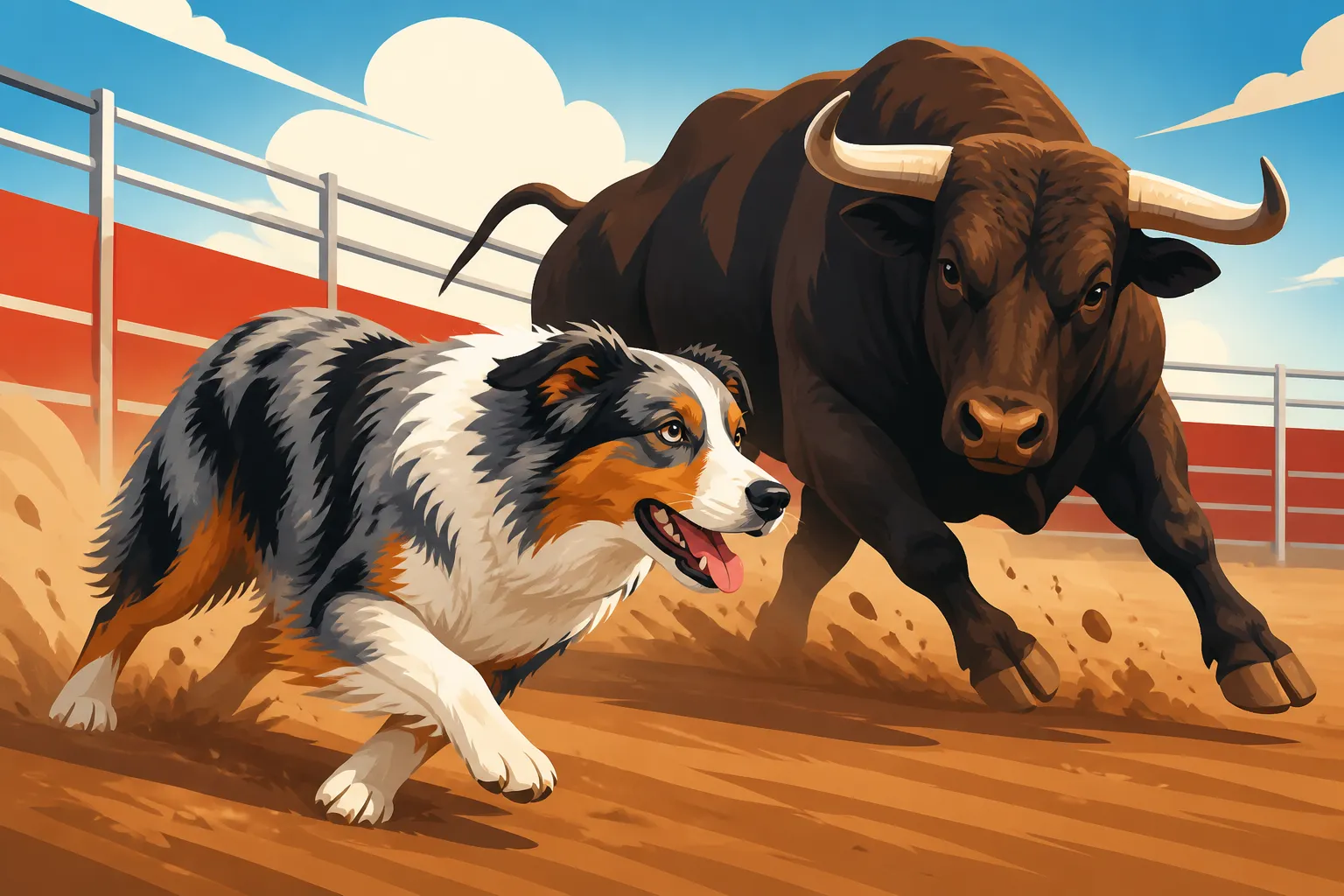
Herding a bull is an entirely different proposition from moving a flock of sheep. It requires a distinct skill set, a deeper level of understanding of animal psychology, and an immense amount of bravery. An Australian Shepherd working a bull isn't just running around; they're engaged in a high-stakes chess match.
Different Stock, Different Tactics
Imagine the difference between guiding a hundred fluffy sheep and influencing a single, ton-heavy bull. Sheep move as a unit, driven by flocking instinct. Bulls, on the other hand, are powerful, independent, and can be incredibly stubborn or aggressive. Herding a bull is not about chasing it; that would likely provoke a dangerous charge. Instead, it’s about applying subtle but firm pressure, using presence and strategic positioning to guide the animal.
An Australian Shepherd working a bull would utilize a combination of "head dog" and "heel dog" techniques. They might get in front to turn the bull, using their eye and a bark to exert dominance and direct movement. Then, they might move to the rear, keeping a respectful but influential distance, to push the bull forward. It's a delicate balance of confidence and caution. The dog has to be close enough to be effective but quick enough to get out of the way of a kick or a charge. This intricate dance requires an Australian Shepherd that can read animal body language instantly, making split-second decisions that ensure both its own safety and the successful movement of the bull.
The Aussie Temperament for Heavy Herding
Not every dog, even within the herding group, possesses the specific temperament required to work large, powerful animals like bulls. The Australian Shepherd's working character, described in Australian Shepherd Temperament and Working Character, is uniquely suited for this demanding task. They are known for their strong prey drive, but also for their discernment. They don't just chase; they work.
A good rodeo Aussie had to possess an unshakeable confidence, a deep well of courage, and an incredible athletic ability. They needed to be quick to accelerate, stop, and change direction, capable of dodging a charging bull or a flailing hoof. Beyond the physical, there was the mental fortitude – the ability to stand their ground, to use their "eye" to intimidate, and to never back down from a challenge. This isn't aggression for aggression's sake; it's a controlled assertion of dominance that guides and directs the larger animal. A dog that could stand up to a bull had to be truly special, embodying the quintessential grit of the working Australian Shepherd.
Safety and Skill in the Arena
The rodeo arena, while exhilarating for spectators, was a place of inherent danger for both humans and animals, and especially for the dogs working within it. The line between effective herding and provoking a dangerous reaction from a bull is incredibly fine. Therefore, the Australian Shepherds employed in these events weren't just naturally gifted; they were often highly trained.
Their handlers understood the specific risks and worked diligently to instill precise commands and a deep understanding of boundaries. A dog that got too close or applied the wrong pressure could easily be gored or trampled. Conversely, a dog that was too timid wouldn't be effective. It was a testament to both the Aussies' intelligence and their trainers' skill that they could perform these tasks with such consistency. These dogs learned when to engage, when to disengage, and how to use the environment (like arena fences) to their advantage. This level of nuanced skill goes far beyond basic obedience and highlights the sophisticated problem-solving abilities of the breed.
The Modern Australian Shepherd and Rodeo Legacy
While the direct, heavy herding of bulls might be a less common sight in mainstream rodeos today, the legacy of the Australian Shepherd's capabilities lives on. Their historical role underscores their incredible versatility and the potent herding drive that remains a hallmark of the breed.
Rodeo's Evolving Role for Herding Dogs
Modern rodeos have largely evolved, with greater emphasis on specific timed events and less on the general "ranch work" demonstrations of yesteryear. While you might still see an Australian Shepherd helping to clear an arena of loose calves or perform impressive trick routines between events, as described in Aussie Trick Routines Between Rodeo Events, the direct, hands-on bull herding is far less prevalent. Safety regulations and a shift in public perception have changed the landscape.
However, the core skills that made these dogs so invaluable in the rodeo – their courage, agility, and herding instinct – are still celebrated. Today, these traits are channeled into various dog sports like agility, flyball, or organized herding trials on controlled livestock. The inherent drive to work and control movement remains, even if the specific application has changed. Owners now often seek to honor this legacy by providing their Aussies with engaging activities that tap into these deep-seated instincts.
Keeping the Herding Drive Alive
For anyone living with an Australian Shepherd, it quickly becomes clear that their herding drive is not just a historical anecdote; it's their operating system. This deep-seated instinct to gather, move, and control is incredibly powerful. Without an appropriate outlet, this drive can manifest in less desirable ways, like herding children, bicycles, or even the vacuum cleaner, as mentioned in An Aussie That Organizes the Dogs at the Park.
Modern Aussie owners face the delightful challenge of channeling this energy constructively. Providing a "job" for an Australian Shepherd is paramount for their happiness and well-being. This can involve formal herding lessons with sheep or ducks, participating in dog sports, or even engaging in advanced obedience and scent work. Many owners find a wide array of durable toys and enrichment tools on sites like Chewy that help satisfy their Aussie's mental and physical needs. Investing in puzzle toys, tough chew items, or specific training tools from Chewy can make a huge difference in managing a high-drive Aussie. Giving an Australian Shepherd a Job Instead of a Walk truly captures the essence of what these dogs need.
Equipment and Support for a Working Aussie
Whether an Australian Shepherd is working a ranch, dazzling crowds at a rodeo, or competing in modern dog sports, they require robust support to maintain their health and performance. Historically, this meant strong, reliable gear and a diet that could fuel intense activity. Today, while the specific context might differ, the need for high-quality care remains.
A working Aussie needs a diet tailored to its energy output. Feeding an Australian Shepherd That Works All Day highlights the importance of nutrient-dense food. Owners often look for specialized diets or supplements to support joint health, especially in dogs that are actively engaged in demanding physical activities. Durable equipment, from sturdy harnesses and long lines to mentally stimulating toys, is also crucial. Modern pet supply retailers like Chewy offer an extensive range of products specifically designed for active and intelligent breeds, ensuring that your Australian Shepherd has everything they need to thrive. From high-quality kibble to interactive feeders and indestructible chew toys, Chewy provides resources that help owners meet the physical and mental demands of their energetic companions.
To truly appreciate the distinction, here's a brief comparison of herding sheep versus herding large stock like bulls:
| Feature | Herding Sheep | Herding Bulls/Cattle |
|---|---|---|
| Primary Goal | Gather, move, and control a flock as a unit | Direct, turn, or separate individual powerful animals |
| Herd Dynamics | Strong flocking instinct, easier to move en masse | Independent, strong-willed, potentially aggressive |
| Dog's Role | Apply pressure to the "balance point" to guide | Assert dominance, use presence and strategic movement |
| Required Temperament | Focus, agility, "eye," gentle assertiveness | Courage, confidence, speed, resilience, powerful "eye" |
| Physical Risks | Lower risk of direct injury from animals | High risk of kicks, charges, and trampling |
| Common Techniques | Outruns, gathers, fetches, driving | Head dog work, pushing, turning, holding a boundary |
| Training Emphasis | Precision, nuanced control, understanding flock | Boldness, quick evasion, reading individual animal |
The history of Australian Shepherds herding bulls at rodeos is a powerful testament to their incredible resilience, intelligence, and unwavering spirit. It paints a picture of a breed that is far more than just beautiful; it is a dedicated and courageous partner, capable of facing down some of the toughest challenges the ranch and arena could throw its way. Their legacy continues to inspire owners to provide their Aussies with the "job" they crave, ensuring these magnificent dogs continue to thrive in whatever role they play in our lives today.
Disclaimer
This article is for general informational purposes only and does not constitute professional advice. Laws, prices and regulations vary by location and change over time. Consult a qualified professional for guidance on your specific situation.