Brushing an Australian Shepherd Through Coat Blow
Ah, the dreaded "coat blow"! If you're an Australian Shepherd owner, you know exactly what I'm talking about: that time of year when your beautiful, fluffy companion suddenly transforms into a walking, shedding machine, leaving a fine layer of fuzz on everything you own. It feels like you could knit a whole new Aussie with the amount of hair that comes out. The sheer volume can be overwhelming, making you wonder if you're doing something wrong or if this shedding will ever actually end. This guide is here to walk you through the phenomenon of Australian Shepherd coat blow, arm you with the right tools, and give you a step-by-step routine to manage the tsunami of fur and keep your beloved Aussie's coat healthy and comfortable.
Understanding the Australian Shepherd Double Coat
Before we dive into the nitty-gritty of brushing, it's really helpful to understand why your Australian Shepherd sheds so much, especially during a coat blow. It all comes down to their magnificent double coat, a testament to their working heritage and ability to thrive in various climates. This isn't just one layer of hair; it's a sophisticated system designed for protection and temperature regulation.
The Function of the Undercoat and Guard Hairs
Your Australian Shepherd's coat is a marvel of natural engineering, comprised of two distinct layers, each with its own crucial job. First, there's the harsh, weather-resistant outer coat, often called the "guard hairs." These longer, coarser hairs act like a protective shield, repelling water, dirt, and debris. They're the first line of defense against the elements, keeping your Aussie dry and clean even when they're romping through wet fields or dusty trails. Think of them as the roof shingles of your dog's personal house, tough and durable.
Beneath this outer layer lies the real powerhouse when it comes to shedding: the dense, soft undercoat. This fluffy layer is composed of much finer, woollier hairs that grow close to the skin. Its primary function is insulation, keeping your Aussie warm in winter and surprisingly, helping to keep them cool in summer by trapping a layer of air. When this undercoat is healthy, it provides an incredible barrier against both extreme heat and cold. This is exactly what we mean when we talk about The Australian Shepherd Double Coat Explained. Without this amazing natural climate control, your Aussie wouldn't have been able to handle the varied conditions their ancestors faced on ranches.
Why Your Aussie Has a "Coat Blow"
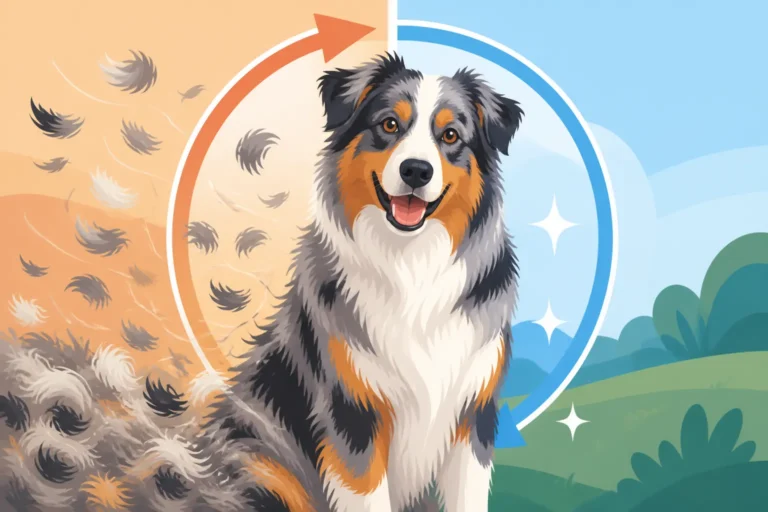
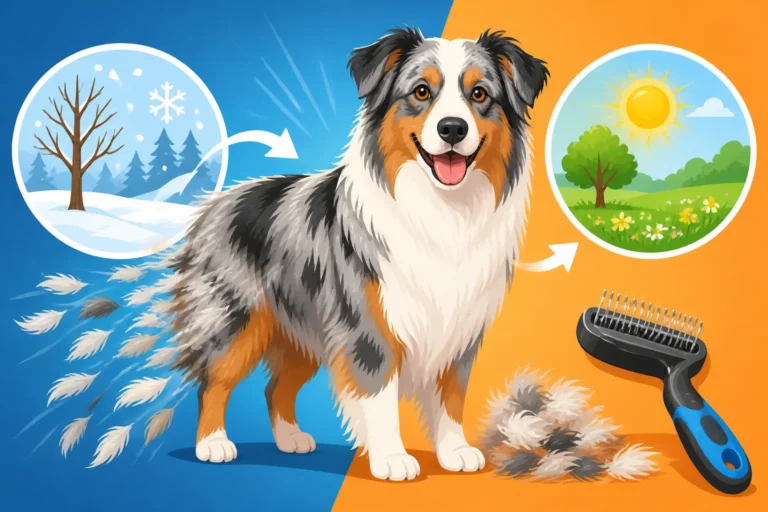
So, with such a functional coat, why does it suddenly seem to explode with hair? The answer lies in the seasonal changes and your Aussie's natural biological rhythms. A "coat blow" refers to the periodic, often intense, shedding of the undercoat that occurs primarily twice a year: typically in the spring as your Aussie sheds their heavy winter coat to prepare for warmer weather, and again in the fall as they shed their lighter summer coat to make way for a thicker, warmer winter undercoat. It's a massive turnover of that insulating layer.
This process is largely triggered by changes in daylight hours and temperature fluctuations, affecting your dog's hormones. It's a completely natural and healthy process, albeit one that can turn your home into a tumbleweed factory for a few weeks. During a coat blow, the dead undercoat needs to be removed to allow new, healthy hair to grow in and for the skin to breathe properly. If this dead undercoat isn't brushed out, it can quickly mat, creating uncomfortable hot spots and even leading to skin infections. This is precisely what happens during Twice-Yearly Coat Blow in an Australian Shepherd. It’s Mother Nature’s way of keeping their system fresh and ready for the next season, but for us owners, it often feels like an unending task.
Essential Grooming Tools for Coat Blow
Facing an Australian Shepherd mid-coat blow without the right tools is like trying to bail out a leaky boat with a teacup—it’s just not going to work efficiently, and you’ll likely feel defeated. Investing in a few key grooming tools will not only make the process easier for you but also much more comfortable and effective for your dog. Forget that flimsy brush you got at the grocery store; we're talking about serious hair removal here!
Deshedding Rakes and Undercoat Tools
When your Aussie is blowing their coat, your absolute best friend will be a good deshedding rake or an undercoat tool. These are specifically designed to reach down through the guard hairs and grab hold of that loose, fluffy undercoat that's ready to come out. There are a few variations:
- Undercoat Rakes with Rotating Teeth: These often have long, metal teeth that can rotate independently. The rotating action helps the teeth glide through the topcoat without snagging, allowing them to effectively reach and remove the loose undercoat. They're excellent for breaking up minor tangles and gently pulling out dead hair. You'll typically use these in a raking motion, following the direction of hair growth.
- Blade-Style Deshedding Tools: Tools like the original Furminator (and many similar generic versions you can find on Amazon or Chewy) feature a fine-toothed metal blade designed to grab and remove loose undercoat. These are incredibly effective but must be used with extreme caution. Overuse or improper technique can cut or damage the guard hairs, leading to coat thinning or damage. If used gently and sparingly, they can work wonders, but always err on the side of less pressure and frequency.
- Comb-Style Deshedding Rakes: These look more like a wide-toothed comb with slightly curved or pointed teeth. They are fantastic for really digging into the dense undercoat, especially on the back, sides, and trousers. They are what we call The Rake That Reaches an Aussie Undercoat.
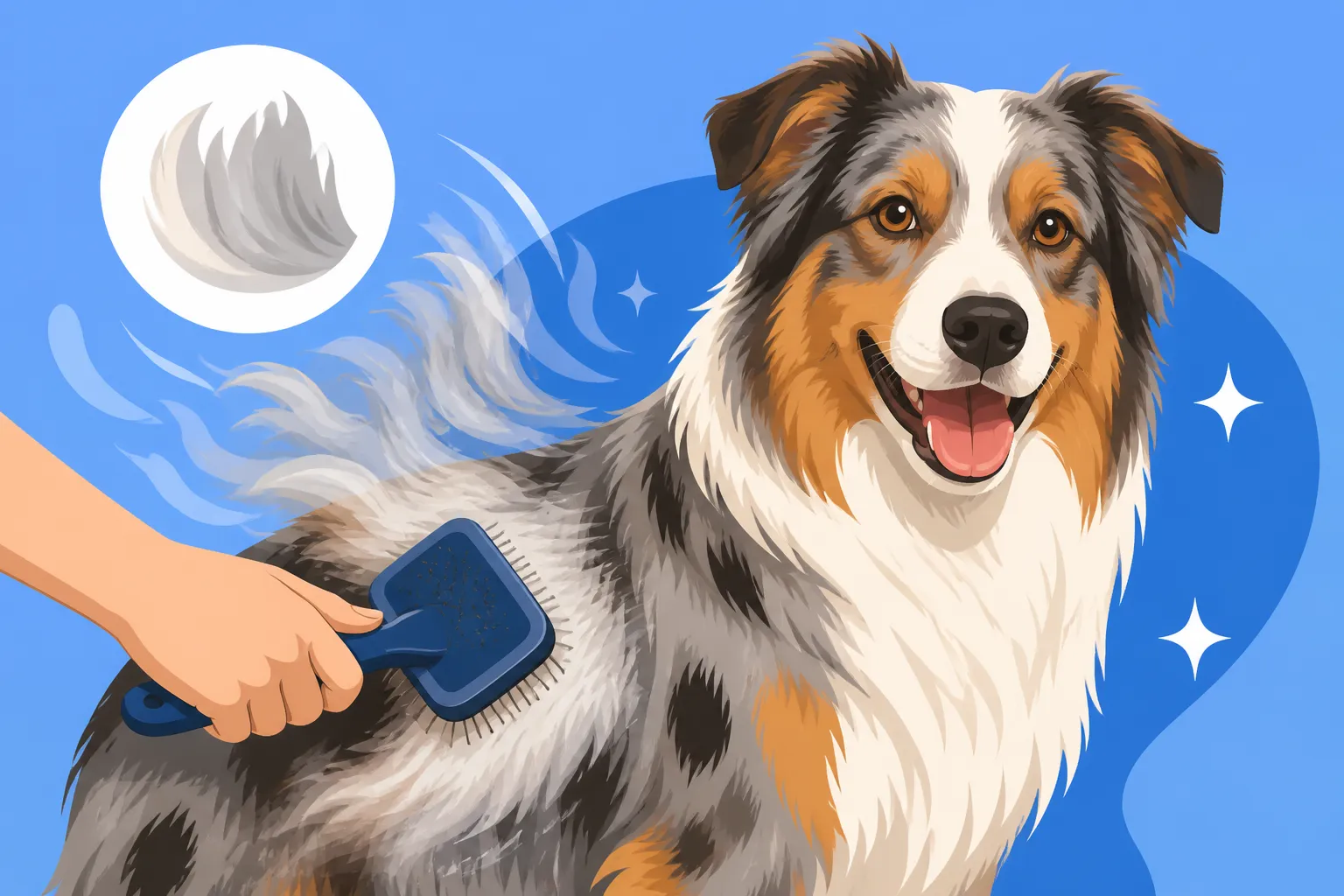
The key with any deshedding rake is to use it gently and systematically. You want to remove the dead undercoat without pulling on live hair or scratching your dog's skin. Go with the grain of the fur, in short, smooth strokes. You'll be amazed (and probably horrified) by the sheer volume of hair these tools can extract. It's truly satisfying, though, to see that cloud of fuzz come out, knowing you're making your Aussie more comfortable and preventing mats.
Slicker Brushes and Pin Brushes
While deshedding tools are your heavy artillery for coat blow, slicker brushes and pin brushes are your everyday workhorses and essential for the finishing touches.
- Slicker Brushes: These brushes have fine, short wires packed closely together on a flat or curved surface. The wires are usually angled slightly to help grab loose hair and detangle. Slicker brushes are fantastic for removing loose hair from the topcoat, smoothing the coat, and working out small tangles and mats. They're particularly useful on the feathering on legs and tail, and for tidying up after you've used an undercoat rake. Always be gentle, as the wire bristles can irritate delicate skin if too much pressure is applied.
- Pin Brushes: A pin brush typically has widely spaced metal pins with rounded tips set in a rubber base. These are the most gentle brushes and are excellent for general daily brushing, especially for longer coats. They're great for distributing natural oils, stimulating the skin, and gently removing loose hairs without pulling. They won't get deep into the undercoat like a rake, but they are perfect for regular maintenance and for a final fluffing. A pin brush is also ideal for the "line brushing" technique, which we'll discuss shortly, as it allows you to work through the coat layer by layer without causing discomfort.
You might find yourself using both. Start with a deshedding rake to get the bulk of the undercoat, then follow up with a slicker brush to smooth out the topcoat and catch any remaining loose hairs, and finally a pin brush for an all-over gentle brush and shine.
Dematting Tools and Combs
Despite your best efforts, mats and tangles can still form, especially during a coat blow when the dead undercoat binds with live hair. This is particularly true in high-friction areas or where the fur is longer and finer. Having the right tools for dematting is critical to prevent pain and further coat damage.
- Wide-toothed Combs: A sturdy metal comb with both wide and medium-spaced teeth is indispensable. After using your deshedding rake, run a comb through the coat to check for any remaining tangles or knots. It helps to separate the hair and identify problem areas. A good comb can gently work out smaller mats.
- Dematting Rakes/Combs with Blades: These tools look a bit like a rake but have small, razor-sharp blades set into the teeth. They are designed to cut through mats rather than pull them out. These require extreme caution and a very light hand. You use them by gently working the blades into the mat, parallel to the skin, to slice through the tangled hair. This prevents pulling on your dog's skin, which can be very painful. However, if misused, they can cause skin nicks. If you're unsure, or if the mat is very tight and close to the skin, it's always safer to consult a professional groomer.
- Scissors with Blunt Tips: For truly stubborn, felted mats that are impossible to comb out, a pair of blunt-tipped grooming scissors can be used as a last resort. However, this should only be done if you can safely get the blades underneath the mat, between the mat and the skin, without risk of cutting your dog. Always point the tips away from the dog's body. For most owners, professional help is the safest option for severe mats. We've all seen those terrible mats that form behind the ears or in the 'trousers' of an Aussie, and sometimes that's the only solution. Just be so, so careful because the skin can be pulled up into those mats more than you'd think. This is especially true for Mats in an Aussie Ruff and Trousers.
Remember, prevention is always better than cure. Regular, thorough brushing, even outside of coat blow season, will significantly reduce the likelihood of severe matting.
The Step-by-Step Coat Blow Brushing Routine
Alright, you've got your arsenal of brushes and you're ready to tackle the fur storm. But don't just dive in headfirst! A systematic approach will make the process more effective, less stressful for your Aussie, and ultimately, get the job done faster. Think of it as a grooming marathon, not a sprint.
Preparing Your Aussie and Your Space
Before you even touch a brush to your Aussie's coat, a little preparation goes a long way. This isn't just about efficiency; it's about making the experience as positive as possible for your dog.
First, choose the right time. Pick a moment when your Aussie is calm and relaxed, perhaps after a good walk or a play session when they've burned off some energy. Trying to brush an overstimulated Aussie is a recipe for frustration for both of you. Have plenty of high-value treats on hand to reward cooperation and create a positive association with grooming. A designated "grooming spot" can also help, whether it's on a non-slip mat, a sturdy grooming table, or even just a specific corner of the yard.
Next, prepare your space for the impending hair-nado. Seriously, during a full coat blow, the amount of hair that comes off can be shocking. If possible, brush your Aussie outdoors on a calm, dry day. The breeze will help carry away the loose fur, and cleanup will be much easier. If brushing indoors, lay down a sheet or a tarp to catch the flying fur. This makes vacuuming infinitely simpler afterwards. You can find cheap tarps or old sheets for this on Amazon or at any home goods store.
Finally, do a quick pre-brush check of your Aussie. Gently run your hands over their entire body. Feel for any lumps, bumps, hot spots, burrs, stickers, or hidden mats that might be sensitive. Check behind their ears, in their armpits, along their belly, and especially in their "trousers" (the longer fur on their hind legs). These are common areas for mats to form and can be quite painful if pulled. If you find any obvious issues, address them gently before starting the main brushing. This initial check not only helps you identify potential problems but also gets your Aussie accustomed to being handled, setting a calm tone for the session.
The "Line Brushing" Technique for Deep Shedding
This is the secret sauce for effectively removing the undercoat during a blow. Line brushing isn't just randomly raking over the coat; it's a methodical technique that ensures you get right down to the skin, layer by layer, where all that dead undercoat is hiding. It’s a bit more time-consuming but yields far superior results compared to just surface brushing.
Here's how to do it:
- Start at the bottom: Begin at the bottom of your Aussie's leg (usually a hind leg) or at the tail, working your way upwards and forwards.
- Part the coat: Use your free hand to part a small section of your Aussie's coat, pushing the top layer of fur up and away, creating a clear "line" down to the skin. This exposes the undercoat directly.
- Brush the line: Take your undercoat rake or slicker brush and brush just that exposed line of fur, working from the skin outwards. Use short, gentle strokes, making sure your brush reaches through the undercoat.
- Work in sections: After you've brushed that first section thoroughly, gently pull down a small amount of the upper layer of fur to reveal the next "line" of undercoat. Repeat the brushing process.
- Overlap your strokes: Continue this process, working in small sections, overlapping your strokes slightly to ensure you don't miss any spots. Imagine you're revealing a new layer of clean undercoat with each brush stroke.
- Progress systematically: Work your way up the leg, then move to the body, starting again from the bottom (e.g., the belly area, working up the side). Don't forget the chest, neck ruff, and behind the ears, which are prime matting spots. The goal is to systematically cover every inch of your Aussie's body.
This technique, while meticulous, ensures that you're not just skimming the surface but actually removing the deep, dead undercoat. It’s a bit like detangling your own long hair; you wouldn't just brush the top layer, you'd work through it section by section. Be patient, take breaks if your Aussie gets antsy, and continue to reward them with treats and praise. The amount of hair you'll pull out using this method will be astounding, but also incredibly satisfying.
Finishing Touches and Aftercare
Once you've done the heavy lifting with the line brushing and undercoat rake, it's time for the finishing touches to make your Aussie truly shine and ensure their comfort.
After you feel confident that the bulk of the dead undercoat has been removed, switch to your slicker brush or pin brush. Use this to go over your Aussie's entire coat, gently brushing in the direction of hair growth. This helps to smooth down the guard hairs, remove any stray loose hairs that might have been missed, and distribute the natural oils in their skin, leaving their coat looking sleek and healthy. It's like buffing a freshly cleaned surface – giving it that final polish. This step also helps to check for any small tangles or mats that might have been overlooked during the deeper brushing.
Once the brushing is complete, give your Aussie a thorough once-over again with your hands. Feel their coat, ensuring there are no hidden snags or rough patches that indicate missed spots. Pay particular attention to those tricky areas like the feathering on their legs and tail, and around their ears and hindquarters. If you find any small, new tangles, you can gently work them out with your wide-toothed comb.
Now for the most important part: reward your amazing Aussie! They've just endured a lengthy grooming session, and they deserve a big fuss. Offer them a high-value treat, lots of praise, and a good belly rub or a game of fetch. This reinforces the positive association with grooming, making future sessions much easier.
Finally, don't forget cleanup and tool care. Remove all the collected fur from your brushes. A handy trick is to use a metal comb or even an old toothbrush to clean out slicker brushes. Store your tools properly so they're ready for the next session. And if you brushed indoors, grab your vacuum and lint rollers. You’ll be surprised how much hair can still settle, even with a tarp! In fact, the costs of managing all that hair can add up, which is why we've even written about Vacuum and Cleaning Costs in an Aussie Household. It's a never-ending battle, but a clean house makes for a happier owner.
Common Challenges and Troubleshooting During Coat Blow
Managing an Australian Shepherd's coat blow isn't always smooth sailing. There are common hurdles that owners face, from stubborn mats to uncooperative dogs. Knowing how to troubleshoot these issues can save you a lot of frustration and keep your Aussie comfortable.
Dealing with Mats and Tangles
Mats and tangles are the bane of every long-haired dog owner's existence, and they seem to multiply exponentially during a coat blow. When dead undercoat gets caught and woven into live hair, it can quickly become a tight, painful knot.
Strategies for tackling stubborn mats:
- Patience is paramount: Never yank or pull on a mat. This is incredibly painful for your dog and can cause skin irritation or even injury.
- Use a detangling spray: Before attempting to comb out a mat, spray it liberally with a good quality detangling spray or conditioner. Let it sit for a few minutes to soften the hair.
- Work from the outside in: Don't try to pull the whole mat apart at once. Instead, gently pick at the very edges of the mat with your fingers or the wide teeth of a comb. Work small sections at a time.
- Utilize a mat splitter or dematting rake: For more serious mats, a specialized dematting tool can be effective. As discussed earlier, these have small blades that carefully slice through the mat. Always work parallel to the skin, never pointing the blades towards the skin. Take small, controlled strokes.
- Support the skin: When working on a mat, place your fingers between the mat and your dog's skin. This helps to pull the skin taut, minimizing the pulling sensation and preventing the mat from tugging directly on the skin.
- When to consider professional grooming help: There are times when a mat is simply too large, too tight, or too close to the skin for you to safely handle at home. If you're struggling, or if your dog is showing signs of pain or extreme discomfort, call a professional groomer. They have specialized tools and techniques to remove mats safely, often without resorting to shaving the entire dog. They can also advise you on how to prevent them. Sometimes, a severe mat requires shaving the affected area, which is always better than causing your dog distress or injury.
Prevention tips:
- Daily spot checks: During coat blow season, quickly check high-friction areas (behind ears, armpits, trousers, under collars/harnesses) daily for small tangles. It's much easier to deal with a small knot than a felted mat.
- Consistent brushing: Even outside of coat blow, regular brushing, even for just Brushing an Australian Shepherd Twice a Week, helps prevent the undercoat from accumulating and forming mats.
Handling a Reluctant or Uncooperative Aussie
Not all Aussies are thrilled about being groomed, especially during a long, intense coat blow session. If your dog is squirmy, anxious, or downright defiant, it can turn brushing into a battle.
Making brushing a positive experience:
- Start young and short: If you have a puppy, introduce brushing early and keep sessions very short, positive, and treat-filled.
- Short, frequent sessions: Instead of one marathon session, break grooming up into several shorter, 10-15 minute sessions throughout the week. This is less overwhelming for your dog.
- High-value rewards: Have your Aussie's absolute favorite treats on hand. Give them constantly during brushing, especially when they cooperate or tolerate a particularly sensitive area.
- Calm environment: Ensure the grooming area is quiet and free from distractions. Play soothing music or simply maintain a calm, reassuring demeanor. Your stress will transfer to your dog.
- Desensitization techniques: For a truly fearful or reactive dog, you might need to desensitize them to the tools. Start by simply having the brush near them, then touching them with it briefly, always pairing it with a treat. Gradually increase the duration and intensity of contact.
- Chew toys/lick mats: A long-lasting chew or a lick mat smeared with peanut butter can be a fantastic distraction, keeping your dog happily occupied while you work. You can find many options for these on Chewy.
When to seek professional guidance:
If your Aussie displays aggression (growling, snapping), extreme fear, or you simply cannot make progress, it’s time to call in a professional. A certified dog trainer or a patient, experienced groomer can offer invaluable advice and hands-on help. They might use specific positive reinforcement techniques, muzzle training (for safety), or even recommend veterinary consultation if underlying pain or anxiety is suspected. Never force your dog; this can damage your bond and make future grooming impossible.
The Never-Ending Hair: When Will It End?
One of the most frustrating aspects of coat blow is the feeling that the shedding will literally never stop. You brush, you vacuum, and still, there are more hair tumbleweeds appearing.
Managing expectations about the duration:
- It's a process, not an event: A full coat blow can last anywhere from a few weeks to even a couple of months, depending on your individual dog, the climate, and their hormones. It's not usually a sudden "one and done" shedding.
- Intensity ebbs and flows: You'll likely have peak shedding days and then periods where it lessens slightly, only to ramp back up. This is normal.
- Look for signs of new growth: You'll know it's truly nearing the end when you start pulling out less and less dead undercoat, and you see new, healthy undercoat appearing at the base of the guard hairs.
Tips for keeping your home cleaner:
- Increase brushing frequency: During peak coat blow, you might need to brush your Aussie daily, even if just for 15-20 minutes, to stay on top of the shedding.
- Invest in good cleaning tools: A powerful vacuum cleaner designed for pet hair is a must-have. Robotic vacuums can be a lifesaver for daily maintenance. Keep lint rollers strategically placed around the house!
- Designated "hairy" areas: Try to encourage your Aussie to nap or rest in areas with easy-to-clean flooring or on designated washable dog beds.
- Washable covers: Use washable slipcovers for furniture or throw blankets that can easily be tossed in the laundry.
- Grooming aprons/smocks: If you're brushing indoors, wearing a grooming smock or an old t-shirt will protect your clothes from becoming completely covered in fur.
Remember, while it feels like an uphill battle, the coat blow will eventually end. Consistent effort and realistic expectations will help you both get through it with minimal stress.
Complementary Care During Shedding Season
Brushing is undeniably the heavy hitter when it comes to managing an Australian Shepherd's coat blow, but it's part of a larger picture of holistic coat care. Supporting your Aussie's skin and fur from the inside out, and knowing when to call in the professionals, can make a huge difference in the overall health and manageability of their coat, especially during those intense shedding periods.
Bathing and Drying Techniques for Coat Blow
While regular brushing is crucial, a good bath can actually be incredibly helpful in loosening and washing away stubborn dead undercoat. It’s like hitting the reset button for their coat during a shed.
- The importance of a good bath to loosen dead hair: Warm water helps to open up the hair follicles and loosen dead hair that’s still clinging to the skin. When shampooing and rinsing, the agitation and water flow literally help to lift and carry away immense amounts of loose undercoat. It can be surprising how much fur comes off in the tub!
- Proper shampoo choice: Look for a high-quality "deshedding" shampoo and conditioner, or simply a moisturizing oatmeal-based shampoo. Avoid harsh detergents or products with strong perfumes that can irritate the skin. Lather thoroughly, ensuring the shampoo gets right down to the skin. Massage it in to help loosen that dead undercoat. Let the conditioner sit for a few minutes before rinsing thoroughly. For an Aussie, proper washing means getting right down to their skin, as described in Washing Right Down to an Aussie's Skin.
- Crucial role of thorough drying: This is perhaps the most important part after the bath for a double-coated breed like an Aussie. Simply air-drying will likely lead to matting, skin issues, and potentially a musty smell. You must dry your Aussie completely, right down to the roots of the undercoat. A high-velocity dog dryer (sometimes called a "force dryer") is invaluable here. These dryers blow air at a high speed, effectively forcing water out of the coat and separating the hairs, which also helps to blow out any remaining loose undercoat. If you don't have one, use a human hairdryer on a cool or low heat setting, constantly moving it to avoid burning the skin, and brush as you dry. Thorough drying prevents mildew, hot spots, and matting, and ensures the coat can perform its insulating job properly. This is crucial for Drying an Australian Shepherd Double Coat.
One critical point: never shave your Australian Shepherd to "help" with shedding or heat. While it might seem intuitive, shaving their double coat can actually do more harm than good. It ruins the natural insulation system, exposing their sensitive skin to sunburn and making them less efficient at regulating their body temperature. Plus, the undercoat often grows back faster and coarser than the guard hairs, leading to a damaged, dull, and even more prone-to-matting coat. This is why Why an Australian Shepherd Should Never Be Shaved is such a strongly held belief among responsible Aussie owners and groomers.
Nutritional Support for a Healthy Coat
What goes into your Australian Shepherd's body has a direct impact on the health and quality of their coat. A well-nourished dog will naturally have a healthier coat that sheds appropriately, rather than excessively or poorly.
- Omega fatty acids, fish oil: These are superheroes for skin and coat health. Omega-3 and Omega-6 fatty acids help reduce inflammation, improve skin barrier function, and contribute to a shiny, healthy coat with less dry, brittle hair. Many high-quality dog foods include these, but you can also supplement with fish oil, salmon oil, or flaxseed oil. Just be sure to consult your vet for the correct dosage. We've talked extensively about the benefits of Fish Oil for an Aussie Double Coat.
- Quality diet's impact on coat health and shedding: A diet rich in high-quality protein, essential vitamins, and minerals provides the building blocks for healthy hair growth. Dogs on poor-quality diets often have dull, brittle coats, excessive shedding, and dry, flaky skin. Look for dog foods that list a named meat source as the first ingredient. Brands like Ollie, which focus on fresh, human-grade ingredients, can provide excellent nutritional support for a healthy coat from the inside out. Their carefully balanced recipes contribute to overall canine wellness, which naturally reflects in a vibrant, healthy coat.
- Hydration: Just like for humans, proper hydration is essential for skin and coat health. Ensure your Aussie always has access to fresh, clean water, especially if they are very active or during warm weather. Dehydrated skin can lead to a dry, flaky coat and more problematic shedding.
A healthy diet contributes significantly to making coat blow manageable. When the hair that is shed is healthy, it's less prone to matting and comes out more easily.
Professional Grooming vs. Home Grooming
For many Aussie owners, the question eventually arises: should I tackle this all myself, or call in the professionals? There's a place for both, and understanding the pros and cons can help you decide what's best for you and your dog.
Pros and cons of each, especially during heavy shedding:
- Home Grooming:
- Pros: Cost-effective, convenient (you set the schedule), strengthens your bond with your dog, allows for daily checks for skin issues or injuries.
- Cons: Time-consuming, physically demanding, requires purchasing tools, can be messy, may not be as thorough as a professional, potentially difficult with uncooperative dogs or severe mats.
- Professional Grooming:
- Pros: Experienced hands, specialized tools (like high-velocity dryers that make a huge difference during coat blow), thorough mat removal, less stress/mess for you, can provide expert advice. A professional deshedding treatment can feel like a miracle during peak season. We discuss this more in Deshedding Treatments at an Aussie Groomer.
- Cons: Can be expensive (especially during coat blow when extra services might be needed), requires appointments, your dog might be stressed by new environments or people.
When to know it's time to call in the pros:
- Severe matting: If you encounter large, tight mats that you cannot safely remove at home, a professional groomer is your best bet to prevent pain and skin damage.
- Overwhelmed by the hair: If you simply can't keep up with the volume of shedding, or if the process is causing you or your dog too much stress, a professional "deshedding package" can be a lifesaver.
- Skin issues: If you notice excessive dryness, redness, sores, or persistent itching, a groomer can often spot these early and advise you to see a vet.
- Lack of time or physical ability: Grooming an Aussie can be physically demanding. If you're short on time or have physical limitations, a professional can ensure your dog's coat remains healthy.
What a professional deshedding treatment entails:
Typically, this involves a specialized bath with deshedding shampoo and conditioner, followed by an intense session with a high-velocity dryer to force out as much dead undercoat as possible. This is usually followed by a thorough brushing and raking to remove any remaining loose hair. Many owners find these treatments worth every penny, as they drastically reduce shedding at home for several weeks.
Ultimately, the choice depends on your comfort level, your dog's temperament, and your budget. A combination of regular home brushing and occasional professional deshedding treatments might be the perfect balance for keeping your Aussie's coat in top condition.
Seasonal Coat Changes Beyond Coat Blow
While the "coat blow" is certainly the most dramatic event in an Australian Shepherd's grooming calendar, their coat is a living, breathing thing that undergoes subtle changes throughout the year. Understanding these ongoing dynamics and knowing how to spot potential issues will help you maintain optimal coat health.
Year-Round Brushing and Maintenance
It’s easy to breathe a sigh of relief when the major coat blow finally subsides, but coat care for an Australian Shepherd is definitely not a seasonal activity. Even when your Aussie isn't actively blowing their coat, consistent maintenance is key.
- Importance of regular, lighter brushing: Outside of the intense shedding periods, a good brushing session two to three times a week is generally sufficient. This helps to remove any daily loose hairs, prevent minor tangles from forming, and distribute natural skin oils throughout the coat. It also acts as a mini-massage, stimulating circulation to the skin, which promotes healthy hair growth. This routine is far less daunting than a full coat blow session and helps keep the coat in good order. It’s what we mean by Brushing an Australian Shepherd Twice a Week.
- Maintaining the integrity of the double coat: Regular brushing ensures that both the undercoat and guard hairs are healthy and untangled. This allows the double coat to function optimally – providing insulation, protecting against elements, and maintaining its natural beauty. Neglecting regular brushing, even outside coat blow, can lead to the undercoat matting and packing, which compromises its insulating properties and can create a host of skin problems. A healthy, well-maintained coat is less likely to shed excessively at unexpected times.
Think of it as routine dental hygiene versus waiting for a cavity to form. Regular, lighter care prevents major problems down the line.
Environmental Factors Affecting Shedding
Your Aussie's coat is designed to respond to their environment, and modern living can sometimes throw a wrench into their natural shedding cycles.
- Indoor vs. outdoor dogs, climate, heating/AC: Dogs that live primarily outdoors in natural light cycles and fluctuating temperatures tend to have more pronounced and predictable seasonal coat blows. Indoor dogs, however, are exposed to artificial light for longer periods and consistent indoor temperatures (thanks to heating and air conditioning). This can sometimes confuse their natural biological clock, leading to more continuous, lighter shedding year-round, or less distinct, drawn-out coat blows. While it might seem less intense, it can also mean a constant, low-level amount of hair in your home.
- Impact of stress or health issues on coat: Stress, illness, or changes in diet can also influence shedding patterns. A dog undergoing significant stress might shed more than usual. Similarly, certain medical conditions can lead to abnormal hair loss or changes in coat texture. For example, a dull, brittle coat could be a sign of poor nutrition or an underlying health issue. Just like in people, extreme stress can literally make a dog's hair fall out.
Being aware of these factors can help you understand subtle changes in your Aussie's shedding and coat health, prompting you to adjust their routine or seek veterinary advice if needed.
Recognizing Abnormal Shedding or Coat Issues
Knowing what's "normal" for an Australian Shepherd's shedding is important, but it's equally important to recognize when something might be amiss. Not all hair loss is normal seasonal shedding.
- When to consult a vet: You should always consult your veterinarian if you notice any of the following:
- Excessive, non-seasonal shedding: If your Aussie is shedding profusely outside of their typical spring and fall coat blows, especially if it's accompanied by other symptoms.
- Patches of baldness or thinning hair: This is usually a red flag. Healthy shedding typically results in overall hair loss, not distinct bald spots.
- Skin irritation, redness, or sores: If the skin under the coat is red, inflamed, bumpy, or has open sores, there's an underlying problem.
- Constant itching or scratching: While some itching is normal, relentless scratching, licking, or biting at the skin indicates discomfort and needs investigation.
- Dull, brittle, or greasy coat: A healthy Aussie coat should be shiny and soft. A significant change in texture could signal a problem.
- Potential underlying health concerns: Many health issues can manifest as coat problems:
- Allergies: Environmental, food, or flea allergies can all cause intense itching, skin inflammation, and subsequent hair loss.
- Parasites: Fleas, mites, and other external parasites cause itching and irritation, leading to scratching and hair loss.
- Fungal or bacterial infections: These can cause skin lesions, redness, and hair loss.
- Hormonal imbalances: Conditions like hypothyroidism (underactive thyroid) are notorious for causing dull coats, excessive shedding, and sometimes symmetrical hair loss. If you notice a flat, lifeless coat, it's worth checking out, as it could be Thyroid Disease Behind a Flat Aussie Coat.
- Nutritional deficiencies: As mentioned, a poor diet can directly impact coat health.
- Stress: Chronic stress can lead to skin problems and increased shedding.
By being observant and maintaining a regular grooming routine, you are often the first line of defense in spotting these potential issues early, allowing for prompt veterinary intervention and keeping your beloved Australian Shepherd healthy and comfortable.
Disclaimer
This article is for general informational purposes only and does not constitute professional advice. Laws, prices and regulations vary by location and change over time. Consult a qualified professional for guidance on your specific situation.