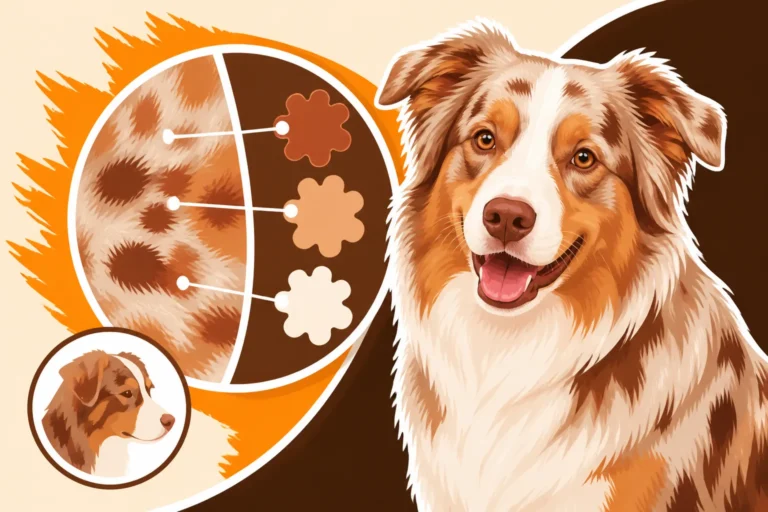
Black Tricolor Australian Shepherds
It's easy to get lost in the dazzling array of Australian Shepherd coat colors, especially when you encounter terms like "tricolor." Many people are captivated by the dynamic patterns of merle Aussies, but sometimes the equally stunning, traditional black tricolor gets a little less specific attention. If you've ever wondered what truly defines a black tricolor Australian Shepherd, from its genetics to its care, this guide is here to unravel the beauty and nuances of this classic coat pattern.
What Defines a Black Tricolor Australian Shepherd?
When we talk about an "Australian Shepherd," a mental image often conjures up a dog with striking merle patterns or vibrant red hues. However, the black tricolor is arguably the most foundational and recognizable color in the breed's history, representing a sturdy, classic look that speaks to the Aussie's working heritage. Understanding what constitutes a black tricolor goes beyond just seeing "three colors." It’s about a specific distribution and intensity of pigments.
The Signature Trio of Colors
A black tricolor Australian Shepherd, at its heart, displays three distinct colors: a solid black base, brilliant copper (or tan) markings, and crisp white areas. The black is the dominant and most expansive color, covering the dog's body, back, and often much of the head and tail. This isn't a diluted black or a smoky grey; it's a rich, deep black that forms the canvas for the other two colors. It's a color that stands out, looking particularly striking against certain landscapes or even just a green park.
The copper points are what truly elevate a black bi-color (black and white) to a tricolor. These warm, reddish-brown accents are strategically placed, typically appearing on the cheeks, over the eyes (often described as "eyebrows"), on the chest, and along the legs and under the tail. These aren't just random splotches; they are defined points that add depth and character to the dog's expression and outline. The intensity of this copper can vary from a pale cream to a deep, burnished rust, but its presence is non-negotiable for a true tricolor.
Finally, the white markings complete the tricolor picture. White usually appears as a blaze on the face, a partial or full collar around the neck, on the chest, on the legs (often called "socks" or "stockings"), and on the tip of the tail. These white areas should be clean and clearly delineated, providing a stark contrast to the black and copper. The amount of white can vary, but excessive white on the body or head can sometimes be indicative of other genetic factors, or simply fall outside the breed standard's preference for balanced markings.
The Classic Aesthetic
The combination of black, copper, and white creates an aesthetic that is both striking and traditional. It’s a look that has graced ranches and show rings for decades, embodying the quintessential working dog. The defined edges of the black, the warm glow of the copper, and the bright pop of white contribute to a balanced appearance that many find incredibly appealing. There's a certain elegance in the simplicity and clear definition of these colors compared to the more marbled appearance of merle coats.
This classic aesthetic also evokes a sense of reliability and strength. While a blue merle might catch the eye with its dynamic pattern, a black tricolor often conveys a timeless dignity. It reminds us of the breed's roots as a no-nonsense stock dog, where functionality and a robust appearance were prized. The consistent coloring also means that, unlike merles, a black tricolor's coat pattern generally doesn't "fade" or change dramatically with age, maintaining its distinct beauty throughout the dog's life. If you're looking for a dog with a classic, enduring look, the black tricolor fits the bill perfectly. You can learn more about all the possible color combinations in Merle, Tri and Every Australian Shepherd Color.
The Genetic Blueprint Behind Black Tricolor
Understanding the genetics behind your Australian Shepherd's coat color can feel like a complex puzzle, but it's fascinating once you grasp the basics. For the black tricolor, it's a combination of several genes working in concert, each responsible for a different aspect of the overall appearance. This isn't about one single gene, but an interplay that results in that distinctive three-color pattern.
Understanding the Base Coat and Modifiers
The foundation of a black tricolor Aussie is, naturally, its black base coat. This is primarily determined by the K locus, where the dominant allele 'K' results in black or merle (if the dog also carries the merle gene, which tricolors do not directly express as their base color). A black tricolor Australian Shepherd will carry at least one dominant K allele, ensuring a black base. Without this, the dog would be a red-based coat, leading to a red tricolor instead.
Building on that black base, we then look to the A locus, which controls the distribution of black and tan pigment. For a tricolor, the critical allele here is 'at' (tan points), which is recessive to the 'A' allele (dominant black, no tan points) but dominant to the 'a' allele (recessive black). A black tricolor Australian Shepherd will have at least one 'at' allele, typically expressed as 'atat' or 'Aat'. This gene tells the pigment-producing cells where to place the copper points – over the eyes, on the cheeks, and so on. Without the 'at' allele, you'd have a solid black dog, or a black bi-color if white markings were also present.
So, for a black tricolor, the dog must have the genetic potential for a black base and the specific instructions to lay down tan points. This combination ensures that the deep black is beautifully contrasted by those warm copper markings, giving the coat its tricolor definition. It’s a precise genetic recipe that has been preserved and appreciated within the breed for generations.
The White Markings Gene
The final piece of the tricolor puzzle comes from the S locus, which governs white spotting. This gene dictates where white appears on the dog's body, creating those characteristic blazes, collars, and "socks." There are various alleles at the S locus, ranging from solid color to extreme white piebald. For most tricolor Australian Shepherds, you'll see a moderate expression of white, creating a balanced appearance without excessive white.
The 'S' allele typically indicates a solid coat with minimal to no white, while 'sP' (piebald) or 'si' (Irish spotting) alleles are often associated with the white markings seen in tricolors. A dog might inherit one or two copies of these spotting alleles, influencing the extent and placement of their white areas. This is why you can see some black tricolors with a full white collar and a wide blaze, while others might have just a partial collar or smaller facial markings. What the Standard Asks of an Aussie Coat often sets expectations for how much white is considered desirable, generally favoring symmetrical and moderate white markings.
The beauty of the white markings is how they break up the larger black and copper areas, adding visual interest and highlighting the dog's structure. These white patterns are not usually random; they follow predictable patterns on the chest, legs, and face. It's a genetic marvel how these three distinct color elements—the black base, the copper points, and the white markings—come together through precise genetic instructions to create the harmonious and striking black tricolor Australian Shepherd.
Distinguishing Black Tris from Other Australian Shepherd Colors
With so many beautiful Australian Shepherd coat variations, it's easy to get a little mixed up. Telling a black tricolor apart from its cousins, especially black bi-colors or even blue merles, comes down to understanding the specific markers for each. It's not just about a general impression; it's about looking for those key color components.
Black Tricolor vs. Black Bi-color
The simplest distinction is often between a black tricolor and a black bi-color. Both share the fundamental black base and white markings, but the tricolor has an essential element that the bi-color lacks: the copper points. Imagine a black and white Australian Shepherd – a striking dog with a solid black body and splashes of white on the chest, face, and legs. That's a black bi-color. It's beautiful in its own right, but it's missing the warm, tan accents.
A black tricolor, on the other hand, must have those distinct copper markings on its cheeks, over its eyes (the "eyebrows"), on its chest, and on its legs. These copper points are usually quite noticeable and add a layer of complexity and warmth to the coat. If you look at a black and white Aussie and think, "It just needs a little something extra," that "something extra" is usually the copper that defines the tricolor. It's the difference between a bold, graphic look and a slightly more nuanced, multi-dimensional one.
| Trait | Black Tricolor Australian Shepherd | Black Bi-color Australian Shepherd | Blue Merle Australian Shepherd |
|---|---|---|---|
| Base Coat | Solid, deep black | Solid, deep black | Marbled grey/black over a black base |
| Copper/Tan Points | Present and distinct (cheeks, eyebrows, legs) | Absent | Present if it's a "blue merle tri" |
| White Markings | Present (blaze, collar, chest, legs) | Present (blaze, collar, chest, legs) | Present (blaze, collar, chest, legs) |
| Eye Color (Common) | Brown, amber, blue (can be heterochromia) | Brown, amber, blue (can be heterochromia) | Blue, amber, brown, marbled (heterochromia very common) |
| Coat Pattern | Clearly defined blocks of solid color | Clearly defined blocks of solid color | Irregular patches of diluted color with solid areas |
Black Tricolor vs. Blue Merle
The comparison with a blue merle Australian Shepherd is where things can get a bit more interesting, especially if the merle also has copper and white markings (a "blue merle tricolor"). The fundamental difference lies in the pattern of the base coat. A black tricolor has a solid black base, meaning the black is a consistent, undiluted color across the areas it covers. There's no marbling, no patches of lighter grey.
A blue merle, however, has a diluted black base, creating a mottled or marbled pattern of grey and black. This merle gene lightens random sections of the black pigment, resulting in a patchwork effect. So, while a blue merle tricolor might also have copper points and white markings, the primary black parts of its coat will not be solid; they will be interspersed with lighter grey areas. Think of it as a tie-dye effect versus a solid canvas. This merling is the defining characteristic of a blue merle.
Another subtle differentiator can sometimes be eye color. While black tricolors can have blue eyes, brown eyes, or even heterochromia (different colored eyes), blue eyes are very commonly associated with the merle gene due to its pigment dilution effect. It's not a hard and fast rule, as black tricolors can indeed have stunning blue eyes, but it's an observation many Aussie enthusiasts make. You can delve deeper into Australian Shepherd Eye Colors and Split Eyes if you're curious about the full spectrum. Ultimately, to distinguish, simply ask yourself: "Is the black parts of the coat solid, or are they marbled with lighter grey?" If solid, you're likely looking at a black tricolor.
Living with and Caring for Your Black Tricolor Aussie
Bringing a black tricolor Australian Shepherd into your home means preparing for a devoted companion with specific care needs, just like any other Aussie. While the coat color itself doesn't change the fundamental requirements, it's a good reminder to be diligent about general health and maintenance. You’ll want to be ready for the routine, the exercise, and the love these dogs demand.
General Coat Care and Health
A black tricolor Australian Shepherd possesses the same magnificent double coat as any other Aussie. This means it has a soft, dense undercoat for insulation and a coarser, weather-resistant outer coat. This beautiful coat, regardless of its specific color, requires consistent care to stay healthy and free of mats. Many new Aussie owners are surprised by the amount of shedding, especially during seasonal "coat blows" twice a year.
Regular brushing is non-negotiable. Aim for at least two to three times a week, and daily during those heavy shedding periods. Tools like an undercoat rake or a slicker brush will be your best friends. These help remove loose hair from the dense undercoat, preventing mats and keeping your dog comfortable. You can find excellent grooming tools from retailers like Chewy, which offers a wide selection to tackle even the thickest Aussie coats. Proper brushing not only keeps their coat looking great but also distributes natural oils, promoting healthy skin. For more detailed guidance, check out Brushing an Australian Shepherd Through Coat Blow and The Rake That Reaches an Aussie Undercoat.
Regarding sun exposure, while a black coat can absorb more heat than lighter colors, the Australian Shepherd's double coat actually provides excellent insulation against both heat and cold. However, prolonged exposure to intense sun on hot days can still lead to overheating, especially during strenuous activity. Always provide shade, fresh water, and avoid exercising during the hottest parts of the day. If your Aussie has any pink skin on its nose or eyelids, particularly common with white markings, a dog-safe sunscreen can be a good idea to prevent sunburn, just as a human would protect themselves. Don't forget, Cooling Gear for a Double-Coated Aussie can also be a lifesaver in warmer climates.
Temperament and Training Considerations
It’s crucial to remember that coat color has absolutely no bearing on an Australian Shepherd's temperament or intelligence. A black tricolor Aussie will be just as smart, energetic, and eager to please as a blue merle or a red bi-color. Their working dog heritage means they are inherently intelligent, highly trainable, and possess a strong desire to have a "job." This can be a huge blessing for owners who are prepared to engage them, but a challenge for those who underestimate their needs.
These dogs thrive on mental and physical stimulation. Just a walk around the block usually won't cut it. They need purposeful activity – whether it's agility, obedience, herding, scent work, or even just complex puzzle toys and training sessions. Ignoring these needs can lead to boredom, and a bored Aussie will often invent their own "jobs," which might include excessive barking, destructive chewing, or trying to herd your children or other pets. Providing outlets for their natural instincts is key to a happy, well-adjusted black tricolor. You can read more about what makes them tick in Australian Shepherd Temperament and Working Character.
Training should be consistent, positive, and start early. These intelligent dogs pick up commands quickly, but they also need clear boundaries and leadership. Socialization is also vital to help them become well-rounded companions, especially given their natural reserve around strangers. Exposure to various sights, sounds, people, and safe, vaccinated dogs from a young age can prevent fear-based reactions later on. Don't forget to ask your vet about The Genetic Panel Every Australian Shepherd Needs to be proactive about their overall health. With proper care, training, and plenty of love, your black tricolor Australian Shepherd will undoubtedly be a cherished member of your family, ready for any adventure you throw their way.
Disclaimer
This article is for general informational purposes only and does not constitute professional advice. Laws, prices and regulations vary by location and change over time. Consult a qualified professional for guidance on your specific situation.