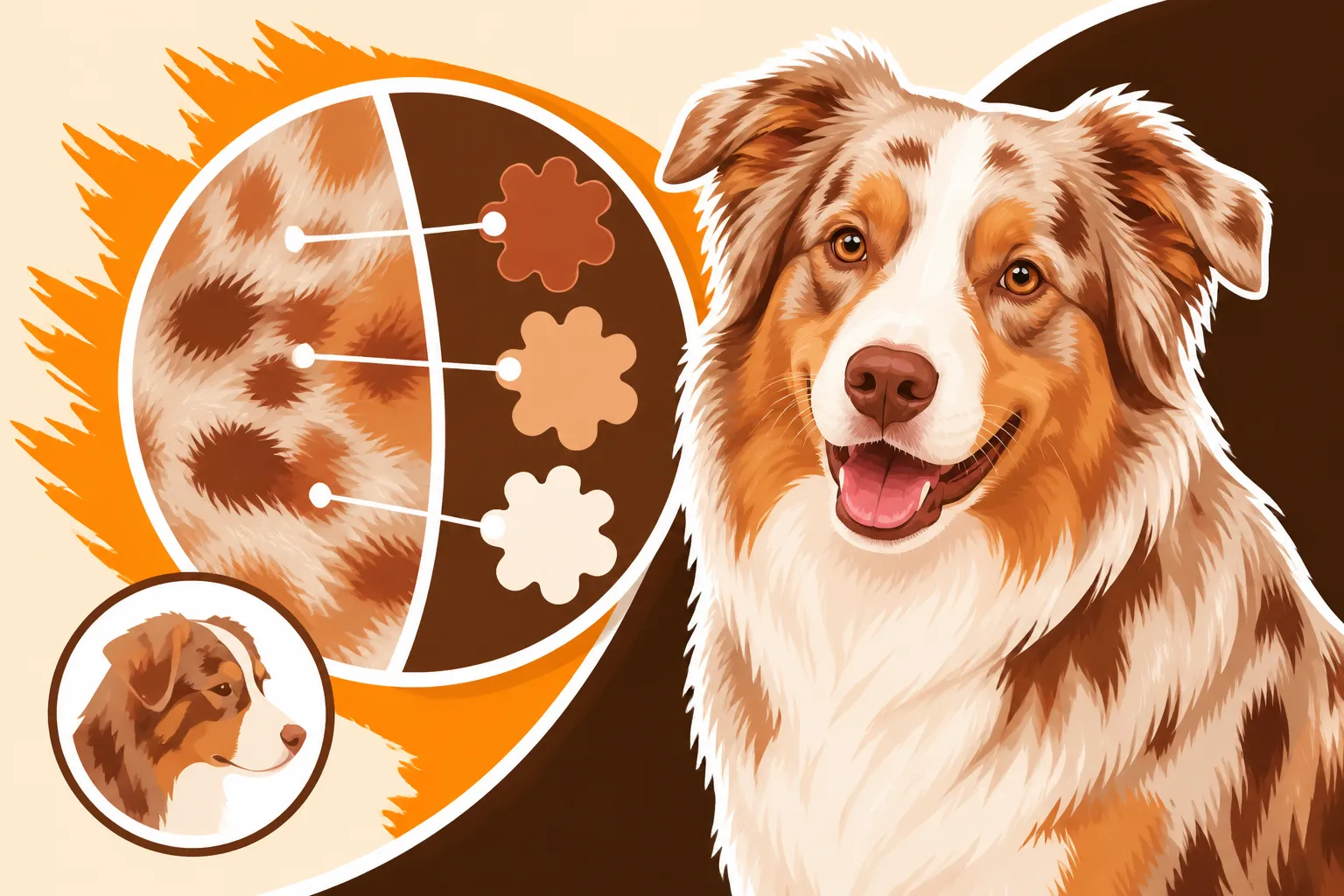
What Makes a Red Merle Aussie Red
One of the most captivating things about Australian Shepherds is their incredible variety of coat colors and patterns, but it can also be incredibly confusing trying to understand what makes each one unique. You might see a stunning dog and hear it called a "red merle," but what does that actually mean on a genetic level? This guide is here to unravel the mystery of the red merle Australian Shepherd, diving deep into the genetics that create this beautiful coloration and helping you understand what truly makes an Aussie red merle.
Unpacking the Merle Gene and Its Colors
The merle pattern is one of the most striking features you'll find in an Australian Shepherd, giving them that signature marbled, patchy look. But what exactly is the merle gene, and how does it play a role in creating a red merle dog? It’s not just about the spots; it’s about how colors are diluted.
The Basic Genetics of Merle
At its heart, the merle gene is a dilute gene, meaning it lightens or "dilutes" areas of a dog's base coat color. Think of it like a genetic paint thinner. Specifically, the merle gene (scientifically, it's the M locus) acts on eumelanin, which is the black pigment. It essentially breaks up the pigment, causing random patches of lighter and darker areas across the coat. The patches can vary wildly in size, shape, and intensity, giving each merle dog a truly unique appearance. Without the merle gene, a dog would simply be solid black or solid red (or another base color). The magic of merle comes from its ability to introduce this captivating, mottled effect.
It's crucial to understand that the merle gene only modifies existing color; it doesn't create color itself. So, for a dog to be a merle, it must first have a base coat color that the merle gene can act upon. In Australian Shepherds, these base colors are typically black or red. When the merle gene is present, it will affect the areas of the coat that would otherwise be solid black or red, creating that beautiful broken pattern. You can learn more about this fascinating gene in The Merle Gene and How It Dilutes Aussie Coat.
Distinguishing Red Merle from Blue Merle
The easiest way to tell a red merle from a blue merle is to look at the underlying dark color. Both red merle and blue merle Australian Shepherds have the merle gene, but the key difference lies in their base pigment.
A blue merle Aussie has a black base coat. The merle gene then dilutes random patches of this black, turning them into shades of gray (often called "blue") and leaving patches of solid black. So, a blue merle will have black patches, gray patches, and often white and copper markings. The "blue" refers to the diluted black, giving it a cool, slate-like appearance.
A red merle, on the other hand, has a red (often liver or brown) base coat. The merle gene still attempts to dilute eumelanin (black pigment), but because the dog's genetics dictate it can't produce black pigment, the merle effect manifests differently. It dilutes the red pigment, resulting in lighter patches of red, liver, or cinnamon, interspersed with the darker, richer shades of the base red coat. The non-merled patches are the full, undiluted red color, while the merled patches are lighter, faded versions of that red. This creates a striking contrast between darker, richer red patches and lighter, often creamy or buff-colored, diluted red patches. For a visual comparison, check out Blue Merle Against Red Merle Australian Shepherds.
The Range of Red Shades in a Merle Coat
"Red" in Australian Shepherds isn't just one singular hue. It's a spectrum. A red merle Aussie might have a base coat that ranges from a deep, rich liver color, almost chocolatey, to a lighter, more cinnamon or even golden-red. The merle gene then takes these base shades and introduces even more variation.
You might see patches that are almost cream or buff, contrasting sharply with darker, rust-colored patches. Some red merles have very subtle merling, where the differences between the light and dark red patches are slight, making the pattern less distinct. Others have very pronounced, high-contrast merling, with distinct dark red, medium red, and almost white patches. This variation is part of what makes each red merle Aussie so unique and captivating. No two red merles look exactly alike, and the interplay of these different red tones is truly a sight to behold.
The Role of the Base Coat Color Gene (B Locus)
To truly understand what makes a red merle Aussie red, we have to look beyond just the merle gene itself and delve into the fundamental genes that determine a dog's base coat color. This brings us to the B locus, which is responsible for whether an Australian Shepherd can produce black pigment at all.
How the "Red" Gene Works
In simple terms, the B locus dictates whether a dog will have black pigment (B) or brown/liver pigment (b). Dogs inherit two copies of this gene, one from each parent.
- BB or Bb dogs will produce black pigment. Their noses will be black, their paw pads will be black, and any dark areas of their coat will be black.
- bb dogs cannot produce black pigment. Instead, all areas that would normally be black are turned into brown or liver. This is what we commonly refer to as "red" in Australian Shepherds. Their noses will be liver-colored (often described as brown or red), their paw pads will be liver, and any dark areas of their coat will be some shade of red.
So, for an Australian Shepherd to be a red merle, it must first inherit two copies of the 'b' allele (bb) at the B locus. This genetic makeup is the absolute prerequisite for an Aussie to express any "red" coloration, whether solid red, red bi, red tri, or red merle. Without that 'bb' genotype, the dog would be black-based, and any merle pattern would result in a blue merle. This distinction is critical in understanding the genetic blueprint of a red merle.
The Interaction of Merle and Red
Here's where it gets a little nuanced and often causes confusion: the merle gene, as we discussed, targets eumelanin (black pigment) for dilution. So, how can it dilute red pigment when red dogs (bb) don't produce black pigment?
The merle gene does not directly dilute phaeomelanin (red pigment). However, in a dog that is genetically red (bb), the merle gene still modifies the distribution of pigment in the coat. The merle gene operates by affecting pigment cells during development. In a red dog, the "merle pattern" is created by varying concentrations of red pigment, rather than by diluting black to grey. The areas that would have been diluted to grey in a black dog become lighter shades of red in a red dog. The areas that would have remained black in a black dog remain rich, undiluted red in a red dog.
Essentially, the merle gene is still "on" and attempting to dilute the eumelanin, but since there's no eumelanin to dilute, it expresses itself by creating lighter patches of phaeomelanin. This results in a coat that has a base of solid, rich red, interspersed with lighter, faded patches of red, often described as liver, cinnamon, or even buff. The effect is still a beautifully marbled coat, but the entire color palette is shifted from black/grey to red/lighter red. This interaction creates the distinct look of a red merle that stands apart from its blue merle counterparts.
Spotting True Red Merle vs. Other Colors
It can be tricky to differentiate a true red merle from other red patterns or even faded blue merles, especially under certain lighting. One of the most reliable indicators of a red merle is the pattern itself – those characteristic irregular patches of darker and lighter shades of red across the main body coat. These aren't just subtle variations in a solid coat; they are distinct, mottled areas.
Another crucial clue is the nose and paw pad color. A true red merle will always have a liver-colored (often brown or pinkish-brown) nose and matching paw pads. If an Aussie has a black nose and black paw pads, it is genetically black-based, meaning it cannot be a red merle – it would be a blue merle, black tri, or black bi. Even if a blue merle has very faded or light grey patches, its nose will still be black. Likewise, a solid red Australian Shepherd would have a liver nose and solid red coat, but would lack the characteristic patchy dilution of the merle pattern. Understanding The Two Merle Patterns an Aussie Can Carry can really help here.
Sometimes, a red tri-color Aussie might have areas where the red appears lighter due to sun exposure or coat condition, but it won't have the distinct, almost 'broken glass' pattern that the merle gene creates. If you're ever in doubt about an Aussie's genetic color, especially if considering breeding, a DNA test can definitively confirm the presence of the merle allele and the b/b genotype. This is a practice many responsible breeders follow, and it offers peace of mind.
Understanding the Markings and Variations
The red merle coloration isn't just about the mottled red; it's often complemented by other markings that contribute to the Australian Shepherd's classic look. These additional splashes of color complete the picture of a stunning red merle Aussie.
The Patches and Swirls of a Red Merle
The beauty of a red merle lies in its unpredictability. The merle gene causes random patches of diluted color, meaning no two dogs will have the exact same pattern. You'll see swirls, splatters, and larger irregular patches of darker, richer reds (the undiluted base color) mixed with lighter, faded reds, sometimes even appearing creamy or beige. These lighter areas are where the merle gene has had its diluting effect.
The contrast between these shades can be very striking, or it can be quite subtle, almost giving the coat a painterly quality. Some red merles might have large, distinct areas of solid red next to equally large areas of faded red. Others might have a finer, more speckled merling pattern. This dynamic interplay of color across the coat, from deep cinnamon to light buff, is what truly defines a red merle. It's like looking at a living, breathing abstract painting, constantly shifting with movement and light.
Copper and White Trim on a Red Merle
Many red merle Australian Shepherds are "red merle tris," meaning they also carry the genes for tan (often called "copper") points and white markings. These markings are incredibly common and add another layer of complexity and beauty to the red merle pattern.
- Copper Points: These are typically found on the cheeks, over the eyes (eyebrows), on the chest, legs, and under the tail. The copper color can range from a light cream to a deep rust, beautifully complementing the red merle body. When these points are present, the dog is called a "red merle tri."
- White Markings: White is most commonly seen on the muzzle, a blaze up the face, on the neck (often forming a full or partial collar), on the chest, belly, and legs. The white markings are distinct from the merle pattern; they are solid white areas and are not diluted by the merle gene. The presence and placement of these white markings are part of the Australian Shepherd breed standard, and they contribute significantly to the dog's overall appearance.
So, a red merle can be a "red merle bi" (red merle with white markings only) or, most commonly, a "red merle tri" (red merle with both white and copper markings). The combination of the mottled red merle body, vibrant copper points, and crisp white trim creates an absolutely breathtaking dog. You often see many products for these colorful coats on places like Chewy, helping owners maintain their Aussie's unique look.
Eye and Nose Pigmentation in Red Merles
The pigmentation in a red merle Australian Shepherd extends beyond just the coat, influencing their eyes and nose, which are also crucial identifiers of their coloration.
-
Nose Pigmentation: As established, a red merle Australian Shepherd will always have a liver-colored nose. This is directly linked to their 'bb' genotype, which prevents the production of black pigment. This liver color can vary from a deep chocolate brown to a lighter, pinkish-brown, and it will match their paw pads. Any Aussie with a black nose cannot be a red merle, regardless of its coat pattern.
-
Eye Color: This is where the merle gene adds another layer of intrigue. While a solid red Aussie typically has amber or brown eyes, the merle gene can introduce striking variations in eye color, particularly shades of blue.
- Blue Eyes: It's very common for red merles to have one or both eyes completely blue, often a piercing ice blue. This blue coloration is due to the merle gene affecting pigment distribution in the iris.
- Amber/Brown Eyes: They can also have amber or brown eyes, sometimes even a lighter golden amber that beautifully complements their red coat.
- Marbled or Split Eyes: One of the most fascinating possibilities is "marbled" or "split" eyes, where an eye might be part blue and part amber/brown, or have flecks of different colors within the same iris. This adds to the unique charm of merle Aussies.
The combination of liver nose, varied red merle coat, and potentially captivating blue or marbled eyes makes a red merle Australian Shepherd truly unforgettable. Understanding these characteristics is not just about aesthetics; it's also important for recognizing responsible breeding practices. Australian Shepherd Eye Colors and Split Eyes delves deeper into these variations.
Why Understanding Red Merle Matters
Beyond simply appreciating their aesthetic beauty, having a solid grasp of red merle genetics holds practical importance for owners, especially those considering breeding or simply wanting to be informed advocates for their dogs.
Breeding Considerations for Red Merles
For anyone involved in Australian Shepherd breeding, understanding the genetics of red merle is paramount. The primary concern with merle genetics, regardless of whether it's red or blue, is the risk associated with breeding two merle dogs together. This practice is known as merle-to-merle breeding, and it carries significant health risks for the offspring.
When two merle dogs are bred, there is a 25% chance in each litter of producing "double merle" puppies. These double merles inherit two copies of the merle gene (MM), which often leads to severe health problems, primarily involving vision and hearing. They can be born with significant deafness, blindness, or both. Their coats are also often excessively white, and they can have microphthalmia (abnormally small eyes) or other severe eye defects. This is why responsible breeders never intentionally breed two merle dogs together. If you're looking at a red merle puppy, it's essential to understand its parents' merle status. For more details on these risks, read Double Merle Australian Shepherds and What Breeding Two Merles Costs and Why Merle-to-Merle Aussie Breeding Is Called Reckless.
Health Implications Related to Merle (General)
While simply being a red merle doesn't automatically mean health problems, the merle gene itself does carry a predisposition to certain issues, particularly when it comes to vision and hearing. Even single merles (those with one copy of the merle gene, which is what a red merle usually is) can sometimes have milder forms of eye or ear anomalies, though these are much less severe than in double merles.
For instance, some merle dogs can have slight defects in their iris or pupil, or underdeveloped optic nerves. While these might not lead to full blindness, they can impact vision. Similarly, some merle dogs can have slight hearing impairments, though profound deafness is rare in single merles. This isn't to say every red merle will have these issues, but it highlights the importance of choosing a reputable breeder who prioritizes genetic health testing and transparently shares information about their dogs' lineage and genetic panel results. Comprehensive eye exams by a veterinary ophthalmologist are a routine check for Aussie puppies, especially merles. You can also explore Eye Defects in a Double Merle Australian Shepherd for more information on specific issues.
Appreciating the Unique Beauty
Ultimately, understanding the genetics of red merle helps us appreciate the sheer biological artistry that creates these dogs. Each red merle Australian Shepherd is a canvas of varying red hues, sometimes accented with copper and white, and often possessing captivating eye colors. This intricate pattern is not just skin deep; it's a testament to the complex genetic interplay within the breed.
Beyond the science, the red merle coat is simply stunning. It gives these intelligent, active dogs an even more distinctive appearance that truly stands out. Whether you own a red merle or simply admire them from afar, recognizing the genetic mechanisms behind their beauty adds another layer of appreciation for this incredible breed. It reminds us that every Australian Shepherd, with its unique blend of color and pattern, is a living masterpiece. Many owners find accessories or even specialized beds for their unique red merle Aussies on sites like Chewy, tailored to their distinct look and needs.
Red Merle vs. Blue Merle: A Quick Comparison
To help clarify the differences between the two primary merle colors, here's a quick comparison:
| Feature | Red Merle Australian Shepherd | Blue Merle Australian Shepherd |
|---|---|---|
| Base Color Gene | bb (cannot produce black pigment) | BB or Bb (can produce black pigment) |
| Dominant Pigment | Phaeomelanin (red) | Eumelanin (black) |
| Merle Effect | Dilutes red pigment, creating lighter red/buff patches on a red base | Dilutes black pigment, creating gray/silver patches on a black base |
| Nose Color | Liver (brown/pinkish-brown) | Black |
| Paw Pad Color | Liver (brown/pinkish-brown) | Black |
| Typical Eye Color | Amber, brown, blue, marbled | Blue, amber, brown, marbled |
| Overall Look | Mottled shades of red (liver, cinnamon, rust) with lighter red/cream patches, often with copper and white trim. | Mottled shades of black and gray, often with copper and white trim. |
This table clearly highlights that the fundamental difference lies in the underlying pigment the merle gene is interacting with. Both are beautiful and unique variations of the Australian Shepherd breed.
Disclaimer
This article is for general informational purposes only and does not constitute professional advice. Laws, prices and regulations vary by location and change over time. Consult a qualified professional for guidance on your specific situation.