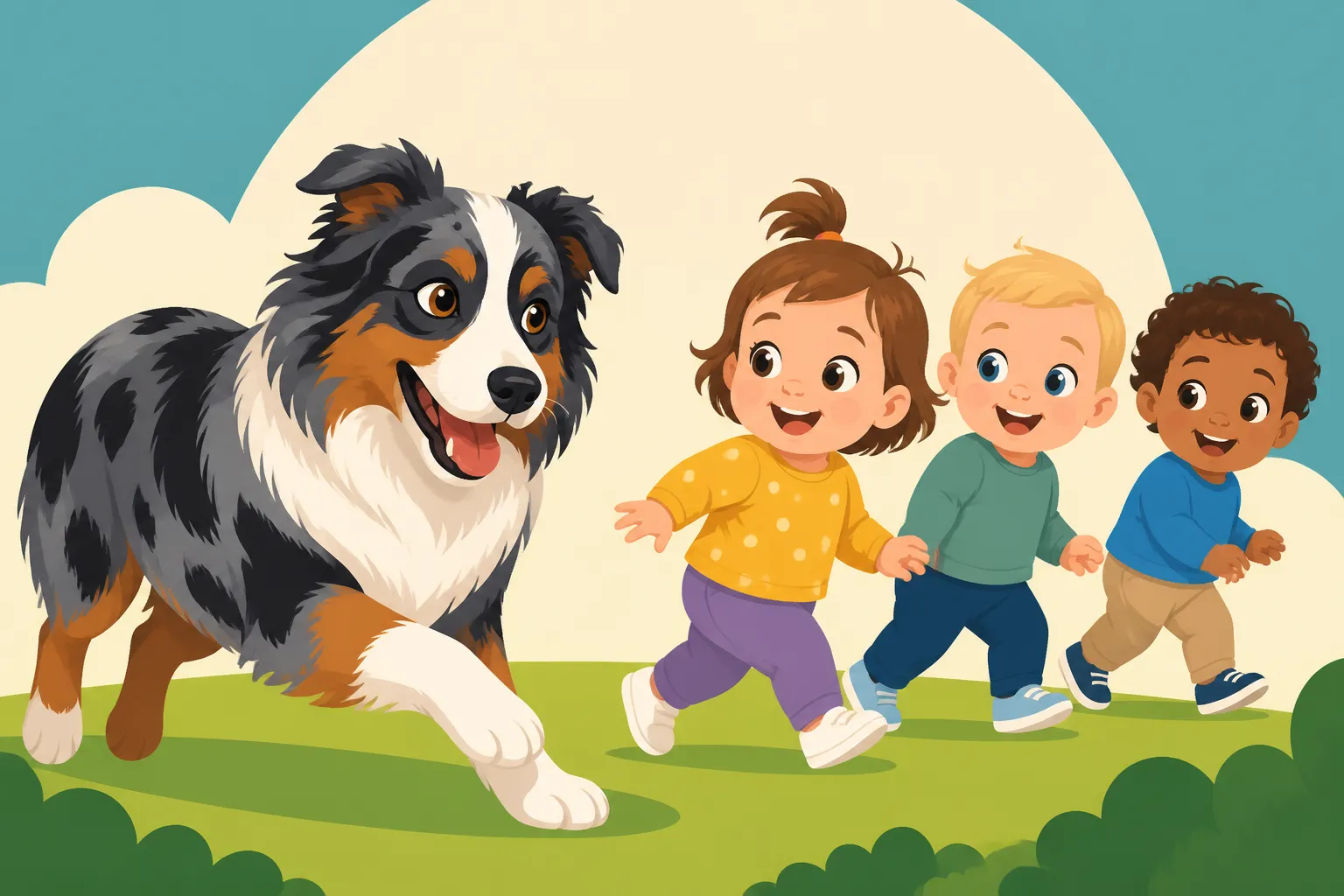
An Aussie Around Toddlers It Wants to Herd
It can be incredibly frustrating, and honestly, a little scary, when your beloved Australian Shepherd starts treating your toddler like a wayward sheep. You brought your Aussie home hoping for a loyal family companion, but now you find yourself constantly intervening as your dog nips at tiny heels or circles a child trying to play. This guide is here to help you understand why your Australian Shepherd exhibits this natural, yet often problematic, herding behavior towards toddlers and, more importantly, how to manage and redirect it to ensure a safe and harmonious home for everyone.
Understanding the Deep Roots of Herding Behavior
Before we can even begin to address your Aussie’s desire to herd your toddler, we need to really dig into why this happens. It's not out of malice, spite, or a lack of love for your child. In fact, it's quite the opposite – it's your Australian Shepherd doing exactly what it was bred to do, acting on an instinct that's been hardwired into its DNA for generations. These dogs were developed to gather and move livestock, often with little instruction, relying on their keen intelligence and strong prey drive to get the job done.
The Deep-Seated Drive to Gather
Australian Shepherds, as working dogs, possess an incredibly powerful herding instinct. This isn't just a learned trick; it's fundamental to their being. They have an innate desire to control movement, to gather things, and to keep them together. For generations, their ancestors were prized for their ability to manage flocks of sheep and herds of cattle across vast Western landscapes. This involved everything from gentle nudges to more assertive nips at the heels of stubborn animals, all in an effort to guide them where they needed to go. It's a complex set of behaviors involving staring, crouching, chasing, and yes, sometimes nipping.
Think of it like this: your Aussie sees motion, and its brain immediately kicks into "herding mode." It’s an almost involuntary response. While you might see your toddler wobbling across the living room, your Aussie might perceive that movement as a "breakaway sheep" that needs to be brought back into the fold. This isn't something you can simply train out of an Australian Shepherd entirely, because it's so deeply ingrained. Instead, our goal is to understand it and redirect it appropriately. This foundational instinct is why we often say The Australian Shepherd Herding Drive You Cannot Train Out; it's about channeling it, not eliminating it.
How Herding Manifests with Small Humans
When you introduce a small, fast-moving, and often unpredictable human into an Aussie's environment, that herding instinct can go into overdrive. Toddlers, with their erratic movements, high-pitched sounds, and tendency to run in unpredictable patterns, inadvertently mimic the very livestock an Aussie is bred to manage. They become fascinating, living targets for that ingrained desire to gather and control.
Your Aussie isn't trying to hurt your child; it's trying to work them. This can look like your dog circling your child, getting between them and an exit, or even bumping them gently with its nose or shoulder to change their direction. For the dog, this is completely natural and appropriate behavior based on its genetic blueprint. For a small child, and understandably for their parents, it can be startling, scary, and even lead to accidental injuries. It's crucial to differentiate this instinctual behavior from aggression, though the results can sometimes be similar if not managed. When an Australian Shepherd starts actively An Australian Shepherd Herding Children in the Yard, it's a clear signal that proactive intervention is needed.
Recognizing the Signs of Toddler Herding Behavior
It's vital for Aussie parents to be vigilant and recognize the early signs of herding behavior directed at toddlers. The quicker you can identify these behaviors, the sooner you can intervene and redirect your dog, preventing escalation and ensuring everyone's safety. Sometimes these signs are subtle, almost imperceptible to the untrained eye, but once you know what to look for, you'll start seeing patterns.
Nips, Nudges, and Circles
The most common and often concerning manifestation of herding is the physical interaction. You might see your Aussie:
- Heel Nipping: This is probably the most infamous herding behavior. Your Aussie might lightly nip at your toddler's ankles or calves as they walk or run by. For livestock, this is how a dog encourages movement. For a toddler, it's painful, frightening, and can cause them to fall. It's a classic sign your Aussie is trying to 'flank' or 'drive' them. Australian Shepherd Heel Nipping and How to Redirect It offers more specific strategies for this.
- Nudging or Bumping: Your dog might use its nose, shoulder, or body to gently (or not-so-gently) redirect your child's movement. They're trying to steer them, just as they would a sheep moving away from the flock.
- Circling and Flanking: The Aussie might run in wide arcs around your child, attempting to gather them into a smaller space or push them in a particular direction. This "flanking" motion is a hallmark of herding.
- Stalking: Your Aussie might crouch low, head down, eyes fixed on your toddler, slowly creeping forward before bursting into a run or a nip. This intense focus is very much like how they'd approach a flock.
It's particularly alarming when you see An Australian Shepherd Nipping a Toddler's Ankles. This isn't your dog being aggressive in the human sense, but rather acting on instinct. However, the child doesn't understand this nuance, and it's our job to protect them and teach our dogs appropriate boundaries.
Staring and Body Blocking
Herding isn't always about physical contact. Often, the initial signs are much more subtle, involving intense eye contact and positioning.
- The "Aussie Stare": Your Australian Shepherd might fix your toddler with an intense, unblinking stare. This is their way of exerting control and trying to communicate direction to the "livestock." It can be unsettling for an adult, let alone a small child. This stare, combined with a low, focused body posture, is a classic herding pose.
- Body Blocking: Your Aussie might intentionally place its body between your toddler and a specific area, such as a doorway, a toy, or even you. They're trying to prevent movement or guide the child in a direction they deem appropriate. This often happens subtly; the dog just "happens" to be in the way, making the child change course.
- "Gathering" Behavior: This less obvious sign involves your Aussie trying to keep your child close to other family members or even other pets, effectively trying to "gather" the whole "flock" together. They might push their way into a group huddle, or try to keep a child from wandering too far from the group.
If you observe any of these behaviors consistently, it's a clear indication that your Aussie is attempting to herd your toddler. Immediate and consistent redirection and management are essential to ensure the safety and comfort of your child.
Proactive Management and Prevention Strategies
Preventing unwanted herding behavior is always easier than trying to correct it once it's become a habit. For families with Australian Shepherds and toddlers, proactive management is absolutely key to creating a safe and happy environment for everyone. This isn't about punishing your dog for being an Aussie; it's about setting them up for success and managing the environment.
Supervision and Physical Barriers
This is probably the most important strategy: never leave your Australian Shepherd unsupervised with a toddler. Ever. No exceptions. This isn't just about herding; it's about any unforeseen interaction that could lead to injury. Think of it like supervising a toddler near an open flame – you just don't take your eyes off them.
- Constant Vigilance: When your toddler and Aussie are in the same room, you need to be actively engaged in watching their interactions. Be ready to intervene instantly at the first sign of herding behavior. This might mean keeping your dog on a long leash attached to you, or even simply having them on a "place" command with a delicious chew toy.
- Physical Barriers: Utilize gates, crates, and playpens liberally. These tools are your best friends in managing the environment.
- Baby Gates: Install baby gates to create physical separation when you can't offer 100% supervision. This allows your Aussie to be in the same general area but prevents direct interaction that could trigger herding. You can find excellent, sturdy baby gates on Chewy that can stand up to a persistent Aussie.
- Crates: A crate isn't just for potty training; it's a safe den for your Aussie and a management tool. When you need a break or know your toddler will be particularly active, put your Aussie in their crate with a high-value chew or puzzle toy.
- Playpens: Similarly, a playpen for your toddler creates a safe zone for them to play without being directly accessible to your dog. This is especially useful during mealtimes or when you're busy with another task.
Remember, these barriers aren't a punishment; they're tools to prevent undesirable behaviors and foster calm, separate coexistence until your Aussie learns better self-control and the toddler grows a bit older and more predictable.
Providing Appropriate Outlets for Herding Drive
Your Aussie needs an outlet for its herding drive. If you don't provide one, it will find its own job, and often that job involves your children. This is where creative solutions come into play.
- Herding Balls: Invest in a large, sturdy herding ball (like those you can find on Chewy designed for livestock work). This allows your Aussie to push, chase, and "herd" an inanimate object. It's a fantastic way to satisfy that instinct without involving people. Spend dedicated time each day letting your Aussie engage with this ball in a safe, fenced area. Check out Introducing an Aussie to a Herding Ball for more tips.
- Flirt Poles: A flirt pole is essentially a giant cat toy for dogs. It has a long handle with a lure (usually a tough toy or rag) attached to a rope. You can drag the lure along the ground, encouraging your Aussie to chase, stalk, and "catch" it. This taps into their prey drive, which is closely linked to herding, in a controlled and safe way. It's fantastic for mental and physical exercise in short bursts.
- Tug-of-War: Teach your Aussie to play a vigorous game of tug. This is a powerful outlet for their natural drives and allows them to use their mouths appropriately on a toy, not on ankles. Always teach a clear "drop it" command. Redirecting an Aussie Onto a Tug Instead of a Heel explains how to make this a valuable training tool.
- Dog Sports: Consider enrolling your Aussie in dog sports like Treibball (urban herding with large exercise balls), agility, or even actual herding trials if you have access to livestock. These activities provide unparalleled mental and physical stimulation that directly channels their instincts. For a broader perspective, Giving an Australian Shepherd a Job Instead of a Walk really emphasizes the importance of mentally engaging activities for this breed.
Teaching Children How to Interact Safely
It's a two-way street. While we manage the dog, we also need to educate the children. Toddlers, by definition, have limited understanding and impulse control, but you can start laying the groundwork for safe interactions.
- "Be a Tree": Teach your toddler to "be a tree" if a dog approaches them too excitedly. This means standing still, quiet, hands at their sides, and looking at their feet. This removes the "moving target" aspect that triggers herding.
- No Running or Screaming: While hard to enforce perfectly with toddlers, consistently discourage running, screaming, or erratic movements around the dog. Explain that these behaviors can make the dog too excited.
- Gentle Petting Zones: Teach your child to only pet the dog in designated "safe zones" like the chest or shoulder, avoiding the head, tail, or paws. Supervise every interaction, guiding their hand.
- Respecting the Dog's Space: Teach your child that the dog's crate, bed, and food bowl are off-limits. These are the dog's personal spaces and should always be respected. This helps prevent resource guarding or defensive behaviors from the dog.
Consistency is key here. Every adult in the household needs to be on the same page with these rules and enforce them patiently and persistently.
Training Interventions to Redirect Herding
While management and prevention are crucial, you also need to actively train your Australian Shepherd to respond to cues that redirect their herding impulses. This takes patience, consistency, and positive reinforcement.
"Leave It" and Recall Training
These two commands are absolute lifesavers when dealing with a herding breed around children.
- "Leave It": This command teaches your dog to disengage from something they are focused on. Practice it constantly with various distractions – toys, food, and eventually, a moving child. Start easy: put a treat on the floor, cover it with your hand, say "leave it." When your dog looks away, reward them with a different, higher-value treat. Gradually increase the difficulty until your dog can disengage from your toddler's movement. This command is invaluable for stopping that intense stare or an impending nip.
- Reliable Recall ("Come"): An emergency recall is non-negotiable for an Australian Shepherd, especially one with a high drive. It means your dog drops everything and races back to you, no matter the distraction. Practice this in increasingly distracting environments. Start in a quiet room, then move to the yard, and eventually to public parks. Use extremely high-value rewards (like bits of cheese or cooked chicken) only for recall practice. Make coming to you the most rewarding thing in the world. Australian Shepherd Recall Around Moving Things offers detailed strategies for building a rock-solid recall, which is essential when a toddler breaks into a run.
These commands give you direct control over your dog's attention and movement, allowing you to interrupt undesirable herding actions and keep everyone safe.
Positive Reinforcement for Calm Interactions
We want to reward the behaviors we do want to see, rather than just punishing the ones we don't. This means actively seeking out and rewarding calm, appropriate behavior around your toddler.
- Reward Calmness: Whenever your Aussie is calm and relaxed in the presence of your toddler (even if they're separated by a gate), drop a treat, praise them, or offer a gentle pet. You can even create a "relaxation station" for your dog – a mat or bed where they can go to chew a bone or a Kong (filled with peanut butter, readily available from Chewy, for example) while your toddler plays nearby. Reward them heavily for staying on this mat.
- Structured Play with Supervision: Facilitate controlled interactions. For instance, have your toddler sit on the floor and gently roll a toy towards your Aussie, then call the dog to you for a treat. Short, positive, and always supervised sessions are key. The goal is to build positive associations between your dog and your child.
- Redirect, Don't Reprimand: If you see your Aussie starting to herd, don't yell or scold. Instead, calmly interrupt the behavior with your "leave it" or "come" command, and immediately redirect them to an appropriate outlet, like their herding ball or a tug toy. Praise them enthusiastically for engaging with the appropriate toy.
Professional Guidance When Needed
Sometimes, despite all your best efforts, the herding behavior persists or even escalates. This is not a sign of failure on your part, but rather an indication that you need to bring in expert help.
- Certified Professional Dog Trainer (CPDT-KA): Seek out a trainer who has experience with herding breeds and positive reinforcement methods. They can offer personalized strategies, help you refine your timing, and introduce advanced techniques. They can also observe your dog's body language in real-time, which can be hard for owners to interpret objectively.
- Veterinary Behaviorist (Dip ACVB): For more severe or persistent issues, especially if you suspect there's an underlying anxiety component or if the nips are becoming harder, a veterinary behaviorist is the most qualified professional. They are veterinarians who specialize in behavior and can diagnose and treat behavioral problems, sometimes incorporating medication if necessary, alongside behavior modification plans.
Never hesitate to seek professional help. It's an investment in the safety and well-being of your family and your dog.
| Strategy Type | Description | Key Benefits |
|---|---|---|
| Environmental | Using gates, crates, playpens to create physical separation. | Prevents unwanted interactions; provides safe zones for both child and dog. |
| Outlets | Providing appropriate toys (herding balls, flirt poles) and sports. | Channels natural herding drive; reduces likelihood of targeting children. |
| Education (Child) | Teaching children to "be a tree," gentle interactions, respecting dog space. | Teaches children safe behavior; reduces triggers for the dog. |
| Training (Dog) | Practicing "Leave It" and a rock-solid "Come" recall. | Gives direct control over dog's attention and movement; interrupts behavior. |
| Reinforcement | Rewarding calm behavior, redirecting to appropriate activities. | Builds positive associations; encourages desired behaviors. |
| Professional Help | Consulting CPDT-KA or Veterinary Behaviorist for persistent issues. | Provides expert, tailored guidance for complex situations. |
Living Harmoniously: Long-Term Strategies
Raising an Australian Shepherd in a home with toddlers is a marathon, not a sprint. It requires ongoing commitment to consistent routines, continued enrichment, and adapting as both your dog and your child grow and change. The goal is to establish a lifelong pattern of safe and respectful coexistence.
Consistent Routine and Enrichment
Australian Shepherds thrive on routine and mental stimulation. A bored, under-exercised Aussie is a problem waiting to happen.
- Predictable Schedule: Establish a consistent daily schedule that includes dedicated exercise, training sessions, meal times, and quiet time for your dog. This predictability can reduce anxiety and hyper-vigilance, making your Aussie feel more secure and less likely to feel the need to "manage" the household.
- Mental Work is Paramount: While physical exercise is important (and your Aussie needs a good How Much Daily Exercise an Australian Shepherd Needs), mental exercise is arguably even more crucial for this intelligent breed. Incorporate daily puzzle toys (many excellent options at Chewy), scent work games, and trick training. Even short, 5-10 minute sessions of focused training can be incredibly tiring for their brains. Read Mental Work That Actually Tires an Australian Shepherd to understand why this is so vital.
- Socialization, But the Right Kind: Continue to Socializing an Aussie Puppy Off the Farm even as they grow older. This means exposing them to a variety of sights, sounds, people, and appropriate dogs in a controlled, positive manner. A well-socialized dog is generally more confident and less likely to react impulsively to novelty or movement.
- "Jobs" Around the House: Give your Aussie appropriate "jobs" that don't involve your toddlers. This could be fetching their leash, carrying a lightweight basket, or even just waiting patiently at a door. Making them feel useful can satisfy some of that working dog drive.
Managing Excitement and Overstimulation
Aussies can become easily overstimulated, especially in busy household environments with young children. Learning to recognize and manage this is crucial.
- Recognize the Signs: Pay attention to your dog's body language. Are their eyes dilated? Are they panting heavily despite being cool? Are they pacing or unable to settle? Are they fixating on the child? These are all signs of increasing arousal.
- Planned "Chill Out" Times: Build in designated quiet times for your Aussie, away from the hustle and bustle of family life. This might be in their crate with a chew, in a separate room, or just a quiet corner on their bed. Teach them to "settle" on command.
- Gradual Introductions to Novelty: If your toddler has new friends over, or there's a lot of unusual activity, manage your Aussie's exposure. Keep them on a leash, in their crate, or in a separate room initially. Gradually reintroduce them to the situation once things have settled, rewarding calm behavior.
- Be the Calm Leader: Your calm demeanor will help your dog stay calm. If you get stressed or agitated, your Aussie will pick up on that and may become more stressed or vigilant themselves. Speak in a calm, low tone, and project confidence.
By consistently applying these strategies, you're not just managing a problem; you're building a stronger, more trusting relationship with your Australian Shepherd and fostering an environment where both your dog and your child can thrive together. It requires dedication, but the reward of a well-adjusted dog and safe children is immeasurable.
Disclaimer
This article is for general informational purposes only and does not constitute professional advice. Laws, prices and regulations vary by location and change over time. Consult a qualified professional for guidance on your specific situation.