What Nobody Warns a New Aussie Owner About
Bringing an Australian Shepherd puppy or adult dog into your home is often imagined as endless fun, beautiful hikes, and a loyal companion by your side. While all of that can be true, many new Aussie owners find themselves blindsided by aspects of the breed's personality and needs that aren't highlighted in those glossy online photos or quick temperament descriptions. This guide is here to shed light on those less-talked-about realities, helping you truly understand what it means to live with and love an Australian Shepherd.
The Unseen Mental Demands: More Than Just Physical Exercise
It's common knowledge that Australian Shepherds are high-energy dogs. Everyone says it, every breed description echoes it. But what often gets lost in translation is what kind of energy that truly is. Most new owners focus solely on physical exercise – long walks, endless games of fetch, trips to the dog park. And while your Aussie absolutely needs that, it's only half the story, and frankly, often the easier half to provide. The real challenge, the one nobody really warns you about, is the insatiable need for mental stimulation.
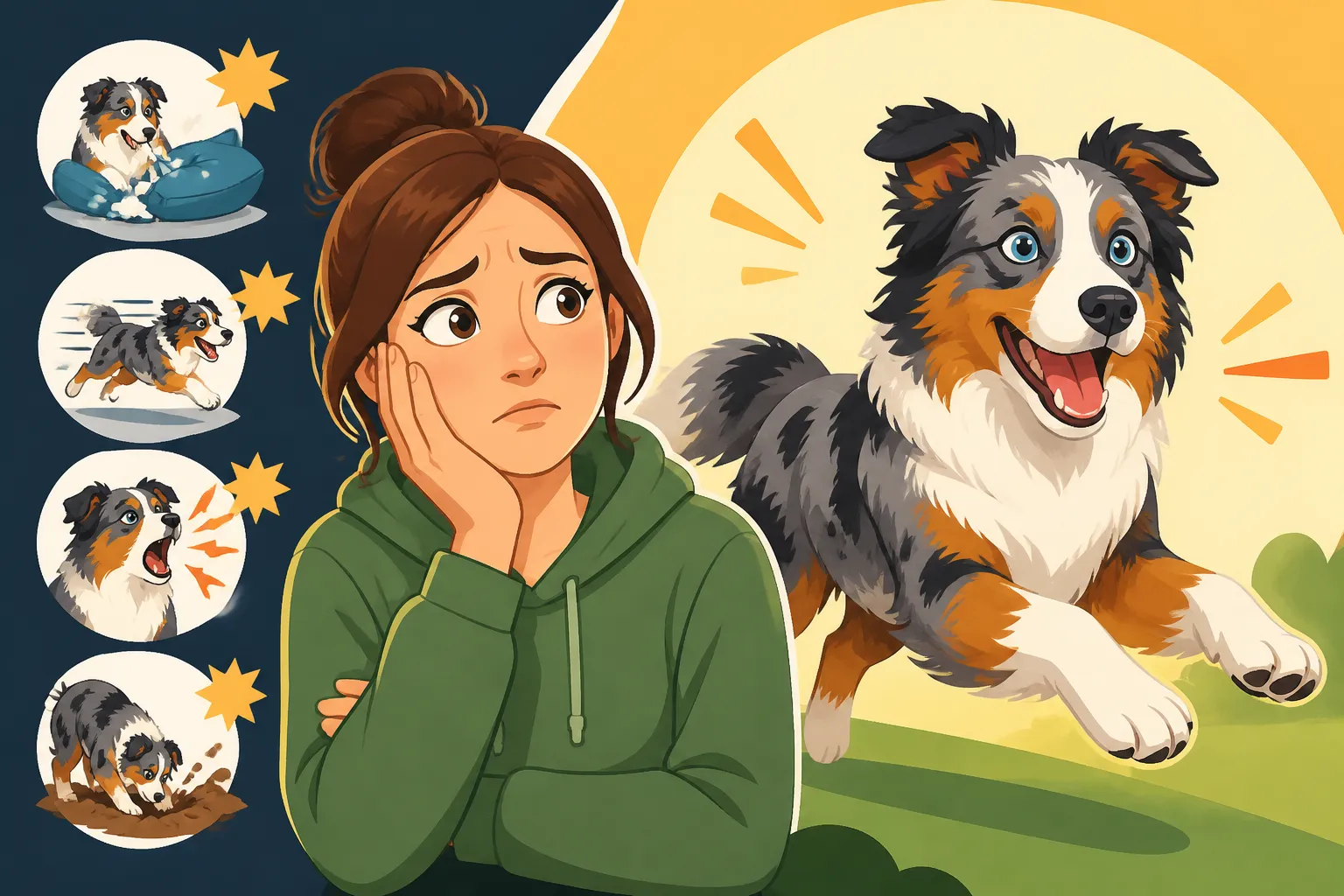
Your Australian Shepherd's brain is wired for problem-solving, decision-making, and constant engagement. These dogs were bred to think on their feet, read livestock, and work independently alongside a human partner. If that powerful brain isn't given appropriate "work," it will find its own job, and trust me, you probably won't like its choices. This might manifest as incessant barking at shadows, obsessive chasing of light reflections, redecorating your furniture with its teeth, or even herding your children around the living room. It's not malice; it's boredom, pure and simple.
Many owners discover that after a two-hour hike, their Aussie might be physically tired, but their mind is still buzzing. This is where you realize that a tired body doesn't always equal a calm dog. What truly settles an Aussie is a combination of physical activity and significant mental challenges. This could be anything from intricate puzzle feeders where they have to manipulate levers and doors to get their meal, to formal obedience training, agility classes, or even just daily trick training sessions in your living room. Think about how a dog like an Australian Shepherd would work on a ranch: it’s not just running; it’s strategizing, observing, and reacting. Replicating that kind of engagement, even in a suburban home, is paramount. Many owners find great success with Scent Games That Tire an Australian Shepherd or advanced obedience work.
The All-Consuming Herding Drive: It's Not Just a Nudge
The Australian Shepherd is a herding dog, plain and simple. It's their operating system. You might think, "Oh, that's cute, they'll just try to keep everyone together." The reality is far more intense and, for the unprepared, can be incredibly frustrating. This isn't a gentle nudge; it's a deep-seated, instinctual drive to control movement, gather, and organize. And if there are no sheep, guess what? Your Aussie will choose whatever moves.
This means your children, other pets, visitors, squirrels, bikes, cars, lawnmowers, and even you, become potential "livestock." You'll see your Aussie circle, stare, nip at heels, and block paths. It’s not being aggressive; it’s doing what it was born to do. This can be particularly challenging with young children, as their erratic movements and high-pitched noises can trigger an Aussie's herding instinct. The puppy nips can quickly escalate if not managed, turning into persistent ankle-nipping or even pushing. You need to be proactive in redirecting this behavior, often with specific toys like a sturdy tug rope, teaching them that human heels are off-limits and the tug toy is the appropriate outlet for their mouthy instincts. We’ve even got a piece on An Australian Shepherd Herding Children in the Yard if you're struggling.
Furthermore, this herding drive often comes with a strong prey drive. That squirrel across the park? That car driving down the street? To your Aussie, it’s not just a passing object; it’s something to be chased, controlled, and brought back to the "flock." This can make off-leash reliability incredibly difficult in unfenced areas, even with excellent training. A solid "come" is essential, but even the best recall can be tested by a strong herding or prey trigger. Many new owners vastly underestimate how powerful this instinct is and how consistently they will need to work to manage it. Investing in long lines for safe exploration and finding secure, fenced areas are not just recommendations; they are often necessities.
Emotional Depth and Sensitivity: Your Aussie Feels Everything
Australian Shepherds are incredibly intelligent, but their intelligence often comes hand-in-hand with deep emotional sensitivity. They form intense bonds with their families, often picking one or two people as "their" person, shadowing them from room to room. This loyalty is beautiful, but it also means they are highly attuned to your emotions and the atmosphere in the home. They can be prone to anxiety, especially if left alone for long periods without sufficient preparation or enrichment. What often surprises new owners is just how much an Aussie can become a "velcro dog," always needing to be in the same room, sometimes even in physical contact. This can make leaving them alone a real challenge, and you might find yourself exploring An Aussie That Cannot Be Left With Nothing to Do solutions.
Their sensitivity also means they don't respond well to harsh training methods. A firm but fair approach, built on positive reinforcement, is crucial. Yelling, punishment, or rough handling can easily shut an Aussie down or, conversely, make them anxious and reactive. They are thinkers, not robots, and they thrive on understanding what you want and feeling like a partner in the process. This emotional depth also contributes to their tendency to be reserved or even suspicious of strangers. It's not aggression, but a natural caution born from their protective instincts. Proper and consistent socialization from a young age, exposing them to a variety of sights, sounds, people, and experiences in a positive way, is paramount to help them develop into well-adjusted adults. Even with good socialization, they may always be polite rather than effusive with new people, which is perfectly normal for the breed. This breed often shines when given clear direction and consistent rules, allowing them to feel secure in their role.
The Double Coat: A Constant Companion in Your Home
Before you bring home that gorgeous, fluffy Australian Shepherd, envision this: a continuous, shimmering cloud of dog hair. That beautiful, flowing double coat, which keeps them warm in winter and surprisingly cool in summer, comes with a trade-off. It sheds. A lot. And not just twice a year during "coat blow," though those periods are epic in their shedding volume. Your Aussie will shed year-round, leaving behind a fine layer of fur that adheres to everything you own.
New owners often underestimate the sheer volume of hair and the commitment required to maintain it. Regular brushing isn't just about keeping your house cleaner (though it helps); it's vital for your dog's health and comfort. Without consistent grooming, that beautiful undercoat can mat tightly, especially behind the ears, in the armpits, and on the "trousers" (the fluffy fur on their hind legs). These mats can be incredibly painful, pull on the skin, and lead to skin infections. You'll need a good collection of grooming tools: slicker brushes, undercoat rakes (like those available from Chewy), and possibly a dematting tool. Learning how to line brush, working in sections to get down to the skin, is essential.
Here’s a rough guide to shedding realities:
| Shedding Period | Frequency | Grooming Needs | Impact on Home |
|---|---|---|---|
| Normal Shedding | Year-round, daily | Brushing 2-3 times/week with a slicker and rake | Light hair on clothes, furniture, floors; needs regular vacuuming. |
| Coat Blow (Seasonal) | Twice a year (spring/fall), 2-4 weeks each | Daily, extensive brushing with undercoat rake; professional deshedding recommended | Massive amounts of hair; will feel like a furry tumbleweed explosion. |
| Matting Risk | Constant, especially with neglected brushing | Immediate detangling; professional groomer intervention | Painful for dog; can lead to skin issues and costly professional dematting. |
Many people think a quick once-over will suffice, but an Aussie's coat demands dedicated time. You might find yourself investing in professional grooming services for deshedding treatments, which can range from Australian Shepherd Grooming at $50 to $100 a Session. And whatever you do, resist the urge to shave your Aussie! Their double coat is crucial for regulating their body temperature, protecting them from both heat and cold, and shaving it can ruin the coat texture and leave them vulnerable to sunburn and even make them hotter by disrupting their natural insulation. Embrace the fur, invest in a good vacuum (and perhaps a lint roller in every room!), and make grooming a bonding ritual.
Disclaimer
This article is for general informational purposes only and does not constitute professional advice. Laws, prices and regulations vary by location and change over time. Consult a qualified professional for guidance on your specific situation.