Buying an Aussie From a Ranch or a Show Kennel
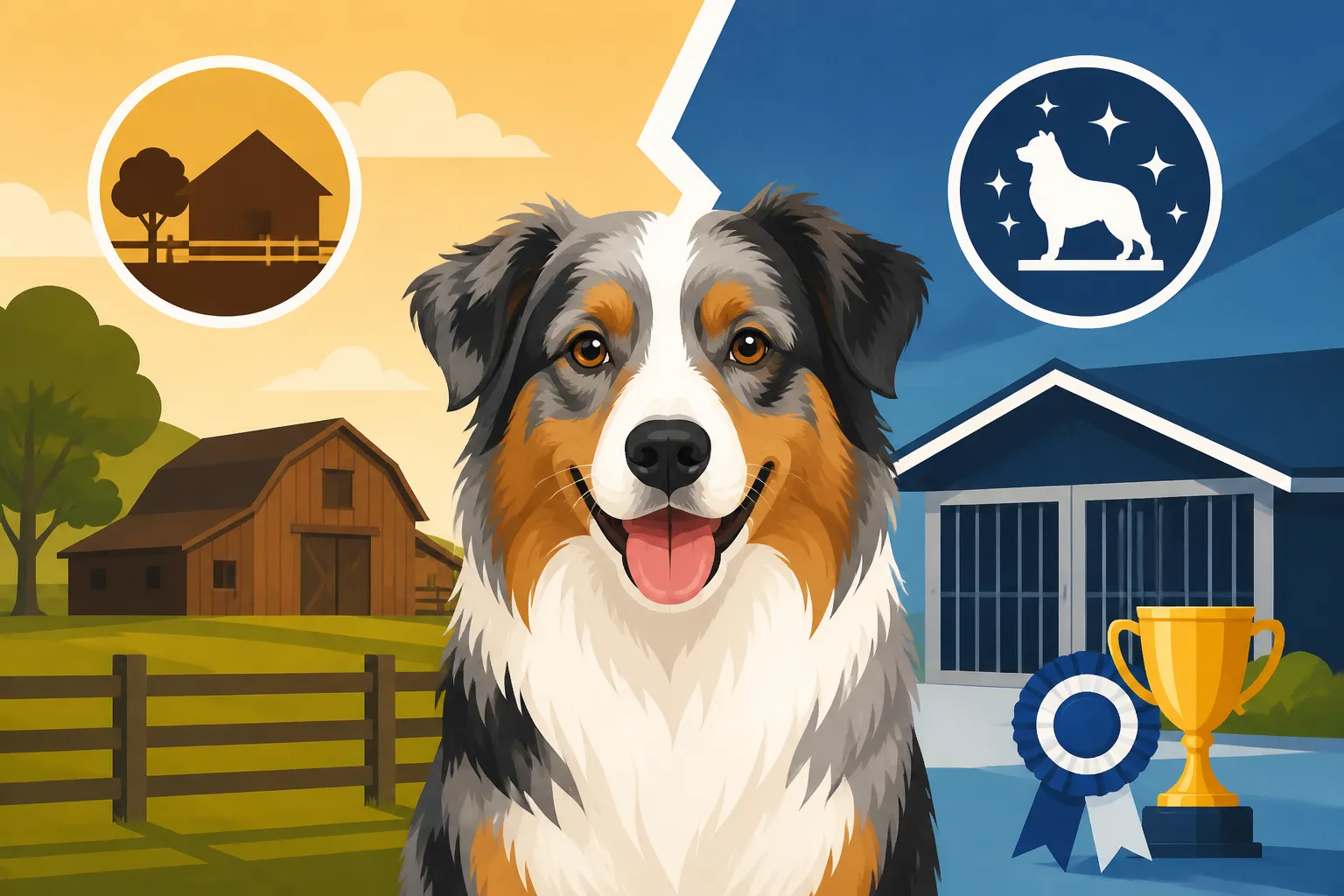
Choosing an Australian Shepherd puppy can feel like navigating a maze, especially when you hear terms like "ranch lines" and "show lines." It’s a common frustration for prospective owners trying to understand what these labels truly mean for the dog they'll bring home. This guide is here to unravel the distinctions between Australian Shepherds bred for working on the farm and those bred for the conformation ring, helping you make an informed decision that perfectly matches your lifestyle and expectations.
Understanding the Foundation: Ranch-Bred Australian Shepherds
When you hear "ranch-bred" or "working lines," imagine a dog whose ancestors spent generations actively herding livestock, whether that's sheep, cattle, or even poultry. These dogs were bred for a specific purpose, and every trait, from their build to their brain, was selected to excel at that demanding job.
The Working Philosophy Behind Ranch Lines
Ranch breeders prioritize function above all else. They are looking for dogs with keen intelligence, immense stamina, biddability (the willingness to work with their handler), and an undeniable drive to control movement. Their breeding choices are geared towards producing animals that can handle long days, varied terrain, and independent problem-solving while keeping livestock where they need to be. Think of a dog that can read sheep, anticipate their movements, and respond with lightning speed and precision. These aren't just pets; they're valuable farmhands whose entire genetic makeup is designed for work.
This emphasis means traits like a strong prey drive, intense focus, and a seemingly endless well of energy are highly valued. A ranch-bred Aussie is often a powerhouse of instinct, ready to spring into action at a moment's notice. They might appear less polished in terms of show ring aesthetics, but their structure is built for durability and efficient movement, not necessarily for winning ribbons based on coat length or eye color. Their health and longevity are paramount, as a working dog needs to stay sound and active for many years. It's a pragmatic approach to breeding, where results in the field speak louder than any champion title.
What to Expect from a Ranch-Bred Aussie
Bringing a ranch-bred Australian Shepherd into a non-working home means you're taking on a canine partner with a significant "job" expectation. These dogs thrive on purpose and mental engagement. Without a genuine outlet for their herding instincts and problem-solving abilities, they can become frustrated, bored, and potentially destructive. Simply providing a large yard or daily walks won't cut it for most. They need to use their brains and bodies in tandem. This could mean training for competitive dog sports like agility, obedience, or even mock herding activities if real livestock isn't an option.
Their intelligence is sharp, but it comes with a need for consistent direction. They might try to "herd" children, other pets, or even you, by nipping at heels or circling. This isn't malice; it's instinct in action. Owners must be prepared to redirect this drive into acceptable channels. The Australian Shepherd Herding Drive You Cannot Train Out is a very real force you’ll need to understand. They typically form strong bonds with their families but can be reserved or even wary of strangers, a trait that serves them well when guarding livestock. Expect a dog that needs structure, clear communication, and a dedicated owner ready to commit to How Much Daily Exercise an Australian Shepherd Needs and mental stimulation.
Finding a Reputable Ranch Breeder
Finding a reputable ranch breeder involves looking beyond flashy websites and pedigrees. You want to see their dogs in action. Ask if you can visit their farm and observe the parent dogs working livestock. A good ranch breeder will be intensely focused on the working abilities of their dogs, their health, and their temperament in a working context. They should be able to articulate the specific tasks their dogs perform and why certain pairings were made. Expect to be thoroughly interviewed about your lifestyle, your experience with working breeds, and your plans for the puppy. They want to ensure their high-drive puppies go to homes that can genuinely meet their needs.
Health clearances are still crucial, even if performance is the top priority. Ask for proof of testing for common Australian Shepherd ailments such as hip and elbow dysplasia, eye conditions like Collie Eye Anomaly (CEA), and genetic issues like the MDR1 mutation. The Genetic Panel Every Australian Shepherd Needs is something every responsible breeder should be familiar with and test for. A good breeder will also provide references and be transparent about their breeding practices, including how they socialize their puppies in a busy farm environment. They’ll want you to understand that these dogs are drivers and not simply passengers.
The Glamour and Precision: Show-Bred Australian Shepherds
On the other side of the spectrum are Australian Shepherds bred for the conformation ring. While they retain the core intelligence and athleticism of the breed, their primary selection criteria lean towards adherence to the breed standard for appearance, structure, and movement.
The Conformation Ring's Influence on Breeding
Show breeders aim to produce dogs that perfectly embody the Australian Shepherd breed standard, as set by organizations like the AKC. This means careful consideration of bone structure, coat texture and color, eye shape and color, tail set, and gait. Every aspect of the dog’s physical presentation is evaluated, with the goal of creating an animal that is both beautiful and structurally sound enough to perform the work it was originally designed for, even if it never steps foot on a farm. This breeding philosophy emphasizes a balanced, aesthetically pleasing dog that moves with grace and power.
While the focus is on appearance, reputable show breeders still understand that the Australian Shepherd is a working breed at heart. They strive for a dog that maintains the intelligent, alert, and keen expression the standard calls for, alongside a solid temperament. Many show-bred Aussies still excel in various performance sports, proving that beauty and brains aren't mutually exclusive. However, the intensity of their herding drive might be slightly modulated compared to their ranch-bred cousins, making them potentially more adaptable to active companion homes without a specific working job.
Temperament and Drive in Show Lines
While still energetic and smart, show-bred Australian Shepherds often possess a slightly different "off switch" than their ranch-bred counterparts. They are generally still very active and require significant exercise and mental stimulation, but their drive may manifest more as a desire to play fetch for hours, learn complex tricks, or excel in agility, rather than an intense, instinctual need to control movement. This isn't to say they don't have herding instinct—they absolutely do—but it might be less overwhelming for a novice owner. They are typically outgoing and enjoy being the center of attention, often having a more social demeanor towards strangers than a true working dog might.
These dogs often thrive as active family companions who participate in dog sports or regular, structured activities. They are keen learners and enjoy having a "job," even if that job is fetching the newspaper or mastering a new obedience routine. A show-bred Aussie might be a better fit for a family seeking a highly trainable, intelligent, and athletic dog for activities like hiking, running, or dog park visits, who also looks stunning in the home. Whether a Show Line Aussie Is Calmer is a common question, and while "calmer" is relative for an Aussie, they may integrate into a non-working household with less potential for instinctual challenges. When shopping for dog supplies like durable chew toys or puzzle feeders, online retailers like Chewy offer a wide selection that can help keep these intelligent dogs engaged.
Identifying a Quality Show Breeder
A quality show breeder will be very proud of their dogs' conformation titles and health clearances. They should be able to show you pedigrees full of champions and demonstrate how their dogs adhere to the breed standard. Like ranch breeders, they will be very invested in health. Expect them to extensively test for genetic conditions relevant to the breed, including those covered by Hereditary Cataracts and the Australian Shepherd HSF4 Test and Collie Eye Anomaly in an Australian Shepherd. They should be transparent about their testing protocols and willing to share results.
Look for a breeder who emphasizes temperament and early socialization. Puppies should be raised in a stimulating home environment, exposed to various sights, sounds, and experiences from a young age. They should also perform temperament evaluations to help match the right puppy with the right home. A good show breeder will typically ask you many questions about your living situation, your experience with dogs, and your goals for the puppy. They are looking for lifetime homes, whether the puppy is destined for the show ring, performance events, or simply a beloved family pet. When purchasing puppy food or training treats, Chewy often provides excellent options recommended by breeders.
Making the Right Choice for Your Lifestyle
The decision between a ranch-bred and a show-bred Australian Shepherd ultimately comes down to an honest assessment of your lifestyle, experience, and what you're truly looking for in a canine companion. There’s no single "better" option, only the one that's right for you.
Assessing Your Time and Energy Commitment
This is perhaps the most critical self-assessment you can make. Australian Shepherds, regardless of their lines, are not couch potatoes. They are dogs that need to do things. A ranch-bred Aussie will require an extraordinary commitment to physical exercise and, more importantly, mental work that engages their innate drive. This might mean enrolling in herding lessons, advanced obedience, or engaging in high-intensity dog sports multiple times a week. If your ideal weekend involves quiet afternoons, a ranch-bred Aussie will likely find their own "job," and you might not like what they choose.
Show-bred Aussies, while potentially less intensely driven, still demand a significant investment of your time and energy. They thrive on structured activity, long walks, runs, hikes, and consistent training. Whether Your Week Has Room for an Aussie is a question every potential owner must ponder deeply. Both types of Aussies can become destructive, noisy, or develop behavioral issues if their needs aren't met. Be realistic about the hours you can dedicate daily to exercise, training, and mental enrichment. Think about whether you can truly commit to Australian Shepherd Exercise at One to Two Hours a Day consistently, every day, for 12-15 years.
Key Questions to Ask Any Breeder
When you connect with any breeder, regardless of whether they focus on working or show lines, come prepared with a comprehensive list of questions. A responsible breeder will appreciate your thoroughness. Here’s a table outlining crucial areas to cover:
| Category | Key Questions to Ask | Why It Matters |
|---|---|---|
| Health | What health clearances do the parents have (Hips, Elbows, Eyes, Genetic Panel)? | Ensures a commitment to breeding healthy dogs and reduces risk of hereditary conditions. |
| Can I see copies of these certificates? | Verification of claims, transparency. | |
| Are puppies guaranteed against genetic diseases? What is the policy if one is found? | Shows breeder responsibility and support for their puppies. | |
| Temperament | What are the temperaments of the parent dogs? Can I meet them? | Gives insight into potential puppy temperament; parents' behavior is a good indicator. |
| How do you socialize your puppies? What experiences do they have before going home? | Critical for developing well-adjusted dogs; impacts their ability to handle new situations. | |
| Rearing | What age do puppies go home? | Ideally 8 weeks or older for crucial developmental stages. |
| What food are the puppies on? | Allows for a smooth transition to your chosen diet (you can stock up on Chewy!). | |
| What is your return/rehome policy if I can no longer keep the dog? | A responsible breeder will always take back their dogs, no questions asked. | |
| Support | What kind of support do you offer after I take my puppy home? | Indicates ongoing commitment and willingness to help with questions or challenges. |
| Can you provide references from previous puppy buyers? | Allows you to speak with other owners and hear about their experiences with the breeder. |
Visiting the Kennel and Meeting the Dogs
Never buy a puppy sight unseen. Visiting the breeder’s home or facility is non-negotiable. This isn’t just about seeing the puppies; it’s about evaluating the environment, the health of the adult dogs, and the breeder’s overall approach. When you visit, observe the following:
- The Parents: Are they friendly, well-adjusted, and comfortable with visitors? Do they display the temperament you’re seeking? Are they clean and well-cared for? Their behavior will tell you a lot about what to expect from your puppy. Visiting an Australian Shepherd Litter is a crucial step.
- The Environment: Is it clean, safe, and stimulating for puppies? Puppies should be raised indoors or in a clean, protected outdoor area, not isolated in kennels. Look for signs of appropriate socialization, like age-appropriate toys, different textures, and human interaction.
- The Breeder: Do they answer your questions thoroughly and patiently? Do they ask you tough questions in return, showing they care about the puppy's future? Do they seem genuinely passionate about their dogs and the breed? Trust your gut feeling about the breeder; a good relationship with them is invaluable. They might even recommend specific products from Chewy for puppy training or health care.
Disclaimer
This article is for general informational purposes only and does not constitute professional advice. Laws, prices and regulations vary by location and change over time. Consult a qualified professional for guidance on your specific situation.