An Aussie That Cannot Be Left With Nothing to Do
It's a common, heartbreaking scenario: you come home to find your Australian Shepherd has redecorated your living room with couch stuffing, or carved a new exit route through the back door. You scratch your head, wondering what went wrong, especially after you just took them for a long walk. The truth is, an Australian Shepherd that’s left with nothing to do isn’t just bored; they’re often deeply stressed and driven to find their own "job," which, unfortunately for us humans, usually involves destruction, incessant barking, or other undesirable behaviors. This guide will delve into the powerful instincts that drive these intelligent dogs and offer concrete strategies to channel their energy and intellect constructively, ensuring a happier, healthier Aussie and a more peaceful home.
Understanding the Australian Shepherd's Innate Drive
Many Aussie owners find themselves caught off guard by the sheer intensity of their dog's needs. These aren't just pretty faces; they are highly intelligent, tenacious working dogs bred for demanding tasks. Understanding this fundamental truth is the first step toward managing an Australian Shepherd who can't stand idleness.
The Herding Dog Blueprint
To truly grasp why your Aussie thrives on having a "job," you have to look back at their lineage. Australian Shepherds were developed as all-around ranch dogs, primarily in the American West, designed to work with livestock—sheep, cattle, even poultry. This wasn't a job for the faint of heart or the easily distracted. It required keen observation, quick thinking, immense stamina, and an almost obsessive focus. Every part of their physical and mental makeup evolved to excel at these tasks. They needed to anticipate the movements of animals, respond to complex commands from their handler, and work tirelessly from dawn till dusk.
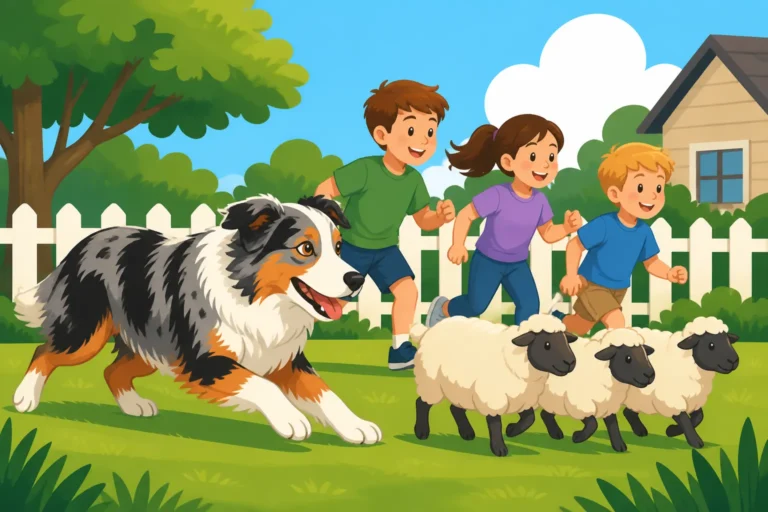
This heritage means that modern Aussies, even those who live purely as companion animals, come hardwired with a profound need for purpose. They aren't content to merely exist; they need to do. Their brains are constantly scanning for patterns, problems to solve, and things to organize. If you let an Australian Shepherd look around the house and find nothing for them to manage or organize, their brain will invent something. That something might be your cushion stuffing, or the dust bunnies under the couch, or the cat, or even the children. It’s not malice; it’s instinct. You simply cannot train out The Australian Shepherd Herding Drive You Cannot Train Out entirely because it's their operating system.
When Instinct Meets Inactivity
So, what happens when this powerful instinct for work and purpose meets the reality of a modern pet home, especially one where the dog is left alone for hours? It's a recipe for frustration, anxiety, and a cascade of unwanted behaviors. Imagine being a brilliant engineer, full of innovative ideas, but your only "job" is to sit in an empty room all day. You'd likely start taking things apart, fiddling with whatever you could find, or maybe even talking to yourself. Your Aussie feels a similar kind of internal pressure.
When an Australian Shepherd is under-stimulated, that incredible working drive doesn't just disappear; it gets misdirected. They might start "herding" inanimate objects, like the vacuum cleaner, or developing an intense fixation on shadows or reflections. Their natural problem-solving abilities turn toward figuring out how to get to the interesting smells in the garbage can or how to extract the fluffy innards of a pillow. It’s not about being "bad"; it's about being an Australian Shepherd who desperately needs an outlet for their intelligence and energy. They're trying to fulfill their inherent purpose, even if that purpose, in their human-centric world, seems utterly bizarre or destructive.
Recognizing the Signs of Under-Stimulation
It's easy to dismiss your Aussie's naughty behavior as stubbornness or spite, but in almost all cases, it's a clear signal that their fundamental needs aren't being met. Learning to read these signs is crucial for understanding and addressing the root cause of their behavior.
Destructive Chewing and Digging
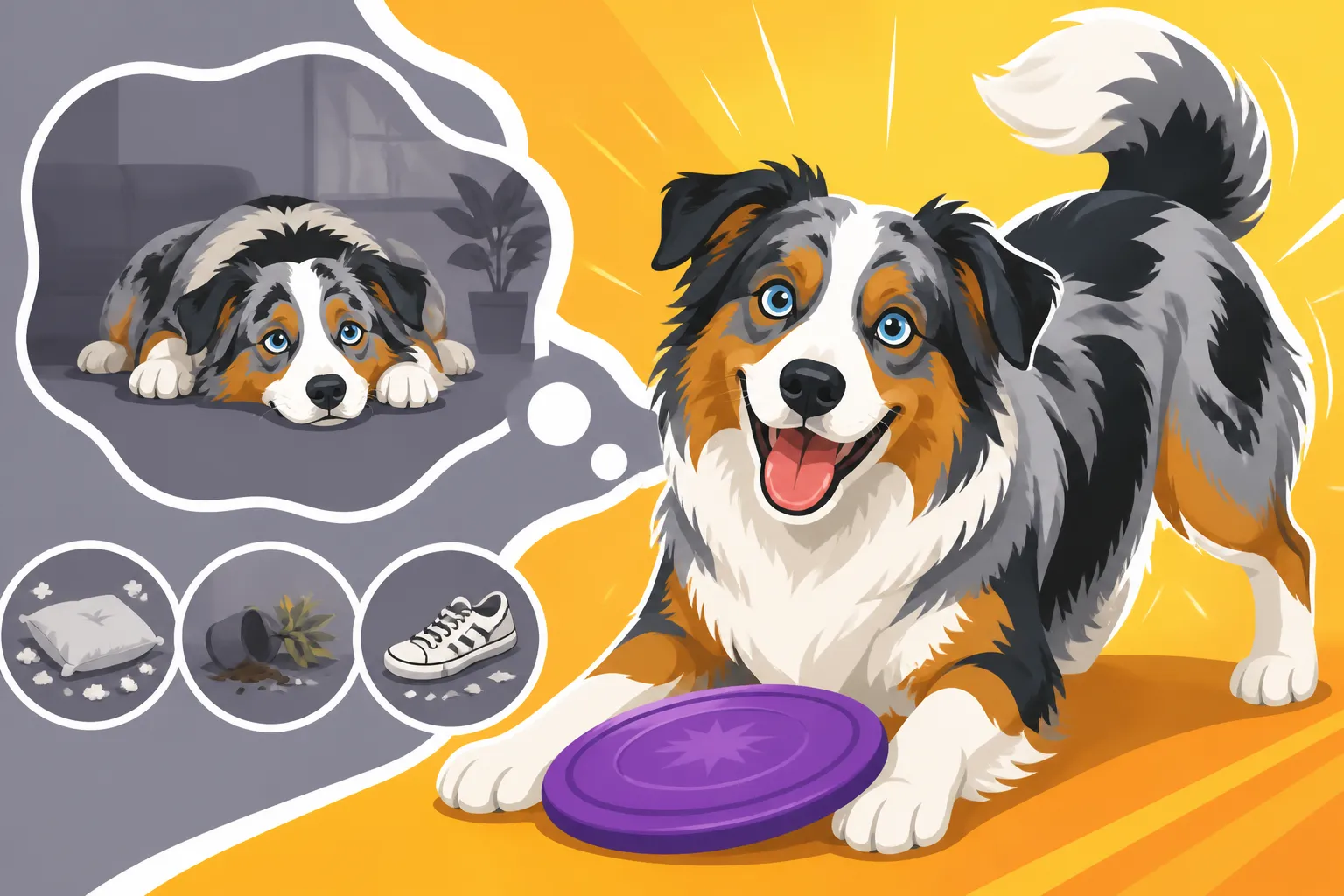
One of the most common and frustrating manifestations of an under-stimulated Australian Shepherd is destructive chewing. This isn't just puppy teething; this is an adult dog systematically dismantling your furniture, shoes, or even walls. For an Aussie, chewing is not only a stress reliever but also a deeply engaging activity. It provides oral stimulation, uses their powerful jaws, and often involves a "puzzle" element as they work to destroy an item. If they don't have appropriate, engaging chew toys, or if their mental stimulation isn't sufficient, your expensive sofa can quickly become their next "project."
Similarly, digging, both indoors and out, can be a symptom. While outdoor digging might be linked to hunting instincts or cooling off, persistent indoor digging (at carpets, crate beds, or even flooring) often indicates a dog trying to create their own entertainment or release pent-up energy. It’s a sensory activity, a way to occupy paws and minds when there’s no sheep to gather or frisbee to catch. An Aussie that is driven to An Australian Shepherd Destroying Doors When Alone or tearing up baseboards is almost certainly telling you they have too much unspent energy and not enough mental engagement.
Excessive Barking and Pacing
Another hallmark of an under-stimulated Aussie is excessive vocalization. This can manifest as constant alert barking at every leaf that blows by, frustrated barking at nothing in particular, or even whining and howling when left alone. Their keen senses, developed for scanning vast landscapes for livestock, become a curse in a quiet house. Every distant sound, every shadow, becomes a potential "threat" or "task" they feel compelled to address. It's their way of communicating distress, boredom, or over-arousal.
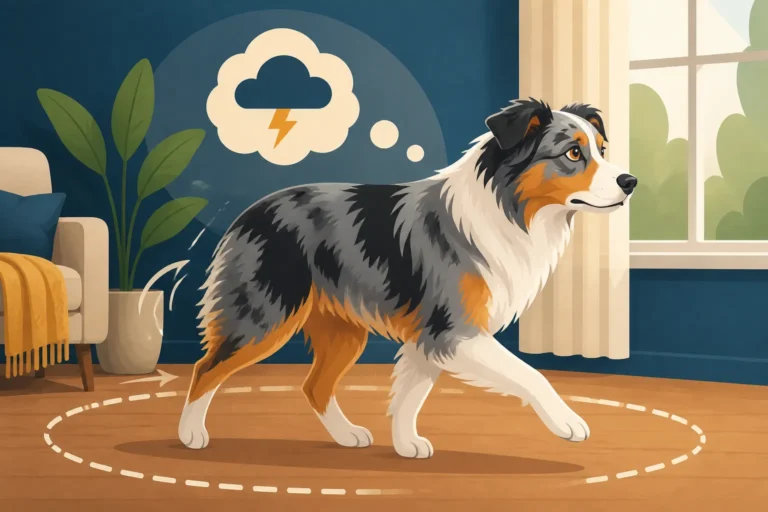
Pacing, often accompanied by panting even when not warm, is another physical sign of internal unrest. An Aussie trapped in a situation with insufficient mental or physical release will often just move. They might walk circuits around the house, restlessly shift positions, or seem unable to settle. This isn't just general nervousness; it's a physical manifestation of their intense energy and mental drive having nowhere to go. They’re trying to burn off steam, but without direction or purpose, it just churns inside them.
Shadow Chasing and Obsessive Behaviors
Australian Shepherds, with their incredible focus and visual acuity, can easily develop obsessive behaviors when under-stimulated. Shadow chasing is a classic example. What starts as a harmless game can quickly spiral into an all-consuming compulsion where the dog fixates on any flicker of light or shadow, ignoring everything else around them. This isn't just cute; it can be incredibly debilitating for the dog and stressful for the owner, as it becomes harder to break their focus.
Other obsessive behaviors might include tail chasing, fixating on reflections in windows, incessant licking of paws or surfaces, or even developing "pica" (eating non-food items). These behaviors are often a coping mechanism for boredom, stress, or anxiety. They provide a predictable, repetitive activity that the Aussie’s busy brain can latch onto when it lacks constructive engagement. It's a clear sign that their mental well-being is suffering, and they're channeling their immense focus into self-soothing or self-stimulating actions.
Beyond Physical Exercise: The Power of Mental Work
Many owners assume that a long walk or a vigorous game of fetch is all an Aussie needs. While physical exercise is absolutely crucial, it’s only half the equation. An Australian Shepherd's mind is their most powerful tool, and if it's not challenged, no amount of running will truly tire them out. In fact, for many Aussies, purely physical exercise without mental engagement can actually wind them up further. They'll come home physically tired but mentally restless, still scanning for their next "job."
Engaging the Aussie Brain with Puzzle Toys
This is where puzzle toys and interactive feeders become your best friend. These aren't just for puppies; they are vital tools for adult Australian Shepherds. Puzzle toys force your Aussie to use their brain to figure out how to get a treat, mirroring the problem-solving aspects of herding or hunting. Instead of simply eating kibble from a bowl in 30 seconds, they might spend 20 minutes nudging, pawing, or manipulating a toy to release their meal. This mental effort is incredibly taxing and satisfying for an Aussie.
There's a vast world of puzzle toys out there, from simple KONGs stuffed with peanut butter or wet food (you can even freeze them for extra challenge!) to more complex interactive games with sliding panels and hidden compartments. Many reputable brands offer a range of difficulty levels. You can find a huge selection on platforms like Amazon. Rotating these toys keeps them fresh and exciting. If your Aussie is a super chewer, make sure you're buying durable, non-toxic options that can withstand their powerful jaws. Engaging their brain with these tools can significantly reduce the likelihood of destructive behaviors born out of boredom. Puzzle Feeders and Enrichment Gear for an Aussie are an investment in your Aussie's mental health.
The Value of Training Sessions and Trick Learning
For an Australian Shepherd, training isn't just about obedience; it's a language, a form of communication, and a mental workout that burns energy more effectively than many physical activities. Even if your Aussie knows all the basic commands, dedicating 10-15 minutes, two or three times a day, to active training sessions can make a huge difference. This could involve practicing known commands in new environments, adding duration or distance, or, even better, teaching new tricks.
Teaching tricks like "fetch my leash," "put your toys away," "spin," "bow," or "weave through my legs" provides immense mental stimulation. It requires focus, memory, and coordination, all things an Aussie excels at and enjoys. The mental effort involved in learning a new behavior, breaking it down into steps, and then performing it on cue, is profoundly satisfying for them. It gives them a sense of accomplishment and strengthens the bond between you. Think of these sessions as giving your Aussie a mini-job to do, with you as their trusted partner. Online training platforms, such as those offered by BAXTER & Bella, can provide structured curricula and support for teaching new skills and tricks, offering a fantastic way to keep your Aussie's mind engaged. Trick Training as Aussie Mental Work is invaluable for their overall well-being.
Scent Work and Nose Games
Never underestimate the power of an Australian Shepherd's nose! Their sense of smell is hundreds of times more powerful than ours, and engaging it is an incredibly enriching and tiring activity. Scent work, often referred to as "nose games," taps into their natural instincts and provides an immersive mental challenge. This doesn't require special equipment or expensive classes to start.
You can begin with simple hide-and-seek games. Hide treats around the house, starting easy and gradually increasing the difficulty. Use a verbal cue like "find it!" and let your Aussie use their nose. As they get better, you can hide their favorite toys, or even just your keys, and have them locate them. More advanced scent work involves teaching them to find specific odors (like birch or anise), which can be pursued as a competitive sport. The focus and problem-solving required to track down a scent are incredibly stimulating and exhausting for their brains. After a good scenting session, an Aussie will often be far more relaxed and ready for a nap than after an hour of running. Scent Games That Tire an Australian Shepherd are a fantastic way to engage their primal instincts in a safe and satisfying manner.
Structuring Your Aussie's Day for Success
Preventing an Aussie from becoming bored and destructive isn't about one-off activities; it's about creating a structured daily routine that consistently meets their needs for both mental and physical engagement. This provides predictability and ensures their powerful instincts are regularly channeled.
Integrating Mental and Physical Outlets
The key is balance. A truly content Australian Shepherd needs a blend of physical exertion and mental gymnastics throughout their day. Don't just dump all the exercise into one long block. Consider splitting their day into segments:
- Morning Kickstart: A brisk walk or a short training session to get the brain working, followed by breakfast in a puzzle feeder. This starts their day with purpose.
- Mid-Day Engagement (if alone): If you work away from home, this is where appropriate chew toys, a KONG stuffed with frozen goodies, or a rotation of safe, interactive toys come into play. Some owners even use timed treat dispensers or interactive cameras where they can talk to their dog and dispense a treat remotely.
- Afternoon Peak: This is often when Aussies have a lot of stored energy. This is a great time for a more vigorous activity like a game of fetch (with rules!), a long hike, or an agility run if you're involved in dog sports. Follow this with a focused training session or a scent work game.
- Evening Wind-Down: A shorter, calmer walk, some gentle grooming, and maybe a quiet chew on a bully stick while you relax. This signals that the "work" day is over and it's time to settle.
Think about how you can layer these activities. A 30-minute walk isn't just about walking; it can be an opportunity for obedience practice, recall games in a safe area, or even "find it" in the bushes. Every interaction can be an opportunity for engagement.
Scheduled Downtime and Relaxation
Just as important as providing activity is teaching your Australian Shepherd how to relax. Many Aussies struggle with an "off switch" because they're constantly looking for something to do. Creating scheduled downtime where they are expected to settle can be incredibly beneficial. This might mean having a designated "place" command, where they lie on a mat or in their crate for a set period, even if you're busy around the house. Rewarding calm behavior is critical.
This isn't about punishment; it's about teaching them that being calm and doing nothing is also a valuable state, and one that earns rewards. Crate training can be particularly helpful for this, providing a safe, quiet den where they can truly decompress without feeling the need to patrol or engage. Introduce it gradually and positively. Consistency is key; if they learn that protesting earns them attention or release, they'll keep doing it. By building in regular periods of enforced rest, you help them understand that they don't always have to be "on duty."
The Role of Daycare or Dog Walkers
For those with demanding schedules, professional help can be a lifesaver. If your Australian Shepherd is spending Hours Alone Before an Aussie Finds a Job, exploring options like doggie daycare or a professional dog walker can be incredibly beneficial.
- Doggie Daycare: A good daycare program offers supervised play, social interaction with other dogs, and often structured activities. However, it's crucial to choose wisely. Look for facilities that screen dogs for temperament, maintain appropriate staff-to-dog ratios, and provide separate play areas for different energy levels. An overstimulated or overwhelmed Aussie in a chaotic daycare environment can actually become more stressed. Ask about their enrichment activities beyond just free play.
- Professional Dog Walkers: A dog walker can provide a much-needed mid-day break, not just for physical relief but also for mental stimulation. A walker who understands the Australian Shepherd breed can do more than just a potty break; they can incorporate training cues, practice polite leash manners, or even play structured games during their time with your dog. This breaks up the monotony of their day and ensures they're getting some dedicated human interaction and activity. When choosing a walker, look for someone experienced with high-energy breeds and ask for references. Daycares That Can Tire an Aussie Out can be a great resource, but do your homework.
Tools and Resources to Combat Boredom
Equipping yourself with the right tools and knowing where to turn for help can make all the difference in managing an Australian Shepherd who thrives on being busy.
Durable Chew Toys and Enrichment Feeders
Investing in high-quality, durable chew toys is non-negotiable for an Australian Shepherd. They need outlets for their strong jaws and a desire to dismantle things. Look for toys specifically designed for "power chewers." Brands like KONG, Nylabone (for supervised chewing), or West Paw offer a variety of options that can withstand an Aussie's determination. Vary the textures and types of chew toys to keep things interesting. Puzzle feeders are also essential. These range from simple rubber toys you can stuff with treats or food, to more complex multi-step puzzles that require manipulation.
Consider a rotation system: don't leave all the toys out all the time. Bring out a few different ones each day, making them feel "new" and exciting. This maintains novelty and prevents your Aussie from becoming bored with their options. You can find an extensive selection of Chew Toys That Last With an Australian Shepherd and enrichment feeders on online retailers like Amazon, making it easy to experiment and find what your specific Aussie enjoys most.
| Enrichment Type | Description | Best For | Benefits |
|---|---|---|---|
| Puzzle Feeders | Toys or bowls that dispense food/treats as the dog manipulates them (e.g., rolling, nudging, sliding). | Slowing down eating, mental engagement, independent play. | Reduces boredom, prevents bloat, encourages problem-solving, can replace meal bowls. |
| Durable Chew Toys | Made from tough rubber or nylon, designed to withstand strong chewing. | Power chewers, stress relief, oral hygiene, independent engagement. | Satisfies natural chewing instinct, redirects destructive chewing, can be long-lasting. |
| Scent Games/Snuffle Mats | Hiding treats in mats with fabric strips or around the house for the dog to find using their nose. | All ages, especially good for low-impact mental work, shy or older dogs. | Highly engaging, builds confidence, tires the brain, low physical demand. |
| Interactive Toys | Toys that move, squeak, or react to the dog's touch, sometimes requiring charging. | Dogs needing high stimulation, independent play, varied sensory input. | Provides novelty, encourages activity, can be self-rewarding. |
| Training Sessions | Structured periods of practicing obedience commands, new tricks, or dog sports. | All Aussies, especially those who love to learn and work with their owner. | Builds bond, provides clear purpose, mentally exhausting, reinforces good behavior. |
Online Training Programs and Community Support
Sometimes, you need more than just physical tools; you need guidance and a structured approach. Online training programs can be an invaluable resource, especially for Australian Shepherd owners. Programs like BAXTER & Bella offer comprehensive, step-by-step training guides, live support, and access to a community of other dog owners and trainers. This can be fantastic for addressing specific behavioral challenges, teaching advanced obedience, or exploring new dog sports from the comfort of your home.
Beyond formal programs, connecting with other Australian Shepherd owners can provide a wealth of practical advice and emotional support. Online forums, social media groups, and local breed clubs are great places to share experiences, ask questions, and learn new tricks or strategies that other owners have found successful. Remember, you're not alone in managing a high-drive dog; many others have navigated similar challenges and can offer insights into what works for this unique breed.
Professional Help for Severe Cases
If you've implemented various enrichment strategies and your Aussie's destructive or anxious behaviors persist or worsen, it's time to seek professional help. This isn't a sign of failure; it's a responsible step towards ensuring your dog's well-being and your peace of mind.
- Veterinary Check-up: Rule out any underlying medical conditions. Pain, discomfort, or certain neurological issues can sometimes manifest as behavioral problems. A vet can also discuss anxiety medications if appropriate.
- Certified Professional Dog Trainer (CPDT) or Behavior Consultant: Look for professionals who specialize in working with herding breeds and positive reinforcement methods. They can assess your specific situation, help identify triggers, and develop a tailored behavior modification plan. A good trainer can guide you through exercises, teach you how to communicate more effectively with your Aussie, and provide strategies for managing their drive. Don't hesitate to ask for their experience with Australian Shepherds or similar high-drive breeds. What a Trainer Charges for Aussie Herding Drive can vary, but it's an investment in your dog's future.
- Veterinary Behaviorist (Dip. ACVB): For severe cases of separation anxiety, aggression, or compulsive disorders, a board-certified veterinary behaviorist is the highest level of expertise. They are veterinarians with advanced training in animal behavior and can prescribe medication in conjunction with behavior modification.
Remember, an Australian Shepherd that cannot be left with nothing to do is simply living up to their genetic programming. By understanding their needs and providing consistent, appropriate outlets for their incredible intelligence and energy, you can transform a frustrated, destructive dog into a happy, well-adjusted companion who truly thrives in your home.
Disclaimer
This article is for general informational purposes only and does not constitute professional advice. Laws, prices and regulations vary by location and change over time. Consult a qualified professional for guidance on your specific situation.