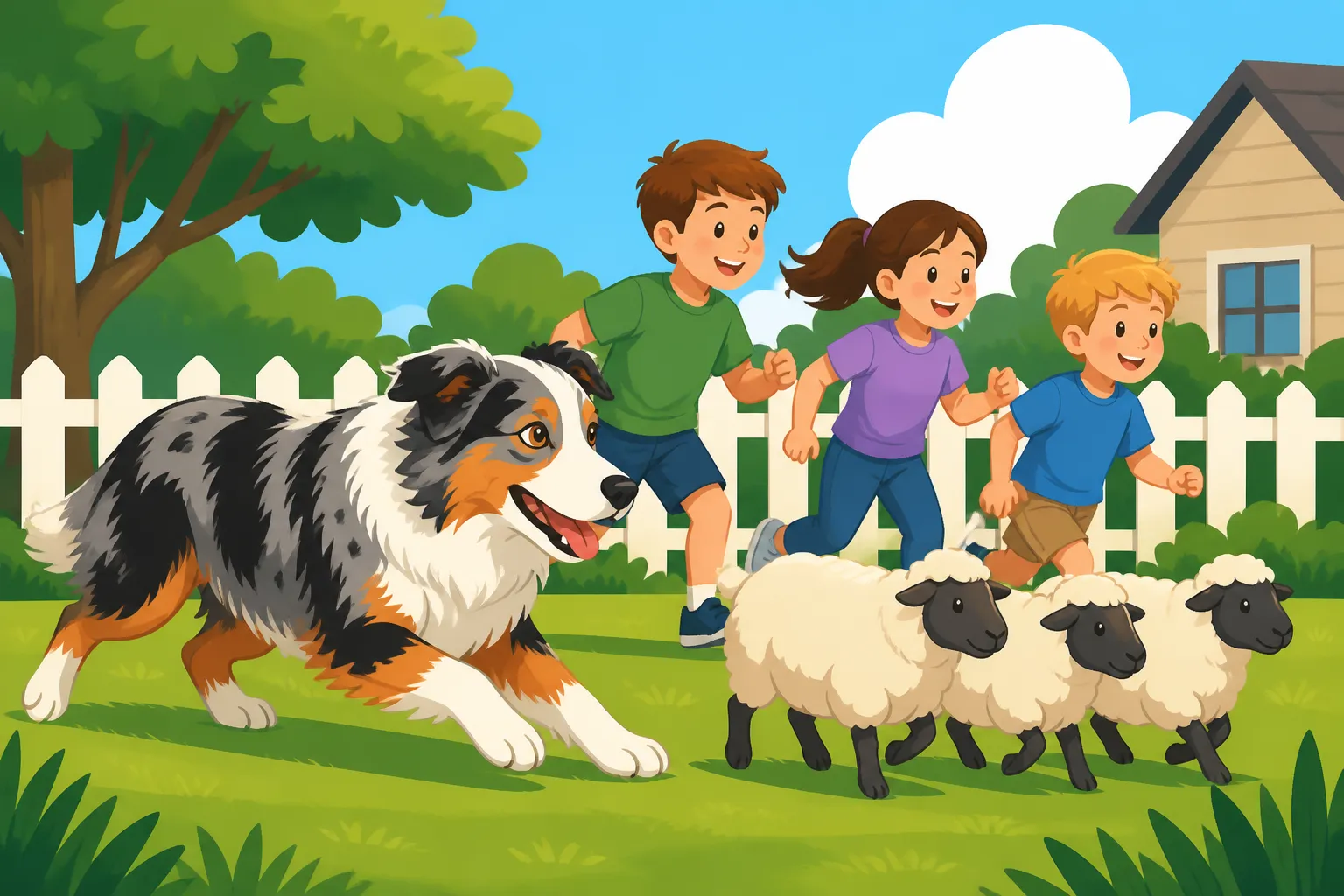
An Australian Shepherd Herding Children in the Yard
It's a scene many Australian Shepherd owners know all too well: you're enjoying a beautiful day in the backyard, the kids are running and playing, and suddenly, your beloved Aussie decides it's time to "manage" them. Instead of joining in the fun, your dog is nipping at heels, circling tightly, or nudging children into a group, leaving everyone confused, frustrated, and sometimes even scared. This guide is here to help you understand why your Australian Shepherd herds children and, more importantly, how to effectively redirect this instinct into safer, more appropriate behaviors for a harmonious household.
Understanding the Herding Instinct in Australian Shepherds
Let's be real, the Australian Shepherd was bred to move livestock. It's in their DNA, their very core programming. This isn't a behavior they "choose" to do out of malice or disobedience; it's a deep-seated, genetic imperative. When they see movement, especially fast, erratic movement like children playing, their instinct kicks in to gather, control, and direct. It’s what makes them such incredible working dogs, but it can be a real challenge in a family setting where the "flock" consists of your kids.
Why Herding Children is Natural Behavior
Imagine your Aussie ancestors on a ranch, working alongside a cowboy, their keen eyes scanning for any stray sheep or cattle. Their job was to keep the flock together, to nip at heels if an animal wandered, and to use their body language to guide. Now, translate that to a modern backyard. Your children, with their unpredictable movements, squeals, and dashes, are, in your Aussie's mind, just a very energetic, very loud flock that needs to be brought into order. It's not personal; it's just business to them. They're not trying to be naughty; they're trying to do their job, the job they were literally engineered for.
This natural inclination means that simply telling them "no" or punishing them for herding is often ineffective and can even be detrimental. It doesn't extinguish the instinct; it just teaches them to be sneaky about it or to fear your reaction, which can break trust. They don't understand why they're being reprimanded for fulfilling their deepest genetic drive. Understanding that this is an instinct, not a choice, is the first crucial step toward managing it effectively. It allows us to approach the problem with empathy and a strategy rooted in redirection rather than suppression. You can't train out The Australian Shepherd Herding Drive You Cannot Train Out, but you can channel it.
The Difference Between Play and Herding
It's important for us, as Aussie parents, to distinguish between playful interaction and true herding behavior. A dog romping with kids, chasing a ball with them, or even engaging in a bit of rough-and-tumble can look similar to herding at first glance. However, true herding behavior often involves specific cues: a low, focused posture, intense eye-stare (the "Aussie eye"), circling, nipping at ankles or knees, and physically bumping or nudging to control movement. The intent is to gather and direct, not just to engage in mutual play.
Play, on the other hand, is usually more reciprocal. The dog might chase, but it's more about shared fun than control. There's often a "play bow" before engagement, and the dog might voluntarily disengage more readily. Herding, however, has a relentless quality to it. Once an Aussie locks into "herding mode," it can be incredibly difficult for them to disengage without intervention. This distinction is vital because how you respond will vary. You want to encourage healthy play while firmly, but gently, redirecting herding. Trying to suppress play because it looks similar to herding can lead to a bored, frustrated Aussie that finds other outlets for its energy – often less desirable ones.
Recognizing the Signs of Herding Behavior
Being able to spot the early warning signs of herding behavior is key to managing it effectively. If you can intervene before your Aussie gets fully "locked on," it's much easier to redirect them. Often, these signs begin subtly and escalate as the children's activity level increases.
Nipping, Bumping, and Circling
When an Australian Shepherd starts herding children, the most common physical manifestations are often nips, bumps, and persistent circling. These aren't necessarily aggressive acts, but rather attempts to mimic how they would control livestock. A quick nip to the back of the leg or ankle is a classic herding move, designed to get a sheep or cow to move in a particular direction. For a child, this can be startling and painful, often leading to tears and a fear of the dog.
Bumping is another technique, where the Aussie uses its body to physically nudge or push a child. This is their way of moving the "flock" where they want it to go. And then there's the circling – a tight, relentless orbit around one or more children, essentially trying to contain them. It’s a powerful visual demonstration of their instinct taking over. If you see your Aussie doing any of these things, especially combined with intense focus, it’s a clear signal that their herding drive is engaged, and it's time to step in. Recognizing these early tells, like An Australian Shepherd Nipping a Toddler's Ankles, allows you to interrupt and offer an alternative before things escalate.
The Intensity of an Aussie's Focus
One of the most defining characteristics of an Aussie in herding mode is their intense, almost laser-like focus. They will often lower their head, fix their gaze on the children, and move with a stealthy, deliberate gait. This isn't the happy-go-lucky bouncy gait of a dog wanting to play; it's the purposeful stalk of a working dog. They might even emit a low growl or a "woof" to direct their "flock." This intense focus can make it very difficult to break their concentration. They might ignore your calls, even their name, because their instinctual drive is overriding everything else.
This kind of focus is precisely what makes them so good at their intended job, but it’s problematic when directed at kids. It's a sign they are fully immersed in their "work" and may not respond to casual commands. This is when management and redirection become paramount, as their mental state is completely dedicated to the task at hand. It also highlights why relying solely on verbal commands in this heightened state might not be enough; physical redirection or a strong interruption might be necessary to break their trance.
Proactive Strategies to Prevent Herding
Prevention is always better than correction, especially when it comes to instinctual behaviors. By setting up your environment and your routine thoughtfully, you can significantly reduce the opportunities for your Aussie to practice herding behaviors on your children.
Supervision and Management in the Yard
The simplest and most effective way to prevent your Australian Shepherd from herding children is through consistent supervision and environmental management. This means that whenever children are actively playing in the yard, your Aussie needs to be either engaged in a different activity with an adult, tethered, or in a separate, secure area. It's not about punishing your dog or excluding them forever, but about setting them up for success. If they don't have the opportunity to practice the behavior, it's less likely to become a habit.
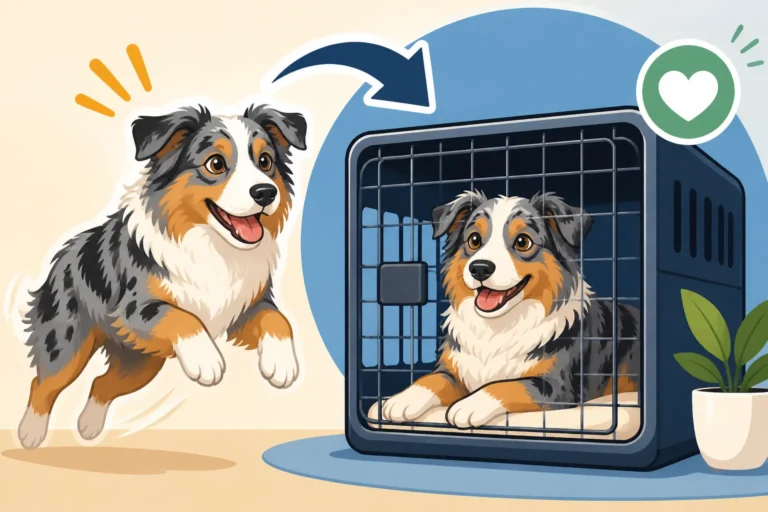
Consider using a long line (a lightweight leash that's 15-30 feet long) if you want them to be out with the kids but need to maintain control. This allows you to gently guide them away or step on the line to interrupt herding attempts. Or, when the kids are wound up and playing intensely, that might be the perfect time for your Aussie to have some quiet crate time with a chew toy in another room, or to go for a solo walk with an adult. The key is never to leave the dog and children unsupervised if herding is an issue. Consistency here is critical; one slip-up can reinforce the unwanted behavior.
Providing Appropriate Outlets for Instinct
Since the herding instinct is so strong, simply suppressing it isn't enough; you need to provide appropriate, structured outlets for it. This is where giving your Australian Shepherd a "job" comes into play. Instead of viewing your kids as livestock, your Aussie needs to learn that other things are fair game for their herding drive. This can include specific toys, sports, or training exercises.
Consider a large, sturdy herding ball specifically designed for dogs, or a Flirt Poles and Herding Balls for an Australian Shepherd designed to simulate the chase and turn of livestock. You can work with your Aussie to "herd" this ball around the yard. This channels their energy into an acceptable target. Dog sports like Treibball, which is urban herding using large exercise balls, or actual sheep herding (if you have access to a facility) can be incredibly fulfilling for an Aussie. Giving an Australian Shepherd a Job Instead of a Walk is paramount for this breed's mental well-being and helps them differentiate between people and "work." Remember, physical exercise alone often isn't enough; they need mental stimulation that taps into their problem-solving and herding intelligence. Why Physical Exercise Alone Never Settles an Aussie is a truth every Aussie owner learns quickly.
Redirecting Herding Behavior Effectively
When you observe your Australian Shepherd starting to exhibit herding behavior towards children, immediate and consistent redirection is vital. The goal isn't to punish the dog, but to interrupt the behavior and offer a desirable alternative.
Using Toys and Games as Alternatives
Once you spot the early signs of herding, immediately interrupt your Aussie with a high-value toy or an engaging game. A tough chew toy, a tug rope, or a favorite squeaky toy can be effective. The key is to grab their attention before they fully commit to the herding sequence. As soon as you see the intense focus or the low posture, clap your hands, call their name excitedly, and present the toy. Encourage them to play with you and the toy, away from the children.
A flirt pole can also be an excellent tool for redirection, as it allows you to engage their chase drive in a controlled way. You can direct their focus and energy onto the lure, allowing them to chase, pounce, and "catch" without involving the kids. Redirecting an Aussie Onto a Tug Instead of a Heel is a powerful technique to channel their mouthiness onto an appropriate item. Once they engage with the toy, lavish praise and reward them. The idea is to teach them that redirecting to a toy when they see children playing is more rewarding than herding the children themselves. Websites like Amazon offer a vast array of durable flirt poles and interactive toys perfect for high-drive Aussies.
Teaching a "Leave It" or "Off" Cue
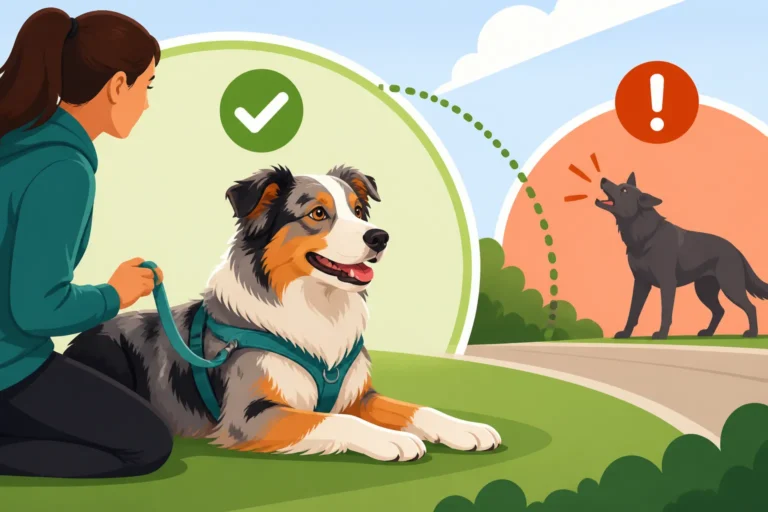
Developing a strong "Leave It" or "Off" cue is invaluable for managing herding behavior. This command teaches your dog to disengage from whatever they are focused on. Start practicing this in low-distraction environments, then gradually increase the difficulty. Use high-value treats to reward immediate disengagement.
For instance, when your Aussie starts to fixate on the children, use your "Leave It" cue firmly but calmly. As soon as they shift their gaze or body even slightly away from the children, immediately reward them. Over time, they will associate disengaging from the children with a positive outcome. This takes consistent practice, often multiple times a day, in various scenarios. It's about building a strong foundation of impulse control. Aussie Impulse Control With Moving Toys is a great place to start building this skill, transferring it to children over time. This kind of structured training provides them with a clear, calm alternative to their instinctual response.
Long-Term Training and Enrichment
Managing an Aussie's herding instinct in a family environment isn't a quick fix; it requires a long-term commitment to training, enrichment, and understanding their breed-specific needs.
Consistent Training for Impulse Control
Beyond specific cues, consistent training is the bedrock of managing herding behavior. This means working on basic obedience commands like "sit," "stay," and "down" in increasingly distracting environments. Impulse control exercises, such as waiting patiently for food or toys, or practicing Mat Settle Training for a Restless Aussie, teach your Aussie to think before acting on instinct. A well-socialized and well-trained Australian Shepherd is better equipped to handle novel situations and resist the urge to herd.
Consider enrolling in advanced obedience classes or working with a professional trainer who has experience with herding breeds. They can help you identify triggers and develop a tailored training plan. Online training platforms, such as BAXTER & Bella, can also provide structured curricula and expert guidance, offering flexible learning from home. Remember, training isn't just about teaching commands; it's about building a strong relationship based on trust and clear communication, where your Aussie understands what's expected of them. A dog that feels secure in its role and understands boundaries is less likely to resort to instinctual, potentially problematic behaviors.
Mental Stimulation Beyond Physical Exercise
We often hear that Australian Shepherds need a lot of physical exercise, and while true, it's only half the story. Mental stimulation is equally, if not more, important for this intelligent breed. A physically tired Aussie might still be mentally wired, looking for a "job." This is where puzzle feeders, scent work, and trick training become indispensable. Mental Work That Actually Tires an Australian Shepherd helps fulfill their need for problem-solving and engagement.
Puzzle feeders, available on platforms like Amazon, make your Aussie work for their food, engaging their brain. Scent work, where they use their nose to find hidden treats or toys, is incredibly tiring and fulfilling. Trick training (like "spin," "weave," or "bow") not only provides mental exercise but also strengthens your bond and builds their confidence. Even simple, structured games like "find it" in the house can be surprisingly effective. By integrating a variety of mental challenges into their daily routine, you help satisfy their intelligent, working minds, making them less likely to invent their own "jobs" – like herding your children – out of boredom or under-stimulation.
Here's a quick reference table for managing herding behavior:
| Situation / Behavior | Recommended Action / Tool | Key Benefit |
|---|---|---|
| Active Herding (Nipping/Circling) | Immediate "Leave It" / Redirection with high-value toy/flirt pole | Breaks focus, prevents reinforcement, provides alternative outlet |
| Children Playing Energetically | Supervised interaction (long line), separate dog, or engage dog in structured activity | Prevents opportunities for herding, ensures safety |
| General Boredom / Under-stimulation | Introduce puzzle feeders, scent games, trick training, urban herding ball | Channels natural instincts, provides mental enrichment, reduces frustration |
| Lack of Impulse Control | Consistent obedience training (sit, stay, down), "Off" cue, mat work | Builds self-control, strengthens communication, creates reliable responses |
| Need for a "Job" | Treibball, actual herding (if accessible), advanced obedience | Fulfills genetic drive, provides purpose, builds confidence |
Disclaimer
This article is for general informational purposes only and does not constitute professional advice. Laws, prices and regulations vary by location and change over time. Consult a qualified professional for guidance on your specific situation.