Why the Aussie Entered the Herding Group in 1993
It’s a common moment of head-scratching for many Australian Shepherd enthusiasts: if these dogs are called "Australian," why aren't they from Australia? And perhaps even more puzzling for those new to the breed, why did it take until 1993 for this truly American marvel to be officially recognized by the American Kennel Club (AKC) and placed squarely in the Herding Group? This guide will dive deep into the fascinating history, the passionate people, and the practical reasons that led to the Australian Shepherd's official entry into the AKC's Herding Group, cementing its place among the working dogs it so clearly belongs with.
The Australian Shepherd's Deep Roots in American Herding
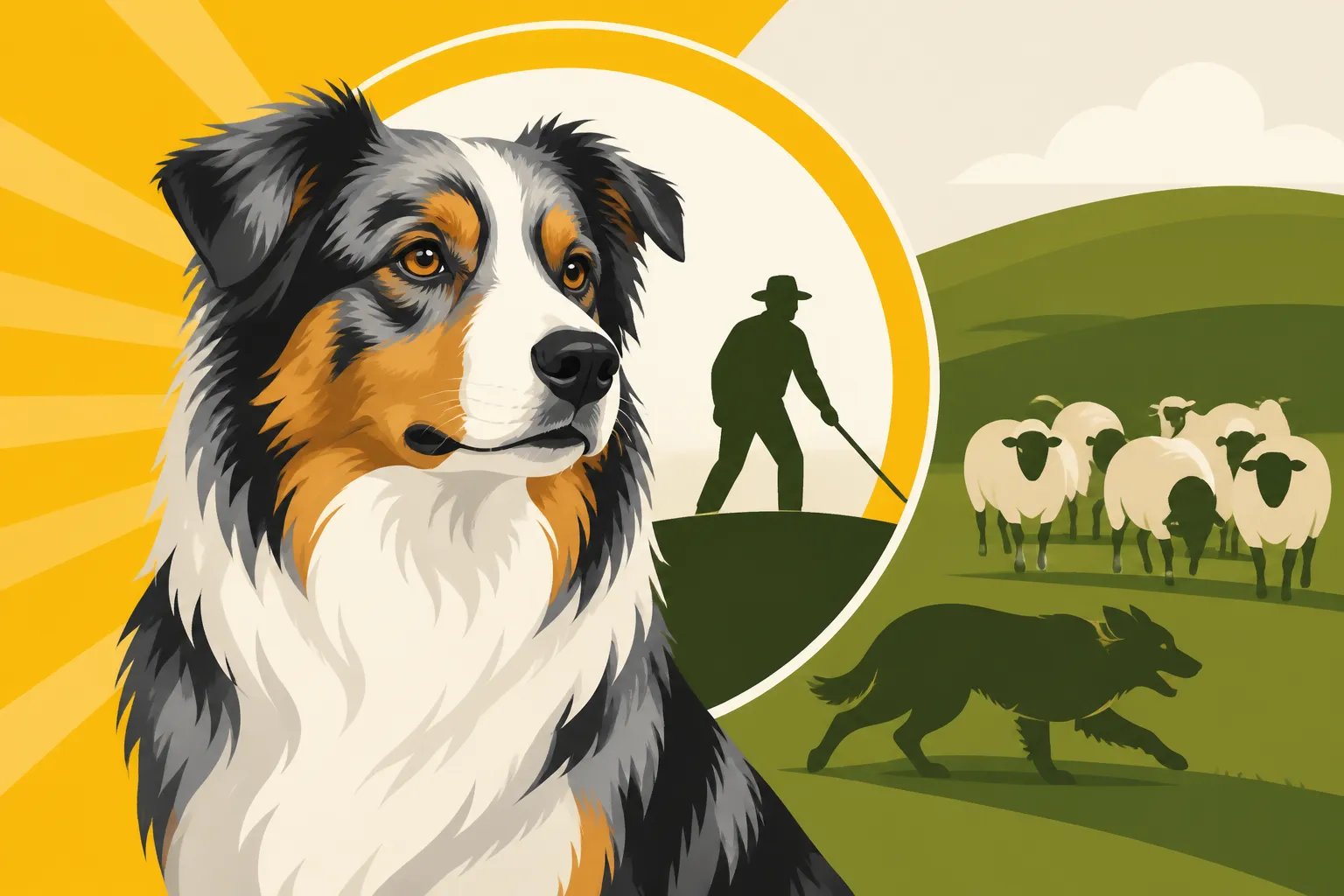
The Australian Shepherd, despite its name, is unequivocally an American creation, developed right here in the American West. Its lineage traces back to the dogs brought over by Basque shepherds who emigrated from Europe, particularly the Pyrenees region, to America in the 1800s, often stopping in Australia with their sheep flocks on the way. These original working dogs, likely a mix of various European herding breeds, were refined and developed in the ranches and farms of California, Colorado, and other western states.
These were not pampered pets, but essential tools for survival on the range. The American West was a demanding environment, and shepherds and ranchers needed intelligent, agile, and resilient dogs that could manage diverse livestock—from sheep and cattle to goats and even poultry—in challenging terrains and weather conditions. The Australian Shepherd, as we know it today, was selectively bred for these precise qualities: a strong herding instinct, keen intelligence, unwavering loyalty, and the stamina to work all day. They learned to navigate vast open spaces, outsmart stubborn livestock, and endure long hours under the sun or in the snow. The Basque Shepherds Behind the Australian Shepherd explores this foundational history in more detail.
For generations, these dogs were the unsung heroes of countless ranches. They moved flocks with precision, retrieved strays from brush, and guarded their charges with a quiet intensity. Their ability to read livestock, anticipate movement, and respond instantly to a handler's subtle cues was paramount. This intense focus on working ability, rather than appearance, defined the early development of the Australian Shepherd. It was a breed built for a job, and its reputation spread through word of mouth among working stockmen who valued capability above all else.
Independent Development and the ASCA's Role
For many decades, the Australian Shepherd existed and thrived outside the formal kennel club structures that typically govern purebred dogs. Its development was organic, driven by the needs of working ranchers and their appreciation for a truly exceptional herding dog. There wasn't a strong push for formal recognition until much later, as enthusiasts began to coalesce and realize the importance of preserving the breed's unique characteristics.
The primary organization dedicated to the Australian Shepherd was, and still is, the Australian Shepherd Club of America (ASCA). Established in 1957, ASCA was founded by breeders and owners who wanted to maintain the integrity of the working Australian Shepherd. Their focus was heavily on performance, herding ability, and health, creating a registry and a standard that prioritized what made an Aussie a great working dog. They offered herding trials, obedience competitions, and championed the breed's natural abilities. For many long-time Aussie owners, ASCA was the authority, and the thought of joining a larger, more show-oriented registry like the AKC was met with significant apprehension. They worried about losing the essence of the working dog, fearing that a focus on conformation (looks) would dilute the strong working drives that defined the breed. You can learn more about this philosophy in The ASCA Australian Shepherd Standard.
This independent spirit meant that Australian Shepherds had a thriving community and competitive outlets long before the AKC entered the picture. Owners seeking reliable gear for their working Aussies, from durable leashes to robust toys that could withstand a herding dog's enthusiasm, often turned to specialty suppliers or online retailers. Many still rely on established brands found on sites like Chewy for all their daily needs, trusting that these products are designed with active, intelligent dogs in mind. The community was tight-knit, fiercely loyal to their breed, and proud of their self-made heritage.
The Journey to AKC Herding Group Status
The road to AKC recognition for the Australian Shepherd was a lengthy and, at times, contentious one. It wasn't just a matter of submitting paperwork; it involved years of careful planning, demonstrating breed consistency, and ultimately, a vote of confidence from the AKC board. The process began in earnest as the breed's popularity grew beyond the working ranch, attracting more companion and performance dog owners who desired the opportunities that AKC recognition could offer, such as participation in a wider range of competitive events and increased public awareness.
Meeting the AKC's Requirements
For any breed to gain full AKC recognition, it must demonstrate a substantial and sustained population, a consistent breed standard, and a national breed club willing to oversee its development within the AKC framework. The Australian Shepherd had all of these, thanks in large part to the dedicated efforts of organizations like ASCA and later, the United States Australian Shepherd Association (USASA), which was formed specifically to pursue AKC recognition. USASA worked tirelessly to ensure that the breed's historical temperament, appearance, and working characteristics were accurately represented in the proposed AKC standard. This meant defining everything from eye color variations to coat texture and the iconic "Aussie gait." For instance, the natural bobtail, a distinctive trait in many Aussies, had to be clearly addressed within the standard to ensure consistency for judging in the show ring.
The AKC typically places breeds into one of seven groups based on their historical function. For the Australian Shepherd, its strong heritage as a livestock herder made the Herding Group the most logical and appropriate placement. This group is home to breeds like the Border Collie, German Shepherd Dog, and Shetland Sheepdog, all known for their intelligence, trainability, and powerful herding instincts. It was a natural fit that honored the breed's fundamental purpose. The Australian Shepherd in the AKC Herding Group goes into further detail about how this group designation reflects their capabilities.
The Vote and the Year: 1993
After years in the AKC's Miscellaneous Class (a provisional status for breeds working towards full recognition), the Australian Shepherd finally received full recognition and was admitted to the Herding Group in 1993. This was a landmark year for the breed, opening up new avenues for competition, public visibility, and formal acknowledgment within the purebred dog world.
The decision was not without its critics. Many traditional ASCA members and working line breeders harbored genuine fears that AKC recognition would shift the focus away from true working ability and towards purely aesthetic qualities favored in conformation shows. They worried that the very essence of the Australian Shepherd—its drive, intelligence, and herding prowess—might be diluted if breeders prioritized ribbon-winning looks over working capabilities. This concern is often explored in discussions around Ranch Bred Against Ring Bred Australian Shepherds. Despite these concerns, the move was ultimately seen by many as a necessary step for the breed's continued growth and recognition on a national and international stage.
Here's a simplified timeline of the Aussie's journey to AKC recognition:
| Year | Event | Significance |
|---|---|---|
| 1957 | Australian Shepherd Club of America (ASCA) established | First major club to preserve and promote the breed, focused on working ability. |
| 1970s-80s | Growing popularity, calls for broader recognition | Increased interest in the breed beyond working ranches. |
| 11/1/1990 | Entered AKC Miscellaneous Class | Provisional step towards full recognition, allowing exhibition but no points. |
| 1/1/1993 | Full AKC Recognition and Herding Group Admission | Official acknowledgment of the breed's heritage and capabilities. |
The Impact of AKC Herding Group Status
Entering the AKC Herding Group in 1993 undeniably brought significant changes and opportunities for the Australian Shepherd. It propelled the breed into the mainstream spotlight, increasing its visibility and popularity exponentially. This newfound recognition meant more people learned about Aussies, leading to a surge in ownership and participation in various dog sports.
Increased Visibility and Popularity
Before 1993, finding an Australian Shepherd often meant connecting with a working rancher or a dedicated ASCA breeder. After AKC recognition, the breed became much more accessible. Show rings across the country featured Aussies, leading to greater public exposure. This visibility spurred interest from families looking for active, intelligent companions, and from individuals eager to participate in dog sports like agility, obedience, and rally, where Aussies often excel. This shift meant that more people were going to places like Chewy to find everything from puppy starter kits to specialized training equipment for their new Australian Shepherds.
This surge in popularity also brought challenges. With increased demand, unfortunately, came less scrupulous breeders who prioritized profit over the breed's health and temperament. This led to a greater need for education among prospective owners about finding responsible breeders who still focused on health clearances and true Aussie temperament, regardless of whether their focus was on show or working lines.
Opportunities in Dog Sports and Conformation
For those interested in dog sports, AKC recognition was a huge boon. Aussies could now compete for prestigious AKC titles in a myriad of disciplines. Their natural athleticism, intelligence, and eagerness to please made them formidable competitors. This opened up new avenues for owners to bond with their dogs and showcase their incredible abilities. Whether it was flying over agility jumps, precisely executing obedience commands, or demonstrating their innate herding skills in AKC herding trials, Aussies proved they could do it all. Australian Shepherd Agility and Disc Sports is a testament to their versatility.
Conformation shows, which judge dogs against the breed standard, also became a prominent outlet for many Aussie enthusiasts. While some breeders worried about a shift away from working traits, many others worked diligently to breed beautiful dogs that also retained strong working instincts and sound temperaments. The AKC breed standard for the Australian Shepherd thoughtfully balances both form and function, aiming to describe a dog that is both aesthetically pleasing and capable of performing its historical duties.
Ongoing Discussions and Preservation
Even today, the conversation about the balance between working traits and show aesthetics continues within the Australian Shepherd community. Many dedicated breeders continue to prioritize herding ability and genetic health above all else, often participating in both ASCA and AKC events to prove the versatility of their dogs. The goal remains the same for most: to preserve the intelligent, loyal, and capable Australian Shepherd that was first developed on American ranches.
For anyone bringing an Aussie into their home, whether from a working line or a show line, understanding this rich history is crucial. It explains why your Australian Shepherd has such strong instincts, why they are so smart, and why they thrive when given a job. It helps you appreciate the journey this incredible breed has taken, from the dusty fields of the American West to a beloved place in homes and competitive arenas across the globe. And knowing this history helps us all ensure that the Australian Shepherd continues to be celebrated for the magnificent herding dog it truly is.
Disclaimer
This article is for general informational purposes only and does not constitute professional advice. Laws, prices and regulations vary by location and change over time. Consult a qualified professional for guidance on your specific situation.