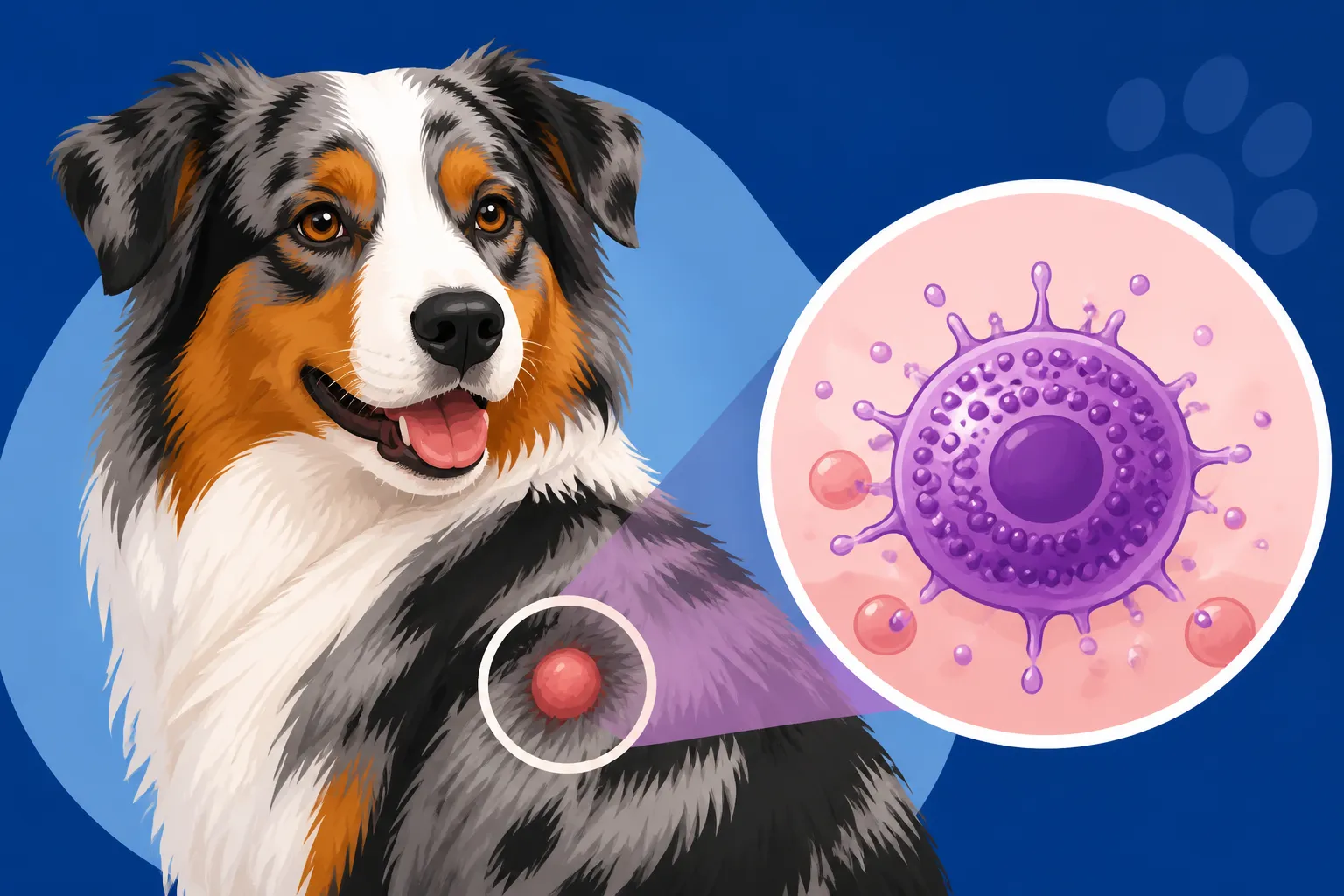
Mast Cell Tumors Under an Aussie Coat
Finding a lump on your beloved Australian Shepherd is one of those moments that can make your heart sink. We've all been there, running our hands over that gorgeous double coat, only to discover something that wasn't there before. It's instantly alarming, and for good reason – mast cell tumors are unfortunately common in our Aussies. This guide is here to walk you through what these tumors are, how to recognize them, what the diagnostic and treatment journey looks like, and how you can best support your furry family member through it all.
Understanding Mast Cell Tumors in Australian Shepherds
Mast cell tumors (MCTs) are one of the most frequently diagnosed skin tumors in dogs, and Australian Shepherds, along with several other breeds, seem to have a higher predisposition. These aren't just any lumps; they originate from mast cells, which are a specific type of immune cell. When these cells start to grow uncontrollably, they form a tumor. The tricky part about MCTs is how varied they can be in their appearance and behavior – some are benign and easily treatable, while others can be aggressive and spread rapidly. Understanding this spectrum is crucial for Aussie parents.
What Exactly is a Mast Cell?
To truly grasp mast cell tumors, it helps to understand what a mast cell is in the first place. Imagine your dog's immune system as a highly organized army, and mast cells are a specialized unit within it, acting like first responders to perceived threats. These cells are found throughout the body, but they're particularly concentrated in areas that interact with the outside world, like the skin, respiratory tract, and gastrointestinal tract. Their primary job is to release powerful chemicals like histamine, heparin, and proteases when triggered by allergens, parasites, or injury. This release causes inflammation, which is usually a protective mechanism, bringing blood flow and other immune cells to an affected area. For instance, when your Aussie gets a bee sting, the immediate swelling, redness, and itchiness are largely due to mast cells dumping their contents.
However, in a mast cell tumor, these cells are essentially "stuck on," growing without control and often releasing their contents without a proper trigger. This constant, unregulated release of histamine can lead to a host of problems, not just at the tumor site itself but potentially throughout the body. You might see a tumor suddenly swell, become red, or appear itchy, a phenomenon sometimes called Darier's sign, which is directly related to these cells degranulating. This erratic behavior is why sometimes a small, innocuous-looking lump can suddenly become a problem, creating local irritation or even systemic issues if the tumor is internal or highly aggressive. The very nature of these cells, designed to react strongly, makes their cancerous proliferation particularly challenging to manage.
Why Australian Shepherds are at Higher Risk
It's a frustrating reality that some breeds just draw a shorter straw when it comes to certain health conditions, and unfortunately, Australian Shepherds appear to be one of the breeds with an elevated risk for developing mast cell tumors. While research is ongoing to pinpoint the exact genetic markers, anecdotal evidence and veterinary observations consistently show a higher incidence in Aussies compared to the general canine population. This isn't to say every Aussie will get one, but it means that as an Aussie parent, you need to be particularly vigilant.
Breeds like Boxers, Boston Terriers, Bulldogs, Pugs, and Golden Retrievers are often mentioned alongside Aussies as being predisposed. The exact genetic mechanism isn't fully understood, but it's believed there are inherited factors that make some dogs' mast cells more prone to uncontrolled growth or less effective at self-regulating. This genetic component underscores the importance of responsible breeding practices and why many owners are so keen on knowing their dog's full genetic background, even if a direct "mast cell tumor gene" isn't yet part of a standard genetic panel. While we might not have a specific DNA test for mast cell tumor susceptibility right now, understanding your dog’s lineage can provide some clues. For general health insights, checking out resources like The Genetic Panel Every Australian Shepherd Needs can offer valuable perspective on inherited conditions. This elevated risk means that every time you're giving your Aussie a good scratch or a thorough grooming session, you should also be performing a careful "lump check."
Spotting the Signs and Getting a Diagnosis
One of the biggest challenges with mast cell tumors is their notorious ability to mimic other, less serious skin conditions. They are often called "the great imitator" in veterinary oncology because they can appear in so many different forms. This is why vigilance is your superpower as an Aussie owner. Given how fluffy and well-insulated our Australian Shepherds are, a small, subtle lump can easily go unnoticed until it's grown to a more significant size. Regular, hands-on checks are paramount. If you ever find anything suspicious, your immediate next step should always be a visit to your veterinarian for a professional assessment.
What to Look For Under That Gorgeous Coat
The appearance of a mast cell tumor can be incredibly varied, which is why they are often tricky to identify without veterinary expertise. On the skin, they might manifest as a raised bump, a wart-like growth, a soft lump under the skin, or even a red, ulcerated sore that doesn't seem to heal. Some can be firm and well-defined, while others feel squishy and indistinct. They can be small, like a pea, or grow quite large. Sometimes, they even fluctuate in size, seemingly getting bigger and then shrinking, which can be misleading and delay diagnosis. This "waxing and waning" often happens due to the mast cells degranulating and releasing histamine, causing temporary swelling.
While most commonly found on the skin, especially on the trunk and limbs, mast cell tumors can also occur internally. They might develop in the spleen, lymph nodes, liver, or even the bone marrow. These internal tumors are far more insidious because you won't see them. Signs of internal MCTs can be vague and non-specific, such as lethargy, loss of appetite, vomiting, diarrhea, or abdominal discomfort. If you're routinely grooming your Australian Shepherd, perhaps tackling their Twice-Yearly Coat Blow in an Australian Shepherd, that's a perfect time to do a thorough head-to-tail check, feeling every inch for any new or changing lumps. Pay particular attention to areas like the armpits, groin, and paw pads, as well as checking the face and around the mouth. Remember, any new lump or bump, no matter how small or innocent-looking, warrants a vet visit.
The Diagnostic Journey: From Fine Needle Aspirate to Biopsy
When you find a suspicious lump on your Aussie, the first step your vet will likely take is a fine needle aspirate (FNA). This is a quick, minimally invasive procedure where a small needle is inserted into the lump, and a few cells are suctioned out into a syringe. These cells are then spread onto a slide and examined under a microscope. For mast cell tumors, the mast cells often have a characteristic appearance, making an FNA a very useful initial screening tool. It can often provide a presumptive diagnosis quickly, sometimes even during your initial visit. It's relatively painless and usually doesn't even require sedation, making it a low-stress option for your dog.
However, an FNA isn't always definitive. While it can often confirm the presence of mast cells, it can't reliably tell you the grade of the tumor, which is absolutely critical for determining prognosis and treatment. For a definitive diagnosis and accurate grading, an excisional biopsy is typically necessary. This involves surgically removing the entire mass (or a portion of it if it's too large) and sending it to a specialized veterinary pathologist. The pathologist examines the tissue structure, cell division rate, and invasiveness to assign a grade (Grade I, II, or III). This grading system is paramount, as it directly correlates with how aggressive the tumor is and its likelihood of spreading. In addition to the biopsy, your vet might recommend further staging tests, especially for higher-grade tumors, which could include bloodwork, urinalysis, abdominal ultrasound to check organs like the spleen and liver, and aspirates of regional lymph nodes to see if the cancer has spread. This comprehensive approach ensures the most accurate picture for guiding treatment decisions.
Treatment Options and Prognosis
Receiving a diagnosis of a mast cell tumor can feel overwhelming, but thankfully, there are several effective treatment options available, and the prognosis often depends heavily on the tumor's grade and how early it was caught. Your veterinary oncologist will work with you to develop a tailored treatment plan, balancing efficacy with your Australian Shepherd's quality of life. The approach can range from straightforward surgical removal to a combination of therapies, especially for more aggressive forms.
Surgical Removal: The First Line of Defense
For many mast cell tumors, especially those that are superficial, small, and low-grade (Grade I or II without evidence of spread), surgical removal is often the primary and most effective treatment. The key to successful surgery for MCTs lies in achieving "wide and deep margins." This means the surgeon doesn't just cut out the visible tumor; they remove a significant amount of healthy-looking tissue surrounding and beneath it. Mast cell tumors have a notorious habit of sending out microscopic "tentacles" into the surrounding tissue that aren't visible to the naked eye. If these microscopic extensions are left behind, the tumor is highly likely to recur.
The extent of the surgical margins required can vary, and it often means removing more tissue than you might expect, which can sometimes lead to reconstructive challenges, particularly if the tumor is in a high-tension area like a limb, eyelid, or muzzle. While most of these surgeries are routine for experienced veterinary surgeons, the potential need for reconstructive surgery or skin grafts can complicate things. In cases where the tumor is in a difficult location and wide margins aren't surgically feasible, or if the pathology report indicates incomplete margins after the initial surgery, your vet will discuss additional therapies, such as radiation or chemotherapy, to target any remaining cancerous cells. Understanding these nuances is vital because the completeness of the surgical excision directly impacts your Aussie's long-term outcome.
Beyond Surgery: Chemo, Radiation, and Targeted Therapies
While surgery is often the cornerstone of mast cell tumor treatment, it's not always enough, especially for higher-grade tumors, those that have already spread, or those where complete surgical removal isn't possible. In these situations, your vet may recommend adjuvant therapies, meaning treatments given in addition to surgery, to improve the prognosis and prevent recurrence or metastasis.
Chemotherapy is one such option. It's often considered for Grade II tumors with aggressive features, Grade III tumors, or any tumor that has spread to lymph nodes or internal organs. Unlike human chemotherapy, which can be extremely debilitating, veterinary chemotherapy regimens are generally designed to be less harsh, aiming to maintain a good quality of life for your Aussie while targeting cancer cells. Side effects can occur, but they are often manageable, usually involving mild gastrointestinal upset or temporary lethargy. Another powerful tool is radiation therapy. This is particularly effective for incompletely excised tumors where further surgery isn't an option. Radiation uses high-energy beams to destroy cancer cells, either shrinking the tumor or eradicating any microscopic disease left behind. This typically involves multiple sessions under anesthesia. Lastly, we've seen exciting advancements in targeted therapies, such as tyrosine kinase inhibitors like Palladia (toceranib) and Kinavet (masitinib). These oral medications work by blocking specific signaling pathways that mast cell tumors use to grow and spread. They are often used for inoperable tumors or as maintenance therapy after other treatments. Each of these advanced therapies comes with its own set of considerations, and your veterinary oncologist will guide you through the pros and cons, ensuring you make the most informed decision for your Australian Shepherd.
Prognosis and Living with a Mast Cell Tumor Diagnosis
The prognosis for an Australian Shepherd diagnosed with a mast cell tumor is highly variable and depends on several key factors, primarily the tumor's histological grade, its location, and whether it has spread. This is why getting a definitive biopsy and accurate staging is so incredibly important.
Generally speaking, Grade I tumors, which are often well-differentiated and confined to the skin, have the best prognosis. With complete surgical removal, many dogs with Grade I tumors can be cured and live long, healthy lives. Grade II tumors are a mixed bag; some behave more like Grade I, while others are more aggressive. The pathologist will often look for additional "mitotic index" (cell division rate) and other criteria to refine the prognosis within this grade. Grade III tumors are the most aggressive. These are typically poorly differentiated, prone to local recurrence, and have a high likelihood of spreading (metastasizing) to regional lymph nodes, the spleen, liver, and even bone marrow. For these, a combination of surgery and aggressive adjuvant therapy is almost always recommended, and the long-term prognosis is more guarded.
The tumor's location also plays a significant role. Tumors on mucocutaneous junctions (e.g., eyelids, lips, anus), nail beds, or internal organs tend to be more aggressive and carry a poorer prognosis than those on the trunk or limbs. Even after successful treatment, regular monitoring is crucial. This means frequent vet check-ups, feeling for new lumps, and being vigilant for any changes in your Aussie's health. Living with an Aussie who has had a mast cell tumor diagnosis can be emotionally challenging, as the worry of recurrence or new tumors is always present. This is where a strong support system with your vet and, importantly, good financial planning can make a huge difference. Treatments for mast cell tumors, especially if they involve surgery, chemotherapy, or radiation, can quickly add up. Costs can range from a few hundred dollars for a simple excision to several thousands for complex cases involving specialists and multiple rounds of therapy. Many Aussie parents find immense peace of mind in pet insurance plans, such as those offered by Healthy Paws. Having a policy in place before a diagnosis can significantly alleviate the financial burden, allowing you to focus on getting your Australian Shepherd the best possible care without having to choose between your dog's health and your budget. This kind of financial safety net can cover a large portion of those unexpected Aussie Vet Bills Between $15,000 and $40,000, making advanced treatments a realistic option.
| Tumor Grade | Characteristics | Typical Prognosis (with adequate treatment) | Treatment Approach |
|---|---|---|---|
| Grade I | Well-differentiated, confined to skin, low mitotic rate. | Good to excellent. Often curable with complete surgical removal. | Surgical excision with wide margins. |
| Grade II | Intermediate differentiation, can be locally invasive, variable mitotic rate. | Fair to good. Surgical excision; may require adjuvant therapy (chemo/radiation) if margins are incomplete or aggressive features are present. | Surgical excision with wide margins, +/- chemotherapy, +/- radiation. |
| Grade III | Poorly differentiated, highly invasive, high mitotic rate, high metastatic potential. | Guarded to poor. High risk of recurrence and metastasis. | Aggressive multimodal therapy (surgery, chemotherapy, radiation, targeted drugs). |
Prevention and Ongoing Care
While we can't completely prevent mast cell tumors in Australian Shepherds due to their genetic predisposition, there are certainly steps you can take to be proactive in detection and to support your dog's overall health. Early detection is truly the most powerful tool in managing these tumors effectively. As an Aussie owner, you become the primary caregiver responsible for routine health checks that go beyond just feeding and exercise.
The Role of Vigilance: Your Best Prevention Tool
Because mast cell tumors can appear in so many forms and locations, the single most effective "prevention" strategy is relentless vigilance. You need to become intimately familiar with every inch of your Australian Shepherd's skin. This isn't just a casual pat; it's a deliberate, systematic full-body check that you should aim to do at least once a month, if not more frequently. Think of it as a skin exam that's part of your regular grooming routine, perhaps when you're doing your Brushing an Australian Shepherd Through Coat Blow or after a bath.
Start at the head and work your way down to the tail, paying close attention to areas that might be easily overlooked, like between the toes, in the armpits, along the belly, and under the tail. Use your fingertips to gently feel for any lumps, bumps, scabs, or changes in skin texture. Note anything new, any growth that has changed in size, shape, or color, or any area that seems itchy or inflamed. If you find something, even if it seems small or insignificant, make a note of its size and location, and schedule a vet appointment. Don't fall into the trap of "watching it" for too long; early diagnosis can make a monumental difference in treatment success and prognosis. Remember, a quick fine needle aspirate can often rule out or confirm a mast cell tumor, giving you peace of mind or an early head start on treatment.
Supporting Your Aussie's Health Post-Diagnosis
Once your Australian Shepherd has been diagnosed with a mast cell tumor, especially if it was a higher grade or required extensive treatment, ongoing care becomes a lifelong commitment. Beyond the specific medical treatments, there are holistic approaches you can integrate, always in consultation with your veterinarian or veterinary oncologist, to support your dog's overall well-being and potentially reduce inflammation.
Dietary considerations are a good starting point. Many vets recommend an anti-inflammatory diet, often one rich in omega-3 fatty acids and antioxidants, while avoiding excessive carbohydrates or highly processed ingredients. This isn't a cure, but a healthy, balanced diet can support the immune system and reduce systemic inflammation, which is always a good thing for a dog fighting cancer. Supplements like omega-3 fatty acids (fish oil), turmeric (a natural anti-inflammatory), and probiotics (for gut health, especially if your dog is on medications) might be discussed. Always get your vet's approval before adding any supplements, as some can interact with medications. For Aussies prone to skin sensitivities or Australian Shepherd Skin, Coat and Allergy Problems, managing these underlying issues can also be beneficial, as chronic inflammation can sometimes be a trigger or exacerbate existing conditions. Regular veterinary check-ups are non-negotiable for ongoing monitoring. Your vet will want to keep a close eye out for new lumps, check incision sites, and possibly perform periodic blood tests or imaging. Pet insurance, like the plans offered by Healthy Paws, can be incredibly valuable here, as it can help cover the costs of these routine follow-ups, re-checks, and any necessary diagnostic tests or medications that become part of your Aussie's long-term care plan. Having that safety net means you can pursue every recommendation without the added stress of crushing bills, ensuring your furry friend gets consistent, high-quality care throughout their journey.
Disclaimer
This article is for general informational purposes only and does not constitute professional advice. Laws, prices and regulations vary by location and change over time. Consult a qualified professional for guidance on your specific situation.