The Lymph Nodes to Check on an Aussie
It can be incredibly unsettling to notice a lump or bump on your beloved Australian Shepherd, especially when their beautiful, dense coat often hides things until they’re quite prominent. As attentive as we try to be, it’s easy to miss subtle changes, and that anxiety about what it might mean can be overwhelming. This guide is all about empowering you to perform routine checks on your Aussie's lymph nodes, helping you learn what’s normal, what’s not, and when it’s time to reach out to your veterinarian for peace of mind or further investigation.
The Aussie's Lymphatic System and Its Role
Before we dive into how to check them, let's take a moment to understand what lymph nodes actually are and why they're so important for your Australian Shepherd's overall health. Think of them as tiny, natural checkpoints in your dog's immune system, constantly working behind the scenes.
What Exactly Are Lymph Nodes?
Lymph nodes are small, bean-shaped glands that are part of your dog's lymphatic system, a crucial component of their immune defense. They’re scattered throughout the body, connected by a network of vessels that carry lymph fluid. This clear fluid, derived from tissue fluids, contains white blood cells, especially lymphocytes, which are vital for fighting off infections and diseases.
When your Aussie's body encounters an invader – be it bacteria, viruses, or even abnormal cells like those found in cancer – these invaders get filtered through the lymph nodes. The nodes act as filtering stations, trapping harmful substances. Once trapped, the lymphocytes inside the nodes go to work, multiplying rapidly to mount an immune response. This intense activity is precisely why lymph nodes can swell when there's trouble brewing in the body. They're literally working overtime to protect your dog.
Why Lymph Nodes are Critical Health Indicators for Your Aussie
For an Australian Shepherd parent, understanding the lymph nodes is like having an early warning system. Because these nodes are so integral to the immune system, any significant change in their size, shape, or texture can be a red flag. Swollen lymph nodes often point to underlying health issues, ranging from minor infections to more serious conditions such as autoimmune diseases or even various forms of cancer, like lymphoma or metastatic carcinomas.
Catching these changes early can make a world of difference in prognosis and treatment options. If you discover a swollen lymph node, it’s not necessarily a death sentence, but it’s a clear signal that a veterinary check-up is in order. It allows your vet to investigate promptly, potentially leading to earlier diagnosis and intervention, which can be critical for conditions such as Australian Shepherd Cancer Risks With Age. Keeping an eye on your Aussie's lymph nodes is a proactive step in managing their health and ensuring they live their happiest, longest life.
Pinpointing Your Aussie's Key Lymph Node Locations
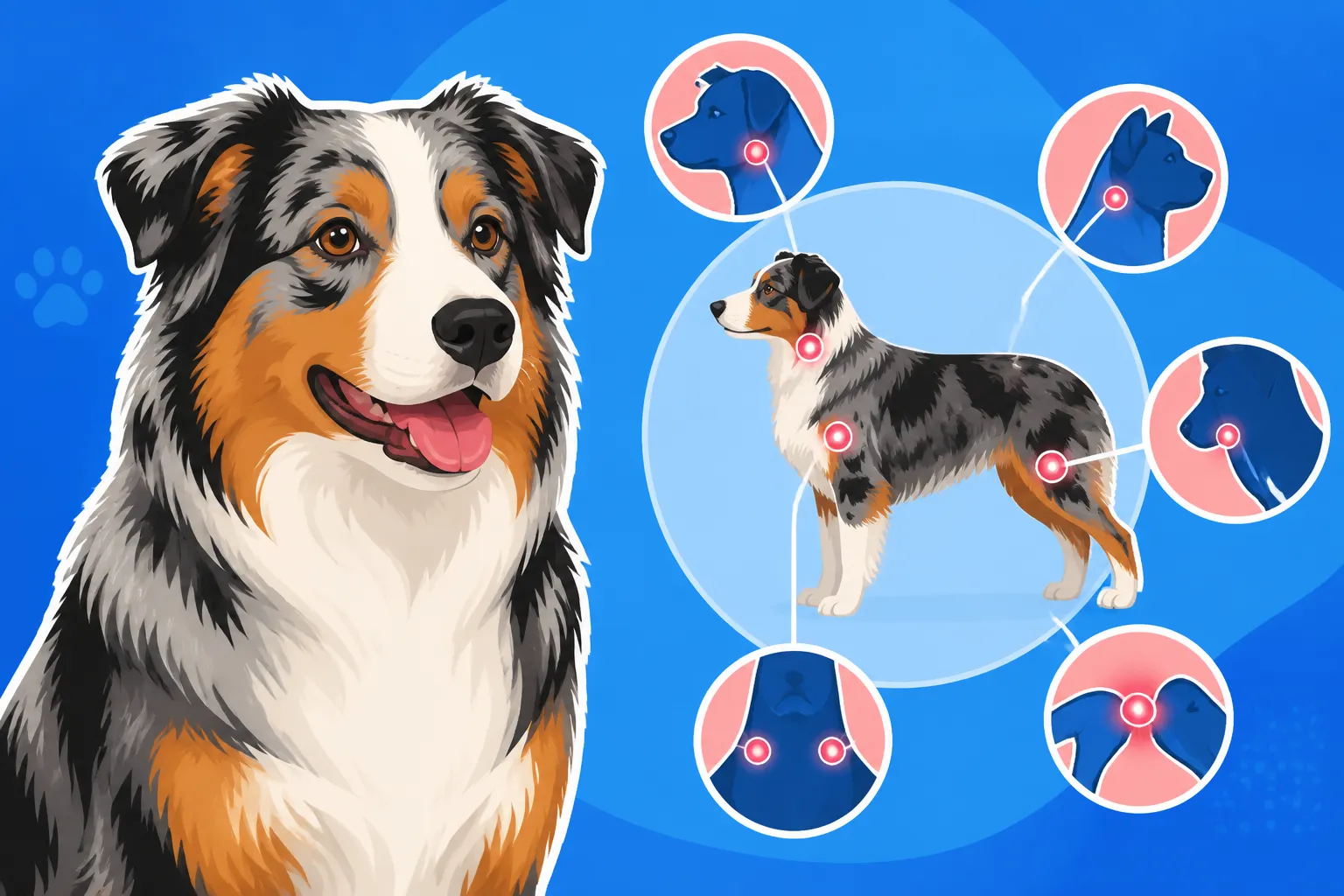
Knowing where to feel is half the battle, especially with an Australian Shepherd's thick coat. There are several superficial lymph node groups that are relatively easy to palpate (feel) if you know exactly where to look. Getting familiar with these spots when your Aussie is healthy will make it much easier to detect any changes down the road.
Feeling Under the Jaw: The Submandibular Nodes
These are often the easiest lymph nodes to find and are a great starting point for your routine checks. The submandibular lymph nodes are located on either side of your Aussie's jaw, tucked in under the chin.
To find them, gently cup your dog's jaw with one hand, feeling along the underside of their chin where the jawbone meets the neck. You should feel two small, oval-shaped structures, one on each side. In a healthy Australian Shepherd, these nodes should be small, soft, and movable, roughly the size of a small pea or a kidney bean, depending on your dog's size. They can feel a bit like a small, smooth pebble. If your Aussie has recently had a dental cleaning or a minor infection in their mouth or throat, these might feel slightly larger than usual but should still be soft and not painful. Any firm, fixed, or rapidly growing lumps in this area warrant immediate veterinary attention.
Ahead of the Shoulders: The Prescapular Nodes
The prescapular lymph nodes are situated in front of your Aussie’s shoulders, just above the point where their shoulder blade meets their chest. These can be a little trickier to isolate, especially on a muscular, active Australian Shepherd.
To locate them, stand beside your Aussie and place your fingers flat on their side, just in front of their shoulder joint. Gently slide your fingers down and forward towards the chest, applying mild pressure. You're looking for a small, oval structure that might roll slightly under your fingertips. Again, in a healthy dog, these should be small, symmetrical, and soft. If you’re checking a younger Aussie during one of their Australian Shepherd Puppy Health Checks at Eight Weeks, your vet will also be palpating these during their examination.
Behind the Knees: The Popliteal Nodes
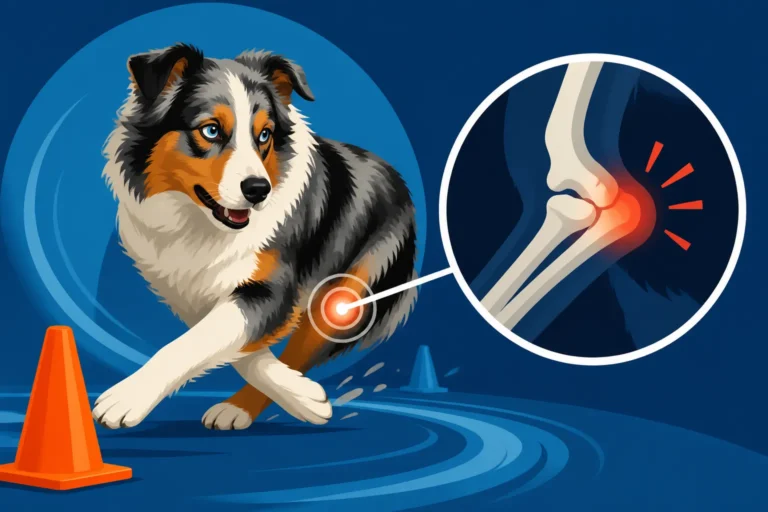
Moving to the hindquarters, the popliteal lymph nodes are located behind your Aussie’s stifle joint, which is essentially their knee. These are often easier to feel when your dog is lying down or relaxed.
To check these, gently bend your Aussie’s back leg slightly. Then, run your fingers along the back of the leg, just above the hock (ankle) and below the hip. You’ll be feeling in the soft tissue behind the knee joint itself, in the triangular hollow. These nodes, like the others, should be small and soft when healthy. Enlargement here could indicate issues in the lower leg or paw, or a more systemic problem. It's a good spot to check for any odd swelling after a long hike where your Aussie might have picked up a small cut or bug bite on their paw, or perhaps if they're experiencing some stiffness due to Australian Shepherd Arthritis After Years of Work.
Other Nodes: Axillary and Inguinal
While the submandibular, prescapular, and popliteal nodes are the most commonly checked and easiest to palpate, your Aussie also has axillary (armpit) and inguinal (groin) lymph nodes. These are generally harder to feel unless they are significantly enlarged because they are deeper set or surrounded by more muscle and fat.
- Axillary (Armpit) Nodes: To check these, gently lift your Aussie's front leg and feel deep within their armpit. You might feel some soft tissue and muscle, but a healthy lymph node here is usually not palpable.
- Inguinal (Groin) Nodes: These are located in the folds of skin on either side of your Aussie's groin area, where the hind leg meets the abdomen. Again, a healthy node here is often difficult to detect.
If you do manage to feel these axillary or inguinal nodes, and they feel distinctly swollen or firm, it's definitely a reason to contact your vet. For conditions like Mast Cell Tumors Under an Aussie Coat, these deeper nodes can sometimes be involved, though usually, other signs would also be present.
A Systematic Approach to Lymph Node Checks
Making lymph node checks a regular part of your grooming or petting routine for your Australian Shepherd is so important. Consistency helps you learn what’s normal for your dog, and that familiarity is key to spotting abnormalities early.
Establishing a Regular Routine
The best way to get good at checking your Aussie's lymph nodes is to do it often, even when you don't suspect a problem. I suggest doing a quick check once a week, perhaps during your regular brushing session or while enjoying some quiet cuddle time on the couch. This isn't just about feeling for lumps; it's about building a picture of what your dog's normal feels like.
Pick a consistent time and place. Maybe it's Sunday mornings, or Tuesday evenings. The more you do it, the more familiar you'll become with the subtle nuances of your dog's body. If you have an older Aussie, these checks become even more crucial as they enter their senior years, tying into broader Senior Australian Shepherd Care After Ten considerations. Regular checks ensure you’re being proactive, rather than reactive, to potential health concerns.
The Gentle Art of Palpation
Palpation simply means feeling with your hands. For lymph nodes, you need a gentle, methodical approach. Use the pads of your fingers, not just your fingertips, as this gives you a broader and more sensitive touch.
- Start with your Aussie relaxed: This is critical. A tense dog will make it harder to feel anything accurately. A nice belly rub or a few treats can help.
- Use light, circular motions: Don't press too hard initially. You're trying to feel for things under the skin. Use small, circular movements as you explore each area.
- Compare sides: Always check both the left and right side of your Aussie's body for each lymph node group. Symmetry is a big indicator of health. If one side feels different from the other, that's a clue.
- Be thorough: Don't rush through it. Take your time to really explore each designated area.
What "Normal" Really Feels Like
This is the golden rule: Normal lymph nodes are typically small, soft, movable, and non-painful.
They should feel like:
- Submandibular: A small, soft bean or grape, easily moved under the skin.
- Prescapular: A tiny, soft bead that might roll slightly under your fingers.
- Popliteal: Similar to the prescapular, small and supple.
- Axillary/Inguinal: Usually not palpable at all, or just barely noticeable as soft tissue.
The exact size can vary slightly based on your Aussie’s individual body size and build, but the key is that they should not feel hard, fixed, or greatly enlarged. If you're unsure, or if your gut tells you something feels off, trust that instinct. It's always better to over-communicate with your vet than to miss something important. Remember, just because you find something, doesn't mean it's serious, but it does mean it's worth checking out professionally.
Spotting Trouble: Recognizing Abnormalities
Finding an enlarged lymph node can send any dog owner into a panic, but it's crucial to approach it calmly. Not all swollen lymph nodes indicate something dire, but they always warrant investigation. Your job as an Aussie parent is to identify the change, and your vet's job is to figure out why.
What Changes in Size and Texture Mean
The most obvious sign of an issue is a noticeable increase in size. A lymph node that feels significantly larger than a normal pea or bean, or larger than its counterpart on the opposite side, is a cause for concern.
Beyond size, pay attention to texture:
- Firm or Hard: Normal nodes are soft and pliable. A node that feels hard or rock-like could be concerning.
- Fixed vs. Movable: Healthy nodes should move freely under the skin. If a node feels "stuck" or adhered to the surrounding tissue, this is abnormal.
- Irregular Shape: While generally oval, a node with an irregular or lumpy shape is also a red flag.
For example, if your Aussie has a minor skin infection, like a small hot spot hidden in their thick fur or a bug bite on their leg, the regional lymph nodes draining that area might become mildly and temporarily enlarged as they work to fight off the infection. This might feel a bit firmer but generally resolves as the infection clears. However, if the enlargement is significant, persists, or rapidly grows, it could point to more serious conditions like Australian Shepherd Autoimmune Disease or certain types of tumors. Many Australian Shepherd owners find that pet insurance, like plans from Healthy Paws, can be a lifesaver for unexpected diagnostic tests when something like this pops up.
Pain, Discomfort, and Other Red Flags
While palpable changes are key, don't overlook your Aussie's reactions. If palpating a lymph node causes them pain or discomfort – they flinch, whine, or pull away – this is another strong indicator of an issue. Inflammation or infection often leads to tenderness.
Beyond the nodes themselves, keep an eye out for other symptoms that might accompany enlarged lymph nodes:
- Lethargy or decreased energy levels: Your typically energetic Aussie seems unusually tired.
- Loss of appetite or weight loss: They're not eating with their usual enthusiasm, or you notice them getting thinner despite eating normally.
- Fever: Your dog feels warm to the touch, or you note a higher than normal temperature if you take it.
- Difficulty swallowing (if submandibular nodes are severely enlarged).
- Swelling in other parts of the body.
- Changes in breathing or coughing.
These systemic signs, especially when paired with enlarged lymph nodes, significantly increase the urgency of a vet visit. Early detection of issues that might require extensive diagnostics can be financially daunting, and having coverage from providers like Healthy Paws can alleviate some of that stress, allowing you to focus on your dog's health.
When to Pick Up the Phone for Your Vet
Okay, so you've found something that doesn't feel quite right. When do you call the vet? My general advice is: if you find anything you're unsure about, especially if it's new, rapidly growing, asymmetrical, hard, or causing pain, make that call.
Here's a quick guide:
| Lymph Node Status | Action Required | Reason |
|---|---|---|
| Small, soft, movable, painless | Routine checks, monitor | Likely normal, continue regular monitoring for changes. |
| Slightly enlarged, soft, movable, painless (resolving) | Monitor for a few days, especially if localized infection/injury | Could be reactive to minor local issue (e.g., bug bite, mild allergic reaction). Should reduce. |
| Significantly enlarged, firm, fixed, painful, or rapidly growing | Contact vet immediately | High suspicion of infection, inflammation, or serious conditions like cancer. Prompt diagnosis is key. |
| Enlarged, accompanied by lethargy, weight loss, fever | Emergency vet visit or urgent appointment | Suggests systemic illness. Do not delay. |
When you call, be prepared to describe what you've found (location, size, texture, whether it's painful) and any other symptoms your Aussie is showing. Your vet will likely want to perform a thorough physical exam, and potentially recommend tests such as bloodwork (which is important for Bloodwork Worth Running on a Senior Aussie), urine tests, or even a fine needle aspirate (FNA) or biopsy of the node to get a definitive diagnosis. This is where having robust pet insurance, potentially through Healthy Paws, can truly support you, covering significant portions of these diagnostic and treatment costs. The sooner you get answers, the sooner you can get your Aussie feeling better.
Disclaimer
This article is intended for informational purposes only and is not a substitute for professional veterinary advice, diagnosis, or treatment. Always seek the advice of your veterinarian or other qualified health provider with any questions you may have regarding a medical condition.