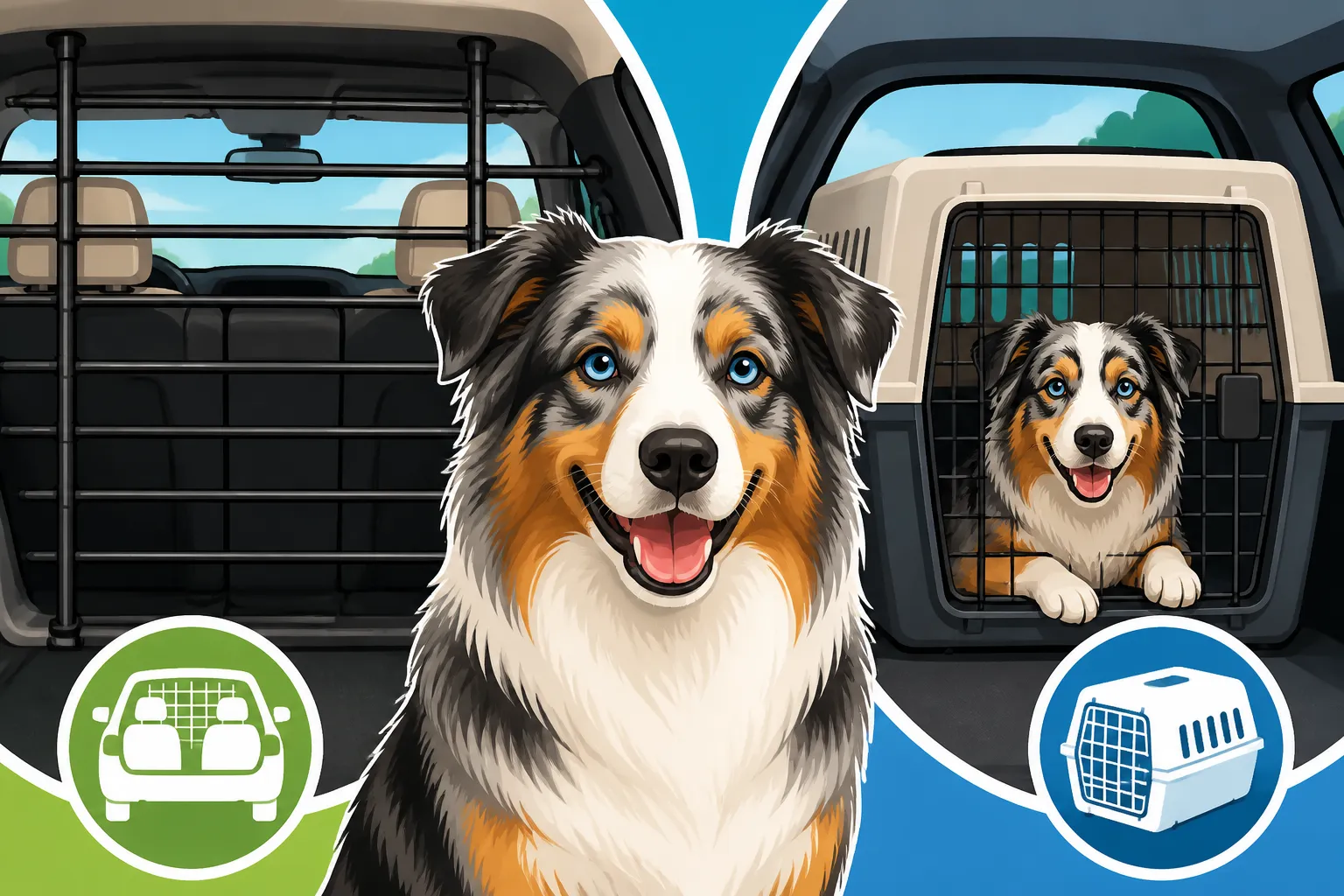
Australian Shepherd Car Barriers and Crates
Bringing your spirited Australian Shepherd along for a car ride, whether it's a quick trip to the vet or a cross-country adventure, often presents a unique set of challenges. Their innate herding drive and boundless curiosity can quickly turn a calm drive into a chaotic one, with them trying to "manage" traffic from the back seat or simply exploring every inch of the car. This guide will walk you through effective strategies for containing and securing your Aussie in the car, ensuring safety for everyone on board and reducing stress for both you and your furry co-pilot.
Why Secure Car Travel Isn't Optional for Your Australian Shepherd
It’s easy to think of a short trip as harmless, letting your Aussie ride shotgun or roam free in the back. But the truth is, an unrestrained dog in a vehicle is a serious safety hazard, not just for them but for you and other passengers. Australian Shepherds are intelligent, active dogs, and their natural instincts mean they often react strongly to external stimuli, making them prone to sudden movements and distractions in a moving car.
The Dangers of Unrestrained Aussies
Imagine driving down the highway and having to brake suddenly. An unrestrained Australian Shepherd, even a smaller one, can become a projectile, causing severe injury to themselves or to anyone in their path. Beyond the obvious impact, their movements can easily distract the driver, leading to accidents. They might try to jump into the front seat, block mirrors, or even interfere with the steering wheel. This isn't just a hypothetical concern; it's a very real risk that smart Aussie owners take seriously. Their tendency to bolt after movement means they can easily become a hazard if they spot something interesting outside the window. If your Aussie is prone to chasing cars, then preventing them from having any chance to influence your driving is paramount.
Even minor bumps can send an unsecured dog flying, leading to sprains, fractures, or worse. In a more significant accident, the outcome can be devastating. Beyond the physical trauma, the stress of such an event can lead to long-term behavioral issues or heightened anxiety around car travel. Preventing these incidents protects your beloved companion and saves you from the potentially heart-wrenching consequences and significant financial burden of unexpected vet visits. Nobody wants to face sudden emergency vet bills, and taking preventive measures is always the best approach.
Legalities and Insurance Implications of Unsecured Pets
While laws vary widely by state and even county, many places have regulations regarding the secure transport of animals in vehicles. Some might fine you for having a dog on your lap, others for allowing them to hang their head out the window if it obstructs your view, or if they are simply unrestrained. Ignoring these regulations can lead to hefty fines and, in the unfortunate event of an accident, could complicate insurance claims.
Consider a scenario where your Aussie, unrestrained, causes an accident by distracting you. Your insurance company might view this differently than if all passengers, including your dog, were properly secured. It’s always best to check your local Department of Motor Vehicles or state patrol website for specific laws in your area. Beyond legal obligations, there's the moral responsibility to ensure your dog's safety and the safety of everyone else on the road. Investing in proper restraint is a small price to pay for peace of mind, especially when considering that Australian Shepherd insurance at $35 to $55 a month can help cover many unexpected medical costs, but preventative safety is always better.
Exploring Car Barrier Options for Your Aussie
Car barriers are a popular choice for Aussie owners who want their dog to have more space than a crate but still be contained within a specific area of the vehicle, typically the cargo area or back seat. These barriers prevent your Australian Shepherd from jumping into the front, ensuring you can focus on driving without distractions.
Mesh and Fabric Barriers
Mesh and fabric barriers are generally the most affordable and easiest to install. They typically attach to headrests and form a flexible wall between the front and back seats. These are excellent for smaller Aussies or those with a calmer demeanor who primarily just need a visual deterrent to keep them from encroaching on the front cabin. They are lightweight, fold up easily for storage, and don't take up much space. Brands like Chewy offer a wide variety of these types of barriers.
However, for a determined or high-energy Australian Shepherd with a strong drive, a mesh barrier might not be enough. They can often chew through the fabric, push past it, or even pull it down if it's not securely fastened. These barriers are more about prevention through gentle obstruction rather than robust containment. If your Aussie is known for their chewing habits or their intense herding drive makes them want to be right up front with you, you might find yourself needing something sturdier.
Metal Grid Barriers
Metal grid barriers offer a significant step up in durability and containment. These are often adjustable and designed to fit snugly between the roof and floor of your vehicle's cargo area, or sometimes between the back of the front seats and the ceiling. They provide a much more robust physical barrier that even the most persistent Aussie will find difficult to breach. Many models are universal, but some are designed for specific vehicle makes and models, offering a custom-like fit.
Installation can be a bit more involved than fabric barriers, often requiring tension rods or straps to secure them firmly. The benefit is superior strength and longevity. These are ideal for Aussies who might try to chew, climb, or forcefully push their way into the front. They keep your dog safely in the back, whether it’s the cargo space of an SUV or the entire back seat of a sedan, giving them room to lie down or sit up without interfering with your driving.
Custom Cargo Area Dividers
For SUV, hatchback, or station wagon owners, custom cargo area dividers represent the pinnacle of secure car travel. These aren't just barriers; they are often integrated systems that create a completely separate compartment for your dog in the cargo area. They typically mount directly to your vehicle's frame or specific anchor points, offering the highest level of safety and stability. While they come at a higher price point and often require professional installation or more complex DIY, they are virtually indestructible and provide the most secure environment for your Australian Shepherd.
These dividers are perfect for families with multiple dogs, working Aussies who frequently travel to trials or ranches, or anyone who wants absolute peace of mind. They ensure your dog is safe from sudden stops and that cargo remains separate from your dog, preventing injuries from shifting items. This is often the preferred choice for those who routinely take their Australian Shepherd on long drives with a restless Australian Shepherd, where safety and comfort are paramount.
Pros and Cons of Car Barriers
Choosing the right barrier depends on your Australian Shepherd's temperament, your vehicle type, and your budget. Here’s a quick overview to help you decide:
| Barrier Type | Pros | Cons | Ideal For |
|---|---|---|---|
| Mesh/Fabric | Affordable, easy to install, lightweight, portable | Easily breached by determined dogs, less durable, offers minimal crash protection | Calm Aussies, visual deterrents, short trips |
| Metal Grid | Durable, good physical barrier, adjustable, universal options | Heavier, can rattle, more involved installation, still offers limited crash protection for dog itself | More energetic Aussies, regular trips, those needing stronger containment |
| Custom Dividers | Most secure, integrated fit, highest crash protection, very durable | Expensive, often vehicle-specific, complex installation, less portable | Frequent travelers, multiple Aussies, maximum safety, large vehicles |
The Crate Conundrum: Choosing and Using a Car Crate for Your Australian Shepherd
For many Australian Shepherd owners, particularly those prioritizing maximum safety, a travel crate is the ultimate solution for car transport. A properly chosen and secured crate provides a familiar, safe den for your Aussie, minimizing distractions and offering superior protection in the event of an accident.
Why a Crash-Tested Crate is the Gold Standard
Just like car seats for children, crash-tested crates for dogs have undergone rigorous safety evaluations to ensure they can withstand impact and protect their occupants. These aren't your everyday wire or plastic crates; they are engineered with specific materials and designs to absorb force, prevent collapse, and keep your Australian Shepherd contained and safe during a collision. While they tend to be more expensive, the investment is invaluable when you consider the potential alternative.
Look for crates that have been certified by organizations that conduct crash tests for pet products. While no pet product can guarantee 100% safety in every extreme scenario, these certifications indicate a significantly higher level of protection than standard crates. For an active breed like an Australian Shepherd, who might already be at risk for conditions like Australian Shepherd Hip Dysplasia and Working Joints, preventing further injury from car accidents is crucial. Ensuring your Aussie is secure can also prevent them from exacerbating an existing injury or experiencing an Australian Shepherd Drug Reactions at the Emergency Vet if they are on certain medications and suffer trauma.
Types of Crates for Car Travel
When it comes to selecting a car crate for your Australian Shepherd, you have several options, each with its own benefits and considerations:
- Wire Crates: These are common for home use, offering good ventilation and visibility. However, they are generally not recommended for car travel due to their tendency to collapse or bend upon impact, which can cause severe injury to your dog. They also don't contain fluids or hair well.
- Plastic Crates (Vari-Kennel Style): More robust than wire crates, these offer better containment and protection from minor impacts. They are also easier to clean. Many airlines approve these for travel. While better than wire, most standard plastic crates are not crash-tested, so check for certifications.
- Soft-Sided Crates: Lightweight and collapsible, these are convenient for quick trips or as a "den" inside the car for a very calm dog. However, they offer virtually no protection in a crash and are easily torn or escaped from by a determined Australian Shepherd. Avoid these for safety-critical travel.
- Specialized Crash-Tested Crates: These are purpose-built for vehicle safety, often made from reinforced aluminum or heavy-duty plastic. They feature specific locking mechanisms and designs to withstand high-speed impacts. While they are usually heavier and more expensive, they offer the highest level of protection. When considering the ideal Australian Shepherd crate size, ensure it's large enough for them to stand, turn around, and lie down comfortably, but not so large that they can be jostled excessively during a sudden stop. If you're looking for gear, Chewy is a great resource to explore different options for these specialized crates.
Crate Training for Car Comfort
For a crate to be an effective and positive travel tool, your Australian Shepherd needs to be comfortable and happy inside it. Many Aussies naturally take to crates, viewing them as a safe den, but others might need gradual introduction and positive reinforcement.
Start by making the crate a comfortable place at home. Feed meals inside, offer high-value treats, and place their favorite blanket or a plush bed (like those you can find on Ollie, or even a simple comfortable mat) inside. Never use the crate as punishment. Once they are happy in the stationary crate, gradually introduce it to the car. Start with short, positive experiences: loading the crate into the car, letting them get in, giving a treat, and then taking them out. Progress to short drives, always keeping the experience positive with praise and rewards. This gradual process helps prevent anxiety and ensures your Aussie associates the car crate with good things. If your Australian Shepherd puppy resists, check out our guide on Crate Training an Aussie That Protests for more in-depth strategies.
Securely Fastening Your Aussie's Car Crate
A crash-tested crate is only as safe as its installation. An unsecured crate, even a robust one, can become a dangerous projectile in an accident. Always follow the manufacturer's instructions for securing the crate in your vehicle.
Most crash-tested crates come with specific tie-down straps or anchoring systems that attach to your vehicle's cargo hooks or seatbelt latches. Ensure these are tightened as much as possible to prevent any movement. If using a non-crash-tested crate for short, low-speed trips (though not recommended for optimal safety), you can use heavy-duty bungee cords or cargo straps to secure it, but understand this offers significantly less protection. Position the crate in the cargo area or on the back seat, ideally facing forward or backward, depending on the manufacturer's recommendations. Never place a crate in the front seat where airbags could deploy, as this can cause fatal injury to your dog. For more general advice on car safety, you might want to read about Australian Shepherd Car Barriers and Crates. For more general travel needs, understanding how to handle Long Drives With a Restless Australian Shepherd will be beneficial.
Integrating Safety into Every Aussie Road Trip
Whether you choose a barrier or a crate, integrating good safety practices into your Australian Shepherd's travel routine will make every trip smoother and safer. It's not just about the equipment; it's about the entire experience.
Pre-Trip Preparation
A successful car trip with your Australian Shepherd starts long before you even leave the driveway. Aussies thrive on routine and physical activity, so address these needs first. Take your dog for a good, energetic walk or a vigorous play session to burn off some of that characteristic Australian Shepherd energy. A tired Aussie is a calm Aussie, and they'll be far more likely to settle down and relax in the car rather than pacing or whining.
Always make sure your Aussie has had a chance to relieve themselves right before getting in the car. This prevents accidents in the crate or on the upholstery, and also reduces their discomfort and potential anxiety during the trip. Offer a drink of water, but don't overfill them, especially if they are prone to car sickness. For puppies, a short trip can sometimes lead to Australian Shepherd Puppy Diarrhea After Homecoming due to stress, so keeping them comfortable and well-prepared is key.
What to Pack for the Road
Think of your Australian Shepherd as another passenger who needs their own travel bag. Here’s a list of essentials:
- Water and Bowl: Staying hydrated is crucial, especially on longer trips or in warm weather. A collapsible bowl is super convenient.
- Favorite Toy/Chew: Something familiar and comforting can help reduce anxiety. A durable chew toy can keep them occupied and happy.
- Comfort Item: A favorite blanket or bed from home can make the crate or car space feel more secure and familiar.
- First Aid Kit: A basic pet first aid kit should include bandages, antiseptic wipes, scissors, and any personal medications your Aussie might need.
- Waste Bags: For obvious reasons!
- Copy of Vet Records/Medication Info: In case of an emergency, having your dog's medical history handy is critical. Be sure your vet knows if your Australian Shepherd is MDR1 positive, as certain common drugs can be dangerous for them.
- Food: If it’s a long trip, bring their regular food to avoid stomach upset from a sudden diet change. High-quality treats, perhaps from Ollie, are also great for positive reinforcement.
Emergency Preparedness on the Road
Even with the best planning, unforeseen circumstances can arise. Being prepared for an emergency involving your Australian Shepherd while traveling is vital.
Always have your veterinarian's contact information readily available, along with the number for an emergency veterinary clinic in the areas you'll be traveling through. A quick search on your phone before you leave can help you locate reputable 24-hour vets along your route. If you have pet insurance, like Healthy Paws, make sure you know how to access your policy information and what steps to take if you need to file a claim for an unexpected injury or illness. Having a plan can significantly reduce stress and improve outcomes in a crisis. Knowing that Emergency Vet Bills an Aussie Owner Should Expect can be substantial, having insurance and a plan is invaluable.
If you are involved in a car accident, your priority, after ensuring human safety, should be your dog's well-being. Keep them contained and prevent them from escaping a chaotic scene. Even a well-behaved Aussie can be disoriented and scared after an accident, potentially bolting into traffic. A secure crate or barrier will be your best friend in such a situation, keeping them safe until you can properly assess the situation.
Disclaimer
This article is for general informational purposes only and does not constitute professional advice. Laws, prices and regulations vary by location and change over time. Consult a qualified professional for guidance on your specific situation.