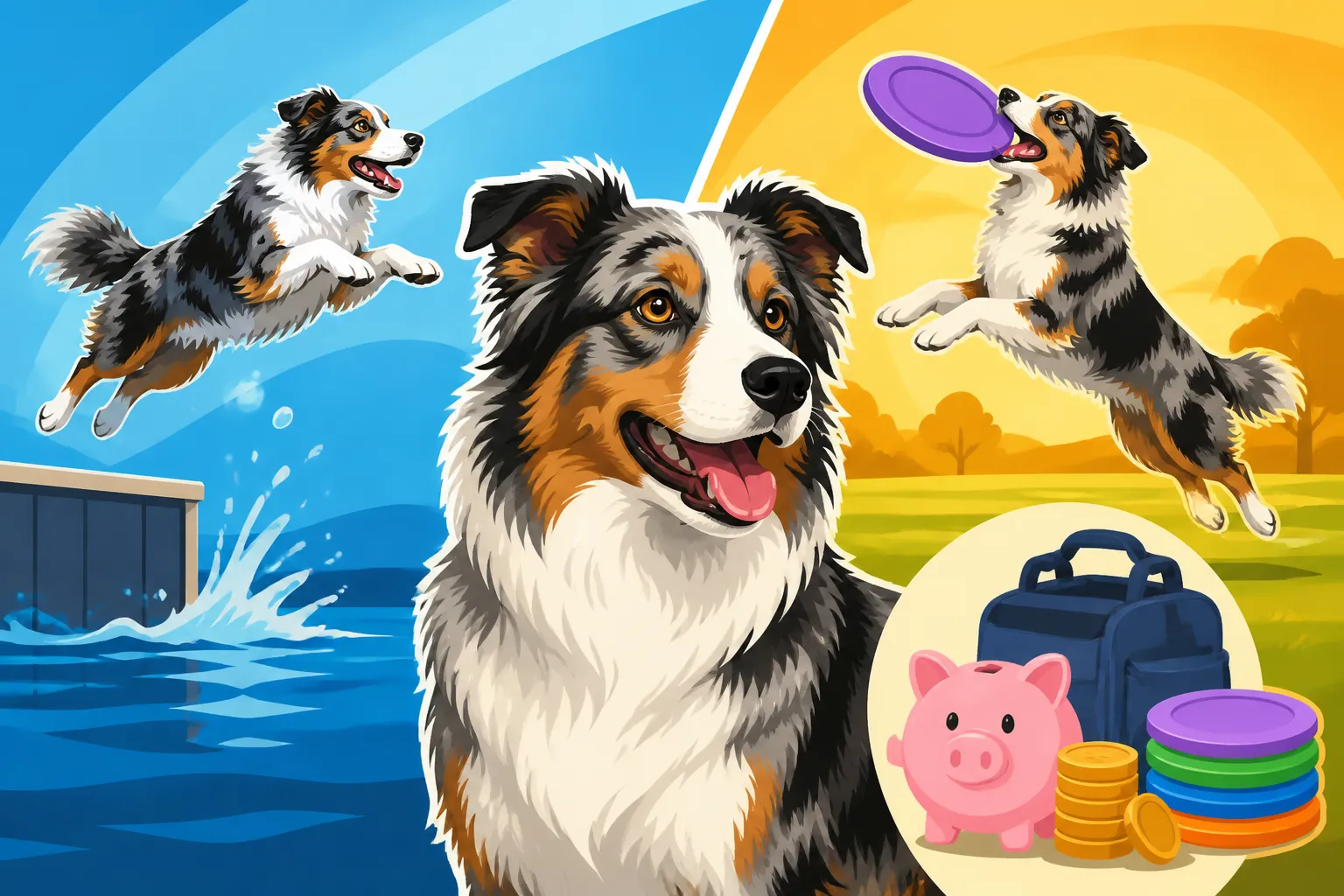
Dock Diving and Disc Costs for an Aussie
It’s a common scenario for Australian Shepherd owners: you watch your energetic, athletic dog launch itself after a frisbee or leap into a pond, and you can almost see the gears turning in its head, thinking, "This is what I was made for!" While these high-drive dogs thrive on demanding activities, many new Aussie parents quickly realize that channeling that boundless energy into structured sports like dock diving and disc dog can come with a surprising array of costs. This guide will help you understand the financial landscape of getting your Australian Shepherd involved in these thrilling canine sports, so you can budget realistically and focus on the fun.
Understanding Why Aussies Excel at Dock Diving and Disc Sports
Before we dive into the numbers, it's worth acknowledging why Australian Shepherds gravitate so naturally towards these high-flying, water-splashing activities. These aren't just random dog tricks; they tap into the very core of what makes an Aussie an Aussie. They're bred for intelligence, agility, and an intense desire to work alongside their human partners. When you see an Australian Shepherd launch itself off a dock or make an impossible mid-air catch, you're witnessing generations of selective breeding for athleticism and drive come alive.
Their natural herding instinct, which often manifests as a keen eye for movement and a desire to control objects, translates beautifully into disc dog. That intense focus on a moving frisbee, the ability to anticipate its flight path, and the explosive power needed to intercept it are all hallmarks of a classic herding dog. Similarly, their strong retrieve drive and often inherent love for water make them prime candidates for dock diving, where a toy thrown into a pool becomes the "sheep" they're driven to pursue and bring back. This isn't just exercise; for many Aussies, it’s a deep satisfaction of their innate purpose, providing both physical and mental stimulation that can be hard to replicate with just a walk around the block.
The Mental and Physical Demands of High-Drive Sports
It’s easy to look at a dock diving dog in mid-air or a disc dog spinning and leaping, and think it’s all pure instinct. While instinct is a huge component, these sports demand significant physical conditioning and mental engagement. An Aussie needs to be strong, flexible, and have excellent body awareness to perform these maneuvers safely and effectively. This means that a healthy, well-conditioned dog is not just an advantage, it's a necessity. We're talking about explosive power, precise landings, and the stamina to perform multiple jumps or retrieves over a session.
Beyond the physical, the mental demands are intense. An Australian Shepherd must learn complex sequences, cues, and remain focused despite distractions. This isn't just about throwing a toy; it's about building a precise communication system between dog and handler. The dog has to understand when to jump, where to land, and how to execute specific catches or retrieves. This level of engagement is often what truly tires out an Aussie, far more than simple physical exertion. It’s why activities like Mental Work That Actually Tires an Australian Shepherd are so crucial in their daily lives, even outside of formal sports. This dual demand on both body and mind is exactly why these sports are so fulfilling for the breed, but it also means that preparation, training, and ongoing care become critical investments.
Initial Gear and Equipment Costs
Getting started in dock diving or disc dog doesn't require a massive upfront investment like some other equestrian or motorized sports, but there are definitely essential items you'll need to acquire. Think of it as setting up your Aussie's "toolbox" for success and safety. The right gear isn't just about performance; it’s about preventing injury and ensuring your dog enjoys the experience.
For disc dog, the most obvious expense is, well, the discs! You'll quickly learn that not all frisbees are created equal for dog sports. Human frisbees are often too hard, brittle, or have sharp edges that can injure your dog's mouth. You'll need durable, dog-safe discs designed for catching. Brands like Hyperflite or Hero Discs are popular choices among disc dog enthusiasts. You'll likely want several, as they can get lost, damaged, or you might want different weights or flexibilities for various throws. Expect to replace them regularly, especially if your Aussie is a strong chewer, though you can find durable options at places like Chewy. Beyond discs, a good quality harness that allows for full range of motion without chafing is vital, especially for disc dogs who are twisting and jumping. A long line can also be incredibly useful for practicing recall and throws in open spaces safely, before your dog's skills are completely solid.
Dock diving also requires specific gear, though some items might overlap. A buoyant retrieve toy is paramount, as it needs to float high in the water and be easily visible for your dog. Durable bumpers or specialized dock diving toys are designed to withstand repeated throws and retrieves from the water. A well-fitting, comfortable life vest for your Aussie can be a great investment, particularly in the beginning or if your dog isn't the strongest swimmer. It helps build confidence and provides an extra layer of safety. You'll also want sturdy leashes and collars that can stand up to water and chlorine without degrading. Don't forget absorbent towels and perhaps even a portable drying coat for after-swim cool downs, especially if you're traveling to events.
Here's a breakdown of typical initial gear categories for getting started:
| Category | Essential Items | Considerations |
|---|---|---|
| Discs/Toys | Dog-safe frisbees (multiple), buoyant retrieve toys | Durability, dog's mouth safety, floatation for water. Expect to replace regularly. |
| Safety/Comfort | Well-fitting harness, life vest (optional but recommended), non-chafing collar | Freedom of movement for disc, buoyancy for dock diving, secure fit. |
| Leashes/Lines | Sturdy leash, long line for practice | Durable materials for water exposure, sufficient length for safe practice in open areas. |
| Travel/Cleanup | Absorbent towels, portable water bowl, crate | Keeping your car and dog comfortable post-swim, ensuring hydration, safe transport. |
| Training Aids | Clicker, high-value treats (e.g., from Ollie) | Essential for positive reinforcement and shaping behaviors in both sports. |
Training and Event Participation Expenses
Once you have your basic gear, the real investment often comes in the form of training and event participation. While a naturally athletic Australian Shepherd might seem ready to go, structured training is invaluable for safety, skill development, and building a strong working relationship between you and your dog. Attempting advanced maneuvers without proper guidance can lead to injuries or frustration for both of you.
Many areas offer beginner classes for both disc dog and dock diving. These classes are fantastic for learning the fundamentals, such as proper throwing techniques for disc, or how to encourage a confident jump from the dock. A good instructor can spot potential issues with your dog's form or your technique, helping you prevent bad habits or injuries before they become ingrained. For example, a dog that lands awkwardly repeatedly could be at higher risk for Australian Shepherd Hip Dysplasia and Working Joints or even cruciate tears. Group classes tend to be more affordable than private lessons, but private coaching can offer tailored attention for specific challenges or to refine advanced skills. Think about it: a few focused sessions with an expert can save you many headaches and potentially costly vet bills down the line.
Beyond initial training, the costs of participating in events add up. Each competition or trial usually has an entry fee per dog, per event. If your Aussie is a multi-talented athlete, you might enter them in several different disciplines, like distance jump, air retrieve, or speed retrieve in dock diving, or various disc freestyle routines. These fees contribute to the cost of facility rental, judges, equipment setup, and awards. Travel to events, especially if you get competitive and start attending regional or national competitions, can become a significant expense. This includes gas, potential hotel stays if the event is far from home, and even food for both you and your dog. Don't forget that many venues charge facility fees or parking fees on top of the entry fees. It truly is a full commitment!
Beyond Beginner Classes: Advanced Training and Competition
As your Australian Shepherd progresses, you might find yourself seeking more advanced training opportunities. This could involve specialized workshops focused on specific disc throws, advanced dock jumping techniques, or even online coaching. Many handlers invest in their own portable ramps or small training docks to practice at home if space allows, though these are substantial investments. For disc dog, setting up a home practice area with safe surfaces and plenty of open space is key. The more seriously you take the sport, the more you'll look for opportunities to refine your skills and your dog's performance.
Competition entry fees will become a regular part of your budget if you and your Aussie catch the competition bug. These fees can vary widely depending on the organization (e.g., North American Diving Dogs, Ultimate Air Dogs for dock diving, or various disc associations), the size of the event, and the number of entries you submit. Many serious competitors plan their entire season around a circuit of events, which means budgeting for multiple entry fees and associated travel costs. For an active dog that loves to work, these events are incredibly rewarding, providing an outlet for their energy and intelligence. However, it's important to recognize that these aren't one-time expenses but rather recurring costs that contribute to the overall Australian Shepherd Training and Sport Costs. Remember, the goal is always to have fun and build that incredible bond with your Aussie, and for many, the investment is well worth the joy it brings.
Health and Wellness for the Canine Athlete
An Australian Shepherd engaging in high-impact sports like dock diving and disc dog is essentially a canine athlete, and just like human athletes, they require specific care to stay healthy, perform at their best, and prevent injuries. This category of costs is often overlooked by new owners but is absolutely critical for the long-term well-being of your active Aussie. These aren't just "vet bills"; they're investments in your dog's athletic career and overall quality of life.
Regular veterinary check-ups become even more important for a sporting dog. Your vet should be aware of the intensity of your Aussie's activities, as this might influence recommendations for diet, supplements, and preventative care. X-rays to monitor joint health, especially hips and elbows, might be suggested more frequently than for a sedentary pet. Injuries, unfortunately, are a risk in any athletic endeavor. Sprains, strains, muscle tears, and even more serious conditions like Cruciate Tears in a Working Australian Shepherd can occur. Having a plan for these possibilities is crucial. This is where pet insurance can be a lifesaver. Providers like Healthy Paws offer policies that can help cover significant portions of unexpected vet bills from accidents or illnesses, easing the financial burden during stressful times. It's smart to explore options like Australian Shepherd Insurance at $35 to $55 a Month early on, before any pre-existing conditions develop.
Preventative care extends beyond vet visits. A high-quality diet tailored for active dogs is essential to fuel their energy needs and support muscle and joint health. You might also consider supplements like glucosamine and chondroitin, or fish oil for their anti-inflammatory properties and to support Joint Support in a Working Aussie Diet. Grooming is also important; while not a direct "health" cost in the medical sense, maintaining a healthy coat and preventing mats can reduce skin issues, and keeping nails trimmed properly can prevent painful breaks during jumps or sprints. After a muddy or wet training session, checking paws for cuts or foreign objects, as discussed in Australian Shepherd Paw Injuries From Hard Running, is vital. Even something as simple as ensuring they have enough water and cool-down periods can prevent heatstroke during intense summer sessions.
Nutritional Support and Injury Prevention
The dietary needs of an Australian Shepherd athlete are different from those of a typical pet. They burn more calories, require specific nutrient balances for muscle repair and energy, and benefit from targeted supplements. Choosing a high-quality kibble designed for active breeds is a good starting point, but some owners opt for fresh food diets, with companies like Ollie providing pre-portioned, nutrient-dense meals that can be beneficial for high-performance dogs. Monitoring your Aussie's body condition score is vital; you want them lean and muscular, not overweight, as extra pounds put immense strain on joints, especially during high-impact activities.
Injury prevention is a holistic effort. Beyond proper training and conditioning, it involves warm-up and cool-down routines before and after sessions, ensuring appropriate rest days, and being acutely aware of your dog's physical limits. Pushing an Aussie too hard, too fast, especially when they're still growing, can lead to long-term joint problems. It's a balance between channeling their incredible drive and safeguarding their bodies. This also includes regular dental care, as pain or infection in the mouth can impact overall health and performance. Being proactive about their health means recognizing that the costs associated with their well-being are not optional; they are a fundamental part of allowing your Australian Shepherd to thrive in these exhilarating sports. Neglecting these areas can lead to costly veterinary interventions down the road, and worse, discomfort or early retirement for your beloved canine companion.
Miscellaneous and Unexpected Costs
Even with a solid budget for gear, training, and routine health care, there are always those miscellaneous costs that pop up, and sometimes, entirely unexpected expenses that can throw a wrench in your plans. Owning an Australian Shepherd, especially one involved in demanding sports, means preparing for the unforeseen. These costs might not always be directly tied to dock diving or disc dog, but they are often amplified by the active lifestyle these sports promote.
One common "miscellaneous" category is travel supplies. Beyond gas and lodging, you might need a new, sturdier crate for road trips, a portable cooling fan for hot weather events to keep your double-coated Aussie comfortable, or special bedding that stands up to frequent washing. If your Aussie has specific dietary needs, carrying specialized food or supplements while traveling is essential. Then there are memberships to various dog sport organizations, which often grant discounts on event entries or provide access to valuable resources. Another often-forgotten expense can be entry fees for spectators or parking at larger events, which, while small individually, can add up over a season. Don't forget those irresistible vendor booths at events, where you might find unique toys, specialized treats, or even custom gear that you "just have to have" for your superstar Aussie!
The truly unexpected costs often stem from emergency situations. Despite your best efforts at injury prevention, accidents can happen. A freak slip on a wet dock, a bad landing after a disc catch, or even something unrelated like an allergic reaction to an insect bite at an outdoor event, can lead to an emergency vet visit. These situations can quickly become financially demanding. This is again where good pet insurance, like plans offered by Healthy Paws, can provide significant peace of mind. Without it, a sudden injury requiring surgery could mean thousands of dollars out of pocket. It's also worth considering the ongoing costs if an injury forces your dog into rehabilitation, such as physical therapy, hydrotherapy, or specialized vet consultations. These are the kinds of costs that emphasize the importance of having an emergency fund or robust insurance coverage for your Australian Shepherd, especially one that leads such a dynamic life. The sheer joy of watching your Aussie excel in these sports is immeasurable, but being financially prepared for all possibilities ensures that joy isn't overshadowed by financial stress.
Disclaimer
This article is for general informational purposes only and does not constitute professional advice. Laws, prices and regulations vary by location and change over time. Consult a qualified professional for guidance on your specific situation.