Cruciate Tears in a Working Australian Shepherd
It’s every Australian Shepherd owner’s worst nightmare: seeing your typically high-drive, athletic companion suddenly falter, limp, or refuse to put weight on a leg. For working Aussies who live for movement – whether on the ranch, in the agility ring, or simply keeping up on long hikes – a sudden injury can be utterly heartbreaking, leaving you wondering what just happened and what comes next. This guide is here to walk you through understanding one of the most common and debilitating orthopedic injuries in active dogs: a cranial cruciate ligament (CCL) tear, often just called a "cruciate tear," and how to navigate this challenging journey with your beloved Australian Shepherd.
Understanding the Canine Cruciate Ligament and Its Role
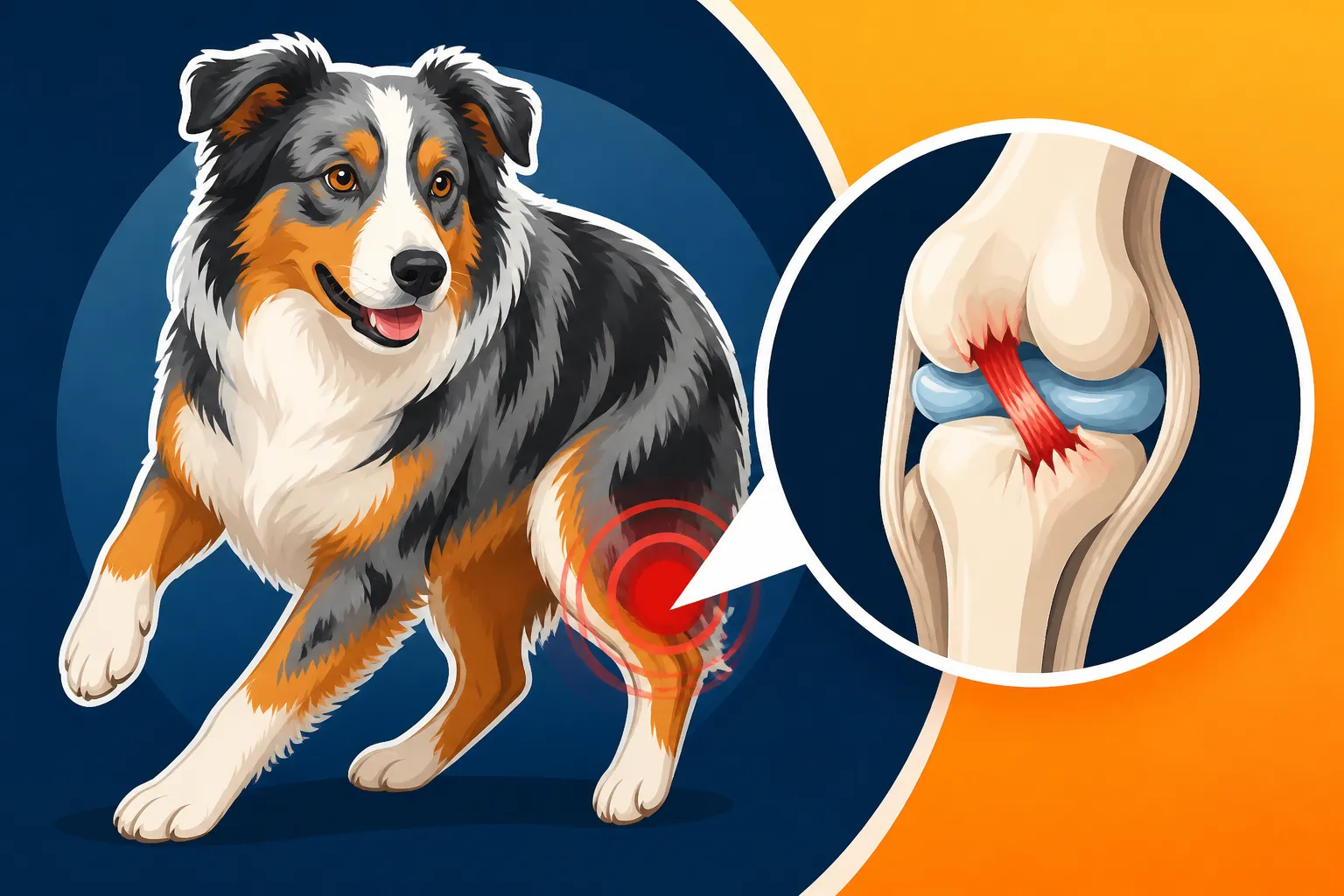
The knee joint in a dog, much like in humans, is a complex hinge that relies on several ligaments for stability. Among these, the cranial cruciate ligament (CCL) is paramount. It’s the primary stabilizer of the knee, preventing the tibia (shin bone) from sliding forward excessively relative to the femur (thigh bone) and preventing internal rotation of the tibia. When this ligament is torn, it leads to instability and pain, immediately impacting your Aussie's ability to bear weight and move comfortably.
Anatomy of the Canine Stifle Joint
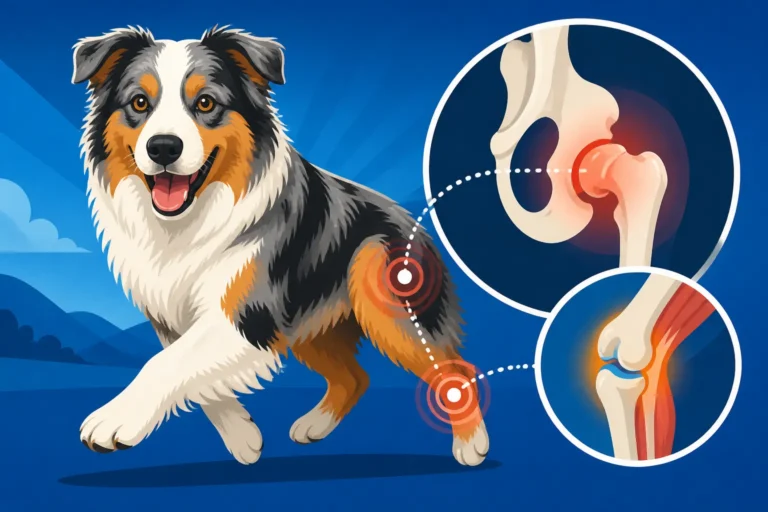
Imagine your Aussie's back leg, and specifically the knee, or "stifle" joint as it's called in veterinary terms. This joint connects the femur (the long bone above) to the tibia (the long bone below) and includes the patella (kneecap). Within this intricate system, two main ligaments crisscross inside the joint, forming an "X" shape – these are the cranial and caudal cruciate ligaments. The cranial cruciate ligament is the one we're focusing on because it's the one most frequently injured in dogs, particularly active breeds like the Australian Shepherd. It’s not just a simple band; it’s a complex structure that works constantly to keep the joint aligned during every stride, jump, and sudden turn.
How a Cruciate Ligament Functions in Movement
Think about your Australian Shepherd's incredible athleticism – the quick pivots during a herding trial, the explosive jumps in agility, or the sudden stops and starts chasing a disc. Every single one of those movements puts immense stress on the knee joint and, by extension, the cruciate ligament. The CCL’s job is to stop the lower leg bone from moving too far forward or twisting incorrectly. When a working Aussie plants its foot and quickly changes direction, or lands awkwardly from a jump, the forces acting on that ligament can be immense. Over time, or with a single traumatic event, this constant stress can lead to the ligament stretching, fraying, or completely tearing. It's a critical component for the powerful propulsion and agility that makes our Aussies so dynamic, and its compromise spells big trouble for their mobility.
Why Working Australian Shepherds are Prone to Cruciate Tears
It’s a cruel irony that the very traits we adore in our Australian Shepherds – their boundless energy, their quick reflexes, and their incredible athleticism – can also put them at higher risk for certain injuries. Cruciate tears are unfortunately common in active breeds, and Aussies fit that bill perfectly. It's rarely a single, dramatic event that causes the tear, but often a degenerative process exacerbated by their active lifestyles.
High-Impact Activities and Repetitive Stress
Australian Shepherds are built for movement. They excel in dog sports like agility, flyball, disc dog, and of course, traditional herding. These activities involve intense bursts of speed, sharp turns, sudden stops, and powerful jumps. Imagine the cumulative stress on the knee joints of an Aussie that spends hours each week training and competing. Even a pet Aussie, if regularly engaging in vigorous games of fetch with abrupt stops or chasing squirrels with enthusiastic abandon, is putting their knees through a workout. Each time they perform a powerful push-off or land heavily, the cruciate ligament absorbs shock and stabilizes the joint. Over months and years, this repetitive stress can cause microscopic damage, weakening the ligament until a seemingly minor misstep or twist is enough to cause a partial or complete tear. This is why it's not always an obvious, catastrophic injury; sometimes, it's the last straw in a long process.
Breed Predisposition and Genetic Factors
While activity level is a huge factor, there's also a significant breed component to cruciate ligament disease. Australian Shepherds, along with other large, active breeds like Labradors, Rottweilers, and Newfoundlands, show a higher incidence of CCL tears. This suggests a genetic predisposition where the ligament itself may not be as robust, or the biomechanics of their stifle joint might put more stress on the CCL. It's thought that the angle of the tibial plateau (the top surface of the shin bone) plays a role, with a steeper angle potentially increasing the force on the CCL even during normal weight-bearing. This means that even if you're careful, your Aussie might still be at a higher risk than some other breeds due to factors beyond your control. It underscores the importance of being vigilant for early signs of lameness and discussing joint health proactively with your vet, especially if your Aussie comes from lines with a history of orthopedic issues. We often focus on conditions like Australian Shepherd Hip Dysplasia and Working Joints or Aussie Elbow Dysplasia From Hard Turning, but cruciate issues are just as prevalent in working lines.
Recognizing the Signs of a Cruciate Tear
Identifying a cruciate tear early can make a difference in your Aussie's prognosis and recovery. The signs can vary depending on whether the tear is acute and complete, or a chronic, partial tear that has progressed over time. Being attuned to your dog’s normal movement and behavior is key.
Sudden Onset Lameness or Non-Weight Bearing
This is often the most dramatic and alarming sign. If your Australian Shepherd is chasing a ball, leaps off the couch, or makes a sharp turn during play, and suddenly lets out a yelp, tucks their leg up, and refuses to put any weight on it, it's a strong indicator of an acute, complete cruciate ligament tear. You might see them hopping on three legs, holding the injured limb completely off the ground. The immediate pain is usually quite severe. This isn't just a slight limp; it's a sudden, undeniable inability to use the leg. As an owner, your heart sinks because you know immediately something is seriously wrong, and that high-energy dog has just been brought to a halt.
Subtle Limping and Gradual Worsening
More commonly, especially in working dogs, cruciate tears start as partial tears, which manifest as a more subtle, intermittent lameness. You might notice your Aussie:
- "Toe-touching": They might put their foot down but only touch their toes to the ground, avoiding full weight bearing.
- Stiffness after rest: After getting up from a nap or in the morning, they might be noticeably stiff or lame, which sometimes improves slightly with movement.
- Reluctance to jump or play: They might hesitate before jumping into the car, onto furniture, or be less enthusiastic about their favorite games.
- Muscle atrophy: Over time, if the leg isn't being used properly, you might notice the thigh muscles on the affected leg start to shrink compared to the healthy leg.
- "Sit test" abnormality: A classic sign is when they try to sit, they might hold the injured leg out to the side rather than tucking it underneath their body symmetrically.
These subtle signs can be tricky, as they might be attributed to general soreness from a hard day's work. However, if you notice these recurring or worsening, it's time to get a professional veterinary opinion. Early intervention can sometimes prevent a partial tear from progressing to a complete rupture.
Diagnosis and Initial Management
Once you suspect a cruciate tear, getting to the vet is the immediate next step. A thorough examination, coupled with diagnostic imaging, will confirm the injury and allow your vet to recommend the best course of action.
Veterinary Examination and Palpation
Your veterinarian will start with a comprehensive physical examination. They’ll observe your Aussie's gait, how they stand, and how they use the suspected limb. The key diagnostic test for a cruciate tear is often performed manually by the vet:
- Cranial Drawer Test: This involves gently manipulating the femur and tibia while the dog is relaxed (sometimes sedated due to pain or muscle tension). If the tibia can be pulled forward like a "drawer" opening, it indicates an unstable joint due to a torn CCL.
- Tibial Compression Test: Another common test where the vet holds the femur and flexes the ankle (hock). If the tibia moves forward, it again suggests CCL instability.
These tests, especially the cranial drawer, are quite definitive for a complete tear. For partial tears, the instability might be less obvious, requiring a vet with a very sensitive touch or additional diagnostics. The examination will also help rule out other orthopedic issues that can mimic cruciate tears, such as patellar luxation or even Australian Shepherd Hip Dysplasia and OFA Scoring.
Imaging and Pain Relief
While the cranial drawer test is often conclusive, X-rays are usually taken to:
- Confirm diagnosis: Especially useful for partial tears where manual instability is subtle.
- Assess secondary arthritis: Cruciate tears, even partial ones, quickly lead to inflammation and degenerative changes in the joint. X-rays can show the extent of these changes.
- Rule out other issues: Ensure there are no fractures, bone tumors, or other problems.
- Plan for surgery: Measurements from X-rays are crucial for surgical planning, especially for procedures like TPLO.
Initial pain relief is paramount. Your vet will likely prescribe anti-inflammatory medications (NSAIDs) to reduce pain and swelling. These will help your Aussie be more comfortable, but it's vital to understand that pain relief doesn't "fix" the underlying instability. Strict rest and limited activity will also be recommended to prevent further damage while you decide on a long-term treatment plan. This is a tough time, watching your normally active Aussie confined, but it's essential for their recovery.
Treatment Options for Cruciate Tears
Deciding on the best treatment for your Australian Shepherd's cruciate tear can feel overwhelming. There are generally two main paths: surgical intervention or conservative (non-surgical) management. The choice often depends on the dog's size, age, activity level, the severity of the tear, and your family's circumstances.
Surgical Intervention
For most active, larger breed dogs like Australian Shepherds, surgical repair is often recommended as the most effective long-term solution. Surgery aims to stabilize the knee joint, reduce pain, and slow the progression of arthritis. There are several surgical techniques, each with its own advantages and considerations:
- Tibial Plateau Leveling Osteotomy (TPLO): This is one of the most common and successful surgeries for larger, active dogs. The surgeon changes the angle of the tibial plateau by cutting and rotating a segment of the tibia and fixing it in a new position with a bone plate and screws. This essentially neutralizes the forces that cause the tibia to slide forward, making the CCL unnecessary for joint stability. TPLO is known for excellent long-term outcomes and allows dogs to return to high-level activity. Recovery is intensive, requiring strict confinement and physical therapy, but many Aussies achieve full function.
- Tibial Tuberosity Advancement (TTA): Similar in concept to TPLO, TTA involves cutting and advancing the tibial tuberosity (the front part of the shin bone) forward. This also changes the biomechanics of the joint, preventing the forward thrust of the tibia. TTA generally allows for good recovery, often with a slightly faster initial weight-bearing compared to TPLO, though both require dedicated rehabilitation.
- Lateral Suture (Extracapsular Repair): This older technique involves placing a strong synthetic suture (fishing line-like material) outside the joint, mimicking the function of the torn CCL. It's often recommended for smaller, less active dogs, or sometimes as a more budget-friendly option. While it can stabilize the joint, it may not be as robust for large, high-energy breeds and carries a higher risk of the suture breaking over time, especially in working Aussies. However, a successful lateral suture can still provide a good outcome, though usually with a slightly lower rate of full return to previous activity levels compared to TPLO or TTA.
The choice of surgical technique is best made in consultation with a board-certified veterinary surgeon who can assess your Aussie's specific needs, including their conformation, age, and anticipated activity levels post-recovery. The cost of these surgeries, particularly TPLO and TTA, can be substantial, often running into several thousands of dollars, making pet insurance, like a policy from Healthy Paws, a crucial consideration before an injury occurs. If you're looking into Knee Repair After an Aussie Tears a Cruciate, be prepared for these discussions.
Conservative Management (Non-Surgical)
Conservative management is typically reserved for very small dogs, senior dogs with very low activity levels, or those with other significant health issues that make surgery too risky. It involves:
- Strict Rest and Activity Restriction: This is non-negotiable. For weeks to months, your Aussie's activity will be severely limited to short, leashed potty breaks only. The goal is to allow scar tissue to form around the joint, hopefully providing some degree of stability.
- Weight Management: Keeping your Aussie at an ideal weight is critical to reduce stress on the knee. How Weight Multiplies the Load on Aussie Joints cannot be overstated when managing a cruciate injury.
- Anti-inflammatory Medications: NSAIDs will be used to manage pain and inflammation, often long-term.
- Physical Rehabilitation: This is absolutely vital for conservative management. A structured program including therapeutic exercises, hydrotherapy, and modalities like laser therapy can help strengthen surrounding muscles and improve joint function.
- Bracing: A custom-fitted knee brace can sometimes be used to provide external support to the joint, though success varies and compliance can be an issue with active dogs.
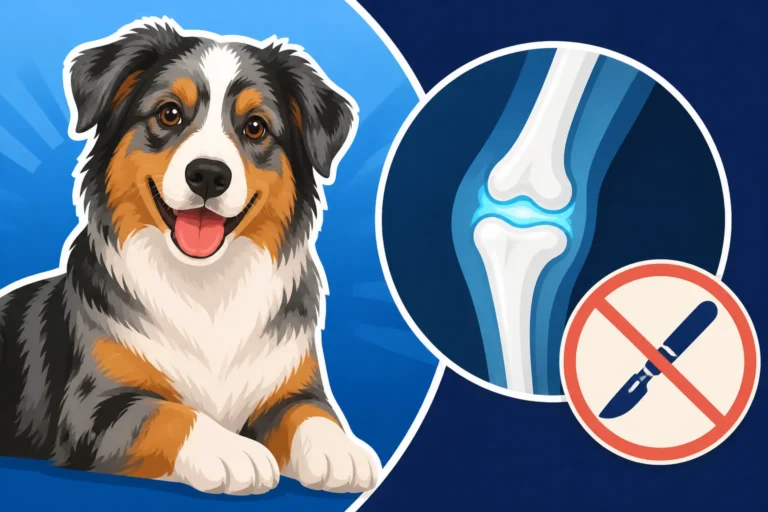
While conservative management can sometimes work for specific cases, particularly partial tears that are caught early, it often leads to a higher rate of progression to severe arthritis and a greater chance of tearing the cruciate ligament in the other knee due to compensatory weight-bearing. For a working Australian Shepherd, whose quality of life is so tied to their athleticism, surgery is usually the path that offers the best chance for a full and active recovery.
Rehabilitation and Recovery
Regardless of whether your Australian Shepherd undergoes surgery or is managed conservatively, rehabilitation is not just an option—it's absolutely essential for optimal recovery. This is a marathon, not a sprint, and your dedication will significantly impact your Aussie’s long-term comfort and mobility.
Post-Surgical Care and Physical Therapy
The period immediately following surgery is critical. Your vet or surgeon will provide detailed instructions, which typically include:
- Strict Confinement: This means crate rest or a small, confined space for several weeks, often 6-8 weeks, to protect the surgical site and allow initial healing. Leash walks for potty breaks only are usually allowed. This can be challenging for a high-energy Aussie, so patience and mental enrichment activities (like puzzle toys or frozen Kongs) are key.
- Medication Administration: Pain relievers, anti-inflammatories, and sometimes antibiotics will be prescribed.
- Wound Care: Monitoring the incision site for swelling, redness, or discharge is important.
- Gradual Increase in Activity: After the initial confinement, activity is slowly and progressively increased. This isn't about rushing your Aussie back to their old routine, but carefully building strength and endurance.
This is where formal physical therapy (PT) becomes invaluable. A certified canine rehabilitation therapist will design a tailored program to:
- Reduce Pain and Swelling: Using modalities like cold laser therapy, massage, and cryotherapy.
- Restore Range of Motion: Gentle passive range of motion (PROM) exercises help prevent stiffness.
- Strengthen Muscles: Targeted exercises to rebuild lost muscle mass in the affected limb and strengthen core muscles.
- Improve Balance and Proprioception: Exercises on unstable surfaces, cavaletti poles, and hydrotherapy (underwater treadmill) are excellent for this.
- Gait Retraining: Ensuring your Aussie learns to use the leg correctly again.
Many veterinary practices offer these services, and for a working Aussie, this structured approach is crucial to maximizing their return to function. Without dedicated rehab, your dog may regain some use of the leg, but often with compensations that can lead to other issues or slower recovery.
Long-Term Management and Preventative Measures
Even after successful surgery and rehabilitation, long-term management is important to maintain joint health and prevent re-injury or injury to the other knee. Remember, roughly 30-50% of dogs who tear one CCL will eventually tear the other.
- Weight Management: This cannot be stressed enough. Maintaining a lean body condition reduces stress on all joints. Regular body condition scoring can help you keep track.
- Consistent, Controlled Exercise: Avoid sudden, high-impact activities, especially without proper warm-up. Opt for controlled leash walks, swimming, and structured play that doesn't involve abrupt stops or twists. Building up a dog's condition gradually is important, and for senior dogs, adapting exercise is key, as discussed in Australian Shepherd Arthritis After Years of Work.
- Joint Supplements: Glucosamine, chondroitin, MSM, and omega-3 fatty acids can support joint cartilage health and reduce inflammation. Discuss appropriate supplements with your vet; they can be a great addition, especially for a working breed that puts stress on its joints. Starting Joint Support on a Young Working Aussie is often a proactive step many owners take.
- Regular Veterinary Check-ups: Ongoing monitoring for signs of arthritis or lameness is important. Your vet can recommend anti-inflammatory medications if needed, particularly as your Aussie ages.
- Proper Warm-Up and Cool-Down: Before any strenuous activity, ensure your Aussie has a good warm-up period, and a cool-down afterward, just like a human athlete. This helps prepare muscles and joints for work and aids recovery.
A cruciate tear is a significant setback, but with dedicated care, rehabilitation, and long-term management, many Australian Shepherds can go on to live full, active, and comfortable lives. However, understanding the financial implications, including potential costs for ongoing care or even future injuries, is part of being a responsible owner. Pet insurance providers like Healthy Paws can help alleviate some of the financial burden, especially when considering the significant Aussie Vet Bills Between $15,000 and $40,000 that can accumulate over a lifetime.
Prevention Strategies for Working Australian Shepherds
While you can't eliminate all risk, especially with a genetically predisposed and active breed like the Australian Shepherd, there are definite steps you can take to significantly reduce the likelihood of a cruciate tear. Prevention is always better than treatment, both for your Aussie's health and your peace of mind (and wallet!).
Structured Conditioning and Warm-Up Routines
Think of your Australian Shepherd as a canine athlete. Just like human athletes, they need proper conditioning to withstand the demands of their activities.
- Gradual Training Progression: Don't go from zero to sixty. If your Aussie has been less active, or is a young dog whose growth plates haven't closed (generally around 12-18 months), gradually build up their exercise intensity and duration. Avoid intense, sudden bursts of activity, especially without a foundation of fitness. For young Aussies, pay attention to Exercise Limits for a Growing Australian Shepherd to protect developing joints.
- Cross-Training: Incorporate a variety of exercises that build different muscle groups. This might include swimming (low impact, great for strength), controlled jogging, hiking on varied terrain, and even mental work that challenges their minds without stressing their joints excessively. Avoiding repetitive, high-impact activities every single day can help.
- Core Strength: A strong core supports the entire body. Exercises like walking over cavaletti poles, doing 'sit-to-stands,' or controlled crawling under obstacles can help build core strength.
- Warm-Up Before Activity: Before any vigorous play, training, or competition, perform a 5-10 minute warm-up. This could include a brisk walk, gentle trots, and some dynamic stretches like leg circles or controlled body twists. This gets blood flowing to muscles and ligaments, making them more pliable and less prone to injury.
- Cool-Down After Activity: Just as important as warming up, a cool-down period of 5-10 minutes of walking helps gradually lower heart rate, stretch muscles, and flush out metabolic waste, potentially reducing soreness and stiffness.
Maintaining Ideal Weight and Joint Health
This really is at the foundation of orthopedic health for any dog, but especially for active, medium to large breeds.
- Lean Body Condition: Extra weight puts immense additional stress on all joints, including the knees. Even a few extra pounds can dramatically increase the load on the cruciate ligaments. Regularly assess your Aussie's body condition score – you should be able to easily feel their ribs without seeing them, and they should have a visible waist when viewed from above. If they're carrying too much weight, work with your vet to create a safe and effective weight loss plan. This is a critical discussion, particularly when considering How Weight Multiplies the Load on Aussie Joints.
- High-Quality Nutrition: Feed a balanced, high-quality diet appropriate for your Aussie's age, activity level, and size. Some foods are formulated with ingredients that support joint health, like glucosamine and chondroitin, though these are often included as supplements rather than primary nutrition.
- Consider Joint Supplements: Proactively using joint supplements, even in younger working Aussies, can be beneficial. Ingredients like glucosamine, chondroitin, MSM, and Omega-3 fatty acids are widely used to support cartilage health, reduce inflammation, and improve joint lubrication. Brands like Nutramax's Dasuquin or Cosequin are often recommended by vets. While not a cure-all, they can contribute to overall joint resilience, especially for dogs who have been through a lot of work, as highlighted in Whether Sports Wear Out an Aussie's Joints.
- Regular Vet Check-ups: Routine veterinary visits allow your vet to monitor your Aussie's weight, gait, and overall health, catching subtle signs of joint issues before they become major problems. They can also advise on appropriate preventative measures tailored to your individual dog. If you're considering pet insurance, getting a policy early from a company like Healthy Paws can protect you against unexpected costs down the line. It's much easier to get coverage before any pre-existing conditions arise.
By being proactive in these areas, you give your working Australian Shepherd the best possible chance to stay sound, active, and free from the pain of a cruciate tear for as long as possible.
Comparing Cruciate Treatment Options
Making decisions about your Australian Shepherd's health can be incredibly stressful, especially when it involves surgery and significant financial outlay. Here’s a simplified comparison of the primary treatment options for a cruciate ligament tear to help you understand the core differences. Remember, the best choice for your dog will always be a conversation with your veterinarian and potentially a board-certified orthopedic surgeon.
| Feature | Conservative Management (Non-Surgical) | Lateral Suture (Extracapsular Repair) | TPLO (Tibial Plateau Leveling Osteotomy) | TTA (Tibial Tuberosity Advancement) |
|---|---|---|---|---|
| Ideal Candidate | Small dogs (<25 lbs), very sedentary dogs, severe health risks for surgery | Smaller to medium-sized dogs, less active large dogs | Medium to large, active/working dogs, steep tibial plateau | Medium to large, active dogs |
| Mechanism | Scar tissue formation, muscle strengthening, pain control | Suture placed outside joint to mimic ligament | Changes joint angle to neutralize forces, no longer needing CCL | Changes joint angle to neutralize forces, no longer needing CCL |
| Cost (Estimated) | Moderate (meds, PT, braces, long-term care) | Moderate to High (often $1,500 – $3,500) | High (often $3,500 – $6,000+) | High (often $3,000 – $5,500+) |
| Recovery Time | Months of strict rest, variable long-term outcome | 8-12 weeks strict rest, 4-6 months full recovery | 8-12 weeks strict rest, 4-6 months full recovery | 8-12 weeks strict rest, 4-6 months full recovery (often slightly faster initial weight-bearing) |
| Return to High Activity | Unlikely | Moderate to good, but may have limitations | Excellent for most, high return to performance | Excellent for most, high return to performance |
| Risk of Meniscus Injury | High risk if not already present | Can still occur, may require secondary surgery | Minimised during surgery, good prognosis for meniscal repair | Minimised during surgery, good prognosis for meniscal repair |
| Arthritis Progression | Often significant and rapid | Generally occurs, but can be managed | Slowed significantly | Slowed significantly |
| Risk of Opposing Leg Injury | High (due to compensatory loading) | Moderate | Lower than conservative, but still a possibility | Lower than conservative, but still a possibility |
Note: Costs are rough estimates and can vary significantly by region, veterinary clinic, and specific surgical requirements. Always get a detailed quote from your veterinary surgeon.
Disclaimer
The information provided in this article is for general informational purposes only and is not intended as a substitute for professional veterinary advice. Always seek the advice of your veterinarian or other qualified animal health provider with any questions you may have regarding a medical condition or treatment for your Australian Shepherd. Never disregard professional veterinary advice or delay in seeking it because of something you have read here.