Australian Shepherd Paw Injuries From Hard Running
It's heartbreaking to see your usually boundless Australian Shepherd suddenly favoring a paw, especially when you know they live for their runs, hikes, and intense playtime. The very activities that keep these intelligent, high-energy dogs happy and healthy can also lead to painful paw injuries. This guide is here to walk you through understanding why these injuries happen, how to treat them, and most importantly, how to prevent them so your Aussie can keep enjoying their active life safely and comfortably.
Understanding the Unique Vulnerabilities of Australian Shepherd Paws
Australian Shepherds are incredible athletes, bred for endurance, agility, and quick directional changes. Their paws are their primary tools for navigating rough terrain, sprinting across fields, and stopping on a dime. However, this constant demand means their paws are also highly susceptible to injury. It’s not just about what they step on, but also the cumulative impact of their energetic lifestyle.
The Anatomy Underpinning Aussie Paw Resilience and Weakness
An Aussie's paw is a marvel of engineering, designed to provide traction, absorb shock, and protect delicate structures. The paw pads themselves are thick layers of keratinized skin, much like the soles of our feet, offering cushioning and grip. Beneath these pads are fatty tissue and bones, all supported by a complex network of tendons and ligaments. Each toe has a nail, which, along with the pad, provides essential traction. However, this complex structure also means there are many points of potential failure. Thin skin between the pads, exposed nail quicks, and the constant stress on tiny bones and joints can all lead to problems. Think of how much pressure your own feet take during a brisk walk; now imagine that multiplied by the explosive energy and sharp turns of a working Australian Shepherd. When they’re in full stride, chasing a disc or herding imaginary sheep in the backyard, those paws are taking an incredible beating with every push-off and landing.
The Impact of High-Energy Activities on Paw Health
The very activities that make an Australian Shepherd thrive are often the culprits behind paw injuries. Intense running, especially on hard or abrasive surfaces like asphalt, concrete, or rocky trails, creates significant friction and impact. This can wear down paw pads rapidly, leading to thinning, cracks, or even painful abrasions. Consider a long fetch session on a gravel driveway or a vigorous hike through sharp shale – these environments are harsh on unprotected paws. Agility training, with its quick bursts, pivots, and jumps, puts immense strain on toe joints, ligaments, and nails. Flyball and disc dog sports involve rapid acceleration and deceleration, sometimes on less-than-ideal surfaces, increasing the risk of sprains or sudden trauma. Even herding work, while often done on softer ground, can involve sharp turns and prolonged activity that stress the paws over time. It’s a fine line between providing adequate exercise for these intelligent dogs and pushing them past the point where their paws can safely cope. You might be surprised to learn that issues like torn nails or sprains are common ailments for highly active dogs. For a deeper dive into how intense work impacts long-term health, you might want to read about Whether Sports Wear Out an Aussie's Joints.
Environmental Factors and Hidden Hazards
Beyond the type of activity, the environment itself plays a huge role in paw injuries. Extreme temperatures are major culprits. Hot pavement in summer can cause severe burns within minutes, often before you even realize how hot it truly is. Conversely, icy surfaces, snow, and road salt in winter can lead to frostbite, cracked pads, or irritation. De-icing chemicals, even pet-friendly ones, can be abrasive and cause chemical burns or dryness. Sharp objects like broken glass, thorns, burrs, or even small, jagged rocks are constant threats, easily puncturing or cutting paw pads that seem so resilient on the surface. Invisible hazards like certain plants, pesticides, or spilled automotive fluids can also cause irritation or chemical burns if your Aussie walks through them. Even seemingly innocuous things like sand can be abrasive, and during certain seasons, a common problem for these dogs is Grass Seeds Working Into an Australian Shepherd Paw which can embed deep between their toes, causing infection and intense discomfort. Being vigilant about the surfaces your Aussie walks on is paramount, but sometimes, despite our best efforts, accidents happen.
Common Types of Paw Injuries from Intense Exercise
When your Australian Shepherd is living their best, most active life, paw injuries are unfortunately a risk. Knowing what to look for can help you act quickly and get them the care they need.
Abrasions, Cuts, and Lacerations
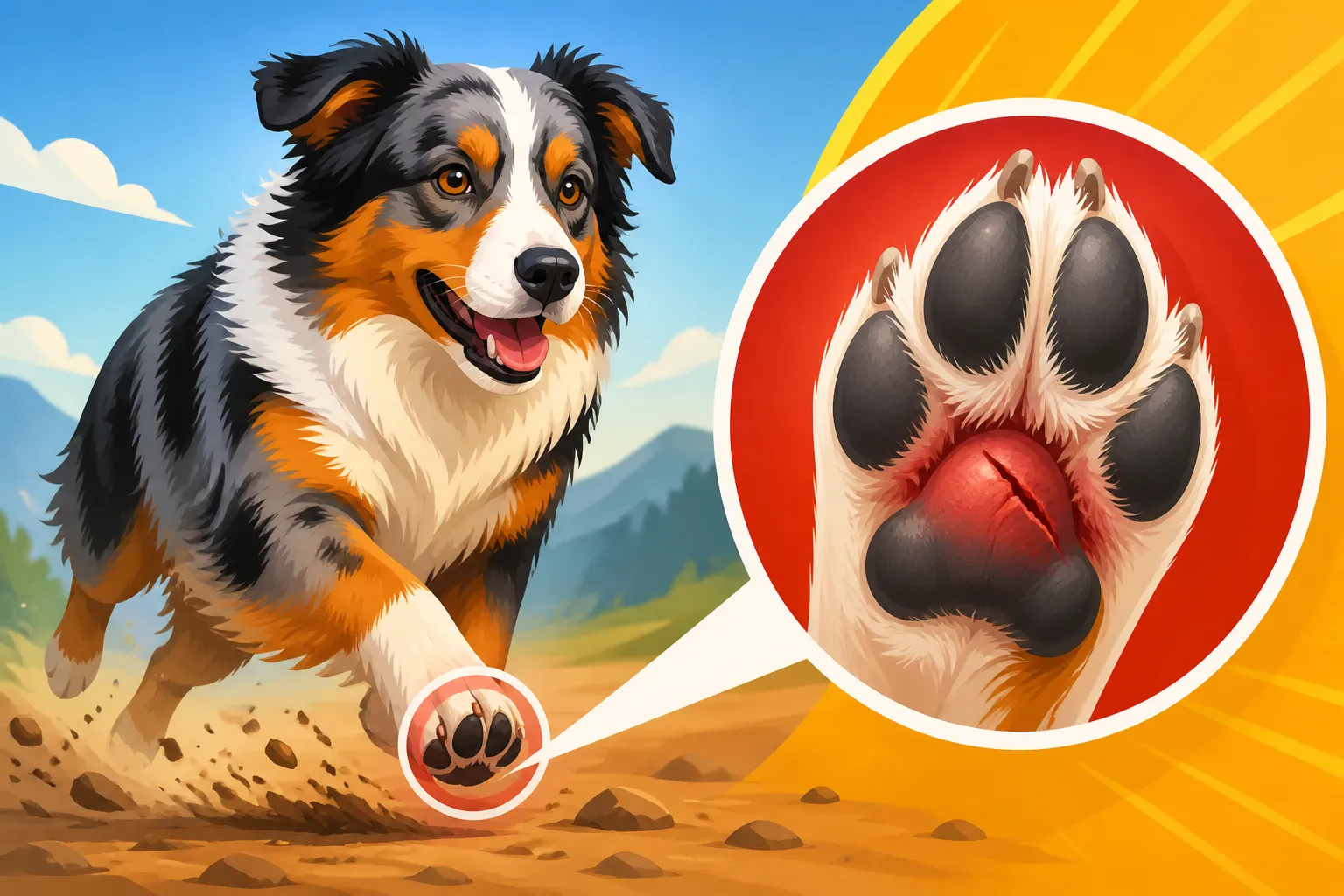
These are perhaps the most common paw injuries for active dogs. Abrasions are essentially scrapes or 'rug burns' on the paw pads, often caused by repeated friction on rough surfaces like concrete, asphalt, or coarse gravel. They might look like raw, red areas where the top layer of skin has worn away. Cuts are typically cleaner breaks in the skin, ranging from shallow nicks from a sharp stick or rock to deeper gashes from broken glass or metal shards. Lacerations are more serious, often jagged and deep, potentially extending through multiple layers of the paw pad and sometimes exposing underlying tissue or even bone.
Imagine your Aussie, completely engrossed in a game of fetch in a park that has some less-than-ideal patches. A quick pivot on a patch of loose gravel, or an accidental swipe against a sharp-edged rock, and suddenly they're limping. You might notice a small red streak, or if it’s a deeper cut, immediate bleeding. These injuries can be incredibly painful because the paw pads are rich in nerve endings. If you see your dog licking their paw excessively, favoring a limb, or leaving bloody paw prints, it’s time for a close inspection. A quick clean and assessment can sometimes be enough for minor abrasions, but deeper cuts or persistent bleeding always warrant a vet visit.
Torn Nails and Exposed Quick
This is a universally cringe-worthy injury for any dog owner. A torn nail happens when the nail catches on something – a snag in the carpet, a loose floorboard, a branch during a run – and is ripped, either partially or completely. This is incredibly painful because the quick, the living tissue within the nail that contains blood vessels and nerves, is exposed or damaged. The quick extends further down an Aussie's nail than many owners realize, especially if regular trimming isn't part of their routine.
Picture your Australian Shepherd excitedly chasing a ball through long grass. One moment they're full of joy, the next, they let out a yelp, pull up their paw, and blood starts to well up around a twisted or broken nail. The bleeding can be quite dramatic, and the pain intense. Sometimes, the nail is only partially torn, hanging on by a thread, which is still excruciatingly painful. Left untended, a torn nail can become infected. Regular nail trims are crucial for prevention, keeping the quick retracted and the nail strong. If it happens, applying styptic powder or cornstarch to stop the bleeding and then contacting your vet for advice or an appointment is usually the best course of action.
Foreign Objects Embedded in Paw Pads or Between Toes
Active Aussies, with their low-to-the-ground searching nature and double coats, are magnets for foreign objects. Burrs, thorns, splinters, small pieces of glass, or even tiny pebbles can easily become lodged in their paw pads or, more commonly, between their toes where the fur can conceal them. These can be particularly insidious because they might not cause immediate, dramatic pain but instead lead to persistent discomfort, limping, and eventually infection if not removed.
Think about a spring or summer day after a walk through a field or wooded area. Your Aussie seems fine, but a few hours later, you notice them chewing or licking obsessively at a paw. When you examine it, you might find a tiny red bump, a swollen area, or even a small abscess between their toes. Sometimes, the offending object is still visible, poking out from the fur. Other times, it’s completely embedded, requiring careful probing or even a vet visit to locate and extract. These foreign bodies can cause localized inflammation, pain, and if bacteria are introduced, a full-blown infection. Maintaining good Australian Shepherd Paw and Coat Care After Fieldwork is vital, including thoroughly checking and cleaning paws after outdoor adventures.
Burns and Frostbite
Environmental extremes pose serious threats to paw pads. Burns can occur from contact with hot surfaces like asphalt, concrete, metal grates, or even sandy beaches during summer. The temperature of these surfaces can rise dramatically, reaching searing levels that can cook a paw pad in a matter of minutes.
Imagine a sunny afternoon, and you take your Aussie for a quick walk around the block. You feel the pavement with your hand and think, "It's warm, but not that hot." But after a few blocks, your dog starts lifting their paws, limping, or licking them incessantly. By the time you get home, the pads might be red, blistered, or even appear to have chunks missing. This is a severe burn, and it’s surprisingly easy to underestimate how quickly it can happen.
Conversely, in winter, prolonged exposure to ice, snow, and freezing temperatures can lead to frostbite. While less common than burns, it can still affect paw pads and toes, especially if an Aussie is standing or running in deep snow for extended periods without protection. Road salt and de-icing chemicals also cause significant irritation and can contribute to cracking and drying, making paws more susceptible to other injuries.
Sprains, Strains, and Fractures of the Toes
While not always immediately visible, injuries to the bones, ligaments, and tendons of the toes can be incredibly painful and debilitating for an active Australian Shepherd. Sprains occur when ligaments (which connect bones) are stretched or torn, while strains involve muscles or tendons (which connect muscles to bones). A toe fracture, though less common, is a break in one of the small bones of the paw.
These injuries often happen during high-impact activities with sudden, awkward movements. A misstep during a rapid sprint, a bad landing after a jump, or twisting a paw while navigating uneven ground can all lead to these internal damages. Your Aussie might suddenly yelp, pull up their paw, and then start limping noticeably. Unlike a visible cut, there might be no obvious external sign of injury, though swelling around the affected toe is common. The limping might be subtle at first, perhaps just a slight reluctance to put full weight on the paw, but it will likely worsen with continued activity. Diagnosing these often requires a vet visit and possibly X-rays, as the small bones and intricate structures can be tricky to assess. Rest and anti-inflammatory medication are typically part of the recovery, and in some severe cases, splinting might be necessary. It's a reminder that sometimes the most serious injuries aren't the ones you can see right away.
Providing Immediate Care and Seeking Veterinary Attention
Discovering your Australian Shepherd has injured their paw can be alarming, but knowing how to react calmly and effectively can make a big difference in their comfort and recovery.
Safely Assessing Your Aussie's Injured Paw at Home
When you notice your Australian Shepherd favoring a paw, the first step is to gently and calmly assess the situation. Approach your dog slowly and speak in a reassuring voice. Even the sweetest Aussie might be in pain and react defensively, so proceed with caution. If they are in extreme pain or trying to bite, it's best to muzzle them for both your safety and theirs, or simply stop and call your vet immediately.
If you can safely examine the paw, start by looking for obvious signs of injury:
- Blood: Is there any bleeding? How much? Is it actively dripping or just a smear?
- Swelling: Is the paw or a specific toe swollen? Compare it to the uninjured paw.
- Lacerations or Punctures: Are there any visible cuts, scrapes, or holes in the paw pad or between the toes?
- Foreign Objects: Do you see anything embedded, like a thorn, glass, or burr? Check carefully between the pads and toes, and around the nails.
- Nail Damage: Is a nail torn, cracked, or completely ripped off? Is the quick exposed?
- Heat: Does the paw feel warmer to the touch than the others?
- Deformity: Does anything look unusually bent or out of place (though this is rare for soft tissue injuries, it’s critical to note if present for a fracture).
You might need to carefully spread their toes apart to get a good look, especially if they have a lot of fur. Use good lighting, and if possible, have someone gently hold your Aussie to keep them steady.
First Aid Steps for Minor Paw Injuries
For minor abrasions, small cuts, or superficial scrapes that aren't bleeding heavily, you can usually start with some basic first aid:
- Clean the Area: Gently clean the wound with warm water and a mild antiseptic solution designed for pets, like diluted chlorhexidine or povidone-iodine. Avoid harsh cleansers or alcohol, which can sting and cause further irritation. Make sure to remove any dirt, debris, or small foreign objects you can safely pick out with tweezers.
- Control Bleeding: For minor cuts or torn nails with light bleeding, apply gentle direct pressure with a clean cloth or gauze. Styptic powder (available at most pet stores) or even cornstarch can help clot the blood on a nail quick.
- Apply a Protective Dressing: Once clean and the bleeding has stopped, you can apply a thin layer of antibiotic ointment (specifically approved for dogs by your vet) and then cover the paw with a clean, non-stick gauze pad. Secure it with self-adhering bandage wrap (like VetWrap), ensuring it's snug enough to stay on but not so tight that it cuts off circulation. You should be able to slide two fingers underneath the bandage easily. Change the bandage daily and monitor for signs of infection.
- Limit Activity: Keep your Aussie calm and restrict their activity to allow the paw to heal. Short, leashed potty breaks only, and no running or jumping.
Remember, even minor injuries can become serious if they get infected. Always keep a close eye on the paw for signs like increased swelling, redness, pus, or a foul odor.
When to Seek Immediate Veterinary Care
While some minor paw injuries can be managed at home, there are many situations where a trip to the vet is absolutely necessary. Don't hesitate if you observe any of the following:
- Deep or Gaping Wounds: Any cut that exposes underlying tissue, bone, or muscle, or is longer than half an inch and doesn't close easily. These often require stitches.
- Heavy or Uncontrolled Bleeding: If bleeding doesn't stop after 5-10 minutes of direct pressure, or if the blood is spurting, it's an emergency.
- Severe Lameness: If your Aussie cannot put any weight on the paw, is hopping, or shows extreme pain when the paw is touched. This could indicate a fracture, severe sprain, or deep foreign object.
- Suspected Fracture: Any visible deformity, extreme swelling, or grinding noise when the paw is moved (do not try to move it if you suspect a fracture).
- Embedded Foreign Objects You Can't Remove: If you can't safely extract a foreign object, or if it appears deeply embedded, a vet will have the tools and expertise to remove it without causing further damage.
- Signs of Infection: Increased redness, warmth, swelling, pus, foul odor, or fever.
- Burns or Frostbite: These need immediate professional assessment to determine the extent of the damage and prevent complications.
- Persistent Licking/Chewing: If your Aussie can't leave the paw alone, even after home care, it indicates ongoing pain or irritation.
- General Malaise: If your Aussie seems lethargic, isn't eating, or shows other signs of being unwell along with the paw injury.
It's always better to err on the side of caution. A quick vet visit can confirm the severity of the injury, prevent complications, and ensure your Australian Shepherd gets the best possible treatment. Plus, having robust pet insurance like Healthy Paws can give you peace of mind, knowing that you're covered for unexpected emergency vet bills, which can certainly add up. For more on what to expect financially in an emergency, you can refer to Emergency Vet Bills an Aussie Owner Should Expect.
Proactive Strategies for Preventing Paw Injuries
An ounce of prevention is worth a pound of cure, especially when it comes to those precious paws. Incorporating preventative measures into your Australian Shepherd's routine can significantly reduce the risk of injury, allowing them to enjoy their active lifestyle without unnecessary pain.
Regular Paw Inspections and Grooming Practices
Making paw inspection a regular habit is one of the easiest and most effective ways to catch problems early. After every walk, hike, or intensive play session, take a few minutes to gently examine each of your Aussie's paws. Look closely at the pads for cuts, scrapes, redness, swelling, or embedded debris. Pay special attention to the spaces between their toes, which are notorious for collecting grass seeds, burrs, and small thorns.
Grooming plays a crucial role too. Australian Shepherds have feathering and fur between their paw pads, which can become matted, trap debris, and reduce traction. Regularly trimming this interdigital fur, often called a "sanitary trim" for the paws, helps keep the area clean and reduces the chance of foreign objects embedding. You should also be diligent about keeping their nails trimmed short. When nails get too long, they can snag and tear, leading to painful injuries and exposing the quick. Long nails can also alter your Aussie's gait, putting undue stress on their paw structure and joints. If you need a refresher on general paw upkeep, take a look at Australian Shepherd Paw Pads After Rough Ground for detailed guidance.
Protective Paw Gear and Conditioning Balms
Just as you wouldn't hike rough trails in flip-flops, sometimes your Aussie needs a little extra paw protection.
- Dog Boots: These are excellent for extreme conditions like scorching hot pavement, icy sidewalks covered in salt, or very rocky terrain. Brands like Ruffwear and Muttluks offer durable, well-fitting boots that can protect against cuts, burns, and frostbite. However, getting an Aussie used to boots takes time and positive reinforcement. Introduce them slowly, starting with short periods indoors.
- Paw Waxes and Balms: Products like Musher's Secret or natural paw balms create a protective barrier on the pads, helping to moisturize, prevent cracking, and shield against irritants like salt or rough surfaces. They won't protect against sharp objects, but they can significantly improve paw pad health and resilience. Apply them regularly, especially before and after walks in challenging conditions.
Choosing the right gear depends on your Aussie's activity level and the environments they frequent. It's an investment in their comfort and long-term paw health.
Smart Exercise Choices and Surface Awareness
One of the best ways to prevent paw injuries is to be mindful of where and how your Australian Shepherd exercises.
- Vary Surfaces: Instead of always running on pavement, mix it up with grass, dirt trails, or sandy areas. Softer surfaces are much kinder to paw pads and joints.
- Avoid Extremes: On hot days, avoid walking during peak sun hours. If the pavement is too hot for your bare hand, it's too hot for your Aussie's paws. Similarly, in winter, limit exposure to icy, salted surfaces.
- Gradual Conditioning: Don't suddenly take your couch-potato Aussie on a 5-mile rocky hike. Build up their paw pad toughness gradually, just as you would condition their muscles for endurance. Start with shorter distances on varied terrain and slowly increase the intensity and duration. Remember, there are Exercise Limits for a Growing Australian Shepherd as well, so be mindful of their age and development.
- Regular Checks During Activity: On longer outings, periodically stop and check your Aussie's paws for any signs of discomfort or injury before they become severe.
Nutrition, Hydration, and Overall Health for Robust Paws
A healthy body supports healthy paws. A balanced diet rich in essential nutrients is crucial for strong skin, nails, and connective tissues. Look for high-quality dog foods that include:
- Omega-3 Fatty Acids: These healthy fats (found in fish oil, flaxseed) are fantastic for skin and coat health, which extends to paw pads, keeping them supple and less prone to cracking.
- Biotin and Zinc: These micronutrients are important for keratin production, which forms the tough outer layer of paw pads and nails.
- Antioxidants: Vitamins E and C help protect cells from damage and support overall immune health, aiding in faster recovery if an injury does occur.
Proper hydration is also key. Dehydrated paw pads are more likely to crack and become brittle. Always ensure your Australian Shepherd has access to fresh water, especially during and after exercise. Furthermore, maintaining a healthy weight for your Aussie is paramount. Excess weight puts additional strain on every joint and paw pad, increasing the risk of injury. If your Aussie is stiff after a lifetime of activity, understanding how An Aussie Stiff After a Career in Agility might impact their paws is crucial. Sometimes, a vet may recommend specific supplements or dietary changes to support joint and paw health, especially as your Aussie ages or if they have a very active lifestyle. For dogs in their prime, you might consider Starting Joint Support on a Young Working Aussie as a proactive measure.
The Value of Pet Insurance
Despite all your best efforts, accidents can still happen. A deep cut from an unseen object, a sudden sprain from a misstep, or an unexpected infection can lead to costly vet bills. This is where pet insurance can be a real lifesaver. Companies like Healthy Paws offer comprehensive coverage for accidents and illnesses, which can include diagnostics, surgeries, medications, and rehabilitation for paw injuries. Having a policy in place means you can make decisions based on what’s best for your Australian Shepherd's health, rather than worrying about the financial strain. Investing in Australian Shepherd Insurance at $35 to $55 a Month early on can provide peace of mind for the lifetime of your active companion.
Here’s a quick reference table for common paw problems:
| Injury Type | Common Causes | Key Symptoms | Immediate Action | When to See Vet |
|---|---|---|---|---|
| Abrasions/Cuts | Rough surfaces, sharp objects | Redness, raw skin, mild bleeding, limping | Clean with antiseptic, mild bandage | Deep cuts, heavy bleeding, signs of infection |
| Pad Lacerations | Glass, metal, sharp rocks | Deep cut, significant bleeding, gaping wound | Apply pressure, clean gently if safe | Always, likely needs stitches |
| Torn Nails | Snagging on carpet, rough ground | Bleeding from quick, pain, dangling nail | Styptic powder/cornstarch, gentle pressure, remove if safe | Nail partially attached, deep quick injury, infection |
| Foreign Objects | Grass seeds, thorns, splinters | Licking paw, swelling between toes, limping | Carefully remove with tweezers if visible | Object embedded, swelling, pus, deep infection |
| Burns | Hot pavement, hot metal | Redness, blisters, peeling skin, severe pain | Cool paw with water, don't apply ice | Always, to assess severity and prevent infection |
| Sprains/Strains | Awkward landing, sudden twist | Limping (no visible wound), swelling, pain | Rest, gentle cold compress | Persistent limping, no improvement after 24 hours |
Preventing paw injuries in your active Australian Shepherd requires a combination of vigilance, proper care, and smart choices about their exercise and environment. By taking these proactive steps, you're not just protecting their paws; you're safeguarding their ability to enjoy a full, happy, and energetic life by your side. Remember to always include a full body check, including paws, as part of your overall Australian Shepherd Dental and Ear Routine to catch issues early.
Disclaimer
The information provided in this article is for educational purposes only and is not a substitute for professional veterinary advice. Always consult with a qualified veterinarian for any health concerns or before making any decisions about your Australian Shepherd's health or treatment plan.