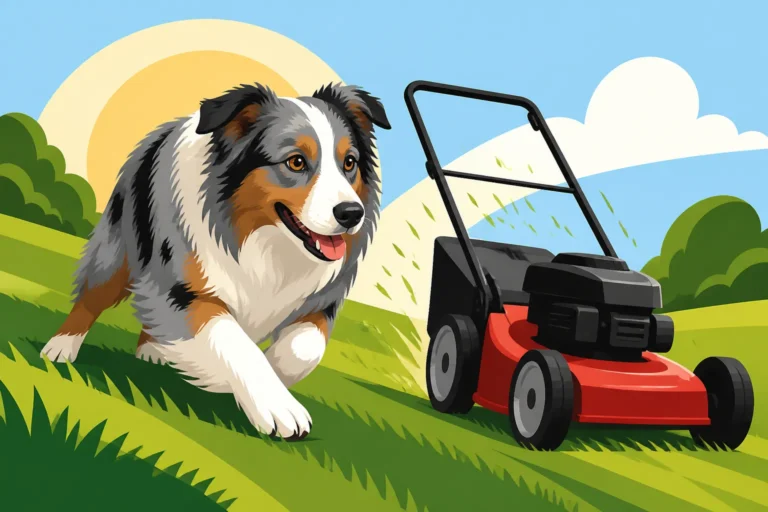
Whether a Tracker Replaces an Aussie Recall
It’s a terrifying moment for any Australian Shepherd owner: your intelligent, energetic companion catches sight of a squirrel, a distant jogger, or even just a fluttering leaf, and poof, they’re gone. The thought of them disappearing over the horizon, potentially into traffic or getting lost, is enough to make anyone panic. This guide will delve into the often-asked question of whether a GPS tracker can truly replace a solid recall for your Aussie, exploring their capabilities and, more importantly, their limitations when it comes to keeping your highly driven dog safe.
The Lure of the GPS Tracker for a High-Drive Aussie
Let's be honest, the appeal of a GPS tracker is incredibly strong, especially when you live with a breed as intelligent and independent as an Australian Shepherd. These dogs are wired to work, to herd, and to move, and sometimes that drive kicks in before their manners. When you picture your Aussie bolting across a wide-open field, the idea of a little device that can tell you exactly where they are feels like a miracle.
Why the Idea of a Tracker as a Recall Replacement is So Tempting
For many Aussie owners, the sheer speed and focus of their dogs can be overwhelming. You might have tried endless recall practice in your backyard, only to have it fall apart the second a rabbit crosses your dog's path at the park. The frustration is real, and the fear of losing your beloved pet is even more so. A GPS tracker offers a sense of control, a technological safety net that promises to alleviate that constant anxiety. It's easy to fall into the trap of thinking, "If I know where they are, I don't need them to come back right away, do I?" This line of thinking, while understandable, can lead to dangerous assumptions about what these devices can actually do.
Imagine you're hiking a new trail, one with dense underbrush and winding paths. Your Aussie, ever the explorer, dives off the path after a scent. You call, but the rustling leaves and the thrill of the chase drown out your voice. In that moment, a tracker seems like a godsend, a direct line to peace of mind. You envision pulling up an app on your phone and seeing a dot move across a map, guiding you straight to your wayward pup. It’s a compelling vision, offering a solution to a very real and common problem among owners of high-prey-drive dogs.
Common Scenarios Where Owners Consider Trackers
Owners often consider GPS trackers for various reasons, all stemming from the same core desire for safety and peace of mind. One common scenario is during off-leash adventures in new or unfamiliar environments, like a vast dog park or a hiking trail where the terrain makes it easy for a dog to get out of sight. You might be concerned about your Aussie’s tendency to wander too far, or maybe you've heard stories of other dogs getting lost in similar areas. The tracker feels like insurance against the unknown.
Another scenario involves Aussies with an incredibly strong Australian Shepherd Recall Around Moving Things. This isn't just about squirrels; it could be a passing car, a group of cyclists, or even children playing noisily. These dogs are bred to react to movement, and sometimes that instinct overpowers all training. If your Aussie has a history of giving chase, a tracker might seem like the only way to ensure you can find them if they successfully bolt past your verbal cues. For those living near busy roads or with unfenced properties, the stakes are even higher, making a tracker an appealing safety measure to prevent a tragic outcome.
The Fundamental Differences: Recall vs. Tracker
While both a reliable recall and a GPS tracker contribute to your Australian Shepherd's safety, they operate on entirely different principles and offer distinct benefits. Understanding these differences is crucial to appreciating why one can never truly replace the other.
What a Reliable Recall Truly Means for an Australian Shepherd
A reliable recall for an Australian Shepherd isn't just about them eventually coming back when they feel like it; it's about an immediate, enthusiastic response to your cue, regardless of distractions. It means that when you say their name or your chosen recall word, your Aussie drops whatever they are doing – whether it's chasing a ball, sniffing an interesting scent, or even interacting with another dog – and returns directly to you, usually at a full run. This isn't just a trick; it's a fundamental safety behavior that demonstrates a strong bond and trust between you and your dog.
For an Australian Shepherd, with their intense focus and drive, a truly reliable recall means they prioritize you and your instruction above all else in that moment. It's a deep-seated understanding that coming back to you is the most rewarding thing they can do. This level of responsiveness is built through consistent, positive reinforcement training, starting in low-distraction environments and gradually increasing the challenge. It requires you to be more interesting than anything else in their environment. When your Aussie has a bomb-proof recall, it’s not just about finding them; it’s about preventing them from ever getting into a dangerous situation in the first place, because you have direct control over their actions, even at a distance. This isn't just about their physical location; it's about their active choice to come to you.
How a GPS Tracker Actually Functions (and Its Limitations)
A GPS tracker, at its core, is a locating device. It uses satellite technology to pinpoint your dog's position and transmits that data to your smartphone or a web interface. You can see a dot on a map, often in real-time, showing you where your dog is. Some trackers even allow you to set "safe zones" and will alert you if your dog leaves a designated area, which can be useful for properties with invisible fencing or simply as an extra alert. You can find many reliable options on platforms like Amazon, offering different features and subscription models.
However, where a tracker shines in location, it falls short in prevention and control. It's a reactive tool, not a proactive one. If your Aussie bolts into a busy road, the tracker will tell you where they are in the road, but it won't stop them from entering it. If they get tangled in underbrush or fall into a ditch, the tracker might show you their static location, but it won't help them get out or prevent the injury. It also relies on battery life and signal availability. If the battery dies, or if your dog goes into an area with poor GPS or cellular reception (like a deep ravine or dense forest), the tracker becomes useless. Think about how your own phone sometimes loses signal in remote areas – the same can happen with your dog's tracker. It gives you information, but it doesn't give you influence over your dog's immediate behavior or safety in a rapidly unfolding crisis.
When a Tracker Complements, But Never Replaces, Your Aussie's Recall
Let’s be crystal clear: a GPS tracker is a fantastic piece of technology that offers an invaluable layer of security. However, it's a supplement, not a substitute, for diligent training. It's there for the "what if," not the "instead of."
Enhancing Safety with Technology: Practical Uses for Trackers
While a tracker can't replace recall, it certainly offers peace of mind and practical benefits. For an adventurous Australian Shepherd that loves to explore, a tracker acts as a vital backup system. Imagine you're at a large, unfamiliar park. Your Aussie is off-leash, happily sniffing. Despite your best efforts at recall, a deer springs out of the woods, and your dog's herding instinct takes over. They vanish into the tree line faster than you can blink. In this scenario, your tracker becomes your most important tool. Instead of blindly searching and calling, you can see their general direction and potentially intercept them before they go too far or into danger.
Trackers are also incredibly useful if you have an Aussie who is an escape artist, perhaps prone to digging under fences or finding gaps you didn't know existed. The moment they cross a geofenced boundary, you get an alert, allowing you to react immediately. This is particularly helpful for dogs with An Australian Shepherd That Bolts After Movement. If your Aussie is known to dart after anything that moves, a tracker gives you an edge in the worst-case scenario. It helps you locate them quickly, minimizing the time they are exposed to potential dangers like traffic, aggressive wildlife, or getting truly lost. It's a tool for recovery, not for prevention, but recovery can be life-saving.
The Non-Negotiable Need for Consistent Recall Training
Despite the technological advancements of GPS trackers, there is simply no substitute for a reliable, rock-solid recall. This fundamental command is your primary means of keeping your Australian Shepherd safe and under control in any situation, especially when unexpected dangers arise. A tracker cannot call your dog back from a busy road, prevent them from consuming something toxic, or deter them from engaging in a dangerous interaction with another animal or person. Only your voice, backed by consistent training and a strong relationship, can do that.
Think of it this way: your Aussie sees a deer and starts to chase. If your recall is strong, they choose to disengage from that powerful instinct and return to you, avoiding the immediate danger. If you rely solely on a tracker, your dog continues the chase, putting themselves at risk until you physically intervene. By then, it could be too late. The effort you put into recall training builds impulse control and responsiveness in your dog, skills that extend far beyond simply coming when called. It fosters a connection where your dog listens to you even when highly stimulated. This is why resources from reputable online trainers, like those offered by BAXTER & Bella, emphasize recall as a cornerstone of safety and good manners, rather than an optional skill. The safety a reliable recall provides is instant and behavioral, not merely locational.
Building a Rock-Solid Recall for Your Australian Shepherd
Given the Australian Shepherd's intelligence and strong working drive, building a reliable recall is entirely achievable, but it requires patience, consistency, and making yourself the most rewarding thing in their world.
Starting Recall Training Early and Making it Fun
The key to a bulletproof recall begins in puppyhood, or as soon as you bring your Aussie home, regardless of age. Start in a low-distraction environment, like your quiet living room or a securely fenced yard. Use a happy, enthusiastic tone and a distinct recall word – something you don't use often, like "Come!" or "Here!" When your puppy turns towards you, even for a second, immediately praise them and offer a high-value treat. Every time they take a step towards you, add more praise. When they reach you, reward them with a jackpot of treats and enthusiastic petting. This makes coming to you the absolute best thing ever.
Practice this many, many times a day, but keep sessions short and fun. Never use your recall word for anything negative, like calling them for a bath they hate or to end a fun play session abruptly. The word must always be associated with positive experiences. For an Aussie, who loves to work and solve puzzles, you can turn recall into a game. Play hide-and-seek in the house or yard, calling them from different rooms. This builds excitement and reinforces the idea that finding you is always a blast. Remember, you want your Aussie to want to come to you, not just to feel obligated. Online programs, such as those from BAXTER & Bella, often provide structured steps for this foundation, ensuring you're building the right habits from day one.
Graduating to Real-World Distractions
Once your Aussie has a strong recall in quiet environments, it's time to gradually introduce distractions. This is where many owners struggle, but it's a critical step. Start by adding mild distractions in a secure, fenced area, like having a friend gently walk by, or scattering a few toys that aren't too exciting. Always use a long line – a lightweight leash that could be 15 to 50 feet long, readily available on Amazon – to ensure safety and allow you to physically guide your dog back if they get distracted. This is not for punishment, but for gentle, consistent guidance. Remember, you're setting them up for success, not failure.
Gradually increase the level of distraction: a busier park, a walking path with other dogs at a distance, or even just another family member playing nearby. Keep your high-value treats and enthusiastic praise ready. If your Aussie struggles, go back to a less distracting environment. Never scold them for not coming; simply retrieve them gently with the long line and try again in an easier setting. It's about building positive associations. Practice Practicing Aussie Recall in a Fenced Field regularly.
As your Aussie masters recall in increasingly challenging situations, you'll find that their general responsiveness improves dramatically. This consistent effort ensures that when you truly need them to return in an emergency – whether you have a tracker on them or not – they will. A tracker is a fantastic tool to have in your kit, but it’s always secondary to the bond and training that make your Aussie a safe, happy, and responsive companion.
| Feature | Reliable Recall (Training) | GPS Tracker (Technology) |
|---|---|---|
| Function | Prevents danger, controls behavior | Locates after separation, alerts |
| Responsiveness | Immediate, active choice by dog | Passive, provides location data only |
| Control | Direct, behavioral control | Indirect, physical recovery required |
| Prerequisites | Consistent training, strong bond | Battery charge, signal availability, subscription |
| Benefits | Enhances safety, builds bond, teaches impulse control | Offers peace of mind, aids recovery in emergencies |
| Limitations | Requires time and effort, can fail if not proofed in distractions | Cannot prevent danger, battery-dependent, signal-dependent |
| Cost | Time, effort, training treats | Device purchase, monthly subscription fees |
Disclaimer
This article is for general informational purposes only and does not constitute professional advice. Laws, prices and regulations vary by location and change over time. Consult a qualified professional for guidance on your specific situation.