An Australian Shepherd Chasing Cars
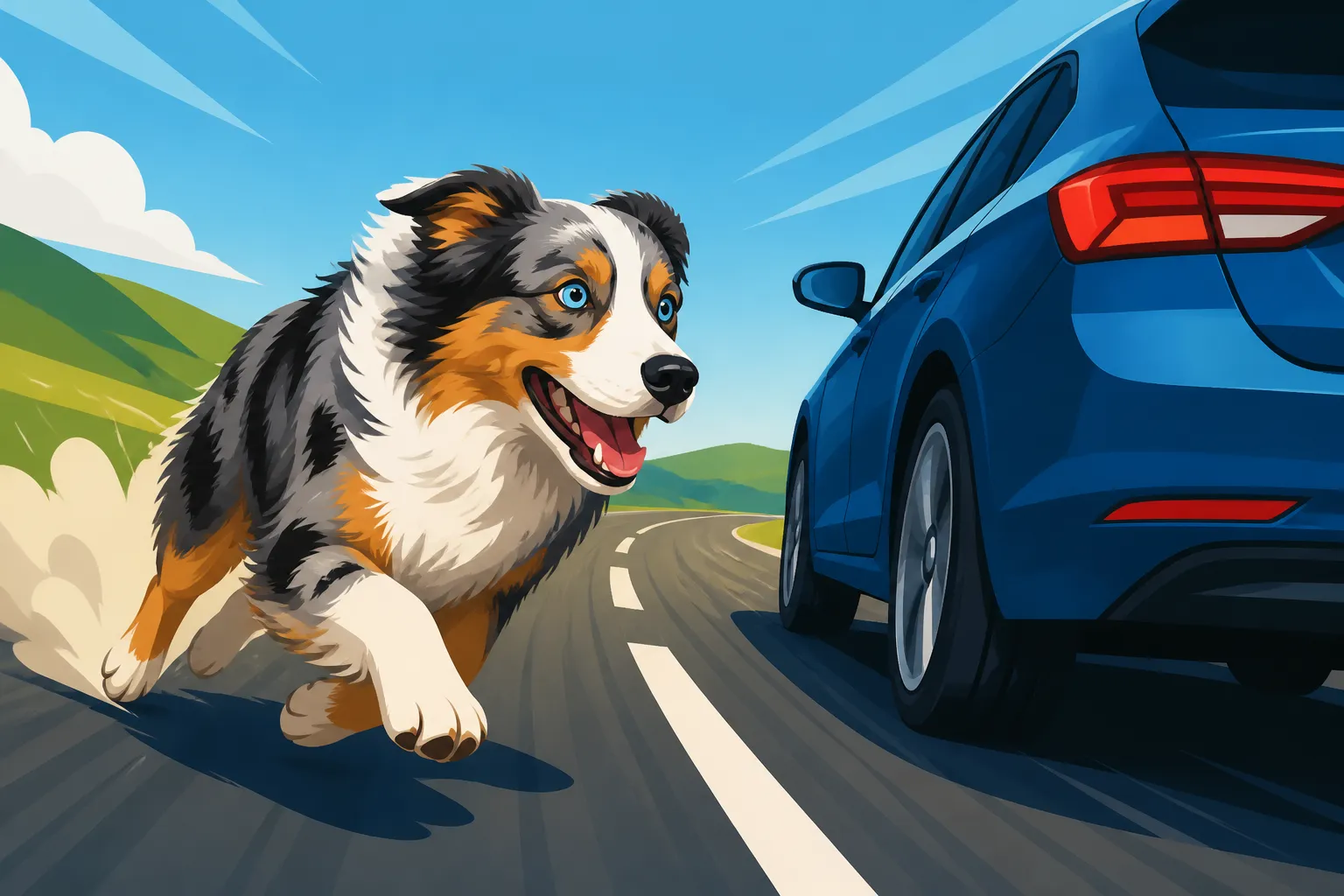
It’s a heart-stopping moment: your Australian Shepherd, suddenly a blur of motion, lunging towards a passing car with an intensity that seems to defy all training. This instinctual drive to chase anything that moves can turn an otherwise pleasant walk into a terrifying gamble, leaving you frustrated and constantly on edge. This guide will delve into the deep-seated reasons behind this behavior and equip you with practical management and training strategies to help keep your beloved Aussie safe.
The Instinct Behind the Chase: Why Aussies Bolt After Movement
Understanding why your Australian Shepherd chases cars is the first step toward managing the behavior. It’s not about malice or disobedience; it’s deeply rooted in their genetics and their historical purpose as working dogs. These aren't just pretty faces; they're finely tuned herding machines.
Herding Drive and Prey Drive Intersect
Australian Shepherds were bred for generations to control livestock. Their job involved moving animals, often large, fast-moving ones, by nipping at heels, circling, and maintaining intense focus. This isn't just a casual stroll in the park; it's a job requiring incredible focus and a strong prey drive, or perhaps more accurately, a herding drive. When a car, bicycle, skateboard, or even a fast-moving jogger passes by, it triggers this ancient instinct. The movement itself, especially something traveling quickly across their field of vision, can act like a sheep bolting from the flock. They see it as something to gather, to control, to stop. They aren't trying to cause an accident; they are simply trying to do what their genetics tell them they were born to do. This powerful, inborn drive is incredibly difficult, if not impossible, to train completely out of an Australian Shepherd. It's truly The Australian Shepherd Herding Drive You Cannot Train Out, a fundamental part of who they are.
Imagine your Aussie, an athlete primed for action, seeing a car speed past. To them, it’s not a dangerous piece of machinery; it's a large, unruly sheep that needs to be "brought back to the flock." Their eyes lock on, their body tenses, and the adrenaline surges. The impulse to chase is overwhelming, often overriding any obedience training you’ve worked on in calmer environments. This is why even a well-trained Aussie can suddenly seem to "forget" everything they know when a car whizzes by. It's less a memory lapse and more a primal takeover.
Overarousal and Environmental Triggers
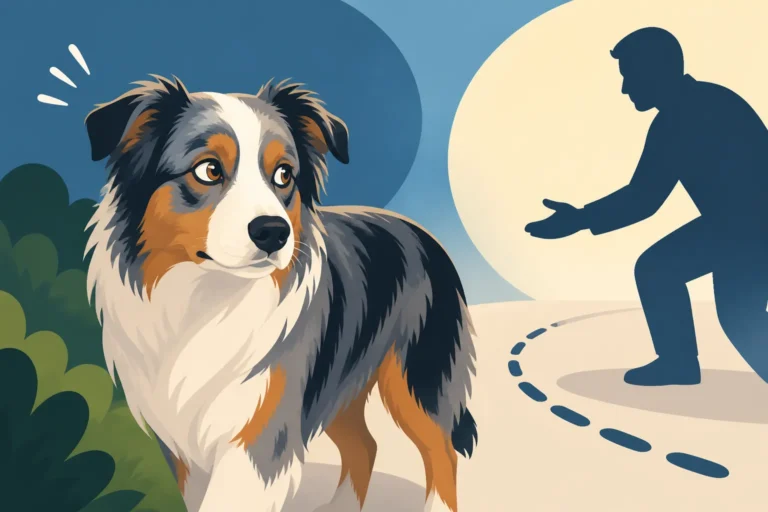
Beyond pure instinct, many Australian Shepherds can become overaroused by their environment. A busy street with lots of traffic, loud noises, and unpredictable movements can push a sensitive Aussie over their emotional threshold. When a dog is overaroused, their ability to process commands and make rational choices diminishes significantly. They might become hyper-focused, anxious, or even frustrated, leading to an impulsive reaction like car chasing. This ties into how easily they can experience Australian Shepherd Overarousal and Frustration.
Think of it like this: if you’re trying to concentrate on a complex task in a chaotic, noisy environment, your ability to perform at your best will suffer. For an Aussie, that chaos combined with their innate herding drive creates a perfect storm for undesirable behaviors. The sound of a passing truck, the flash of a bike, the sudden appearance of a runner—each can be a trigger that pushes them further into an overaroused state, making it harder for them to listen to you. Their senses are bombarded, and their herding mechanism kicks into overdrive.
Proactive Steps: Preventing Car Chasing in Young Aussies
Prevention is always easier than intervention, especially with a behavior as ingrained and potentially dangerous as car chasing. For Australian Shepherd puppies, laying a strong foundation is crucial.
Early Socialization and Exposure
Starting early with controlled, positive exposure to various sights and sounds is key. This isn't just about meeting other dogs; it's about helping your puppy learn to calmly observe the world around them without reacting impulsively. Gradually introduce them to environments with distant traffic, bicycles, and people moving at different speeds. The goal isn't for them to interact with cars, but to simply exist in their presence without feeling the need to chase.
When you're out with your puppy, keep interactions brief and positive. If a car passes, and your puppy merely notices it without reacting strongly, praise them calmly and reward them with a high-value treat. The idea is to build positive associations with these common environmental stimuli. Avoid pushing them too close to busy roads initially, and always keep sessions short to prevent overstimulation. A well-structured puppy program, like those offered by BAXTER & Bella, often includes guidance on crucial early socialization to help puppies learn to navigate the world calmly.
Foundation Obedience: Recall and "Leave It"
A rock-solid recall and a reliable "leave it" command are your absolute best defenses against car chasing. These aren't just parlor tricks; they are life-saving commands for an Australian Shepherd. Start practicing these commands in quiet, low-distraction environments, gradually increasing the difficulty.
For recall, make coming to you the most rewarding thing in the world. Use exciting vocalizations, high-value treats (like boiled chicken or cheese), and engaging toys. Practice frequently, even when your puppy is already close to you. For "leave it," start with low-value items and gradually work up to more tempting distractions. The goal is for your Aussie to instantly disengage from an enticing object or movement when you give the command. Remember, for a breed with such a strong drive, this will take consistent, dedicated training over many months. For more specific guidance on recall around high-value distractions, refer to articles like Australian Shepherd Recall Around Moving Things and The Recall Word That Stops an Aussie Mid-Chase.
Managing the Risk: Safety and Containment for Established Chasers
If you already have an Australian Shepherd with a car-chasing habit, management becomes paramount. Your primary goal is to prevent the behavior from happening, both for their safety and to prevent the behavior from becoming more ingrained. Every time they successfully chase a car, they are self-rewarding the behavior, making it harder to break.
Tools for Safety and Control
Using the right equipment can make a world of difference.
- Front-Clip Harnesses: These harnesses clip in the front, redirecting your dog's momentum back towards you if they pull, making it harder for them to lunge forward. This gives you more control than a traditional back-clip harness or a flat collar.
- Double Leashing: For extreme cases or for dogs in training, use two leashes. One leash attaches to their collar and the other to a front-clip harness. This provides a backup in case one piece of equipment fails or slips.
- Long Lines: If you want to give your Aussie more freedom in a safe, open area, a long line (15-30 feet) can be invaluable. This allows them to explore while still being tethered to you, giving you the ability to interrupt a chase attempt safely. You can find excellent quality long lines on platforms like Amazon. Just make sure it's durable enough for an Aussie! For more details, see Long Line Length for an Australian Shepherd.
- Muzzles: In situations where you absolutely cannot risk your dog attempting to bite at tires (a common herding behavior) or if you're working on very high-distraction training, a well-fitted basket muzzle can be a temporary safety tool. It allows them to pant, drink, and take treats, but prevents dangerous biting.
Important Note: These tools are for management and safety; they are not a substitute for training. They buy you time and prevent rehearsal of the unwanted behavior while you implement training protocols.
Environmental Management and Avoidance
Until you have a rock-solid handle on the behavior, actively avoid triggers.
- Choose Quiet Routes: Opt for walking routes that are far away from busy roads. Seek out parks with large, fenced areas, hiking trails, or quieter residential streets during off-peak hours.
- Fenced Yards: Ensure your yard is securely fenced and that your Aussie cannot dig under, jump over, or slip through any gaps. Even if you have a fence, supervise them closely, as some determined Aussies can still find ways to "herd" cars through chain link.
- Supervised Off-Leash Time: Only allow off-leash play in truly secure, fully enclosed areas where there is absolutely no chance of a vehicle passing by. Even then, maintain vigilance. A GPS collar, easily found on Amazon, can offer some peace of mind for tracking purposes, but it's not a substitute for proper containment and supervision.
This table provides a quick overview of management strategies:
| Strategy / Tool | Purpose | Pros | Cons |
|---|---|---|---|
| Front-Clip Harness | Redirects pulling, enhances control | Prevents hard pulling, safer than neck collar | May not stop a determined lunge entirely |
| Double Leashing | Backup security, increased control | Added safety layer, peace of mind | Can be cumbersome, requires coordination |
| Long Line | Allows freedom in safe areas, maintains connection | Gives space for exploration, training aid | Requires open space, can get tangled, still needs vigilance |
| Environmental Avoidance | Prevents rehearsal of unwanted behavior | Safest option, reduces stress for dog & owner | Limits walking routes, may not be feasible for all |
| GPS Collar | Tracks location if dog escapes | Peace of mind for runaways | Does not prevent escape, not a substitute for physical restraint |
Training Solutions to Redirect the Behavior
Management is crucial, but training is how you build a long-term solution. It requires immense patience, consistency, and a strong understanding of your Australian Shepherd's working drive.
Building a Stronger "Watch Me" and Focus
Teach your Aussie a "watch me" or "look at me" command. This is about getting them to break focus from distractions and engage with you instead. Start in a quiet environment, holding a high-value treat near your nose. When they look at you, say "watch me" (or your chosen cue), reward, and praise. Gradually introduce this command in slightly more distracting environments, always building on success.
The goal is that when you see a potential trigger approaching (a car in the distance), you can proactively ask for their attention before they even register the car as something to chase. This preemptive engagement helps break the behavioral chain before it starts. Consistent training will reinforce that focusing on you leads to good things, even when exciting things are happening around them.
Desensitization and Counter-Conditioning
This technique involves changing your dog's emotional response to the trigger. Instead of associating cars with an irresistible urge to chase, you want them to associate cars with positive things, like delicious treats.
- Start from a distance: Find a spot where cars are visible but far enough away that your Aussie notices them without reacting (no lunging, barking, or fixating). This is their "threshold."
- Observe and reward: The moment a car passes, and your Aussie sees it but remains calm, immediately give them a high-value treat. The treat should appear after the car passes, creating the association: "car passes = good things happen."
- Gradual approach: Over many sessions, slowly decrease the distance to the road or increase the intensity of the traffic, always staying below their threshold. If they start to react, you've moved too quickly; increase the distance again.
- Consistency is key: This process takes time, sometimes weeks or months. Consistency in timing and reward value is critical. You are essentially rewiring their brain's response.
For Aussies, who thrive on having a "job," consider giving them a specific task to perform when cars pass, such as a "touch" command to your hand, or a quick "sit-stay" with a reward. This gives them a more appropriate outlet for their focus.
Emergency Recall and Professional Help
While you work on desensitization, an emergency recall is non-negotiable. This is a special, high-value recall command (maybe a unique word or a whistle, as explored in Building an Emergency Recall Whistle for an Aussie) that you only use when safety is paramount and for which you provide the absolute best rewards. Never use it for casual situations, so its power remains undiluted for true emergencies.
If you're struggling to make progress on your own, or if your Aussie's car chasing is particularly intense or dangerous, do not hesitate to seek professional help. A certified professional dog trainer or a veterinary behaviorist experienced with herding breeds can provide tailored guidance. They can help you properly assess your dog's threshold, develop a precise training plan, and offer hands-on support. When looking for help, make sure you know Vetting a Trainer Before Booking an Aussie to ensure they use positive reinforcement methods suitable for a sensitive, intelligent breed like the Australian Shepherd.
This drive is a powerful part of who Australian Shepherds are, and while you may not completely eliminate the instinct, with consistent effort, smart management, and targeted training, you can teach your Aussie to safely navigate a world full of tempting, moving things.
Disclaimer
This article is for general informational purposes only and does not constitute professional advice. Laws, prices and regulations vary by location and change over time. Consult a qualified professional for guidance on your specific situation.