Whether an Australian Shepherd Needs a Job to Be Calm
Many Australian Shepherd owners grapple with a fundamental question: if their intelligent, high-energy dog isn't actively working on a farm, will it ever truly be calm? It’s a real struggle when you have a brilliant dog that seems to bounce off the walls despite long walks. This guide dives deep into the Australian Shepherd's inherent needs, exploring what "a job" truly means for them and how providing purposeful activities can be the key to unlocking a truly calm and well-adjusted companion in any home setting.
Understanding the Australian Shepherd's Innate Drive
Let's be honest, an Australian Shepherd isn't just a dog; it's a finely tuned, intelligent, and incredibly driven working machine. Their ancestors were bred to gather and manage livestock across vast expanses of land, often working independently and making quick decisions. This isn't just a historical footnote; it's etched into their very DNA. When we bring one of these amazing dogs into our homes, whether it's an apartment in the city or a sprawling suburban house, we're essentially bringing a highly capable employee who’s looking for a task.
This intrinsic herding drive isn't something you can simply train out of an Aussie. It’s their operating system. They observe, they process, and they instinctively want to organize and control movement. That's why you might see your Aussie trying to "herd" your children, the vacuum cleaner, or even other pets. It's not naughty behavior in their minds; it's just them doing what they were born to do. If this drive isn't channeled appropriately, it doesn't just disappear. Instead, it can manifest as frustration, anxiety, and a host of behaviors that make living with an under-stimulated Aussie incredibly challenging. They might pace endlessly, bark at every leaf blowing by, or become destructive. It's their way of telling you, loud and clear, "I need something to do!"
The Persistent Herding Instinct
Imagine being an Aussie. Your brain is constantly scanning for things to move, things to organize, things to put where they belong. This is The Australian Shepherd Herding Drive You Cannot Train Out. It’s powerful. It’s pervasive. It means that while a casual stroll around the block might satisfy some dogs, it barely scratches the surface for an Australian Shepherd. They don't just need to move their bodies; they need to engage their minds. A dog walking alongside you isn't necessarily working in the way an Aussie understands it. They need a purpose for that walk, even if it's just a complex scent trail to follow or a series of obedience commands to execute.
This constant internal "to-do list" means that simply burning off physical energy isn't enough. An Aussie can run for miles, chase a ball for an hour, and still come home looking for "what's next." This is often why owners get so frustrated: they provide what they think is ample exercise, only to find their dog still restless, still demanding attention, still unable to truly relax. The problem isn't necessarily the amount of exercise, but the type.
When Instinct Leads to Restlessness
Without appropriate mental and physical outlets, an Australian Shepherd can become a whirlwind of undirected energy. You'll see them An Australian Shepherd That Cannot Switch Off, pacing in the living room, nudging you with their nose, or bringing you toys incessantly. This isn't them being deliberately annoying; it's a symptom of profound boredom and under-stimulation. Their brains are wired for problem-solving, for active engagement with their environment. If that environment is just four walls and a comfy couch, they will invent their own "jobs"—and those jobs often involve things you don't want, like chewing furniture, digging up the yard, or excessive barking.
This restlessness can lead to serious behavioral issues, not just minor inconveniences. A dog that is constantly on edge can develop reactivity towards other dogs, strangers, or even sudden noises. Their natural wariness can heighten into suspicion or fear when they don't have a clear role or predictable routine that satisfies their inherent drive. It’s a vicious cycle where their unmet needs lead to behaviors that make them even harder to live with, exacerbating the problem.
Defining "A Job" for Your Aussie Beyond the Ranch
When we talk about an Australian Shepherd needing "a job," it's easy to picture them on a sprawling ranch, working sheep. And while that's their historical legacy, for most modern Aussies, "a job" looks very different. It's less about actual livestock and more about channeling their intelligence, drive, and desire to partner with you into constructive activities. A "job" provides purpose, mental stimulation, and a sense of accomplishment, all of which contribute to a truly calm and satisfied Aussie.
It's about understanding that their mental capacity needs exercise just as much as their physical body. Think of it as intellectual work for your dog. Instead of just "going for a walk," they need to "go on a mission." Instead of "playing fetch," they need to "retrieve specific objects on command." These distinctions might seem subtle to us, but to an Aussie, they make all the difference.
What Constitutes a "Job" in a Modern Home?
A "job" for an Australian Shepherd isn't necessarily a paid position or a traditional herding task. It’s any activity that requires them to think, problem-solve, and engage their natural abilities. This could be anything from advanced obedience routines to complex scent detection games. The key is that it utilizes their intelligence and desire to work alongside you.
Here are a few examples of what a "job" can look like for your Aussie:
- Scent Work: This is a fantastic option. Aussies have incredible noses and love to use them. Hiding treats or specific target odors for them to find is incredibly engaging. You can start simple, hiding treats around the house, and then progress to more complex setups, even joining local scent work classes. This is a brilliant way to give them a truly productive mental "task." Scent Games That Tire an Australian Shepherd are far more effective than just physical exertion.
- Trick Training: Teaching your Aussie a wide repertoire of tricks isn't just entertaining; it's a powerful way to engage their minds. From "spin" and "bow" to more complex sequential tricks, each new skill requires focus, problem-solving, and coordination. It builds a strong bond between you and offers endless opportunities for mental stimulation. Trick Training as Aussie Mental Work can be surprisingly tiring for them.
- Puzzle Feeders and Enrichment Toys: These aren't just toys; they are tools that give your dog a "job" at mealtime. Instead of simply gobbling down their food, they have to work for it. There are countless options available on platforms like Amazon, from simple treat-dispensing balls to multi-stage puzzles. These items make mealtime a challenging and rewarding activity, slowing down eating and engaging their brains.
- Advanced Obedience: Moving beyond basic "sit" and "stay" into more complex sequences, heeling patterns, and distance work can be incredibly satisfying for an Aussie. The precision and focus required provide significant mental exercise.
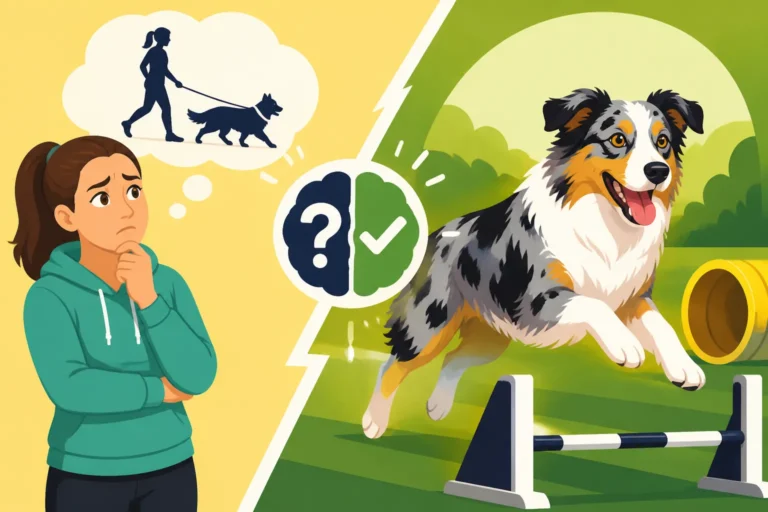
- Dog Sports (even at a beginner level): Agility, Rally Obedience, Flyball, or even Treibball (herding a large exercise ball) are all excellent ways to give your Aussie a structured job. They provide both physical and mental challenge in a fun, competitive, or recreational setting. These activities leverage their natural athleticism and drive.
The Difference Between Busy Work and Purposeful Work
It's crucial to distinguish between simply keeping your Aussie "busy" and giving them purposeful work. Handing them a chew toy for an hour is busy work; it keeps their mouth occupied but doesn't necessarily engage their higher cognitive functions or fulfill their innate drive for partnership and problem-solving. True purposeful work involves your interaction, clear objectives, and a sense of achievement for the dog.
For instance, playing an unstructured game of fetch for 30 minutes might seem like a lot of exercise, but for an Aussie, it can quickly become repetitive and less stimulating. A purposeful "job" might involve: "Go find the blue ball, bring it back, then go find the red tug, and bring that back too." This adds a layer of complexity and decision-making that is far more satisfying to their intelligent minds. It’s not just about running; it’s about thinking while running. This focus on "type over duration" is key, as highlighted in Why Aussie Exercise Type Beats Duration.
Practical Ways to Provide Purpose for a Calm Aussie
Integrating purposeful activities into your Aussie's daily routine doesn't have to be overwhelming. It's about consistency, creativity, and understanding your dog's individual preferences. Remember, the goal isn't to turn your living room into a sheep pasture, but to give your Aussie's brilliant brain meaningful tasks that lead to a calm, fulfilled dog.
The key is structure and engagement. A dog that knows what is expected of them, and has opportunities to use their natural talents, is a much happier dog. Think of it as providing a constructive outlet for all that energy and intelligence that's bubbling just under the surface.
Structuring Daily "Job" Opportunities
The best approach is to weave "job" opportunities throughout the day, rather than trying to cram everything into one giant session. Little bursts of mental work can be incredibly effective.
Here's how you can structure it:
- Morning Brain Warm-Up: Start the day with a short, focused training session (5-10 minutes). This could be practicing a new trick, reviewing known commands with increasing difficulty, or a quick nose work game. You can find excellent guided online courses, such as those offered by BAXTER & Bella, which provide structured lessons for everything from basic manners to more advanced skills, giving both you and your puppy a clear curriculum. This sets a positive tone for the day, immediately engaging their minds.
- Interactive Walks: Transform your regular walks into working outings. Instead of just letting your Aussie sniff around, incorporate commands like "find it" to direct them to specific scents, practice heeling through distractions, or ask for a "stay" before crossing a street. These small integrations turn a physical outing into a mental challenge. This ties into the concept of Giving an Australian Shepherd a Job Instead of a Walk.
- Mealtime Challenges: Always use puzzle feeders or scatter feeding for meals. This extends mealtime significantly and makes your Aussie work for their food, fulfilling a primal need. You can rotate different types of feeders to keep things novel and interesting.
- Afternoon Engagement: Another short training session or a more involved enrichment activity like a DIY sniff mat, a stuffed Kong, or a frozen lick mat can keep them occupied and mentally stimulated during quiet periods.
- Evening Wind-Down: Before bed, a gentle massage, a quiet chewing session with a long-lasting chew (supervise always!), or a simple "place" command on their mat can help them transition into a calm state.
It's important to remember that puppies also need jobs, but tailored to their developmental stage. A structured puppy curriculum, perhaps like the one BAXTER & Bella offers, can introduce concepts early and help mold a well-adjusted adult. Australian Shepherd Puppy Curriculum Month by Month is a great resource for understanding age-appropriate tasks.
Resources for Engaging Your Aussie's Mind
There are countless resources available to help you come up with engaging activities. Don't feel like you have to invent everything from scratch!
- Online Training Platforms: As mentioned, programs like BAXTER & Bella offer step-by-step guidance for a wide range of training, perfect for a dog that thrives on learning. Their structured approach can take the guesswork out of what to teach next.
- Books and Websites: Look for resources on canine enrichment, nose work, trick training, and dog sports. Many detailed guides are available through online retailers like Amazon.
- Local Classes: Enroll in local obedience classes, agility, nose work, or even herding clinics. These provide expert guidance, a structured environment, and social opportunities. Finding a trainer who truly understands the Australian Shepherd's working breed traits is paramount; you want someone who appreciates their drive, not tries to suppress it. Finding a Trainer Who Understands an Aussie can make all the difference.
- DIY Enrichment: Don't underestimate the power of simple household items. A cardboard box filled with crumpled paper and scattered kibble becomes an instant "foraging box" job. A towel rolled up with treats tucked inside becomes a "snuffle roll." Creativity is your friend!
Here's a quick comparison of different "job" types:
| Job Type | Description | Primary Benefit | Equipment/Space Needed | Training Level |
|---|---|---|---|---|
| Scent Work | Finding hidden treats or specific target odors. | Mental Fatigue | Small treats, secure space | Beginner to Advanced |
| Trick Training | Teaching a variety of novel behaviors on cue. | Brain Engagement | Treats, clicker (optional) | Beginner to Advanced |
| Puzzle Feeders | Eating meals from devices that require problem-solving. | Slow Eating, Mental Stim. | Various feeders | All levels |
| Advanced Obedience | Precise execution of complex command sequences. | Focus, Impulse Control | Leash, collar, treats, open space | Intermediate to Advanced |
| Dog Sports (e.g., Agility) | Navigating obstacle courses, often at speed. | Physical & Mental | Specific equipment, open field | Intermediate to Advanced |
| Treibball | Herding large exercise balls into a goal. | Herding Outlet | Large exercise ball, open field | Intermediate |
The Transformative Effect of Purpose-Driven Living
When an Australian Shepherd has a clear sense of purpose and regular opportunities to engage their minds and bodies constructively, the change in their demeanor can be remarkable. It’s not just about managing unwanted behaviors; it’s about truly fulfilling their potential and allowing them to be their best selves. A calm Aussie isn't one that's exhausted; it's one that's satisfied.
Imagine the difference between a high-achieving person stuck in a boring, unchallenging job versus one thriving in a role that uses all their skills. The dog experiences something similar. Their natural drives are met, their intelligence is engaged, and the need to self-entertain through destructive or anxious behaviors diminishes significantly.
From Restless to Relaxed: The Observable Shift
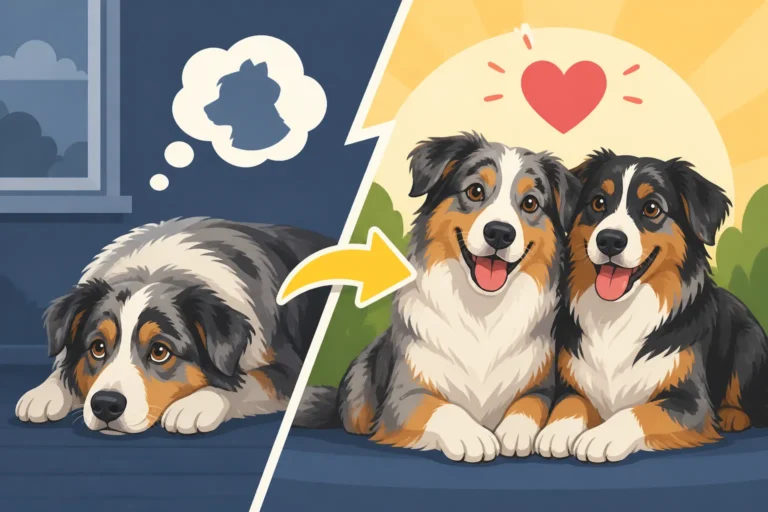
An Aussie that's consistently given purposeful work will exhibit a noticeable shift in behavior. The constant pacing might stop. The incessant barking might quiet down. Instead of being a wired, anxious presence, you'll start to see a dog that can genuinely relax. They’ll chew a toy calmly, settle on their mat, or simply curl up for a nap without constantly scanning for the next thing to do. This profound relaxation is a sign of a truly fulfilled dog. They’ve had their brain taxed in a good way, and now they can switch off.
This isn't to say every Aussie will become a couch potato. Their inherent energy and alertness will always be a part of their charm. But instead of frantic, undirected energy, you'll witness a calm readiness. They'll be alert, but not anxious; observant, but not obsessive. They'll be able to differentiate between "work time" and "downtime," a crucial skill for any working breed in a companion home. This ability to relax and simply be in the house is the ultimate goal, a direct result of their "job" needs being met. An Aussie That Paces Indoors is often doing so because their mind is under-exercised.
The Bond Deepens with Shared Purpose
Perhaps one of the most beautiful side effects of providing your Aussie with a job is the strengthening of your bond. When you actively engage with your dog in meaningful, purposeful activities, you become a partner in their work. You're not just a food dispenser or a leash holder; you're the leader of their pack, the director of their talents, and the source of their intellectual fulfillment.
This shared purpose builds trust, respect, and a deeper understanding between you and your dog. They learn to look to you for direction, to understand your cues, and to anticipate the joy of working together. This mutual engagement is incredibly powerful and creates a connection that goes far beyond basic companionship. It’s in these moments of shared activity—whether it's a challenging scent game or mastering a new agility sequence—that the true spirit of the Australian Shepherd shines through, and both of you reap the rewards.
Disclaimer
This article is for general informational purposes only and does not constitute professional advice. Laws, prices and regulations vary by location and change over time. Consult a qualified professional for guidance on your specific situation.