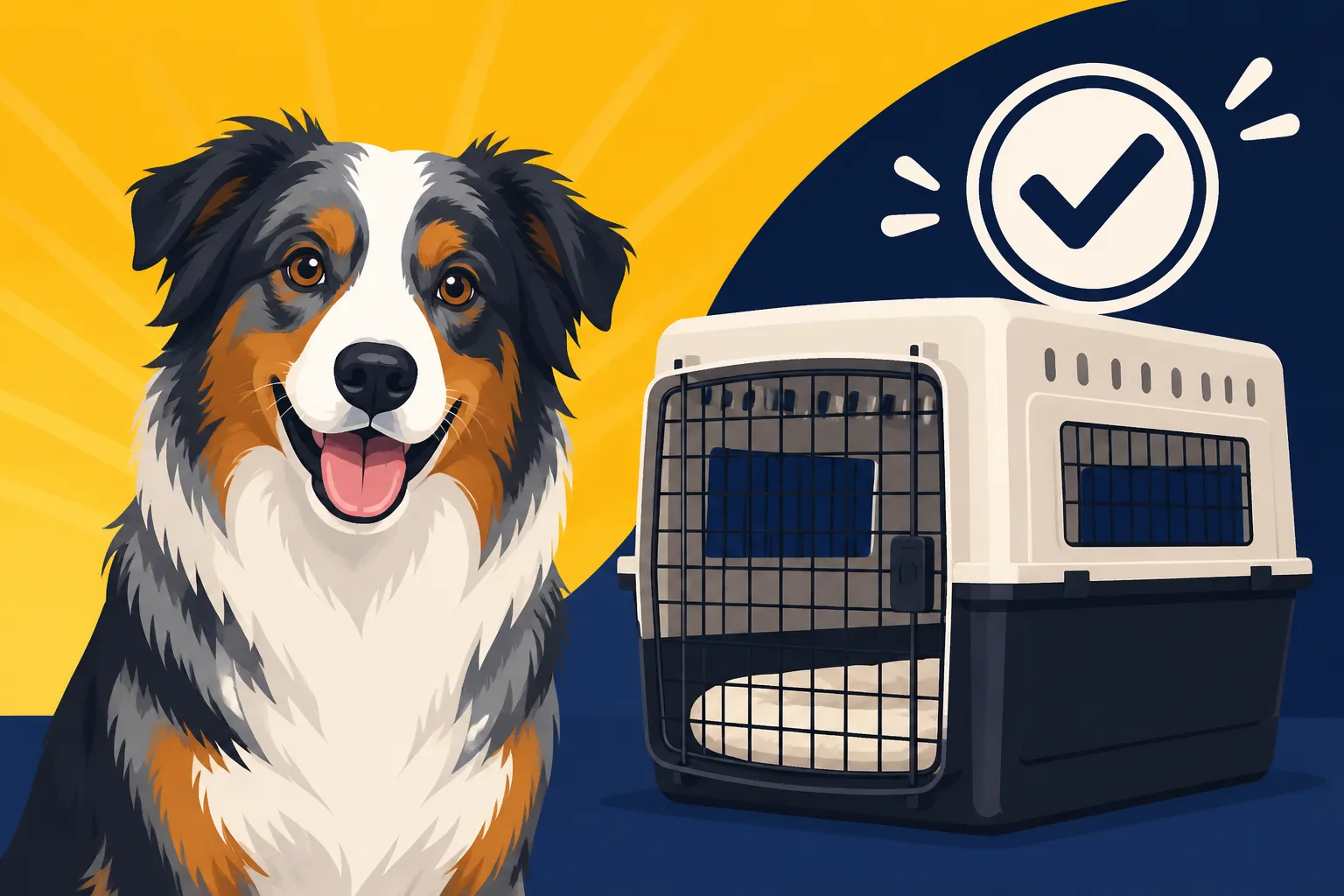
The Crate a Fifty Pound Aussie Needs
One of the most common dilemmas Australian Shepherd owners face is trying to figure out if their dog’s crate is truly the right fit. It’s not just about whether they can squeeze in; it’s about providing a space where your fifty-pound Aussie feels safe, comfortable, and genuinely at peace. This guide will walk you through everything you need to know to select and set up the ideal crate for your adult Australian Shepherd, transforming it from a potential battleground into their favorite den.
Why Crate Training Is Essential for a 50-Pound Aussie
For many new Australian Shepherd parents, the idea of a crate can feel a bit like putting your dog in jail. But I promise you, when introduced and used correctly, a crate becomes a profoundly positive tool. For a breed as intelligent, active, and sometimes mischievous as an Aussie, it's not just a convenience; it’s often a necessity for their well-being and the sanity of your household.
Safety and Security in Your Home
Think of your Aussie's crate as their personal, dog-proof room. When you can’t actively supervise them, especially during those early months or when you’re out of the house, a crate prevents them from getting into trouble. This means no chewing on electrical cords, no ingesting household cleaners, and no turning your favorite couch into a new chew toy. For a dog that needs constant mental engagement, a lack of supervision can quickly lead to destructive behaviors. Aussies are notorious for "An Australian Shepherd That Cannot Be Left With Nothing to Do," and a crate acts as a crucial boundary to keep them safe from themselves and your belongings safe from them.
Beyond preventing destruction, a crate can be a lifesaver in unexpected situations. If you have guests over who might accidentally leave a door open, or if your Aussie is prone to bolting after movement, their crate provides a secure spot. It’s also invaluable during emergencies or home repairs when you need to contain your dog safely away from hazards or workers. Knowing your Aussie is secure, rather than free to roam and potentially injure themselves or damage property, offers incredible peace of mind.
Aid in House Training and Routine
Australian Shepherds, like most dogs, have a natural instinct to keep their sleeping area clean. This denning instinct is a powerful ally in house training. When your fifty-pound Aussie puppy arrives, a correctly sized crate will discourage them from eliminating inside it because they don't want to soil their sleeping space. This means they'll learn to hold it until they are let outside. It's a fundamental principle of "House Training an Aussie Puppy in Six Weeks."
Beyond initial house training, a crate helps establish a predictable routine. Dogs thrive on routine, and knowing when they’ll be crated, when they’ll go outside, and when they’ll get playtime helps them feel secure and understand expectations. This predictability reduces anxiety and makes transitions smoother, whether it's bedtime, a quick trip to the store, or needing to settle down for an hour or two while you work from home. For an adult Aussie, even one who is fully house-trained, the crate can still serve as a useful tool for maintaining good habits and preventing regressions during times of stress or change.
Creating a Den for Calmness
In a bustling household, every dog needs a quiet sanctuary where they can truly relax without interruption. For an Australian Shepherd, a breed that can sometimes be prone to overstimulation or "Australian Shepherd Noise Sensitivity and Startle," their crate can become that much-needed retreat. It’s a personal den where they can go to decompress after a busy play session, escape the chaos of children, or simply nap undisturbed.
Properly introduced, the crate should never feel like punishment. Instead, it should be a place associated with comfort, safety, and positive experiences. Many Aussies learn to love their crates, going in voluntarily for naps or just to get away from the world for a bit. It's their own personal space, much like a child's bedroom or a quiet reading nook for us. This sense of having a predictable, safe space can significantly reduce stress and help an Aussie develop a healthy "off switch," especially beneficial for "An Aussie That Cannot Switch Off." This space also serves as a great tool for "Enforced Naps for an Overtired Aussie Puppy," teaching them how to settle even when they're still buzzing with energy.
Choosing the Right Size Crate for Your Adult Australian Shepherd
Selecting the correct crate size is arguably the most crucial step in making the crate a positive and effective tool for your Australian Shepherd. Too small, and it's uncomfortable and can feel like punishment. Too large, and it defeats the purpose for house training and can make your Aussie feel less secure.
The "Stand, Turn, Lie Down" Rule
When evaluating a crate for your adult Australian Shepherd, remember the "Stand, Turn, Lie Down" rule. Your Aussie should be able to:
- Stand up comfortably without hitting their head on the top.
- Turn around easily in a full circle without awkward maneuvering.
- Lie down stretched out on their side with plenty of room.
To get precise measurements, have your Australian Shepherd stand and measure their length from the tip of their nose to the base of their tail (not the tip, especially if they have a natural bobtail!). Then measure their height from the top of their head to the floor while standing. Add a few inches to these measurements to ensure ample space for comfort. For example, if your Aussie is 26 inches long and 20 inches tall, you’ll need a crate that is at least 30-32 inches long and 24-26 inches tall. It sounds simple, but many owners underestimate how much space their dog genuinely needs to be comfortable.
Common Crate Dimensions for a 50-Pound Aussie
While individual Aussies can vary in size, a healthy adult Australian Shepherd typically falls within the 35 to 65-pound range, with "Australian Shepherd Height and Weight" usually being 18-23 inches at the shoulder. For a 50-pound Australian Shepherd, a 42-inch crate is often the sweet spot.
Here’s a general guideline for crate sizes, but always measure your specific dog:
| Aussie Weight Range (Approx.) | Crate Length (Approx.) | Crate Width (Approx.) | Crate Height (Approx.) | Suitable For |
|---|---|---|---|---|
| 35-50 lbs | 36 inches | 23 inches | 25 inches | Smaller males, average females |
| 50-70 lbs | 42 inches | 28 inches | 30 inches | Average males, larger females, most adults |
| 70+ lbs (less common) | 48 inches | 30 inches | 32 inches | Very large males (rare) |
For a 50-pound Aussie, the 42-inch crate usually provides enough room for them to stretch out, stand, and turn comfortably without being so vast that they can choose one corner as a bathroom area. If you’re getting a puppy, many wire crates come with dividers, allowing you to buy the adult-sized crate and adjust the space as your puppy grows. This saves you from buying multiple crates over time and ensures you always have the right "The Crate a Fifty Pound Aussie Needs."
Types of Crates: Pros and Cons for an Active Aussie
Just like there are different types of homes, there are various styles of crates, each with its own advantages and disadvantages. What works best for one Australian Shepherd might not be ideal for another, especially considering their intelligence and energy levels.
Wire Crates: Versatile and Ventilated
Wire crates are probably what most people picture when they think of a dog crate. They are widely available, often found on Amazon, and come in a vast range of sizes.
Pros:
- Excellent Ventilation: The open wire design allows for maximum airflow, which is crucial for a double-coated breed like an Australian Shepherd, especially in warmer climates.
- Visibility: Your Aussie can see what's happening around them, which can be comforting for some dogs who like to be part of the action. This also allows you to keep an eye on them easily.
- Portability/Storage: Many wire crates fold down flat for easy transport or storage. They often come with handles for carrying.
- Affordability: Generally, wire crates are more budget-friendly than other options.
- Dividers: Many models include a divider panel, making them ideal for puppies as you can adjust the internal space as they grow, perfectly following the "Stand, Turn, Lie Down" rule for house training.
Cons:
- Less Den-Like: The open design might not appeal to Aussies who prefer a more enclosed, cozy den. You can easily fix this by covering the crate with a blanket or a dedicated crate cover to create a more secure feel.
- Can Be Noisy: If your Aussie moves around a lot, the metal bars can rattle, which might disturb you or them.
- Escape Artists: Highly motivated or anxious Aussies might try to bend bars or find ways to escape if not properly secured. Wire crates can also be less robust for a dog determined to get out, and an Aussie with "An Australian Shepherd That Gets Worse in the Evening" might find the crate frustrating.
Plastic/Airline-Style Crates: Secure and Den-Like
These crates are made of sturdy plastic, often with wire doors and ventilation holes on the sides. They are commonly used for air travel because of their robust construction and enclosed nature.
Pros:
- Security: Their solid construction makes them more secure and difficult for an escape-artist Aussie to break out of compared to a wire crate.
- Den-Like Feel: The enclosed design offers a more private, den-like atmosphere, which many dogs instinctively prefer. This can be very calming for an Aussie who is easily overstimulated. They are excellent for "Getting a Restless Aussie to Settle in a Crate" because of this secure feeling.
- Travel-Friendly (Airline Approved): If you plan to travel by air with your Aussie, an airline-approved plastic crate is a must-have.
- Easy to Clean: The smooth plastic surfaces are generally easier to wipe down and sanitize than wire crates.
Cons:
- Less Ventilation: While they have vents, the airflow is not as good as a wire crate, which can be a concern in hot weather.
- Less Visibility: Your Aussie has a more restricted view of their surroundings.
- Bulkier: They don't fold down and can be more cumbersome to store or transport.
- Heavier: The solid construction means they are heavier than wire or soft-sided crates.
Furniture Crates: Aesthetic Meets Function
These crates are designed to blend seamlessly with your home decor, often looking like end tables or stylish cabinets. They typically feature wooden or metal frames with various designs.
Pros:
- Aesthetics: Their primary appeal is that they look like regular furniture, avoiding the "cage" appearance of traditional crates.
- Dual Purpose: They can serve as a functional piece of furniture, like a bedside table or side table, which is great for smaller living spaces.
Cons:
- Cost: Furniture crates are significantly more expensive than wire or plastic options.
- Fixed Size: Most don't come with dividers, so you'll need to buy one specifically sized for your adult Aussie, or purchase a separate training crate for a puppy.
- Durability: The material quality can vary greatly. A determined chewer could damage wooden elements, making them less ideal for an Aussie with "An Australian Shepherd Destroying Doors When Alone."
- Portability: They are usually heavy and not designed for easy moving or travel.
Soft-Sided Crates: Lightweight for Mild Temperaments
Made from fabric stretched over a collapsible frame, soft-sided crates are designed for portability and lightness.
Pros:
- Portability: Extremely lightweight and often fold down into a compact carrying case, making them great for car trips, dog shows, or visits to friends.
- Comfort: The fabric can offer a cozier feel for some dogs.
Cons:
- Not for Chewers/Escape Artists: These are absolutely not suitable for an Aussie who chews or tries to escape. A few minutes of determined effort and they’ll be out, often with a damaged crate. If your Aussie is known for their "Australian Shepherd Puppy Nipping That Draws Blood," this type of crate is a definite no-go.
- Less Secure: Offers minimal containment for an anxious or high-drive Aussie.
- Limited Durability: The fabric can tear or rip over time, especially with regular use by an active dog.
- Cleaning: Fabric can absorb odors and stains more easily than plastic or wire.
For a fifty-pound Australian Shepherd, especially one with that classic Aussie drive and intelligence, a sturdy wire or plastic crate is generally the most practical and safest choice. You can always enhance the den-like feel of a wire crate with a cover.
Making the Crate a Safe Haven for Your Australian Shepherd
Once you've picked out "The Crate a Fifty Pound Aussie Needs," the real work begins: making it a positive and cherished space for your dog. This isn’t about locking them away; it’s about teaching them that their crate is a wonderful place to be.
Positive Association and Training
The key to successful crate training is building strong, positive associations. Never, ever use the crate as a punishment. If your Aussie sees the crate as a consequence for bad behavior, they will learn to fear or dislike it. Instead, focus on making it a reward.
Start by placing high-value treats and favorite toys inside the crate, leaving the door open. Let your Aussie explore it at their own pace. Encourage them to go in by tossing treats. Once they're comfortable entering, start closing the door for very short periods – literally seconds – then open it and reward them. Gradually increase the time the door is closed, always staying nearby. Feeding meals inside the crate is another fantastic way to build positive associations. A consistent positive reinforcement program, like those taught by BAXTER & Bella, emphasizes making every interaction with the crate a good one. Use puzzle feeders or long-lasting chews (more on those below) to keep them engaged and happy while inside. Patience is paramount; pushing too fast can lead to an Aussie who protests loudly when crated. If you find yourself dealing with "Crate Training an Aussie That Protests," slow down the process and go back to shorter durations with higher rewards.
Comfort and Enrichment Inside
A crate should be comfortable. While some Aussies will rip up any bedding you put in, many appreciate a soft, comfortable place to lie down. For chewers, consider a durable, chew-proof mat or a heavy-duty bed that resists destruction. Brands like Kong and K9 Ballistics offer options that can withstand even the most determined Aussie teeth. For non-chewers, a soft blanket or a regular dog bed can make the crate extra inviting.
Beyond bedding, enrichment is vital. A crate isn't just for sleeping; it's a place where your Aussie can be mentally engaged. Fill a Kong or other stuffable toy with peanut butter, yogurt, or kibble and freeze it. This creates a long-lasting treat that keeps your dog busy and happy in their crate. "Chew Toys That Last With an Australian Shepherd" are essential. Look for durable rubber toys or safe bully sticks (always supervise with new chews). "Puzzle Feeders That Slow an Australian Shepherd" are also excellent for mealtime, turning eating into a rewarding activity inside the crate. These activities help your Aussie associate the crate with good things and reduce boredom, which can often manifest as whining or destructive behavior.
Location, Location, Location
Where you place the crate can significantly impact your Aussie’s comfort and acceptance of it. Initially, it's often best to place the crate in a central area of your home, like the living room or your bedroom, where your Aussie can still feel connected to the family. Aussies are companion dogs, and isolating them completely can increase anxiety. Being able to see and hear you, even if they're in their crate, helps them feel more secure.
As they become more comfortable, you can experiment with moving the crate to a quieter spot if you prefer, or if they seem to be more relaxed with less household commotion. However, for many Aussies, especially during the early stages of training or during nighttime, being close to their people provides reassurance. Consider where your Australian Shepherd naturally gravitates to nap – that might be a good indicator of their preferred "den" location. Ensure the crate is not in direct sunlight, in a draft, or too close to loud appliances. The goal is to make it a consistently safe, comfortable, and positive space for your fifty-pound Australian Shepherd.
Disclaimer
This article is for general informational purposes only and does not constitute professional advice. Laws, prices and regulations vary by location and change over time. Consult a qualified professional for guidance on your specific situation.