Long Line Length for an Australian Shepherd
One of the biggest struggles Australian Shepherd owners face is balancing their dog's boundless energy and innate desire to run with the very real need for safety. You want to give your intelligent, active Aussie the freedom to explore and stretch those powerful legs, but busy environments, unpredictable wildlife, or even just the open road can make off-leash time a dangerous gamble. This guide will walk you through understanding why a long line is an indispensable tool for your Australian Shepherd, how to choose the right length, and best practices for using it safely and effectively to enhance your training and your bond.
Why a Long Line is Indispensable for Your Australian Shepherd
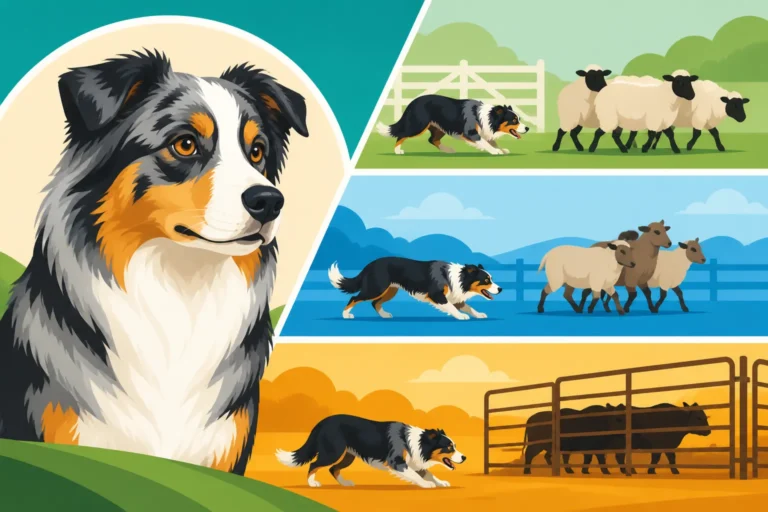
Australian Shepherds are incredible dogs, built for work and blessed with an intense herding drive. This means they're often highly motivated by movement – be it a squirrel darting across a field, a cyclist speeding by, or even just a leaf blowing in the wind. This powerful instinct, while magnificent to behold in the right context, can be a real challenge when you're trying to enjoy a park or a trail without the constant worry of your dog bolting. That's where a long line truly shines.
It's not about restricting them; it's about providing a safe, controlled way for them to experience more freedom than a standard six-foot leash allows. Imagine letting your Aussie explore a vast field, sniffing every interesting scent, practicing quick bursts of speed, and engaging with the environment without the fear of them disappearing over the horizon or into a dangerous situation. A long line gives them that space to be a dog, to run and chase, all while you maintain a vital connection and the ability to intervene if necessary. It’s an essential bridge between fully leashed walks and reliable off-leash freedom, particularly for a breed with such strong working instincts. You can practice Australian Shepherd Recall Around Moving Things with the security of knowing you have a physical backup.
Managing Herding Instinct and Prey Drive
Your Aussie's hardwired desire to herd and chase means that even the most well-behaved dog can have a moment where instinct overrides training. That squirrel, that rabbit, that distant jogger – they all represent potential "livestock" or prey to your Australian Shepherd. A long line allows you to safely proof your recall in environments where these temptations exist. It provides a physical tether to prevent them from acting on that chase instinct, giving you the opportunity to redirect their attention and reinforce your commands positively. It’s a powerful way to teach them impulse control in stimulating situations without the risk of them making a poor, and potentially dangerous, decision.
Think about those moments when your Aussie locks onto something. Without a long line, you might shout, panic, and hope they listen. With one, you can give your recall command, apply gentle pressure if needed, and guide them back to you, rewarding them heavily. This consistent practice, where the dog learns that coming back to you is always more rewarding than chasing, is invaluable. This tool also prevents many scenarios where a dog ends up in Australian Shepherd Behavior Problems From Under-Exercise because you're too worried to let them have enough space.
Building Reliable Recall Safely
Building a truly bombproof recall with an Australian Shepherd takes time, consistency, and a lot of practice in varying environments. A long line is your best friend in this process. It enables you to simulate off-leash scenarios while still having a safety net. You can practice calling your dog back from distractions, having them check in with you, and reinforcing that connection without the constant anxiety that they might ignore you and run off.
Imagine practicing "come" in a new park. Your Aussie might be excited, sniffing new smells, perhaps even spotting another dog far away. If they hesitate to respond, the long line allows you to gently guide them back to you, rather than letting them "fail" by ignoring the command. This builds success upon success, reinforcing the positive association with returning to you. It's a key tool in progressing from a backyard recall to one that holds up in real-world scenarios, transforming a tentative "come" into The Recall Word That Stops an Aussie Mid-Chase.
Choosing the Right Long Line Length for Your Aussie
The "right" length for a long line isn't a one-size-fits-all answer; it depends heavily on your training goals, your dog's current skill level, and the environment you'll be using it in. What works perfectly in a wide-open field won't be practical in a dense forest. Generally, long lines come in a range of lengths, most commonly 15, 20, 30, and 50 feet, but you can find even longer ones.
It’s often beneficial to have a couple of different lengths to suit various situations. For instance, a shorter line might be perfect for initial proofing in a slightly more contained area, while a longer one offers maximum freedom for advanced recall practice in an open space. When you're first getting started, or if your Aussie is still a puppy, it's often easier to manage a slightly shorter line, and then gradually increase the length as both of you become more comfortable and proficient.
Shorter Long Lines 15-20 Feet
A 15-20 foot long line is a fantastic starting point for many Australian Shepherds. It offers a good balance of increased freedom without becoming too unwieldy, especially if you're working in areas that aren't vast open spaces. This length is ideal for initial recall training outside a fenced yard, allowing your dog to move a bit further away from you while still keeping them relatively close for quick intervention.
It's also excellent for practicing impulse control around moderate distractions. If you're working on not pulling towards other dogs or interesting smells on a trail, the 15-20 foot line gives them a bit more slack to feel independent, but you can still easily step on it or gather it quickly if a strong temptation arises. This length is particularly useful when you're still teaching your Aussie the ropes of Teaching an Aussie to Come Off a Chase and need to keep them within a manageable distance.
Medium Long Lines 25-40 Feet
Stepping up to a 25-40 foot long line is where you start truly giving your Australian Shepherd a taste of significant freedom. This length is perfect for larger parks, sports fields, or open trails where you want to allow extensive sniffing, exploring, and running without the constant constraint of a short leash. It provides enough distance for your Aussie to feel almost off-leash, but you still have that crucial safety connection.
This range is often favored for more advanced recall practice, especially when introducing more significant distractions. Your Aussie has to really choose to come back to you from a greater distance, making the successful recall even more rewarding. It’s also great for practicing distance commands like "stay" or "down" in a real-world setting. Just be mindful of other park users and your surroundings when deploying a line of this length, as it covers a significant area.
Longer Long Lines 50+ Feet
For those truly expansive spaces – wide-open beaches, vast empty fields, or secluded natural areas – a 50-foot or even 100-foot long line can provide the ultimate "off-leash" experience with built-in safety. This length allows your Australian Shepherd to gallop at full speed, investigate distant scents, and truly stretch their legs without you having to worry about them wandering too far or encountering danger.
Using such a long line requires a good amount of space and careful handling, as managing a huge coil of line can be tricky. It's often best for advanced recall practice where you're proofing your Aussie's ability to respond from extreme distances. It's not usually practical for everyday walks, but for dedicated training sessions or special outings to truly open spaces, it offers unparalleled freedom and a fantastic way to engage your high-energy companion. Many Aussie owners find these extra-long lines are crucial for allowing their dogs to truly get their Australian Shepherd Exercise at One to Two Hours a Day.
| Length (Feet) | Ideal Use Case | Pros | Cons |
|---|---|---|---|
| 15-20 | Initial recall, moderate distractions, suburban parks | Easy to manage, good control, compact | Less freedom, dog feels more tethered |
| 25-40 | Advanced recall, larger parks, open trails, exploration | Good balance of freedom and control, versatile | Can get tangled, requires more conscious handling |
| 50+ | Off-leash simulation, vast open fields, beaches | Maximum freedom, true long-distance recall practice | Very cumbersome, prone to tangles, high snag risk, requires dedicated open space |
Training with a Long Line: Best Practices
Using a long line isn't just about clipping it on and letting your Australian Shepherd run wild. There's a proper technique to ensure safety for both you and your dog, and to maximize its effectiveness as a training tool. The goal is to make the long line feel as invisible as possible to your dog, a gentle suggestion rather than a constant tug, while you maintain control.
One of the biggest mistakes people make is treating a long line like a bungee cord, constantly reeling the dog in or using it to yank them back. This teaches your dog nothing positive and can even create an aversion to coming back to you. Instead, think of it as a communication device and a safety brake. The bulk of your training should still involve positive reinforcement and making coming back to you the best option ever.
Proper Handling and Safety First
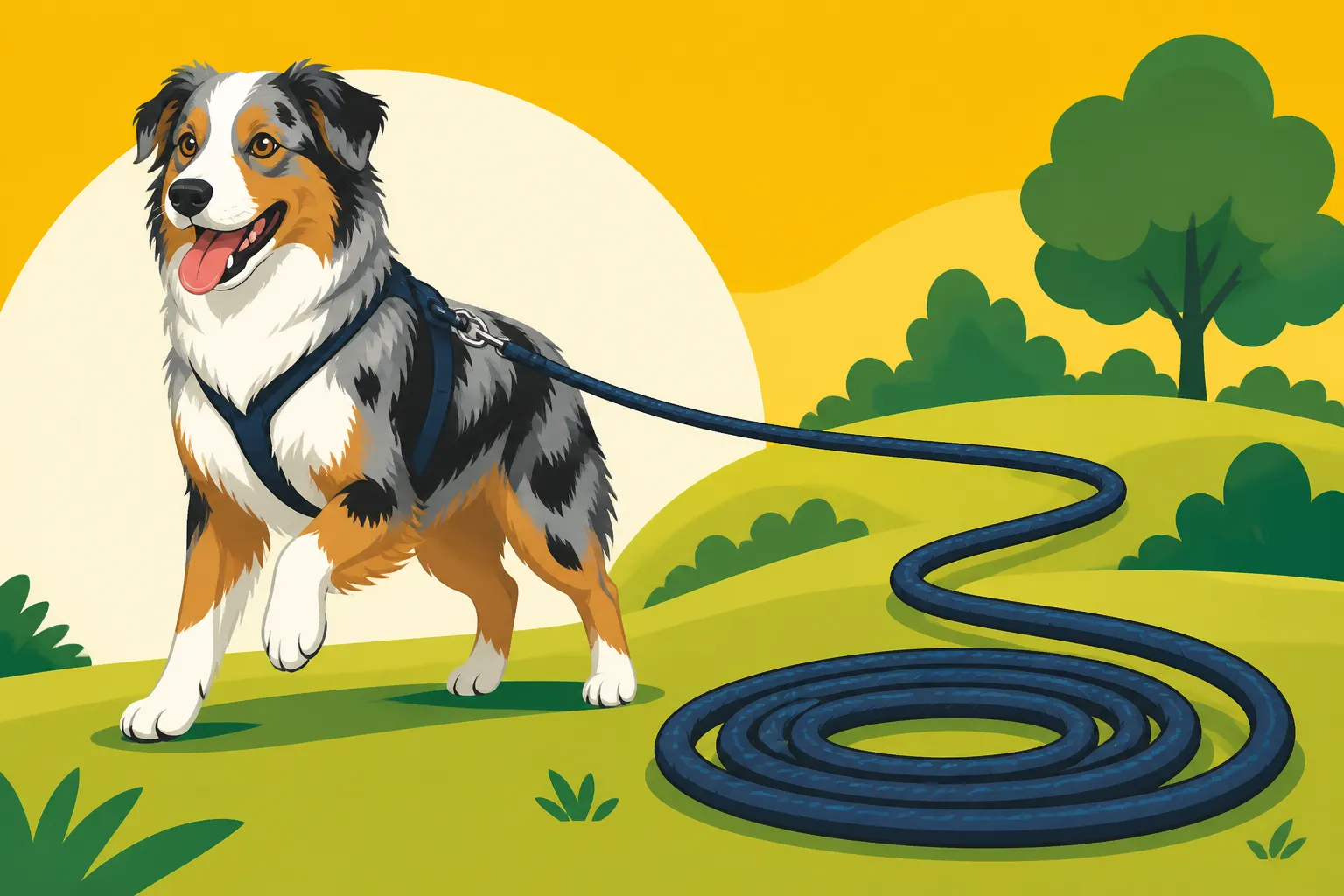
When handling a long line, safety is paramount. Never, ever wrap the line around your hand or any part of your body. A sudden lunge from your Australian Shepherd can cause severe rope burns or even broken bones. Instead, let the line slide through your open hand, wearing gloves if you're concerned about friction, especially with nylon lines. You can also allow the line to trail behind your dog, keeping an eye on it to step on if needed, which is often easier with lighter, non-snagging materials like Biothane.
Always be aware of your surroundings. A long line can easily get tangled around trees, poles, or even other people or dogs. Keep the line as neat as possible, gathering excess slack in loops in your hand. If your dog makes a sudden move, bracing your stance and letting the line slide through your grip to a point where you can step on it is often safer than trying to hold a full-speed Aussie directly. This helps you avoid injury and keeps your dog safe.
Introducing the Long Line to Your Aussie
For some Australian Shepherds, a long line can feel a bit strange at first, especially if they’re used to a standard short leash. Introduce it gradually and positively. Start in a familiar, low-distraction environment, like your backyard. Let your Aussie drag the line for short periods, getting used to the feel of it. Supervise them closely so it doesn't snag or tangle. Make it a fun experience, associating the line with freedom and play.
Once they're comfortable dragging it, you can begin to hold the end. Let them wander, but intermittently call them back, rewarding enthusiastically. The line is there to gently guide if they ignore your call, not to yank them. This helps them understand that the line is not a punishment, but a tool that allows them to explore more while still needing to check in with you. This gradual introduction prevents any negative associations, making it a positive training experience from the start.
Practicing Recall and Impulse Control
The long line truly shines when practicing recall. Start by allowing your Australian Shepherd to explore to the end of the line. Then, enthusiastically call their name and your recall cue (like "The Recall Word That Stops an Aussie Mid-Chase"). As they turn or start to move towards you, encourage them with praise and take a few steps backward to make yourself more enticing. When they reach you, reward them with high-value treats and praise. If they hesitate, give a gentle, consistent tug on the line while continuing to call them, guiding them towards you, then reward immediately upon arrival.
Gradually introduce distractions: a bouncing ball, a familiar person, another calm dog. Practice your recall at varying distances and with different types of distractions. The long line allows your Aussie to make mistakes safely, giving you the chance to correct and guide them without the fear of them running away entirely. It also allows for Practicing Aussie Recall in a Fenced Field if your usual space isn't fully enclosed. This consistent practice builds reliable recall, teaching your Aussie that coming back to you is always the best choice, no matter what tempting sights or smells are around. It’s also fantastic for working on a solid "leave it" command before they reach an enticing (or dangerous) object.
Types of Long Lines and Materials
Just like with any other piece of dog gear, long lines come in various materials and styles, each with its own advantages and disadvantages. Choosing the right material can significantly impact your comfort as the handler and the overall experience for your Australian Shepherd. Considerations often include durability, how well it sheds water and dirt, how easy it is to grip, and of course, cost.
Some popular options are traditional nylon webbing, the increasingly popular Biothane, and occasionally cotton or polypropylene. The clips and hardware are also important; you want something sturdy that won't break or come undone when your active Aussie puts pressure on it. Remember that this tool is an investment in your Aussie's safety and training, so choosing a quality product that will hold up to their energy is key. You can find a huge variety of choices for Long Lines and Harnesses for an Australian Shepherd on sites like Amazon, letting you compare materials and lengths easily.
Nylon Webbing
Nylon long lines are probably the most common and widely available option. They are generally affordable, come in a vast array of colors, and are reasonably durable. Nylon webbing is strong and can withstand a lot of wear and tear, making it a good choice for an active Australian Shepherd. They're lightweight when dry, which is nice for packing.
However, nylon lines do have some drawbacks. They can absorb water, becoming heavy and taking a long time to dry, which isn't ideal for wet conditions or muddy fields. When wet, they can also pick up a lot of dirt and debris. Perhaps the biggest complaint from handlers is the potential for "rope burn" if the line quickly slides through your hands, especially if your Aussie lunges. For this reason, wearing gloves when using a nylon line, particularly a longer one, is often recommended.
Biothane Long Lines
Biothane long lines have gained immense popularity for good reason. Biothane is a polyester webbing with a PVC coating, giving it a leather-like look and feel, but with superior performance characteristics. The biggest advantage is that Biothane is waterproof and doesn't absorb odors, making it incredibly easy to clean. Mud, water, and dirt can simply be wiped off, and it dries almost instantly.
This material is also more comfortable to hold than traditional nylon for many people, as it has a softer, smoother texture that is less likely to cause rope burn. It doesn't tangle as easily as nylon, which is a huge bonus when managing a long line in the field. The main downside to Biothane is that it tends to be more expensive than nylon, but for many Aussie owners, the ease of cleaning and handling makes the investment worthwhile.
Other Materials: Cotton, Rope, and Specialty Lines
While nylon and Biothane are the most popular, you might encounter long lines made from other materials. Cotton webbing can be soft and comfortable to hold, but it's highly absorbent, dries slowly, and can be prone to mildew. Rope lines, often used for climbing, are extremely strong but can be very bulky and prone to severe rope burn if not handled carefully.
Some specialty lines might incorporate reflective stitching for visibility in low light, or have different types of clips. For your Australian Shepherd, always prioritize strength and security of the hardware. A swivel snap hook is generally preferred as it prevents the line from twisting and tangling at the attachment point to your dog's harness or collar. Companies like BAXTER & Bella often provide recommendations for training gear, including lines, that complement their training programs, ensuring you get suitable tools for your energetic companion.
Disclaimer
This article is for general informational purposes only and does not constitute professional advice. Laws, prices and regulations vary by location and change over time. Consult a qualified professional for guidance on your specific situation.