Redirecting Aussie Puppy Teeth Onto a Toy
Bringing home an Australian Shepherd puppy is an absolute joy, filled with boundless energy, adorable antics, and, let's be honest, a whole lot of sharp little teeth. Many new Aussie parents quickly find themselves wondering how to navigate the relentless puppy nipping that can make playtime a painful experience for human hands and ankles. This guide is here to walk you through understanding why your clever little herder insists on using their mouth, and more importantly, how to effectively redirect those sharp puppy teeth onto appropriate toys, setting your Aussie up for polite interactions and a happy, well-adjusted life.
Why Your Australian Shepherd Puppy Is a Mouthy Marvel
It’s easy to get frustrated when your cute, fluffy land shark is constantly trying to chew on you, but it’s crucial to remember that this behavior is completely normal for puppies, especially for a breed like the Australian Shepherd. Their history as working dogs means they come hardwired with certain instincts that manifest early on, including their keen interest in using their mouths.
The Deep Roots of Herding Instinct
Australian Shepherds were bred for generations to work livestock, which involves a lot of nipping and nudging to guide animals. This isn't aggressive behavior; it's a natural, inherent drive to control movement. When your Aussie puppy nips at your heels, pants, or even your moving hands, they're not trying to be naughty – they're simply trying to "herd" you. It's their natural operating system kicking in, trying to gather and direct anything that moves, including their human family members. Understanding this innate drive helps us approach the behavior with patience rather than anger. You can't train out this instinct entirely, but you can absolutely redirect it onto appropriate outlets. For more on this, you might find The Australian Shepherd Herding Drive You Cannot Train Out helpful.
Teething Troubles and Mouthy Exploration
Beyond instinct, there’s the undeniable physical discomfort of teething. Just like human babies, Aussie puppies experience significant discomfort as their needle-sharp puppy teeth fall out and their stronger adult teeth emerge. This process typically starts around 3-4 months of age and can last until they're about six months old. During this period, chewing provides immense relief to their aching gums. Everything becomes a potential chew toy, from furniture legs to, unfortunately, your fingers. Puppies also explore their world with their mouths, learning about textures, pressure, and what is safe to chew. This exploratory biting is a natural part of their development, helping them learn bite inhibition – how hard they can bite before it hurts.
Overstimulation and Tiredness
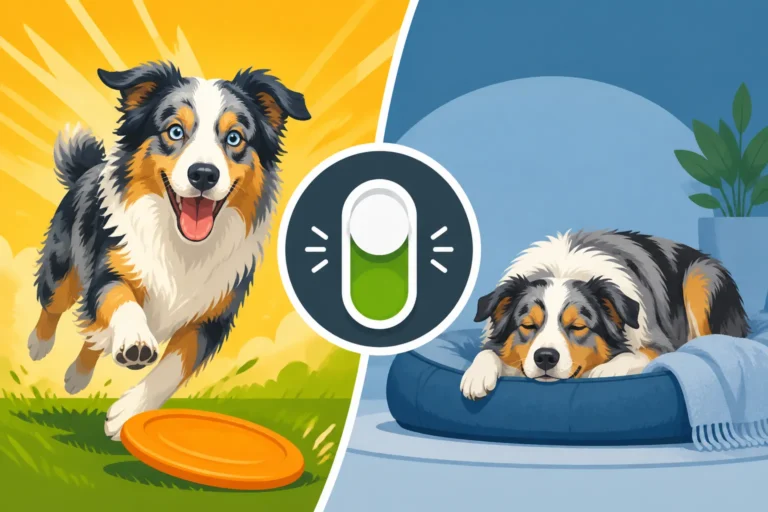
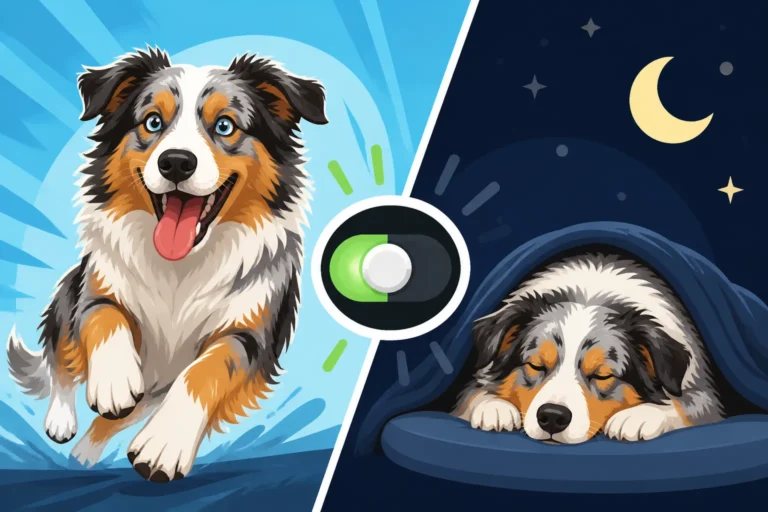
Sometimes, puppy nipping isn't just about herding or teething; it's a clear sign of an overtired or overstimulated puppy. Just like a toddler throwing a tantrum, an Aussie puppy who has had too much excitement, not enough quiet time, or skipped a nap might resort to frantic, uncontrolled nipping. They might zoom around, jump, and then latch onto the nearest available limb. Recognizing these patterns is key. If your puppy seems to get "witching hour" zoomies followed by intense nipping, it's often a signal they need to wind down. Enforced naps in a crate can work wonders in these situations. Consider reading Enforced Naps for an Overtired Aussie Puppy for practical tips.
Mastering the Art of Redirection: From Nips to Nuzzles
The good news is that puppy nipping is a phase, and with consistent, clear guidance, your Australian Shepherd puppy will learn that human skin is off-limits for chewing. The goal isn't to stop them from chewing entirely – that's impossible and unhealthy – but to teach them what to chew instead.
The "Yelp and Withdraw" Technique
This classic method helps teach your puppy about bite pressure. When your Aussie puppy’s teeth make contact with your skin, even gently, let out a high-pitched "yelp" or "ouch" immediately. Don't yell aggressively, just a quick, sharp sound that mimics another puppy's reaction to pain. Then, instantly withdraw your hand, ending playtime. Stand up, turn your back, or even leave the room for a few seconds. The key is to convey, "Ouch, that hurt! Play stops now." Most puppies are startled by the yelp and learn quickly that hard biting makes their fun human disappear. Once they calm down, you can re-engage with a toy. If you're dealing with particularly painful nips, Australian Shepherd Puppy Nipping That Draws Blood provides further guidance.
The Seamless Toy Swap
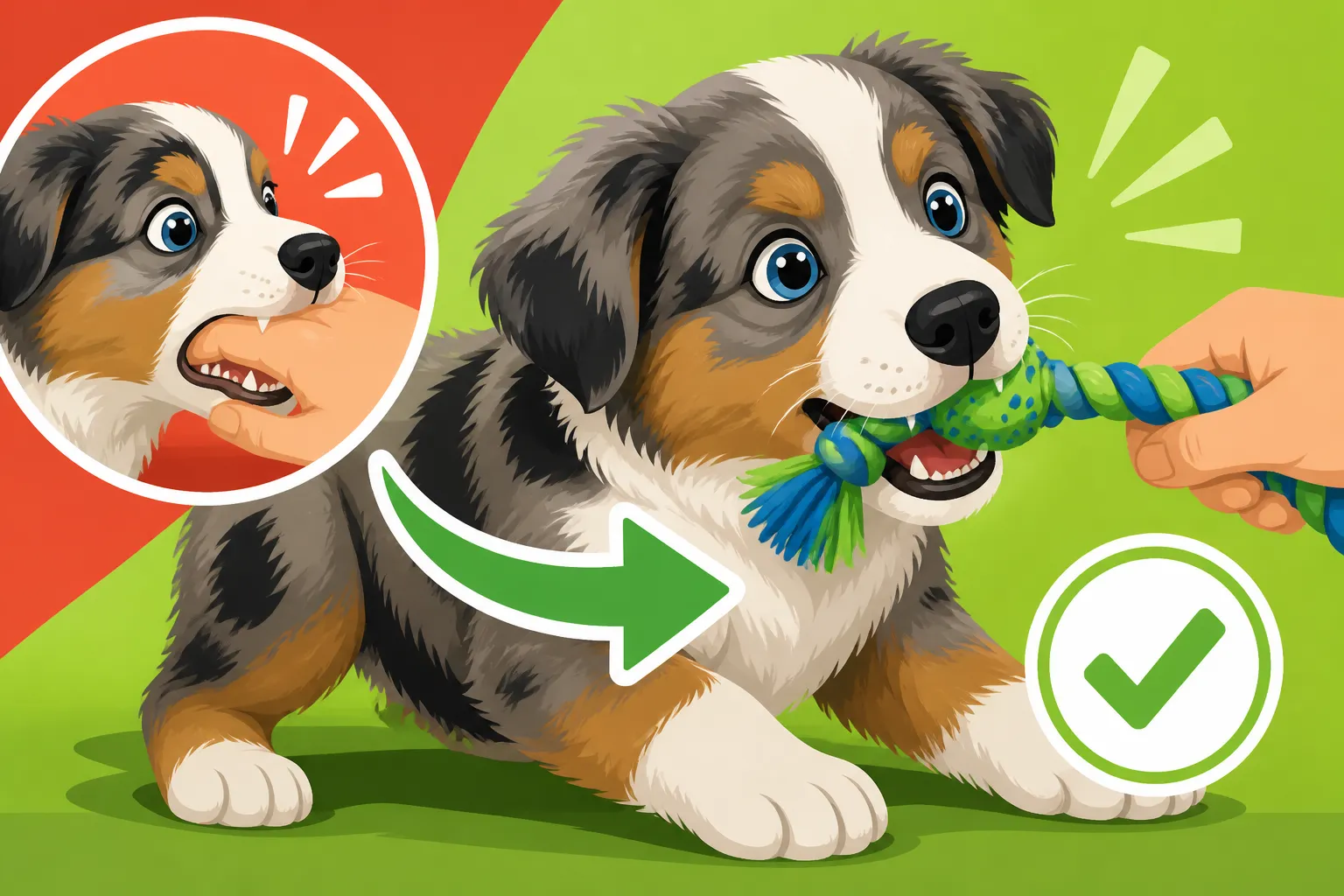
This is where the "redirection" truly comes into play. The moment your puppy even thinks about nipping your hand, or if they do nip and you've used the yelp technique, immediately present a suitable chew toy. Keep appropriate toys readily available in every room where you interact with your puppy. As their mouth heads for your arm, gently but firmly interpose the toy. Wiggle the toy to make it more enticing. When they latch onto the toy, praise them enthusiastically ("Good chew!"). This teaches them, "Instead of biting me, bite this! And when you bite this, you get praise and attention!" The timing is everything – you want to interrupt the undesirable behavior before it escalates and offer the correct alternative.
Teaching "Gentle" and Bite Inhibition
Beyond just redirecting, you want your Aussie to learn bite inhibition – the ability to control the force of their bite. Even when playing with toys, encourage gentle mouthing. If they get too rough with a toy and their teeth accidentally scrape your hand, repeat the "yelp and withdraw" technique. You can also practice holding a treat in your hand and only releasing it when your puppy takes it gently without teeth touching your skin. Start with easy releases and gradually make them wait for more patience. This nuanced training is a critical part of a puppy's development and can prevent serious issues down the line. Puppy classes, like those recommended by BAXTER & Bella, often focus on this crucial life skill, providing a structured environment for learning.
The Right Tools for the Job: Choosing Appropriate Chew Toys
Having a variety of safe, engaging, and appropriate chew toys is absolutely essential for redirecting an Aussie puppy's teeth. Without attractive alternatives, your puppy will simply find other things to chew on – which might be your expensive shoes or furniture.
Durability and Variety are Key
Australian Shepherds are intelligent, strong-jawed dogs, even as puppies. You’ll quickly discover that not all chew toys are created equal. Look for toys made from durable rubber or tough nylon that can withstand enthusiastic chewing. A variety of textures and shapes will keep your puppy interested. Some toys are designed for aggressive chewers, while others are more for comfort or gentle play. Consider having a rotation of toys to keep things fresh and exciting. You can find a huge selection of durable puppy chew toys on Amazon, offering different materials, shapes, and sizes to suit your Aussie's preferences.
Here's a quick comparison of common puppy chew toy types:
| Toy Type | Description | Benefits | Considerations |
|---|---|---|---|
| Rubber Chews | Durable, often hollow for stuffing with treats (e.g., Kongs). | Satisfies chewing, food puzzles, soothing. | Can be expensive, need to clean. |
| Nylon Chews | Very hard, long-lasting, often flavored. | Extremely durable, good for strong chewers. | Can be too hard for very young puppies, splinters. |
| Rope Toys | Cotton or synthetic ropes, good for tugging and flossing. | Interactive, helps clean teeth (some claim). | Can unravel and be ingested, supervise use. |
| Soft Plush Toys | Comforting, good for carrying, sometimes with squeakers. | Emotional comfort, gentle play. | Easily destroyed, stuffing can be ingested. |
| Edible Chews | Bully sticks, dental chews, etc. | High value, helps with teething. | Can be calorie-dense, monitor for choking. |
Interactive and Puzzle Toys
Beyond passive chew toys, interactive options can be incredibly effective for an Aussie puppy. Puzzle feeders, for example, challenge their minds while rewarding them with food, tiring them out mentally which can reduce nipping. A flirt pole, which is essentially a stick with a lure attached to a rope, can mimic the chasing and capturing experience of herding, providing a fantastic outlet for their predatory and herding drives without using your body. Brands often recommend specific enrichment gear. For instance, online training programs like BAXTER & Bella often integrate specific puzzle feeders and interactive toys into their curriculum, understanding that mental stimulation is as important as physical exercise for a smart breed like the Australian Shepherd. Puzzle Feeders and Enrichment Gear for an Aussie offers more ideas for engaging toys.
Soothing Teething Pain
When your Aussie puppy is really struggling with teething, certain items can offer extra relief. Freezing a wet washcloth, a stuffed Kong, or even specially designed teething rings can provide a cool, firm surface for them to chew on, numbing their sore gums. Always ensure any frozen item is safe and won't splinter or be swallowed. Avoid ice cubes, which can be too hard and potentially chip teeth.
The Pillars of Success: Consistency, Patience, and Prevention
Redirecting puppy nipping isn't a one-and-done solution; it's an ongoing process that requires dedication from everyone in the household. Think of it as laying the groundwork for all future training.
Everyone On Board: A Unified Front
Consistency is the single most important factor. Every person who interacts with your Australian Shepherd puppy must use the same techniques and boundaries. If one family member allows nipping, even playfully, while another strictly redirects, your puppy will become confused and progress will slow or even reverse. Hold a family meeting to discuss the "yelp and withdraw" and "toy swap" methods, ensuring everyone is on the same page. This unified approach prevents your clever Aussie from learning that different people have different rules.
Managing the Environment for Success
Prevention is a powerful tool. Don't set your puppy up for failure by giving them opportunities to nip inappropriately. When you’re actively engaging with your puppy, always have a toy within arm's reach. If you're petting them, keep a toy in your other hand. If you're sitting on the floor, have a handful of toys around you. When you cannot actively supervise, your puppy should be in a safe, puppy-proofed area like a crate or a playpen with appropriate chew toys. This is also important for Getting a Restless Aussie to Settle in a Crate. Avoiding situations where they might get overstimulated or bored and resort to nipping out of frustration is critical.
The Power of Routine and Adequate Exercise
A tired puppy is a good puppy – but for an Australian Shepherd, "tired" means both physically and mentally engaged. Ensure your puppy gets appropriate, age-specific exercise, but remember that too much physical activity can also lead to overstimulation and more nipping. Balance walks and playtime with mental stimulation through training sessions, puzzle toys, and scent games. A predictable routine for feeding, potty breaks, play, and naps can also significantly reduce anxiety and frantic behavior. The Aussie Puppy Curriculum Month by Month delves deeper into structuring your puppy's early development. Remember, Aussies need a "job" to be truly content. While physical exercise is crucial, mental work that truly tires them out is often what settles them.
When to Call in the Reinforcements
While puppy nipping is normal, sometimes it can feel overwhelming, or you might worry your puppy's biting is unusually aggressive. If you're consistently using redirection techniques and not seeing improvement, or if your puppy's bites are breaking skin frequently despite your efforts, it's absolutely okay to seek professional help. A certified professional dog trainer or a behaviorist specializing in puppies can offer tailored advice and hands-on guidance. Puppy classes are also invaluable for socialization and learning these foundational behaviors in a controlled environment. Organizations like BAXTER & Bella provide comprehensive online training programs that can guide you through these stages, offering expert advice and support from the comfort of your home. Sometimes, learning from a professional is the best investment you can make for your Aussie's future. For those considering formal training, What Six Weeks of Aussie Puppy Class Costs offers an idea of typical expenses.
Successfully redirecting your Australian Shepherd puppy's sharp teeth onto appropriate toys is a journey of patience, consistency, and understanding their unique breed traits. By recognizing their instincts, providing the right tools, and maintaining clear boundaries, you’ll help your adorable land shark transform into a well-mannered companion who knows exactly what to chew (and what not to!).
Disclaimer
This article is for general informational purposes only and does not constitute professional advice. Laws, prices and regulations vary by location and change over time. Consult a qualified professional for guidance on your specific situation.