Tug as a Legal Outlet for Aussie Herding Drive
One of the biggest frustrations for Australian Shepherd owners is dealing with that intense, inherent herding drive when it’s directed at inappropriate targets like children, other pets, or even inanimate objects. This guide is all about channeling that powerful instinct into a positive, enriching, and perfectly legal activity: tug-of-war. We'll explore why tug is such a fantastic outlet for your Aussie's unique needs and how to play it in a way that strengthens your bond and builds good manners, rather than creating a demanding monster.
Understanding the Australian Shepherd's Herding Drive
If you live with an Australian Shepherd, you already know. This isn't just a dog that likes to chase; it's a dog that needs to manage and control movement. This isn't just a quirky habit; it’s the very operating system of their being, hardwired into their DNA over generations of working livestock. Understanding this fundamental truth is the first step to truly managing your Aussie's behavior in a positive way.
The Instinctive Nature of Herding
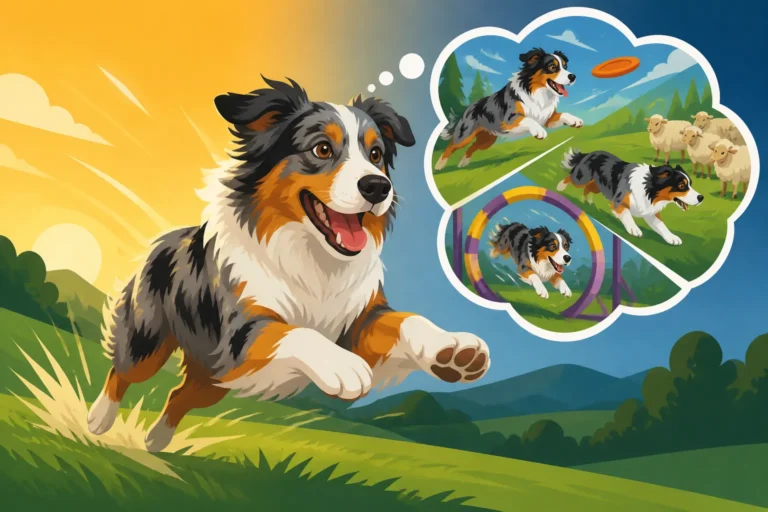
Australian Shepherds were bred for specific tasks on ranches: gathering sheep, moving cattle, and generally keeping order among livestock. This required a keen eye, quick reflexes, and an innate desire to control the movement of other animals. They don't just run after things; they think about how to influence direction, how to cut off an escape, and how to bring things back to a central point. This is why you see them circling, nipping at heels, and using their bodies to block. It’s not aggression; it's their job. You really can't train this out of them, because it's part of who they are, as detailed in The Australian Shepherd Herding Drive You Cannot Train Out. This powerful instinct isn't just about physical exertion; it's deeply mental, requiring problem-solving and focus. Without an appropriate outlet, this drive can become misdirected and incredibly frustrating for both dog and owner.
How Herding Drive Manifests in the Home
When there are no sheep or cattle around, that strong herding instinct doesn't simply disappear. It looks for other "livestock" to manage. This often means toddlers running in the yard, bicycles whizzing by, or even the vacuum cleaner. Many owners experience their Aussie nipping at the heels of family members, pushing children into groups, or barking frantically at cars passing outside the window. This isn't malicious behavior; it's your dog trying to do the job it was bred for. Imagine being an artist desperate to paint, but only given accounting spreadsheets; you'd find a way to express yourself, even if it was doodling in the margins. Your Aussie is the same. The high-pitched barks, the intense stares, the sudden dashes – these are all manifestations of that deep-seated need to control movement. Without constructive redirection, these behaviors can escalate into genuine problems like An Australian Shepherd Nipping a Toddler's Ankles or constant alert barking.
Why Tug-of-War Works for Aussies
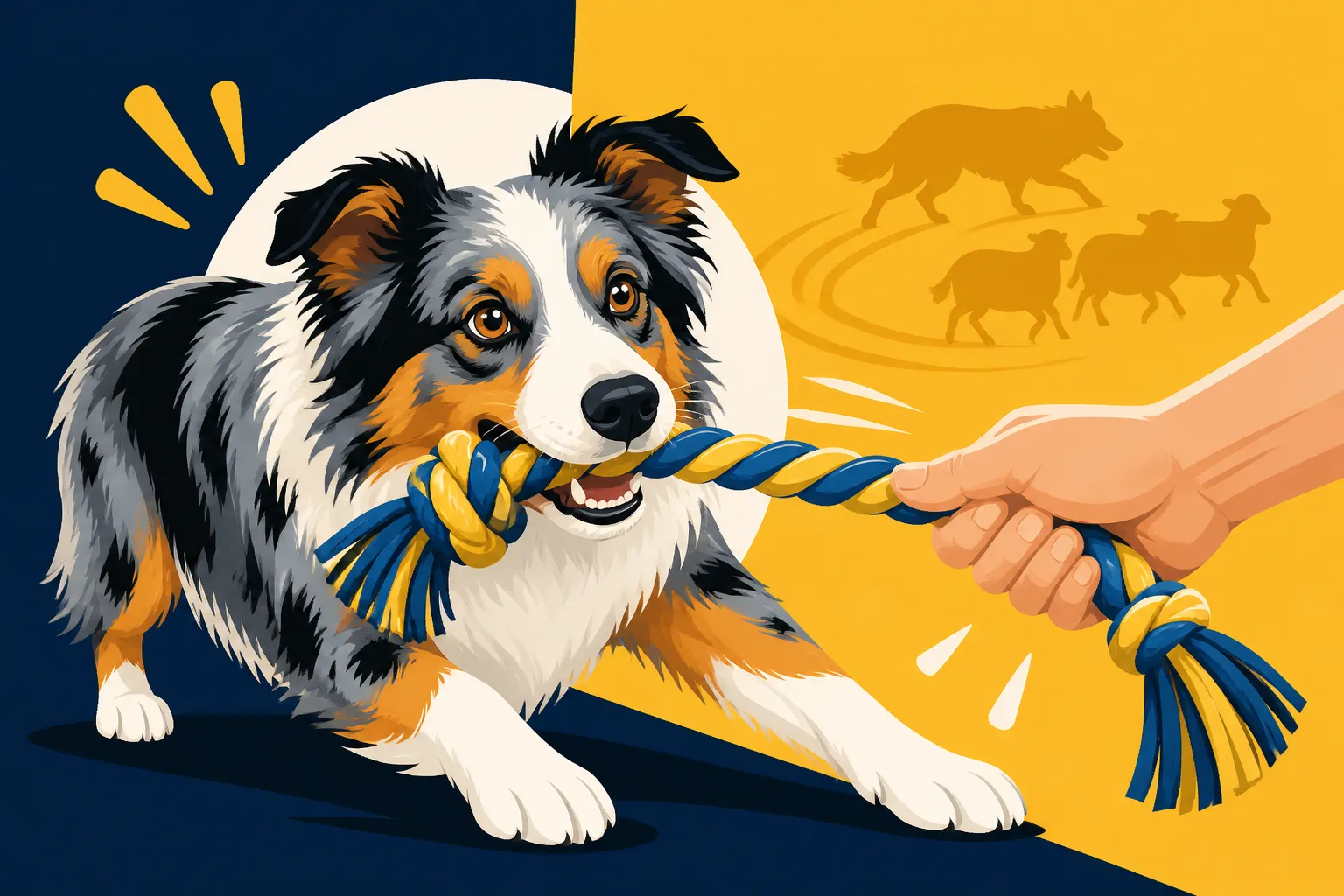
Tug-of-war might seem like a simple game, but for an Australian Shepherd, it's a sophisticated play that taps directly into their core drives. It's much more than just pulling; it's a dynamic interaction that satisfies many of their intrinsic needs in a controlled and safe environment.
Mimicking the "Catch" of Prey Drive
While herding is distinct from predatory behavior, there's a significant overlap in the drives involved. The chase, the focus, the "catch," and the "kill" (or, in play, the vigorous shaking of the toy) all resonate with an Aussie's instincts. When playing tug, your Australian Shepherd gets to engage in a controlled version of this sequence. They stalk the toy, they grab it with intent, they pull and shake, and they "possess" it. This provides a deeply satisfying outlet for that intense, focused energy. It allows them to feel successful in a "hunt," even if that hunt is just for a rope toy. This is particularly effective because it uses their mouth and body in a way that feels natural and productive to them, rather than simply running around aimlessly, which often doesn't truly tire an Aussie mentally. Mental Work That Actually Tires an Australian Shepherd often involves these focused, engaging activities.
Controlled Outlet for Physical and Mental Energy
Australian Shepherds are incredibly intelligent and physically capable dogs. A simple walk around the block rarely scratches the surface of their exercise requirements. Tug-of-war, when played correctly, is a full-body workout that engages both their muscles and their minds. They have to think about holding on, bracing their body, shifting their weight, and responding to your movements. It’s a dynamic negotiation. This intense physical activity, combined with the mental engagement of "winning" or strategically pulling, is far more tiring and satisfying than just chasing a ball for an hour. It burns off that excess energy in a way that aligns with their natural predispositions, offering a constructive way of Giving an Australian Shepherd a Job Instead of a Walk. This structured interaction prevents them from inventing their own "jobs," which often involve herding you, your kids, or the cat.
Building a Stronger Bond
Many people worry that playing tug will make their dog aggressive or dominant. With proper rules, the opposite is true. Tug-of-war is an incredibly interactive game that requires cooperation and communication. You're working together, even if it feels like a contest. When you play fair, respect your dog's strength, and follow established rules (like dropping the toy on command), you build trust. Your Aussie learns that you are a fun, engaging partner who provides outlets for their drives. This shared activity strengthens your relationship, making you more relevant and valuable in their eyes. It's a fantastic way to engage with them one-on-one, creating a shared language of play and respect. This positive interaction can significantly improve your Aussie's responsiveness in other training contexts because they view you as a source of good things and clear boundaries.
How to Introduce and Play Tug Safely and Effectively
Starting tug-of-war with your Australian Shepherd isn't just about grabbing a rope and pulling. To make it a truly beneficial outlet, you need to set clear expectations and use the right tools. This isn't just for fun; it's a vital part of their enrichment and training.
Choosing the Right Tug Toy
Selecting the appropriate tug toy is crucial for safety and engagement. A good tug toy should be durable, long enough to keep your hands away from your Aussie's mouth, and comfortable for both of you to hold. Avoid toys that are too small, as they can lead to accidental nips or your dog swallowing them.
Here's a quick guide to common tug toy materials:
| Material Type | Pros | Cons | Ideal For |
|---|---|---|---|
| Rope | Durable, good grip, machine washable | Can fray and be ingested, abrasive on teeth over time | Strong chewers, outdoor play |
| Fleece | Soft on mouth, gentle on hands, lightweight | Less durable, can unravel if poorly made | Puppies, gentler tuggers, indoor play |
| Rubber | Very durable, easy to clean, good texture | Can be hard on teeth, heavier | Power chewers, intense tug sessions |
| Fire Hose | Extremely durable, water-resistant | Can be rigid, not easily found | Working dogs, serious tug enthusiasts |
| Leather/Suede | Natural texture, good grip, durable | Can be expensive, requires care | Training, specific bite work |
For a strong Australian Shepherd, look for sturdy rope toys or those made from fire hose material. Many excellent options can be found on Amazon, designed specifically for active breeds. The length is important – you want at least 12-18 inches so there's enough room for both of you to safely grip without teeth accidentally connecting with hands. Always inspect toys regularly for wear and tear, and discard any that are starting to break apart to prevent ingestion.
Establishing Rules for a Fair Game
The key to successful tug-of-war is establishing clear rules that your Australian Shepherd understands and respects. This is not a free-for-all; it's a structured interaction.
- You Initiate and End the Game: Always be the one to present the toy and invite play. This teaches your Aussie that you control the valuable resource (the game). Similarly, you decide when the game is over. If your dog becomes too frenzied or starts to ignore commands, end the game immediately.
- "Drop It" is Non-Negotiable: This is the most critical rule. Teach your dog to drop the toy on command reliably. Practice this by offering a high-value treat in exchange for the toy. The moment they release, praise and reward. Once they understand, you can gradually phase out the treat, using praise and the promise of restarting the game as the reward. This command ensures you always have control, preventing resource guarding and allowing you to de-escalate play.
- No Teeth on Skin: If your Aussie's teeth accidentally touch your skin, even lightly, the game stops instantly. A sharp "ouch!" and dropping the toy, followed by turning your back for a few seconds, teaches them that rough play ends the fun. They learn quickly that gentle mouths keep the game going. This is a crucial step in teaching bite inhibition.
- Keep it Low and Forward: When tugging, try to keep the toy low to the ground and move it side-to-side, rather than jerking it upwards. This protects your dog's neck and spine, especially if they're still growing. Short, controlled tugs are better than wild, uncontrolled jerks.
Integrating Tug into Training and Exercise
Tug-of-war can be more than just a standalone game; it can be a powerful motivator and reward in your broader training regimen. This is especially true for an intelligent, drive-filled breed like the Australian Shepherd.
Consider using tug as a reward for successful obedience commands. After a strong "sit-stay" or a rock-solid "recall," a quick, enthusiastic game of tug can be far more motivating than a treat for some Aussies. This teaches them that listening to you leads to highly satisfying activities. The Recall Word That Stops an Aussie Mid-Chase can be powerfully reinforced with a game of tug when they come back.
For dogs that struggle with focus in distracting environments, a structured tug game can help them re-engage with you. If your Aussie is getting over-aroused by other dogs or movement, a short, intense session of tug in a quieter spot can help redirect that energy back to you. It's a fantastic way to reset their focus and remind them that you are the most exciting thing in their world. Many online training platforms, such as BAXTER & Bella, offer resources on how to use play, including tug, as a powerful training tool for energetic breeds like Australian Shepherds. They emphasize building engagement and focus through interactive games.
Remember to incorporate tug into a balanced exercise routine. While it’s great for mental and physical exertion, it shouldn’t be the only form of exercise. Mix it with walks, scent games, and other activities to ensure a well-rounded fitness and enrichment program. For more ideas on effective mental and physical outlets, check out How Much Daily Exercise an Australian Shepherd Needs and Why Physical Exercise Alone Never Settles an Aussie.
Common Pitfalls and How to Avoid Them
Even with the best intentions, playing tug with a high-drive Australian Shepherd can sometimes lead to challenges. Being aware of these common pitfalls and knowing how to navigate them will ensure that tug remains a positive and productive activity for both of you.
Preventing Over-Arousal
Australian Shepherds are known for their intensity, and it's easy for them to get over-aroused during high-energy play like tug-of-war. An over-aroused Aussie might start jumping, barking excessively, or losing their ability to respond to commands. This isn't constructive, as it can lead to frustration and accidental nips.
To prevent over-arousal:
- Keep Sessions Short: Instead of one long, frenetic session, opt for several shorter, intense bursts of tug throughout the day. Five minutes of focused, enthusiastic tug can be more beneficial than twenty minutes of escalating chaos.
- Incorporate Breaks: Build "pause" moments into the game. Stop pulling, ask for a "sit" or "down," then release them to tug again. This teaches impulse control and helps your Aussie regulate their excitement. It’s about teaching them an "off switch" during play. An Australian Shepherd That Cannot Switch Off often benefits from these controlled breaks.
- Vary Intensity: Don't always play at maximum intensity. Sometimes gentle tugs are just as rewarding, especially if you're trying to wind down after an exciting play session.
- Read Body Language: Learn to recognize the signs that your Aussie is getting too amped up. Wide, dilated eyes, tense body, stiff wagging tail, or frantic pulling are all indicators it’s time to dial it back or end the game.
Ensuring Your Aussie Understands "Drop It"
As mentioned earlier, "Drop It" is the cornerstone of safe and effective tug play. If your Australian Shepherd struggles with this command, tug can quickly become a battle for control or lead to resource guarding issues. Consistency and high-value rewards are key.
- Start Simple: Begin practicing "Drop It" in a low-distraction environment.
- Use Trade-Offs: Hold a high-value treat (like a piece of cheese or cooked chicken) near their nose while they're holding the tug toy. The moment they release the toy to sniff the treat, say "Drop It," give the treat, and then immediately re-engage with the tug toy for a brief pull. This teaches them that dropping the toy leads to something better or more fun, rather than ending the fun.
- Never Wrestle the Toy Away: Forcing the toy from your dog's mouth can damage your relationship and teach them to guard items more intensely. Always use a trade or a clear "Drop It" command.
- Practice Frequently: Integrate "Drop It" into every tug session, even if it's just for a second or two. The more they practice, the more fluent and reliable the command becomes. For an Aussie with strong drive, consistency is paramount, especially when working on Aussie Impulse Control With Moving Toys.
Managing the Obsessive Tugger
Some Australian Shepherds can become quite obsessive about tug, wanting to play constantly and struggling to disengage. This is a common manifestation of their high drive and intense focus. While tug is a great outlet, it shouldn't consume their entire day.
- Set Clear Boundaries: Establish specific times or situations for tug play. For example, "we play tug after our morning walk" or "we play tug when I say the word 'tug time'." This teaches them that tug is a designated activity, not an always-available option.
- Rotate Toys: Don't leave the tug toy out all the time. Put it away when play is over. This keeps the toy special and exciting, rather than something commonplace they can demand. When it comes out, it signifies a specific play session with you.
- Vary Activities: Ensure tug is just one part of a varied enrichment program. If tug is their only exciting activity, they will naturally fixate on it. Introduce more Scent Games That Tire an Australian Shepherd, puzzle toys, trick training, or structured walks to broaden their interests and reduce reliance on just one type of play.
- Reinforce Calm Behavior: Actively reward your Aussie when they are calmly resting, playing independently with appropriate toys, or simply existing quietly in the house. This teaches them that calm behavior is also desirable and earns your attention. Many Aussies need to learn how to Teaching an Aussie to Take a Break from their intense focus.
Tug-of-war is an incredibly powerful tool for bonding, training, and providing a legal, satisfying outlet for your Australian Shepherd's magnificent herding drive. By setting clear rules, choosing appropriate toys, and understanding your dog's instincts, you can transform this simple game into a cornerstone of a happy, well-adjusted life with your high-energy companion.
Disclaimer
This article is for general informational purposes only and does not constitute professional advice. Laws, prices and regulations vary by location and change over time. Consult a qualified professional for guidance on your specific situation.