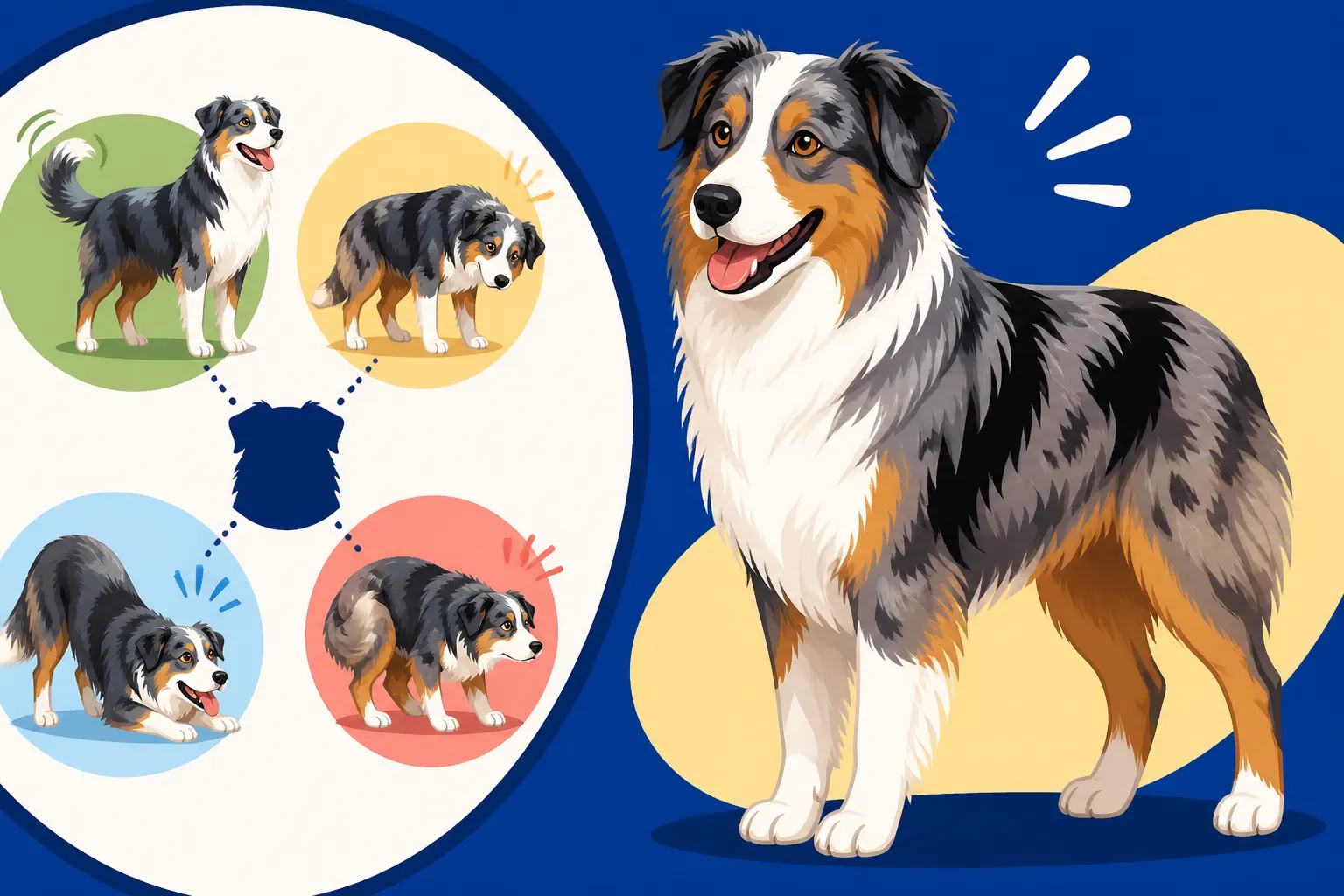
Reading an Aussie Body Language Under a Full Coat
It can be incredibly frustrating to feel like you're missing what your Australian Shepherd is trying to tell you. Their gorgeous, thick double coats, while stunning, can often obscure the very subtle body language cues that other breeds might display more openly, leaving us scratching our heads when they suddenly react or seem out of sorts. This guide is here to pull back that metaphorical fur curtain, helping you understand how to look beyond the fluff and truly read your Aussie's emotional state, from the tip of their naturally bobbed tail to the crinkle around their expressive eyes.
The Challenge of the Australian Shepherd's Double Coat
We adore our Australian Shepherds for their intelligence, loyalty, and of course, that magnificent coat. But let's be honest, that luxurious fur, especially during coat blow, can be a real communication blocker. A Border Collie or a short-haired breed might offer clear visual cues with every muscle twitch or subtle shift in hackles, but with an Aussie, those signals are often swallowed by a sea of hair. It's like trying to read a nuanced expression when someone is wearing a heavy scarf and a big hat – you know there's something there, but it’s just not as clear.
This isn't just about missing a cute head tilt; it's about safety and understanding. If you can't tell your Aussie is uncomfortable with a child approaching, or feeling threatened by another dog, you might miss a crucial window to intervene before a situation escalates. Their inherent herding instincts, which can manifest as intense focus or a desire to control space, are always at play, and misreading their stress signals can lead to misunderstandings. Knowing how to see past the fur and interpret their body language is a vital skill for any Aussie owner, helping to build a stronger, safer bond and avoid Australian Shepherd Behavior Problems From Under-Exercise.
Why an Aussie's Fur Hides Signals
Think about the sheer volume of an Australian Shepherd's coat. They have that dense, woolly undercoat for insulation and a coarser, longer outer coat that forms fringes, feathering, and a distinct ruff around the neck. This dense layering is fantastic for keeping them warm when they're out working sheep in cold climates, but it makes seeing muscle tension or the subtle raising of hackles incredibly difficult.
A dog that is feeling threatened or excited will often raise the hair along their spine (piloerection). On a short-coated dog, this is glaringly obvious. On an Aussie, it can be camouflaged by the overall fluffiness, requiring you to be much closer and actively looking for it, perhaps even parting the fur a bit to see the skin underneath. Similarly, subtle shifts in posture – a slight weight transfer to the back, a tightening of the chest muscles – might be visually absorbed by the coat's volume, making them harder to pick up from a distance.
The Role of Feathering and the Tail
The beautiful feathering on an Aussie's legs, breeches, and tail can also play a deceptive role. A happy, relaxed tail wag on a Labrador is unmistakable. An Aussie with a natural bobtail, or even a docked tail, still uses it to communicate, but the action might be less pronounced, and the surrounding fur can make the movement seem less direct. The height and stiffness of the tail carriage are key, regardless of length. A relaxed Aussie might have their tail held low, gently wagging, or even tucked, but a tense tail will be held stiffer, either very low and rigid or slightly raised and vibrating with tension.
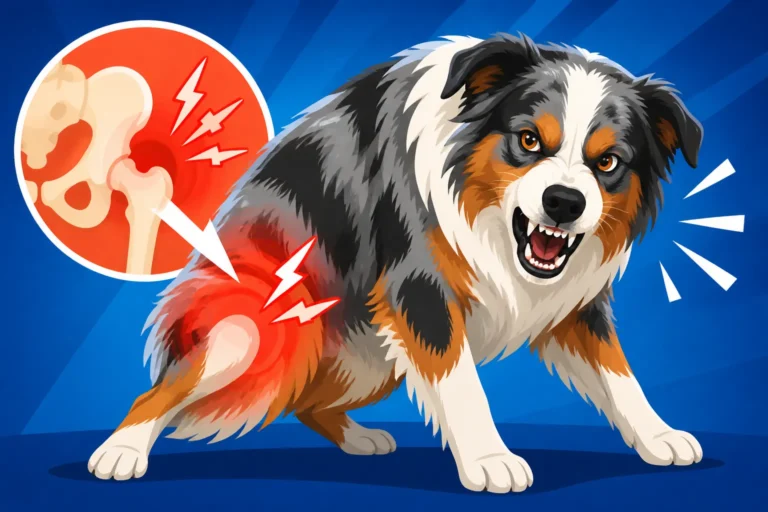
The feathering on the legs can also hide subtle tremors or stiffness in movement if your Aussie is feeling anxious or sore. If you suspect your Aussie is having trouble, perhaps from Aussie Cruciate Tears From Sharp Turns or Australian Shepherd Hip Dysplasia Symptoms Before Two, carefully observing their gait and stance becomes even more critical, and you may need to visually 'strip away' the fur in your mind to assess their underlying skeletal and muscular structure.
Beyond the Fur: Focusing on Key Indicators
While the coat presents a challenge, it doesn't make reading your Aussie impossible. It just means you have to be more observant, paying close attention to the areas that are less obscured and interpreting a combination of signals rather than relying on just one. Think of it as putting together a puzzle, where each piece, no matter how small, contributes to the overall picture of your dog's emotional state.
Eyes: The Windows to Their Soul
An Australian Shepherd's eyes are incredibly expressive, often piercing and intelligent. Regardless of color – whether they have deep brown, stunning blue, or captivating marbling – their eyes offer a wealth of information.
- Soft, relaxed eyes: Often accompanied by a slight squint or a 'soft' gaze, indicating comfort and contentment. The pupils will be normal sized.
- Hard, staring eyes: A direct, unblinking stare with wide, dilated pupils can signal fear, aggression, or a challenge. This is a clear warning sign.
- Whale eye: This is when you can see the whites of your Aussie's eyes, particularly on the outer edges, while they are looking at something to the side. It almost always indicates stress, fear, or anxiety. They're trying to watch something without directly turning their head towards it, often a sign of wanting to avoid confrontation.
- Rapid blinking or darting eyes: Can indicate anxiety, confusion, or that your Aussie is trying to appease.
Pay attention to the area around the eyes too. A relaxed Aussie might have smooth skin, but a stressed one might show tension with furrowed brows or a slight pulling back of the skin, even if the fur makes it less obvious.
Ears: More Than Just Listening
Aussies have ears that typically fold over (rose ears or button ears), but they are incredibly mobile and convey a lot.
- Relaxed ears: Often held naturally, neither forward nor back, just resting.
- Forward-pointing ears: Alertness, interest, or curiosity. They are focusing on something. If combined with a hard stare, it can also signal a challenge.
- Flattened or pinned-back ears: A clear sign of fear, submission, or anxiety. They are trying to make themselves appear smaller and less threatening.
- Ears rotated to the side: Often seen with whale eye, indicating unease or uncertainty. They might be trying to listen without fully committing to the interaction.
Because the fur around an Aussie's ears can be quite thick, you need to look for the base of the ear, where it attaches to the head, for these movements. The direction of the ear canal opening can also give a clue.
Mouth and Jaw: Subtle But Telling Cues
The mouth area on an Aussie, though sometimes hidden by whiskers and muzzle fur, offers critical signals.
- Relaxed mouth: Often slightly open, panting gently if warm or active, with no visible tension in the lips.
- Lip licking: A quick flick of the tongue over the lips, especially when no food is present, is a common appeasement signal, indicating stress or discomfort.
- Yawning: Like lip licking, yawning when not tired can be a stress signal.
- Tight, closed mouth: Often a sign of tension. The lips might be pulled back tightly, sometimes revealing just a hint of teeth.
- Growling or snarling: Clear warning signs. Even a low growl under the fur is unmistakable. Remember, a growl is communication; never punish your Aussie for growling, as it's a critical warning that precedes a bite. Instead, listen to what they're telling you and address the underlying cause. Why You Should Never Punish an Aussie Growl is a great article to read if you want to learn more about this.
- Drooling (excessive): Beyond normal drooling after exercise or in anticipation of food, excessive drooling can indicate high stress or nausea.
A table can help us visually summarize these cues, especially when considering the challenge of the Aussie's coat.
| Body Part | Relaxed/Happy Cues (even under coat) | Anxious/Stressed Cues (even under coat) | Aggressive/Threatening Cues (even under coat) |
|---|---|---|---|
| Eyes | Soft, blinking, normal pupils | Whale eye, rapid blinking, darting | Hard stare, dilated pupils, unblinking |
| Ears | Natural, slightly to side | Flattened, pinned back, rotated to side | Forward, stiff, or slightly back but tense |
| Mouth | Slightly open, soft, panting gently | Lip licking, yawning (stress), tight lips | Tight lips, pulled back, showing teeth, growling |
| Tail | Low, relaxed wag, gentle sway | Tucked, rigid low wag, subtle quiver | Stiff, raised (or held stiff and low if bobbed) |
| Body | Loose, flowing movement, relaxed posture | Low posture, tense, shivering, leaning away | Stiff, forward lean, weight on front paws, hackles (if visible) |
| Coat | Smooth, natural lie | May show subtle piloerection (hackles up) | Hackles raised along spine (look closely!) |
Whole Body Language: Putting it All Together
Reading your Aussie isn't just about isolated parts; it's about the entire picture. You need to observe how all these elements combine, and how their overall posture and movement change in different situations.
Posture and Movement
Even under a thick coat, you can observe the general shape and movement of your Australian Shepherd's body.
- Relaxed posture: A loose, fluid gait, weight evenly distributed, head held naturally. They might stretch leisurely, rolling onto their back for belly rubs.
- Tense or stiff posture: Anxious Aussies might stand rigidly, often with their weight shifted slightly back, ready to retreat. They might lower their head or avert their gaze. A stressed Aussie might pace, shake, or even shiver, even if it's not cold.
- Play bow: A clear invitation to play, where your Aussie bows down on their front legs with their rear end up in the air, tail often wagging. This is universally understood dog language, even for a furry Aussie!
- Crouching or lowering: Can indicate fear or a desire to appease, making themselves appear smaller. It can also be a prelude to a pounce during play or herding work.
- Leaning away: If your Aussie leans away from an approaching person or dog, it's a clear sign they are uncomfortable and want more space.
- Sniffing the ground: This can be a displacement behavior, a way for your Aussie to cope with stress or discomfort by appearing to be uninterested in the situation. It's a "fidget" behavior.
Consider their overall gait. Is it smooth and confident, or hesitant and choppy? Are they moving freely, or do they seem stiff, which could be a sign of discomfort, or perhaps even an injury like those described in An Aussie Stiff After a Career in Agility?
Vocalizations and What They Add
While body language is primary, don't forget vocalizations, especially with a breed as communicative as the Australian Shepherd. Barks, growls, whimpers, and even sighs add another layer to understanding their mood. A sharp, high-pitched bark combined with a forward stance is very different from a soft whine accompanied by a tucked tail and flattened ears. A frustrated bark, like an Aussie might give if they can't herd something they want, will sound distinct from an alarm bark warning of a stranger.
Sometimes, your Aussie might offer very subtle sighs or groans when settling down, which are often signs of contentment. However, unusual vocalizations, especially those accompanied by other signs of discomfort, should always warrant a closer look or a vet visit.
Practical Tips for Observing Your Aussie
Being a great Aussie parent means being an active observer. It’s not just about spending time with them, but truly seeing them.
Establish a Baseline
The most important step is to understand your individual Aussie's "normal." Every dog has unique quirks. How does your Aussie usually hold their ears when relaxed? What's their typical tail carriage? What does their "happy dance" look like? Spend time simply observing them when they are calm and comfortable at home. This baseline will help you quickly spot deviations that indicate stress, fear, or excitement. What does their face look like when they're truly resting, like after a long session of Mental Work That Actually Tires an Australian Shepherd?
Look for Combinations of Signals
Instead of focusing on one cue, look for a cluster of signals. A single ear flick might not mean much, but ears flattened plus whale eye plus a low, stiff tail tells a much clearer story of fear. If you find yourself in a situation where you're unsure, it's always safer to assume your Aussie is uncomfortable and create space or remove them from the situation.
Utilize Grooming Time
Grooming is not just about keeping that gorgeous coat healthy and managing Twice-Yearly Coat Blow in an Australian Shepherd; it's also a prime opportunity to physically check in with your dog and observe them up close. As you brush, especially with a good undercoat rake or slicker brush (you can find excellent ones on Amazon), you'll be parting their fur, allowing you to see their skin and muscle tension more clearly. Pay attention to their reaction to touch – do they flinch in certain spots? Are their muscles tense? This can reveal hidden discomfort or even early signs of Australian Shepherd Skin, Coat and Allergy Problems.
Learn From Trusted Resources
There are many fantastic resources available to help you further your understanding of dog body language. Online training platforms, like those offered by BAXTER & Bella, often have modules dedicated to canine communication, complete with videos and examples that can help you recognize subtle cues. Watching how professional trainers interpret dog interactions can be incredibly insightful, providing you with a visual dictionary of behaviors.
Consider the Context
Always interpret body language within the context of the situation. A high-energy Aussie might have a stiff, forward posture and intense focus when they're about to start an agility run because they're excited and anticipating work. The same posture in a quiet park with a strange dog approaching would likely indicate tension or threat. Always ask yourself: "What is happening around my Aussie right now?"
Trust Your Gut
As an owner, you have an intuitive connection with your dog. If something just feels "off" about your Aussie, even if you can't pinpoint a specific body language cue, trust that feeling. It might be a very subtle change you've subconsciously picked up. Investigate further, give them space, or consult with a veterinarian or a certified professional dog trainer. This instinct is often correct and can be crucial for your Aussie's well-being, especially if they are experiencing pain or illness that might manifest as a shift in behavior, as explored in Sudden Aussie Aggression and a Vet Check.
Learning to read your Australian Shepherd's body language, especially under that thick, beautiful coat, is an ongoing journey. It requires patience, keen observation, and a willingness to learn. But with consistent effort, you'll gain an invaluable insight into your Aussie's inner world, strengthening your bond and ensuring a happier, safer life for both of you.
Disclaimer
This article is for general informational purposes only and does not constitute professional advice. Laws, prices and regulations vary by location and change over time. Consult a qualified professional for guidance on your specific situation.