An Aussie That Will Not Hand Things Over
It's incredibly frustrating when your clever, quick-witted Australian Shepherd snatches something they shouldn't have – your reading glasses, a dropped remote, or even your favorite sock – and then refuses to give it back. You might feel like you're playing a frustrating game of "keep away," or worse, you might worry they're being aggressive when they stiffen or growl. This guide is here to help you understand the root causes behind this common Aussie behavior and, more importantly, to walk you through practical, positive reinforcement techniques to teach your dog reliable "drop it" and "give" commands, transforming those tense moments into cooperative exchanges.
Understanding the Aussie Impulse to Hold On
Australian Shepherds are brilliant dogs, but their intelligence is deeply intertwined with their natural herding instincts. This means they are wired to gather, control, and sometimes, to guard resources. When your Aussie won't hand something over, it's often not defiance in the human sense, but a manifestation of these innate drives. It can be incredibly confusing and even upsetting when your usually compliant dog suddenly acts like you're trying to steal their most prized possession.
The Herding Instinct and "Collecting" Behavior
Think about what an Australian Shepherd was originally bred to do: gather and control livestock. This isn't just about chasing; it's about holding, moving, and sometimes even subtly "owning" a space or a resource. This instinct doesn't magically disappear when they come into our homes; it simply re-manifests in different ways. For some Aussies, this translates into a strong desire to "collect" items, whether it's their own toys scattered across the living room or, much to our dismay, your child's favorite stuffed animal or your expensive new sneaker.
They might not be trying to chew it up; they might just be holding it, much like they would 'hold' a sheep in a flock. This collecting can feel incredibly satisfying to them, and when you approach to take the item, you're essentially challenging their innate drive to control. It's not personal; it's just how their magnificent brains are wired. Understanding this can help shift our perspective from annoyance to empathy, allowing us to approach the situation with more patience and a training mindset.
Resource Guarding Versus Simple Reluctance
It's vital to differentiate between an Aussie who is simply reluctant to give something up because they enjoy holding it, and one who is actively resource guarding. Simple reluctance often looks like a game of chase, a slight evasive maneuver, or perhaps a gentle nip if you try to pry something from their mouth. They might run away with the item, tuck it under themselves, or just hold it tightly without any overt aggression.
True resource guarding, however, is a more serious behavior that involves defending an item with clear warning signals. This can include stiffening of the body, a hard stare, growling, snarling, lunging, snapping, or even biting. If your Aussie exhibits any of these more aggressive behaviors when you approach them or reach for an item, it's a clear sign of resource guarding. This isn't something to be punished, as punishment often escalates guarding. Instead, it's a call for immediate, professional intervention from a qualified positive reinforcement trainer. We'll touch on seeking help later, but for now, recognize the difference to ensure you're addressing the correct underlying issue.
Why Some Items Are More "Valuable" to an Aussie
You might wonder why your Australian Shepherd will happily drop a slobbery tennis ball but clamps down on your TV remote like it's solid gold. The value of an item to your dog isn't necessarily logical to us. Often, forbidden items are instantly more appealing. The scent of a human, the novelty, or the fact that you clearly value it makes it instantly more interesting and, therefore, higher value to your Aussie. A lost sock smells intensely of its owner, a remote control feels novel and perhaps tastes interesting, and a shoe has a fascinating texture and scent.
Consider the "forbidden fruit" effect. If you're constantly chasing them for a specific item, that item gains immense value because it sparks an engaging game, and your attention, even negative attention, is a powerful reinforcer. To an Aussie, who thrives on engagement and problem-solving, a game of "catch me if you can" with your wallet might be the highlight of their afternoon. Understanding this means we need to proactively manage their environment and consistently train appropriate behaviors with high-value rewards to shift their perception of what's truly rewarding.
Building a Solid "Drop It" Command
Teaching a reliable "drop it" command is absolutely crucial for any Australian Shepherd owner, not just for reclaiming stolen items, but for safety. Imagine your Aussie picking up something genuinely dangerous like a broken piece of glass, medication, or a toxic plant. A solid "drop it" can be a lifesaver. This command needs to be built on positive association, making dropping an item feel like the best decision your dog could possibly make.
Starting with Low-Value Items
The key to success is to set your Australian Shepherd up to win. You wouldn't ask a child to solve advanced calculus before they've mastered basic addition, and the same principle applies to dog training. Begin by practicing "drop it" with items your Aussie doesn't particularly cherish. Think about their less-loved chew toys, a worn-out ball, or even a plain piece of kibble if they aren't overly food motivated.
The idea here is to create a positive history with the command where dropping the item always leads to something better. If you start with your favorite shoe, which your Aussie views as a priceless treasure, you're likely to be met with resistance, which can be frustrating for both of you and potentially damage your training efforts. Keep these initial sessions short, fun, and always end on a high note.
The "Trade" Method for Success
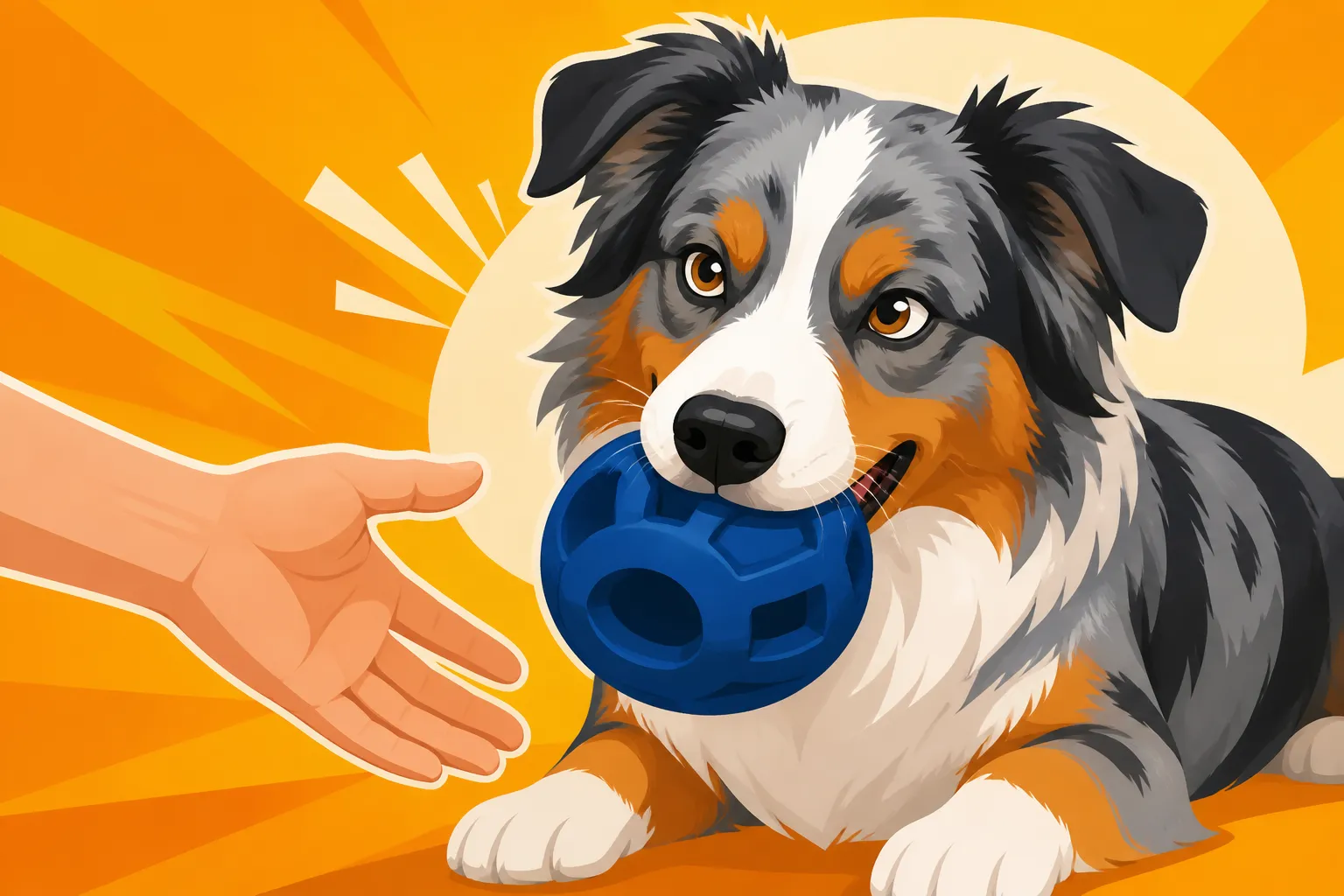
The trade method is perhaps the most powerful tool for teaching "drop it." It works on the principle that your Australian Shepherd will happily drop one item if they know a more valuable item is coming their way. This isn't bribery; it's a fair exchange that builds trust and positive associations with giving things up. Start with your Aussie holding a low-value item. Approach them with a much higher-value treat – something truly irresistible like a small piece of cooked chicken, cheese, or a high-quality commercial treat.
Hold the high-value treat near their nose. The moment they open their mouth to investigate or drop the original item, even if it's just a slight release, say "yes!" or click a clicker, then immediately give them the high-value treat. As they eat the treat, pick up the item they dropped. This teaches them: "Dropping this thing makes an amazing treat appear, and the human safely takes the old thing away." Repeat this many, many times in various locations with different low-value items until the act of dropping becomes second nature. Treats That Fit an Australian Shepherd Training Day can be helpful in finding those high-value rewards.
Adding the Verbal Cue and Hand Signal
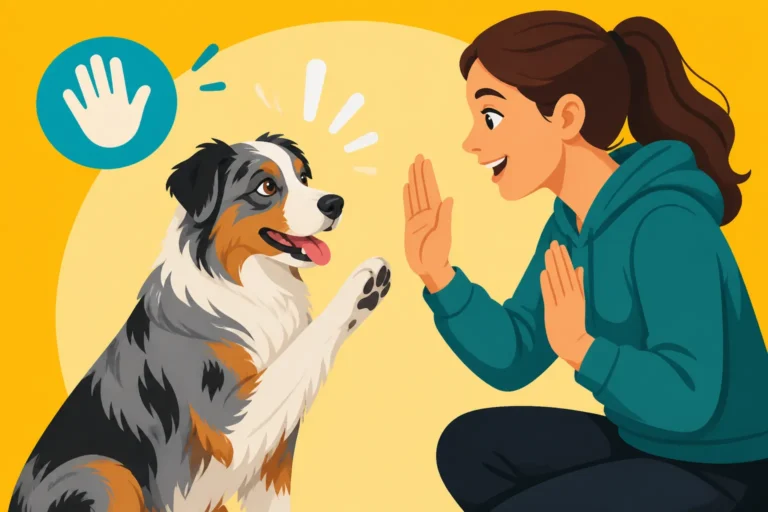
Once your Australian Shepherd reliably drops items using the trade method, it's time to introduce your verbal cue and a hand signal. As your Aussie is about to drop the item in anticipation of the trade, say "Drop it!" (or "Out!" or "Release!") clearly and consistently. Pair this with a subtle hand signal, perhaps an open palm gesture towards the ground. The timing here is crucial; you want the verbal cue and signal to predict the action of dropping and the subsequent reward, not to precede it so much that they don't understand.
Practice this sequence diligently. Over time, your Aussie will associate the verbal cue and hand signal with the act of dropping and receiving a reward, making the action almost automatic. Once they are consistent with low-value items, slowly introduce slightly higher-value items. Always be prepared with an even more valuable treat for the trade. The goal is that "drop it" eventually means "something even better is coming!" rather than "I'm going to lose this forever." Consistency across all family members is essential for your Aussie to generalize the command. For a structured approach to training, resources like BAXTER & Bella can offer guidance on incorporating verbal cues and hand signals effectively into your daily routine.
Cultivating a Reliable "Give" or "Out" Command
While "drop it" focuses on getting an item out of your Australian Shepherd's mouth, "give" or "out" often implies a more voluntary offering of an item, sometimes directly into your hand. This command builds on the foundation of "drop it" but adds another layer of cooperation and trust. It's especially useful for retrieving toys during play or when you need your Aussie to politely relinquish something they're holding without even putting it on the ground first.
Teaching "Give" from Your Hand
Start by teaching your Australian Shepherd to "give" directly from your hand, without involving a disputed item. Hold a few small, yummy treats in one hand. Offer a single treat from your other, empty hand. As they take the treat, say "Give!" Gently close your empty hand slightly, encouraging them to release any remaining crumbs or to anticipate the next offering. The goal is to associate the word "give" with the voluntary release or offering of something, even if it's just their focus or a tiny crumb.
This initial step is about building the concept of "give" as a positive interaction where their actions lead to more good things. Keep it low-pressure and rewarding. You can also practice by holding a treat in your palm, letting your Aussie lick it, and as they finish, say "Give!" while gently closing your hand or presenting another treat. This reinforces the idea of relinquishing something in a positive, non-confrontational way.
Extending "Give" to Toys and Objects
Once your Aussie understands the basic concept of "give" with treats from your hand, it's time to apply it to toys and objects. Begin with a game of fetch using a toy your Australian Shepherd enjoys but isn't overly possessive about. When they bring the toy back to you, or even just hold it near you, present a high-value treat. As you offer the treat, say "Give!" When they open their mouth to take the treat, the toy will naturally drop or become accessible for you to gently take it.
The key is to not snatch the toy. Let them release it willingly. As with "drop it," the exchange must always result in something more rewarding for them. Over time, you can gradually reduce the immediate treat reward for every "give" and instead use praise, a quick toss of the toy for another round of fetch, or a gentle scratch behind the ears as their reward. The value here is that the game continues, or they get positive attention. Remember to keep sessions fun and reinforce the idea that "give" means good things happen.
Troubleshooting Common "Give" Challenges
You might encounter a few hiccups as you practice "give." What if your Australian Shepherd clamps down harder on the item when you say "Give!"? This often happens if they perceive your command as an attempt to take something away rather than an invitation to exchange. In these cases, you might be moving too fast or not using a high enough value reward. Go back to basics with easier items and more irresistible treats.
If they run away with the item when you approach, you're likely dealing with a fear of losing the item or a desire to engage in a chase game. Avoid chasing at all costs, as this reinforces the behavior. Instead, try turning your back and walking away, making yourself boring. Often, their desire for attention will bring them closer. You can then try initiating the trade from a distance, or simply ignore them until they present the item, at which point you can offer a reward. Always avoid punishment, scolding, or physically prying items from their mouth, as these can severely damage trust and escalate guarding behaviors. Consistent positive reinforcement, patience, and making the "give" command consistently rewarding are your best strategies.
Preventing the "Grab and Run" Game
It's one thing to train a command, and another to prevent the unwanted behavior from happening in the first place. For clever Australian Shepherds who are always looking for "jobs" and entertainment, proactive prevention and consistent management are critical. You want to make it easy for your Aussie to make good choices and difficult for them to make bad ones.
Managing the Environment (Puppy-Proofing on Steroids)
This is perhaps the most straightforward and effective prevention strategy. If your Australian Shepherd can't get to the forbidden items, they can't practice stealing them. This isn't just for puppies; it's a lifelong commitment for many Aussie owners. Think of it as "Aussie-proofing" your home. Keep counters clear, especially of tempting food items or small objects that can be easily knocked down. Shoes should be in closets, dirty laundry in hampers with lids, and remotes, phones, and glasses out of reach on high shelves or in drawers.
Consider using baby gates to block off rooms where tempting items are abundant, or to create designated "Aussie zones" where all accessible items are dog-safe. A well-placed gate can prevent your Aussie from getting into the bathroom for toilet paper rolls or the office for important papers. The Crate a Fifty Pound Aussie Needs can also serve as a safe, managed space when you can't actively supervise them, preventing opportunistic grabbing. The less they practice the unwanted behavior, the less ingrained it becomes.
Providing Appropriate Chews and Toys
A significant reason Australian Shepherds grab household items is often boredom, an unsatisfied urge to chew, or simply a lack of appropriate, high-value alternatives. Aussies need outlets for their oral fixations and their problem-solving minds. Invest in a variety of durable, interesting chew toys that can stand up to their strong jaws. Look for items that can be stuffed with treats to provide mental stimulation, like puzzle feeders. These can keep them engaged for a good chunk of time.
You can find a wide array of options on Amazon, from durable rubber chews to interactive puzzle toys. Rotate their toys regularly to keep things fresh and exciting. Offer different textures and shapes to maintain their interest. If they always have access to highly engaging, appropriate chews, the appeal of your dirty sock or the TV remote naturally diminishes. This strategy effectively redirects their natural instincts towards acceptable outlets. Chew Toys That Last With an Australian Shepherd and Puzzle Feeders and Enrichment Gear for an Aussie offer more specific ideas for robust and engaging toys.
Proactive Training and Enrichment
Beyond simply managing the environment, actively engage your Australian Shepherd's mind and body. A bored Aussie is a destructive Aussie, and they will find "jobs" for themselves, which often involve things you'd rather they didn't do. Regular, structured training sessions, even short ones throughout the day, can make a huge difference. Teach them new tricks, practice obedience commands, or engage in scent work. These activities are incredibly mentally tiring for an Aussie.
Physical exercise is equally important, but remember that two hours of mindless fetching might not be as satisfying as 30 minutes of a mentally stimulating activity. Consider dog sports like agility, obedience, or even urban herding with a large exercise ball. These activities provide a productive outlet for their intelligence and energy, reducing the likelihood they'll seek entertainment by stealing your belongings. Mental Work That Actually Tires an Australian Shepherd and Giving an Australian Shepherd a Job Instead of a Walk delve deeper into how to effectively tire out your clever companion. You can also explore online training platforms like BAXTER & Bella which offer comprehensive puppy and dog training programs, many of which are designed to keep intelligent breeds like Aussies engaged and learning.
When to Seek Professional Help (Resource Guarding)
While simple reluctance to hand over an item can often be addressed with consistent positive reinforcement, true resource guarding is a more serious behavioral issue that requires a nuanced approach. If you notice any signs of aggression when your Australian Shepherd is holding an item, it's crucial to seek professional help. Attempting to manage serious resource guarding on your own, especially through punitive methods, can inadvertently make the problem much worse and put you or others at risk.
Recognizing Serious Resource Guarding Behaviors
As mentioned earlier, signs of serious resource guarding go beyond a simple game of chase. If your Australian Shepherd exhibits any of the following behaviors when you approach them or attempt to take an item, it's a strong indicator of guarding:
- Stiffening of the body: Their posture becomes rigid and tense.
- Hard stare: Direct eye contact with dilated pupils, often accompanied by a low head posture.
- Growling: A vocal warning signal.
- Snarling: Lifting the lips to show teeth.
- Snapping: A quick bite in the air or a warning bite that doesn't make contact.
- Biting: Making contact with teeth, even if it doesn't break the skin.
- Lunging: A sudden forward movement towards you.
These behaviors are your dog's way of saying, "Back off! This is mine!" It's important to respect these warnings and not escalate the situation by forcing a confrontation. Recognizing these signs early is key to addressing the issue safely and effectively.
Finding a Qualified Positive Reinforcement Trainer
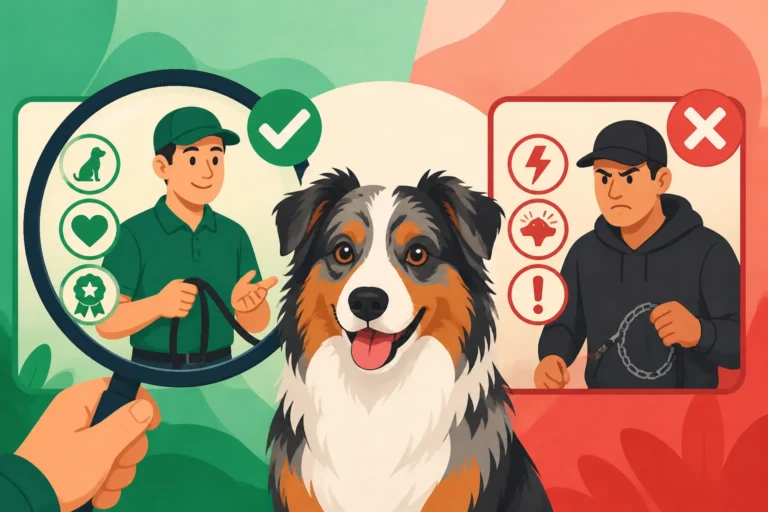
If you suspect your Australian Shepherd is resource guarding, your first step should be to consult a certified professional dog trainer or a veterinary behaviorist who specializes in positive reinforcement and force-free methods. It is absolutely critical to avoid trainers who use punishment, dominance theory, or aversive tools (like shock collars, prong collars, or harsh verbal corrections) for resource guarding. These methods can suppress the outward signs of aggression but often increase the dog's underlying anxiety and fear, leading to more dangerous, unpredictable bites without warning.
A good trainer will work with you to implement a management plan, teach your dog that human approach means good things (usually high-value trades), and help you build trust. They will focus on changing your Aussie's emotional response to your presence around their valued items, making them feel safe rather than threatened. Look for certifications like CPDT-KA, KPA-CTP, or a board-certified veterinary behaviorist (DACVB). Finding a Trainer Who Understands an Aussie can provide more guidance on how to select the right professional for your dog's needs.
Safety First: Managing Until Help Arrives
While you are waiting for professional help, prioritize safety. This means avoiding any situations that could trigger a guarding response from your Australian Shepherd. Implement strict management:
- Prevent Access: Keep all high-value or tempting items completely out of your Aussie's reach. If they can't get it, they can't guard it. This is where your "Aussie-proofing" skills become paramount.
- No Confrontation: Do not attempt to take items away from your dog. If they have something, especially something dangerous, try to trade with an irresistible treat (like a handful of chopped hot dogs or cheese) from a distance. Throw the treat away from them, and while they go to get it, safely remove the guarded item.
- Supervised Access: Only allow access to items they might guard (like their food bowl or special chew toys) when you can actively supervise, or when they are in a secure space where you won't need to retrieve items.
- Teach "Leave It" (without confrontation): While "drop it" is for items in their mouth, "leave it" is for items they see but haven't touched. This can be taught with treats first, gradually moving to higher-value distractions.
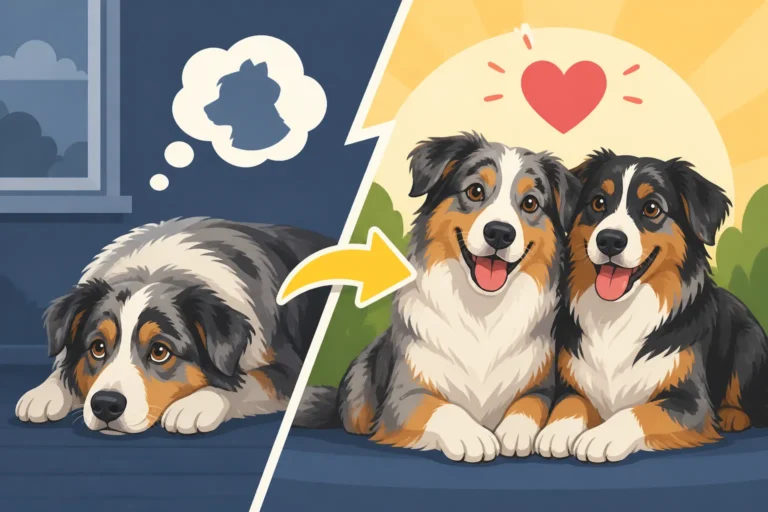
Remember, your Aussie isn't being "bad"; they are responding to an instinctual drive. Patience, understanding, and professional guidance are the keys to safely and effectively resolving resource guarding behaviors.
Here's a quick comparison of the two key commands we've discussed:
| Command | Primary Goal | Best Use Case | Training Focus | Core Principle |
|---|---|---|---|---|
| Drop It | Release an item currently in the mouth. | Safety (dropping dangerous items), retrieving dropped items, ending a game. | Exchange for a higher-value reward. | Giving up current item leads to something better. |
| Give | Voluntarily offer an item from the mouth or paw to your hand. | Returning toys, handing over an item politely. | Voluntary relinquishment, usually as part of an exchange or continuing interaction. | Handing over an item leads to positive interaction or a new reward. |
Disclaimer
This article is for general informational purposes only and does not constitute professional advice. Laws, prices and regulations vary by location and change over time. Consult a qualified professional for guidance on your specific situation.