Aussie Cruciate Tears From Sharp Turns
It’s a gut-wrenching moment for any Australian Shepherd owner: seeing your usually agile dog suddenly yelp, pull up lame, or struggle to put weight on a back leg. Often, these heartbreaking injuries, especially for our active, sharp-turning Aussies, point to a torn cruciate ligament. This guide is here to walk you through understanding these common knee injuries, recognizing the subtle (and not-so-subtle) signs, exploring treatment paths, and most importantly, how to help prevent them in your high-energy companion, especially those that love to make those quick, sharp turns.
The Cruciate Ligament and Why Sharp Turns Are So Risky for Aussies
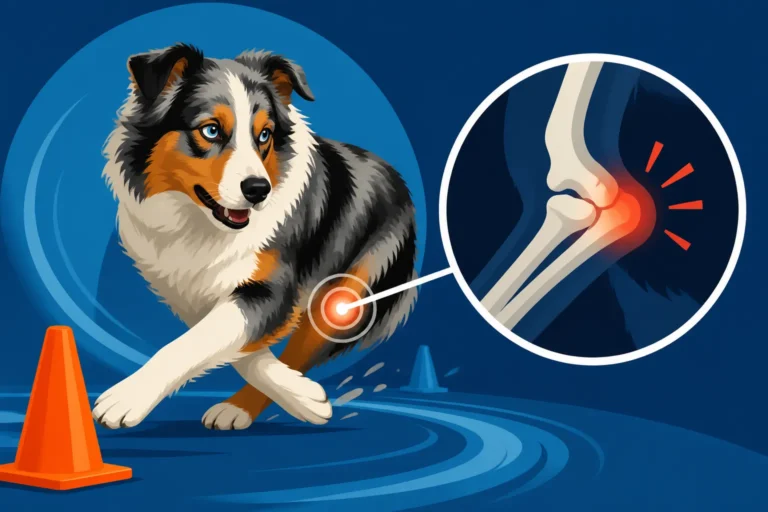
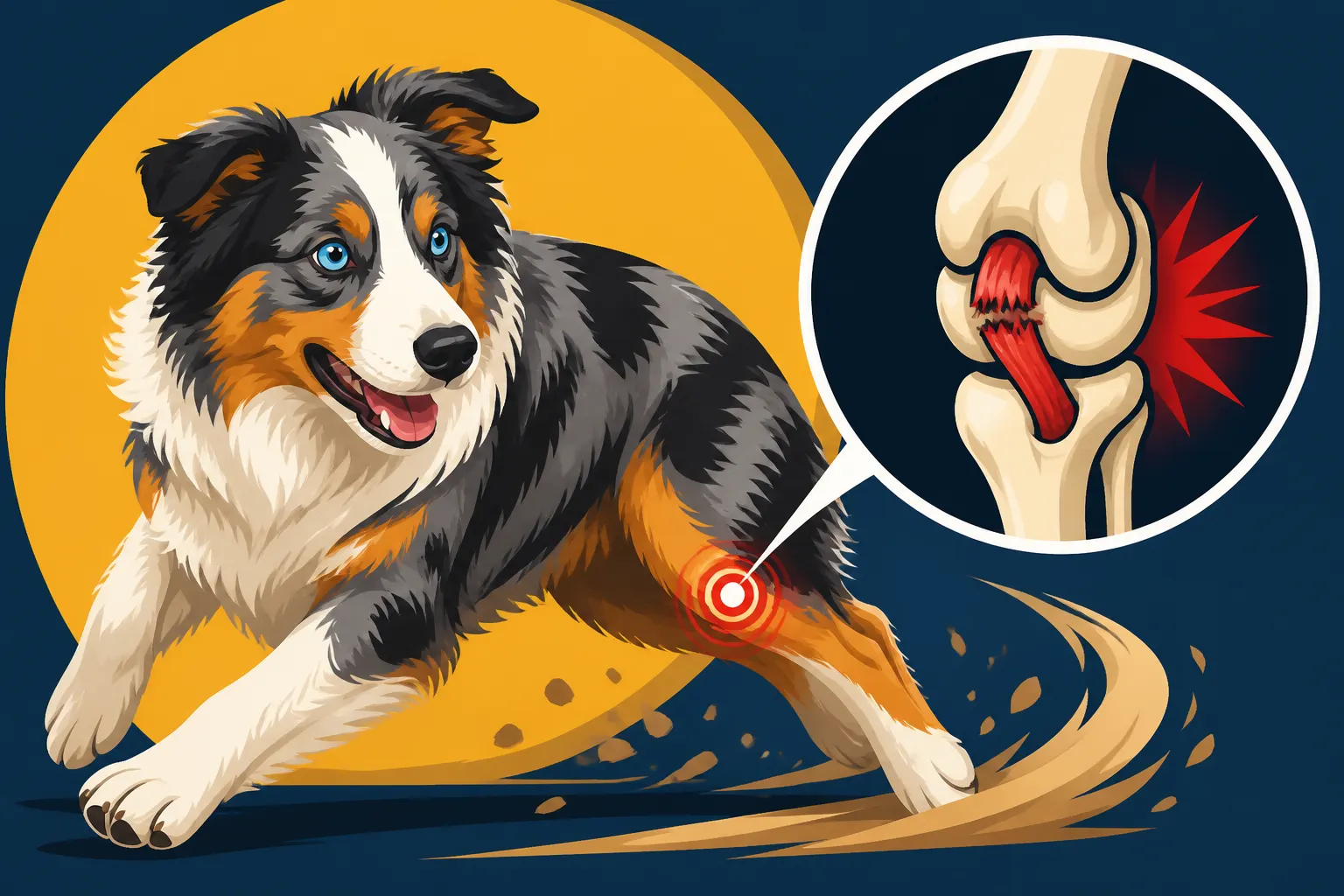
Understanding the anatomy of your Australian Shepherd's knee, or stifle joint, is the first step to truly grasping why cruciate tears are so prevalent in our active companions. Inside this complex joint, you'll find two crucial ligaments that cross over each other – hence "cruciate" – connecting the thigh bone (femur) to the shin bone (tibia). These are the cranial cruciate ligament (CCL) and the caudal cruciate ligament. For dogs, the CCL is by far the most commonly injured, similar to an ACL tear in humans. Its job is incredibly important: it prevents the tibia from sliding forward relative to the femur, limits internal rotation of the tibia, and prevents hyperextension of the knee joint. Without a healthy CCL, the knee becomes unstable, leading to pain and further damage.
Now, why are our beloved Australian Shepherds so susceptible to these injuries, particularly from those explosive, sharp turns? It boils down to their very nature and the activities they excel at. Aussies are dogs of incredible athleticism, agility, and a strong work ethic. They live for activities that involve rapid acceleration, sudden stops, quick pivots, and tight turns – think herding, agility courses, flyball, or even just chasing a frisbee in the park. Each time an Aussie makes a hard, quick turn, especially when running at high speeds, immense rotational and shearing forces are placed on their knee joints. The CCL can only withstand so much stress before it begins to fray, partially tear, or even completely rupture. It's not always a single catastrophic event; often, it's a culmination of repetitive micro-traumas over time, weakening the ligament until a seemingly minor movement causes it to finally give way. This cumulative stress, combined with any inherent genetic predispositions for weaker ligaments, makes sharp turns a high-risk maneuver for many Australian Shepherds.
Moreover, the breed's conformation can play a role. Australian Shepherds often have a fairly straight angulation in their rear legs, which some experts believe might put additional stress on the CCL compared to breeds with more angled stifles. This, coupled with their dense musculature that can generate immense power, means their joints are under constant high demand. It’s a sad irony that the very traits that make them such magnificent athletes are also what put them at higher risk for injuries like a cruciate tear. When you combine their innate herding drive, which makes them want to circle and redirect quickly, with participation in high-impact dog sports or even just enthusiastic backyard play, you start to see the perfect storm for a cruciate injury to occur. Owners of working line Aussies, in particular, need to be hyper-vigilant because their dogs are often asked to perform these kinds of movements day in and day out, whether on the farm or in competitive arenas.
Recognizing the Signs of a Cruciate Tear and Getting a Diagnosis
Spotting a cruciate tear in an active Australian Shepherd can sometimes be straightforward, but often, the signs are subtle, especially if it’s a partial tear that progresses slowly. Many owners describe a sudden onset of lameness – their dog might yelp, immediately stop putting weight on the affected leg, and hold it up. This is the classic presentation of an acute, complete rupture. Imagine your Aussie, mid-chase, planting a foot to turn, and then collapsing. It’s terrifying to witness. However, it’s not always so dramatic. For some Aussies, particularly those with partial tears or chronic degeneration of the ligament, the signs might be more insidious. You might notice your dog is just a little stiff after resting, especially first thing in the morning or after a nap. They might exhibit a "toe-touching" gait, where they only lightly place their toes on the ground, reluctant to bear full weight. Sometimes, they might favor one leg for a few days, seem to improve, and then regress again. This waxing and waning lameness is a classic sign of a partial tear that’s still unstable.
Observing your Australian Shepherd's gait and behavior is crucial. Do they hesitate before jumping into the car or onto the couch? Are they less enthusiastic about their usual playtime, or do they tire more quickly? Do you notice an unusual "sitting" posture, where they might extend the affected leg out to the side rather than tucking it underneath them? These are all subtle cues that something isn't right with their knee. If you've noticed your dog has been An Australian Shepherd Limping After Agility or just showing general stiffness, it's definitely time for a veterinary visit. Early intervention can make a significant difference in outcomes.
When you get to the vet, they will typically perform specific diagnostic tests to confirm a cruciate tear. The two most common are the "cranial drawer test" and the "tibial compression test." During the cranial drawer test, your vet will attempt to manually slide the tibia forward relative to the femur. If the CCL is torn, there will be excessive movement, much like a drawer opening. The tibial compression test involves flexing the ankle joint, which causes the tibia to push forward if the CCL is ruptured. These tests often require the dog to be relaxed, and sometimes mild sedation is necessary to get an accurate result, especially if your Aussie is tense or in pain. X-rays are also a vital part of the diagnostic process. While X-rays don't show the ligament itself, they can reveal secondary signs of a tear, such as joint effusion (fluid in the joint) or early signs of arthritis, which is unfortunately a common consequence of knee instability. X-rays also help rule out other potential causes of lameness, like fractures or other joint diseases that might present similarly to Australian Shepherd Hip Dysplasia and Working Joints. Getting a definitive diagnosis is the critical first step to getting your Aussie on the path to recovery.
Navigating Treatment Options and the Road to Recovery
Once your veterinarian has confirmed a cruciate ligament tear, you'll be faced with decisions about treatment. For our active Australian Shepherds, especially those who love their jobs or sports, surgery is often the recommended path for optimal recovery and long-term stability. While conservative management (rest, anti-inflammatories, physical therapy) might be considered for very small, sedentary dogs or those with partial tears, it's generally less successful for larger, more athletic breeds like Aussies due to the high forces placed on their joints. The goal of surgery is to stabilize the knee joint, reduce pain, and prevent the progression of arthritis.
There are several surgical techniques commonly employed for cruciate tears:
- Tibial Plateau Leveling Osteotomy (TPLO): This is one of the most popular and highly effective procedures, especially for active, larger dogs. The surgeon cuts and rotates the top part of the tibia (the tibial plateau) to change the angle, effectively neutralizing the "cranial drawer" effect. This makes the knee stable during weight-bearing, even without an intact CCL.
- Tibial Tuberosity Advancement (TTA): Similar to TPLO, this procedure also involves altering the biomechanics of the knee. The front part of the tibia (tibial tuberosity) is cut and advanced forward, changing the patellar tendon's angle and reducing the cranial thrust.
- Lateral Suture (Extracapsular Repair): This is a less invasive and often less costly option. It involves placing a strong suture material (like heavy fishing line) outside the joint, mimicking the function of the torn CCL. This aims to provide temporary stability while the body forms scar tissue to create its own stability. It tends to be more successful in smaller or less active dogs.
The choice of procedure often depends on your dog's size, activity level, the surgeon's preference, and your budget. No matter the chosen method, understanding that Knee Repair After an Aussie Tears a Cruciate is just the beginning of a journey is crucial. The recovery period is extensive and demands strict adherence to post-operative care instructions. This typically involves a strict rest period, often crate rest, followed by a gradual increase in controlled exercise. Physical therapy is paramount for regaining strength, flexibility, and proper gait. This might include passive range of motion exercises, controlled leash walks, hydrotherapy, and therapeutic exercises tailored to your Aussie. Patience is not just a virtue here; it's a necessity. It can take 6-12 months for full recovery, and rushing the process can lead to complications or re-injury. During this time, having pet insurance like Healthy Paws can significantly alleviate the financial burden of these extensive procedures and follow-up care, which can easily run into thousands of dollars. Thinking about Australian Shepherd Insurance at $35 to $55 a Month before major issues arise is a wise decision.
| Surgical Option | Description | Typical Recovery Time | Estimated Cost Range (USD) | Pros | Cons |
|---|---|---|---|---|---|
| TPLO (Tibial Plateau Leveling Osteotomy) | Bone cut and rotated to alter tibial plateau angle, neutralizing cranial drawer. | 12-16 weeks | $4,000 – $6,000+ | Highly stable, excellent for active, large dogs. | More invasive, higher cost, potential for bone infection. |
| TTA (Tibial Tuberosity Advancement) | Front part of tibia cut and advanced, changing patellar tendon angle to reduce cranial thrust. | 10-14 weeks | $3,500 – $5,500+ | Less invasive than TPLO, good results. | May be less suitable for very large or extremely active dogs, potential implant issues. |
| Lateral Suture (Extracapsular Repair) | Strong suture placed outside the joint to mimic CCL function, providing temporary stability for scar tissue. | 8-12 weeks | $2,000 – $4,000+ | Less invasive, lower cost. | Higher re-tear rate in large/active dogs, relies on scar tissue for long-term stability. |
Remember that post-surgical recovery is a long haul. It means carefully managing your Aussie's activity, adhering to medication schedules, and diligently performing exercises. It’s hard to keep an active dog like an Aussie quiet, but it’s absolutely vital for successful healing. You’ll eventually be working towards Getting a Working Aussie Back Into Condition, but this must be done slowly and under veterinary guidance to prevent setbacks.
Proactive Prevention and Long-Term Joint Health
The best way to deal with a cruciate tear is to try and prevent it from happening in the first place, or at least minimize the risk. For an Australian Shepherd, whose life revolves around movement and activity, preventative care for joint health is paramount. One of the single most impactful things you can do for your Aussie's joints is to maintain an ideal body weight. Just a few extra pounds can dramatically increase the stress on all joints, including the knees, making ligaments more susceptible to injury. Think about it: if your dog is carrying even 10% more weight than they should, that's like adding a weighted vest to every single jump, run, and, crucially, sharp turn they make. It's a silent stressor that How Weight Multiplies the Load on Aussie Joints significantly, predisposing them to tears. Regularly assess your Aussie's body condition and consult your vet for an appropriate feeding plan to keep them lean and athletic.
Beyond weight management, proper conditioning and thoughtful exercise routines are key. While Aussies need a lot of exercise, it's not just about duration but also quality. Intense, repetitive activities that involve sudden stops and sharp turns, like prolonged fetch sessions or agility drills without proper warm-up, can be hard on the joints. Instead, aim for a balanced exercise regimen that includes varied activities: swimming, hiking on varied terrain, long walks, and mental stimulation games. Always include a proper warm-up before strenuous activity and a cool-down afterward. Just like human athletes, a dog's muscles and ligaments benefit from being gradually prepared for work and then gently brought back to rest. If your Aussie is prone to being An Aussie Stiff After a Career in Agility, it’s a sign that their body needs more support or a different approach to their routine.
Joint supplements can also play a supportive role in long-term joint health. Ingredients like glucosamine, chondroitin, MSM, and omega-3 fatty acids are commonly recommended to support cartilage health, reduce inflammation, and improve joint lubrication. While they can't prevent an acute traumatic tear, they can contribute to overall joint resilience and comfort, especially for working or senior dogs. Many owners begin Starting Joint Support on a Young Working Aussie as a proactive measure, under the guidance of their veterinarian. Brands like Dasuquin, Cosequin, or even specific veterinary diets fortified with joint-supporting ingredients are popular choices.
Furthermore, consider your Aussie's growth plates. During their first year, their bones are still developing, and high-impact activities can put undue stress on their immature joints. Consult your vet about appropriate exercise limits for a growing Australian Shepherd to protect their developing skeletal system. Remember, the goal is to build strength and endurance gradually, not push them to their physical limits too soon. It’s important to acknowledge that Whether Sports Wear Out an Aussie's Joints is a valid concern, and managing intensity is part of responsible ownership.
Finally, and this is something I cannot stress enough, proactive pet insurance is a game-changer. Cruciate surgeries are among the most expensive veterinary procedures, and the emotional stress of a diagnosis is compounded by financial worries. Having a robust policy from a provider like Healthy Paws in place before any signs of lameness or injury appear means you won't have to make decisions based on cost alone. The peace of mind that comes with knowing you can afford the best possible care for your Aussie, should they suffer a cruciate tear, is invaluable. Regular veterinary check-ups are also crucial, as your vet can monitor joint health, assess gait, and recommend early interventions if they notice any concerning signs.
Disclaimer
This article is intended for informational purposes only and does not constitute veterinary advice. Always consult with a qualified veterinarian for any health concerns or before making any decisions about your pet's medical care.