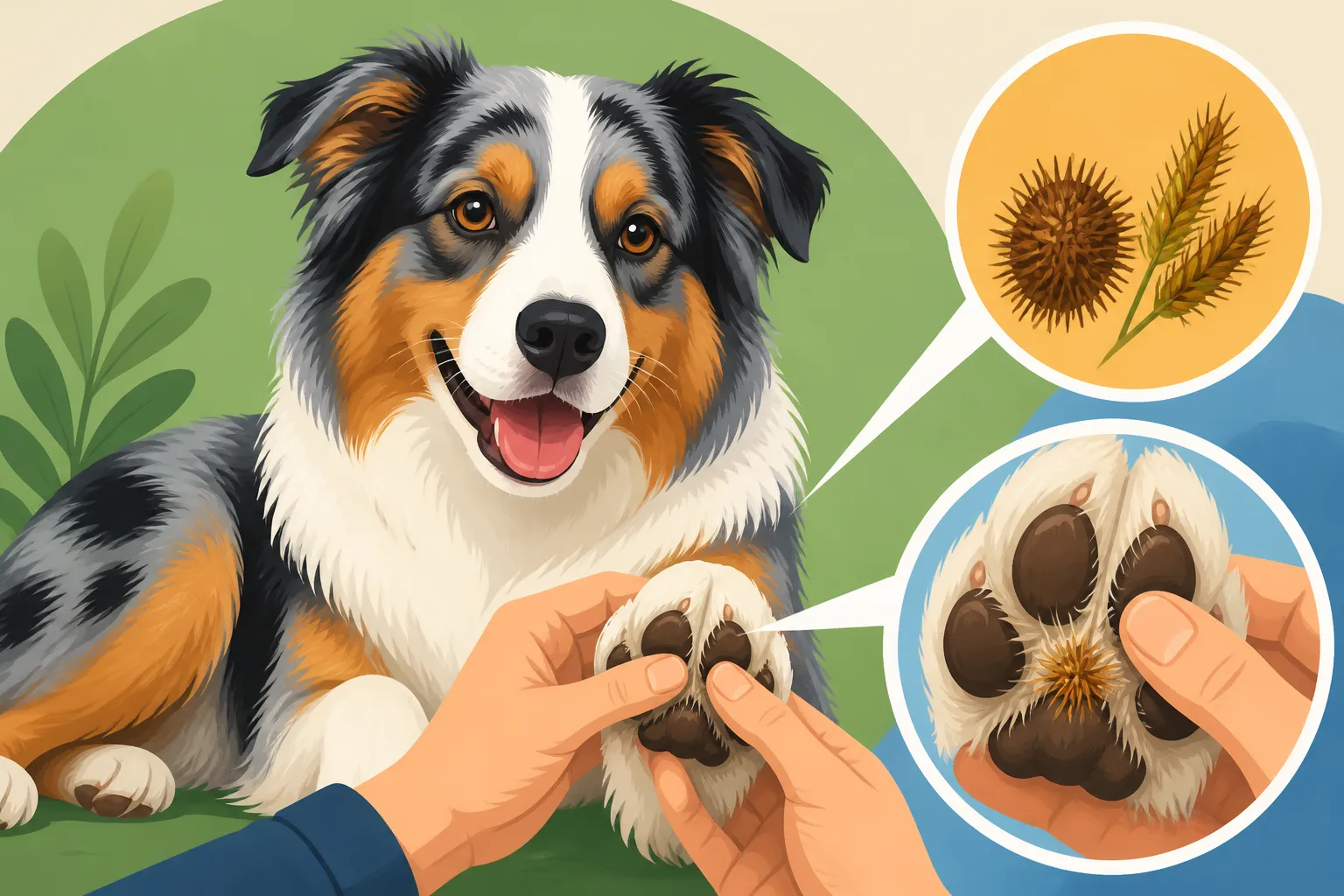
Checking an Australian Shepherd for Burrs and Foxtails
There's nothing quite like the joy of seeing your Australian Shepherd bounding through a field, tail wagging, truly in their element. But that joy can quickly turn into a headache when you discover their magnificent double coat has become a veritable magnet for every burr, stick, and, worst of all, insidious foxtail in the vicinity. It's a frustrating reality for any Aussie owner, facing the daunting task of sifting through all that beautiful fur. This guide is here to walk you through a systematic, empathetic approach to checking your Australian Shepherd for these pesky invaders, ensuring their comfort and preventing potentially serious health issues.
Understanding the Threat: Why Burrs and Foxtails Are More Than Just Annoying
For dogs like our Australian Shepherds, with their dense double coats and propensity for outdoor adventures, burrs and foxtails aren't just a minor inconvenience; they can pose significant health risks. It's easy to dismiss a few burrs as mere annoyances, but understanding their true potential for harm is the first step in proactive care.
The Sneaky Dangers of Foxtails
Foxtails, those innocent-looking, barbed seed heads from certain grasses, are perhaps the most insidious outdoor threat to our active Aussies. They are designed by nature to burrow, and once they latch onto your dog's fur, they only move in one direction: forward. These tiny plant invaders have microscopic barbs that prevent them from backing out, meaning they can, and often do, migrate deep into your dog's body.
Imagine your Aussie running through a dry field, and a foxtail catches in the delicate fur around their ear. Over time, or with your dog's natural movements, that foxtail can work its way into the ear canal, causing intense pain, infection, and even damage to the eardrum. We've heard countless stories of dogs shaking their heads incessantly, tilting them, or pawing at an ear, only for a vet to pull out a fully embedded foxtail. The same terrifying migration can happen if a foxtail gets lodged between paw pads, where it can burrow under the skin, creating abscesses and lameness. They can even be inhaled, ending up in nasal passages or lungs, or find their way into eyes, causing severe irritation and potential blindness. These aren't just theoretical dangers; they're common, painful realities that many Australian Shepherd owners have faced.
Burrs: Tangles, Mats, and Skin Irritation
While not as migratory as foxtails, burrs, those round, sticky seed pods, present their own set of challenges, especially for a dog with an Australian Shepherd's magnificent coat. Burrs are experts at clinging, and their barbed exteriors make them incredibly difficult to remove once entangled. A single burr can rapidly gather more fur, twisting it into tight knots that pull on your dog's skin.
If left unchecked, even for a short period, a few burrs can quickly escalate into a dense, painful mat, particularly in areas of friction or dense feathering like behind the ears, under the armpits, or in the "trousers" on their hind legs. These mats aren't just unsightly; they create a perfect breeding ground for moisture, dirt, and bacteria, leading to painful skin irritation, hot spots, and secondary infections. It’s disheartening to find a large, solid mat near your Aussie’s armpit that you missed for a week, knowing how much discomfort it must have caused. The longer burrs remain, the tighter the mats become, often necessitating shaving large sections of their beautiful coat, which no owner wants to do.
Essential Grooming Tools for the Aussie Owner's Toolkit
Dealing with burrs and foxtails effectively requires more than just good intentions; it demands the right tools. Equipping yourself with a few key items can make the difference between a quick, stress-free clean-up and a frustrating, painful ordeal for both you and your Australian Shepherd.
Brushes and Combs for Deep Coat Penetration
An Australian Shepherd's double coat is a marvel of nature, designed to protect them from the elements. However, it also means that surface brushing simply won't cut it when it comes to finding hidden invaders. You need tools that can reach down to the skin.
Start with a high-quality slicker brush. These brushes have fine, short wires packed closely together, excellent for removing loose undercoat and teasing out minor tangles without pulling too much. Use it with a light hand, working in layers, especially after a romp outdoors. For the true depth of their coat, an undercoat rake is indispensable. These rakes have longer, widely spaced teeth designed to penetrate the dense undercoat and pull out shedding hair and, crucially, any burrs or debris that have settled deep within. The Rake That Reaches an Aussie Undercoat Working methodically with an undercoat rake can help you feel for hidden lumps and bumps that might be embedded plant material.
Finally, a sturdy metal comb with both wide and fine teeth is your precision instrument. The wide-toothed side is great for starting to break up larger tangles and working through feathering, while the fine-toothed side is perfect for delicate areas like behind the ears, around the muzzle, and, critically, between the paw pads. This comb will be your final check, catching anything the brushes missed. You can find excellent quality slicker brushes, undercoat rakes, and metal combs on sites like Chewy or Amazon, often in bundles or kits designed for long-haired breeds.
Specialized Tools for Stubborn Invaders
Sometimes, a burr or foxtail is so deeply embedded or tightly tangled that your standard brushes and combs aren't enough. This is where a few specialized tools come into play, but always remember that safety is paramount when working with sharp objects near your dog's skin.
Blunt-nosed scissors are a must-have. These are not for general trimming, but for carefully cutting around a burr that's hopelessly matted into the fur, or for snipping a few strands of hair to free a deeply lodged seed. Always point the blunt end towards the dog's skin and lift the fur away from the body before cutting, never cutting directly against the skin. Another incredibly useful tool is a pair of hemostats (locking forceps). These are fantastic for grasping a stubborn burr or the stem of a foxtail and gently twisting it free. Their fine tips allow for precise removal without pulling large sections of hair.
For extreme matting caused by multiple burrs, a dematting tool with sharp, inwardly curved blades can be a lifesaver, but use it with extreme caution as it can easily cut skin if not handled correctly. In addition to physical tools, consider having a detangling spray or a conditioning spray on hand. A spritz of detangler can often help loosen the grip of a burr on the fur, making it easier to comb out without causing discomfort. Many of these specialized grooming aids, from scissors to sprays, are readily available on platforms like Amazon, offering a wide range of options to suit your needs.
The Systematic Head-to-Tail Check-Up Routine
After an adventurous outing, your Australian Shepherd might be exhausted but content. However, your job isn't quite done. A thorough head-to-tail check is crucial to ensure no unwelcome hitchhikers like burrs or foxtails have latched on. Don't just glance; this needs to be a hands-on, methodical inspection.
Starting With the Head: Ears, Eyes, and Muzzle
The head is a critical zone, particularly because invaders here can quickly cause serious problems. Start by gently cupping your Aussie's head in your hands, reassuring them. Begin with their ears. First, examine the outside of the ear flap, paying close attention to the long feathering that can easily catch burrs. Then, gently lift the ear flap to inspect the entrance to the ear canal. Foxtails, in particular, love to sneak into the ears, and a deep-set one can cause extreme irritation and infection. Look for any redness, swelling, or foreign objects. If your Aussie has been shaking their head more than usual, this is a prime suspect area. Australian Shepherd Ear Cleaning
Next, move to their eyes. Carefully part the fur around their eyes, looking for any debris, redness, or discharge. Foxtails can get caught in the eyelids or under the third eyelid, causing painful scratches to the cornea. Wipe gently with a soft, damp cloth if needed. Finally, check their muzzle and lips. Aussies love to sniff and root around, making their face and mouth susceptible. Run your fingers through the fur on their cheeks and chin. Gently lift their lips to check their gums and teeth for any embedded seeds or plant material. Some determined foxtails can even work their way into the roof of the mouth or between teeth. A quick sniff test can sometimes alert you to something amiss in their nasal passages – a sign that a foxtail might have been inhaled.
Navigating the Body: Chest, Armpits, and Underside
Once you've cleared the head, it's time to move to the main body. This is where your Aussie's dense double coat truly becomes a challenge for detection. Don't rely solely on your eyes; your hands are your best tool here.
Start at the neck and work your way down their back, running your fingers deep through their fur, feeling for any bumps, tangles, or foreign objects. The chest and armpit areas are notorious burr magnets. The longer fur and the constant motion of their legs create friction, causing burrs to quickly mat into painful clumps. Spend extra time here, gently separating the fur and feeling along the skin. You might find burrs nestled so tightly that they're almost invisible until you feel them.
Next, move to their underside and groin area. If your Aussie has been walking through tall grass or underbrush, this delicate skin can easily pick up seeds and burrs. Gently roll your dog onto their side, if they're comfortable, or stand them up and lift their front legs slightly to gain access. Be thorough but gentle, as this area is sensitive. Remember, the goal is to feel for anything that shouldn't be there – a small lump could be an embedded foxtail, or a hard knot could be a cluster of burrs. It’s a painstaking process, but discovering a potential issue before it becomes a major problem is always worth the effort.
Legs, Paws, and Tail: Critical Ground-Level Zones
The legs, paws, and tail are the front lines for any outdoor adventurer, and for an Australian Shepherd, they require meticulous inspection. These areas are constantly in contact with the ground and vegetation, making them highly susceptible to picking up debris.
Start with each leg, working your way down from the shoulder or hip. Pay close attention to the feathering on their legs, which can easily collect burrs and seeds. Run your fingers through the fur, feeling for anything that feels out of place. Then, move to the paws, which are perhaps the most critical area for foxtail detection. Gently spread your Aussie's toes and inspect the webbing between them, as well as the paw pads themselves. Foxtails can easily lodge themselves here, and due to constant pressure and movement, they can quickly burrow under the skin, leading to severe lameness and infection. It can be tricky if your Aussie is squirmy or has very sensitive paws, but persistence is key. Australian Shepherd Paw Pads After Rough Ground Look for any redness, swelling, punctures, or drainage. Grass Seeds Working Into an Australian Shepherd Paw
Finally, don't forget the tail. If your Aussie has a full tail, the long feathering can become heavily laden with burrs and debris. Gently comb through it, section by section. Even naturally bobbed tails can catch smaller seeds at the base. Remember to be patient and make this a positive experience for your dog, with lots of praise and perhaps a treat or two. A comprehensive check after every significant outdoor adventure, especially during dry seasons when foxtails are prevalent, can save your Aussie a lot of discomfort and you a hefty vet bill.
Safe Removal Techniques for Burrs and Foxtails
Finding burrs and foxtails is only half the battle; knowing how to remove them safely and effectively is just as important. Your approach will depend heavily on the type of invader and how deeply it's entrenched.
Gentle Burr Extraction and Dematting
When it comes to burrs, patience and the right technique are your best friends. Most burrs, if caught early, can be worked out without too much fuss. Start by trying to gently pull the burr out with your fingers, working from the outer edges of the fur entanglement inwards. If it's too stubborn, use your metal comb. Isolate the section of fur with the burr and, starting from the very tips of the hair, gently comb downwards, slowly working the burr free. It's like trying to unravel a knot; don't yank!
For burrs that are more deeply matted, a detangling spray can be a game-changer. Spritz the matted area liberally with a dog-safe detangling spray, let it sit for a minute, and then try combing again, using the wide-toothed side of your comb first. This lubrication can significantly reduce pulling and discomfort for your Aussie. If the mat is truly hopeless, and you can't get a comb through it, then careful cutting with blunt-nosed scissors may be necessary. Always try to slip the blunt end of the scissors between the mat and the skin, pointing away from the skin, and make small, careful snips. Never try to cut a mat that is flat against the skin, as it's incredibly easy to cut your dog. Remember, sometimes a small shaven patch is far better than a large, painful mat. Mats in an Aussie Ruff and Trousers
Handling the Tricky Foxtail: When to Seek Professional Help
Foxtails are a different beast entirely. Unlike burrs, their barbed structure means they are designed to move into tissue, not out of it. If you spot a foxtail that is only superficially caught in your Aussie's fur, you might be able to gently pull it out with your fingers or hemostats. However, this is where extreme caution is required.
Never try to pull out a foxtail that appears to be embedded in skin, or if you suspect it has entered an orifice like an ear canal, nostril, or eye. Attempting to pull an embedded foxtail can break it, leaving part of the barbed head behind to continue its migration, or push it even deeper. If your Australian Shepherd is shaking their head, pawing at an ear, limping, excessively licking a paw, sneezing violently, or showing any signs of discomfort around an area where a foxtail might be present, it's time to call your veterinarian immediately. These are all signs that a foxtail has potentially migrated and requires professional removal. Foxtails in an Australian Shepherd Ear
A vet has the proper tools, magnification, and expertise to safely locate and remove embedded foxtails, often requiring sedation to ensure the dog's comfort and prevent further injury. Trust your instincts; if you're unsure, or if you suspect the foxtail has moved beyond superficial fur, err on the side of caution and seek veterinary assistance. Early intervention is key to preventing serious infections and complications.
Prevention Is Key: Minimizing Risk for Your Adventurous Aussie
While knowing how to remove burrs and foxtails is essential, preventing them in the first place is always the best strategy. For an active Australian Shepherd, this means a combination of proactive grooming and thoughtful management of their outdoor environments.
Proactive Grooming and Coat Maintenance
An Australian Shepherd's coat is magnificent, but it's also a high-maintenance affair, especially when it comes to keeping it free of natural debris. Regular brushing is your first line of defense. Aim for at least two to three times a week, but after every outing in tall grass or brush, a thorough brush-down is crucial. Brushing an Australian Shepherd Twice a Week This helps remove loose fur, small burrs, and surface debris before they have a chance to work their way deeper into the coat or create mats. During seasonal coat blows, you might even need to brush daily.
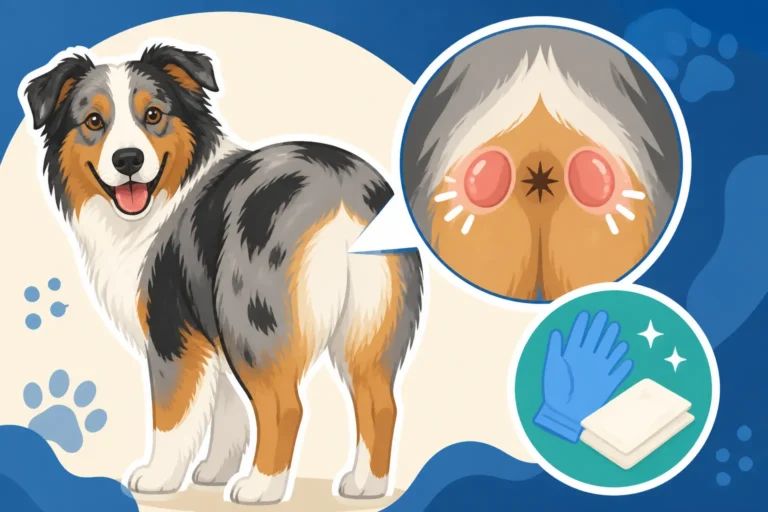
Consider strategic trimming, particularly around sensitive areas. A "sanitary trim" around the groin and hindquarters can significantly reduce the amount of fur available to collect seeds and burrs in those areas. Sanitary Trims on an Australian Shepherd Similarly, keeping the fur between your Aussie's paw pads trimmed short can prevent foxtails and other debris from getting lodged there. Many owners learn to do these small trims at home with blunt-nosed scissors, or you can ask your professional groomer to incorporate them into your dog's regular grooming schedule. For overall coat health, which can make fur less prone to matting, some owners supplement their dog's diet with high-quality fish oils, often found on Chewy or incorporated into fresh food services like Ollie, which can contribute to a healthier skin and coat barrier.
Strategic Exercise Environments and Gear
Where you take your Australian Shepherd for exercise can greatly influence their exposure to burrs and foxtails. During the drier months, when foxtails are most prevalent and dangerous, it's wise to be more selective about your walking routes. Avoid overgrown fields, tall grassy areas, and trails that are known to be dense with foxtail-producing plants. Stick to mown paths, paved trails, or well-maintained dog parks where the risk is lower.
For those times when avoiding such environments is impossible, or if your Aussie is a dedicated working dog, consider protective gear. Paw boots can be incredibly effective at preventing foxtails from burrowing between toes or into paw pads. While some dogs take time to adjust to them, they can offer invaluable protection. For areas with extremely dense brush, some owners even use lightweight, breathable full-body suits designed for dogs, which act as a physical barrier against burrs and seeds clinging to the coat. When choosing such gear, look for durable, comfortable options with good reviews on sites like Amazon or Chewy, ensuring they don't restrict your Aussie's movement or cause overheating. A little planning and preparation can go a long way in keeping your adventurous Australian Shepherd safe and comfortable in the great outdoors.
Here's a quick comparison of our two main culprits:
| Feature | Burrs | Foxtails |
|---|---|---|
| Appearance | Round, prickly seed pods | Barbed, spear-shaped grass seeds |
| Primary Danger | Matting, skin irritation, hot spots | Migration into body, infection, abscesses |
| Typical Location | Everywhere in fur, especially feathering | Ears, nose, eyes, paw pads, skin anywhere |
| Movement | Sticks to fur, creates knots | Only moves forward, burrows |
| Easy Removal? | Often, with combing and detangling | Only if superficial; embedded requires vet |
| Symptoms | Tangles, discomfort when brushed, mats | Head shaking, licking, limping, sneezing, eye irritation |
Disclaimer
This article is for general informational purposes only and does not constitute professional advice. Laws, prices and regulations vary by location and change over time. Consult a qualified professional for guidance on your specific situation.