Cutting Aussie Calories Without Cutting Meals
It's a tough spot, isn't it? You know your beloved Australian Shepherd needs to shed a few pounds for their long-term health, but the thought of simply giving them less food feels awful. Aussies are often food-motivated, active, and can be quite expressive when they feel deprived, making the whole weight loss journey a real challenge. This guide is all about helping you reduce your Aussie's calorie intake without leaving them feeling hungry, frustrated, or like they're on a perpetual diet.
The Dilemma of the Hungry Aussie: Why "Just Less Food" Isn't the Answer
When your vet gently suggests your Australian Shepherd could stand to lose a few pounds, the immediate, logical thought is usually, "Okay, I'll just feed them less." Simple, right? But for anyone who lives with an Aussie, you know it's rarely that simple. These intelligent, often highly driven dogs don't just passively accept a smaller bowl. They might stare at you mournfully, pace the kitchen, or even try to "herd" you towards the food bin, making you feel like the worst pet parent ever. Cutting back on volume without addressing satiety can lead to a truly unhappy dog and a frustrated owner.
Understanding the Aussie Metabolism and Drive
Australian Shepherds were bred for work – long hours of herding, running, and thinking on their feet. This history has given them a metabolism that is efficient, but also often demands a certain amount of fuel to feel truly satisfied. A working Aussie might burn through calories easily, but a pet Aussie who gets a couple of walks and some backyard play might not be expending the same energy. Yet, their internal programming still expects a certain level of intake.
They're not just running on instinct; they're smart cookies. They remember meal times, they understand routines, and they can absolutely tell when their bowl is lighter than usual. This isn't just about hunger; it's about expectation and routine. If they feel like they're not getting enough, they might start seeking out food in less desirable ways, like scavenging crumbs, begging more intensely, or even trying to sneak food from counters. This can create a whole new set of behavioral challenges on top of the weight problem. We need to respect that intelligence and find ways to work with it, not against it.
The Psychological Impact of Underfeeding a Smart Dog
Imagine being on a diet where you're constantly hungry and never feel full. It's miserable, right? Our Aussies feel the same way. When they're perpetually underfed in terms of volume, even if their caloric needs are technically met, their intelligent brains and strong drives can interpret this as scarcity. This can lead to increased anxiety around food, resource guarding behaviors, or obsessive searching for edibles. It can even make training harder if food is usually a primary motivator, and now they associate it with deprivation.
An Australian Shepherd thrives on feeling fulfilled, both physically and mentally. A sudden, drastic reduction in food can lead to a noticeable shift in their demeanor – perhaps less enthusiasm for play, more lethargy, or even grumpiness. It's crucial that any calorie-cutting strategy maintains their sense of well-being. Our goal isn't just a thinner dog, but a healthy, happy dog who feels satisfied and energetic. This means getting creative with their diet to provide bulk and nutrients without packing on excess calories. Remember, their joints, especially as they age, will thank you for maintaining a healthy weight. How Weight Multiplies the Load on Aussie Joints is a great resource to understand this further.
Strategic Calorie Reduction: Smart Swaps and Volume Tricks
The secret to cutting calories without cutting meals lies in making smart substitutions and increasing the sheer volume of low-calorie, nutrient-dense foods. This approach helps your Aussie feel full and satisfied, even as their overall caloric intake decreases. It's about changing what they eat, not necessarily how much their bowl appears to hold.
Incorporating Low-Calorie Fillers for Satiety
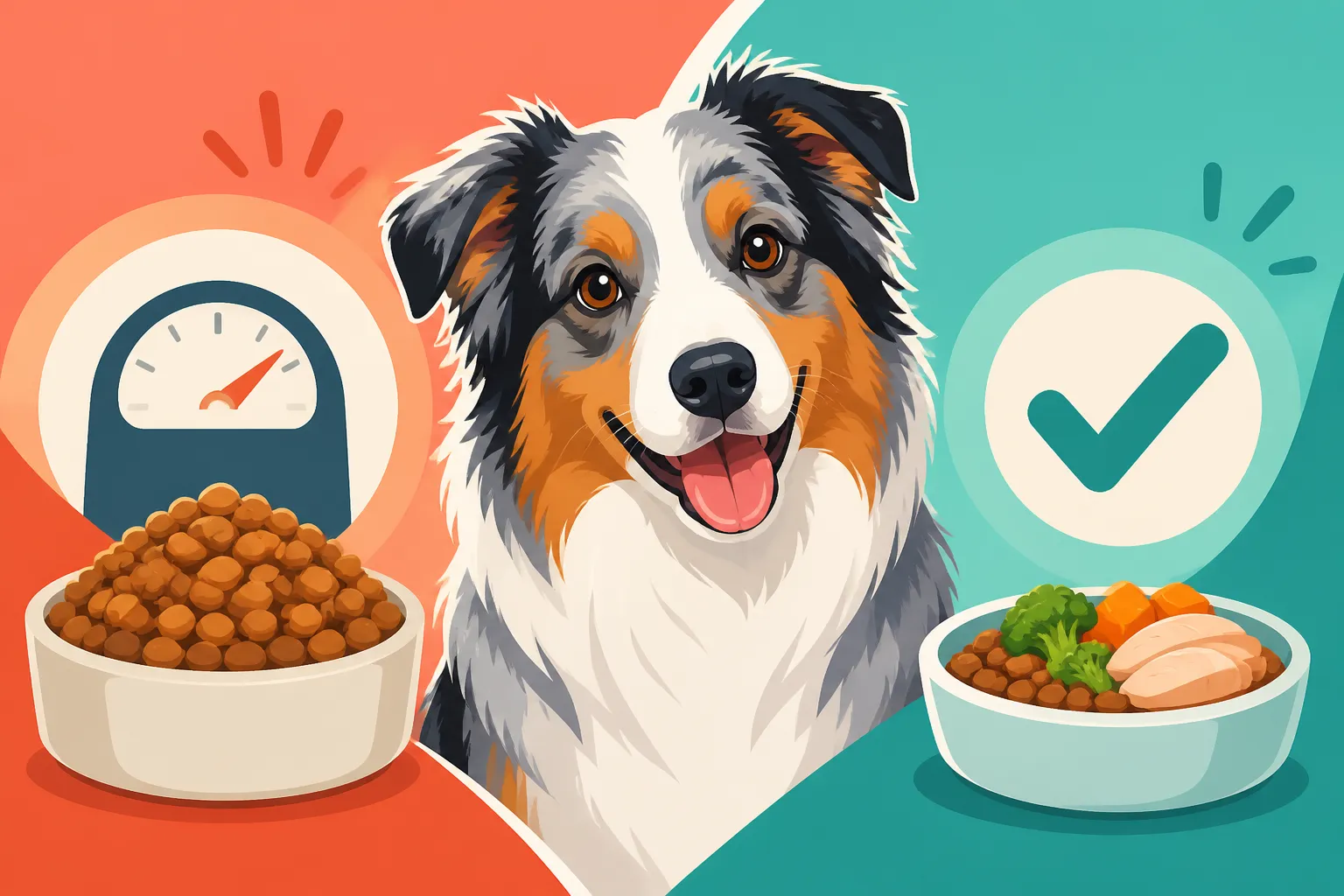
One of the most effective ways to make your Aussie feel full on fewer calories is to introduce low-calorie, high-fiber fillers into their meals. These additions take up space in the stomach, sending signals of fullness to the brain without adding many extra calories. Think of it as adding more salad to your own dinner to feel satisfied!
Great options include cooked green beans, broccoli florets (steamed or raw, in small pieces), carrots, and pumpkin (plain, canned pumpkin, not pie filling!). You can mix these into their regular kibble or fresh food. Start by replacing about 10-20% of their meal's volume with these vegetables and observe how they react. Some Aussies are pickier than others, so you might need to experiment to find their favorites. For a fifty-pound Australian Shepherd, a quarter cup of cooked green beans mixed into a meal can add significant volume with minimal calories. This is especially helpful if you're working on Cutting Aussie Calories Without Cutting Meals.
Another excellent filler, often overlooked, is water. Adding warm water to kibble not only helps hydrate your dog but also expands the kibble, making it seem like there's more in the bowl. This simple trick can make a big difference in how quickly your Aussie eats and how satisfied they feel afterward.
The Power of Veggies: What's Safe and Appealing
Vegetables are your best friends in the quest for healthy weight management. They're packed with vitamins, minerals, and fiber, and most importantly, they are low in calories. However, not all vegetables are safe or appealing to every Aussie.
Here's a quick guide to some popular and safe options:
| Vegetable | Preparation Suggestions | Calorie Impact | Benefits |
|---|---|---|---|
| Green Beans | Steamed, boiled, or raw; chopped for small pieces | Very Low | High fiber, vitamins K, C, and manganese |
| Carrots | Raw (can be crunchy treat), steamed, or boiled | Low | Beta-carotene (Vitamin A), fiber, dental health |
| Broccoli | Steamed florets, small pieces; avoid large stalks | Low | Vitamins C, K, and fiber; antioxidants |
| Plain Pumpkin | Canned (not pie filling!) or freshly cooked/pureed | Very Low | High fiber, great for digestive health and satiety |
| Cucumber | Sliced, peeled if desired | Very Low | Mostly water, very refreshing, low calorie |
| Sweet Potato | Boiled and mashed (in moderation due to higher carbs) | Moderate | Good source of fiber, vitamins A, C, B6, and potassium |
Important Note: Always introduce new foods slowly to avoid upsetting your Aussie's stomach. Avoid onions, garlic, grapes, raisins, and avocados, which are toxic to dogs. If you're home-cooking, be mindful of Home Cooking for an Aussie and the Balance Problem – while veggies are great, the overall diet needs to be nutritionally balanced. For specific dietary concerns, especially if your Aussie has allergies, consulting your vet about a Novel Protein Food for an Itchy Aussie or an Eight Weeks of Elimination Diet on an Aussie might be beneficial alongside these veggie additions.
Switching to Lighter, Nutrient-Dense Kibble Options
Sometimes, the best strategy is to reconsider the base of your Aussie's diet. Many commercial dog foods, especially those marketed for "all life stages" or "active breeds," can be quite calorie-dense. Switching to a formula specifically designed for weight management, senior dogs, or less active adults can make a huge difference without you having to drastically reduce the volume of their meals.
When evaluating new food, look for options that are lower in fat and calories but still provide high-quality protein and fiber. Many brands offer "healthy weight" or "light" formulas. Read the labels carefully to compare caloric content per cup or per gram. You might find that a high-quality "light" kibble still provides all the necessary nutrients but allows for a slightly larger portion size for the same caloric intake. The Label Details That Matter for an Aussie can help you decipher what to look for.
Some companies also offer fresh food delivery services, like Ollie, that can be portioned specifically for weight loss. While these might have a different cost structure, they often provide precise calorie counts, which can be invaluable when you're trying to manage weight carefully. When changing kibble, always do it gradually over 7-10 days to prevent digestive upset. Mixing the old food with increasing amounts of the new food will make the transition smoother. Chewy and Amazon both offer a wide selection of weight-management dog foods, making it easier to compare options and read reviews from other Aussie owners.
Mealtime Magic: Spreading Out, Slowing Down, and Enriching
Beyond what you feed, how you feed your Australian Shepherd can significantly impact their satisfaction and help with weight loss. Aussies are smart and can get bored easily, and mealtime can be an excellent opportunity for mental enrichment, which in itself can burn a few calories and contribute to their overall well-being.
The Benefit of Multiple Small Meals a Day
Instead of feeding your Aussie one or two large meals, consider splitting their total daily caloric intake into three or even four smaller meals. This strategy has a couple of key advantages. First, it keeps their metabolism working more consistently throughout the day. Second, and perhaps more importantly for a hungry Aussie, it provides more frequent opportunities for them to feel "fed."
Imagine if your dog gets breakfast, a mid-day snack (their "lunch"), dinner, and maybe a small bedtime treat. Even if the total amount of food is the same, having more moments where food is presented can reduce the feeling of deprivation. This can be especially effective for Aussies who tend to gulp down their food and then immediately look for more. If you're currently feeding once or twice, try splitting that into smaller, more frequent portions. Splitting an Australian Shepherd's Ration Into Two Meals is a good starting point, but going to three or four can be even better for satiety.
Using Puzzle Feeders and Enrichment Toys
Aussie brains need to work, and mealtimes are a perfect opportunity to engage them. Instead of just dumping food into a bowl, make your dog "work" for their meal using puzzle feeders, snuffle mats, or treat-dispensing toys. This not only slows down their eating significantly, which aids in digestion and increases feelings of fullness, but also provides valuable mental stimulation.
Think about it: foraging for food is a natural dog behavior. When they have to nudge, roll, or sniff out every piece of kibble, it takes longer, engages their senses, and burns a little mental energy. A simple rubber Kong stuffed with a portion of their kibble (perhaps moistened and frozen to last even longer) can turn a two-minute meal into a twenty-minute activity. There are many types of Slow Feeder Bowls for an Australian Shepherd and interactive toys available on Chewy and Amazon that can transform mealtime into a stimulating experience. This helps prevent boredom, which can sometimes lead to excessive begging or destructive behaviors.
Portioning Treats Wisely and Mindfully
Treats are often the hidden culprit in an Aussie's weight gain. Those little rewards add up quickly, and it's easy to lose track of how many you're giving throughout the day, especially during training sessions. When you're trying to cut calories, rethinking your treat strategy is essential.
First, identify high-value, low-calorie treat options. Small pieces of cooked chicken breast, baby carrots, green beans, or even plain Cheerios can be excellent, healthy alternatives to traditional store-bought treats. You can also use small pieces of their regular kibble as training rewards, effectively incorporating part of their meal into training. For training, remember Treats Small Enough for Aussie Training Repetition are key.
Second, be mindful of when and why you're giving treats. Are you giving them out of habit? Out of guilt? Or genuinely as a reward for good behavior? Try to be more intentional. Keep a daily count if necessary, or designate a specific, small portion of their daily calorie allowance for treats. If your Aussie is prone to begging, work on training a "place" command or rewarding them for quietly lying down during meal prep, rather than giving in to persistent staring. Sometimes, a cuddle or a game of fetch can be just as rewarding as a treat.
Beyond the Bowl: Lifestyle Adjustments to Support Weight Management
While diet is critical for weight loss, it's only one piece of the puzzle. An Australian Shepherd's overall lifestyle plays a huge role in their calorie expenditure and general health. Making some adjustments to their daily routine can complement your dietary changes and help your Aussie reach a healthy weight.
Boosting Activity Levels Smartly
An Australian Shepherd needs a job, and exercise is a big part of that job. If your Aussie is overweight, there's a good chance their activity level isn't quite meeting their breed's inherent needs. However, simply adding more intense exercise isn't always the best or safest first step, especially for an overweight dog who might already have stressed joints. Australian Shepherd Arthritis After Years of Work is a real concern, and extra weight exacerbates it.
Start by increasing the duration and consistency of walks, rather than high-impact activities. For example, instead of one brisk 30-minute walk, try two 45-minute strolls, perhaps exploring different routes to keep it interesting. Gradually introduce activities like swimming, which is low-impact and excellent for burning calories, or nose work, which uses mental energy. Remember, The Distance an Adult Aussie Can Cover can be significant, but it needs to be built up.
Avoid vigorous running or jumping until your vet gives the all-clear and your dog has lost some weight. Overweight dogs are more prone to injuries, especially to their joints and ligaments. On warmer days, be cautious about Exercising an Australian Shepherd Over Eighty Degrees to prevent overheating, as their thick double coats can make them more susceptible. The goal is consistent, moderate activity that gradually builds their stamina and helps burn calories without causing undue strain.
Regular Weight Checks and Vet Consultations
You can't manage what you don't measure. Regular weight checks are absolutely essential to monitor your Aussie's progress. Aim to weigh your dog at least once a month, ideally at the same vet office or using the same scale at home for consistency. Many vets are happy for you to pop in just to use their scale.
Beyond just the number on the scale, learn how to assess your Aussie's body condition by feel. Because of their thick double coats, it can be hard to tell visually if they're gaining or losing weight. You should be able to feel their ribs easily with slight pressure, but not see them prominently. Their waist should tuck in when viewed from above, and there should be an abdominal tuck when viewed from the side. Scoring an Aussie Body Condition by Hand is a crucial skill for every Aussie owner, as Why a Thick Coat Hides Aussie Weight Gain is a common issue.
Your veterinarian is your most valuable partner in this weight loss journey. They can help you determine your Aussie's ideal weight, calculate a precise caloric target, and rule out any underlying medical conditions that might be contributing to weight gain. They can also advise on how quickly your Aussie should be losing weight – typically a slow and steady process is best for long-term health, as How Slowly a Working Aussie Should Lose Weight is a better approach than rapid drops. Don't hesitate to schedule regular check-ins with your vet to ensure you're on the right track and to adjust the plan as needed. If your Aussie is neutered, you might also need to consider Recalculating an Aussie Ration After Neutering as their metabolic needs can change.
By combining smart food choices, creative feeding methods, and appropriate exercise, you can help your Australian Shepherd shed those extra pounds without making them feel like they're missing out. It's a journey, but a deeply rewarding one for both of you.
Disclaimer
This article is for general informational purposes only and does not constitute professional advice. Laws, prices and regulations vary by location and change over time. Consult a qualified professional for guidance on your specific situation.