Why a Thick Coat Hides Aussie Weight Gain
It’s a struggle many Australian Shepherd parents know all too well: you look at your beautiful, fluffy companion, and they seem perfectly healthy. They’re running, playing, and acting like their usual energetic selves. Yet, underneath all that gorgeous fur, weight gain can sneak up unnoticed, becoming a silent threat to their well-being. This guide is here to help you understand exactly why your Aussie's thick coat is such a masterful disguise for extra pounds and, more importantly, how you can stay vigilant to keep them at their ideal healthy weight.
The Australian Shepherd Double Coat as a Master of Disguise
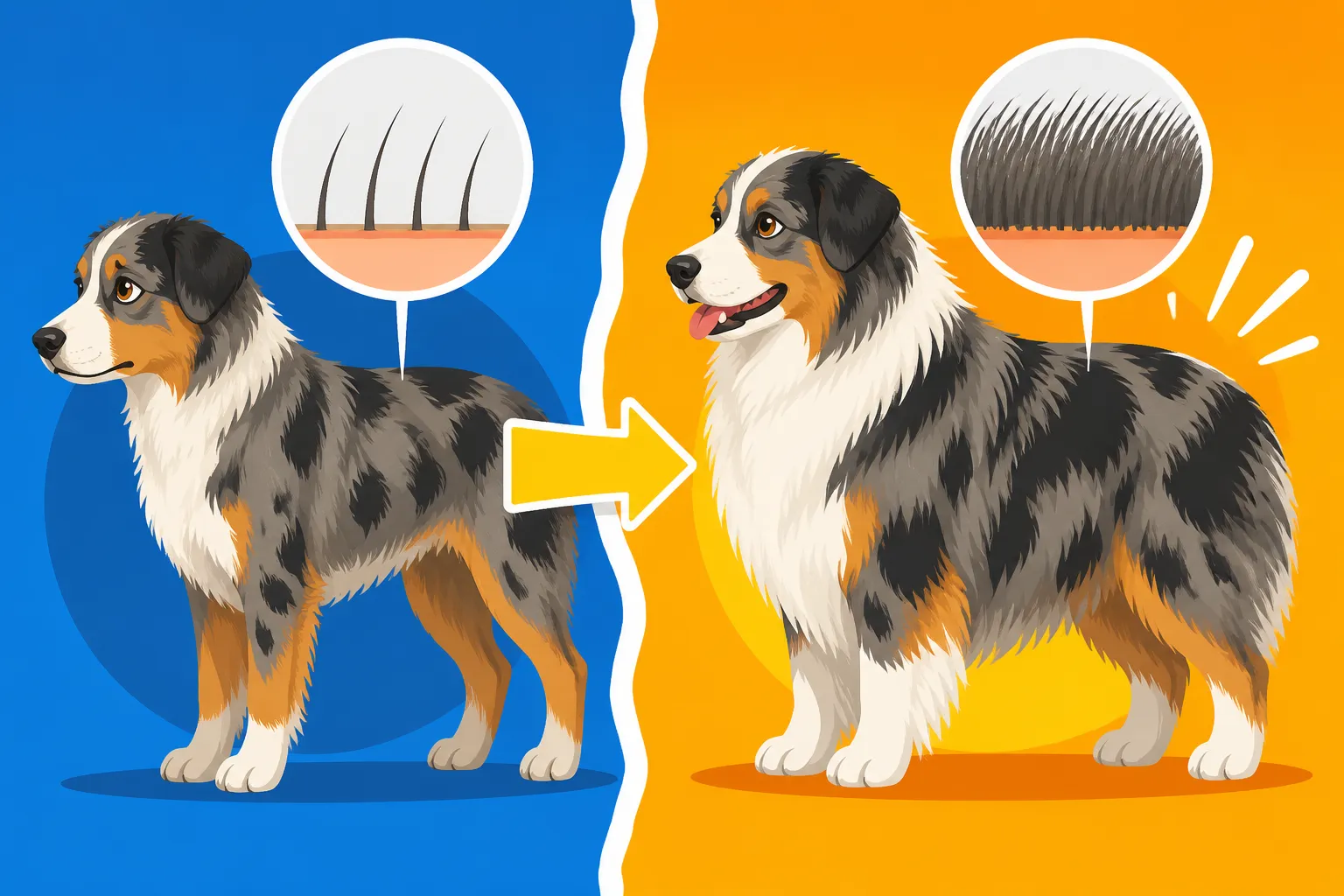
Australian Shepherds are blessed with a stunning, dense double coat that serves a crucial purpose: protecting them from the elements. This coat is designed to keep them warm in winter and surprisingly, to help insulate them from heat in the summer. But what's fantastic for weather protection can be a real headache when you're trying to monitor your dog's physical condition. That plush outer layer and thick, woolly undercoat effectively hide the subtle changes in body shape that would be obvious in a short-haired breed.
Imagine trying to see the lean muscle definition of a marathon runner while they’re wearing a heavy winter parka. That's essentially what you're up against with an Australian Shepherd. The voluminous hair simply fills out any contours that might indicate a widening waistline or a less tucked-up abdomen. You might glance down at your Aussie, see a perfectly cylindrical barrel, and think everything is fine, completely missing the fact that their ribs are becoming harder to feel. It’s not just the length of the hair, but its sheer density that creates this optical illusion, making your dog look substantial even when they're actually packing on pounds. This effect is particularly pronounced during Twice-Yearly Coat Blow in an Australian Shepherd, when the undercoat sheds but also seems to puff up, adding even more visual bulk.
Challenges in Visually Assessing Body Condition
Because of their magnificent coats, simply looking at your Australian Shepherd from above or from the side isn't enough to get an accurate picture of their body condition. You're likely to be misled, and this can lead to serious health consequences if weight gain goes unaddressed.
The Deceptive Profile and Top Line
When you stand over your Aussie and look down at their back, you ideally want to see a defined waistline – a clear tuck-in between their rib cage and hips. For many breeds, this "hourglass" shape is an easy indicator of a healthy weight. With an Australian Shepherd, however, that dense fur can completely mask this crucial visual cue. The coat creates a relatively straight line from shoulders to tail, making it incredibly difficult to discern if their body is broadening due to fat rather than just fluffy hair. What looks like a healthy, compact shape might actually be a wider, heavier dog. The same goes for their profile: the deep chest and the slight tuck of the abdomen might be obscured by the length and density of their belly fur and flank hair, making them appear perpetually sleek even if they're starting to carry extra weight around their middle. Why a Thick Coat Hides Aussie Weight Gain is a frustrating reality for many owners.
Feeling for Ribs Becomes a Dexterity Test
A key part of assessing any dog’s body condition is being able to easily feel their ribs. Not see them, but feel them with gentle pressure, much like running your hand over the knuckles on your own hand. For an Australian Shepherd, this tactile assessment can become a genuine challenge. Their thick guard hairs and dense undercoat add a significant layer of cushioning, making it harder to feel the bony structures underneath without applying more pressure than you typically would for a short-haired dog. You might think you're feeling for ribs and only be pressing into layers of plush fur, leading you to incorrectly assume your dog is too thin when they're actually at an ideal weight, or worse, that they're fine when they've actually started to accumulate a layer of fat over their ribs. This can be especially tricky around the chest and barrel, where the coat is often at its thickest. It takes a deliberate, hands-on approach to get past the fluff and truly connect with your dog's skeletal structure. We'll talk more about how to do that in the next section, but just know, it's not always as intuitive as you might think.
Practical Methods for Monitoring Weight and Body Condition
Since visual checks are often insufficient, it's vital for Australian Shepherd owners to adopt more proactive and hands-on methods for monitoring their dog's weight and overall body condition. These strategies will help you cut through the fluff and truly understand what’s happening underneath.
The Hands-On Rib Check and Waist Palpation
This is perhaps the most critical tool in your arsenal. You need to get your hands on your Aussie regularly, at least once a week, to perform a thorough body condition assessment. Start by running your flat palms along your dog's sides, just behind their shoulders. You should be able to feel their ribs without pressing hard, much like feeling the back of your hand. If you have to dig your fingers in, they might be carrying too much weight. If the ribs feel prominent, like your knuckles, they might be too thin. Next, move your hands back towards their hips. You should be able to feel a slight narrowing, or "waist," where their abdomen tucks up. This contour should be palpable, even if the coat hides it from view.
It's all about consistency. Make this a part of your regular grooming routine or cuddle time. A gentle, reassuring touch can make it a positive experience for both of you. Don't be afraid to part the fur a little to feel the skin directly, especially if you're uncertain. This direct contact is the only way to get an accurate picture of what's going on beneath that beautiful, fluffy exterior. Remember, the goal isn't to see the ribs, but to feel them with ease. You can learn a lot about Scoring an Aussie Body Condition by Hand by being diligent with these checks.
Regular Weigh-Ins and Photo Documentation
While hands-on checks are excellent, nothing beats the objectivity of a scale. Investing in a sturdy pet scale, or making regular trips to your vet's office to use theirs, is a game-changer. Weigh your Aussie at least once a month, keeping a log of their weight. Even small, incremental changes are easier to spot on a scale than by eye or hand through thick fur. A few pounds might not seem like much on a larger dog, but for an Australian Shepherd, it can represent a significant percentage of their ideal body weight. If you notice a consistent upward trend, it's time to adjust their diet or increase their activity.
Another fantastic, yet often overlooked, method is photo documentation. Take pictures of your Aussie from the top and side once a month, ensuring they are standing in the same relaxed posture each time. Store these photos and compare them over time. While the coat can hide a lot, sometimes subtle changes in overall bulk or the way their stance looks can become apparent when you view a progression of images. Think of it as creating a visual diary of their body condition. This can be especially helpful if you're working with a vet or a trainer who needs to see how your dog's body is changing over several months. You might even upload these photos to a pet profile on sites like Chewy or use them to discuss diet options from services like Ollie, giving you a historical record.
Seeking Veterinary Guidance
No matter how diligent you are at home, nothing replaces the objective eye and experience of a veterinarian. Your vet is trained to assess body condition across all breeds, even those with challenging coats like the Australian Shepherd. During routine check-ups, they will perform a thorough physical examination, including palpating ribs, spine, and waist. They can also provide a Body Condition Score (BCS), a standardized scale that helps quantify your dog's weight status.
Don't hesitate to bring up your concerns about your Aussie's weight during appointments, even if you think it's a small issue. They can offer tailored advice on diet and exercise, help you understand appropriate portion sizes, and recommend specific foods if necessary. If your Aussie is already overweight, your vet can help you create a safe and effective weight loss plan. They can also rule out any underlying medical conditions that might be contributing to weight gain, such as Australian Shepherd Autoimmune Thyroiditis, which can often lead to unexplained weight increases. Regular vet visits are your best defense against undetected weight problems.
| Body Condition Score | Visual Assessment (Hard for Aussies) | Hands-On Assessment (Best for Aussies) |
|---|---|---|
| Too Thin | Ribs, spine, hip bones visible | Ribs easily visible AND felt, no fat cover |
| Ideal | Slight waist, ribs not visible | Ribs easily felt with light pressure, slight waist felt |
| Overweight | No waist, broad back | Ribs hard to feel, fat cover felt, no waist |
| Obese | Rounded shape, no distinction | Ribs very difficult to feel, heavy fat deposits |
Health Implications of Undetected Weight Gain
Allowing weight gain to go unnoticed under that thick Australian Shepherd coat can have far-reaching and serious consequences for their health. Aussies are naturally active dogs, and extra weight puts undue strain on their bodies, particularly their joints and internal organs.
Joint Strain and Mobility Issues
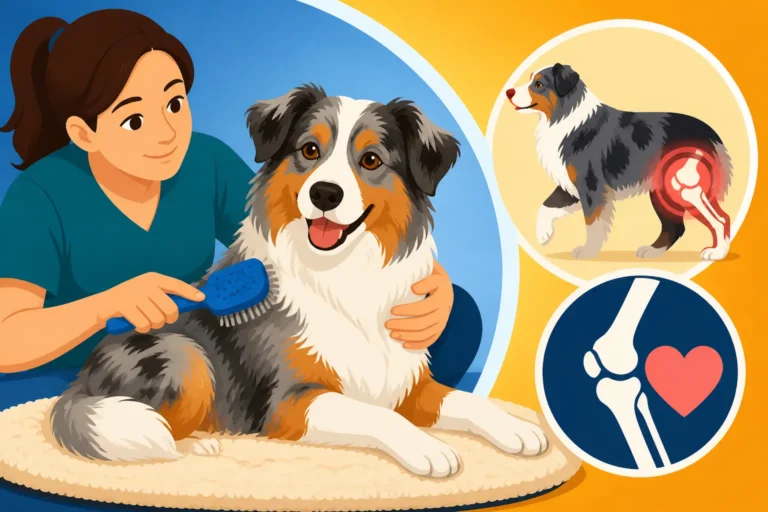
Australian Shepherds are predisposed to certain orthopedic conditions, such as Australian Shepherd Hip Dysplasia and Working Joints and elbow dysplasia. These conditions, which can range from mild discomfort to severe lameness, are significantly exacerbated by carrying excess weight. Imagine having to carry a backpack full of bricks every single day – that's what a few extra pounds feel like to your dog's joints. The added pressure accelerates the wear and tear on cartilage, worsens inflammation, and speeds up the progression of arthritis.
Even if your Aussie doesn't have a diagnosed joint condition, being overweight can lead to general stiffness, reluctance to play or jump, and reduced stamina. A dog that once loved to chase a frisbee for an hour might start to tire quickly or limp after activity. This reduction in activity then creates a vicious cycle, as less exercise leads to more weight gain, which further strains the joints. It’s a heartbreaking scenario to watch a vibrant, energetic Aussie become sluggish and uncomfortable simply due to unmanaged weight. Investing in Joint Support in a Working Aussie Diet from a store like Amazon can help, but preventing the weight gain in the first place is paramount.
Increased Risk of Chronic Diseases
Beyond joint issues, carrying extra weight dramatically increases an Australian Shepherd's risk of developing a host of other chronic health problems. Just like in humans, obesity in dogs is a major contributor to conditions like diabetes. The excess fat interferes with insulin function, making it harder for their bodies to regulate blood sugar. Overweight Aussies are also more susceptible to certain types of cancer and liver disease.
Their cardiovascular system also takes a hit. The heart has to work harder to pump blood through a larger body mass, increasing the risk of heart disease. Respiratory function can also be compromised, making breathing more labored, especially in warmer weather or during exercise. Even something as common as Australian Shepherd Dental Tartar and Cleanings can be indirectly linked, as an overweight dog might be less active and prone to certain dietary choices that affect oral health. Being vigilant about your Aussie's weight isn't just about their comfort; it's about protecting them from a future filled with preventable illnesses.
Reduced Quality of Life and Lifespan
Ultimately, undetected and unmanaged weight gain chips away at your Australian Shepherd's overall quality of life and can even shorten their lifespan. An overweight Aussie simply can't enjoy life to the fullest. They're less able to participate in activities they love, whether it's long hikes, agility training, or simply romping in the yard with the kids. Their energy levels drop, their playfulness diminishes, and they may even become more irritable due to discomfort.
The joy of an Australian Shepherd lies in their boundless energy and eagerness to work and play. When that is taken away by excess weight, a vital part of their personality and well-being is lost. Studies consistently show that dogs maintained at a healthy weight live longer, happier lives. They have more energy, fewer health problems, and maintain better mobility into their senior years. By proactively managing your Aussie's weight, performing those regular hands-on checks, and adjusting their Daily Calories for a Fifty Pound Australian Shepherd as needed, you are giving them the best chance at a long, fulfilling life by your side. It's a testament to the fact that prevention truly is the best medicine for our beloved companions.
Disclaimer
This article is for general informational purposes only and does not constitute professional advice. Laws, prices and regulations vary by location and change over time. Consult a qualified professional for guidance on your specific situation.