Daily Calories for a Fifty Pound Australian Shepherd
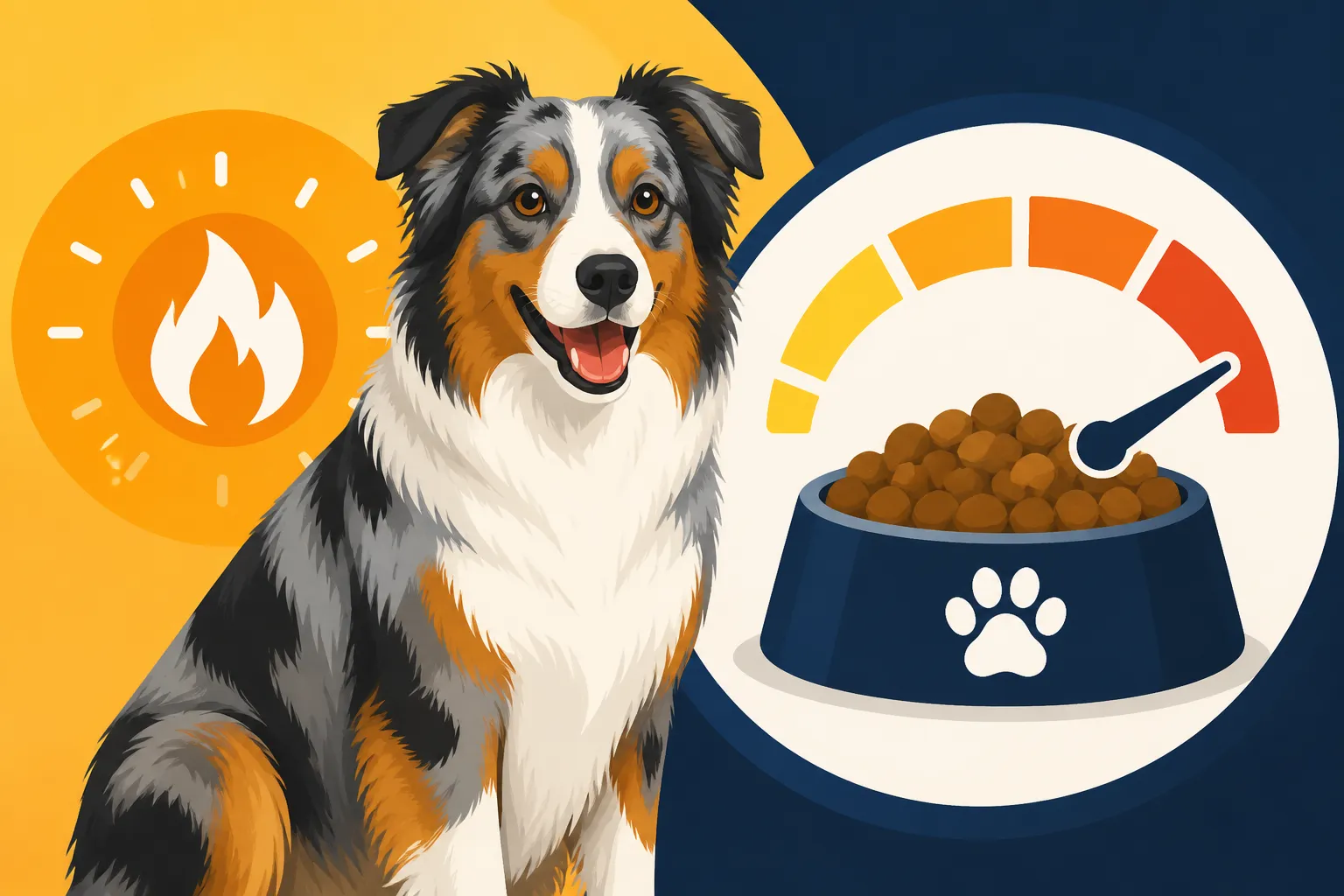
One of the most common questions new Australian Shepherd owners, and even experienced ones, grapple with is exactly how much food their energetic companion truly needs. It's not as simple as checking the bag, especially when you have a 50-pound bundle of Aussie energy that might be working sheep one day and lounging the next. This guide will meticulously break down how to accurately determine the daily calorie intake for a 50-pound Australian Shepherd, taking into account their unique activity levels and individual needs.
Understanding Your Australian Shepherd's Energy Demands
Australian Shepherds are not your average couch potatoes; they were bred for demanding work, requiring significant physical and mental output. This inherent drive means their caloric needs are often higher than other breeds of comparable size, but it's not a static number. A 50-pound Aussie could be a lean, muscled working dog, or a more sedentary companion, and their diet needs to reflect that.
The Active Aussie Lifestyle
When we talk about an "active" Australian Shepherd, we're really painting a broad picture. For some, it might mean daily agility training, long hikes, or even actual work on a farm, herding livestock. For others, it could be hours of intense fetch, disc dog practice, or long runs with their human. These activities all burn calories, but not equally. A dog spending two hours a day actively herding sheep is going to have vastly different energy requirements than an Aussie who gets an hour of brisk walking and some puzzle toys. It's easy to look at their boundless energy and think "more food," but it’s critical to match their input to their output carefully. You can find more detail on their general exercise needs in Australian Shepherd Exercise at One to Two Hours a Day.
It's also important to remember that physical activity isn't the only drain on their energy stores. Mental stimulation, which Aussies crave, also burns calories. A rigorous training session focusing on complex commands, scent work, or even just learning new tricks can be just as tiring, if not more so, than a simple walk. Ignoring this mental component can lead to an under-stimulated, potentially destructive Aussie, even if their physical needs are met. This nuanced understanding is the first step in correctly assessing your 50-pound Aussie's caloric requirements, moving beyond just their body weight.
Factors Influencing Calorie Needs Beyond Weight
While a 50-pound starting point is helpful, it’s just that—a starting point. Several other factors play a huge role in shaping your Australian Shepherd's true daily calorie needs. Age is a big one: a growing Australian Shepherd puppy will require more calories per pound of body weight for development than a mature adult, and a senior Aussie, whose metabolism may slow and activity decrease, will need less. Exercise Limits for a Growing Australian Shepherd discusses this further.
Their reproductive status also matters. Intact dogs often have slightly higher metabolic rates than spayed or neutered dogs. If your female Aussie is pregnant or lactating, her caloric demands will skyrocket to support herself and her puppies. Environmental temperature can also have a subtle effect; dogs living in colder climates might burn slightly more calories to maintain body temperature. Health conditions are another crucial factor. An Aussie recovering from surgery, battling an illness, or even managing chronic pain (such as from Australian Shepherd Hip Dysplasia and Working Joints) might have altered energy needs. Always consult your veterinarian when health concerns are in play, as they can provide tailored dietary advice.
Calculating Daily Calories for a 50-Pound Australian Shepherd
To move beyond guesswork, we can use a basic formula to estimate your Australian Shepherd's daily calorie needs. This involves two main steps: calculating their Basal Metabolic Rate (BMR) or Resting Energy Requirement (RER), and then applying an activity multiplier. Don't worry, it's not as complicated as it sounds!
Basal Metabolic Rate and Resting Energy Requirement (RER)
The Basal Metabolic Rate (BMR) or Resting Energy Requirement (RER) is the amount of energy your dog burns just to exist—to breathe, pump blood, digest food, and maintain body temperature, even when resting. It's the bare minimum required. For dogs, a common formula used to estimate RER is:
RER (in kcal/day) = 70 * (Body Weight in kg)^0.75
Let's do the math for a 50-pound Australian Shepherd:
- Convert weight to kilograms: 50 pounds / 2.2 kg/pound = approximately 22.7 kg
- Calculate (22.7)^0.75: This is roughly 10.9
- Multiply by 70: 70 * 10.9 = approximately 763 kcal/day
So, a 50-pound Australian Shepherd at complete rest would need about 763 calories per day. This is the foundation, but your Aussie is rarely at "complete rest," which is where the activity multiplier comes in.
Applying the K-Factor: Activity Level Multipliers
Once you have the RER, you multiply it by a factor (often called a "K-factor" or "multiplier") that accounts for your dog's activity level and physiological state. This is where personalization really comes into play. Choosing the correct multiplier is crucial for ensuring your 50-pound Aussie is neither overfed nor underfed.
Here's a general guide for multipliers:
| Activity Level / Condition | Multiplier (K-Factor) | Daily Calorie Estimate (for 50-lb Aussie) | Description |
|---|---|---|---|
| Neutered/Spayed Adult | 1.6 | 1221 kcal | This is for the "average" companion Aussie. Perhaps an hour or two of walks, some play, but not intense daily work. This is a common starting point for many suburban Aussies. |
| Intact Adult | 1.8 | 1373 kcal | A male or female Aussie who is not spayed or neutered. Their metabolism tends to run a little higher. |
| Lightly Active Working/Sport Dog | 2.0 – 3.0 | 1526 – 2289 kcal | For Aussies regularly participating in agility, obedience, herding practice a few times a week, or enjoying long, vigorous hikes multiple times a week. This is where many active family Aussies fall. |
| Moderately Active Working Dog | 3.0 – 4.0 | 2289 – 3052 kcal | An Aussie actively working several hours a day on a ranch, or competing intensely in dog sports almost daily. This takes a lot of energy! You can learn more in Feeding an Australian Shepherd That Works All Day. |
| Heavily Active/Heavy Working Dog | 4.0 – 6.0+ | 3052 – 4578+ kcal | Reserved for Aussies engaged in extremely high-intensity, prolonged work such as daily extensive herding, search and rescue, or endurance activities. Not common for most pet Aussies. |
| Weight Loss | 1.0 – 1.4 | 763 – 1068 kcal | If your 50-pound Aussie needs to lose a few pounds. Start closer to 1.2 or 1.0 and monitor. |
| Weight Gain | 1.8 – 2.5 | 1373 – 1908 kcal | If your 50-pound Aussie is a bit too lean and needs to put on muscle or a bit of healthy weight. |
| Puppy (Growth) | 2.0 – 3.0 | 1526 – 2289 kcal | Puppies need a lot of energy for growth and play. This factor decreases as they age. |
As you can see, the range is significant, from just over 1200 calories for a relatively mellow fixed adult to well over 3000 for a true working dog. It’s a starting point, not a definitive command. The exact caloric needs can vary significantly between individuals. Always remember that these are estimates. The real world isn't always perfectly captured by a formula, so consistent monitoring of your dog's body condition is key. You can refer to Daily Calories for a Thirty-Five to Seventy Pound Aussie for a broader perspective.
Practical Feeding Strategies for a 50-Pound Aussie
Knowing the numbers is one thing, but putting it into practice with your daily routine and chosen dog food requires a little finesse. It's not just about dumping the right number of scoops into the bowl; it's about making informed choices for your Aussie's long-term health and well-being.
Choosing the Right Food Type and Quality
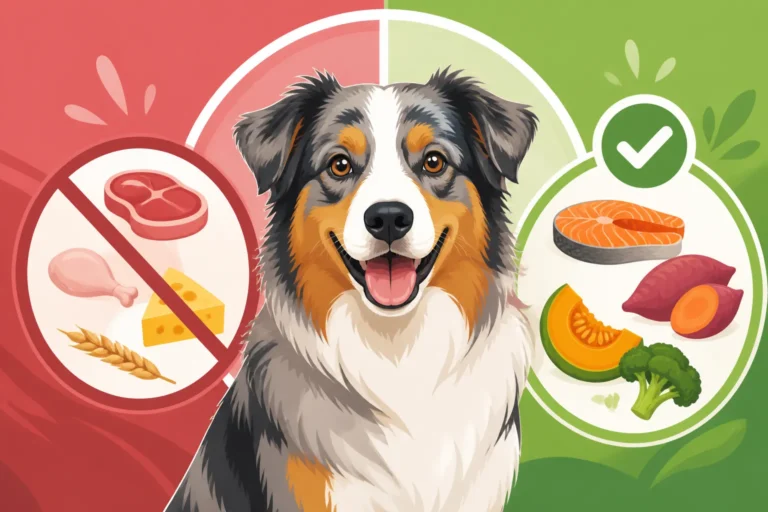
The type of food you choose will greatly impact how many scoops or cups equate to the calorie target you’ve calculated. Different brands and formulas have wildly different caloric densities. A high-quality, performance-oriented kibble designed for active breeds will typically have more calories per cup than a standard adult formula. This means you’ll feed less volume of the denser food to meet the same calorie count. Always check the "guaranteed analysis" and "calorie content" (often listed as Kcal/kg or Kcal/cup) on the food bag.
When considering food quality, look for named meat sources as the first few ingredients, whole grains or easily digestible carbohydrates, and a good balance of fats, vitamins, and minerals. Avoid foods with excessive fillers, artificial colors, or vague "meat by-products" as primary ingredients. Brands like Orijen, Acana, and Taste of the Wild often offer good quality options for active dogs. Some owners also explore fresh food options from services like Ollie, which can be precisely portioned. For some Aussies, especially those with sensitivities, a novel protein food might be beneficial, as discussed in Novel Protein Food for an Itchy Aussie.
Whether you opt for dry kibble, wet food, or a fresh food diet, consistency is key. Sudden changes can upset your Aussie's stomach. If you decide to switch foods, do so gradually over 7-10 days, mixing increasing amounts of the new food with decreasing amounts of the old. You can also explore Wet Food Against Dry Food for an Australian Shepherd for a deeper dive into different food types.
Monitoring Weight and Adjusting Portions
The numbers derived from the RER and K-factor are excellent starting points, but your Aussie's body will tell you the real story. The most important tool you have is your hands. Regularly assess your Aussie's body condition score. You should be able to easily feel their ribs with slight pressure, but not see them prominently. They should have a noticeable waist when viewed from above, and an abdominal tuck when viewed from the side. If you can't feel their ribs, or they look a bit "square" from above, they’re likely carrying too much weight, and you'll need to reduce their daily calories. If their ribs are very prominent, or they look overly gaunt, they might need more.
It's helpful to weigh your Aussie regularly, perhaps once a month, especially if you're making dietary changes. Even a pound or two of unwanted weight gain or loss on a 50-pound dog can make a difference. Always weigh their food using a kitchen scale rather than relying on measuring cups. Measuring cups can be notoriously inaccurate, and even a slight over-fill twice a day can add up to hundreds of extra calories over a week, contributing to unhealthy weight gain. Why an Aussie Ration Should Be Weighed provides more context on this. Adjust your portions slowly, making small changes (e.g., a quarter-cup less or more) and observing the results over a few weeks before making further adjustments. For more guidance on assessing their physique, check out Scoring an Aussie Body Condition by Hand.
Incorporating Treats and Training Rewards
Let's be honest: training an Australian Shepherd often involves a lot of treats. These intelligent, food-motivated dogs thrive on positive reinforcement. However, those treats contribute to their daily caloric intake, and it's easy to accidentally overfeed them this way. A handful of small training treats can easily add 100-200 calories, which needs to be factored into their main meal portions.
Choose low-calorie, high-value treats for training. Small pieces of cooked chicken, cheese, or specialized training treats are excellent. Consider using a portion of their daily kibble ration as training rewards, especially for longer sessions. Brands found on platforms like Chewy or Amazon offer a wide array of healthier, lower-calorie treat options. If you're giving a larger chew or dental treat, remember to count those calories too. Some toys, like puzzle feeders, can dispense kibble, turning mealtime into a mental exercise. The key is balance: account for all calories consumed, whether from their main meal or from rewards. You can learn more about suitable treats in Treats That Fit an Australian Shepherd Training Day.
Common Calorie-Related Pitfalls and How to Avoid Them
Even with the best intentions, it's easy to fall into common traps when feeding an Australian Shepherd. Their unique blend of intelligence and athleticism means their needs aren't always straightforward. Being aware of these pitfalls can help you avoid them and ensure your 50-pound Aussie stays healthy and happy.
Overfeeding and Underexercising
This is perhaps the most common pitfall for Australian Shepherd owners. You see their high energy and assume they need an enormous amount of food, or you mistakenly believe a quick walk around the block is sufficient exercise. The reality is, many Aussies, especially those not actively working livestock or competing in sports, can easily become overweight if their owners don't accurately match caloric intake to energy expenditure. An hour of fetching in the yard, while fun, often doesn't burn as many calories as a long, vigorous hike or an intense agility session. Why an Hour of Fetch Bores an Aussie explores the nuances of Aussie exercise.
An overweight Australian Shepherd is at higher risk for a myriad of health issues, including Australian Shepherd Hip Dysplasia and OFA Scoring, Australian Shepherd Arthritis After Years of Work, diabetes, heart disease, and a reduced lifespan. Even a small amount of extra weight can significantly strain their joints, impacting their mobility and quality of life as they age. This is particularly true for a 50-pound Aussie, where five extra pounds is a 10% increase in body weight. It's far better to err on the side of slightly less food and more appropriate, high-quality exercise. Remember, for a working breed, "appropriate" exercise often means mental engagement alongside physical exertion. Regularly check their body condition score and adjust their food intake, sometimes even before you see a drastic weight change.
Misinterpreting "Working Dog" Formulas
Many dog food brands offer "working dog" or "high-performance" formulas, which are often tempting for Australian Shepherd owners. The marketing can make it sound like these are automatically the best choice for any Aussie. However, these formulas are typically very calorie-dense and high in fat and protein, designed for dogs engaged in truly strenuous, prolonged activities like daily herding, sledding, or search and rescue. For a 50-pound Aussie that gets regular walks, backyard play, and maybe an occasional hike, a "working dog" formula can easily lead to overfeeding and weight gain.
Unless your Aussie fits the description of a truly "working" dog in the most demanding sense, a high-quality "all life stages" or "active adult" formula might be a more appropriate choice. These still provide excellent nutrition but with a more moderate calorie count, making it easier to manage their weight without having to feed tiny, unsatisfying portions. If you do choose a working dog formula, be extra vigilant with portion control and monitor their body condition closely. Portioning an Aussie Ration by Workload gives further insight into adjusting rations for activity. Always remember that the best food for your 50-pound Australian Shepherd is the one that keeps them at a healthy weight, with a shiny coat, bright eyes, and plenty of energy, whatever its label.
Disclaimer
This article is for general informational purposes only and does not constitute professional advice. Laws, prices and regulations vary by location and change over time. Consult a qualified professional for guidance on your specific situation.