Spotting Heat Trouble in a Working Aussie
It’s a situation many of us Australian Shepherd owners dread: you’re out with your high-energy Aussie, maybe at the dog park, on a long hike, or even just playing an intense game of fetch in the yard, and you notice something’s off. Their panting seems too heavy, their usual boundless energy is lagging, and a sudden wave of panic washes over you. Spotting the signs of heat trouble early in a working Australian Shepherd can be the difference between a minor concern and a life-threatening emergency, and this guide is here to walk you through exactly what to look for and what to do.
Why Australian Shepherds Are So Prone to Overheating
Australian Shepherds are incredible dogs, built for work and renowned for their stamina and drive. However, these very traits, combined with their distinctive physical characteristics, make them particularly susceptible to overheating, especially in warm weather or during strenuous activity. It's a cruel irony that the qualities we admire most can also put them at risk.
The Double Coat Dilemma
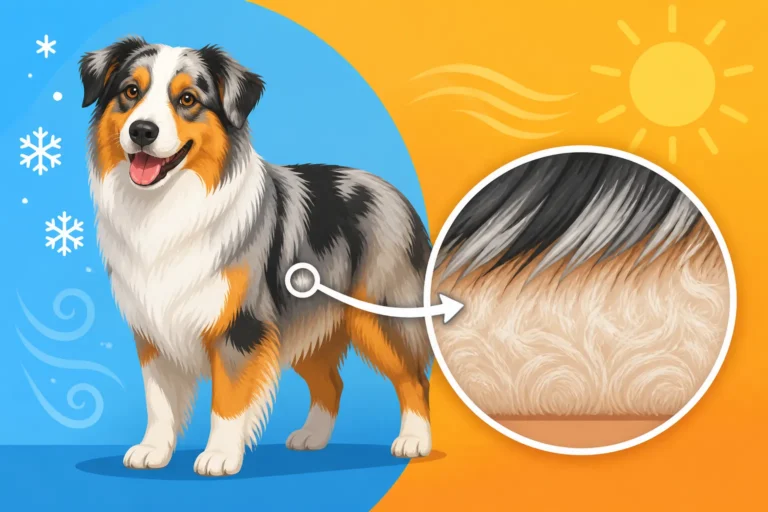
Let’s talk about that gorgeous coat. Australian Shepherds sport a dense double coat: a softer, insulating undercoat, and a coarser, weather-resistant outer coat. In colder climates, this coat is a marvel of natural engineering, keeping them warm and protected from the elements. However, in warmer temperatures, or during intense exercise, this very same coat can become a significant liability.
The undercoat, designed to trap warm air close to the body, can also trap heat in when the ambient temperature rises. It’s like wearing a heavy winter parka in July. When your Aussie is running, working, or playing, their body temperature naturally increases. The thick coat prevents efficient heat dissipation, making it much harder for them to cool down. Many owners, in a well-intentioned but misguided effort to help, consider shaving their Australian Shepherd. This is almost universally a bad idea. Shaving actually disrupts the coat's natural insulation properties, both for heat and cold, and can expose their sensitive skin to sunburn and other issues. Instead of shaving, focus on proper grooming, especially during seasonal shedding, to remove dead undercoat which can trap even more heat. Regularly brushing your Aussie helps thin out that dense undercoat without stripping their natural protection. You can learn more about this in The Australian Shepherd Double Coat Explained.
High Drive and Relentless Work Ethic
Beyond their coat, the Australian Shepherd’s temperament plays a huge role in their susceptibility to heat stress. These dogs are intelligent, eager to please, and possess an incredible work ethic. Whether they're herding livestock, excelling in agility, or simply chasing a disc, they tend to push themselves to their physical limits, often ignoring their body’s signals to slow down or rest. They’re the kind of dog who will run until they drop, not because they’re unhealthy, but because their drive to perform and be with you is so strong.
This high drive means that your Aussie might not stop even when they’re starting to feel overheated. They’ll keep going, driven by instinct and desire, pushing their internal temperature higher and higher. This is particularly true for working lines or those involved in intense dog sports, where the adrenaline and focus can mask early signs of discomfort. It’s up to us, as their guardians, to recognize these subtle cues and intervene before their dedication puts them in real danger. Understanding their drive is key to preventing problems, and it’s why just "running it out" isn't always the best strategy for an Aussie. For deeper insights into their exercise needs, consider reading Why Aussie Exercise Type Beats Duration.
Early Warning Signs of Heat Stress in Your Aussie
Catching heat stress early is crucial. Your Australian Shepherd might not always vocalize their discomfort, preferring to push through it. It's up to you to be a keen observer of their normal behavior and physical state, so you can spot even the most subtle changes that signal trouble.
Subtle Behavioral Shifts
Before you see dramatic physical symptoms, your Aussie might show changes in their behavior. These are often the first, most easily missed signs that their body is struggling to regulate its temperature. Pay close attention if your usually boisterous dog starts to act uncharacteristically.
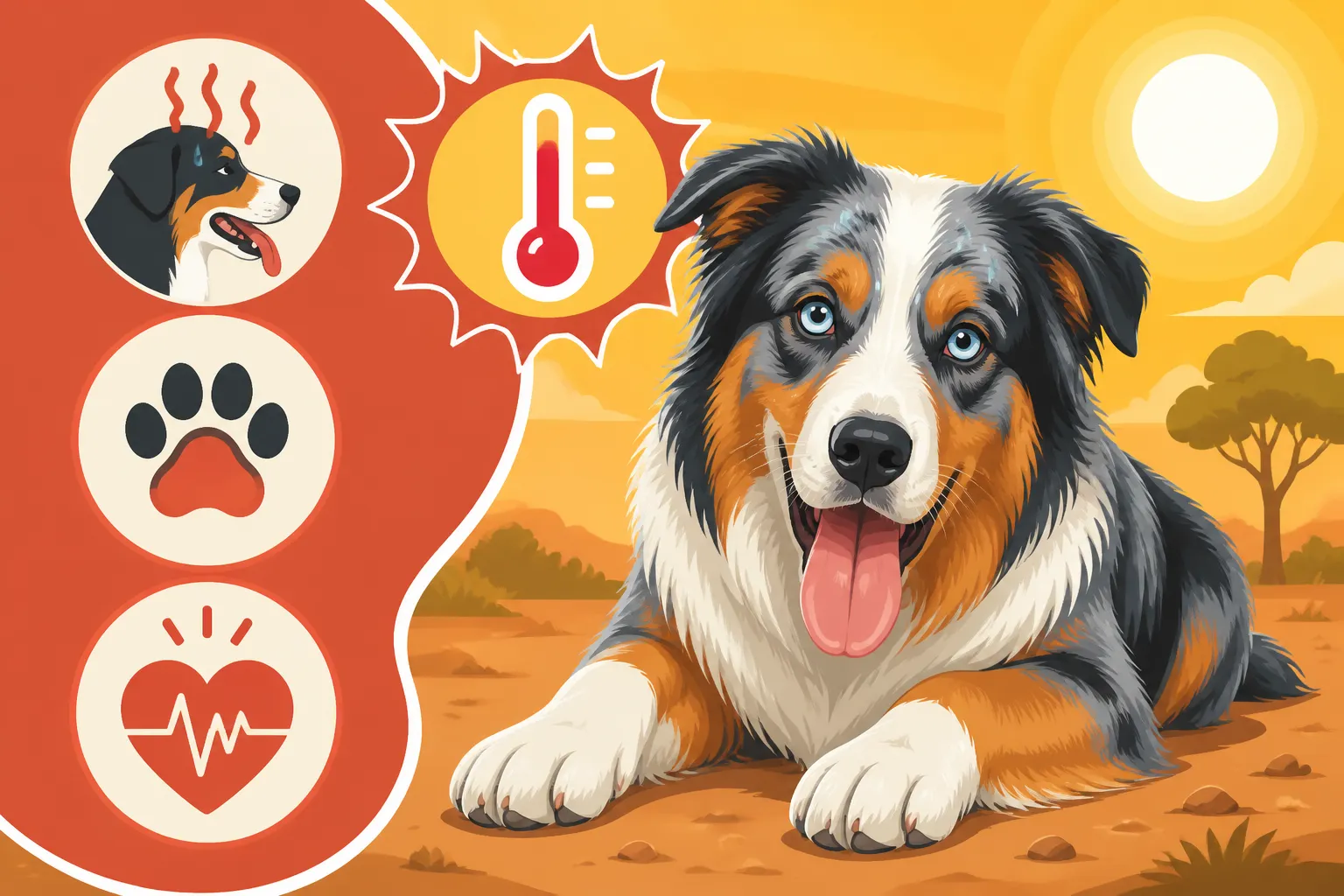
One of the most common early indicators is excessive panting that seems out of proportion to their activity level or the ambient temperature. While some panting is normal for a dog cooling down, if it's heavier, more rapid, or persists long after they've stopped exercising, it's a red flag. They might also become unusually restless, shifting positions frequently, or conversely, seem lethargic and less engaged than usual. A working Aussie who suddenly loses interest in a favorite game or lags behind on a walk, even for a moment, could be telling you something. They might start actively seeking out shade or cool spots more frequently, even when they typically wouldn't. While this is good self-preservation, if it's accompanied by other subtle signs, it warrants investigation. They might also become less responsive to commands, not out of disobedience, but because their brain is beginning to be affected by the rising temperature.
Physical Indicators to Watch For
As heat stress progresses, more overt physical signs will begin to manifest. These are generally easier to spot and should prompt immediate action. Don't wait for these signs to become severe; address them as soon as you notice them.
A noticeable change in their gums and tongue is a significant indicator. Instead of their normal healthy pink, you might see gums that are bright red or even brick-red, indicating increased blood flow as the body tries to cool. Their tongue might also look darker red and appear swollen. Profuse drooling is another common sign, especially if the saliva becomes thick, foamy, or stringy. This is your dog trying to dissipate heat through evaporation, but it can also lead to dehydration. Check their eyes—they might appear glassy, sunken, or have a worried expression. A rapid heart rate, which you can feel by placing your hand on their chest behind their elbow, is also common as their body works harder to circulate blood and cool down. In more advanced stages of heat stress, you might notice uncoordinated movements, staggering, or a general weakness in their legs, indicating that their muscles and neurological system are starting to be affected. These signs, especially when coupled with heavy panting and behavioral changes, mean it's time to take action. For guidance on safe exercise, read Australian Shepherd Exercise in Summer Heat.
Progression to Heatstroke and Emergency Signs
Understanding the progression from heat stress to full-blown heatstroke is critical. While early intervention can often reverse heat stress, heatstroke is a severe medical emergency that requires immediate veterinary care and can be fatal if not addressed rapidly.
Escalating Symptoms
If the early signs of heat stress are missed or ignored, your Aussie’s condition can quickly escalate. The body's systems begin to fail under the sustained high temperature, leading to a cascade of more serious symptoms.
One of the most alarming signs of escalating heatstroke is gastrointestinal distress. Your dog might start vomiting, sometimes repeatedly, and experience diarrhea, which can occasionally be bloody. This indicates internal organ damage. You might also notice muscle tremors or twitching, particularly in their legs or face, as their nervous system struggles. Disorientation is another critical symptom; your Aussie might appear confused, bump into objects, stare blankly, or struggle to recognize you. Their usual responsive and intelligent demeanor will be replaced by a detached or vacant look. They may even collapse and be unable to get back up, signaling extreme weakness and exhaustion. These are not minor issues; they are clear indicators that your dog's life is in danger. If you see any of these signs, consider it an urgent situation. These neurological symptoms can be very frightening, much like those described in Cluster Seizures in an Australian Shepherd.
Recognizing a Full-Blown Emergency
When your Australian Shepherd reaches this stage, there is no time to waste. These are the life-threatening signs that demand immediate, emergency veterinary intervention. Every minute counts.
The most severe indicators of heatstroke include loss of consciousness or complete unresponsiveness. Your dog might be comatose or seize uncontrollably. Their gums may change from bright red to pale, gray, or even bluish as their circulatory system starts to shut down. Their breathing might become extremely shallow and labored, or they might even stop breathing altogether. A body temperature that soars above 104-105 degrees Fahrenheit (40-40.5 Celsius) and stays there, even after initial cooling efforts, signifies a dire situation. At this point, irreversible organ damage, including brain damage, kidney failure, and liver damage, is highly probable. Do not delay. Call your emergency vet immediately, inform them you are coming with a suspected heatstroke case, and begin first aid while en route. This level of emergency demands swift action, akin to dealing with Australian Shepherd Drug Reactions at the Emergency Vet.
What to Do If You Suspect Heat Trouble
Knowing the signs is only half the battle; knowing what to do is the other, equally vital, part. Prompt, effective action can save your Australian Shepherd's life. Don't panic, but act quickly and deliberately.
Immediate First Aid Steps
If you observe any of the early or escalating signs of heat stress, your first priority is to get your Aussie cooled down safely and efficiently.
- Move to a Cool Area: Immediately get your dog out of the sun and into the coolest, shadiest spot available. If you're near air conditioning, that's ideal. If outside, find dense shade.
- Offer Water (Carefully): Provide small amounts of cool, fresh water. Do not force them to drink, and do not let them gulp down large quantities quickly, as this can lead to vomiting. Just offer it gently.
- Initiate Cooling: This is the most crucial step. Focus on areas where blood vessels are close to the surface: the paw pads, ears, groin (inner thighs), and armpits.
- Water Application: Use cool (not ice-cold) water. Ice-cold water can cause superficial blood vessels to constrict, which actually traps heat in the core and can induce shivering, which generates more heat. A damp towel, a garden hose on a gentle setting, or even a spray bottle can be effective. If you have access to a bath or sink, you can gently place their paws and lower legs in cool water.
- Airflow: If you have a fan (a small portable one works wonders), direct it at your dog while applying water. The evaporation helps cool them down significantly.
- Cooling Gear: If you have cooling vests, bandanas, or mats, now is the time to deploy them. Many pet supply stores like Chewy and Amazon offer excellent options for cooling gear designed for dogs with dense coats, such as specialized cooling vests or pressure-activated cooling mats that can provide rapid relief. Check out options like Cooling Kit That Works Under an Aussie Coat for ideas.
- Monitor Temperature (If Possible): If you have a rectal thermometer, carefully take your dog’s temperature. Aim to get it down to around 102.5-103 degrees Fahrenheit (39.2-39.4 Celsius). Stop active cooling once you reach this point to prevent over-cooling (hypothermia).
When to Seek Veterinary Care
Even if your Australian Shepherd seems to recover quickly after your initial first aid, a veterinary check-up is still highly recommended, especially if they showed more than just mild panting. Heatstroke can cause internal damage that isn't immediately obvious.
A vet can assess for any underlying issues, check for organ damage, and address potential dehydration or electrolyte imbalances. They might administer intravenous fluids, conduct blood tests, or provide medications to support organ function. Describe exactly what happened, the symptoms you observed, and the first aid steps you took. Be honest about how long the exposure or strenuous activity lasted.
If your Aussie showed any of the escalating or emergency signs (vomiting, diarrhea, disorientation, collapse, seizures, loss of consciousness), do not hesitate. Call your emergency vet immediately as you initiate first aid and head their way. Time is of the essence. Quick action and professional medical care give your beloved Australian Shepherd the best chance of a full recovery from heat-related illness. Remember that hot pavement can also contribute to overheating and paw pad burns, a topic covered in Summer Pavement Under an Aussie Foot.
Here's a quick comparison of what to look for:
| Symptom | Normal/Mild Heat Stress | Moderate Heat Stress | Severe Heatstroke |
|---|---|---|---|
| Panting | Regular, light panting after exercise | Heavy, rapid, continuous panting | Extremely heavy, distressed, struggling to breathe |
| Energy Level | Normal, enthusiastic | Slightly lethargic, slowing down, seeking shade | Stumbling, weak, collapsed, unresponsive |
| Gums/Tongue | Healthy pink | Bright red, darker red, possibly swollen tongue | Pale, greyish, blue, or brick red |
| Saliva | Normal | Profuse, thick, stringy, foamy | Thick, very foamy, little to no drooling (dehydrated) |
| Eyes | Bright, alert | Glassy, slightly sunken, worried expression | Glazed over, fixed, disoriented look |
| Behavior | Responsive, engaged | Restless, fidgety, less responsive, disinterested | Confused, disoriented, muscle tremors, seizures |
| Gastrointestinal | Normal | N/A | Vomiting, diarrhea (possibly bloody) |
| Consciousness | Alert | Alert but distressed | Loss of consciousness, comatose |
| Body Temp | 100-102.5°F (37.8-39.2°C) | 103-104°F (39.4-40°C) | 105°F+ (40.5°C+), unmanageable high temperature |
Staying vigilant about your Australian Shepherd's well-being, especially during warmer months or intense activity, is a fundamental part of responsible ownership. By recognizing the signs early and knowing how to respond, you can keep your energetic companion safe and healthy for many years to come. Remember to always ensure access to plenty of fresh water, especially on long outings. You can find excellent portable water bowls and hydration solutions on sites like Ollie, Chewy, and Amazon that cater to active dogs. Maintaining proper hydration is vital, as discussed in Australian Shepherd Water Needs on a Long Day Out.
Disclaimer
This article is for general informational purposes only and does not constitute professional advice. Laws, prices and regulations vary by location and change over time. Consult a qualified professional for guidance on your specific situation.