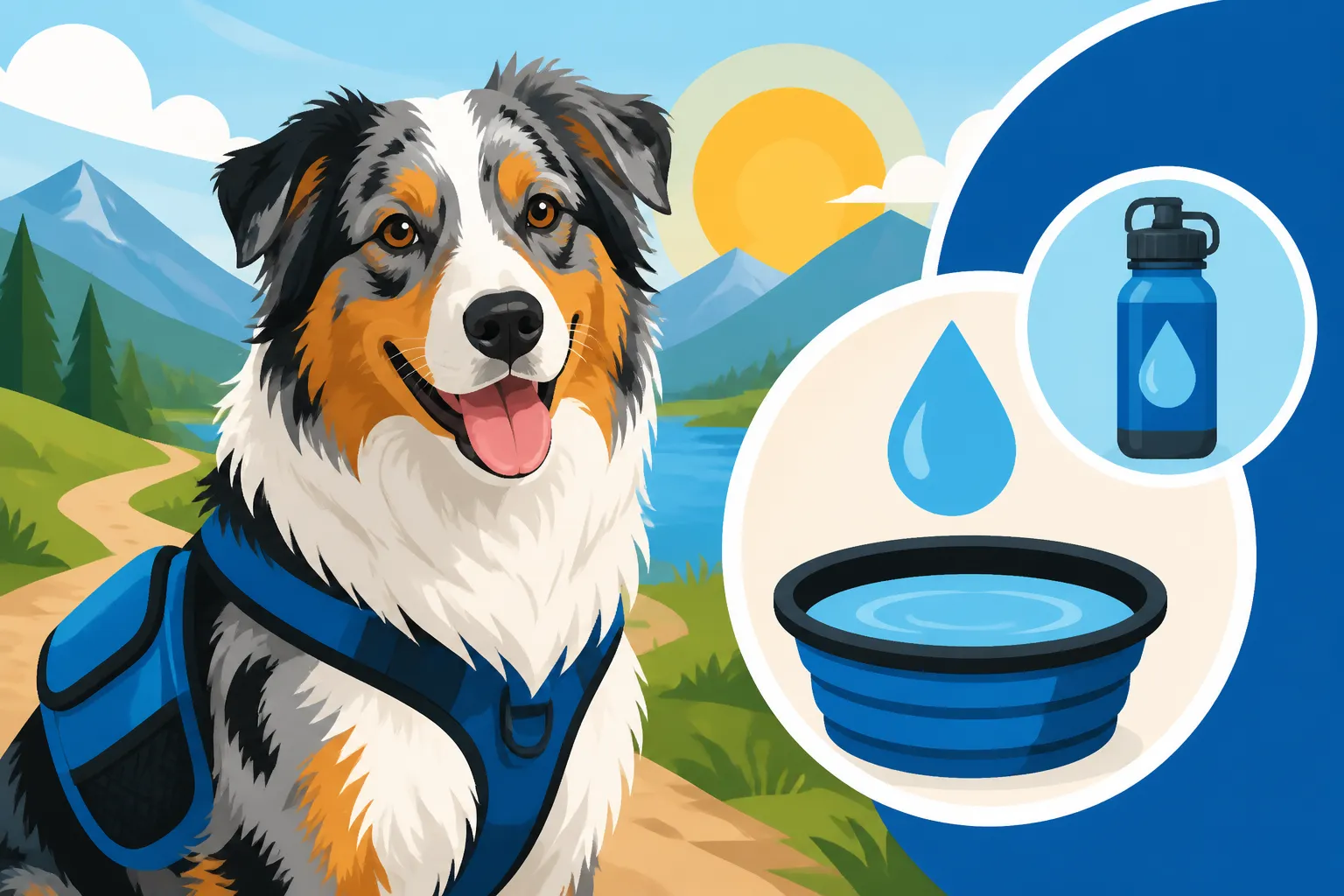
Australian Shepherd Water Needs on a Long Day Out
There's nothing quite like hitting the trails or heading out for a long day of adventuring with your Australian Shepherd. Their boundless energy and enthusiastic spirit make them the perfect companions for exploring. However, many of us, in our excitement, might not fully appreciate just how crucial proper hydration is for these active, double-coated dynamos, especially when you're far from home. This guide is all about understanding your Aussie's unique water needs when you're out and about, recognizing the signs of trouble, and ensuring you're always prepared to keep them safe and thriving.
The Critical Importance of Hydration for Your Active Australian Shepherd
When you're out there with your Aussie, whether it's a strenuous hike, a busy dog sport event, or just an extended play session at the park, their bodies are working hard. Just like us, dogs need water for every single bodily function, from regulating temperature and lubricating joints to transporting nutrients and flushing out waste. For a breed as active and predisposed to overheating as the Australian Shepherd, adequate hydration isn't just nice to have; it's a non-negotiable part of their health and safety.
Why Aussies are Prone to Dehydration on Long Outings
Australian Shepherds are built for work and endurance. They have a dense double coat designed to protect them from both cold and heat, but this very coat can also contribute to overheating if not managed properly, especially on a sunny day. Their high energy levels mean they're constantly on the move, burning calories and generating internal heat. Unlike humans who sweat across their skin, dogs primarily cool themselves by panting. This process involves evaporating water from their tongue and respiratory tract. The more they pant, the more water they lose, making them highly susceptible to dehydration, sometimes faster than you'd expect. A long day out, especially if it involves running, herding games, or agility, significantly ups the ante on their fluid loss.
Imagine your Aussie, utterly focused on a frisbee, darting back and forth for an hour straight. They're not just running; they're working, their muscles contracting, their heart pumping, and their metabolism roaring. All of this demands a constant supply of water to keep their internal systems functioning optimally. If you're not actively managing their water intake, it's easy for them to fall behind, especially since they're often too "in the zone" to stop and drink adequately on their own. This is why being proactive about water is far better than reactive.
The Role of Water in Aussie Physiology During Exertion
Water is involved in virtually every metabolic process in your Australian Shepherd's body. During strenuous activity, its importance becomes even more pronounced. First and foremost, water is vital for thermoregulation. As your Aussie exercises, their body temperature rises. Panting, as mentioned, is their primary cooling mechanism, and it directly depends on water availability. Without enough water, they can't effectively cool themselves, leading to dangerous overheating and even heatstroke. We've talked before about Spotting Heat Trouble in a Working Aussie, and proper hydration is the first line of defense.
Beyond cooling, water facilitates nutrient transport to working muscles and helps remove metabolic waste products, like lactic acid, which can build up during intense activity and contribute to muscle fatigue. It also maintains proper electrolyte balance, which is critical for nerve and muscle function. Think of your Aussie's incredible agility and coordination; these rely on properly functioning cells, all of which need to be bathed in the right balance of water and electrolytes. Even a slight dip in hydration can reduce their performance, cause muscle cramps, and dull their mental focus. So, when you're asking your Aussie to perform, you're also asking their body to maintain a delicate balance that water is central to.
Key Factors Influencing Your Aussie's Water Needs
It's tempting to think that all dogs need the same amount of water, but that's simply not true, especially for a breed like the Australian Shepherd. Their water requirements are dynamic, changing based on a variety of internal and external factors. Understanding these variables is key to tailoring your hydration strategy to your individual dog and their specific outing.
Activity Level and Intensity: More Than Just a Walk
The most obvious factor is, of course, how much your Aussie is doing. A leisurely stroll around the block is vastly different from an hour-long, off-leash trail run or a full day at an agility trial. For a dog that's constantly moving, running, jumping, and using their brain, their caloric expenditure is higher, and consequently, their water loss through respiration and metabolism increases significantly. Many Australian Shepherd owners struggle to understand that Australian Shepherd Exercise at One to Two Hours a Day is a baseline, not a maximum. On a long day out, they're likely exceeding this, and their water needs will surge.
Consider two scenarios: one where your Aussie is calmly accompanying you on a lead through a park for an hour, sniffing around. Their water needs will be moderate. Now, picture them on a sprawling sheep farm, engaging their instincts, rounding up livestock, or intensely training for several hours. Their body is working overtime, their panting is much more pronounced, and they're shedding water with every breath. You could easily see their water requirements double or even triple in the latter scenario. It's not just about the duration, but the intensity. A half-hour of high-intensity fetch in the summer heat might dehydrate them more than a two-hour leisurely walk in cooler weather.
Environmental Conditions: Heat, Humidity, and Altitude
The weather plays a colossal role in your Aussie's hydration needs. Hotter temperatures mean their body has to work harder to maintain a safe core temperature, increasing panting and thus water loss. Humidity, often overlooked, makes it even more difficult for dogs to cool themselves because the air is already saturated with moisture, making evaporative cooling less efficient. This means they'll pant even more, losing even more water. If you're planning on Australian Shepherd Exercise in Summer Heat, meticulous hydration is paramount.
Altitude is another factor. At higher elevations, the air is typically drier, and the thinner air can lead to increased respiratory rates, both contributing to faster dehydration. A sunny day, even if not scorching, can also lead to faster dehydration, as direct sunlight causes heat gain. Think about how quickly a water bowl dries up in the sun; the same principle applies to your dog's internal moisture. Wind can also accelerate evaporative cooling (and thus water loss) from their respiratory tract. So, before you head out, always check the forecast for temperature, humidity, and consider the elevation of your destination.
Individual Aussie Differences: Age, Size, and Health
Just like people, not all Australian Shepherds are created equal when it comes to water needs. A larger, more muscular Aussie will generally require more water than a smaller, more finely built one. An active adult in peak condition might manage their hydration better than a senior dog or a rapidly growing puppy. For Exercise Limits for a Growing Australian Shepherd, their developing bodies are still learning to regulate and can be more susceptible to dehydration. Similarly, Senior Australian Shepherd Care After Ten means paying extra close attention to their water intake, as their thirst drive or ability to regulate temperature might be diminished.
Underlying health conditions can also impact water needs. Dogs with certain medical issues, such as kidney disease or diabetes, may have altered fluid balances. Even seemingly minor issues like diarrhea can rapidly lead to dehydration. Always consult your vet if your Aussie has any health concerns that might affect their hydration. A dog on certain medications might also have increased thirst or urination. Knowing your own dog's normal drinking habits and energy levels is your best defense.
Spotting the Subtle (and Not-So-Subtle) Signs of Dehydration
One of the biggest challenges for Aussie owners is that dogs are often masters at hiding discomfort, especially when they're having fun. By the time obvious signs of dehydration appear, your dog might already be in a compromised state. Learning to recognize the early, subtle cues is absolutely vital for intervening before a serious problem develops.
Early Indicators You Might Miss
The earliest signs of dehydration are often subtle and can be easily mistaken for simple tiredness or just "being an Aussie." One common early sign is a decrease in their usual exuberant energy, a slight sluggishness that isn't typical for them after a similar amount of activity. They might not be as keen to chase the ball, or their pace might slow down significantly on a hike. Their gums might appear a bit tacky or dry rather than moist and shiny, and their saliva could seem thicker or stickier than usual. They might also show a reduced desire to engage or seem a little less responsive to commands.
Another early indicator is darker, more concentrated urine, or less frequent urination than usual. While not always easy to observe on a long day out, if you notice this when they do finally pee, it's a red flag. They might also start seeking shade more frequently, even if the temperature isn't excessively high, or show a mild increase in panting despite not being at their peak exertion. These are all subtle nudges from your Aussie's body telling you they need a water break and probably have for a little while. Don't dismiss them as just fatigue; investigate with a water bowl.
Advanced Symptoms Requiring Immediate Attention
If those early signs are missed, dehydration can progress rapidly, especially in a high-drive Australian Shepherd. Advanced symptoms are much more alarming and indicate a medical emergency requiring immediate action and veterinary attention. These include sunken eyes, a significantly dry nose, and extremely dry, pale, or even bluish gums. Their skin turgor (elasticity) will be severely reduced, meaning when you gently pinch the skin on their back, it will tent up and slowly return to normal, or not at all.
A severely dehydrated Aussie might also exhibit visible lethargy, weakness, stumbling, or even collapse. Their breathing might become labored or shallow, and their heart rate could be rapid. They may vomit or have diarrhea, which further exacerbates fluid loss. In extreme cases, they could go into shock or suffer irreversible organ damage. If you ever see these advanced signs, stop all activity immediately, get your dog to a cool place, offer small amounts of water, and transport them to the nearest emergency vet without delay. This is not a situation where you can "wait and see."
Here’s a quick overview of dehydration signs:
| Symptom Category | Early/Mild Dehydration | Moderate Dehydration | Severe Dehydration |
|---|---|---|---|
| Gums | Slightly tacky, less moist | Dry, sticky, pale | Very dry, pale, or bluish |
| Eyes | Normal or slightly less bright | Slightly sunken | Significantly sunken, dull |
| Skin Turgor | Returns quickly (1-2 seconds) | Slow return (2-4 seconds) | Very slow return (>4 seconds) or tents indefinitely |
| Energy/Behavior | Slightly less energetic, seeks shade, less playful | Lethargic, reluctant to move, dull | Weak, staggering, collapse, unresponsive |
| Panting | Mildly increased for exertion | Increased, perhaps labored, even at rest | Rapid, shallow, distressed |
| Urine | Darker, more concentrated, less frequent | Very dark, concentrated, very infrequent or none | No urine output |
| Other | Mildly thicker saliva | Thicker saliva, possible vomiting/diarrhea | Cold extremities, rapid heart rate, shock, unconscious |
The "Skin Turgor" Test and Other Quick Checks
The skin turgor test is one of the easiest and most reliable ways to quickly assess your dog's hydration level. To perform it, gently grasp a fold of skin, usually on the back between their shoulder blades or over their rump. Lift it up gently, then release it. In a well-hydrated dog, the skin should snap back into place almost immediately, within a second or two. If it takes longer (3-4 seconds for moderate dehydration, or even longer for severe), that's a clear sign of fluid loss. Practice this on your Aussie when they are healthy and well-hydrated so you know what "normal" looks like for them.
Another quick check is to press your finger firmly on their gums until the spot turns white. Release it and count how long it takes for the color to return. In a healthy, hydrated dog, this capillary refill time (CRT) should be less than two seconds. If it takes longer, it suggests reduced blood volume, a symptom of dehydration. Always compare this to their normal, healthy state. A quick look at their eyes can also tell you a lot; sunken eyes are a definite red flag. Being able to do these quick checks can literally be a lifesaver when you're far from immediate help.
Smart Strategies for Keeping Your Aussie Hydrated on the Go
Knowing why hydration is important and what to look for is only half the battle. The other half is being proactive and having a solid strategy for keeping your energetic Australian Shepherd well-watered throughout your adventures. This requires planning, consistency, and a little bit of creativity.
Planning Ahead: Water Quantity and Accessibility
Before you even step out the door, you need a hydration plan. This means calculating how much water your Aussie will realistically need. A general rule of thumb for active dogs is about 0.5 to 1 ounce of water per pound of body weight per day, but this can easily double or triple during intense exercise, especially in warm weather. So, if your Aussie weighs 50 pounds, they might need 25-50 ounces (about 3-6 cups) on a normal day, but potentially 50-100 ounces (6-12+ cups) on a long, active, hot day. It's always better to carry more water than you think you'll need.
Accessibility is key. Don't just carry a bottle of water; carry a suitable portable bowl or a bottle with an integrated dispenser that makes it easy for your Aussie to drink. Plan regular water breaks, not just when you stop for a rest, but proactively every 20-30 minutes during strenuous activity or in hot weather. Even if they don't seem thirsty, offer it. Just like us, by the time they feel thirsty, they're already starting to dehydrate. Think about your route: are there reliable natural water sources? If so, consider carrying a portable water filter like a Sawyer Mini or a LifeStraw to make pond or stream water safe, especially since giardia and other parasites are a concern. When Hiking With an Australian Shepherd Off Trail, knowing your water sources is critical.
Encouraging Drinking: Making Water Appealing
Some Aussies are enthusiastic drinkers, while others need a little more encouragement. If your dog isn't keen on drinking plain water on the go, you can try making it more appealing. A common trick is to add a tiny splash of low-sodium chicken or beef broth to their water. You can also bring along a few ice cubes (or frozen broth cubes) to add to their bowl; the novelty and coolness can entice them. For dogs that love to chase, tossing an ice cube can turn drinking into a fun game.
Another strategy is to offer water in different ways. Some dogs prefer a traditional bowl, while others might drink better from a lick-style bottle or a stream from your hand. Experiment at home to see what your Aussie prefers. Make drinking a positive experience by praising them when they take a drink. You can even make it a part of your routine; every time you stop for a break, offer water before resuming activity. Some owners find that adding a small amount of their regular wet food or even a couple of pieces of kibble (perhaps from a brand like Ollie, which offers fresh, nutrient-dense options) to the water can make it more palatable, turning it into a mini-meal and rehydration combo.
Electrolytes and Hydration Supplements: When and If
For most typical long days out, plain fresh water is perfectly sufficient for your Australian Shepherd. However, for extremely strenuous activities lasting several hours, especially in hot conditions, or if your dog has been vomiting or experiencing diarrhea, electrolyte supplements might be beneficial. These supplements are designed to replace minerals like sodium, potassium, and chloride that are lost through sweat (or panting, in dogs) and can help with rehydration.
It's crucial to use canine-specific electrolyte solutions, as human sports drinks are often too high in sugar and other ingredients that can upset a dog's stomach or even be harmful. Brands like Oralade or some veterinary-approved rehydration powders can be mixed with water. Always consult your vet before giving your dog any supplements, especially electrolytes. Overdoing it can be just as problematic as not having enough. Electrolytes are not a substitute for water but can complement it in specific, high-demand situations. Think of them as an aid for recovery and prolonged exertion, not a daily necessity.
Essential Gear for On-the-Go Hydration
Having the right equipment can make all the difference in keeping your Aussie well-hydrated and your adventures stress-free. There's a wide range of products available, but choosing what works best for you and your dog's typical activities is key.
Portable Water Bowls and Bottles: What Works Best
The market is flooded with portable water solutions, and thankfully, many are affordable and effective. For shorter trips or park visits, a collapsible silicone bowl is a fantastic choice. They fold flat or can be scrunched up, taking minimal space in your bag or clipping to your belt. Many pet supply stores, and online retailers like Chewy, offer a variety of sizes and colors. Simply pop it open, pour in water, and your Aussie has a familiar drinking vessel.
For those who prefer a more integrated solution, dog water bottles with attached dispensers are incredibly convenient. These often have a leak-proof cap that you can squeeze to fill a small trough for your dog to drink from, with any unused water flowing back into the bottle. They're great for quick sips on the trail. You can find many options on Amazon, from simple plastic designs to insulated stainless steel versions that keep water cool for longer, which is a huge plus on a hot day. The best choice often comes down to your Aussie's preferred drinking style and how much water you need to carry.
Hydration Packs and Water Carriers for Longer Adventures
When you're embarking on truly long hikes or multi-hour outings, a small water bottle for your dog simply won't cut it. This is where dedicated hydration packs or larger water carriers become invaluable. Some owners opt for a human-style hydration bladder in their own backpack, with an extra hose to dispense water into a collapsible bowl for their dog. This keeps your hands free and ensures you have a large volume of water.
Alternatively, there are dog-specific packs designed for your Aussie to wear themselves. Brands like Ruffwear or Kurgo make sturdy packs that fit comfortably on an Australian Shepherd, allowing them to carry their own water bottles (typically 1-2 liters, split evenly to balance the load) and other essentials. This is a great way to distribute weight and instill a sense of purpose in your working dog. Just be sure to properly fit the pack and gradually introduce your Aussie to carrying weight. Always check for chafing points, especially around the chest and armpits, and ensure the weight isn't too heavy for them, particularly if they are young or prone to joint issues. An Aussie's propensity for Australian Shepherd Paw Pads After Rough Ground means their comfort with gear is crucial.
Considering Water Sources on the Trail
While it's always safest to carry all the water your Aussie will need, sometimes you might be on a trail with known, reliable water sources like streams, rivers, or natural springs. If you plan to rely on these, it's absolutely essential to bring a way to purify the water. Untreated natural water, no matter how clear it looks, can contain harmful bacteria, parasites (like Giardia or Leptospirosis), or algae that can cause severe gastrointestinal upset or more serious illnesses in your dog.
Portable water filters, like those designed for backpacking, are excellent investments. Many of these handheld devices can filter out most bacteria and protozoa, making stream water safer for both you and your dog. Another option is purification tablets, though these often require a waiting period before the water is safe to drink. Never let your Aussie drink stagnant water, water from puddles near roads (due to chemicals), or any source that looks murky or smells off. When in doubt, always default to the water you carried in.
Rehydration and Recovery After a Big Day Out
The care doesn't stop when you get back to the car or walk through the front door. The post-outing period is crucial for your Aussie's recovery, and proper rehydration is a significant part of that. Just like an athlete, their body needs time and the right resources to bounce back.
Post-Exertion Hydration Routines
As soon as you're done with your activity, or even during the drive home, offer your Aussie fresh water. Don't let them gulp down a huge bowl all at once, as this can sometimes lead to an upset stomach or even contribute to bloat, which is a serious concern for deep-chested breeds like Australian Shepherds. Instead, offer smaller amounts frequently over the next hour or two. A good routine might be to offer a cup or two of water every 10-15 minutes until they seem satisfied, rather than an endless supply immediately.
Once you're home, ensure their regular water bowls are clean and full. It's often helpful to keep multiple water bowls around the house, especially during warmer months, to encourage consistent drinking. Pay attention to how much they drink in the hours following intense exercise; a dog that's still ravenously thirsty long after the activity might have been more dehydrated than you initially thought. This post-exertion period is also a good time to review their paws, coat, and overall condition, especially after a hard day, as discussed in An Aussie Stiff After a Career in Agility.
Replenishing Energy and Electrolytes
In addition to water, a long day out will deplete your Aussie's energy stores. Their muscles will be tired, and their body will be working to repair itself. This is where their post-exercise meal comes in. If you're Feeding an Australian Shepherd That Works All Day, their diet is already optimized for high energy, but after an exceptionally long or intense day, you might consider offering a slightly larger meal, or one with readily available carbohydrates and protein. Some owners find that a fresh food diet, like those from Ollie, can be highly palatable and easily digestible, aiding in quicker nutrient absorption for recovery.
Again, while plain water is usually fine, if you opted for an electrolyte supplement during the outing, or if your vet recommended one for recovery, this is the time to offer it. You can also offer certain moisture-rich foods that contribute to hydration and provide natural electrolytes, such as small amounts of plain cooked chicken or a spoonful of pure pumpkin (not pumpkin pie filling). These also serve as excellent, healthy treats for a job well done!
Monitoring Your Aussie's Recovery Post-Adventure
For the next 24-48 hours after a big day out, keep a close eye on your Australian Shepherd. While some muscle soreness and tiredness are normal, any lingering signs of lethargy, decreased appetite, continued excessive panting, or changes in gait could indicate a more serious issue than simple fatigue or mild dehydration. Watch for any signs of gastrointestinal upset, like vomiting or diarrhea, which can also be a symptom of over-exertion or dehydration.
A healthy, well-hydrated Aussie should bounce back within a few hours to a day. They might sleep more, which is perfectly normal, but they should still be bright-eyed and interested in their surroundings and meals. If you notice persistent signs of illness or unusual behavior, don't hesitate to contact your veterinarian. It’s always better to be safe than sorry, especially with a dog that works as hard and plays as intensely as an Australian Shepherd.
Disclaimer
This article is for general informational purposes only and does not constitute professional advice. Laws, prices and regulations vary by location and change over time. Consult a qualified professional for guidance on your specific situation.