The Gold Rush Flocks That Made the Aussie
When we talk about the Australian Shepherd, our minds often jump to their incredible intelligence, striking merle coats, and boundless energy. But have you ever stopped to think about where this remarkable breed actually came from? It’s a common frustration to hear "Australian" Shepherd and assume Australia, only to find out it's a deep American story. This guide is going to take you back in time, unraveling the fascinating, demanding, and utterly essential role that the California Gold Rush played in shaping the ancestors of the Aussies we know and love today, exploring the crucial flocks of sheep that were at the heart of their development.
The Lure of Gold and the Need for Sustenance
The mid-19th century in America was a time of frenzied hope and hardship, all sparked by the glint of gold in California's rivers. People from all corners of the globe flocked to the Golden State, dreaming of striking it rich. But these dreams came with a very real, very pressing problem: how do you feed thousands upon thousands of hungry miners in a remote, rapidly expanding territory? This wasn't a place with established grocery stores or massive cattle ranches waiting to supply them.
Imagine arriving after months of arduous travel, your pockets maybe already light, and the nearest town barely more than a collection of tents. The physical demands of mining were immense, requiring hearty, sustaining meals. These weren't desk jobs; these were days spent swinging picks, shoveling earth, and panning icy river water. The influx of people was staggering, and the infrastructure to support them simply didn't exist. This sudden population boom created a vacuum, a desperate need for resources, and chief among them was food. Without a reliable food source, the dream of gold would quickly turn into a nightmare of starvation.
California's Empty Rangelands
Before the Gold Rush, California was largely untamed wilderness outside of a few Spanish missions and ranches. Vast expanses of rolling hills, dense forests, and high deserts stretched for miles, largely uninhabited by European settlers and their domesticated animals. While indigenous populations had lived sustainably on the land for centuries, their food systems weren't designed to feed a sudden, massive influx of thousands of prospectors.
The landscape was ideal for grazing in many areas, but the livestock simply wasn't there in the numbers required. Cattle were present, primarily for their hides and tallow, but not in quantities to satisfy the daily protein needs of a booming mining population. There were no massive commercial feedlots or vast tracts of farmland dedicated to growing crops for human consumption on a large scale. This meant that any food source had to be mobile, resilient, and capable of converting natural forage into sustenance for the burgeoning population.
The Appetites of the Gold Miners
Miners worked from dawn until dusk, often in harsh conditions, enduring both extreme heat and bitter cold. Their bodies burned through calories at an alarming rate, and they needed calorie-dense, portable, and readily available food. While beans, flour, and dried provisions were staples, fresh meat was a precious commodity, providing essential protein and a welcome break from monotonous meals.
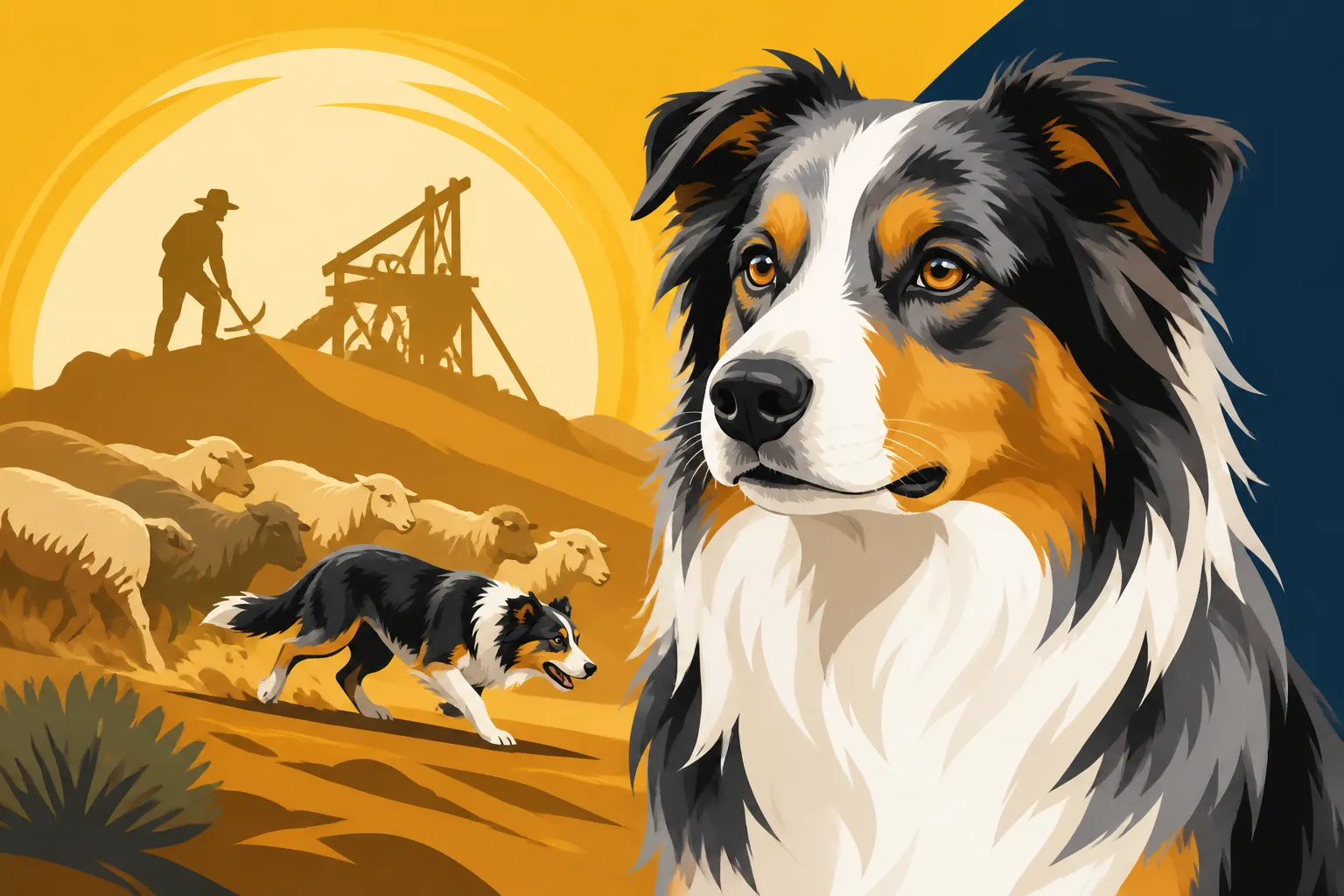
Sheep were the perfect answer to this culinary challenge. They were relatively easy to transport across long distances, could graze on diverse terrain, and reproduced quickly, ensuring a continuous supply of meat. A flock of sheep was essentially a walking larder, a mobile food source that could follow the miners wherever new strikes were found. This made them invaluable to the prospectors, who paid top dollar for fresh mutton, transforming the sheep from mere farm animals into a vital part of the Gold Rush economy. The demand for sheep skyrocketed, creating an economic incentive that drew shepherds and their flocks from far and wide, laying the groundwork for the Australian Shepherd's origins.
Sheep, Shepherds, and Their Journey to California
With the immense demand for meat in California, resourceful individuals saw an opportunity. They started bringing in vast numbers of sheep, not just from within the burgeoning United States, but from across oceans. These weren't just any sheep; they were hardy, resilient animals, often accompanied by equally hardy, skilled shepherds whose traditions of animal husbandry stretched back centuries. This convergence of sheep, people, and dogs, all driven by the promise of gold, was the true crucible where the Aussie's ancestors were forged.
The journey itself was a testament to human endurance and ingenuity. Moving thousands of animals over land or by sea was no small feat, requiring meticulous planning, tireless work, and an intimate understanding of both animal behavior and the environment. These shepherds and their dogs formed an inseparable unit, navigating unforgiving landscapes and protecting their valuable flocks against predators and thieves. Their deep connection to their animals and their craft was paramount, as the success of the entire enterprise rested on their ability to deliver healthy, thriving sheep to the hungry miners.
Basque Sheepherders and Their Ancient Craft
Among the most prominent and skilled shepherds who answered California's call were the Basques. Hailing from the Pyrenees mountains between Spain and France, the Basques had an ancient, deep-rooted tradition of sheepherding that was almost unmatched. Their culture was intrinsically linked to their flocks, and their methods of working with dogs were highly refined, passed down through generations. These were not casual dog owners; these were masters of their craft, and their dogs were essential partners, extensions of their will on the vast rangelands.
The Basque shepherds arrived with their working dogs, breeds that were adept at controlling large flocks, navigating challenging terrain, and possessing an innate intelligence for herding. These dogs were not merely pets; they were integral to the Basque way of life and their economic survival. They understood the nuances of sheep behavior, knew how to move a flock with subtle commands, and had the stamina to work all day, every day. Their arrival with their dogs was a pivotal moment, introducing highly specialized herding genetics and centuries of accumulated knowledge into the American West. The Basque Shepherds Behind the Australian Shepherd delves deeper into their crucial contributions.
The Spanish Merino and Its Resilience
The sheep that made these arduous journeys were often Spanish Merinos or their crosses. The Merino breed is renowned for its fine wool, but it's also incredibly hardy, adaptable, and a prolific grazer. They could thrive in diverse climates and on sparse forage, making them ideal for the challenging conditions of California's undeveloped rangelands. Their ability to put on weight efficiently, even in less-than-ideal circumstances, made them a reliable source of protein for the miners.
These sheep were not merely passive cargo; they were active participants in their own survival, guided and protected by the skilled dogs. The Merinos’ resilience meant they could endure long drives, harsh weather, and the ever-present threat of predators. This hardiness was a non-negotiable trait for any animal making its way to the Gold Rush fields. The success of the Merinos directly fueled the demand for the skilled herding dogs that could manage them, creating a powerful feedback loop that further solidified the need for exceptional working canines.
The Dogs That Traveled West
The dogs that accompanied the sheep and shepherds on their journey to California were a motley but invaluable crew. They weren't a single, defined breed as we understand the Australian Shepherd today. Instead, they were a collection of working dogs, each bringing their own specific skills and genetic predispositions from various European herding traditions. These dogs were selected for their utility, their grit, and their ability to get the job done, no matter the conditions.
These dogs were true pioneers, much like their human counterparts. They faced new terrains, new challenges, and a new set of expectations. Their lives were not easy, but they were purposeful. Their work was physically demanding, mentally stimulating, and absolutely vital to the success of the shepherding operations. Without these four-legged partners, managing vast flocks across hundreds of miles of open country would have been an impossible task, making the dogs as precious as the gold itself in the eyes of the shepherds.
Diverse Herding Stock From the Old World
The dogs arriving in California came from a variety of European backgrounds. Many were direct descendants of the sheepdogs used by the Basque shepherds in the Pyrenees, known for their strong herding instinct, intelligence, and endurance. Others came with settlers from Australia (who had, in turn, received many of their sheep and dogs from Britain), bringing their own types of collies and working dogs. There were also dogs from various parts of the British Isles, like early forms of Border Collies, Smithfields, and other unnamed landrace herding types, valued for their "eye" and ability to control sheep.
This genetic melting pot was critical. Each type of dog brought slightly different herding styles and physical attributes. Some were strong, silent workers, others more vocal and direct. Some were adept at close-up work, others at ranging wide. These diverse skills were all valuable in the varied landscapes and demanding situations encountered in the American West. The shepherds, in their pragmatic way, weren't concerned with breed purity as much as with practical working ability. They bred the dogs that performed best, leading to a natural selection process that favored versatility and efficiency, setting the stage for the distinct characteristics of the Aussie.
Adapting to the American West
The vast, open rangelands of California presented a new set of challenges for these European herding dogs. The terrain was often rugged, with harsh summers and sometimes snowy winters. Predators like coyotes and mountain lions were a constant threat, requiring dogs with both guarding instincts and courage. The sheer scale of the flocks and the distances covered meant that only the most resilient and intelligent dogs could truly thrive.
The dogs needed to be agile enough to navigate rocky slopes, fast enough to gather scattered sheep, and possess the stamina to work for hours on end without tiring. They also needed to be highly intelligent and biddable, able to understand and respond to the subtle commands of their shepherds, often over long distances. This intense selective pressure, favoring dogs that could adapt and excel in this demanding environment, honed the traits that would eventually define the Australian Shepherd. It was a natural, functional breeding program driven by necessity, where only the fittest and most effective dogs passed on their genes.
Forging a New Breed: The Californian Influence
As these diverse sheep, shepherds, and their dogs converged in California, something truly unique began to happen. The melting pot of cultures and canine genetics, combined with the relentless demands of the Gold Rush era, started to forge a new type of working dog. This wasn't a planned breeding program in the modern sense, but rather an organic evolution driven by the need for exceptional, versatile herding animals. It was here, in the vast, untamed American West, that the true foundations of the Australian Shepherd were laid.
The shepherds quickly realized that a dog perfectly suited for the lush, fenced pastures of Europe might not be ideal for the sprawling, wild rangelands of California. They needed dogs that could work independently when necessary, but also respond instantly to commands. Dogs that could handle both the heat of the valleys and the cold of the mountains. This critical period of adaptation and practical selection was paramount, giving rise to the hardy, intelligent, and fiercely loyal companion we know today.
Crossbreeding and Practicality on the Range
With different types of herding dogs arriving from various regions, crossbreeding was inevitable and, indeed, encouraged by the pragmatic shepherds. They weren't breeding for a specific look or to conform to a show standard; they were breeding for function. If a dog from one line possessed incredible stamina, and a dog from another had exceptional "eye" for controlling sheep, a shepherd would naturally breed them together, hoping to combine these desirable traits in the offspring. This practical approach meant that the most effective working dogs, regardless of their original lineage, were the ones chosen to reproduce.
This intense focus on working ability meant that traits like intelligence, biddability, endurance, and a strong but controllable herding instinct were highly valued. Dogs that were prone to chasing wildlife indiscriminately or that lacked the mental fortitude for long, demanding work were quickly weeded out of the breeding pool. This process, driven by the harsh realities of ranching life, resulted in a dog that was remarkably versatile and capable of handling complex herding tasks in challenging environments. The dogs were often named for their origin, or a primary characteristic, further highlighting their diverse heritage.
Early Ranchers and Their Criteria
The ranchers of the American West, many of whom were also shepherds, became the de facto "breeders" of these early Australian Shepherds. Their criteria were simple but stringent: the dogs had to be exceptional workers. They needed dogs that could gather, drive, and protect sheep across vast distances, often without fences or clear boundaries. Loyalty was also a key trait; a dog that would stick with its flock and shepherd through thick and thin was invaluable.
These ranchers also appreciated a dog that could transition from intense work to a calmer demeanor around the homestead, though their primary focus was always on utility. A good ranch dog was a jack-of-all-trades: herder, protector, and companion. They needed a dog that could think for itself, make quick decisions on the range, and yet be responsive to its handler. This combination of independent thought and deep loyalty is a hallmark of the Australian Shepherd today. Their strong work ethic and desire to please their owners, even those who might not have had specialized training gear like that found on Chewy, were evident from the beginning.
From Gold Rush to Australian Shepherd Recognition
While the foundational work for the Australian Shepherd was laid during the Gold Rush, the breed as we know it today didn't fully coalesce overnight. The journey from those rough-and-tumble ranch dogs to a recognized, beloved breed was a gradual one, spanning decades and influenced by changes in American agriculture, culture, and eventually, the rise of dog sports. The name itself, "Australian Shepherd," is a fascinating misnomer that speaks to the complex, international origins of these remarkable dogs.
Understanding this trajectory helps us appreciate the Aussie's inherent drive and adaptability. They carry the legacy of those hardworking ancestors, a drive that still defines them and sometimes challenges modern owners who aren't prepared for their intellectual and physical needs. The evolution of the breed reflects a blend of practical necessity, human ingenuity, and the enduring bond between people and their canine partners, all culminating in the unique dog that now graces our homes and fields.
The 'Australian' Misnomer and Post-War Popularity
One of the most common questions about the breed is, of course, "Why 'Australian' Shepherd if they're from America?" The most widely accepted theory points back to the shepherds who migrated from Australia to California during the Gold Rush. These shepherds often brought with them their own working dogs, which were likely crosses of British collies and other European herding breeds that had been further refined for Australian conditions. When these "Australian" dogs and their offspring were then crossbred with the Basque dogs and other herding stock already in California, American ranchers started referring to the new, distinct type of working dog as "Australian Shepherds" to differentiate them from other local working dogs.
The breed's popularity truly soared in the post-World War II era. With the rise of Western horsemanship, rodeos, and the expanding ranching industry, a highly capable, intelligent, and visually striking working dog like the Aussie found its niche. Their agility, quick thinking, and willingness to perform made them ideal for working cattle, horses, and sheep, not just on ranches but also in entertainment. Jay Sisler, a famous rodeo performer, captivated audiences with his Australian Shepherds performing incredible tricks, further cementing their place in the American consciousness and paving the way for wider recognition.
The Enduring Legacy of the Working Dog
Even as the Australian Shepherd transitioned from purely a working ranch dog to a popular companion and sport dog, the core traits forged during the Gold Rush era remained. That intense herding drive, the boundless energy, the sharp intelligence, and the deep loyalty to their human partners are all direct inheritances from those early ancestors. Modern Aussies, whether they're competing in agility trials, working as service dogs, or simply being cherished family pets, still thrive on having a "job" to do and a purpose.
This legacy means that owning an Australian Shepherd today comes with a responsibility to understand and honor their working heritage. They are not content to be couch potatoes; they need mental stimulation and physical activity to be happy, well-adjusted companions. Failing to provide this can lead to common behavioral issues born of boredom and unfulfilled instincts. When you see an Aussie effortlessly navigating an obstacle course or intently staring down a frisbee, you're seeing the direct continuation of centuries of selective breeding for a highly capable, driven working partner, a partner whose origins were deeply rooted in the practical, demanding world of the Gold Rush flocks.
How Modern Aussies Carry Their Gold Rush Legacy
It's easy to look at our fluffy, house-trained Australian Shepherds today and forget the rugged, pragmatic origins that lie just a few generations back. Yet, every time your Aussie tries to "herd" your kids into a single room, paces expectantly before your walk, or seems to read your mind, you're seeing echoes of their Gold Rush ancestors. This deep-seated heritage isn't just a fun historical tidbit; it profoundly impacts their needs, their behavior, and how we must approach their care in the modern world.
Understanding this connection is key to being a responsible Aussie owner. It helps us interpret their sometimes-quirky behaviors and provides insight into why certain training methods or types of enrichment work so well for them. Their intelligence and drive are not just charming traits; they are tools honed by generations of demanding work, and they need appropriate outlets to truly flourish. The Gold Rush didn't just give us a breed; it gave us a blueprint for understanding and living with this extraordinary canine.
Instincts Alive and Well in Today's Aussies
The intense herding drive that was essential for managing vast flocks on the open range is still very much alive in modern Australian Shepherds. While most don't have sheep to work, this instinct often manifests in other ways:
- "Herding" people or other pets: They might nudge you, circle children, or try to keep family members together, just like their ancestors kept sheep cohesive. This is often seen as a charming quirk, but it can be problematic with very young children if not managed.
- Chasing moving objects: Bikes, skateboards, cars, joggers—anything that moves quickly can trigger that instinct to chase and gather. This is why Australian Shepherd Recall Around Moving Things is such a critical skill to master for their safety and the safety of others.
- "The Eye": Many Aussies exhibit a concentrated stare, often called "the eye," which their ancestors used to silently control sheep. This can be intense, but it's a direct link to their working past.
It's crucial for owners to provide appropriate outlets for these instincts. Herding balls, flirt poles, or even structured games of fetch can satisfy some of this drive. Without an outlet, an Aussie might invent its own "job," which might involve nipping at heels, excessive barking, or destructive behaviors. These aren't signs of a "bad" dog, but rather an unfulfilled working dog asking for a purpose.
The Need for Purpose and Mental Stimulation
Those Gold Rush dogs weren't just physically active; they were mentally engaged for hours every day, making complex decisions and responding to dynamic situations. This legacy means that physical exercise alone is rarely enough for an Aussie. Their sharp minds need to be challenged just as much as their bodies. A bored Aussie is often a destructive Aussie.
Consider the contrast: an ancestor might have spent a day moving hundreds of sheep across miles, navigating difficult terrain, and fending off predators. A modern Aussie might get a 30-minute walk around the block. That gap in mental stimulation is significant. Puzzle toys, scent work, obedience training, trick training, and dog sports like agility or frisbee are all excellent ways to engage their powerful brains. Mental Work That Actually Tires an Australian Shepherd offers more ideas for keeping your dog happy and stimulated. Even browsing for new brain-stimulating toys or long-lasting chews on Chewy can be a step towards meeting these critical needs.
Health and Temperament Reflections
The rigorous selection process on the Gold Rush ranches, where only the hardiest and most capable dogs thrived, contributed to the Australian Shepherd's overall robustness. However, it also highlights the importance of responsible breeding today. Just as early ranchers valued sound structure and good temperament, modern breeders must prioritize health clearances and genetic testing to ensure these traits continue. The long hours of work also meant ancestors needed strong joints and good vision, traits that remain important concerns for the breed. Australian Shepherd Hip Dysplasia and Working Joints and Hereditary Cataracts Clouding an Aussie Eye are examples of ongoing health considerations that link back to the breed's physical demands.
Their reserved nature with strangers, often described as aloofness, can also be seen as a reflection of their history. Early working dogs needed to be focused on their work and their shepherd, not distracted by every passing person. This doesn't mean they're unfriendly, but they often choose their trusted circle carefully, a trait born from the necessity of being a reliable, focused working partner rather than a gregarious greeter. It’s important to respect this tendency and introduce them to new people and situations calmly and positively, helping them build confidence without overwhelming their natural caution.
The Costs of Their Heritage: Time, Training, and Enrichment
Embracing the Australian Shepherd's Gold Rush heritage isn't just about understanding their history; it's about making a realistic commitment to their present and future. Their incredible intelligence and energy, born from those demanding early years, translate directly into significant investments of time, consistent training, and ongoing enrichment. Many new Aussie owners find themselves caught off guard by the sheer volume of mental and physical engagement these dogs require, often leading to frustration on both sides.
This isn't a breed that thrives on minimal effort. They demand an active partnership, a willingness to engage their minds and bodies daily, and a patient, consistent approach to training. Neglecting these fundamental needs doesn't just result in a bored dog; it can lead to a dog that develops problematic behaviors out of sheer necessity to find an outlet for its innate drive. When considering an Aussie, it's vital to truly evaluate whether your lifestyle can genuinely accommodate the "cost" of their magnificent heritage.
The Investment of Time and Energy
Those early Gold Rush dogs worked from sunup to sundown, and while we don't expect our modern Aussies to literally herd sheep for eight hours a day, the need for substantial daily engagement remains. An Australian Shepherd typically requires a minimum of one to two hours of dedicated, focused exercise daily. This isn't just a leisurely walk; it needs to be high-quality exercise that challenges them both physically and mentally. Think fast-paced fetch, long hikes, trail runs, or engaging dog sports.
Beyond physical activity, these dogs also need significant one-on-one time for training and mental games. Fifteen to twenty minutes of focused trick training or puzzle-solving can be as tiring as a good run. Without this, you might find your Aussie "herding" your furniture, creating elaborate destruction projects, or barking incessantly out of boredom. It's a daily commitment that doesn't just fade after puppyhood; it's a lifelong partnership with a very engaged and demanding canine intellect. Australian Shepherd Exercise at One to Two Hours a Day explores this in more detail.
Financial Commitments for an Active Life
Beyond the time investment, fulfilling an Australian Shepherd's needs also comes with financial considerations. Providing the necessary outlets for their drive often involves more than just a leash. Quality food designed for active breeds is a must to fuel their energy. Engaging toys, especially those durable enough to withstand an Aussie's enthusiasm, can be a recurring cost. Many owners invest in puzzle feeders and training treats, perhaps even stocking up from a convenient retailer like Chewy, to keep their dogs mentally stimulated.
For those pursuing dog sports, the costs can add up quickly with class fees, entry fees for trials, and specialized gear. Even regular trips to a dog park or a large, fenced area require transport and often annual memberships. If your schedule doesn't always allow for their rigorous exercise, daycare or professional dog walkers become part of the budget. The Cost of Keeping a High-Energy Australian Shepherd Busy truly unpacks these realities. Understanding these potential expenses upfront is crucial for anyone considering bringing one of these magnificent dogs into their home.
| Category | Description of Impact from Gold Rush Heritage | Typical Investment (Time/Money) |
|---|---|---|
| Exercise | High drive for movement, endurance for long hours | 1-2 hours vigorous physical exercise daily |
| Mental Stimulation | High intelligence, problem-solving abilities for complex tasks | 30-60 minutes daily dedicated training, puzzle games, enrichment |
| Training | Biddable but needs consistent direction; can be independent-minded | Ongoing classes (puppy, obedience, sports), daily reinforcement |
| Socialization | Reserved with strangers (ranch focus), needs broad exposure | Planned exposures to diverse environments, people, other dogs (positive) |
| Grooming | Double coat for weather protection | Regular brushing (weekly, daily during coat blow), occasional baths |
| Food | High energy expenditure requires quality, nutrient-dense diet | Premium dog food, treats for training and enrichment |
| Toys/Gear | Durable toys for chewing, herding balls, long lines | Investment in robust chew toys, training equipment |
Finding the Right Fit for Your Lifestyle
Understanding the Gold Rush history of the Australian Shepherd isn't just an academic exercise; it's a practical guide to responsible ownership. Knowing why they are the way they are helps us appreciate their incredible abilities and, crucially, understand their profound needs. They were, and still are, working dogs at heart, regardless of whether their "work" is on a sheep ranch or a suburban agility course.
If you're drawn to the Australian Shepherd's beauty and intelligence, that's wonderful! But the true joy of owning one comes from embracing their heritage and channeling their natural drives in positive, productive ways. This means more than just loving them; it means committing to a lifestyle that supports their inherent needs for activity, mental engagement, and a strong partnership. When you fulfill these needs, you unlock the full potential of this magnificent breed, a potential forged in the demanding, golden hills of California.
Are You Ready for a Working Partner?
Before bringing an Australian Shepherd into your life, ask yourself honestly if you're prepared for a working partner, not just a pet. Are you someone who enjoys outdoor activities, like hiking, running, or dog sports? Do you have the time and patience for consistent, positive reinforcement training? Are you willing to provide daily mental challenges to keep their intelligent minds occupied?
If your answer to these questions is a resounding "yes," then an Australian Shepherd could be an incredible match for you. They thrive in active households where they are integrated into daily activities and given a purpose. They are not content to be left alone for long hours without stimulation. Their happiness and your peace of mind depend on a compatible lifestyle. Whether a First-Time Owner Should Get an Aussie offers a frank discussion on these considerations.
Training and Socialization Rooted in Purpose
Effective training and socialization for an Australian Shepherd must acknowledge their origins. Their natural wariness of strangers means early and ongoing positive exposure to various people, places, and other dogs is essential to prevent reactivity or shyness. Their strong herding instinct needs to be managed and redirected from an early age, teaching them appropriate outlets like a flirt pole or herding ball, rather than letting them practice on children or other pets.
Seeking out trainers who understand the nuances of herding breeds is also incredibly important. They can guide you in channeling your Aussie's intelligence and drive into constructive behaviors, rather than inadvertently exacerbating problematic ones. Training isn't just about teaching commands; it's about building a language and a partnership that respects their historical purpose and unlocks their incredible potential as a loyal, capable companion. Even something as simple as using high-value training treats purchased from Chewy can make a huge difference in keeping their attention and making training sessions a positive experience.
Disclaimer
This article is for general informational purposes only and does not constitute professional advice. Laws, prices and regulations vary by location and change over time. Consult a qualified professional for guidance on your specific situation.