The Basque Shepherds Behind the Australian Shepherd
It's a common puzzle, isn't it? You hear "Australian Shepherd" and your mind immediately travels to the vast sheep stations Down Under. But then you quickly learn that this beloved, intelligent, and energetic breed actually hails from the American West, leaving you scratching your head about the name. This guide is here to untangle that very mystery, diving deep into the fascinating, somewhat understated, yet utterly crucial role the Basque shepherds and their incredible dogs played in shaping the Australian Shepherd we know and adore today. We're going to pull back the curtain on this lesser-known history and shine a light on the true origins of our remarkable companions.
The Name That Misleads: Why "Australian" Isn't Quite Right
The name "Australian Shepherd" has caused more confusion than almost anything else related to the breed. It's perfectly natural to assume a dog with "Australian" in its name comes from Australia, much like an English Bulldog comes from England or a German Shepherd from Germany. But with our Aussies, it's a wonderfully complex and deeply American story, rooted in the hard work and migration of people and their loyal canine partners.
The Common Misconception: Everyone Thinks They're Aussie Born
I’ve had countless conversations at dog parks, at agility trials, and even with friends who are just getting to know the breed, where they express genuine surprise upon learning that Australian Shepherds aren't, in fact, Australian. The assumption is so prevalent that it often becomes a funny icebreaker. People imagine sun-drenched outbacks and kangaroos, picturing the dog rounding up sheep under the harsh Australian sun. It’s a compelling image, but it just doesn’t fit the historical facts of this particular breed.
This misconception isn't just a trivial matter; it often overshadows the true, rich history of the breed's development. If we just stick with the "Australian" idea, we miss out on the incredible journey and the dedicated people who truly forged these dogs into existence. Understanding where they didn't come from is the first step in appreciating where they did come from and the unique circumstances that shaped them.
The American West: The True Cradle of the Breed
While their ancestors had roots elsewhere, the Australian Shepherd as a distinct breed was developed right here in the United States, specifically in the wide-open spaces of the American West. Think California, Oregon, Nevada, Idaho – states with vast rangelands perfect for sheep and cattle operations. This was a place of opportunity, hard work, and a relentless need for intelligent, resilient working dogs. The climate, the types of livestock, and the specific challenges of managing flocks and herds in this rugged landscape all contributed to the selective breeding that led to the Aussie's traits.
The working environment of the American West demanded a versatile dog, one that could handle diverse terrain, extreme weather, and clever livestock. These were not just herders; they were partners, protectors, and companions during long, solitary days. The ranchers and shepherds who settled this land needed dogs that were not only biddable and quick to learn but also possessed an innate understanding of livestock behavior and a strong desire to please their human counterparts. This truly American crucible is where the Australian Shepherd's unique blend of intelligence, athleticism, and loyalty was refined. You can read more about how this environment shaped them in Where the Australian Shepherd Was Actually Developed.
Unraveling the Naming Mystery: A Clue from the Sheep
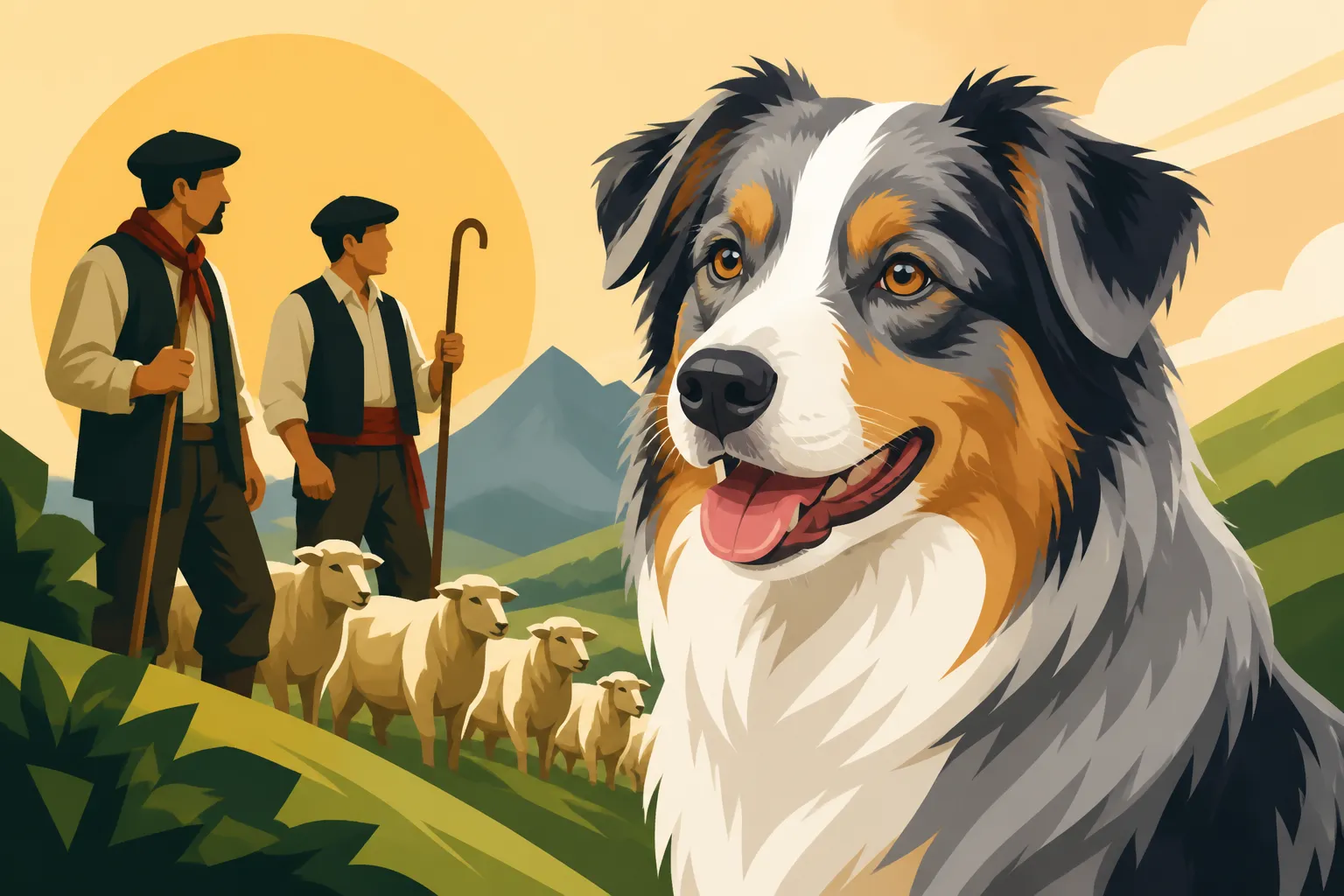
So, if they weren't from Australia, why the name? This is where our Basque shepherds come into play. Many of these European shepherds immigrated to the American West, and often, before reaching the U.S., they had spent time in Australia, or more importantly, the sheep they brought with them had. It wasn't the dogs that were Australian, but rather a significant portion of the sheep they were herding. These Merino sheep, renowned for their fine wool, had made their way from Australia to America, often accompanied by the Basque shepherds and their dogs.
The dogs these Basque shepherds brought with them to herd these "Australian sheep" were often referred to by the local American ranchers as "the Basque dogs" or, more commonly, "the Australian shepherd's dogs" – referring to the dogs that came with the Australian sheep. Over time, the name simply shortened to "Australian Shepherd," a practical if historically misleading, label that stuck. It's a linguistic shortcut that obscures a much richer, more international heritage, but it’s a direct nod to the crucial connection these dogs had with the Basque people and their flocks.
The Silent Shepherds: Who Were the Basque People?
To truly understand the Australian Shepherd's roots, we must first understand the Basque people. They are a unique and ancient ethnic group with a distinct culture, language, and history that sets them apart from their French and Spanish neighbors. Their story is one of resilience, deep connection to the land, and a remarkable tradition of shepherding that directly impacted the development of our beloved Aussies.
A Unique Culture on the Border: Spain and France
The Basque Country spans a region in the western Pyrenees Mountains, straddling the border between what is now France and Spain. This rugged, beautiful land has been home to the Basques for millennia, making them one of Europe’s oldest indigenous groups. Their language, Euskara, is a linguistic isolate, unrelated to any other known European language, a testament to their long and independent history. This isolation, combined with the challenging mountain terrain, fostered a strong sense of community, self-reliance, and a deep respect for tradition.
Living in such a demanding environment meant developing specific skills for survival, and animal husbandry, particularly sheep farming, became central to their way of life. Their culture emphasized practicality, hard work, and a close relationship with the land and its creatures. These aren’t abstract concepts; they are the very values that would later be imprinted on the working dogs they brought with them to the New World, dogs that needed to be tough, smart, and devoted.
Centuries of Sheep Herding Tradition: Their Way of Life
For centuries, sheep herding wasn't just an occupation for the Basque people; it was an integral part of their identity and survival. They practiced a form of transhumance, moving their flocks seasonally between mountain pastures and lowland areas. This nomadic lifestyle, driven by the needs of their sheep, required dogs that were incredibly hardy, intelligent, and fiercely independent yet deeply loyal to their shepherd. These dogs were more than tools; they were indispensable partners, often spending weeks or months alone with the shepherd and the flock in remote areas.
This demanding tradition of shepherding meant that only the most capable dogs were bred and kept. They needed to be able to gather, drive, and protect sheep, often without direct supervision, using their keen instincts and problem-solving abilities. The focus was always on utility and temperament. Dogs that bit too hard, lacked stamina, or were easily distracted simply wouldn’t make the cut in such a harsh, unforgiving environment. It was a natural selection process, favoring the traits that would eventually define the Australian Shepherd. The Basque Sheepherders Behind the Aussie explains this heritage in more detail.
Why the Basque Migrated: Seeking Opportunity in the New World
By the mid-19th and early 20th centuries, economic pressures, land scarcity, and political instability in their homeland led many Basque people to seek new opportunities abroad. The promise of the American West, with its vast tracts of undeveloped land and burgeoning livestock industry, was a powerful draw. Many of them arrived during or after the California Gold Rush, where the demand for meat and wool created an opening for experienced shepherds.
These weren't just individuals seeking fortune; they often came with their families, their traditions, and, crucially, their working dogs. They brought with them not only generations of shepherding knowledge but also the genetic foundation of the dogs best suited for the task. They understood the value of a good working dog, and they were prepared to put their faith in these four-legged partners to help them build new lives in a foreign land. Their migration was a pivotal moment, setting the stage for the true birth of the Australian Shepherd.
The Long Journey: Basque Shepherds and Their Dogs Come to America
The journey from the rugged Pyrenees to the expansive American West was long and arduous, spanning continents and oceans. It was a testament to the Basque people's determination and resilience, and their dogs were right there with them, adapting to new environments and challenges every step of the way. This migration wasn't just a physical relocation; it was a transfer of culture, knowledge, and genetic heritage that would forever shape the American herding landscape.
Sailing Across the Atlantic: The Trek to the West
For many Basque immigrants, the journey often began with a long sea voyage across the Atlantic Ocean, typically landing on the East Coast of the United States. From there, the trek westward was usually by train or wagon, a slow and dusty passage across vast distances. Imagine bringing working dogs on such a journey – it speaks volumes about their importance. These weren't pets; they were essential members of the family and future business partners, irreplaceable assets for the life they planned to build.
The conditions would have been tough, testing the endurance and adaptability of both humans and animals. Dogs that were prone to illness, fear, or aggression wouldn't have survived or been deemed suitable for such a demanding relocation. This further reinforced the selection for robust health, steady temperaments, and an inherent resilience that are still hallmark traits of the Australian Shepherd today.
The Gold Rush Era: A Demand for Sheep and Sheepdogs
The California Gold Rush, beginning in 1848, brought a massive influx of people to the West, creating a huge demand for food and supplies. While most people focused on striking it rich in the mines, a more stable and equally profitable venture emerged: supplying the boomtowns with meat and wool. This created an ideal environment for experienced shepherds, and the Basques, with their expertise and their superior sheep, were perfectly positioned to fill this niche. They brought with them tough, versatile sheep like the Merino, which had often passed through Australia, leading to the "Australian sheep" designation.
These "Australian sheep" needed "Australian shepherds" – meaning dogs capable of managing large flocks on challenging new terrains. The existing dog breeds in America weren't always suited to the specific demands of large-scale herding on open ranges with rapidly growing settlements. The Basque dogs, refined over centuries for this exact purpose, quickly proved their worth, becoming invaluable to the burgeoning livestock industry of the West.
Establishing Roots in the American West: California and Beyond
California became a primary hub for many Basque immigrants, particularly around areas like the San Joaquin Valley and the Sierra Nevada foothills, where vast tracts of land were suitable for grazing. From there, they spread throughout the intermountain West, establishing ranches and sheepherding operations in states like Nevada, Idaho, Oregon, and Colorado. Each of these regions contributed to the evolving identity of the working dog.
These shepherds brought their unique skills, their work ethic, and their dogs, adapting their traditional methods to the new environment. They built communities, often maintaining their cultural identity through generations, even as they became integral to the American agricultural landscape. The legacy of these resilient people and their contributions to the livestock industry is deeply woven into the fabric of the West, and their dogs were right there, shaping the nascent Australian Shepherd into the breed we recognize today.
The Dogs of the Basques: The Ancestors of the Aussie
The dogs that accompanied the Basque shepherds on their journey to the New World were not a single, formally recognized breed as we understand it today. Instead, they were a diverse collection of highly effective working dogs, carefully selected and bred over generations for their herding prowess, intelligence, and stamina. These were the true genetic forebears of the Australian Shepherd, bringing with them a rich tapestry of European herding bloodlines.
More Than Just One Breed: A Mix of European Herders
When we talk about the "Basque dogs," it's important to understand that this wasn't one standardized breed like a modern Labrador Retriever or a Border Collie. Instead, these were landrace dogs, meaning they were dogs developed through natural selection and informal breeding practices within a specific geographical area, primarily for their ability to perform a particular job—in this case, herding sheep. They likely represented a blend of various European herding types, all sharing common traits necessary for their demanding work.
These dogs would have been chosen for their biddability, their intelligence, their strong herding instinct, and their resilience. Appearance, while perhaps secondary to working ability, would have also been influenced by regional preferences and the practicalities of a working life. This genetic melting pot provided a broad foundation of valuable traits from which the nascent Australian Shepherd would later draw.
The Pyrenean Shepherd Connection: A Strong Link
One of the most frequently cited ancestral breeds in the lineage of the Australian Shepherd is the Pyrenean Shepherd. Originating from the same region as the Basque people – the Pyrenees Mountains – these dogs are known for their lively intelligence, incredible agility, and unwavering dedication to their flock. Their presence among the Basque flocks in Europe and their subsequent journey to America is a well-established part of the Aussie's heritage.
Pyrenean Shepherds are typically smaller, active dogs with shaggy coats, excellent eyesight, and a keen herding instinct. These characteristics would have been highly desirable for managing sheep in mountainous terrain and would have undoubtedly contributed to the Australian Shepherd's athletic build, alert nature, and intense focus. Many of the traits we see in modern Aussies, such as their quick movements and problem-solving minds, can be traced back to these agile mountain dogs. Explore this connection further in Pyrenean Shepherds in the Australian Shepherd Line.
Adaptation and Selection: Shaping the American Working Dog
Once these dogs arrived in the American West, they continued to be selected and bred, but now under new environmental pressures. The vast, unfenced ranges of America were very different from the enclosed pastures or mountain trails of Europe. This new landscape demanded dogs that could work at greater distances from the shepherd, handle larger flocks, and contend with different types of predators and climates. The working dogs brought by the Basque shepherds were quickly put to the test, and those that excelled became the foundation for future generations.
This ongoing, rigorous selection process, driven by the practical needs of American ranchers, gradually refined the "Basque dogs" into a more distinct type. Characteristics like stamina for long days, a strong but controllable herding instinct, and an innate understanding of how to manage various livestock were paramount. This wasn't about creating a beautiful show dog; it was about breeding the most effective and efficient working partner possible.
| Trait Category | Desired by Basque Shepherds (Europe) | Desired by American Ranchers (USA) | Australian Shepherd Today |
|---|---|---|---|
| Herding Style | Close, watchful, precise, often using bark to move sheep. | Broad casts, strong gathering, able to work large distances, quiet efficiency. | Versatile, can work close or wide, strong natural instinct, intense focus. |
| Stamina/Endurance | High, for long treks in mountainous terrain. | Exceptional, for vast open ranges and long workdays. | Very high, requires significant daily exercise. |
| Intelligence | High, problem-solving, independent decision-making. | Extremely high, biddable, quick to learn complex tasks. | Brilliant, trainable, needs mental stimulation as much as physical. |
| Temperament | Resilient, loyal, reserved with strangers, protective of flock. | Tough, adaptable, loyal, protective, calm when not working. | Loyal, intelligent, can be reserved with strangers, strong protective instincts. |
| Coat/Physicality | Varied, shaggy or smooth, practical for weather. | Durable double coat for varied weather, athletic build, agility. | Medium-length double coat, athletic, balanced build, agile. |
| Size | Typically medium, agile for mountain work. | Medium to large, powerful enough for cattle, agile enough for sheep. | Medium, sturdy, with great agility and speed. |
Meeting the Local Stock: How the Aussie Type Emerged
The arrival of the Basque shepherds and their dogs in America wasn't an isolated event. The West was already a melting pot of people and livestock, and with them, other types of working dogs. The genetic contribution of the Basque dogs, while significant, was just one thread in the rich tapestry that would become the Australian Shepherd. It was through interaction, interbreeding, and ongoing selection by discerning ranchers that the true Aussie type began to coalesce.
Mixing with Native Herding Dogs: A Melting Pot of Genes
Upon arriving in the American West, the Basque dogs didn't exist in a vacuum. They encountered other herding dogs that had already established themselves with local ranchers and farmers. These included various types of Collies, often ancestors of what would become Border Collies or even early forms of English Shepherds, brought over by settlers from the British Isles. Ranchers, always looking for the best working partners, would naturally breed dogs that showed exceptional talent, regardless of their immediate origin.
This intermingling of different herding bloodlines was crucial. It meant that the Basque dogs contributed their unique strengths, but also gained new characteristics from other skilled working dogs. The result was a dog that combined the best of several worlds – the resilience and close-working style of some European herders with the wider-ranging, more independent approach suited to American ranches. This "melting pot" of genes allowed for a diverse and robust genetic foundation for the emerging breed. The role of other ancestral breeds, like the Collie Blood in the Australian Shepherd, cannot be understated.
Ranchers' Needs: What American Farmers Wanted
American ranchers had very specific and demanding requirements for their working dogs. They needed dogs that could handle not only sheep but also cattle, often ranging across vast, unfenced landscapes. This meant dogs needed to possess a strong prey drive but with excellent control, able to move stubborn livestock without being overly aggressive, and brave enough to face down a challenging steer. Furthermore, these dogs often had to work independently for extended periods, making their own decisions based on the situation.
The dogs needed incredible stamina to cover many miles each day, adaptability to handle diverse weather conditions from blistering summer heat to harsh winter snows, and a calm demeanor when not actively working. They were also expected to be reliable companions and often family protectors. These were not luxury animals; they were essential economic assets. The ranchers’ pragmatic approach to breeding, focusing solely on working ability, was the primary driving force behind the Australian Shepherd’s development.
Defining Traits: The Beginnings of the Aussie Look and Drive
Through this process of rigorous selection, specific traits began to emerge consistently in the dogs that would become the Australian Shepherd. Their signature intense gaze, often referred to as "the Aussie stare," became a crucial tool for controlling livestock. Their athletic build, capable of bursts of speed and sustained endurance, was refined. And, of course, their highly intelligent, biddable yet independent nature became a hallmark.
While the modern breed standard defines appearance in detail, the core look of the Aussie — strong, balanced, agile, with an alert expression — was a direct result of these working requirements. The natural bobtail, while not universal, became a characteristic feature for many, potentially an advantage in avoiding tail injuries while working livestock. The focus was on functionality, and beauty naturally followed from efficiency. The distinctive merle patterning, though not unique to Aussies, became strongly associated with the breed, adding to their striking appearance. The Australian Shepherd Standard and What Judges Want often still reflects these working origins.
From Ranch Hands to Rodeo Stars: The Aussie's Rise to Fame
While their roots were firmly planted in the pragmatic world of ranching, the Australian Shepherd’s journey to widespread recognition took a fascinating turn through the exciting, vibrant world of American rodeos. This transition from humble ranch dog to public performer was instrumental in bringing the breed into the national spotlight and capturing the hearts of a wider audience.
Working on American Ranches: Indispensable Partners
Before they became stars, Aussies were, first and foremost, ranch hands. They were the indispensable partners of cowboys and shepherds across the West, performing tasks that no human could manage alone. They helped move herds from pasture to pasture, sorted cattle in corrals, kept predators away from sheep, and assisted with branding and doctoring. Their intelligence and agility made them perfectly suited for the dynamic, unpredictable environment of a working ranch.
These were dogs that understood livestock intuitively, could anticipate their movements, and responded to subtle cues from their handlers. Many ranchers swore by their "Aussie dogs," recognizing their unique blend of grit, intelligence, and unwavering loyalty. The bond between these working dogs and their human counterparts was forged in the demanding crucible of daily ranch life, a bond built on trust and mutual reliance.
The Rodeo Circuit: A Showcase for Intelligence and Agility
The post-World War II era saw a surge in the popularity of rodeos across America. These events weren't just about bull riding and barrel racing; they were celebrations of Western culture and horsemanship, and they often featured demonstrations of skilled working dogs. This is where the Australian Shepherd found a new stage. Ranchers and cowboys who participated in rodeos would often bring their working Aussies along, not just as companions but as performers.
The dogs' incredible agility, their quick learning ability, and their willingness to perform complex tricks captured the attention of rodeo audiences. They could jump through hoops, walk tightropes, herd ducks or small ponies, and even perform choreographed routines with their handlers. This public exposure was a crucial turning point, moving the breed from being a hidden gem of the working world to a recognized talent.
Jay Sisler and the Media Spotlight: Bringing Aussies to the Public Eye
No discussion of the Australian Shepherd's rise to fame is complete without mentioning Jay Sisler. A trick trainer and cowboy from Idaho, Sisler became a master at showcasing the intelligence and versatility of his Australian Shepherds. He toured the rodeo circuit extensively with his dogs, performing incredible routines that left audiences spellbound. His most famous dogs, Stub and Queen, became household names, appearing in Western movies, television shows, and even at Disneyland.
Sisler's performances were a revelation, demonstrating that these highly capable working dogs were also incredibly entertaining and trainable. He essentially introduced the Australian Shepherd to mainstream America, creating a surge of interest in the breed. His work laid the foundation for the breed's eventual formal recognition and cemented its reputation as a dog of extraordinary talent and charm. You can see how this public display contributed to their current demand for engagement in Giving an Australian Shepherd a Job Instead of a Walk and Australian Shepherd Sports From Herding to Agility.
Preserving the Legacy: Keeping the Working Australian Shepherd Spirit Alive
The journey from the Pyrenees to American ranches, and then to rodeo arenas, deeply ingrained certain characteristics into the Australian Shepherd. Today, as the breed enjoys immense popularity as family companions, performance athletes, and even service dogs, there's a concerted effort to preserve that original working spirit and ensure the breed's health and integrity for future generations. It's a balance between celebrating their versatility and remembering their roots.
The Formation of Breed Clubs: ASCA and AKC
As the Australian Shepherd's popularity grew, so did the need for formal organization. The Australian Shepherd Club of America (ASCA) was founded in 1957, with a primary focus on preserving the breed's working characteristics. ASCA has historically emphasized herding trials and performance events, striving to maintain the functional integrity of the Aussie. For many years, ASCA was the sole registry for Australian Shepherds, championing their ranching heritage.
Later, in 1993, the Australian Shepherd was recognized by the American Kennel Club (AKC), which brought increased visibility but also raised discussions within the breed community about the potential shift from a purely working focus to one that also valued conformation (show ring appearance). Today, both organizations play a vital role, with many breeders and owners participating in events offered by both, striving to produce dogs that are sound in both body and mind, capable of working and excelling in various disciplines. The differences between the emphases of these clubs can be explored in Ranch Bred Against Ring Bred Australian Shepherds.
Genetic Diversity and Health: Modern Breeding Challenges
With increased popularity comes increased responsibility, especially concerning health and genetic diversity. Early breeders focused on performance, often inadvertently line-breeding for desired traits. Today, our understanding of canine genetics is far more advanced, allowing breeders to screen for various hereditary conditions prevalent in the breed, such as hip and elbow dysplasia, certain eye conditions like Collie Eye Anomaly, and the MDR1 mutation, which can cause sensitivity to certain drugs.
Responsible breeders today use genetic testing and careful pedigree analysis to minimize the risk of passing on these conditions, ensuring that puppies are as healthy and robust as possible. Resources like the Australian Shepherd Health & Genetics Institute (ASHGI) provide invaluable information and support for breeders and owners alike, emphasizing the importance of informed breeding decisions. Undertaking a The Genetic Panel Every Australian Shepherd Needs is now considered standard practice for ethical breeders.
The Enduring Herding Drive: A Core of the Breed Today
Despite their evolution into beloved family pets and versatile performance dogs, the core of the Australian Shepherd remains its innate herding drive. This powerful instinct, honed over centuries by Basque shepherds and American ranchers, is still very much alive in every Aussie. It's what makes them so intelligent, so eager to learn, and so sensitive to movement and their environment.
For owners, understanding and channeling this drive is key to a happy, well-adjusted Aussie. While not every Australian Shepherd will herd sheep, providing outlets for their mental and physical energy through sports like agility, obedience, flyball, or even specialized urban herding activities using large balls, is crucial. If this drive isn't satisfied, it can manifest in unwanted behaviors like nipping at heels or trying to "herd" children or other pets. It's a testament to their enduring legacy that even generations removed from the ranch, the Basque shepherds' selective breeding for an intelligent, driven working partner still shines through. Many Chewy resources, for instance, highlight ways to channel this energy through interactive toys and puzzles, helping owners understand that a tired Aussie is usually a happy Aussie.
Disclaimer
This article is for general informational purposes only and does not constitute professional advice. Laws, prices and regulations vary by location and change over time. Consult a qualified professional for guidance on your specific situation.